Democracy
-
Portrait of Byong-jin Ahn

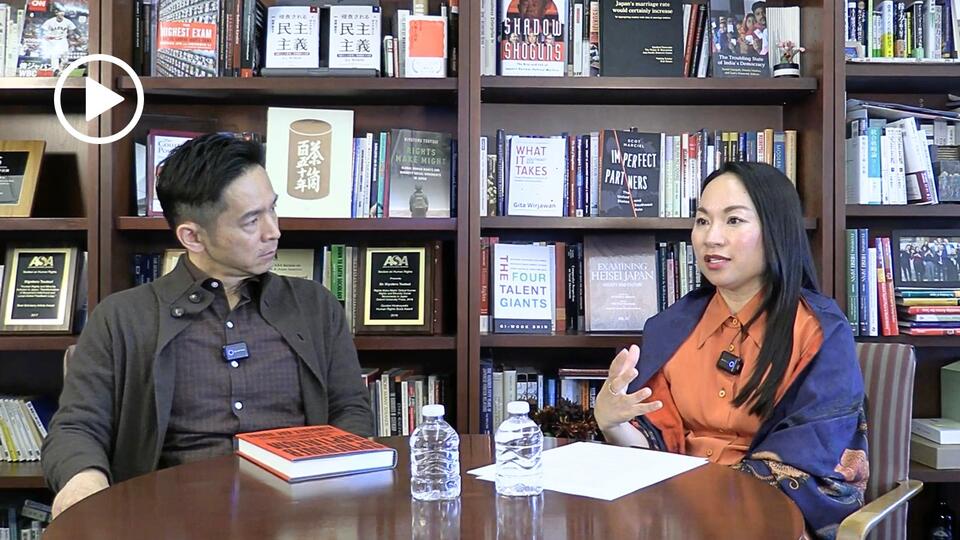
South Korea, long seen as a rare success in adopting the American presidential system, recently weathered a martial law crisis and secured a democratic government. President Lee Jae-myung now must reinforce liberal constitutional democracy and navigate growing global uncertainty. Many abroad still misunderstand how his administration will address these challenges. Professor Byong-jin Ahn, a former member of Lee’s National Policy Planning Committee, offers an insider view on the administration’s priorities, Lee’s leadership style, and the role of technology alliances in the geopolitics of South Korea, the United States, and Northeast Asia.

Speaker:

headshot of Byoung-jin Ahn

Byong-jin Ahn is a 2025-26 Visiting Scholar at APARC and he is a professor at Kyung Hee University's Global Academy for Future Civilizations. He has recently served at the State Affairs Planning Committee, Lee's presidential transition team. He has appeared on major Korean media and newspapers on the U.S. presidential election specials and has been often quoted by the New York Times. His recent publications include a chapter, “Why Is Korean Democracy Majoritarian but Not Liberal?“ in the edited volume South Korea's Democracy In Crisis: The Threats of Illiberalism, Populism, and Polarization (Gi-Wook Shin and Ho-Ki Kim, Stanford University Press, 2022). He earned his Ph.D. in American politics from the New School for Social Research.


Directions and Parking > 

Philippines Conference Room (C330)
Encina Hall, 3rd Floor
616 Jane Stanford Way, Stanford, CA 94305

Byong-jin Ahn, Visiting Scholar, Shorenstein Asia-Pacific Research Center, Stanford University; Professor, Kyung Hee University
Seminars
Date Label
Authors
Larry Diamond
News Type
Commentary
Date
Paragraphs

As we gather here to celebrate freedom and to recommit ourselves to the democratic cause, we face a powerful authoritarian tide. The remarkable third wave of global democratization ran out of steam two decades ago. Since then, many countries have fallen under the spell of illiberal and even authoritarian populism. Anti-establishment parties have swept into power promising to elevate “the people” over corrupt ruling elites and decrepit institutions, only to betray them more deeply through corruption and abuse of power. These include not just emerging-market democracies like Venezuela and Turkey but wealthier democracies in Europe and the United States, whose stability as liberal democracies we took for granted. 

In this global trend away from freedom, authoritarian populists have implemented a common playbook to polarize politics, punish independent media and civil society, undermine judicial independence, purge neutral watchdog institutions, politicize the civil service and security apparatus, and weaponize the state to persecute critics and opponents.

Once this authoritarian project settles into power, truth decays, the rule of law crumbles, fear sets in, and submission becomes the norm. Moreover, authoritarian populists draw from one another — and from powerful autocracies like Russia and China — the narrative arguments, political techniques, resource flows, and technological tools to accelerate their bids for hegemony.


The longer these authoritarian parties are in power, the more they eviscerate democratic institutions. But they are not invincible or irreversible.
Larry Diamond
Mosbacher Senior Fellow in Global Democracy, FSI


The longer these authoritarian parties are in power, the more they eviscerate democratic institutions. But they are not invincible or irreversible. Incipient authoritarianism has been turned back in countries as diverse as Brazil, Poland, Sri Lanka, and Senegal. The slide away from liberal democracy has been reversed recently in Botswana and Mauritius. An executive coup against democracy was defeated in South Korea. Young people in Bangladesh overthrew a dictator last year in a remarkable upsurge of protest. And the longstanding autocracies in Venezuela and Turkey are looking increasingly desperate and unpopular. These examples bear lessons we must learn and promote if we are to ignite — as we surely can — a new era of democratic progress.

First, we must study what it takes to defeat autocrats at the ballot box. Typically, electoral battles are not a straight contrast between democracy and autocracy. Voters weigh their circumstances of life as well. Fortunately, autocrats have other failings besides their corruption, lawlessness, and abuse of power: sooner or later, they fail to deliver on their material promises. Successful democratic campaigns target the populists’ hypocrisy and address not just people’s political rights but their economic and social needs. 

To defeat autocrats, democratic forces must offer specific, credible plans to meet the core policy challenges of economic growth and distribution, fairness and inclusion, education, health care, infrastructure, public safety, and national security. 

But people everywhere also need a vision of what constitutes a good and just form of government. Here, democracies have dropped the ball in making the case FOR democracy as the best form of government. Decades ago, as they fought dictatorships and then came to power, democracies taught their young people the values, ideas, and history of democracy. But as new democracies stabilized, the existence of a democratic culture came to be assumed, and countries forgot the terrible price they paid under dictatorship — the fear, falsehoods, powerlessness, and repression, the lack of accountability, voice, justice, and human dignity. We can make the practical case for democracy — it performs better over time. But we cannot pin the argument on performance, which may fail at specific points in time.


Ultimately, the case for democracy is that being able to speak truth to power, to hold it accountable, and to change those who exercise it is a core element of human dignity and a basic human right.
Larry Diamond
Mosbacher Senior Fellow in Global Democracy, FSI


Ultimately, the case for democracy is that being able to speak truth to power, to hold it accountable, and to change those who exercise it is a core element of human dignity and a basic human right. The freedoms to speak, publish, pray, organize, and assemble are inalienable human rights. As are the rights to a fair and impartial trial and to have all citizens be treated equally under the law. It is only democracy — never autocracy — that protects these rights and treats citizens with dignity by investing sovereignty in them, not some self-appointed minority. Liberty and democracy are intertwined.

We must make these points relentlessly, creatively, and convincingly, not just in the schools, at successively higher levels of instruction and deliberation, but through the social media platforms where people live their information lives. Russia, China, Iran, and other autocracies wage extensive propaganda campaigns to trash liberal values and institutions. They portray democracy as lacking in dynamism, capacity, and masculine strength. These arguments are false, offensive, and degrading to the human spirit. But they will not fail of their own accord. They need to be defeated by better, more inspiring arguments and narratives about why people need freedom to thrive, and why societies need democracy to have freedom.

Today, there are four arenas of struggle for the future of freedom, and democrats must prevail in all of them. The core battle is now in the countries that have been sliding back from democracy to autocracy. 


In almost every instance where authoritarian projects have been defeated, it has been through elections. Illiberal populists crave the legitimacy that comes from victory in multiparty elections. But corruption and misrule erode their electoral support. So, they need elections that are competitive enough to validate their claim to rule but rigged enough to minimize the risk of defeat. The pathway to restoring democracy is to seize the electoral opportunity, flood the zone with election workers and observers, and wage an effective campaign so that people who have grown weary of authoritarian abuse can defeat it at the ballot box.

To win, democrats must forge a unified coalition across factional and ideological divides. They must offer concrete policy ideas to improve people’s lives. They need a narrative about what has happened to justice and democracy, and why restoring these will help to make the country great again. A campaign is not a legal brief. It must inspire and excite. It requires strong, compelling leadership. It must engage diverse sections of society, including people who once supported the authoritarian populists but are now disillusioned. Democrats must also express patriotism and show that illiberal populists wave a false flag. Democrats are the truer patriots because they recognize democracy and liberty as pillars of national greatness.

These lessons can help to restore democracy where it has been lost and to secure it in a second arena, when it is under challenge from authoritarian populist parties. But there are two other arenas of struggle in which we must prevail. Globally, democrats cannot let the world’s powerful authoritarian states capture and hollow out the global institutions to defend freedom — the UN Human Rights Council, the international and regional instruments of electoral observation and assistance, and the rules that govern the flows of data and information. Neither can we shrink from the global battle to support democratic values and free flows of information, and to lend technical and financial support to peoples, parties, media, and movements around the world struggling for freedom. 

In the face of isolationist efforts to defund and withdraw from this cause, we must convince democratic publics that we can only secure our own freedom by supporting that of others. A more democratic world will be a safer, fairer, less corrupt, more peaceful, and prosperous world.


There is no more urgent priority than to give the Ukrainian people the weapons, resources, and economic sanctions to defeat Russian aggression. Similarly, we must ensure that Taiwan’s democracy does not suffer the same aggression from the People’s Republic of China.
Larry Diamond
Mosbacher Senior Fellow in Global Democracy, FSI


All of that has been under existential challenge in Ukraine since Russia’s brutal invasion in February of 2022. Resisting aggression is the fourth arena of struggle. There is no more urgent priority than to give the Ukrainian people the weapons, resources, and economic sanctions to defeat Russian aggression. Similarly, we must ensure that Taiwan’s democracy does not suffer the same aggression from the People’s Republic of China. Taiwan must have the weapons, trade, and international dignity it needs to survive. We must preserve the status quo across the strait by making clear that the US and other democracies stand behind the resolve of a free people to chart their own destiny in Taiwan — as we do in Ukraine.

We meet here today just a short distance from the grotesque wall that stood for decades as the dividing line between freedom and tyranny. 36 years ago — almost to this day — the wall was torn down. Few imagined it would happen when it did. But it did because of democratic conviction and resolve. Now, we are in a new cold war with global authoritarianism. The history of Berlin should constantly remind us that freedom is fragile, but it can also be resilient. We must never lose faith in the rightness of our cause and the obligation we bear once again to defend freedom in an hour of peril.

Professor Diamond delivered this speech at the Berlin Freedom Conference on November 10, 2025.

Read More

Sunset with overlaid American flag and Statue of Liberty
Q&As

Turbulent Times For Democracy

Hoover scholar Larry Diamond calls for respect, collaboration, and a crackdown on young people’s smartphones.
Turbulent Times For Democracy
Larry Diamond on World Class Podcast
Commentary

How Democracy Is Doing Around the World

On the World Class podcast, Larry Diamond and Michael McFaul compare how civic discourse and political institutions are holding up in the United States, South Korea, Taiwan, and other democracies.
How Democracy Is Doing Around the World
Larry Diamond and Francis Fukuyama speaking at a round table in front of a wall of books on a shelf.
Commentary

CDDRL Scholars Explore Impacts of Executive Orders and Policy Changes on Global Democracy

In a new video series, Francis Fukuyama and Larry Diamond discuss how democracy-promoting programs are being eroded under the new administration.
CDDRL Scholars Explore Impacts of Executive Orders and Policy Changes on Global Democracy
Hero Image
Larry Diamond delivered remarks to the Berlin Freedom Conference on November 10, 2025.
Courtesy of Democracy Without Borders
All News button
1
Subtitle

Professor Larry Diamond's remarks to the Berlin Freedom Conference, November 10, 2025.

Date Label
Authors
Nensi Hayotsyan
News Type
News
Date
Paragraphs

In a CDDRL research seminar held on October 30, 2025, Einstein-Moos Postdoctoral Fellow Oren Samet presented his research on how opposition parties engage internationally to challenge authoritarian regimes, focusing on the costs and benefits of a phenomenon he terms “opposition diplomacy.” This CDDRL research seminar highlighted Samet’s book project, which explores how opposition actors shape international politics and what their strategies reveal about the global landscape of democracy. 

Samet defines opposition diplomacy as the explicit efforts by political actors in the opposition to engage with international policymakers, promote their own priorities, and influence the foreign policies of external states. His research focuses on opposition diplomacy directed at Western governments in the post-Cold War era, undertaken by parties and politicians seeking to gain power through elections. 

As Samet highlighted, opposition diplomacy can take several forms, including direct lobbying, international networking, diaspora mobilization, and public relations. These efforts can shape foreign policy decisions by building coalitions of international allies with overlapping goals and with influence within foreign policy establishments, as well as by persuading policymakers that opposition parties are credible partners. This, in turn, can be beneficial, as it draws attention to repression, strengthens advocacy for democratic reform, and helps motivate external pressure, including through public statements of solidarity and specific policies such as sanctions. 

To study how these relationships operate, Samet analyzes data from party internationals – formal networks that connect political parties across countries – and their links with ideological groups represented within the European Parliament. He shows that when an opposition party from a country belonged to a party international with such links, members of the associated group in the European Parliament were more likely to raise issues about that country’s democratic deficits, indicating that these ties can increase visibility and solidarity abroad.

Samet further highlights this dynamic through the case of Cambodia, where opposition leaders have long appealed to Western governments and mobilized diaspora networks to pressure the prevailing autocratic regime. Their outreach helped bring international attention to Cambodia’s democratic backsliding and contributed to the imposition of European Union sanctions by increasing the visibility of regime abuses and helping to legitimize calls for stronger international action. 

However, Samet emphasized that the costs of opposition diplomacy can often outweigh its benefits. International engagement can expose politicians to repression or legal risks, divert financial and human resources from domestic mobilization, and enable ruling regimes to portray opposition parties as agents of foreign influence. In Cambodia, for example, opposition figures who engaged in international outreach faced arrests, restrictions, and bans on political participation, showing how consequential such engagement can be. Additionally, as Samet discussed, opposition diplomacy can sometimes produce unintended effects by giving regimes further justification to tighten control or discredit opposition leaders in the eyes of the public. Ultimately, due to these risks, opposition diplomacy is most common when domestic opportunities are scarce, leaving opposition parties with few alternatives. 

Samet closed by noting that these tradeoffs reveal the complex nature of opposition diplomacy. While opposition politicians can be influential global actors, their impact depends on how they weigh the risks and rewards of engaging abroad. Hence, the international environment for democratization is shaped not only by governments but also by the strategic choices of opposition actors themselves.

Read More

Lauren Young presented her research at a CDDRL seminar on October 16, 2025.
News

Elite Cohesion and the Politics of Electoral Repression

UC Davis Political Scientist Lauren Young examines why authoritarian incumbents use electoral repression selectively, why they often outsource it, and how elite cohesion shapes its organization, targeting, and effectiveness.
Elite Cohesion and the Politics of Electoral Repression
Saumitra Jha presented his research in a CDDRL seminar on October 9, 2025.
News

The Effects of Financial Exposures on Support for Climate Action

Can financial literacy shape climate beliefs? Saumitra Jha’s latest study suggests it can — and across party lines.
The Effects of Financial Exposures on Support for Climate Action
Maria Nagawa presented her research in a CDDRL seminar on October 2, 2025.
News

Foreign Aid and the Performance of Bureaucrats

CDDRL postdoctoral scholar Maria Nagawa examines how foreign aid projects influence bureaucrats’ incentives, effort, and the capacity of bureaucratic institutions.
Foreign Aid and the Performance of Bureaucrats
Hero Image
Oren Samet presented his research in a CDDRL seminar on October 30, 2025.
Nensi Hayotsyan
All News button
1
Subtitle

In a CDDRL research seminar, Einstein-Moos Postdoctoral Fellow Oren Samet explored the benefits, costs, and global reach of opposition diplomacy.

Date Label
Paragraphs

Opposition coalitions under electoral authoritarianism have been associated with greater likelihood of opposition victory and democratization. I argue, however, that coalitions also entail significant downside risks with implications for longer term prospects for democracy. Where coalitions produce strong electoral outcomes but fail to force turnovers, regimes are left with both the incentive and capacity to repress and reconsolidate power. I show cross-nationally that opposition coalitions are associated with stronger opposition performance overall, but that when oppositions fail to take power, exceptionally strong performance is associated with greater autocratization in the subsequent years, including increased repression and poorer electoral quality in future contests. Probing the case of Cambodia, I demonstrate how the very features that make opposition coalitions a useful tool in strengthening performance also invite new threats from regimes. I argue that this makes coalition formation a particularly risky proposition.

All Publications button
1
Publication Type
Journal Articles
Publication Date
Journal Publisher
American Journal of Political Science
Authors
Oren Samet
Number
Issue 4, October 2025
Authors
Khushmita Dhabhai
News Type
News
Date
Paragraphs

On October 16, 2025, UC Davis political scientist Lauren Young delivered a talk on the politics of electoral repression in post–Cold War autocracies. Her talk examined why authoritarian incumbents use electoral repression in some elections and not others, why they often outsource it, and why it is often not targeted at the most strategically valuable districts. She argued that cohesion in the ruling coalition shapes its organization, targeting, and effectiveness. Electoral repression refers to the use of coercive violence by ruling elites to weaken opposition forces and tilt electoral competition in their favor while still holding elections. It is a common tool of authoritarian control, with opposition harassment present in roughly one in five elections since 1990. Yet incumbents do not always rely on repression, and when they do, they frequently delegate it to paramilitary groups rather than state security forces.

Young argued that repression is both valuable and politically risky, which explains why it is sometimes but not always used. Authoritarian elites face two key problems. First, there is a control problem: the effects of repression on political behavior are unpredictable. While violence may intimidate some citizens, it can also backfire, provoking outrage or mobilization. Second, there is a power-sharing problem: delegating repression to coercive actors — police, military, or militias — can empower these groups and threaten regime stability. These risks push rulers toward patronage, propaganda, and performance, turning to repression only when these strategies fail.

The problem of authoritarian control is shaped by the fact that citizen reactions to repression are driven by psychological factors that are hard for elites to observe. These include self-efficacy — the belief in one’s ability to overcome obstacles — and risk aversion, or preference for certainty. Individuals with high self-efficacy and lower risk aversion are less likely to be deterred, increasing the uncertainty of repression’s effects. 

The talk’s focus was on elite cohesion and how it structures electoral repression. When ruling coalitions are cohesive, regimes rely on state security forces, making violence more organized and strategically targeted at competitive “swing” districts. When coalitions are fragmented, elites are more threatened by the risk that politicized state security forces will turn on them and instead outsource violence to militias, including violent interest groups, criminal organizations, and loosely organized bands of party supporters. This produces poorly targeted repression, often concentrated in strongholds, less lethal, and more prone to backfire. Internal power dynamics thus shape how electoral repression unfolds.

To illustrate this, Young drew on more than 5,000 incidents of electoral violence in Zimbabwe between 2000 and 2023. Periods of high elite cohesion, such as the 2002 presidential election, saw repression directed by state security forces in competitive districts. Periods of low cohesion, such as the 2000 legislative election and the 2008 runoff, saw militia-led violence concentrated in party strongholds, where it was less strategic and more likely to generate backlash.

By linking elite politics with these dynamics, Young’s work shows why electoral repression remains widespread but unevenly effective, and why even carefully planned repression can backfire.

Read More

Saumitra Jha presented his research in a CDDRL seminar on October 9, 2025.
News

The Effects of Financial Exposures on Support for Climate Action

Can financial literacy shape climate beliefs? Saumitra Jha’s latest study suggests it can — and across party lines.
The Effects of Financial Exposures on Support for Climate Action
Maria Nagawa presented her research in a CDDRL seminar on October 2, 2025.
News

Foreign Aid and the Performance of Bureaucrats

CDDRL postdoctoral scholar Maria Nagawa examines how foreign aid projects influence bureaucrats’ incentives, effort, and the capacity of bureaucratic institutions.
Foreign Aid and the Performance of Bureaucrats
Claire Adida
News

Overcoming Barriers to Women’s Political Participation: Evidence from Nigeria

In Nigeria, women are far less likely than men to attend meetings or contact leaders. Claire Adida’s research reveals interventions that make a difference.
Overcoming Barriers to Women’s Political Participation: Evidence from Nigeria
Hero Image
Lauren Young presented her research at a CDDRL seminar on October 16, 2025.
Stacey Clifton
All News button
1
Subtitle

UC Davis Political Scientist Lauren Young examines why authoritarian incumbents use electoral repression selectively, why they often outsource it, and how elite cohesion shapes its organization, targeting, and effectiveness.

Date Label
Authors
Khushmita Dhabhai
News Type
Q&As
Date
Paragraphs

The "Meet Our Researchers" series showcases the incredible scholars at Stanford’s Center on Democracy, Development and the Rule of Law (CDDRL). Through engaging interviews conducted by our undergraduate research assistants, we explore the journeys, passions, and insights of CDDRL’s faculty and researchers.

On a busy Thursday afternoon at Stanford’s Center on Democracy, Development and the Rule of Law (CDDRL), I sat down with Professor Michael McFaul, Director of the Freeman Spogli Institute for International Studies (FSI) and Ken Olivier and Angela Nomellini Professor of International Studies in the Department of Political Science, for a wide-ranging conversation on great power competition, U.S.–China relations, Cold War legacies, and the role of ideology in shaping global politics.

A former U.S. Ambassador to Russia and one of the most prominent voices on American foreign policy, Professor McFaul’s new book Autocrats vs. Democrats: China, Russia, America, and the New Global Disorder examines the stakes of the current geopolitical moment. Over the course of nearly an hour, we spoke about the elasticity of the term “great power competition,” the dangers of isolationism, the importance of middle powers, and the enduring influence of ideas in world politics. He also shared advice for young people interested in foreign policy, as well as the two books that shaped his early intellectual journey.

The term “great power competition” has become such a potent buzzword in Washington. Everyone uses it all the time, and it feels like it can mean many different things depending on who’s talking. How do you define great power competition? And do you think there’s a way for Washington to stop treating it as a catch-all phrase and instead turn it into a strategy with clear ends, means, and metrics?


The original motivation for writing my book came in 2017 when the Trump administration came into power. They wrote a National Security Strategy that very explicitly stated that we were in a new era of great power competition. And that document, in my view, became one of the most famous national security strategies of recent decades because it was so clear about that shift. The Pentagon even came up with an acronym — GPC (great power competition) — and when they create an acronym, it usually means it’s here to stay.

Around that time, there was also a big debate about whether we had entered a new Cold War. It began first with Russia — books were being written about a “new Cold War” as early as 2009 — and then the conversation shifted to China. So my first motivation for writing the book was to ask: Is this actually true? Is the Cold War analogy useful or not? My answer is complicated. Some things are similar, some things are different. Some of what’s similar is dangerous; some isn’t. Some of what’s different makes things less dangerous, and some of what’s different is scarier than the Cold War. If we don’t get the diagnosis right, then we won’t have smart policies to sustain American national interests.

You’ve written and spoken about how the Cold War analogy can be misleading. What are the main lessons from that period that we should remember, both the mistakes and the successes?


Because we “won” the Cold War, a lot of the mistakes made during it are forgotten. I use the analogy of when I used to coach third-grade basketball. If we won the game, nobody remembered the mistakes made in the first quarter. But if we lost, they remembered every single one. Because the U.S. “won,” people forget the mistakes.

There were major errors: McCarthyism, the Vietnam War, and allying with autocratic regimes like apartheid South Africa when we didn’t have to. So, in the book, I dedicate one chapter to the mistakes we should avoid, one to the successes we should replicate, and one to the new issues the Cold War analogy doesn’t answer at all. It’s not about glorifying the past; it’s about learning from it in a clear-eyed way.

President Trump and former President Biden have had very different approaches to great power competition. President Biden’s vision is closer to a liberal international order, whereas President Trump talks about a concert of great powers — almost a 19th-century idea. How do you evaluate that model? Do you think it can work today?


The short answer is no. I don’t believe in the concert model or in spheres of influence. That’s the 19th century, and this is the 21st. Trump’s team itself was internally confused on China. Trump personally thinks in terms of great powers carving up the world into spheres, but the national security strategy he signed was written by his advisors, not necessarily by him.

In thinking about Trump, I find it useful to remember that U.S. foreign policy debates don’t fall neatly between Democrats and Republicans. They run along three axes: isolationism versus internationalism, unilateralism versus multilateralism, and realism versus liberalism. Trump is radical on all three fronts — he’s an isolationist, he prefers unilateralism, and he doesn’t care about regime type. I think that combination is dangerous for America’s long-term interests.


I find it useful to remember that U.S. foreign policy debates don’t fall neatly between Democrats and Republicans. They run along three axes: isolationism versus internationalism, unilateralism versus multilateralism, and realism versus liberalism.
Michael McFaul


What role do middle or “auxiliary” powers — like India, Brazil, or Turkey — play in this evolving landscape of great power competition?


This is one of the biggest differences between today and the Cold War. Back then, the system was much more binary. Today, the world is more fragmented. I think of it as a race: the U.S. is ahead, China is closing the gap, and everyone else is running behind. But they’re running. They have agency. They’re not just sitting on the sidelines.

Countries like India, South Africa, Turkey, and Brazil are swing states. They’re not going to line up neatly with Washington or Beijing. BRICS is a perfect example — democracies and autocracies working in the same grouping. The U.S. has to get used to living with that uncertainty. We need to engage, not withdraw.

And at the same time, while the U.S. seems to be retreating from some of its instruments of influence, China appears to be expanding. What worries you about this divergence?


It’s striking. We’re cutting back on USAID, pulling out of multilateral institutions, shutting down things like Voice of America, Radio Free Asia, Radio Free Europe, and cutting back on diplomats. Meanwhile, the Chinese are expanding their presence, their multilateral influence, their media footprint, and their diplomacy.

If the autocrats are organized, the democrats have to be organized too. We can’t just step back and assume things will turn out fine. That’s not how competition works.


If the autocrats are organized, the democrats have to be organized too. We can’t just step back and assume things will turn out fine. That’s not how competition works.
Michael McFaul


During the Cold War, despite intense rivalry, the U.S. and USSR cooperated on nuclear nonproliferation and arms control. How do you see cooperation taking shape in today’s U.S.–China rivalry?


That’s a really important point. Cooperation in the Cold War wasn’t just about deterring the Soviets — it was also about working with them when we had overlapping interests. The Nuclear Nonproliferation Treaty of 1968 was a monumental achievement. It was signed at the height of the Vietnam War, while we were literally fighting proxy conflicts, and yet we found common ground on nuclear weapons.

I think something similar can and should happen now. Even if we’re competing with China, and even with Russia, there are areas where cooperation is in everyone’s interest: nuclear arms control, nonproliferation of dangerous technologies like AI and bioweapons, and climate change. These are existential issues. We cooperated with our adversaries in the past; we should be able to do it again.

One of the big debates in international relations is about the role of ideology. How much does ideology matter in this current geopolitical context?


It matters a lot. My book isn’t called Great Powers — it’s called Autocrats vs. Democrats for a reason. I believe ideas and regime type shape international politics.

Putinism and Xi Jinping Thought are exported differently. Putinism — illiberal nationalism — has ideological allies in Europe and here in the U.S. Xi’s model is more economically attractive to parts of the Global South. Power matters, of course, but it’s not the only thing.

You can see this clearly if you compare Obama and Trump. There was no big structural power shift between 2016 and 2017, but their worldviews were radically different. That’s evidence that ideas and individuals matter a great deal in shaping foreign policy.


My book isn’t called "Great Powers" — it’s called "Autocrats vs. Democrats" for a reason. I believe ideas and regime type shape international politics.
Michael McFaul


You’ve warned about the dangers of U.S. retrenchment. Are there historical moments that you see as parallels to today?


I worry about a repeat of the 1930s. When Italy invaded Ethiopia, Americans said, “Where’s Ethiopia?” When Japan invaded China, they said, “Why do we care?” Then came 1939. Stalin and Hitler invaded Poland, and we still said, “That’s not our problem.” Eventually, it became our problem.

If we disengage now, we may find ourselves facing similar consequences. That’s part of why I wrote this book — to push back against the idea that retrenchment is safe. It’s not.

To close, what advice would you give to students who want to build careers like yours? And, could you recommend a book or two for young people entering this field?


Be more intentional than I was. Focus on what you want to do, not just what you want to be. Develop your ideas first, then go into government or academia to act on them. Don’t go into public service just for a title. I saw too many people in government who were there just to “be” something, without a clear agenda. The “to do” should come first; the “to be” comes later.

As for books, my own book, Autocrats vs. Democrats: China, Russia, America, and the New Global Disorder, is coming out soon — you can pre-order it. But the two books that shaped me the most when I was young are Crane Brinton’s The Anatomy of Revolution and Guillermo O’Donnell and Philippe Schmitter’s Transitions from Authoritarian Rule.

Read More

Meet Our Researchers: Alain Schläpfer
Q&As

Meet Our Researchers: Alain Schläpfer

Investigating how reputation, cultural norms, and conditional cooperation shape social harmony and conflict with CDDRL Research Scholar Alain Schläpfer.
Meet Our Researchers: Alain Schläpfer
Meet Our Researchers: Michael Bennon
Q&As

Meet Our Researchers: Michael Bennon

Investigating how infrastructure project financing has changed amidst global geopolitical competition and how democracies can more effectively build in the future with CDDRL research scholar Michael Bennon.
Meet Our Researchers: Michael Bennon
Hero Image
Meet Our Researchers: Prof. Michael McFaul
All News button
1
Subtitle

Exploring great power competition, Cold War lessons, and the future of U.S. foreign policy with FSI Director and former U.S. Ambassador Michael McFaul.

Date Label
Subscribe to Democracy