CDDRL Research in-brief
Authors
News Type
News
Date
Paragraphs

Introduction and Contribution


Democratic “consolidation,” whereby democracy is the “only game in town,” depends on the functioning of a host of political institutions. This includes free and fair elections, respect for individual rights, and an independent judiciary. Accordingly, many countries that underwent transitions to democracy in the 1990s worked to build autonomous and impartial judicial institutions. Reformers hoped that judges with the capacity to review executive and legislative action and effectively enforce their decisions would serve as bulwarks against authoritarian reversion. 

Yet the recent wave of democratic backsliding and autocratization has demonstrated the fragility of judicial institutions. In places as diverse as Hungary, Poland, Venezuela, and Turkey, elected authoritarian leaders have sought to weaken or destroy independent judiciaries, even co-opting them to further their anti-democratic agendas. Have judges become unable to counter autocrats? Answering this question is critical for the global pro-democracy movement.

In “How Latin America's Judges are Defending Democracy,” Diego A. Zambrano, Ludmilla Martins da Silva, Rolando Garcia Miron, and Santiago P. Rodríguez show how judges in Brazil, Colombia, and Mexico have made a series of innovative and forceful anti-authoritarian rulings. These outcomes are surprising in light of parallel judicial failures in Latin America and other backsliding democracies. The authors discuss six factors that help explain these outcomes: three stem from the judiciary's internal politics, and three connect to broader changes in Latin American society. Although no single factor explains all three cases, this should not detract from the broader lesson that judiciaries can serve as important pro-democracy actors. 

Three Cases of Judges Defending Democracy


Brazil: 

After the military junta fell in 1985, Brazil built strong judicial institutions, which largely remained on the political sidelines until the rise of Jair Bolsonaro in 2018. During his campaign, Bolsonaro expressed his intent to manipulate the Supreme Court’s composition, suggested he would not comply with its decisions, and marched in favor of a military takeover. Meanwhile, his supporters placed explosives near the homes of Supreme Court justices and made threats against them and their families. These developments — threatening Brazilian democracy, the separation of powers, and the personal safety of judges — put significant strain on the judiciary. 

In response, the Supreme Court took the unprecedented step of ruling that it could unilaterally open investigations into government officials. It did so in cases involving those who spread false information and made defamatory accusations against judges. During COVID-19, Bolsonaro attempted to centralize the authority to impose lockdowns, which the Supreme Court rejected as violating the constitutional separation of powers.

Brazilian democracy faced its most existential threat during and after the 2022 elections. In response to Bolsonaro and his supporters promoting conspiracy theories about election fraud, the Supreme Court issued press releases attesting to the elections’ democratic integrity. And after the infamous Brazilian coup plot, the Court investigated Bolsonaro and disqualified him from running for office.

Colombia:

Colombia’s judiciary has received global recognition for its independence, defenses of human rights, and broad domestic legitimacy. It has decriminalized abortion and euthanasia while imposing limits on executive power. In 2010, it rejected President Álvaro Uribe’s unconstitutional attempt to run for a third term in office despite Uribe’s widespread support among the public and Colombian elite. And in 2023, it upheld its power to suspend evidently unconstitutional acts or those posing a “clear and present danger” to the constitutional order. These rulings demonstrate how Colombian judges have been willing to defend constitutional democracy, even when doing so requires confronting powerful executives.

Mexico:

Much like in Brazil under Bolsonaro, Mexico’s judiciary faced a critical test with the rise of President Andrés Manuel López Obrador (AMLO) in 2018. AMLO was extremely popular, winning over 50% of the vote, while his Morena party took control of Congress. Perceiving the Supreme Court as an impediment to his populist agenda, AMLO used daily press conferences to denounce the justices as overpaid, corrupt elites. 

Initially, Supreme Court president Arturo Zaldívar was receptive to AMLO’s accusations, persuading his colleagues to accept salary and budget reductions. However, Zaldívar’s successor, Norma Piña, led a much more oppositional court. One of AMLO’s signature initiatives was to overhaul and defund the independent electoral body — the National Electoral Institute (INE) — seen as one of Mexican democracy’s most important institutions. This involved reducing INE’s staff by 85%, which would have placed free and fair elections in serious jeopardy. When the INE case reached the Supreme Court, however, the justices sided against AMLO. 

Why Have Judges Defended Democracy?


These bold and surprising cases of judicial intervention in defense of democracy call for an explanation. Accordingly, the authors consider two sets of factors, one internal and one external to the judiciary. One external factor is connected to the fact that judiciaries often side with public opinion, which has increasingly opposed authoritarian maneuvers by executives. For example, although AMLO was popular, his anti-democratic electoral reforms were not, prompting mass protests in 2023. However, this factor has a harder time explaining judicial behavior in Colombia; as mentioned, President Uribe’s proposed third term received broad public support.

Perhaps the more compelling factors are internal to Latin American judiciaries. These include increasingly prevalent rules and norms favoring tenure protections. Another important factor involves the growing number of judicial appointees who are elite lawyers, such as those from academia or private practice. Because they are unaffiliated with traditional networks of political power, these judges have arguably been more willing to act against autocrats’ wishes. 

Finally, several cases may be explained by the facts that (a) judges, like other political actors, seek to preserve their positions and (b) attacks on democratic institutions threaten those positions. In Mexico, for example, AMLO’s assault on the INE, by threatening free and fair elections, would have upset the balance of power between the executive and judiciary. A similar case could be made in Brazil, where judges sought to preserve not only their autonomy but their physical safety. No single factor can explain every judicial ruling. Together, however, they help shed light on why Latin American judiciaries have stood up to powerful and popular elected autocrats.

*Brief prepared by Adam Fefer

Hero Image
Brown wooden gavel on brown wooden table
Katrin Bolovtsova
All News button
1
Subtitle

CDDRL Research-in-Brief [4-minute read]

Image
Brown wooden gavel on brown wooden table
Photo credit Katrin Bolovtsova
Date Label
Display Hero Image Wide (1320px)
No
Authors
News Type
News
Date
Paragraphs

Introduction and Contribution


One cannot today talk about important political phenomena such as democratic backsliding. Indeed, political leaders and parties in both democracies and autocracies increasingly appeal to differences between places, especially the divide between urban and rural communities, to mobilize voters. Narratives that blame urbanites for the social and economic problems facing rural communities have become an important tool for justifying anti-democratic measures and polarizing electorates. At the same time, voters in many urban places feel increasingly resentful toward rural residents, arguing that these residents exert too much political control over their lives. Apart from these broader developments, however, much remains unknown about how places shape and are shaped by politics. 

In “Place Attachments,” Elizabeth Mitchell Elder and Hans Lueders argue that social scientists have failed to make an important distinction between being attached to a place and identifying with groups that live in a place. Place attachments provide a sense of continuity and stability in one’s life. By contrast, place identities are tied to various “reference groups” that share attributes and values and provide members with a sense of self-esteem. This distinction matters: individuals can be attached to a specific place, such as rural Appalachia or New York City, while not identifying with rural or urban places or the people who inhabit them. The former — what the authors call “place attachment” — brings about a deep investment in one’s local community and strong local political engagement. The latter — what the authors call “place identity” — may bring about the same amount of local political engagement, but can also come with animosity toward individuals residing in other places or types of places — animosity that can be exploited by political leaders. 

To understand the consequences of place attachments, Elder and Lueders conduct original surveys of voters in Germany, the United States, and the Appalachian region of the United States. Survey respondents with a strong sense of belonging and commitment to their place are more trusting of local governments, more engaged with local politics, and tend to prefer local candidates. “Place Attachments” makes an important contribution by conceptualizing and measuring a phenomenon that has often been conflated with identity and that shapes political behavior  in consequential  ways.

The Importance of American and German Place-Based Attachments


Elder and Lueders leverage original surveys of voters in the United States and Germany because they differ considerably in terms of mobility and the role that place and geographic identity have played in each country’s history. An additional survey run among residents of Appalachia draws attention to a region where place attachments are strong despite the region’s poor socioeconomic outcomes; many residents remain strongly attached to it. 

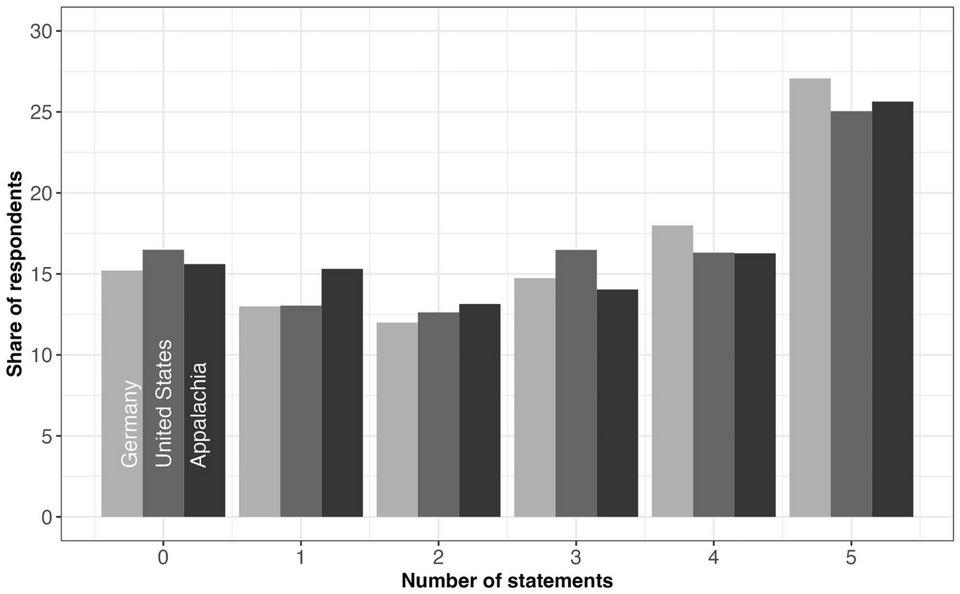
The authors operationalize place attachments in terms of respondents’ agreement with five statements about their current place of residence: that they feel like they belong there, that it is an important part of who they are, that they feel at home there, that it reminds them of their past, and that they would like to remain there for the rest of their lives. Respondents varied significantly in terms of the strength of their place attachments: about 25% agreed with all five statements, 15% disagreed with all five, and the remainder were evenly distributed across the other combinations (e.g., agreeing with two, agreeing with three). However, distributions were similar across all three geographic samples.


Image
Fig. 1: Distribution of strength of local attachments in all three samples: share of respondents who agree somewhat or strongly with the number of statements reported on the horizontal axis.


Fig. 1: Distribution of strength of local attachments in all three samples: share of respondents who agree somewhat or strongly with the number of statements reported on the horizontal axis.


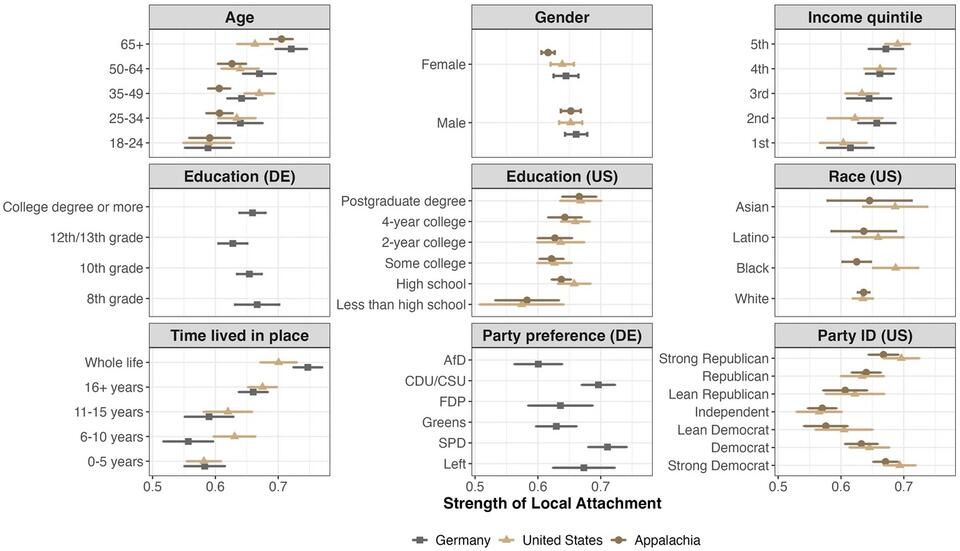
Two main demographic correlates of place attachments are found to be of importance: older people and those who have resided for longer in a place have stronger attachments. In terms of politics, Germans who support the Social Democratic Party and the center-right Christian Democratic Union have stronger place attachments than do supporters of the far-right Alternative for Germany. In the United States, by contrast, the strength of one’s partisan identity matters more than party affiliation: Democrats and Republicans both score higher, especially as they identify more strongly with either party, than Independents.


Image
Fig. 2: Demographic correlates of local attachments. Estimated strength of local attachments by select demographic groups.


Fig. 2: Demographic correlates of local attachments. Estimated strength of local attachments by select demographic groups.


Local attachments are weakly related to measures of a place’s “objective” quality, such as life expectancy or unemployment rates, and they also vary little across urbanites and ruralites. The latter is surprising given the common assumption that rural residents have especially strong attachments to place. When asked to describe what they like most about a place, respondents rarely mentioned their co-residents’ physical attributes or values. This provides evidence for the authors’ claim that place attachments are conceptually distinct from place identities.

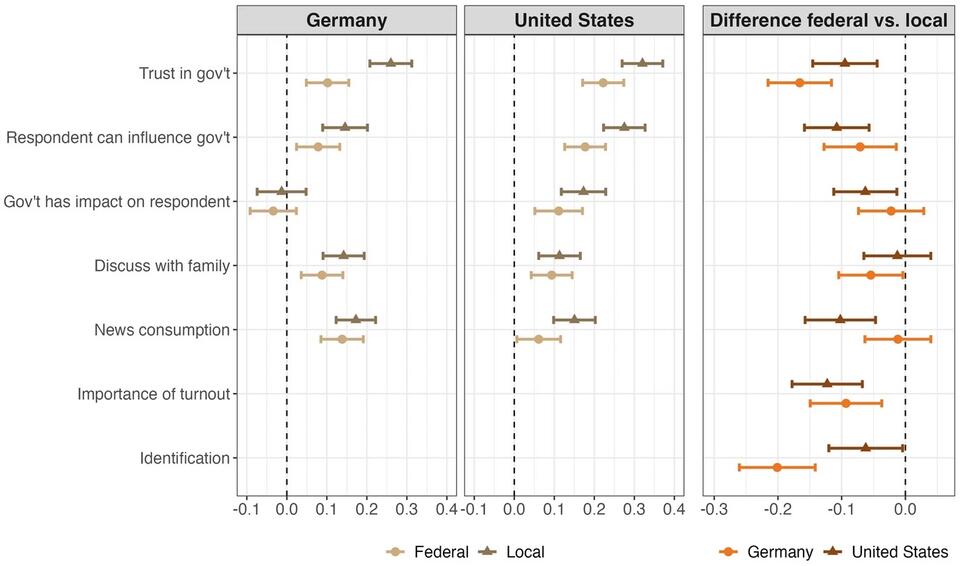
The authors then analyze how place attachments relate to political behavior. They find that respondents with stronger place attachments are relatively more engaged in their local communities: they are more trusting of their local governments, spend more time reading and talking about local politics, and are more likely to believe that they can influence political outcomes in their local communities. Individuals with strong local attachments are also more likely to participate in local elections or local voluntary organizations.


Image
Fig. 5: Correlations between local attachments and engagement in national and local politics. Left and center panels: estimated relationship between local attachments and various measures of political engagement at the national and local levels. Right panel: estimated relationship between local attachments and the difference in national vs. local engagement (negative values here mean relatively more local than national engagement).


Fig. 5: Correlations between local attachments and engagement in national and local politics. Left and center panels: estimated relationship between local attachments and various measures of political engagement at the national and local levels. Right panel: estimated relationship between local attachments and the difference in national vs. local engagement (negative values here mean relatively more local than national engagement).


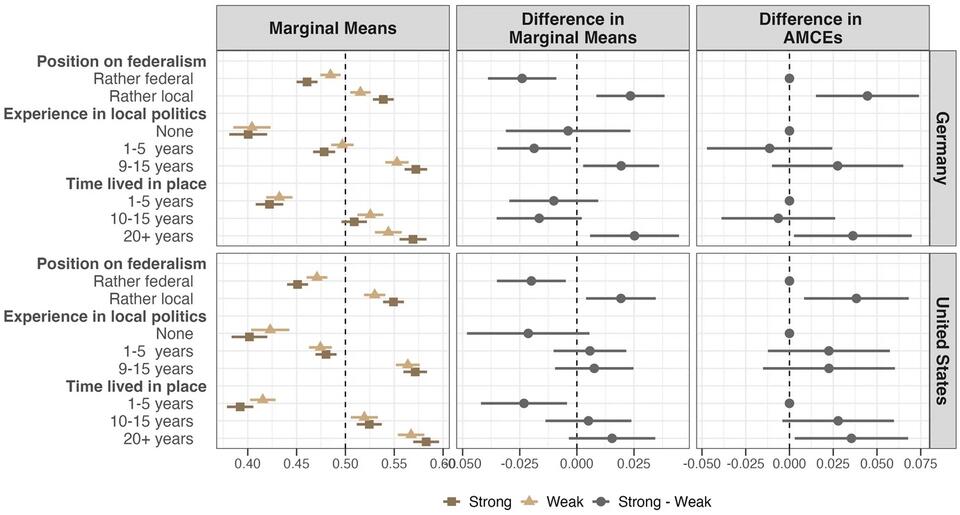
Finally, respondents participated in a “forced-choice conjoint experiment,” which involved choosing between pairs of hypothetical candidates. Candidate profiles included their position on the importance of local autonomy, their experience in local politics, and length of residence in the community. Respondents with higher place attachments were significantly more likely to choose hypothetical candidates with stronger local orientations or connections — that is, candidates who supported autonomy, had local experience, and had lived in the community. Place attachments thus seem to shape not only how individuals perceive their communities but the criteria they use to evaluate politicians. 


Image
Fig. 6: Local considerations have a stronger effect on candidate choice among voters with strong local attachments.


Fig. 6: Local considerations have a stronger effect on candidate choice among voters with strong local attachments. Left panel: propensity that a candidate with the attribute on the y axis is selected (marginal means), estimated separately for voters with strong and weak local attachments. Center panel: difference in marginal means between voters with strong and weak local attachments. Right panel: differences in average marginal component effects (AMCEs) between respondents with strong and weak local attachments for a particular attribute level compared to the baseline. See Figure A4 in appendix B.3 full results. See Figure A5 in appendix B.4 for AMCEs.


*Brief prepared by Adam Fefer.

Hero Image
Row of half-timbered buildings on Frankfurt’s Römerberg square, with a Justitia fountain statue in the foreground.
Frankfurt, Germany. | NIR HIMI
All News button
1
Subtitle

CDDRL Research-in-Brief [4-minute read]
Image
Row of half-timbered buildings on Frankfurt’s Römerberg square, with a Justitia fountain statue in the foreground.
Caption Frankfurt, Germany. | Photo credit NIR HIMI
Aria Label
Read More of Identifying With Versus Being Attached to a Place
Date Label
Display Hero Image Wide (1320px)
No
Authors
News Type
News
Date
Paragraphs

Introduction and Contribution


The United States is frequently described as exceptional among other advanced industrial democracies, especially those of Western Europe. Popular narratives attribute this to the US Constitution, a commitment to individual liberty, and economic opportunity, or the “American dream.” Scholarly accounts, by contrast, have focused on institutional differences, especially the absence of a comprehensive American welfare state. To be sure, these claims must be qualified. Social and economic mobility has declined substantially in the US over recent decades, while Americans derive sizable welfare benefits from tax relief schemes such as retirement savings. In what sense, and relative to which countries, is the US in fact exceptional? 

In “American Exceptionalism in Comparative Perspective,” Julieta Casas argues that exceptionalism should be conceptualized in two distinct ways: (1) The US’s lack of convergence with Western European countries, despite similar outcomes (e.g., prosperity and industrialization) and different starting points (limited vs. comprehensive welfare states). (2) The US’s divergence from Latin American countries in terms of outcomes (e.g., development vs. underdevelopment) despite similar starting points (colonization, independence movements seeking Republican government). Put differently, if initial conditions are X and outcomes are Y, the two corresponding questions are “Why Y despite no X?” and “Why X but not Y?” Casas maintains that while much valuable scholarship has focused on (1), especially in the ‘American Political Development’ tradition, an analysis of (2) holds promise to sharpen our explanations of exceptionalism and methodological rigor. 

This reframing of exceptionalism has broader significance beyond academic debates. Indeed, the United States is currently undergoing the most pronounced democratic decline in its history. Similar kinds of declines — particularly those motivated by right-wing, anti-immigrant, populist sentiment — have been observed across Europe and Latin America. Resisting authoritarian leaders and movements in the US requires understanding cases of successful and failed resistance elsewhere. This kind of understanding depends on making appropriate kinds of comparisons.

Resisting authoritarian leaders and movements in the US requires understanding cases of successful and failed resistance elsewhere. This kind of understanding depends on making appropriate kinds of comparisons.

Two Ways of Thinking About Exceptionalism


Lack of Convergence with Western Europe:

Perceptions of American exceptionalism vis-à-vis Europe date to at least the early nineteenth century. Alexis de Tocqueville saw the US as uniquely equal compared to his native France, owing to its lack of a feudal past and abundance of land, among other factors. Twentieth-century observers highlighted the absence of a strong American socialist party as well as dramatic rises in incarceration rates and income inequality — especially after the late 1970s. However, these accounts have been tempered by those who sought to show how, for example, the early American state was not exceptionally weaker than its European counterparts. Although the US lacked a powerful federal government, other institutions, such as Congress, the judiciary, and political parties, were quite strong.

One significant, less disputed case of exceptionalism is the early American bureaucracy, which was substantially more ‘patrimonial’ than in Western Europe. In other words, US politicians treated bureaucratic privileges — such as jobs — as rewards or ‘patronage’ to be doled out in exchange for political support. This lack of convergence with professionalized European bureaucracies was most famously explained by reference to the ‘sequencing’ of popular suffrage and bureaucratic development. In the US, suffrage came first, which gave politicians incentives to behave as patrons interacting with voters or ‘clients.’ In Europe, by contrast, suffrage came later, which enabled bureaucracies to professionalize without electoral pressures. 

Divergence from Latin America:

Although the United States is often seen as standing apart from other countries in the Americas, they share many starting points. These include similar times of independence from the European colonial powers, presidential and Republican as opposed to parliamentary and monarchical systems, and racialized hierarchies where darker-skinned and indigenous groups were oppressed. Across the Americas, weak federal governments struggled to exercise authority over vast territories. This led to intransigent pockets of authoritarian rule — compare the US South under Jim Crow with the decades-long rule by the Institutional Revolutionary Party (PRI) in Oaxaca, Mexico. However, the US proved quite exceptional in terms of its prosperity and industrialization; indeed, it surpassed not only Latin America but also its former colonizer.

Social scientists have analyzed divergence by using the US as a comparative case study. This includes asking why the US diverged from Canada in terms of their different healthcare systems. In addition, the question of divergence within Latin America, in terms of different kinds of twentieth-century regimes (e.g., military dictatorship, traditional dictatorship, democracy), has received much scholarly attention. American exceptionalism vis-à-vis Latin America, however, has not. 

One of Casas’ key contributions is to show how comparing the US and Latin America forces a rethinking of the above-mentioned sequencing debate.

One of Casas’ key contributions is to show how comparing the US and Latin America forces a rethinking of the above-mentioned sequencing debate. It is true that the American bureaucracy professionalized much later than in Europe. However, explaining this development in terms of the timing of suffrage runs into a problem: Latin American countries also introduced suffrage before building their bureaucracies, yet in these cases, professionalization was either extremely slow or has yet to occur. In Mexico, it was not until 100 years after the franchise was expanded that civil service reforms were enacted. 

In comparison to Latin America, then, the US looks like a pioneer and success story of bureaucratic development — not a laggard in comparison to Western Europe. Casas thus highlights an important point about reference classes or vantage points. To use a related example, Americans may rightly view the US as more free relative to India or Brazil, yet overlook its distance from more robust democracies such as Canada or Japan. This underscores that exceptionalism is not a fixed property, but rather is defined by the comparisons we make.

*Brief prepared by Adam Fefer.

Hero Image
An American flag flying from a white pole against a bright blue sky with large white clouds.
Chris Robert
All News button
1
Subtitle

CDDRL Research-in-Brief [4-minute read]
Image
An American flag flying from a white pole against a bright blue sky with large white clouds.
Photo credit Chris Robert
Aria Label
Read More American Exceptionalism Beyond Western Europe
Date Label
Display Hero Image Wide (1320px)
No
Authors
News Type
News
Date
Paragraphs

Introduction and Contribution


Nearly half of the world (46%) lives in authoritarian regimes that hold regular elections — compared to 28% who live in autocracies without elections and 26% who live under democracy. In these “electoral autocracies,” the ruling party can theoretically lose power, but its ability to repress and co-opt its opponents makes defeat unlikely. Incumbent executives and parties in electoral autocracies have become increasingly sophisticated in their repressive techniques and increasingly connected to other regimes that share similar fears of democracy. “How can electoral authoritarianism be resisted?” is thus a pressing question for domestic opposition parties and civil society organizations (CSOs) as well as international actors seeking to promote democracy, including governments, nonprofits, think tanks, and academics. 

In “Opposition strategies and electoral challenges under autocracy,” Oren Samet analyzes five strategies opposition parties use to fight electoral authoritarianism during campaigns, on election day, and after polls have closed. These are: joining multiparty coalitions, strengthening their party organization, mobilizing mass protests, boycotting elections, and seeking international assistance. Samet shows that each strategy entails tradeoffs, increasing opposition competitiveness while making authoritarian repression more likely or efficient. For example, joining a multiparty coalition can both increase the incumbent’s likelihood of defeat and increase his propensity to repress — insofar as he perceives the opposition as popular and threatening.

Samet shows that each strategy entails tradeoffs, increasing opposition competitiveness while making authoritarian repression more likely or efficient.

Samet offers several prescriptions for international democracy promoters. First, they must collaborate with domestic opposition parties, because only they — and not CSOs — can win elections. Yet many international actors avoid this approach; for instance, some opposition parties may care more about power than democracy, or collaborating with them may invite criticism that democracy promotion is partisan. While these risks cannot be ignored, neither can political parties.

A second prescription follows from the fact that oppositions have at least five tools at their disposal: there can be no single “best practice” in democracy promotion; it requires flexibility, adaptability, and an integrated approach. Finally, because autocrats continue to become more sophisticated, democracy promoters must take steps to prepare for the repression of their partners. 

Five Approaches and Their Pitfalls


Otherwise effective strategies for winning democratic elections — such as running savvy campaigns on primetime television that are informed by public opinion polling — will not work for opposition parties under electoral autocracy. This is because the system is structurally biased toward incumbents. As such, one common approach has been for individual opposition parties to join together in a coalition: sharing policy platforms, endorsing joint candidates, and merging their party organizations. And indeed, multiparty coalitions are statistically associated with higher vote shares and a higher likelihood that autocrats are defeated. At the same time, however, such coalitions are difficult to form and sustain due to ideological differences and polarization. In especially repressive electoral autocracies, such as Ethiopia or Cambodia, incumbent parties are often able to neutralize or eliminate coalitions. Finally, when coalitions pose a serious challenge on election day but without winning, autocrats may repress even harder.

A second strategy involves strengthening party organization, for example, by improving its geographic reach or recruiting more professional candidates. These efforts can increase competitiveness and popular appeal, but they risk providing the incumbent with a large amount of information that he can use to more efficiently target his opponents. This includes formal lists of members, candidates, and party branch locations. Meanwhile, more organized opposition parties may inadvertently legitimize the system by affording it some semblance of democracy.

Encouraging mass protests is a third strategy available to opposition parties. As the number of protesters grows, authoritarian repression becomes more costly and more likely to backfire, while the incumbent’s allies become more likely to defect and join the opposition. Parties help with this process by translating protester demands into coherent party platforms. However, and especially after the 2010-12 Arab Uprisings, electoral authoritarian regimes have become highly sensitive to and ready to combat protests. This may be accomplished via surveillance or assistance from powerful third parties such as China or Russia.

A fourth, common strategy has been for parties to boycott the autocrat’s electoral facade. Doing so signals to the international community that the playing field is skewed and the system illegitimate. Yet boycotts can lead to missed opportunities for the opposition to build electoral strength, influence policy change as legislative minorities, or monitor the autocrat from inside government. In addition, they rob oppositions of the chance to take advantage of the autocrat’s miscalculations, which may even lead to his defeat. 

Finally, opposition parties can reach out to international actors for support. This may involve requesting that they sanction the regime or intervene in the name of democracy. International pressure can indeed encourage political openings and is especially useful for oppositions with low visibility. However, autocrats are adept at demonizing those who use this strategy as agents of malign foreign influence. These appeals can strengthen the autocrat’s domestic support base among those who see him as protecting the nation. In all, these tradeoffs suggest that effective democracy promotion requires a deep understanding of the political context in which oppositions operate.

*Brief prepared by Adam Fefer.

Hero Image
A crowd of people gathers at a protest, holding handmade signs. A cardboard sign in the center reads “WE CAN DO BETTER.”
Sandra Seitamaa
All News button
1
Subtitle

CDDRL Research-in-Brief [3.5-minute read]

Date Label
Display Hero Image Wide (1320px)
No
Authors
News Type
News
Date
Paragraphs

Introduction and Contribution


Economies depend on infrastructure: roads enable the movement of goods and workers, electricity powers businesses and factories, and communications technologies allow for the exchange of information and services. Yet in our connected world, roughly 1 billion people live more than two kilometers from an all-season road, and approximately 1.2 billion have no access to electricity.1

For decades, institutions such as the World Bank and McKinsey Global Institute have promoted the idea that closing a trillion-dollar gap between planned global infrastructure investment and the estimated level of investment needed to drive growth will alleviate poverty, harness the potential of developing nations to increase global GDP, and enrich foreign investors. But despite the fact that unrealized gains from greater infrastructure investment in emerging market and developing economies (EMDEs) outstrip those in the rich world, comparatively little capital flows into the infrastructure of poor countries.

In “The Global Infrastructure Gap: Potential, Perils, and a Framework for Distinction,” Camille Gardner and Peter Blair Henry reject the received narrative that flooding poor countries with capital simply to reach a target level of infrastructure investment will yield the desired gains. Instead, they urge investors and policymakers to move from thinking about infrastructure “gaps” to prioritizing infrastructure returns. Specifically, they propose the first “dual hurdle” framework. The framework uses cross-country differences in returns to identify efficiency in cross-country investments, incorporating the incentives that suppliers and allocators of capital must have to finance productive projects.

The authors reject the received narrative that flooding poor countries with capital simply to reach a target level of infrastructure investment will yield the desired gains.

Applying the framework to historical data, Gardner and Henry debunk the notion that poor countries offer ubiquitous opportunities for productive investment. Only 13 percent of countries in the data set cleared the dual-hurdle tests of efficiency for projects in both roads and electricity. But for countries that did clear the hurdles, the return on infrastructure was large: more than 10 times greater in some cases than the return on rich-country private capital.

This underscores the need for updated and more accessible data to drive decisions and prioritize projects. Differences across countries, sectors (e.g., roads vs. electricity), and locations (urban vs. rural) must be taken seriously to avoid a wasteful allocation of global infrastructure capital.

Gardner and Henry expand our understanding of when cross-country infrastructure investments are efficient and why poor countries have struggled to catch up. And as labor forces in poor countries grow rapidly, the problems associated with infrastructure scarcity are likely to become more acute, increasing migration pressures. Effective investment can mitigate risks while generating mutual gains for poor and rich countries alike.

When Infrastructure Investment Pays Off


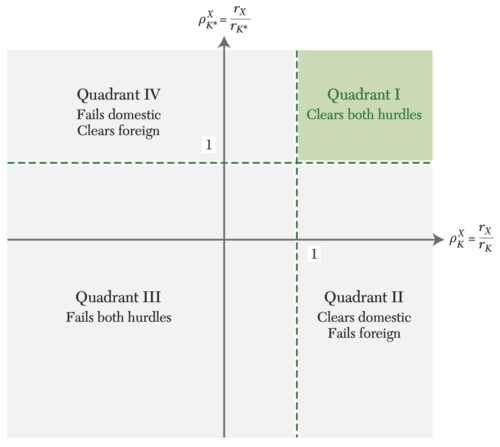
The authors’ dual hurdle framework reveals that public infrastructure investment in a poor country is efficient only if it yields higher returns than the social rate of return on private capital (a) within the country and (b) in rich countries. Countries that clear both hurdles are deemed strong candidates for more investment.


Image
Figure 4. The Dual-Hurdle Framework


Figure 4. The Dual-Hurdle Framework

Note: For a given poor country and type of infrastructure, the dual-hurdle framework sorts each country-infrastructure observation into one of four quadrants according to whether it clears the hurdle for efficient: (a) domestic investment, and (b) foreign investment.


Gardner and Henry apply their framework to 53 countries that belong to the only known data set of comprehensive cross-country estimates of the social rates of return on infrastructure (roads and electricity) in poor countries, found in a paper commissioned by the World Bank that is based on data from 1985.2 In their analysis, Gardner and Henry show that while some countries have opportunities for high returns (especially for paved roads), many others do not. In very few countries can the case be made for investing across multiple kinds of infrastructure (only 7 of 53 countries cleared the dual hurdles for both roads and electricity), and for some countries there is no case to be made.

To be clear, infrastructure investment is not generally inefficient. Indeed, worthwhile projects to increase or upgrade infrastructure in poor countries can yield much higher gains than are available from private investment in both poor and rich countries. This is because infrastructure improvements raise productivity across the economy. The problem is that these high-return opportunities are difficult to identify, especially without updated, readily accessible, quality data.

Different types of infrastructure also vary in their impact depending on the context. For example, investments in electricity often yield low returns in rural settings but high returns in urban settings (where firms are concentrated and struggle due to unreliable power). By contrast, roads more often yield higher returns because they support market activity overall. Finally, the authors show that efficient infrastructure also depends on the interaction of private capital, human capital, and good institutions. This underscores the limitations of simply building more infrastructure in isolation. 

Challenges to Infrastructure Investment


Gardner and Henry document extensive variation in efficiency when comparing private versus public capital allocation (in roads and electricity) across rich and poor countries. The social rates of return on public capital vary much more than with private capital, which is the case in both rich and poor countries, and inefficiencies in public capital allocation are greater in poor countries than in rich ones. This variation is driven not just by economic factors but also by political and institutional constraints.

The concept of “frozen capital” helpfully describes the outcome of problems facing prospective investors. For one, because infrastructure requires complementarities (e.g., electrifying an area requires the preexistence of reliable roads), individual projects may be unprofitable unless others are simultaneously financed and coordinated.

Additionally, foreign investors may distrust the governments of the countries where they invest, or they may be wary of the quality of domestic firms tasked with completing a given project. This will certainly be true where transparency and accountability are lacking. Especially in poor autocracies or semi-democracies, governments may arbitrarily change the law, fail to honor contracts, or face political and social instability, leaving investors uncertain about the prospect of repayment and return on their investments.

Ultimately, infrastructure investment offers great promise, but it must be evidence-based and approached with caution. The challenge is not to simply raise the level of investment but, as “The Global Infrastructure Gap” shows, to use cross-country differences in returns to identify the right infrastructure projects, in the right places, to maximize the efficiency of cross-country capital allocation.

*Brief prepared by Adam Fefer.

References:

1. Canning, David, and Esra Bennathan. 2000. “The Social Rate of Return on Infrastructure Investment.” World Bank Policy Research Working Paper 2390.

2. Rozenberg, Julie, and Marianne Fay, eds. 2019. Beyond the Gap: How Countries Can Afford the Infrastructure They Need While Protecting the Planet. Washington, DC: World Bank.

Hero Image
Aerial view of a multi-level highway interchange with sweeping curved overpasses crossing above one another. A few cars and a white semi-truck travel on the mostly empty concrete roads, while patches of vegetation and water are visible below the elevated ramps.
Brendan Beale
All News button
1
Subtitle

CDDRL Research-in-Brief [3.5-minute read]

Image
Aerial view of a multi-level highway interchange with sweeping curved overpasses crossing above one another. A few cars and a white semi-truck travel on the mostly empty concrete roads, while patches of vegetation and water are visible below the elevated ramps.
Photo credit Brendan Beale
Aria Label
Read More When Does Infrastructure Investment Pay Off?
Date Label
Display Hero Image Wide (1320px)
No
Authors
News Type
News
Date
Paragraphs

Introduction and Contribution


A burgeoning literature considers the domestic causes and consequences of democratic backsliding for public perceptions of democracy but has yet to fully examine the role of international factors in explaining these perceptions. The effect of democratic backsliding in one

democracy on public support for democratic principles in other countries has, thus far, defied theoretical and empirical investigation. In “U.S. Democratic Backsliding and the Decline of Democratic Support Abroad,” Amnon Cavari, Amichai Magen, and Benjamin Yoel address this gap in knowledge. They propose and test a theory of the effects of backsliding on global opinion, in which information about democratic decline in one country can lead to diminished support for liberal democracy and increased support for authoritarian governance in another. To test this, they deployed an original survey experiment in Israel to examine the effect of two narratives about the 2020 U.S. elections — one signaling democratic decline and one signaling democratic resilience — on support for authoritarian governance. They found that respondents exposed to the narrative of U.S. democratic decline were more supportive of authoritarian governance than those exposed to the narrative of democratic resilience. Moreover, they find marginal evidence that the respondents’ ideological preferences condition the effect of narrative exposure. Cavari, Magen, and Yoel’s findings suggest that the democratic backsliding literature has insufficiently explored the global consequences of domestic events and processes for democratic decline worldwide.

[The authors] propose and test a theory of the effects of backsliding on global opinion, in which information about democratic decline in one country can lead to diminished support for liberal democracy and increased support for authoritarian governance in another.

Democratic erosion is both a supply- and demand-side phenomenon. On the supply side, leaders take anti-democratic actions, such as weakening checks on executive power, which they then justify to the public — on grounds of law and order, threats to the nation, and so on. On the demand side, varied types of social conflict, such as polarization or racial animus, can lead publics to endorse limits on democratic governance. 

Real-life models of democratic erosion have ‘diffused’ across borders. For example, strongmen in countries neighboring Russia, such as Alexander Lukashenko and Viktor Orbán, have borrowed from Vladimir Putin’s playbook of jailing opponents and using anti-Western rhetoric. It is less clear, however, whether authoritarian phenomena in one country can prompt changes in the beliefs of ordinary people in other countries.

In “U.S. Democratic Backsliding and the Decline of Democratic Support Abroad,” Amnon Cavari, Amichai Magen, and Benjamin Yoel present results from a survey experiment conducted among Israelis following the January 6 United States Capitol attack. They find that respondents who were randomly exposed to a narrative about US democracy eroding were significantly more supportive of autocracy in Israel. By contrast, those exposed to a narrative about the resilience of US democracy after January 6 were less supportive. These effects were most pronounced among conservative Israelis, perhaps unsurprising given the associations between right-wing ideologies and authoritarianism.

They find that respondents who were randomly exposed to a narrative about US democracy eroding were significantly more supportive of autocracy in Israel. By contrast, those exposed to a narrative about the resilience of US democracy after January 6 were less supportive.

Readers come away with a sense of the varied ways that democratic erosion can diffuse across borders, particularly at the micro level. That changes in American politics can affect the attitudes of Israelis over 6000 miles away suggests that autocrats can be highly effective in shaping the regime trajectories of their more immediate neighbors. This makes it all the more urgent to combat anti-democratic narratives before they take root and spread.

How Authoritarian Attitudes Diffuse


The authors make a straightforward claim: someone in country A who observes democratic norms or institutions being undermined in country B may well question the value of democracy for A. To see this, consider how Nayib Bukele’s campaign of mass imprisonment without due process in El Salvador has appealed to ordinary people across Latin America. In light of the social and economic problems facing democratic countries, unchecked strongmen — and their purported successes — have come to seem more credible and pragmatic. 

Democratic erosion in country B should be especially likely to affect the beliefs of people in A when (1) B is a close ally of, or is seen as powerful or influential for A, and (2) events in B are widely covered in A’s traditional or social media. For example, coverage of the United Kingdom’s “Brexit” was shown to influence how people in other European Union countries viewed integration or withdrawal. The authors further posit that democratic erosion will have a larger effect on support for autocracy among those who subscribe to right-wing ideologies — these prioritize social order and religious or racial purity, which can conflict with inclusive democracy. 

Backsliding in Israel and Ties to the United States


Israeli democracy has eroded in recent years, particularly as Benjamin Netanyahu’s Likud party has worked to undermine judicial independence and as discrimination against Arab and other ethnic minority Israelis persists. However, Israel’s backsliding also has strong demand-side components: majorities of those surveyed in 2023 agreed that a strong leader — one not limited by the legislature or judiciary — was necessary to solve Israel’s problems, that voting rights should be restricted among those unwilling to declare their loyalty to the state, and that international NGOs should be banned. The authors aim to show that these anti-democratic beliefs stem not only from elite rhetoric or national polarization, but from global backsliding. 

The United States is Israel’s closest ally, and the two countries share much in terms of political and social life. Both were founded by groups fleeing persecution, who established a political culture defined by pioneer settlement and the displacement of indigenous peoples. The US has consistently supported Israel’s wars and military operations in the Middle East. A large majority of Israelis view the US as an exemplar of democracy and freedom. This makes Israel an ideal case for measuring how global democratic erosion affects democratic sentiment at home. 

The Survey Experiment


The survey was fielded in March 2021, a time of acute political crisis in Israel: this marked the fourth election cycle in less than two years, and the prior two elections had resulted in parliamentary stalemates and short-lived governments. In the prior months, Israeli media had extensively covered Donald Trump’s efforts to overturn the 2020 elections and ensuing January 6 attack on the Capitol. 92% of survey participants reported following the US elections, and 43% reported doing so closely. A majority reported believing the US strongly influences Israeli politics.

Participants were randomly assigned to read one of two ‘vignettes’ about the 2020 elections. One emphasized that US democracy had faltered, as evidenced by Trump’s behavior and the Capitol attack. Another emphasized the resilience of US democracy, as evidenced by high turnout and the eventual transfer of power — this vignette did not mention January 6. The authors find that those who read the “US democracy faltering” vignette were significantly less likely to agree the US elections were free and fair. 

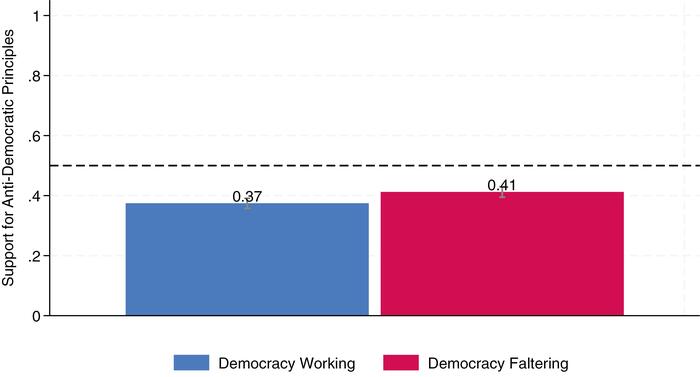
Finally, the authors measure their dependent variable — support for autocracy — in terms of support for restricting speech that is hostile to the government, the permissibility of rule by strongmen, and so on. The key finding is that Israelis exposed to the “US democracy faltering” narrative were significantly more supportive of autocracy.


Image
Figure 3. Support for Authoritative Governance, by Vignette.


Figure 3. Support for Authoritative Governance, by Vignette.


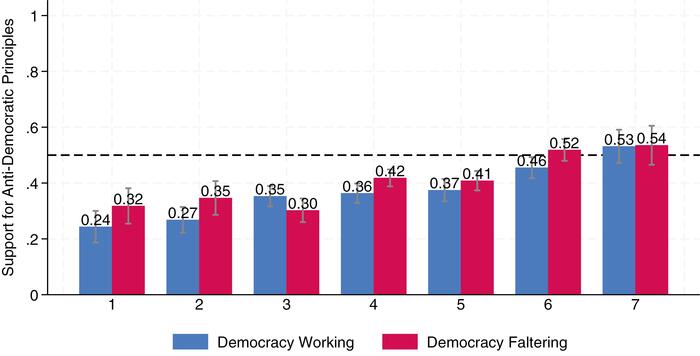
These effects were most pronounced among those on the political right, but the main finding holds even when statistically controlling for ideology. In all, the study demonstrates that when democratic erosion diffuses, it can shape not only elite behavior but mass attitudes as well.


Image
Figure 4. Effect of ideology on support for Authoritative Governance by Vignette.


Figure 4. Effect of ideology on support for Authoritative Governance by Vignette.


*Brief prepared by Adam Fefer.

Hero Image
Israeli and American flags flying in front of brick building in Jerusalem.
Shalev Cohen
All News button
1
Subtitle

CDDRL Research-in-Brief [5-minute read]

Date Label
Display Hero Image Wide (1320px)
No
Authors
News Type
News
Date
Paragraphs

Introduction and Contribution


Since coming to power in 2002, Recep Tayyip Erdoğan and his Justice and Development Party (AKP) have significantly undermined Turkish democracy. This has most visibly involved police repression, systematic prosecutions of the AKP’s critics, and partisan control and censorship of the media. Although opposition persisted in parliament, municipalities, campuses, and professional associations, the playing field is rigged against the AKP’s opponents.

Yet these visible forms of repression are only part of a broader process of Turkey’s autocratization. In “The Capture of Turkey’s Universities Under the AKP,” Ayça Alemdaroğlu shows how the regime has, through a host of less spectacular but durable mechanisms, used its control over higher education to turn universities into channels for distributing opportunity, disciplining dissent, and cultivating loyal staff and students. These mechanisms — including baseless investigations and dismissals of academics, online citizen reporting against faculty, and patronage around university jobs — have weakened academic life and transformed Turkish higher education into a key instrument of the AKP’s governing project.

Importantly, Turkey’s democratic erosion has accelerated in tandem with the massive, rapid growth in colleges and student enrollment. For Alemdaroğlu, this should temper any assumption that higher education is automatically a space of democratic resistance. Universities can produce critique, organization, and dissent, but the higher education system can also facilitate authoritarian consolidation through appointments, disciplinary procedures, funding, surveillance, and patronage. Comparable processes to subordinate universities have unfolded in India, China, and Russia. Instructors may publish or teach critical material while students may organize against the state, but autocrats can hedge against these risks by capturing the university system writ large. In the United States, where universities have become central to “culture wars,” Alemdaroğlu’s article serves as a cautionary tale about how quickly institutional autonomy can erode, especially in the absence of protections against executive encroachment.

Alemdaroğlu’s article serves as a cautionary tale about how quickly institutional autonomy can erode, especially in the absence of protections against executive encroachment.

The Growth of Turkish Higher Education


The AKP did not eviscerate higher education in one fell swoop but did so incrementally, building on the efforts of its predecessors. For example, after the 1980 coup d'état, Turkey’s military government centralized key aspects of university appointments, which the Erdoğan regime has expanded. In addition, the country’s 1980s neoliberal turn refashioned universities as instruments of profit and efficiency rather than spaces of academic freedom. Since the AKP attained power, higher education has grown at an unprecedented scale: there were 76 universities with 1.7 million enrolled students in 2002, compared to 206 universities and 8 million students in 2020. This has afforded the regime vast new terrain on which to exercise control.

Unsurprisingly, such rapid growth has increased quantity at the expense of quality. From a political standpoint, however, this is not especially costly for the AKP. For example, meager investments in research capacity have served to weaken the independence of academics and their ability to criticize the regime. Meanwhile, university hiring processes reflect the preferences of AKP loyalists, thus expanding the scope of co-optation. These are not unintended consequences but core features of a system geared toward patronage.

University expansion has helped the AKP widen its reach across social groups and economic sectors. Lucrative construction projects, public-sector jobs, faculty appointments and access to scarce resources have become channels through which the party awards supporters and cultivates loyalty.  In other words, higher education has served as a means of patronage, ideological inculcation and political control. The government framed expansion as a democratizing challenge to secular urban privilege and as part of a project to cultivate a more conservative, religiously grounded youth.

Waves of Capture


Alemdaroğlu periodizes the AKP’s higher education agenda into three waves that illustrate the shift from episodic intervention to routinized control. The first wave, which began soon after the AKP came to power, was not immediately visible to international observers as part of a broader authoritarian turn. Though it was clear to those targeted. For example, a 2005 penal code criminalized the “denigration of Turkishness,” which state prosecutors used to target faculty in literature and journalism, particularly those who had published on the Armenian genocide and the systematic mistreatment of Kurds.

By contrast, the second wave, beginning after the failed 2016 Turkish coup d'état attempt, was much more dramatic. The AKP government presented the coup attempt, which it attributed to the Gülen movement, as a national emergency requiring sweeping state action. Faculty and employees were dismissed and suspended en masse, while Gülen-affiliated universities were shuttered and had their assets frozen. In addition, investigations were conducted against those who signed a 2016 “Academics for Peace” document, which called for an end to state violence against Kurds. Turkey’s Constitutional Court found the investigations illegal in 2019, but by which time many academics had already lost their positions, passports, income, and professional standing.

The final, ongoing wave has “shifted toward a permanent institutional model, moving control and coercion into the everyday governance of the university.” Faculty are routinely disciplined for “verbally disrespectful speech” or conduct incompatible with “public morality and decency,” while AKP loyalists are appointed to senior academic posts by direct presidential decree. In addition, online citizen reporting through the state’s communication system has created another channel for targeting faculty. Although the rise from 130,000 applications in 2006 to 6 million in 2020 reflects the system as a whole, it shows how citizen complaints became part of everyday state monitoring, including at universities.

Ultimately, the Turkey case shows how democracy erodes through both dramatic ruptures and quiet, cumulative transformations. Alemdaroğlu emphasizes that the degraded condition of Turkish higher education does not merely reflect AKP’s autocratization but has actively enabled it.

*Brief prepared by Adam Fefer.

Hero Image
University lecture hall
Dom Fou
All News button
1
Subtitle

CDDRL Research-in-Brief [4-minute read]
Date Label
Display Hero Image Wide (1320px)
No
Authors
News Type
News
Date
Paragraphs

Introduction and Contribution


Democracies face a host of ongoing challenges, including the rise of elected autocrats, income inequality, mainstreamed forms of xenophobic nationalism, and political apathy. All of these challenges pose threats to democratic participation — elected autocrats restrict it, inequality makes it easier for oligarchs to sway election outcomes, and xenophobia can discourage cultural outsiders from voting.

Apart from practical threats to democratic participation, an established intellectual tradition has viewed participation with deep skepticism. In this view, democracy is good simply because it ensures peaceful transfers of power and protects individual rights. Collective decisions, however, cannot be meaningfully viewed as representing the “will of the people” owing to manipulation, apathy, and the high costs of acquiring political knowledge. Is this “realist” vision the best one can hope for in democratic life?

In “Can deliberation have lasting effects?,” James Fishkin, Valentin Bolotnyy, Joshua Lerner, Alice Siu, and Norman Bradburn show how a three-day deliberative experiment in late 2019 had large and long-term effects on turnout and voting behavior. Those most likely to exhibit these civic behaviors nearly a year later had come to follow politics more closely and see their political opinions as valuable. At the same time, the experiment’s effects on participants’ policy views were significant only in the short term — most deliberators eventually reverted to their previously held policy positions.

That three days of deliberation had such lasting civic effects suggests that efforts to create more inclusive forms of democratic participation are both possible and scalable. Moreover, it suggests that academic skepticism about democratic participation is not an argument against citizens’ capacities for reasonable decision-making; rather, it is an argument against our imperfect contexts of participation. Deliberative experiments may offer hope for improving these contexts.

Academic skepticism about democratic participation is not an argument against citizens’ capacities for reasonable decision-making; rather, it is an argument against our imperfect contexts of participation.

The Deliberative Experiment and Its Effects on Policy Views


In September 2019 — one week prior to the experiment — a treatment group (i.e., those who would deliberate) of 523 registered voters from around the US and a control group of 844 voters were surveyed on their political attitudes. Members of the treatment group then deliberated on five issue domains (the economy, environment, immigration, health care, foreign policy) in small groups and on 47 policy proposals (e.g., redistributing wealth in some way). 26 of these proposals were characterized by extreme partisan polarization, meaning significant numbers of those who identified as Democrats or Republicans held the most extreme views. After the deliberations ended, both the treatment and control groups were surveyed. Then, three subsequent surveys were conducted in late 2020.

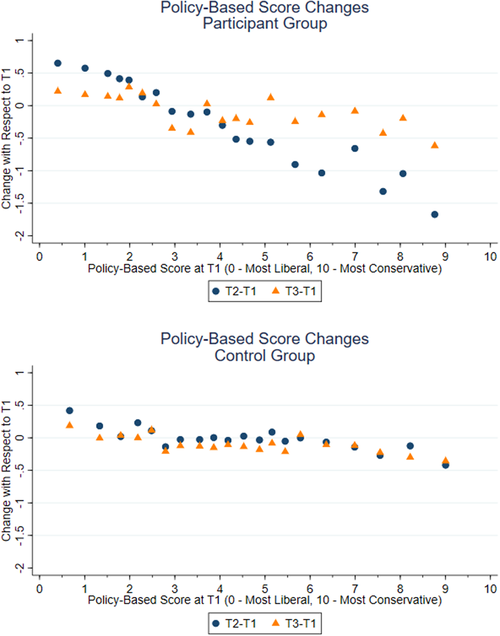
Among the treatment group, deliberation produced significant, short-term depolarization on 20 of the 26 (polarized) policy proposals. In other words, the averages for participants who identified with each party moved closer together (though not necessarily toward the center). These changes were large, sometimes 40 percentage points, as in the case of Republicans abandoning extreme positions on immigration. Meanwhile, the control group’s policy positions changed hardly at all — pointing to the key role played by deliberation. Within the five issue areas, averages among deliberators shifted leftward on all but the economy.


Image
Figure 1. Policy-Based Score (PBS) Changes over Time


Figure 1. Policy-Based Score (PBS) Changes over Time
Note: Policy-based score (PBS) is constructed for each individual based on responses to 26 questions identified as the most polarizing. The upper chart shows the participant group, and the lower chart shows the control group. T1 is the survey wave prior to the deliberations, T2 is right after the deliberations, and T3 is 10 months after, in July 2020.


By late 2020, however, the treatment group’s policy positions mostly reverted to their pre-deliberation levels. The differences between these two points in time were still significant compared with the control group, yet relatively small in absolute terms. These policy reversions are perhaps unsurprising: deliberators returned to an environment of heightened polarization and aggressive campaigning during the 2020 election cycle. (To be sure, and from the standpoint of finding solutions to collective problems, policy reversion is not especially concerning — the aim of deliberation is to bring citizens together to reason and compromise, which the experiment accomplished.)

A Civic Awakening?


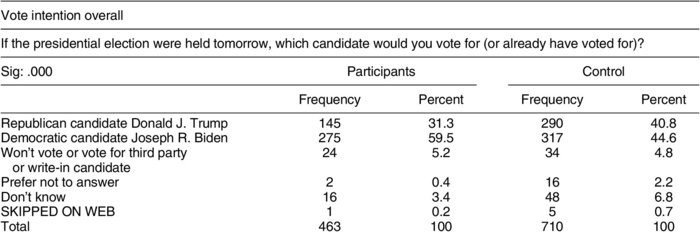
The lack of long-term policy effects suggests that three-day deliberations may be limited in their ability to create a more encompassing, participatory society. However, the treatment group demonstrated large and persistent changes in their intention to vote (i.e., turnout) and their candidate of choice. Among the control group, Joe Biden was favored over Donald Trump by about four percentage points — very close to Biden’s actual margin in the popular vote. Among the treatment group, however, Biden was favored by 28 percentage points. The gaps in turnout were similarly large. (Note that these are intentions, not reports of actual decisions. However, Tables 6 and 7 in the article show similar effects for recollected votes after the election.)


Image
Table 2. Voting Intention for Participant and Control Groups, Time 4


Table 2. Voting Intention for Participant and Control Groups, Time 4


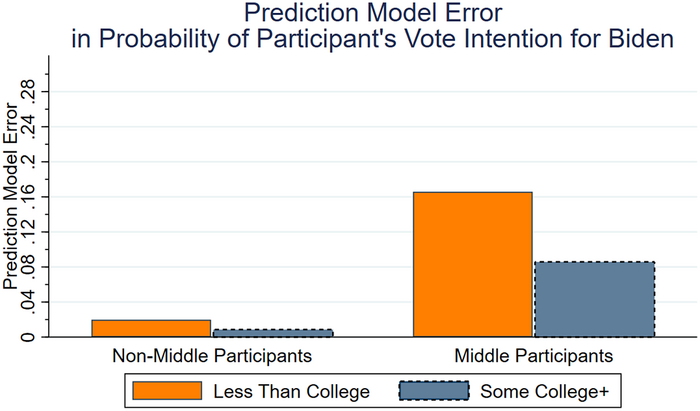
These civic outcomes are especially surprising because (a) voting behavior is thought to be stable and deeply rooted in one’s psychology and social context, and (b) experimental efforts to increase turnout have been most successful when undertaken shortly before elections, as opposed to one whole year prior. The effects were most pronounced among political moderates and those without college degrees — perhaps pointing to the educative effects of deliberation.


Image
Figure 5. Effects on Vote Intention Captured by Predictive Modeling, by Education


Figure 5. Effects on Vote Intention Captured by Predictive Modeling, by Education
Note: Middle are those participants who have Policy-Based Scores between 3 and 5 (inclusive) at Time 1. Non-middle participants are all other participants. Positive prediction error shows that, on average, participants were more likely to vote for Biden than predicted by the model. Vote intention data are collected at Time 4, in October, 2020. Full calibrated model used to construct this figure can be found in the APSR Dataverse.


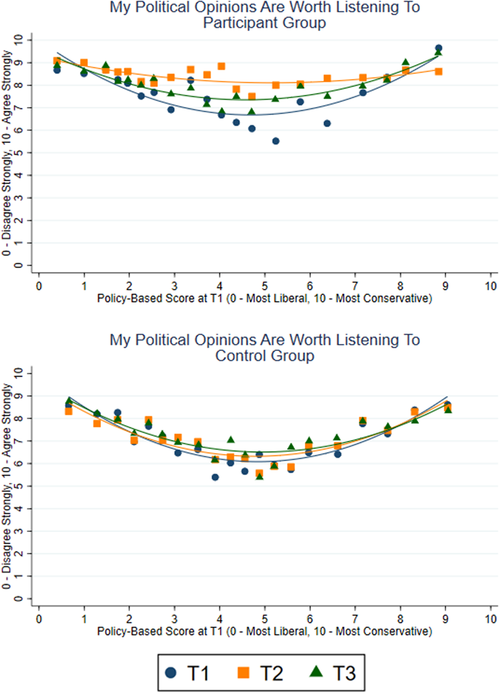
Why did deliberation produce only short-term policy effects but long-term effects on voting behavior? The authors posit that deliberation caused an “awakening of civic capacities.” They reason that deliberation was a transformative experience in terms of stimulating political engagement and a sense of efficacy. And indeed, the treatment group was, in the long term, more likely than the control group to follow the 2020 election campaign, believe their political opinions mattered, and acquire general information about American politics. (The latter is measured in terms of knowing which party controlled the House and Senate.)


Image
Figure 9. Having “Political Opinions Worth Listening to”


Figure 9. Having “Political Opinions Worth Listening to”
Note: Policy-based score is constructed for each individual based on responses to 26 questions identified as the most polarizing. Responses to the question “How strongly would you disagree or agree with the following statement?”[I have opinions about politics that are worth listening to.] were collected at T1 (just before deliberations), T2 (just after), and T3 (10 months later, July 2020).


The authors close by discussing efforts to scale up civic engagement, such as the Stanford Online Deliberation Platform. In all, “Can deliberation have lasting effects?” provides a rigorous case for the value of deliberation in strengthening democratic participation.

*Brief prepared by Adam Fefer.

Hero Image
Group of people deliberating around a table
A group deliberating during the America in One Room national Deliberation Poll in Dallas, TX, 2019
All News button
1
Subtitle

CDDRL Research-in-Brief [4-minute read]
Terms
Image
Group of people deliberating around a table
Caption A group deliberating during the America in One Room national Deliberation Poll in Dallas, TX, 2019
Aria Label
Read More The Lasting Effects of Deliberation on Civic Engagement
Date Label
Display Hero Image Wide (1320px)
No
Authors
News Type
News
Date
Paragraphs

Introduction and Contribution:


The recognition of indigenous territory or rights to self-governance is often viewed as intrinsically valuable: indigenous peoples (or comunidaded campesinas) deserve to be recognized as such, especially in light of the violence and discrimination they have endured. However, recognition can also be extrinsically good, insofar as it makes indigenous life more secure or sustainable in the face of political encroachment or environmental degradation.

Indigenous recognition has often occurred during, and because of, conflict and violence. In “Adhering Indigenous Communities to the State,” Michael Albertus shows that recognition during Peru’s infamous 1980-2000 “internal conflict” itself reduced violence: formally recognized communities had systematically fewer conflict deaths than those not recognized. He argues that recognition (a) made property rights more secure, thus “restrict[ing] what could be won and held with violence” (p.7), and (b) supplied the Peruvian government with detailed information about and connections into indigenous communities, thus improving state intelligence during the war. Marshaling a large and original dataset on recognition, property rights, fatalities, state capacity, and more, Albertus demonstrates how recognition can empower not only indigenous communities but also central governments.

Marshaling a large and original dataset on recognition, property rights, fatalities, state capacity, and more, Albertus demonstrates how recognition can empower not only indigenous communities but also central governments.

Peru’s “Internal Conflict”:


Between 1980 and 2000, the Peruvian state fought an extremely brutal war against the Shining Path (Sendero Luminoso), which sought to overthrow the government and establish an agrarian communist society. The Shining Path’s insurgency was anchored in indigenous communities, whose members suffered economic hardships and political exclusion. Nearly 75% of the estimated 70,000 people killed were indigenous, despite them constituting just 26% of the population. Some insurgents learned Quechua, married into indigenous families, and dismantled unpopular state agricultural cooperatives. 

Over time, however, Shining Path’s growing violence and village authoritarianism alienated many indigenous communities, who formed self-defense committees in response. Initially, the Peruvian government dealt with the insurgency through indiscriminate violence. However, the failure of these strategies prompted a search for alternatives within indigenous communities themselves.

How Recognition Reduced Violence:


Regarding property rights, because disputes over land and resources — those between communities and private landholders — often turned violent, recognition enabled more peaceful, state-led resolutions. Indeed, “the state invited parties for conciliation, checked public registries, examined the de facto occupation of land, and, in the case of disagreements, would begin a judicial proceeding for the disputed territory…outlining a process to identify specific community lands, to map them, and to record the responses of neighbors” (p.7). These varied activities led to a thorough “penetration” of the state into indigenous life.

Recognition was not simply a one-way grant but a mutual agreement, one that imposed clear legal conditions on indigenous communities. These included enrolling community members, forming leadership bodies, and making territorial claims. The state then verified these claims by communicating with leaders and collecting geographical data. Recognized communities also had to adapt their traditional governing institutions to a standardized framework. All of this greatly enhanced the state’s ability to gather information and coordinate counterinsurgency efforts at the community level. It also enabled the training and arming of self-defense committees, many of whose leaders became local authorities.

Research Design and Findings:


It follows from Albertus’ logic not only that (1) recognition should have decreased violence; in addition, and given the importance of property rights and state-community relations, decreases in conflict deaths should have been more pronounced in places with greater (2) land insecurity and (3) state penetration. To see this, imagine the opposite case: where land was plentiful, and ownership was clear, state recognition would have had little added value — and, in turn, minimal effects on violence. The same is true if the state had been unable to build connections with local communities and coordinate its counterinsurgency.

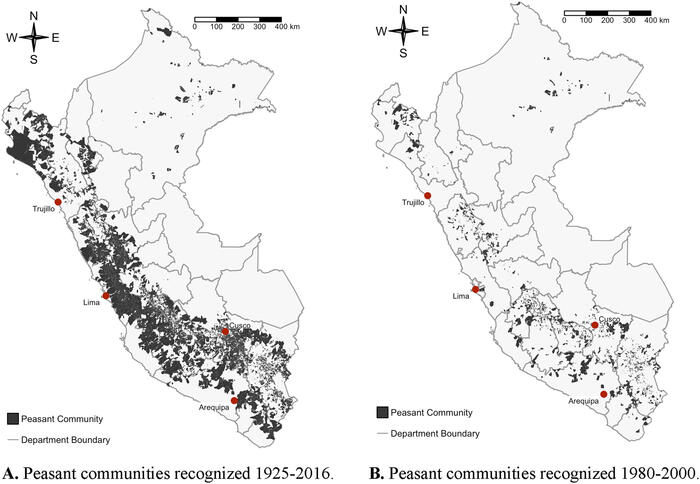
To measure the impact of recognition on violence, Albertus compares 2,475 recognized communities (i.e., those “treated” with recognition) between 1980 and 2000 with their pre-recognition trends, and an additional 228 communities recognized after the war — the “control” group.


Image
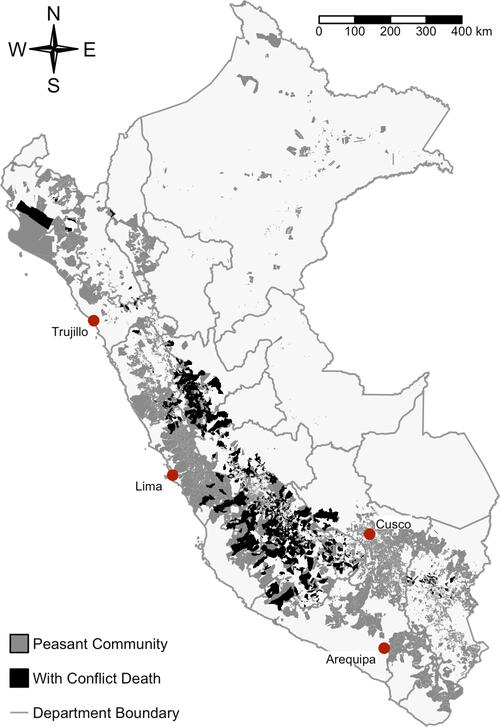
Figure 1. Recognized indigenous communities across Peru.


Figure 1. Recognized indigenous communities across Peru.


The findings confirm Albertus’ general hypothesis: the average number of deaths per year in a given community during the war was 0.086. (This may sound low, but the violence was heavily concentrated.) In formally recognized indigenous communities, however, the average number of deaths was 0.055 per year, about a 36 percent decline.


Image
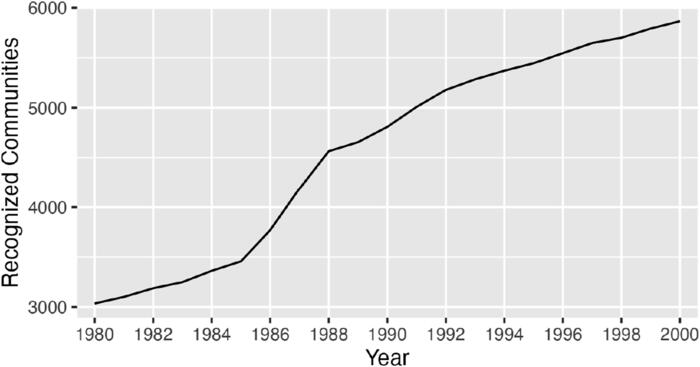
Figure 2. Indigenous community recognition from 1980 to 2000.


Figure 2. Indigenous community recognition from 1980 to 2000.


The findings confirm Albertus’ general hypothesis: the average number of deaths per year in a given community during the war was 0.086. (This may sound low, but the violence was heavily concentrated.) In formally recognized indigenous communities, however, the average number of deaths was 0.055 per year, about a 36 percent decline.


Image
Figure 3. Indigenous communities that experienced conflict deaths.


Figure 3. Indigenous communities that experienced conflict deaths.


Albertus then assesses the importance of property rights, comparing places with different levels of land security: Insecure communities were those that had tenuously acquired land as part of state-run cooperatives under Peru’s 1960-80 military government, or who had bought pieces of that land as the cooperatives broke up; secure communities were those with longer-standing land claims. Albertus finds that the insecure communities experienced much greater declines in violence, again pointing to the state’s importance in peacefully resolving land disputes. In addition, those communities with greater state penetration — measured by road density — also experienced more pronounced declines. Recognition was also associated with greater participation in self-defense committees, perhaps unsurprising given that many of these were state-trained and -funded. 

Finally, Albertus finds that recognition had different effects on the kinds of wartime violence observed. In recognized communities, there were lower levels of violence by civilian and state actors, consistent with the logics of legibility, coordination, and penetration. By contrast, recognition initially had little effect on violence by the Shining Path — perhaps because recognized communities became targets. Over time, however, guerrilla violence also declined. In all, readers come away with an understanding that recognition is not merely symbolic but can be politically quite consequential, enhancing the state’s reach into peripheral areas and improving its intelligence capabilities.

*Brief prepared by Adam Fefer

Hero Image
Two native women sit atop a rock wall in Peru.
Alex Lenz
All News button
1
Subtitle

CDDRL Research-in-Brief [4-minute read]

Date Label
Display Hero Image Wide (1320px)
No
Authors
News Type
News
Date
Paragraphs

Introduction and Contribution:


Indigenous peoples constitute at least 8% of Latin America's population, well over 40 million in total, depending on whether one measures this by self-identification or proficiency in an indigenous language. Over the five centuries since Latin America’s colonization, indígenas have been subjected to myriad injustices, from genocide and linguicide to dispossession, forced assimilation, and political exclusion. However, during the last two decades, indigenous identities have entered Latin America’s political mainstream, indigenous candidates and parties have grown in popularity, and traditional political debates — for example, over fair economic development — have been increasingly addressed using the language of indigenous rights and autonomy.

Social scientific knowledge about indigenous peoples has improved considerably, and in ways that reflect many of these ongoing processes. Yet gaps persist, partly owing to the neglect of scholarship written by indigenous peoples (and in non-English languages) as well as the shoehorning of indigenous life into categories such as “peasants” or “poor masses.” The time is thus ripe for a critical examination.

In “Original Peoples Count,” Alberto Díaz-Cayeros and Irma Alicia Velasquez Nimatuj systematically review current scholarship on indigenous peoples in Latin America. The authors demonstrate how much has been learned about trends in indigenous language use, the virtues of indigenous political institutions, the dangers of indigenous environmental activism, and much more. Looking ahead, the authors call for greater attention to the threats posed by the rapid growth of artificial intelligence, as well as to the persistence of disparities in indigenous health outcomes.

Counting Indigenous Peoples and Languages:


One important cause of indigenous marginalization is that many colonial and post-colonial governments simply refused to recognize their existence. Nation-building elites privileged Spanish and Portuguese and made deliberate choices about which identities to include in censuses. Relatedly, the very category “indigenous” reflects colonial efforts to homogenize millions of diverse peoples, and many indigenous peoples do not identify as such. There is tremendous variation in terms of the languages that indigenous peoples speak and the demographics of where they live. Not only do these territories cut across national borders, but many indigenous peoples have a distinctive understanding of borders, as representing sacred — rather than merely administrative — divisions.


Image
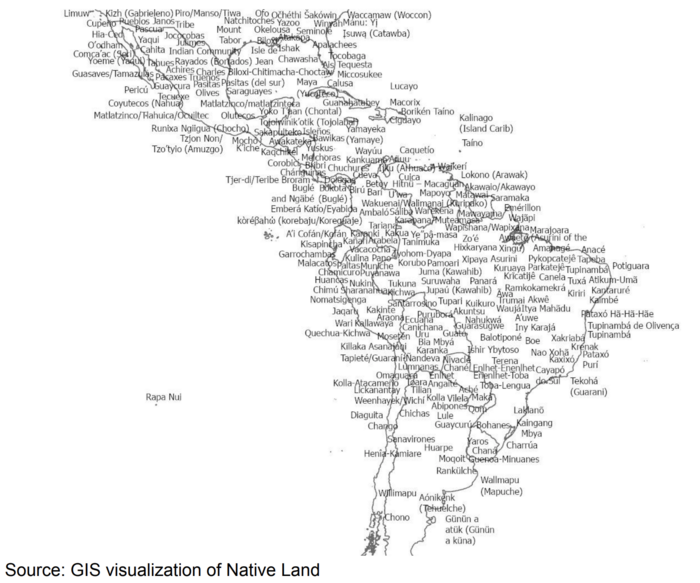
Figure 2. Unceded Territories of Indigenous Peoples in Latin America


Figure 2. Unceded Territories of Indigenous Peoples in Latin America


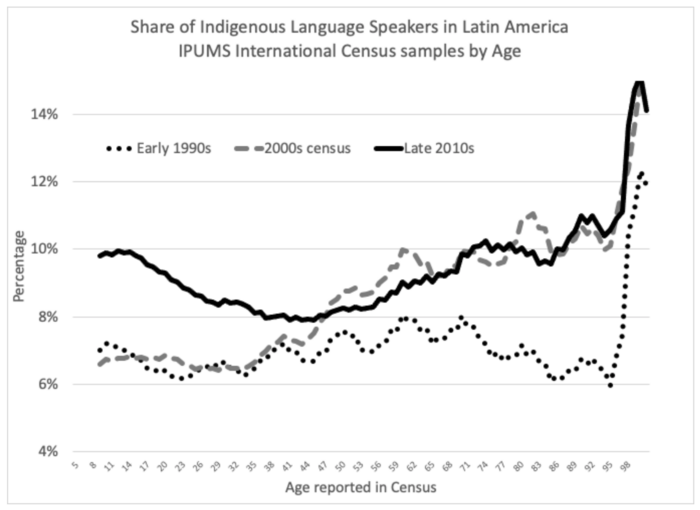
Despite the visibility of language loss and extinction, panel data collected since the 1990s paint a more nuanced picture. Diaz-Cayeros and Nimatuj highlight several important trends along these lines. For one, the number of indigenous language speakers has increased across every age cohort. Second, there was a dramatic increase in indigenous language speakers around age 40 in the 2000s, followed by an increase in speakers under 40 in the 2010s. What this suggests is not that more people are learning indigenous languages, but that more speakers are willing to reveal their identities to surveyors. The latter is itself a political phenomenon that reflects growing indigenous consciousness.


Image
Figure 1. Identity Revelation in Latin American Census Data


Figure 1. Identity Revelation in Latin American Census Data


Indigenous Politics and Economics:


Over the last two decades, indigenous politics has moved from street protests to the highest levels of government, with Evo Morales winning Bolivia’s presidency. Yet these improvements in indigenous peoples’ descriptive representation have not always produced substantive reductions in poverty and discrimination. This is one reason why indigenous parties cannot automatically rely on indigenous vote blocs; understanding why these parties enjoy more or less consistent support is a key question for future research.

Outside of mainstream politics, traditional institutions such as indigenous assemblies have grown in number and prominence. Scholars have documented cases where these institutions exhibited highly democratic properties. These include high competitiveness and turnout, which arguably produce greater accountability to ordinary people. Indigenous governance may thus provide insights into how Latin American politics can become more encompassing and participatory, moving beyond simply electing and removing candidates once every few years.

In terms of socioeconomic trends, indigenous rates of poverty, infant mortality, and school enrollment lag behind the rest of the population. These outcomes are usually worse for women, partly owing to the persistence of indigenous patriarchal norms. Meanwhile, indigenous economies have been substantially reshaped by large-scale industrial activity, especially mining and logging. The authors caution, however, against assuming that indigenous peoples uniformly oppose these activities. At the same time, local efforts to rein in industrial activity are often met with extremely punitive state action — leading to the imprisonment or death of key indigenous leaders. Latin America is now the world’s most dangerous region for environmental activism.

Directions for Future Research:


One likely cause of indigenous marginality is ‘historical trauma,’ or rather the ways that colonialism and post-colonial discrimination have transmitted social and psychological harm across generations. The authors call for greater attention to the varied political effects of historical trauma, including depressed indigenous participation, lower levels of trust in political institutions, and worse life outcomes. Similarly, despite visible efforts by Latin American governments to undertake health interventions, substantial gaps persist within indigenous communities, particularly in mental health.

Another topic for further research concerns the lives of indigenous youth, especially those who migrate to urban centers for work. Migration generates multiple overlapping challenges, including cultural adjustment, political marginality, and economic precarity. Finally, the growth of ‘digital colonialism’ demands greater attention. Artificial intelligence has generated a host of injustices, such as environmental degradation, algorithmic discrimination against indigenous languages, and the nonconsensual extraction of indigenous knowledge. The authors close by noting that indigenous peoples may use AI to make their histories ever more visible. In all, “Original Peoples Count” is an ambitious review that will likely inform the next generation of scholarship on indigenous politics.

*Brief prepared by Adam Fefer.

Hero Image
Woman working on a loom wearing traditional dress in Peru.
Adrian Dascal
All News button
1
Subtitle

CDDRL Research-in-Brief [4-minute read]

Date Label
Display Hero Image Wide (1320px)
No
Subscribe to CDDRL Research in-brief