Environment

FSI scholars approach their research on the environment from regulatory, economic and societal angles. The Center on Food Security and the Environment weighs the connection between climate change and agriculture; the impact of biofuel expansion on land and food supply; how to increase crop yields without expanding agricultural lands; and the trends in aquaculture. FSE’s research spans the globe – from the potential of smallholder irrigation to reduce hunger and improve development in sub-Saharan Africa to the devastation of drought on Iowa farms. David Lobell, a senior fellow at FSI and a recipient of a MacArthur “genius” grant, has looked at the impacts of increasing wheat and corn crops in Africa, South Asia, Mexico and the United States; and has studied the effects of extreme heat on the world’s staple crops.

Authors
News Type
Commentary
Date
Paragraphs

I am a Ukrainian national. I studied at Stanford University in 2019 and 2020 in the Ukrainian Emerging Leaders Program run by the Center on Democracy, Development and the Rule of Law at the Freeman Spogli Institute for International Studies.

For several years now, I have been a leader of environmental and anti-corruption NGOs. Among other endeavors, my team and I developed the SaveEcoBot program, which is the most popular air quality monitoring service in Ukraine and has 1.5 million users in 15 countries.

I was with my wife and six-year-old daughter in Kyiv when Putin’s invasion of Ukraine began. I grabbed my family and brought them to a place I thought they would be safer. Then I immediately volunteered to join the Ukrainian Defense Force. I have already seen active fire, which has resulted in a dreadful number of casualties, both for Ukrainians and Russians. But this tragedy is not just a humanitarian emergency.

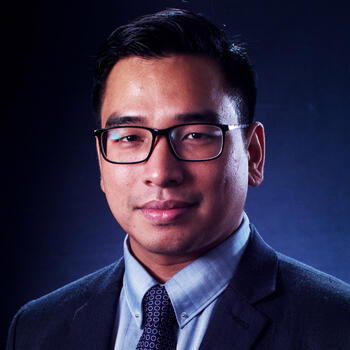
Ukraine at Stanford: Meet the Third Cohort, Freeman Spogli Institute, Stanford University, 3 October 2019. From left, (1) Francis Fukuyama; (2) Artem Romaniukov; (3) Kateryna Bondar; and, (4) Pavel Vrzheshch.
Ukraine at Stanford: Meet the Third Cohort, Freeman Spogli Institute, Stanford University, 3 October 2019. From left, (1) Francis Fukuyama; (2) Artem Romaniukov; (3) Kateryna Bondar; and, (4) Pavel Vrzheshch. | Artem Romaniukov

The Pentagon estimates that 600 Russian missiles have been fired at Ukrainian targets in the first 10 days of war alone. Additionally, the infamous abandoned Chernobyl nuclear plant has been seized by Russian forces and, most recently, the Zaporizhzhia Nuclear Power Station in Enerhodar has been attacked and occupied by armed Russian soldiers. Zaporizhzhia is the largest nuclear power plant in Europe and Russian projectiles started a localized fire in an auxiliary building on the site on March 3, 2020.

Russian forces have also cut off the power supply to the Chernobyl reactor and containment site. This means that spent nuclear fuel is not being cooled at the site in accordance to internationally recognized standards. The head of the Chernobyl nuclear plant has said that the back-up generators have enough fuel to power the site for 48 hours. We can only guess what might happen after that. If this were not enough, there is still ongoing shelling at a nuclear research facility in Kharkiv. The current conditions there are unknown.


In Ukraine, we have a saying, “мавпа з гранатою,” which means, “Like a monkey with a grenade." Russia is playing the monkey to all of Europe.

Despite these chaotic circumstances, the SaveEcoBot team, in coordination with the Ministry of Environmental Protection, has put a lot of effort into radiation monitoring and informing the public about changes in background radiation. We’ve been set back in this critical work by the damages done to our monitoring equipment by Russians, but Ukrainian technicians are restoring the systems as fast as they can.

The assaults on the Chernobyl and Zaporizhzhia power plants have already had implications for the environment. The radioactive dust raised by the wheels and trucks of the Russian combat vehicles in the Chernobyl zone has raised the background radiation levels to a hundredfold excess of the normal threshold. Just imagine what chaotic attacks, with Russians shooting, firing missiles, and bombing other parts of Ukrainian territory might lead to. In Ukraine, we have a saying, “мавпа з гранатою,” which means, “Like a monkey with a grenade." Russia is playing the monkey to all of Europe.

Lieutenant Artem Romaniukov, on active duty at the Ukrainian Defence Forces, March 2022.
Lieutenant Artem Romaniukov on active duty with the Ukrainian Defence Forces, March 2022. | Artem Romaniukov

Russia continues to assert that its forces are in Ukraine for reasons of safety and security. The takeover of Chernobyl disturbed large amounts of radioactive soil, propelling it into the air. The attack on Zaporizhzhia resulted in a fire on the site of an active nuclear plant. This is not what safety looks like. To pretend that these actions are anything but a dangerous disregard for life is an insult to all sane, rational people. We are all very lucky that none of Zaporizhzhia’s six reactors were hit by the tank shell that started that fire.

Russia, the U.S. and the UK committed 20 years ago to ensure Ukraine’s peaceful sovereignty in exchange for Ukraine giving up its nuclear weapons program. This agreement was built on the idea that Ukraine without nuclear weapons would never have cause to be the target of any attack. This assurance was guaranteed by the signers of the memorandum.

But Russia’s violent attacks have proven that a nuclear threat still exists in Ukraine. It is not a threat of Ukraine’s making, but one engineered by Russia’s own reckless assault on our civilian nuclear facilities. The consequences of this diabolical action go well beyond a potential environmental catastrophe for Ukraine; our neighbors, including Russia itself, and even countries outside of Europe could all be affected by nuclear fallout carried on high-atmosphere winds across continent and over oceans.


This is not what safety looks like. To pretend that these actions are anything but a dangerous disregard for life is an insult to all sane, rational people.

One way to mitigate this threat and to realize security assurances to Ukraine is to implement a no-fly zone over Ukraine. The hesitance of the EU and U.S.  to implement a no-fly zone is understandable. But at the same time, it is critically important to develop options and generate models for other types of no-fly zones beyond the proposals being discussed today. Such alternative options could be the key to helping prevent a Ukrainian tragedy not only in terms of nuclear security, but also in averting a similar tragedy to what the world witnessed in Aleppo.

To do this, Ukraine needs more military support. We have gratefully received strong military support from our allies, but even this bounty is not enough to defend our country. Stinger missiles can shoot down small, low-flying aircraft from a fairly short distance, but are useless against ballistic missiles and high-altitude bombers. We need weapons that can shoot down planes at considerable distances and altitudes, systems to detect and shoot down cruise missiles, and planes to protect our airspace. Early Russian attacks targeted our airports to deplete our air defense capabilities and frustrate our ability to get planes in the air. But we still stand. But if we want to avert a second Chernobyl or another Aleppo, we need to strengthen our air defenses.

We learned in 1939 that making concessions to tyrants is no plan for peace. Putin is a bully. Like all bullies, he will take as much as he can get while treating all harm — including environmental harm — as merely incidental. Like all bullies, he will stop only when he meets strong resistance. Putin and the Russia propaganda machine frame all attempts to stymie Russian aggression as not only a provocation, but a provocation that could trigger a nuclear response. Such veiled threats of nuclear attacks are a form of prior restraint meant to constrain Ukraine’s allies from even suggesting that the Russian invasion is improper. But we must not accept this starkly irrational framework. Nuclear weapons are weapons of deterrence, not tools to chill diplomatic criticism.


Any compromised nuclear facility in Ukraine inherently becomes an international problem, not just a local one. Like Putin, radioactive fallout does not respect borders.

American analysts say that they expect the Russian attacks to become increasingly more brutal. Any increased risks to civilian and military targets commensurately increases risks to nuclear sites as well. And any compromised nuclear facility in Ukraine inherently becomes an international problem, not just a local one. Like Putin, radioactive fallout does not respect borders.

Just ten days ago, my life changed dramatically. I used to be a successful civil leader and entrepreneur with an innovative business. Now I sleep on the floor of an abandoned building with my gun in hand. My daughter knows exactly how the air raid siren sounds. But we are still Ukrainians. We are still Europeans. We still count on our allies. So to our allies, I say: close the Ukrainian sky. Provide us with enough weapons. We will do the rest.

Resources on the Ukraine-Russia Conflict

As the war in Ukraine evolves, the Stanford community is working to provide support and perspectives on the unfolding crisis. Follow the links below to find FSI's resource page of expert analysis from our scholars, and to learn how to get involved with #StandWithUkraine.

Read More

Left to right: Denis Gutenko, Nariman Ustaiev, Yulia Bezvershenko -- fellows of the Ukrainian Emerging Leaders Program -- and Francis Fukuyama, senior fellow at the Freeman Spogli Institute for International Studies.
News

Stanford welcomes Ukrainian emerging leaders after COVID-19 disruption

After a hiatus due to the pandemic, fellows of the Ukrainian Emerging Leaders Program are now on campus, ready to begin their ten months attending classes and working on projects tackling issues relevant in Ukraine.
Stanford welcomes Ukrainian emerging leaders after COVID-19 disruption
Students from the FSI community gather for a teach-in about the Ukraine conflict at the McFaul residence in Palo Alto, CA.
Blogs

Students Find Solidarity and Community Amidst the Conflict in Ukraine

Four students from the FSI community share their thoughts on the conflict in Ukraine, its implications for the world, and the comfort and solidarity they have felt in communing with one another at Stanford.
Students Find Solidarity and Community Amidst the Conflict in Ukraine
Members of the Ukrainian military carry the flag of Ukraine during the 30th anniversary of the country's independence.
News

What the Ukraine-Russia Crisis Says about the Global Struggle for Democracy

Former prime minister of Ukraine Oleksiy Honcharuk joins Michael McFaul on the World Class Podcast to analyze Russia's aggression towards Ukraine and how it fits into Vladamir Putin's bigger strategy to undermine democracy globally.
What the Ukraine-Russia Crisis Says about the Global Struggle for Democracy
Hero Image
The Chernobyl nuclear reactor complex in Pripyat, Ukraine.
The Chernobyl nuclear complex in Pripyat, Ukraine. The reactor zone was seized by Russian troops on 26 February, 2022.
Getty
All News button
1
Subtitle

Firing on civilian nuclear facilities is an unacceptable disregard for the rules of war that endangers the entire world, not just Ukraine.

-

Image
China & the World: Beyond the Headlines

News on China dominates the headlines. In this panel program, however, panelists dig beneath the headlines to discuss research findings rarely discussed by mainstream media. Organized in collaboration with Michigan State University’s (MSU’s) Office of China Program, speakers highlight China’s monumental conservation efforts, based on their years of collaboration. Faculty from Stanford, MSU, and the Chinese Academy of Sciences will discuss the impact and implications of their own and related research in this field.


OPENING REMARKS

Scott Rozelle, Co-Director, Stanford Center on China's Economy and Institutions

Douglas Gage, Vice President, Office of Research and Innovation, Michigan State University

SPEAKERS

Gretchen Daily is Bing Professor of Environmental Science in the Stanford Department of Biology and a Senior Fellow at the Woods Institute for the Environment. She is also Co-founder and Faculty Director of the Stanford Natural Capital Project. Daily’s work is focused on understanding human dependence and impacts on nature and the deep societal transformations needed to secure people and nature. She has published several hundred scientific and popular articles, and a dozen books. She has received numerous international honors. Daily is also a fellow of the U.S. National Academy of Sciences, the American Academy of Arts and Sciences and the American Philosophical Society.

Zhiyun Ouyang is a professor of ecology and the Director of the Research Center for Eco-Environmental Sciences at the Chinese Academy of Sciences. He is the president of the Ecological Society of China and the vice-president of the Ecological Economic Society of China. He has played an active role in conservation policy innovation in China since 2000. His research is notable for its influence on policymaking for ecosystem conservation, restoration, and land management from local to national levels in China. He has published 11 books and hundreds of peer-reviewed papers.

Hua Zheng is a professor at the Research Center for Eco-Environmental Sciences at the Chinese Academy of Sciences. His research focuses on the relationships between and policy applications of ecosystem structure-process, ecosystem services, and ecosystem service assessment. His past research has explored how forest ecosystem structures and processes impact ecosystem services through long-term ecological research. He has coauthored numerous peer-reviewed papers in international journals in his field.

Tong Wu is the Co-director of the China & Environment Program at the Stanford Center on China’s Economy and Institutions. His scientific and policy interests focus on the achievements, challenges, and prospects for sustainable development in China. He has conducted research on the mainstreaming of ecosystem services in management and planning, the role of nature in improving public health outcomes, and strategies for climate change mitigation and adaptation. Wu has coauthored numerous peer-reviewed papers in international journals.

Jiaguo Qi is the Director of the Asia Hub Network which features over 20 partner institutions across Asia, focusing on Water-Energy-Food nexus research. He is also Co-Director of MSU’s Office of China Programs. His research focuses on two main areas: 1) integrating biophysical and social processes and methods in understanding land use and land cover change, and 2) transforming data into information and knowledge. Understanding the coupling of nature and human systems is important in his global change research. Dr. Qi directed the Center for Global Change and Earth Observation for many years.

Peilei Fan is the interim director at Center for Global Change and Earth Observation and professor of Urban and Regional Planning at Michigan State University. Dr. Fan has served as a consultant/economist for the United Nations University –World Institute of Development Economics Research and the Asian Development Bank. She is the Secretary General of International Association of Landscape Ecology (IALE), the Deputy of Landscape Ecology Working Party of International Union of Forest Research Organizations (IUFRO), and a Public Intellectuals Program Fellow of the National Committee on US-China Relations. She is passionate about achieving sustainability for cities and regions through efficient, just, and green processes and outcomes. Her work focuses on environment, innovation, and human well-being.

Jianguo "Jack" Liu, a human-environment scientist and sustainability scholar, holds the Rachel Carson Chair in Sustainability, is a University Distinguished Professor at Michigan State University, and director of the Center for Systems Integration and Sustainability. Liu takes a holistic approach to addressing complex human-environmental challenges through systems integration, such as the integration of ecology with social sciences, policy and advanced technologies. He is particularly keen to connect seemingly unconnected issues such as telecoupling (human-nature interactions over distances, e.g., among China, US, and Brazil).

Steve Pueppke is a faculty member in the Center for Global Change and Earth Observations, the Center for European, Russian and Eurasian Studies, and Professor of Plant, Soil and Microbial Sciences at MSU. Dr. Pueppke was trained as a plant scientist and spent much of his professional career as a laboratory researcher/research administrator, including several years as Director of MSU AgBioResearch and Associate Vice-President for Research and Graduate Studies at MSU. He currently serves on the Board of Directors of the National Center for Food and Agricultural Policy in Washington and is Section Editor for Water, Agriculture, and Aquaculture for the journal Water.

Download the Event Flyer
Download pdf

Virtual Event | Register Here

Gretchen Daily
Peilei Fan
Douglas Gage
Jianguo Liu
Steve Pueppke
Jiaguo Qi
Scott Rozelle
Tong Wu
Hua Zheng
Ouyang Zhiyun
Panel Discussions
-

For spring quarter 2022, CISAC will be hosting hybrid events. Many events will offer limited-capacity in-person attendance for Stanford faculty, staff, fellows, visiting scholars, and students in accordance with Stanford’s health and safety guidelines, and be open to the public online via Zoom. All CISAC events are scheduled using the Pacific Time Zone. 

SEMINAR RECORDING

Virtual to Public. Only those with an active Stanford ID with access to William J Perry Conference Room in Encina Hall may attend in person. 

Gorakh Pawar
Seminars
Authors
News Type
News
Date
Paragraphs

Depend on your smart phone? Enjoy a flat screen tv? How about an electric vehicle, do you drive one? These technologies—and other clean energy, information, and defense applications— all rely on rare-earth elements that could be mined in most parts of the world but are primarily processed and refined only in a limited number of countries, like China.

“Right now, the U.S. doesn’t have enough supply to fulfill the objective of the steady clean energy transition, ensure national security, and achieve long-term economic goals” said Gorakh Pawar, a staff scientist at the Idaho National Laboratory who is a visiting scholar at the Center for International Security and Cooperation.  The importance of rare earths mining is highlighted in the series of reports recently issued by the U.S.  Department of Energy in response to President Biden’s Executive Order "America's Supply Chains" signed in 2021.

“This means that the U.S. depends on other countries and therefore, the U.S. needs a strategic approach to resolve the major rare earth elements supply chain issues urgently,” Pawar added. 

Mountain Pass Rare Earth Mine and Processing Facility Mountain Pass Rare Earth Mine and Processing Facility, Mountain Pass, San Bernardino Co., California (Image credit: MP materials.com)

Rare-earth elements “are moderately abundant in the earth’s crust, but they need to be concentrated to be economically viable,” said Sulgiye Park, a Fellow at CISAC. “What we want is concentrated rare-earth reserves because we are going to spend a lot of money mining and processing it.”

Important deposits of rare earths exist in the U.S. and previously the U.S. was self-reliant in domestically produced rare-earth elements, but mining operations have declined over the last several decades, allowing China to command roughly 90 percent of the global market. Now, however, there are signs that domestic production is making a comeback, and CISAC scholars are both studying and providing support to accelerate this resurgence.

Pawar, Park and CISAC co-director Rod Ewing toured the Mountain Pass Rare Earth Mine and Processing Facility in southern California to learn more about its operation and to determine how their research could help support this important industry.

“We were provided with critical insights into MP Materials' strategy for securing the domestic rare earth supply chain that would significantly reduce U.S. economic dependence on foreign REE,” Ewing said.

“The substantial challenges include developing domestic supply chains for mill equipment and capacity to process rare earths, such as neodymium-praseodymium magnets,” Ewing added.

Pawar, Park and Ewing toured the mine for three hours to see the facilities, ask and answer questions. They wanted to understand the facts on the ground, supply chain issues and industry challenges in a more complete way to enhance their own research.

Open pit mine Open pit mine (Sulphide Queen deposit) at Mountain Pass. The open pit is ~600 m wide. A massive carbonatite forms the core of Mountain Pass that hosts REE mineral resources, including bastnäsite. (Image credit: Gorakh Pawar)

Before the trip, Pawar and Park relied on academic literature, open source information, news stories and press releases about rare-earth elements, like this recent White House release titled “Securing a Made in America Supply Chain for Critical Minerals,” which announced a Department of Defense grant to MP Materials, who operate the Mountain Pass mine.

“Open source is great,” Park said. “But if you have a chance to visit the site, you can learn from the people on the ground who provide a whole new perspective. “

The tour also fortified connections so that the Pawar, Park and Ewing could share their own knowledge and policy-relevant research, as well as their network of colleagues who have different areas of expertise.

CISAC was created in 1983 with the goal of bringing together experts in science and technology with experts in policy. The mission statement has always been “to generate new knowledge for a better world.” And this trip to Southern California was another opportunity to fulfill this mission.

About Idaho National Laboratory
Battelle Energy Alliance manages INL for the U.S. Department of Energy’s Office of Nuclear Energy. INL is the nation’s center for nuclear energy research and development, and also performs research in each of DOE’s strategic goal areas: energy, national security, science and the environment.

Hero Image
Three people in hard hats
From the left: Gorakh Pawar (CISAC researcher), Sulgiye Park (CISAC postdoctoral fellow), and Michael Rosenthal (MP Materials Chief Operating Officer). Image Credit: Rodney Ewing
All News button
1
Subtitle

A three-person team from CISAC toured the only domestic mine producing rare earths, which are critical for the modern economy.

0
mip_headshot_-_kyle_stanford_smith.jpg

Kyle is a former US Navy officer and MBA/MIP dual degree candidate interested in private sector approaches to climate and sustainable development.

Master's in International Policy Class of 2022
-

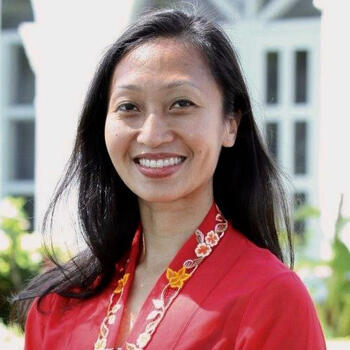
The digital transformation of Southeast Asia is in full swing.  In 2021, 8 of the 10 ASEAN countries had internet penetration rates higher than those for Asia (64%) and the world (66%).  But digital access is unevenly distributed between and within Southeast Asian countries.  How are the new technologies impacting the region?  Are they helping civil society or the surveillance state—free speech and economic growth or unaccountable concentrations of power and wealth?  Are Huawei and the Digital Silk Road creating a future with Chinese characteristics?  Who will write the rules of the digital road?  How are specific countries coping?  What is ASEAN’s role?  What should the US do?  Two leading experts, Huong Le Thu and Elina Noor, will discuss these and related questions.

Image
Huong Le Thu
Huong Le Thu is a co-author of Digital Southeast Asia, a just-published policy-focused study of the webinar topic.  A prolific and influential policy analyst of security and diplomacy in the region, she has written widely in journals and global media and for international think tanks including, as a non-resident fellow, the Center for Strategic and International Studies (Wash., DC).  She has held positions at the Australian National University, the ISEAS Yusof Ishak Institute, and the Institute of International Relations in Taipei. Her alma maters include National Chengchi University (Taiwan, PhD) and Jagiellonian University (Poland, Master’s).  She speaks five languages and has published in four.

Image
Elina Noor
Elina Noor has just launched a podcast, “Between the Binary: Tech and the Global South.”  It assesses technology’s intersections with history, gender, power, and economic growth through the underheard voices of guests from developing countries.  Cybersecurity has figured prominently in her many publications on Southeast Asia.  She is a member of the Global Commission on the Stability of Cyberspace and has held key positions at the Inouye Asia-Pacific Center for Security Studies (Hawaii), the Institute of Strategic and International Studies (Malaysia), and the Council for Security Cooperation in the Asia Pacific (CSCAP). Her higher degrees are from the London School of Economics and Political Science (LLM) and Georgetown University (MA).

Image
Winter2022_series_NewFrontiers
This event is part of the 2022 Winter webinar series, New Frontiers: Technology, Politics, and Society in the Asia-Pacific, sponsored by the Walter H. Shorenstein Asia-Pacific Research Center.

Via Zoom Webinar
Register: bit.ly/3LjVVTj

Huong Le Thu Senior Analyst, Australian Strategic Policy Institute, Canberra
Elina Noor Director, Political-Security Affairs, and Deputy Director, Asia Society Policy Institute, Washington, DC
Moderator: Moderator
0
Senior Fellow Emeritus at the Freeman Spogli Institute for International Studies
Affiliated Faculty, CDDRL
Affiliated Scholar, Abbasi Program in Islamic Studies
aparc_dke.jpg PhD

At Stanford, in addition to his work for the Southeast Asia Program and his affiliations with CDDRL and the Abbasi Program in Islamic Studies, Donald Emmerson has taught courses on Southeast Asia in East Asian Studies, International Policy Studies, and Political Science. He is active as an analyst of current policy issues involving Asia. In 2010 the National Bureau of Asian Research and the Woodrow Wilson International Center for Scholars awarded him a two-year Research Associateship given to “top scholars from across the United States” who “have successfully bridged the gap between the academy and policy.”

Emmerson’s research interests include Southeast Asia-China-US relations, the South China Sea, and the future of ASEAN. His publications, authored or edited, span more than a dozen books and monographs and some 200 articles, chapters, and shorter pieces.  Recent writings include The Deer and the Dragon: Southeast Asia and China in the 21st Century (ed., 2020); “‘No Sole Control’ in the South China Sea,” in Asia Policy  (2019); ASEAN @ 50, Southeast Asia @ Risk: What Should Be Done? (ed., 2018); “Singapore and Goliath?,” in Journal of Democracy (2018); “Mapping ASEAN’s Futures,” in Contemporary Southeast Asia (2017); and “ASEAN Between China and America: Is It Time to Try Horsing the Cow?,” in Trans-Regional and –National Studies of Southeast Asia (2017).

Earlier work includes “Sunnylands or Rancho Mirage? ASEAN and the South China Sea,” in YaleGlobal (2016); “The Spectrum of Comparisons: A Discussion,” in Pacific Affairs (2014); “Facts, Minds, and Formats: Scholarship and Political Change in Indonesia” in Indonesian Studies: The State of the Field (2013); “Is Indonesia Rising? It Depends” in Indonesia Rising (2012); “Southeast Asia: Minding the Gap between Democracy and Governance,” in Journal of Democracy (April 2012); “The Problem and Promise of Focality in World Affairs,” in Strategic Review (August 2011); An American Place at an Asian Table? Regionalism and Its Reasons (2011); Asian Regionalism and US Policy: The Case for Creative Adaptation (2010); “The Useful Diversity of ‘Islamism’” and “Islamism: Pros, Cons, and Contexts” in Islamism: Conflicting Perspectives on Political Islam (2009); “Crisis and Consensus: America and ASEAN in a New Global Context” in Refreshing U.S.-Thai Relations (2009); and Hard Choices: Security, Democracy, and Regionalism in Southeast Asia (edited, 2008).

Prior to moving to Stanford in 1999, Emmerson was a professor of political science at the University of Wisconsin-Madison, where he won a campus-wide teaching award. That same year he helped monitor voting in Indonesia and East Timor for the National Democratic Institute and the Carter Center. In the course of his career, he has taken part in numerous policy-related working groups focused on topics related to Southeast Asia; has testified before House and Senate committees on Asian affairs; and been a regular at gatherings such as the Asia Pacific Roundtable (Kuala Lumpur), the Bali Democracy Forum (Nusa Dua), and the Shangri-La Dialogue (Singapore). Places where he has held various visiting fellowships, including the Institute for Advanced Study and the Woodrow Wilson International Center for Scholars. 


Emmerson has a Ph.D. in political science from Yale and a BA in international affairs from Princeton. He is fluent in Indonesian, was fluent in French, and has lectured and written in both languages. He has lesser competence in Dutch, Javanese, and Russian. A former slam poet in English, he enjoys the spoken word and reads occasionally under a nom de plume with the Not Yet Dead Poets Society in Redwood City, CA. He and his wife Carolyn met in high school in Lebanon. They have two children. He was born in Tokyo, the son of U.S. Foreign Service Officer John K. Emmerson, who wrote the Japanese Thread among other books.

Selected Multimedia

Date Label
Director, Southeast Asia Program, Asia-Pacific Research Center, Stanford University
Seminars
Authors
Melissa Morgan
News Type
News
Date
Paragraphs

2021 was not the year many people hoped for. In addition to the ongoing COVID-10 pandemic and emerging coronavirus variants, last year ushered in a laundry list of unprecedented weather events.

Canada and the Pacific Northwest of the United States were scorched by a record-breaking heat wave. An extended fire season in the American West sent blankets of smoke pollution rolling across the rest of the continent. In India, China and Germany, unseasonal rain storms brought on devastating floods. According to the National Centers for Environmental Information (NOAA), July 2021 was the hottest July on Earth since global record-keeping began in 1880.

Data clearly shows that these kinds of extreme weather patterns are driven by climate change. But is that fact driving policymakers to make meaningful inroads to address the climate crisis? Marshall Burke, the deputy director of the Center on Food Security and the Environment, joins Michael McFaul on World Class podcast to review the latest data on what’s happening with the climate in the field and in the halls of Congress.

Listen here and browse highlights of their conversation below.

Click the link for a transcript of “Taking the Temperature on Climate Change."

Climate Policy in the United States


Changes in climate are going to affect most, if not all, of us in the U.S. And public opinion has certainly changed on this in the last 10 years. Many more Americans are on board that the climate is changing and that we should do something about it. There's much more support for climate legislation across the board from Democrats and increasingly from Republicans.

Anyone who works on climate was really excited to see the platform Biden ran on, because it was really the first mainstream presidential campaign where climate had played a fundamental role. There's been a lot of discussion aboutthe importance of climate, the damages from climate that are already happening, and what we need to do is take aggressive action in the future to deal with the problem.

But there are specific industries who are going to be harmed by this legislation, and they are quite organized in fighting this legislation, and in funding politicians who fight it, and in funding organizations, either transparently or not, that are fighting climate legislation.

We are closer than we’ve ever been to really meaningful legislation on climate change. The optimistic view is that we’re on the right trajectory and that we’re going to get some part of this done eventually. But we’re not there yet.
 

Progress is being made. Emissions are falling. But it’s also important for us to realize what we don’t know.
Marshall Burke
Deputy Director of the Center on Food Security and the Environment


COP26: Climate Change on the Global Stage


A “COP” is a “Conference of the Parties,” which is an annual meeting of the signatories of the 1992 United Nations Framework Convention on Climate Change. The main focus of Glasgow was to get countries to be very transparent about how they are going to achieve the ambitions for combating climate change that they articulated at the last major COP summit in Paris.

Was it a success? A lot of countries did come to the table in Glasgow and made commitments in ways that they hadn't done before. There were also new, important agreements on certain greenhouse gasses that we've learned recently are pretty damaging, like methane.

Where we failed to make progress was on something that's called “loss and damage.” Many developing countries argue that they are suffering the damages from climate change even though it is a problem that they have not caused, and they are seeking compensation from developed countries who have been the drivers of climate change. That issue was on the table in Glasgow, but it got put off until next year in Egypt.

The Forecast for the Future


Progress is being made. Emissions are falling in the U.S. They're falling in California. They're falling in the EU. They're pretty flat around the world. And these are not just the per capita emissions, but overall emissions are now going down in many parts of the world, which is a huge success.

Where has that progress come from? In part from government policies that have been successful in mitigation. But the driving factor has really been longer decadal investments by both the public sector and the private sector in technologies that allow us to produce energy in a clean way. It’s a combination of long-term public support through taxes and subsidies for the development of these technologies alongside private sector deployment of these technologies at huge scale.
 

We are closer than we’ve ever been to really meaningful legislation on climate change. But we’re not there yet.
Marshall Burke
Deputy Director of the Center on Food Security and the Environment


It’s important for people to know about these successes. But it’s also important for us to realize what we don’t know. Emissions in different parts of the world are falling, and that’s fantastic. But it’s also true that people are already getting sick, being harmed, and dying because of the changes we’re already experiencing.  We’re poorly adapted to the climate we live in now, much less the climate of a two-degree warmer or three-degree warmer future, and the science on that needs to be much more widely understood.

I think a huge role for us as academics is not only to do the research to understand those questions, but to get that information out into the world. The great thing about the Freeman Spolgi Institute and institutions like FSI is that it's part of our mandate to translate this research out into the broader world. The translation of what we already know is important, as is the imperitive to drill down on and study the things that we don't.

Read More

David Lobell holds up maize in a farm to show outcomes from different growing practices
News

David Lobell honored with 2022 NAS Prize in Food and Agriculture Sciences

Lobell’s groundbreaking work has advanced the world’s understanding of the effects of climate variability and change on global crop productivity.
David Lobell honored with 2022 NAS Prize in Food and Agriculture Sciences
Climate change activists march down a street carrying banners and signs.
Q&As

Together For Our Planet: Americans are More Aligned on Taking Action on Climate Change than Expected

New data from the Center for Deliberative Democracy suggests that when given the opportunity to discuss climate change in a substantive way, the majority of Americans are open to taking proactive measures to address the global climate crisis.
Together For Our Planet: Americans are More Aligned on Taking Action on Climate Change than Expected
Forest fires burn
News

Ban Ki-moon Urges Global Cooperation to Address Twin Crises of Climate Change, COVID-19

“We need an all hands on deck approach underpinned by partnership and cooperation to succeed...we must unite all global citizens and nations...indeed we are truly all in this together.”
Ban Ki-moon Urges Global Cooperation to Address Twin Crises of Climate Change, COVID-19
Hero Image
People gather at the UN Climate Change Conference in Glasgow, 2021.
Data on the severity of the climate crisis is abundant, but effective policy to adapt to and mitigate the changing climate still lags in most countries, says Marshall Burke.
Getty
All News button
1
Subtitle

Climate expert Marshall Burke joins the World Class podcast to talk through what’s going right, what’s going wrong, and what more needs to be done to translate data on the climate crisis into meaningful policy.

-

Wednesday, March 9, 2022 | 4:00-5:15 pm Pacific Time

Integrating Nature into Policy & Finance for Transformation in China

In response to escalating ecosystem degradation, China has avowed to transform its development model and build an “ecological civilization” that “harmonizes humanity and nature”. I will discuss science-based policy innovation designed to achieve three key goals in support of this vision.  The first is to secure the vital benefits of nature to people – such as climate stability, water security, and food security – targeting key regions and sectors.  The second is to drive investments in protecting and revitalizing both natural capital and also human livelihoods and well-being.  The third is to evaluate and track progress, moving beyond gross domestic product (GDP) to include a new system of accounts and high-level metric called gross ecosystem product (GEP).  


About the Speaker


Dr. Ouyang Zhiyun is Professor and director, Research Center for Eco-Environmental Sciences, Chinese Academy of Sciences.  His research interests include ecosystem assessment, ecosystem services, ecosystem restoration and biodiversity conservation. In recent years, he has made his main efforts in mainstreaming ecosystem services in policy making for ecosystem conservation, restoration and land management in China, including national ecosystem survey and assessment of China, national framework of ecological redline planning, national key ecological functional area identification, national park network planning, giant panda protection, and national ecological transfer payment. Dr. Ouyang has played a key role in conservation policy innovation in China since 2000.


Seminar Series Moderators

Image
Headshot of Dr. Scott Rozelle

Scott Rozelle is the Helen F. Farnsworth Senior Fellow and the co-director of Stanford Center on China's Economy and Institutions in the Freeman Spogli Institute for International Studies and Stanford Institute for Economic Policy Research at Stanford University.  For the past 30 years, he has worked on the economics of poverty reduction. Currently, his work on poverty has its full focus on human capital, including issues of rural health, nutrition and education. For the past 20 year, Rozelle has been the chair of the International Advisory Board of the Center for Chinese Agricultural Policy, Chinese Academy of Sciences (CAS). Most recently, Rozelle's research focuses on the economics of poverty and inequality, with an emphasis on rural education, health and nutrition in China. In recognition of this work, Dr. Rozelle has received numerous honors and awards. Among them, he became a Yangtse Scholar (Changjiang Xuezhe) in Renmin University of China in 2008. In 2008 he also was awarded the Friendship Award by Premiere Wen Jiabao, the highest honor that can be bestowed on a foreigner. 

Image
hongbin li headshot

Hongbin Li is the Co-director of Stanford Center on China's Economy and Institutions, and a Senior Fellow of Stanford Institute for Economic Policy Research (SIEPR) and the Freeman Spogli Institute for International Studies (FSI). Hongbin obtained his Ph.D. in economics from Stanford University in 2001 and joined the economics department of the Chinese University of Hong Kong (CUHK), where he became full professor in 2007. He was also one of the two founding directors of the Institute of Economics and Finance at the CUHK. He taught at Tsinghua University in Beijing 2007-2016 and was C.V. Starr Chair Professor of Economics in the School of Economics and Management. He founded the Chinese College Student Survey (CCSS) in 2009 and the China Employer-Employee Survey (CEES) in 2014.

Hongbin’s research has been focused on the transition and development of the Chinese economy, and the evidence-based research results have been both widely covered by media outlets and well read by policy makers around the world. He is currently the co-editor of the Journal of Comparative Economics.


Register Here

Register once to receive the Zoom meeting link that will be used for all lectures in this series.

Academic Seminar | Zoom Meeting
Registration Required

Ouyang Zhiyun
Seminars
-

Tuesday, February 15, 2022 | 4:00-5:15 pm Pacific Time

Carbon Trading vs. Direct Allocation:  Theory and Application to China's Carbon Abatement

The Emission Trading System (ETS) and Direct Allocation Scheme (DAS) are two popular schemes to achieve a given target of carbon abatement. We compare their welfare implications under incomplete information and with local externalities of such abatement (e.g., changes in air pollution). We show that the ETS addresses incomplete information but not heterogeneous local externalities; the opposite is true for the DAS. Therefore, the policy choice depends on the relative significance of incomplete information and heterogeneous local externalities. We apply the theoretical results to the Chinese data and discuss why a national ETS can be undesirable.


About the Speaker

Picture

Guojun He is an economist working on environmental, development, and governance issues. Currently, he is an associate professor in Economics and Management & Strategy at the University of Hong Kong (HKU). He holds a concurrent appointment at the Energy Policy Institute of the University of Chicago (EPIC) and serves as the research director of its China center (EPIC-China). He is a co-editor of Journal of Environmental Economics and Management and China Economic Review

His research tries to address some of the most challenging problems faced by developing countries and seeks to produce empirically-grounded estimates for optimal policy design. The majority of his work focuses on understanding the benefits and costs of environmental policies, while he also has a broader research interest in development and governance issues. His work has been published in leading economics journals (like QJEAER: InsightsAEJ: Applied) and science journals (like PNASNature: SustainabilityNature Human Behavior, and The BMJ). 

He has won multiple academic awards, including the Best Paper Award from China Health Policy and Management Society, Masahiko Aoki Best Paper Award Nomination, and notably two Gregory Chow Best Paper Awards from the Chinese Economists Society. He was named a Young Scientist by the World Economic Forum.  

He obtained his Ph.D. degree in Agricultural and Resource Economics from U.C. Berkeley and received undergraduate education from School of Economics at Peking University. ​Before joining HKU, he worked at Hong Kong University of Science and Technology and Harvard University.​


Seminar Series Moderators:

Image
Headshot of Dr. Scott Rozelle

Scott Rozelle is the Helen F. Farnsworth Senior Fellow and the co-director of Stanford Center on China's Economy and Institutions in the Freeman Spogli Institute for International Studies and Stanford Institute for Economic Policy Research at Stanford University.  For the past 30 years, he has worked on the economics of poverty reduction. Currently, his work on poverty has its full focus on human capital, including issues of rural health, nutrition and education. For the past 20 year, Rozelle has been the chair of the International Advisory Board of the Center for Chinese Agricultural Policy, Chinese Academy of Sciences (CAS). Most recently, Rozelle's research focuses on the economics of poverty and inequality, with an emphasis on rural education, health and nutrition in China. In recognition of this work, Dr. Rozelle has received numerous honors and awards. Among them, he became a Yangtse Scholar (Changjiang Xuezhe) in Renmin University of China in 2008. In 2008 he also was awarded the Friendship Award by Premiere Wen Jiabao, the highest honor that can be bestowed on a foreigner. 

Image
hongbin li headshot

Hongbin Li is the Co-director of Stanford Center on China's Economy and Institutions, and a Senior Fellow of Stanford Institute for Economic Policy Research (SIEPR) and the Freeman Spogli Institute for International Studies (FSI). Hongbin obtained his Ph.D. in economics from Stanford University in 2001 and joined the economics department of the Chinese University of Hong Kong (CUHK), where he became full professor in 2007. He was also one of the two founding directors of the Institute of Economics and Finance at the CUHK. He taught at Tsinghua University in Beijing 2007-2016 and was C.V. Starr Chair Professor of Economics in the School of Economics and Management. He founded the Chinese College Student Survey (CCSS) in 2009 and the China Employer-Employee Survey (CEES) in 2014.

Hongbin’s research has been focused on the transition and development of the Chinese economy, and the evidence-based research results have been both widely covered by media outlets and well read by policy makers around the world. He is currently the co-editor of the Journal of Comparative Economics.


Register Here

Register once to receive the Zoom meeting link that will be used for all lectures in this series.

Academic Seminar | Zoom Meeting
Registration Required

Guojun He
Seminars
Date Label
Subscribe to Environment