Environment

FSI scholars approach their research on the environment from regulatory, economic and societal angles. The Center on Food Security and the Environment weighs the connection between climate change and agriculture; the impact of biofuel expansion on land and food supply; how to increase crop yields without expanding agricultural lands; and the trends in aquaculture. FSE’s research spans the globe – from the potential of smallholder irrigation to reduce hunger and improve development in sub-Saharan Africa to the devastation of drought on Iowa farms. David Lobell, a senior fellow at FSI and a recipient of a MacArthur “genius” grant, has looked at the impacts of increasing wheat and corn crops in Africa, South Asia, Mexico and the United States; and has studied the effects of extreme heat on the world’s staple crops.

-

Prof. Yang discusses two current research projects:


AI-tocracy 
Can frontier innovation be sustained under autocracy? We argue that innovation and autocracy can be mutually reinforcing when: (i) the new technology bolsters the autocrat’s power; and (ii) the autocrat’s demand for the technology stimulates further innovation in applications beyond those benefiting it directly. We test for such a mutually reinforcing relationship in the context of facial recognition AI in China. To do so, we gather comprehensive data on AI firms and government procurement contracts, as well as on social unrest across China during the last decade. We first show that autocrats benefit from AI: local unrest leads to greater government procurement of facial recognition AI, and increased AI procurement suppresses subsequent unrest. We then show that AI innovation benefits from autocrats’ suppression of unrest: the contracted AI firms innovate more both for the government and commercial markets. Taken together, these results suggest the possibility of sustained AI innovation under the Chinese regime: AI innovation entrenches the regime, and the regime’s investment in AI for political control stimulates further frontier innovation.

Exporting the Surveillance State via Trade in AI 
What are the international ramifications of China’s emergent leadership in facial recog- nition AI? We collect global data on facial recognition AI trade deals and document two facts. First, we show that China has a comparative advantage in this technology. It exports substantially more facial recognition AI than other countries, and particularly so as compared to other frontier technologies. This comparative advantage may stem in part from the Chinese government’s larger demand for the technology for do- mestic surveillance and political control — a form of “home-market” effect — as well as Chinese firms’ access to large government datasets. Second, we find that there is a political bias in China’s facial recognition AI exports. It is more likely to export this technology to autocracies and weak democracies relative to other frontier technologies, in particular to those lacking domestic AI innovation or experiencing political unrest. No such bias is observed for the United States. To the extent that China may be exporting its surveillance state via trade in AI, this can enhance and beget more autocracies abroad. Policymakers should thus frame AI trade regulations around regulations on products with global externalities.


Watch the Recording:


About the Speaker

Image
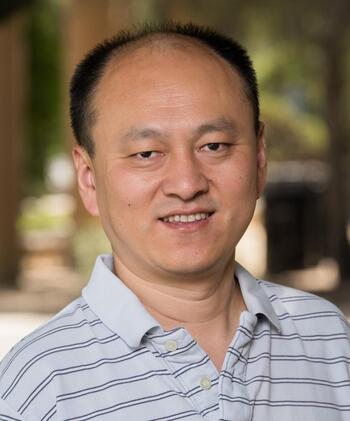
David Yang

David Y. Yang is an Associate Professor in the Department of Economics at Harvard University, a Faculty Research Fellow at NBER and a Global Scholar at CIFAR. David’s research focuses on political economy, behavioral and experimental economics, economic history, and cultural economics. In particular, David studies the forces of stability and forces of changes in authoritarian regimes, drawing lessons from historical and contemporary China. David received a B.A. in Statistics and B.S. in Business Administration from University of California at Berkeley, and PhD in Economics from Stanford.


This event will be held in-person at Stanford University, however, the lecture will be recorded. If you are interested in viewing the recording, please contact Debbie Aube.

Questions? Contact Debbie Aube at debbie.aube@stanford.edu


Encina Hall, Stanford University

David Y. Yang
Seminars
Authors
Melissa Morgan
News Type
Q&As
Date
Paragraphs

Every year, students in our Ford Dorsey Master’s in International Policy are given assignments in the Policy Change Studio. This unique aspect of the coursework partners students with government programs, NGOs and foundations across the globe to give them opportunities to solve problems and gain experience working on policy issues in a hands on, on-the-ground way.

In 2021, Serage Amatory, Hallie Lucas, Samantha Lee and Angela Ortega Pastor were partnered with a project at the U.S. National Renewable Energy Laboratory (NREL) focused on finding ways to help micro, small and medium sized businesses in the Yucatan Peninsula of Mexico access affordable, clean energy.

After a year of hard work, we checked in with Hallie and Angela to see how the project they started as students has grown and what has come of their efforts. As alumni of FSI, Hallie is now a formal employee at NREL, and Angela continues to support the partnerships their student group formed with the NREL team and local community members in Mexico in a personal capacity.


How did you initially get involved with the NREL group and their work on the Yucatan project?

Hallie Lucas: Our MIP practicum team was initially introduced to this effort in January 2021, through a challenge from NREL to “advance clean, affordable, and reliable energy for micro, small, and medium-sized businesses (MiPyMEs) in the Yucatan region of Mexico as part of our master’s capstone project.

Angela Pastor: We set out to scope the problem and connected with stakeholders on the ground. Throughout our project, it was very important for us to connect with local partners and to listen to the needs of the businesses we were trying to help.

Lucas: Through focused and intentional stakeholder discussions, it became apparent that access to affordable finance and technical knowledge gaps were the greatest barriers to energy efficiency and DPV adoption within the region. We also identified that behind-the-meter technologies like distributed photovoltaics (DPV) could be used as an energy and cost-savings mechanism to reduce grid-scale power emissions and empower consumer agency in addition to the enhancing consumer reliability.

Pastor: Since we graduated from MIP, we have continued to work with NREL and our local partners at the Instituto Yucateco del Emprendedor (IYEM) and the Instituto Tecnologico Superior Progreso (ITSP) to build what we are calling the MIPyMEs Futuros Verdes program. Currently the program has launched with a pilot in Merida, Yucatan supported by the Government of the State and IYEM, which really is a testament to the commitment and perseverance of our partners in Yucatan who have relentlessly believed in our vision and helped us push it through to this pilot phase.

What were some of the challenges of this particular project, and what excited you about this work?

Lucas: The challenge with this work was to demonstrate two critical components of our theory of change: 1) that the energy DPV and energy efficiency investments were sufficient to offset the initial cost of the loan within a reasonable time period for MiPyMEs and 2) that we could successfully de-risk lending to applicants with minimal or no credit history through this alternative credit mechanism.

Pastor: It definitely took a while for us to land on the root cause of the energy access issue in the Peninsula, and we did a lot of technical scoping work early in the process, and those co-creation workshops where we got input and feedback from partners on the ground was critical for us to finally read that, “ah, ha” moment.

We eventually realized that the key issue was not a lack of technical options, but rather a lack of access to affordable finance to invest in these interventions. We also realized that most businesses are connected to the grid and as such, while some will benefit from distributed solar generation systems, this will not be the case in general. Instead, focusing on bringing awareness and introducing energy efficiency and conservation measures is key to helping more businesses lower their electricity bill burden. The cheapest megawatt, after all, the one you don’t use.

In the year you’ve been working with NREL, how has this project grown and changed? What’s are some of the victories? What areas are you still working to make better?

Pastor: When we started this project, we had no idea what it would turn out to be. It was a class project, a challenge that we had to come up with a solution for. I don’t think any of us thought we would get to actually implement our idea. But today MIPyMEs in the Yucatan are able to get a free energy audit and apply to MicroYuc Verde for an affordable line of credit that enables them to both reduce their energy consumption and grow their business.

Lucas: I also see the multi-stakeholder coalition we’ve built as a major team victory – working with local government leaders, researchers, and changemakers in this space is really encouraging.

Pastor: We are also working to scale up the program and develop energy audit training modules that other local institutions across Mexico will be able to use to offer free energy audits to businesses. Receiving the endorsement of the Governor of Yucatan was a great win for the program. And as Hallie mentions, the multi-stakeholder coalition we have built is a true victory, and something that makes me confident that the program will continue.

Participants on the stage at the launch event for the MIPyMEs Futuros Verdes program.
The MIPyMEs Futuros Verdes program, which MIP alumni Angela Pastor and Hallie Lucas helped build, was launched in February 2022. | Angela Pastor

How do you hope to see this project continue to develop in the coming years?

Lucas: In the next phase of this project, NREL, IYEM, and ITSP are working to develop a robust technical training curriculum for university students to conduct energy efficiency audits for local businesses seeking to reduce their energy consumption. Student and university-led technoeconomic analysis will support data-driven decisions on investment and lending and will equip students with the advanced skill set they need to succeed in a clean energy futures workforce. These targeted training materials and analytical tools will be made publicly available when complete.

Pastor: I would love to see this project grow in its pilot phase to offer more audits and microloans to MIPyMEs in the Yucatan, and even go beyond Yucatan to other Peninsula states, as I truly think it can make a different.

And at a higher-level, I am really looking forward to seeing whether our theory of change is legitimate – if we can prove that SMEs can leverage affordable financing to access clean energy that would be consequential for broader energy transition efforts around the globe.

How did having the chance to work on a project like this as a Ford Dorsey Master’s in International Policy student impact your studies and how you think about your role and future in the world of policy and international development?

Pastor: Getting the chance to work on a project like this has definitely shaped the type of work and impact I want to have. I am currently working in the sustainable finance space, as I really believe that part of the key to achieving our climate goals lies with closing the mitigation and adaptation finance gap, and especially focusing on bringing financing solutions to those who are often left behind by the system.

Lucas: I’ve been prompted to reflect more about institutionalized and systemic barriers to energy equity, as well, and to think more critically about what inclusive clean energy transitions look like in practice. The next several decades are humanity’s most critical – as the entire world mobilizes to combat the climate crisis, global energy and economic structures will be fundamentally transformed. In this, we have an unparallel opportunity to choose – and create – a better, more inclusive, more sustainable, future.

What are each of you hoping to do next in your careers?

Pastor: I hope to keep growing my knowledge of climate finance and to keep working to make an impact and accelerate climate transition efforts around the world. It’s been so moving to see the passion and commitment everyone we have worked with has shown. The fact that some of the Yucatan participants would take two days out of their busy schedules to come together to discuss what could be done to solve this problem is very inspiring. And even since our initial investigations have ended, they have continued to show up for the project, and are very much driving it forward at this point. It is truly great to see them believe in our vision for a clean energy future

Lucas: I agree. I want to keep doing what I am doing now!


The Ford Dorsey Master's in International Policy

Want to learn more? MIP holds admission events throughout the year, including graduate fairs and webinars, where you can meet our staff and ask questions about the program.

Read More

Students on the NREL policy team
News

Stanford Students on Track to Bring Clean, Affordable Energy to Businesses in the Yucatan Peninsula, Mexico

As part of FSI's Policy Change Studio, four master's students have partnered with the U.S. National Renewable Energy Laboratory to connect businesses in the Yucatan Peninsula with reliable, inexpensive, and clean energy.
Stanford Students on Track to Bring Clean, Affordable Energy to Businesses in the Yucatan Peninsula, Mexico
Students from the 2022 cohort of the Ford Dorsey Master's in International Policy participate in the Policy Change Studio.
News

Where Our Master's Students are Making Policy Impacts in 2022

From women's health and reproductive rights in India to cybersecurity issues in Washington D.C., students from the 2022 cohort of the Ford Dorsey Master's in International Policy are tackling big policy projects in the Policy Change Studio.
Where Our Master's Students are Making Policy Impacts in 2022
Hero Image
Participants on the stage at the launch event for the MIPyMEs Futuros Verdes program.
The MIPyMEs Futuros Verdes program, which MIP alumni Angela Pastor and Hallie Lucas helped build, was launched in February 2022.
Angela Pastor
All News button
1
Subtitle

As alumni of the Ford Dorsey Master's in International Policy at the Freeman Spogli Institute for International Studies, Angela Ortega Pastor and Hallie Lucas continue their efforts to bring clean, affordable energy to businesses in Mexico.

-

SCCEI Spring Seminar Series 


Wednesday, May 25, 2022      11:00 am -12:15 pm Pacific Time

Philippines Room, C330, 3rd Floor, Encina Hall Central, 616 Jane Stanford Way | Zoom Meeting 


Economic Inequality and Social and Demographic Outcomes in China

In this talk, Professor Yu Xie will first document a sharp rise in economic inequality in contemporary China. He then will present results from his research program on the impact of rising economic inequality on a variety of social and demographic outcomes in China: intergenerational mobility, marriage age, marriage partner choice, fertility, and mortality. 


About the Speaker

Image
Yu Xie photo

Yu Xie is Bert G. Kerstetter ’66 University Professor of Sociology and has a faculty appointment at the Princeton Institute of International and Regional Studies, Princeton University. He is also a Visiting Chair Professor of the Center for Social Research, Peking University. His main areas of interest are social stratification, demography, statistical methods, Chinese studies, and sociology of science.

Xie's recently published works include: Marriage and Cohabitation (University of Chicago Press 2007) with Arland Thornton and William Axinn, Statistical Methods for Categorical Data Analysis with Daniel Powers (Emerald 2008, second edition), and Is American Science in Decline? (Harvard University Press, 2012) with Alexandra Killewald. Xie joined Princeton University in 2015, after 26 years at the University of Michigan, most recently as the Otis Dudley Duncan Distinguished University Professor of Sociology, Statistics and Public Policy and a research professor in the Population Studies Center at Michigan's Institute for Social Research. He is also a member of the American Academy of Arts and Sciences, Academia Sinica and the National Academy of Sciences.


Seminar Series Moderators

Image
Headshot of Dr. Scott Rozelle

Scott Rozelle is the Helen F. Farnsworth Senior Fellow and the co-director of Stanford Center on China's Economy and Institutions in the Freeman Spogli Institute for International Studies and Stanford Institute for Economic Policy Research at Stanford University.  For the past 30 years, he has worked on the economics of poverty reduction. Currently, his work on poverty has its full focus on human capital, including issues of rural health, nutrition and education. For the past 20 year, Rozelle has been the chair of the International Advisory Board of the Center for Chinese Agricultural Policy, Chinese Academy of Sciences (CAS). Most recently, Rozelle's research focuses on the economics of poverty and inequality, with an emphasis on rural education, health and nutrition in China. In recognition of this work, Dr. Rozelle has received numerous honors and awards. Among them, he became a Yangtse Scholar (Changjiang Xuezhe) in Renmin University of China in 2008. In 2008 he also was awarded the Friendship Award by Premiere Wen Jiabao, the highest honor that can be bestowed on a foreigner.  
 

Image
hongbin li headshot

Hongbin Li is the Co-director of Stanford Center on China's Economy and Institutions, and a Senior Fellow of Stanford Institute for Economic Policy Research (SIEPR) and the Freeman Spogli Institute for International Studies (FSI). Hongbin obtained his Ph.D. in economics from Stanford University in 2001 and joined the economics department of the Chinese University of Hong Kong (CUHK), where he became full professor in 2007. He was also one of the two founding directors of the Institute of Economics and Finance at the CUHK. He taught at Tsinghua University in Beijing 2007-2016 and was C.V. Starr Chair Professor of Economics in the School of Economics and Management. He founded the Chinese College Student Survey (CCSS) in 2009 and the China Employer-Employee Survey (CEES) in 2014.

Hongbin’s research has been focused on the transition and development of the Chinese economy, and the evidence-based research results have been both widely covered by media outlets and well read by policy makers around the world. He is currently the co-editor of the Journal of Comparative Economics.


A NOTE ON LOCATION

This seminar is a hybrid event. Please join us in person in the Philippines Room, C330, located within Encina Hall Central on the 3rd floor, or join remotely via Zoom.

Register once to receive the Zoom meeting link that will be used for all lectures in this series.

Questions? Contact Debbie Aube at debbie.aube@stanford.edu


Scott Rozelle
Hongbin Li

Hybrid Event: Philippines Room, C330, 3rd Floor of Encina Hall Central | Zoom Meeting

Yu Xie
Seminars
-

SCCEI Spring Seminar Series 


Wednesday, May 18, 2022      11:00 am -12:15 pm Pacific Time

Goldman Room E401, Encina Hall, 616 Jane Stanford Way | Zoom Meeting 


Understanding the Resurgence of the SOEs in China: Evidence from the Real Estate Sector 

We advance a novel hypothesis that China’s recent anti-corruption campaign may have contributed to the resurgence of the state-owned enterprises (SOEs) in China as an unintended consequence. We explore the nexus between the anti-corruption campaign and the SOE resurgence by presenting supporting evidence from the Chinese real estate sector, which is notorious for pervasive rent-seeking and corruption. We use a unique data set of land parcel transactions merged with firm-level registration information and a difference-in-differences empirical design to show that, relative to the industrial land parcels which serve as the control, the fraction of residential land parcels purchased by SOEs increased significantly relative to that purchased by private developers after the anti-corruption campaign. 


About the Speaker 
 

Image
Hanming Fang

Hanming Fang is an applied microeconomist with broad theoretical and empirical interests focusing on public economics. His research integrates rigorous modeling with careful data analysis and has focused on the economic analysis of discrimination; insurance markets, particularly life insurance and health insurance; and health care, including Medicare. In 2008, Professor Fang was awarded the 17th Kenneth Arrow Prize by the International Health Economics Association (iHEA) for his research on the sources of advantageous selection in the Medigap insurance market. 

Professor Fang received his Ph.D. in Economics from the University of Pennsylvania in 2000. Before joining the Penn faculty, he held positions at Yale University and Duke University.  He is a research associate at the National Bureau of Economic Research, where he served as the acting director of the Chinese economy working group from 2014 to 2016. He is also a research associate of the Population Studies Center and Population Aging Research Center, and a senior fellow at the Leonard Davis Institute of Health Economics at the University of Pennsylvania.


Seminar Series Moderators

Image
Headshot of Dr. Scott Rozelle

Scott Rozelle is the Helen F. Farnsworth Senior Fellow and the co-director of Stanford Center on China's Economy and Institutions in the Freeman Spogli Institute for International Studies and Stanford Institute for Economic Policy Research at Stanford University.  For the past 30 years, he has worked on the economics of poverty reduction. Currently, his work on poverty has its full focus on human capital, including issues of rural health, nutrition and education. For the past 20 year, Rozelle has been the chair of the International Advisory Board of the Center for Chinese Agricultural Policy, Chinese Academy of Sciences (CAS). Most recently, Rozelle's research focuses on the economics of poverty and inequality, with an emphasis on rural education, health and nutrition in China. In recognition of this work, Dr. Rozelle has received numerous honors and awards. Among them, he became a Yangtse Scholar (Changjiang Xuezhe) in Renmin University of China in 2008. In 2008 he also was awarded the Friendship Award by Premiere Wen Jiabao, the highest honor that can be bestowed on a foreigner. 


Image
hongbin li headshot

Hongbin Li is the Co-director of Stanford Center on China's Economy and Institutions, and a Senior Fellow of Stanford Institute for Economic Policy Research (SIEPR) and the Freeman Spogli Institute for International Studies (FSI). Hongbin obtained his Ph.D. in economics from Stanford University in 2001 and joined the economics department of the Chinese University of Hong Kong (CUHK), where he became full professor in 2007. He was also one of the two founding directors of the Institute of Economics and Finance at the CUHK. He taught at Tsinghua University in Beijing 2007-2016 and was C.V. Starr Chair Professor of Economics in the School of Economics and Management. He founded the Chinese College Student Survey (CCSS) in 2009 and the China Employer-Employee Survey (CEES) in 2014.

Hongbin’s research has been focused on the transition and development of the Chinese economy, and the evidence-based research results have been both widely covered by media outlets and well read by policy makers around the world. He is currently the co-editor of the Journal of Comparative Economics.


A NOTE ON LOCATION

This seminar is a hybrid event. Please join us in person in the Goldman Conference Room located within Encina Hall on the 4th floor of the East wing, or join remotely via Zoom.

Register once to receive the Zoom meeting link that will be used for all lectures in this series.

Questions? Contact Debbie Aube at debbie.aube@stanford.edu


Scott Rozelle
Hongbin Li

Hybrid Event: Goldman Room E409, Encina Hall | Zoom Meeting

Hanming Fang
Seminars
-

SCCEI Spring Seminar Series 


Wednesday, April 13, 2022      11:00 am -12:15 pm Pacific Time


Models of Bilateral Clean Energy Cooperation with China: A Tale of Three Clean Energy Research Centers

As global interest in clean energy technologies increases, we have seen countries around the world partner with China as the epicenter of clean energy deployment and an important location for learning-by-doing innovation. This paper presents three new case studies of the largest bilateral clean energy research centers developed in partnership with China over the past two decades. These cases facilitate an assessment of the political and technological benefits to international technology collaboration with China, as well as the substantial challenges.


About the Speaker 
 

Image
Lewis photo

Joanna Lewis is Provost’s Distinguished Associate Professor of Energy and Environment and Director of the Science, Technology and International Affairs Program (STIA) at Georgetown University's Edmund A. Walsh School of Foreign Service. She has two decades of experience working on international climate and clean energy policy with a focus on China. At Georgetown she runs the Clean Energy and Climate Research Group and leads several dialogues facilitating U.S.-China climate change engagement. Lewis is also a faculty affiliate in the China Energy Group at the U.S. Department of Energy’s Lawrence Berkeley National Laboratory. She is the author of the award-winning book Green Innovation in China, and was a Lead Author of the Intergovernmental Panel on Climate Change’s Fifth Assessment Report. Lewis has worked for a number of governmental and non-governmental organizations including the Pew Center on Global Climate Change, the Asia Society and the White House Council on Environmental Quality, and has been a visiting scholar at Tsinghua University, the Woodrow Wilson International Center for Scholars and the East-West Center. Her research has been supported by the National Science Foundation, the Rockefeller Brothers Fund and the Center for Security and Emerging Technologies, among others. Lewis holds a Master’s and Ph.D. in Energy and Resources from the University of California, Berkeley and a Bachelor’s degree in Environmental Science and Policy from Duke University.


Seminar Series Moderators

Image
Headshot of Dr. Scott Rozelle

Scott Rozelle is the Helen F. Farnsworth Senior Fellow and the co-director of Stanford Center on China's Economy and Institutions in the Freeman Spogli Institute for International Studies and Stanford Institute for Economic Policy Research at Stanford University.  For the past 30 years, he has worked on the economics of poverty reduction. Currently, his work on poverty has its full focus on human capital, including issues of rural health, nutrition and education. For the past 20 year, Rozelle has been the chair of the International Advisory Board of the Center for Chinese Agricultural Policy, Chinese Academy of Sciences (CAS). Most recently, Rozelle's research focuses on the economics of poverty and inequality, with an emphasis on rural education, health and nutrition in China. In recognition of this work, Dr. Rozelle has received numerous honors and awards. Among them, he became a Yangtse Scholar (Changjiang Xuezhe) in Renmin University of China in 2008. In 2008 he also was awarded the Friendship Award by Premiere Wen Jiabao, the highest honor that can be bestowed on a foreigner. 


Image
hongbin li headshot

Hongbin Li is the Co-director of Stanford Center on China's Economy and Institutions, and a Senior Fellow of Stanford Institute for Economic Policy Research (SIEPR) and the Freeman Spogli Institute for International Studies (FSI). Hongbin obtained his Ph.D. in economics from Stanford University in 2001 and joined the economics department of the Chinese University of Hong Kong (CUHK), where he became full professor in 2007. He was also one of the two founding directors of the Institute of Economics and Finance at the CUHK. He taught at Tsinghua University in Beijing 2007-2016 and was C.V. Starr Chair Professor of Economics in the School of Economics and Management. He founded the Chinese College Student Survey (CCSS) in 2009 and the China Employer-Employee Survey (CEES) in 2014.

Hongbin’s research has been focused on the transition and development of the Chinese economy, and the evidence-based research results have been both widely covered by media outlets and well read by policy makers around the world. He is currently the co-editor of the Journal of Comparative Economics.


Register once to receive the Zoom meeting link that will be used for all lectures in this series.

Questions? Contact Debbie Aube at debbie.aube@stanford.edu


Scott Rozelle
Hongbin Li

Zoom Meeting

Joanna Lewis
Seminars
-

The Web of Power: How Elite Networks Shaped War and China

Scholars have argued that powerful individuals can influence the path of a nation's development. Yet, the process through which individuals affect macro-level political economy outcomes remains unclear.  This study uses the deadliest civil war in history, the Taiping Rebellion (1850--1864), to elucidate how one individual---Zeng Guofan---employed his personal elite networks to organize an army that suppressed the rebellion, and how these networks consequently affected the power distribution of the nation. Two findings stand out: (i) counties with more elites in Zeng's pre-war networks experienced more soldier deaths after he took power; and (ii) the post-war political power shifted significantly toward the home counties of these very elites, which created a less-balanced national-level power distribution.  Our findings highlight the role of elite networks that propagate individual-level influences to shape national politics and the distribution of power in a society. 


About the Speaker

Image
Headshot of Dr. Ruixue Jia.

Ruixue Jia is a Visiting Senior Fellow at London School of Economics and an Associate Professor of Economics at the School of Global Policy and Strategy, UC San Diego. She is interested in the interplay of economics, history and politics. One stream of her research focuses on understanding elite formation and elite influence, in both historical and modern contexts. A second focus of her work is the deep historical roots of economic development. More recently, she started following the ongoing transformation of the manufacturing sector in China and expanded her interest to labor and technology issues. For more information, please visit her personal site.


This event will be held in-person at Stanford University, however, the lecture will be recorded. If you are interested in viewing the recording, please contact Debbie Aube.

Questions? Contact Debbie Aube at debbie.aube@stanford.edu


Philipines Room, Encina Hall, Stanford University

Ruixue Jia
Seminars
-

Register: https://bit.ly/3Ncvj7B

AHPP “Aligning incentives” series final webinar: May 12th 6pm PDT, May 13th 9am in Hong Kong and Singapore

How has Myanmar’s health system dealt with the devastation caused by the coup and the pandemic, and what are the current opportunities and challenges for response and recovery? In this panel of two experts, Dr. Thin Zaw will first discuss how Myanmar’s health system and health workforce are endeavoring to respond to the syndemic crisis, a deadly combination of the global pandemic, the military coup, and post-coup civil conflicts. She will also discuss how stakeholders are working together to try to mitigate the crisis, and how a federal health system could be built up to align incentives for effective collaboration among ethnic health organizations. Second, Dr. Tun will provide a grassroots medical humanitarian perspective on what is happening in Myanmar. He will present results of a mixed-methods survey conducted in non-military-controlled areas from October to December 2021, discussing how Myanmar professionals including healthcare workers are spearheading the Civil Disobedience Movement, helping internally displaced people, and trying to address the healthcare needs of populations in conflict areas.

Image
Phyu Phyu Thin Zaw 051222
Phyu Phyu Thin Zaw (MBBS, MPP, PhD), who is a Burmese national, is a medical doctor, epidemiologist and health systems researcher currently working as a Lecturer in the School of Public Health in the Li Ka Shing Faculty of Medicine, University of Hong Kong. She is also a member of the Steering Committee of the Science in Exile initiative, which brings together at-risk, displaced and refugee scientists along with like-minded organizations who work together to strengthen systems that support, protect and integrate such affected scientists. Phyu Phyu’s research interests are equity, health and education policies, Southeast Asia health systems and policies, sexual and reproductive health, gender equality, poverty eradication, and human rights issues. Dr. Thin Zaw is also a public health and policy consultant giving technical advice to think tanks and non-governmental organizations.

Image
Nay Lin Tun 051222
Nay-Lin Tun (MD, MPP) is a medical doctor by training, and recently earned a Master in Public Policy from the National University of Singapore. He works as a program manager for a local organization that focuses on social cohesion and pluralism among diverse communities. In this role, he manages programs that help vulnerable communities in remote, hard-to-reach, and conflict-affected areas of Myanmar to get access to health services and provide financial assistance to injured civilians who need emergency referrals to private hospitals. Dr. Tun experienced a turning point in his career in 2017 when he went to the conflict-riven northern Rakhine areas. Witnessing people’s suffering and discrimination firsthand compelled him to initiate mobile health clinics and speak out in the media about health care challenges. On a voluntary basis, he is coordinating international donations and grants to field medical teams in conflict-affected areas of the country.

Karen Eggleston

Via Zoom Webinar.

Phyu Phyu Thin Zaw Lecturer, University of Hong Kong
Nay Lin Tun Physician and Medical Humanitarian in Singapore
Seminars
-

Myanmar’s junta is more than a year old.  The vast majority of the country’s people oppose the junta and favor democracy.  But the devil is in the details.  Many in the opposition want some form of multi-ethnic federal democracy.  But levels of disagreement and distrust among different communities, including some of the Ethnic Armed Groups, are impeding a unified vision to push the military out of power and establish civilian rule.  This webinar will examine the choices and challenges faced by the opponents of the regime as they try to unite these communities against it on behalf of a better future for Myanmar.

Image
Nyantha Maw Lin 041922
Nyantha Maw Lin is an independent analyst with more than a decade of interdisciplinary experience in government affairs, public policy, and political risk assessment related to Myanmar. Prior to the February 2021 coup, he supported community and stakeholder engagement efforts in Myanmar’s Rakhine State and served on a voluntary panel of industry and civil society representatives who advised the government on initiatives to fight corruption. He also helped to lead several innovative non-profit entities based in Yangon engaged in philanthropy, business, and social-impact activity. In addition to convening multi-sectoral dialogues with government, the private sector, and civil society in Myanmar, Nyantha has also participated in semi-official conversations elsewhere in Southeast Asia. A former Eisenhower Fellow (2018), he earned his BA in Political Science/International Relations from Carleton College (2008).  

Image
Marciel 041922
Scot Marciel has had a long career as an American diplomat serving in multiple countries, most recently as US Ambassador to Myanmar (2016-2020).  Earlier postings included as Ambassador to Indonesia (2010-2013) and concurrently as Ambassador for ASEAN affairs and Deputy Assistant Secretary of State for Southeast Asia (2007-2010).  He has also served in the Philippines and Vietnam.  His assignments at the State Department in Washington DC have included as Principal Deputy Assistant Secretary of State for East Asian Affairs and as Deputy Assistant Secretary of State of Southeast Asia.  Based on these experiences, he has been writing a book entitled “Imperfect Partners: The United States and Southeast Asia.”  He earned his MA at the Fletcher School of Law and Diplomacy (1983) and his BA in International Relations at the University of California at Davis (1981).

Donald K. Emmerson

 Via Zoom Webinar.

Nyantha Maw Lin Independent Analyst
1
Oksenberg-Rohlen Fellow
scot_marciel.jpg

Scot Marciel was the Oksenberg-Rohlen Fellow at the Freeman Spogli Institute for International Studies, affiliated with the Walter H. Shorenstein Asia-Pacific Research Center from 2022-2024. Previously, he was a 2020-22 Visiting Scholar and Visiting Practitioner Fellow on Southeast Asia at APARC.  A retired diplomat, Mr. Marciel served as U.S. Ambassador to Myanmar from March 2016 through May 2020, leading a mission of 500 employees during the difficult Rohingya crisis and a challenging time for both Myanmar’s democratic transition and the United States-Myanmar relationship.  Prior to serving in Myanmar, Ambassador Marciel served as Principal Deputy Assistant Secretary for East Asia and the Pacific at the State Department, where he oversaw U.S. relations with Southeast Asia.

From 2010 to 2013, Scot Marciel served as U.S. Ambassador to Indonesia, the world’s fourth most populous country.  He led a mission of some 1000 employees, expanding business ties, launching a new U.S.-Indonesia partnership, and rebuilding U.S.-Indonesian military-military relations.  Prior to that, he served concurrently as the first U.S. Ambassador for ASEAN Affairs and Deputy Assistant Secretary of State for Southeast Asia from 2007 to 2010.

Mr. Marciel is a career diplomat with 35 years of experience in Asia and around the world.  In addition to the assignments noted above, he has served at U.S. missions in Turkey, Hong Kong, Vietnam, Brazil and the Philippines.  At the State Department in Washington, he served as Director of the Office of Maritime Southeast Asia, Director of the Office of Mainland Southeast Asia, and Director of the Office of Southern European Affairs.  He also was Deputy Director of the Office of Monetary Affairs in the Bureau of Economic and Business Affairs.

Mr. Marciel earned an MA from the Fletcher School of Law and Diplomacy, and a BA in International Relations from the University of California at Davis.  He was born and raised in Fremont, California, and is married with two children.

Date Label
Visiting Practitioner Fellow on Southeast Asia, APARC, Stanford University
Panel Discussions
0
CDDRL Honors Student, 2021-22
Carolyn Chun

Major: History
Hometown: Oak Brook, Illinois
Thesis Advisor: Stephen Stedman

Tentative Thesis Title: Modes of Knowing: Consequences of Methodological Approaches in World Bank Agricultural Policy

Future aspirations post-Stanford: I would like to pursue social impact work that leverages data to empower individuals and communities to advocate for effective policies and participate in civic discourse.

A fun fact about yourself: I enjoy hiking in U.S. national parks — eleven so far!

Authors
Michael Breger
News Type
News
Date
Paragraphs

China and the United States are the two biggest carbon-emitting countries in the world. Decarbonization in these two countries will have material impacts on a global scale and is timelier than ever, according to a recent report from Stanford University’s Precourt Institute for Energy, Stanford Center at Peking University, APARC's China Program, and Peking University’s Institute of Energy.

The report is the product of a roundtable series, held in October 2021 that brought together leading American and Chinese current and former officials, and experts in the public and private sectors working on energy, climate, the environment, industry, transportation, and finance. The roundtables promoted discussion around how China and the United States can accelerate decarbonization and cooperate with one another to meet their carbon neutrality goals by mid-century.

The thematic areas of the roundtables included U.S.- China collaboration on climate change, global sustainable finance, corporate climate pledges, and the opportunities and challenges for the acceleration of decarbonization in both countries in general, as well as specifically for the power, transportation, and industry sectors.

The resultant report reviews the key themes and takeaways that emerged from the closed-door discussions. It builds on the “U.S.-China Joint Statement Addressing the Climate Crisis” released by the U.S. Department of State on April 17, 2021 and shares some common themes with the “U.S.-China Joint Glasgow Declaration on Enhancing Climate Action in the 2020s” released on November 10, 2021. Shiran Victoria Shen of the Hoover Institution authored the report, with contributions by Yi Cui of the Precourt Institute for Energy, Zhijun Jin of the Institute of Energy and Jean Oi, Director of APARC's China Program

The report suggests that tensions in U.S.-China relations have hindered the acceleration of decarbonization and that open science in fundamental research areas must be encouraged. Universities can educate future leaders, advance knowledge, and foster U.S.-China collaboration on open-science R&D, regardless of the political environment. The report argues that the most promising strategy to decarbonize energy is to electrify consumption now served by fossil fuels as much as possible while decarbonizing electricity generation. 

The roundtables identified six areas where the U.S. and China could collaborate: global green finance, carbon capture and storage, low-carbon agriculture and food processing, methane leak reduction, grid integration and greater use of intermittent renewables, and governance, including at the subnational level. The report further identifies more concrete and additional promising areas for accelerated decarbonization and bilateral collaboration, as well as the obstacles to be tackled, including institutional, political, and financial constraints. 

Read More

Forest fires burn
News

Ban Ki-moon Urges Global Cooperation to Address Twin Crises of Climate Change, COVID-19

“We need an all hands on deck approach underpinned by partnership and cooperation to succeed...we must unite all global citizens and nations...indeed we are truly all in this together.”
Ban Ki-moon Urges Global Cooperation to Address Twin Crises of Climate Change, COVID-19
Blue image with event title, time, and date
News

Navigating Chinese Investment, Trade, and Technology: The New Economy Conference

Ambassador Craig Allen, David Cheng, James Green, and Anja Manuel explore the role of Chinese economic activity in California in the context of the greater US-Chinese relationship.
Navigating Chinese Investment, Trade, and Technology: The New Economy Conference
Hero Image
Cover of the report 'Accelerating Decarbonization in China and USA through Bilateral Collaboration'
All News button
1
Subtitle

A report on China and the United States' decarbonization and carbon neutrality proposes areas of collaboration on climate change action, global sustainable finance, and corporate climate pledges. The report is the product of roundtables with participants from the Stanford Precourt Institute for Energy, SCPKU, APARC's China Program, and Peking University’s Institute of Energy.

Date Label
Subscribe to Environment