FSI scholars approach their research on the environment from regulatory, economic and societal angles. The Center on Food Security and the Environment weighs the connection between climate change and agriculture; the impact of biofuel expansion on land and food supply; how to increase crop yields without expanding agricultural lands; and the trends in aquaculture. FSE’s research spans the globe – from the potential of smallholder irrigation to reduce hunger and improve development in sub-Saharan Africa to the devastation of drought on Iowa farms. David Lobell, a senior fellow at FSI and a recipient of a MacArthur “genius” grant, has looked at the impacts of increasing wheat and corn crops in Africa, South Asia, Mexico and the United States; and has studied the effects of extreme heat on the world’s staple crops.
Reset of U.S. Nuclear Waste Management Strategy and Policy
Meeting 3: Consent-Based Siting
The Reset Project’s third meeting, March 9-10, 2016, will focus on another key issue: consent-based siting. In 2012, the Blue Ribbon Commission on America’s Nuclear Future recommended a new, consent-based approach to siting future nuclear waste-management facilities. As a near-term action, the Commission recommended that future siting efforts be informed by past experience, drawing on experience gained in siting nuclear waste facilities in the U.S. and abroad. In 2013, the Secretary of Energy released the Administration’s Strategy for the Management and Disposal of Used Nuclear Fuel and High-level Radioactive Waste, which endorsed the principles underlying the BRC recommendations (adaptive, phased implementation). Recently, the Department of Energy has invited public comment on the design of a consent-based siting process.
Critical to the success of any consent-based approach in the U.S. is that the implementer sustain public trust and confidence over decades and that there be a resolution of how power is distributed between the federal government on the one-hand and state/local governments on the other.
The Reset Project’s third meeting seeks to advance the understanding of how a consent-based siting process might be designed in the U.S.:
What insights are provided from the U.S. experience for building local, Tribe and State confidence, and for initiating and sustaining consent-based siting?
How can consent-based siting be informed by the experience by other nuclear projects in the U.S or internationally?
How is “consent” sought, demonstrated and sustained?
What are priority areas for preparing the policy and regulatory foundations for consent-based siting?
These topics will be addressed over a two-day meeting, through presentations and panel discussions. Invited speakers will share their experience, drawing on their first-hand experience with consent-based siting – from those with direct experience at the levels of local government, Tribe and State governments, to implementers and regulatory authorities involved. Scholars and other experts will be invited to address some important ethical and legal dimensions of consent-based siting. Considerable time will be set aside for discussion and audience participation.
Quantitative estimates of the impacts of climate change on economic outcomes are important for public policy. We show that the vast majority of estimates fail to account for well-established uncertainty in future temperature and rainfall changes, leading to potentially misleading projections. We reexamine seven well-cited studies and show that accounting for climate uncertainty leads to a much larger range of projected climate impacts and a greater likelihood of worst-case outcomes, an important policy parameter. Incorporating climate uncertainty into future economic impact assessments will be critical for providing the best possible information on potential impacts.
Growing evidence demonstrates that climatic conditions can have a profound impact on the functioning of modern human societies, but effects on economic activity appear inconsistent. Fundamental productive elements of modern economies, such as workers and crops, exhibit highly non-linear responses to local temperature even in wealthy countries. In contrast, aggregate macroeconomic productivity of entire wealthy countries is reported not to respond to temperature= while poor countries respond only linearly. Resolving this conflict between micro and macro observations is critical to understanding the role of wealth in coupled human–natural systems and to anticipating the global impact of climate change. Here we unify these seemingly contradictory results by accounting for non-linearity at the macro scale. We show that overall economic productivity is non-linear in temperature for all countries, with productivity peaking at an annual average temperature of 13 °C and declining strongly at higher temperatures. The relationship is globally generalizable, unchanged since 1960, and apparent for agricultural and non-agricultural activity in both rich and poor countries. These results provide the first evidence that economic activity in all regions is coupled to the global climate and establish a new empirical foundation for modelling economic loss in response to climate change, with important implications. If future adaptation mimics past adaptation, unmitigated warming is expected to reshape the global economy by reducing average global incomes roughly 23% by 2100 and widening global income inequality, relative to scenarios without climate change. In contrast to prior estimates, expected global losses are approximately linear in global mean temperature, with median losses many times larger than leading models indicate.
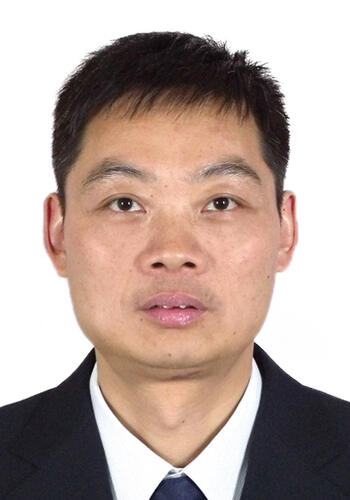
The lecture aims to introduce the prevalence of Non-communicable Diseases (NCDs) in Zhejiang Province in China, and also share experience of Control and Prevention of NCDs. The lecture is composed by five parts. Firstly, NCDs surveillance system in Zhejiang will be introduced, including its establishment history and system coverage. Then, epidemiological characteristics of major NCDs (such as diabetes, cancer, stroke, and acute coronary heart disease events) will be presented, as well as NCDs related behavioral risk factors and hospital-based injury surveillance. Next, current work of NCDs prevention and control in Zhejiang Province will be described, including work network, human resources, community management and pilot programs for NCDs. Fourthly, economic cost of diabetes will be illustrated. Finally, countermeasures for NCDs Prevention and Control will be discussed.
Image
Min Yu is deputy director of Zhejiang Provincial Center for Disease Control and Prevention. He was awarded as New-Century 151 Talents of Zhejiang Province, China. He is a committee member of Epidemiology Branch of Chinese Preventive Medicine Association. He is the leader of key discipline of Non-Communicable Diseases epidemiology (NCDs), and led the establishing of NCDs and behavioral risk factor surveillance system in Zhejiang province.
Yu got Medical degree in Zhejiang University and Master degree of Public Health in Peking Medical University. Now his research focuses on epidemiology of NCDs, strategy for NCDs control and prevention, and disease burden.
Min Yu
Deputy director of Zhejiang Provincial Center for Disease Control and Prevention
Co-sponsored by the Asia Health Policy Program & the Southeast Asia Program
This paper analyzes the effects of an early-life shock in Indonesia on children’s human capital formation and parental responses to these shocks. We exploit the geographical variation of Indonesia’s forest fires during the El Nino phenomenon in 1997, as well as cohort variation in exposure. Children affected by these shocks in utero and in early years have worse health outcomes relative to children not exposed to these shocks. We find that the health effects persist, but other factors mitigate the initial effect on cognitive skills.
My main research interest lies at the intersection of development and health economics. I am particularly interested in how social policies affect health outcomes for the poor, early health investments, and health-seeking behavior in limited resource settings, focusing on the evaluation of different strategies that seek to promote health investments and the effects of these interventions. Specifically, I have analyzed the effects of Indonesia’s household conditional cash transfer program on health outcomes, local health care price, and quality of care. I have also analyzed the long-term effects of a large-scale midwifery program in Indonesia. Current projects study the effects of early life shocks on children’s human capital outcomes in Indonesia and the Philippines.
A Stanford-led team has discovered how to estimate crop yields with more accuracy than ever before with satellites that measure a special form of light emitted by plants. This breakthrough will help scientists study how crops respond to climate change.
As Earth's population grows toward a projected 9 billion by 2050 and climate change puts growing pressure on the world's agriculture, researchers are turning to technology to help safeguard the global food supply.
A research team, led by Kaiyu Guan, a postdoctoral fellow in Earth system science at Stanford's School of Earth, Energy, & Environmental Sciences, has developed a method to estimate crop yields using satellites that can measure solar-induced fluorescence, a light emitted by growing plants. The team published its results in the journal Global Change Biology.
Scientists have used satellites to collect agricultural data since 1972, when the National Aeronautics and Space Administration (NASA) pioneered the practice of using the color – or "greenness" – of reflected sunlight to map plant cover over the entire globe.
"This was an amazing breakthrough that fundamentally changed the way we view our planet," said Joe Berry, professor of global ecology at the Carnegie Institution for Science and a co-author of the study. "However, these vegetation maps are not ideal predictors of crop productivity. What we need to know is growth rate rather than greenness.
The growth rate can tell researchers what size yield to expect from crops by the end of the growing season. The higher the growth rate of a soybean plant or stalk of corn, for instance, the greater the harvest from a mature plant.
"What we need to measure is flux – the carbon dioxide that is exchanged between plants and the atmosphere – to understand photosynthesis and plant growth," Guan said. "How do you use color to infer flux? That's a big gap."
Solar-induced fluorescence
Recently, researchers at NASA and several European institutes discovered how to measure this flux, called solar-induced fluorescence, from satellites that were originally designed for measuring ozone and other gases in the atmosphere.
A plant uses most of the energy it absorbs from the sun to grow via photosynthesis, and dissipates unused energy as heat. It also passively releases between 1 and 2 percent of the original solar energy absorbed by the plant back into the atmosphere as fluorescent light. Guan's team worked out how to distinguish the tiny flow of specific fluorescence from the abundance of reflected sunlight that also arrives at the satellite.
"I think of it like crumbs falling to the ground as people are eating. It's a very small trail," said co-author David Lobell, associate professor of Earth system science at Stanford's School of Earth, Energy, & Environmental Science. "This glow that plants have seems to be very proportional to how fast they're growing. So the more they're growing, the more photosynthesis they're doing, and the brighter they're fluorescing." Lobell is also deputy director of the Center on Food Security and the Environment.
The research team saw an opportunity to use this new data to close the knowledge gap about crop growth, beginning with a major corn- and soybean-producing region of the U.S. Midwest.
"With the fluorescence breakthrough, we can start to directly measure photosynthesis instead of color," Guan said.
The fact that fluorescence can now be detected from space allows researchers to measure plant growth across much larger areas and over long periods of time, giving a much clearer picture of how yields fluctuate under changing weather conditions.
"One of the really cool things about fluorescence is that it opens up a whole new set of questions that we can ask about vegetation, and often times it's these new measurements that drive the science forward," Lobell said.
Next steps
The research team has already identified a number of potential uses of this approach by agricultural scientists, farmers, crop insurance providers and government agencies concerned with agricultural productivity.
If there is a day when the plant is really stressed, the fluorescence will drop significantly, Lobell said. Capturing these short-term responses to environmental changes will help scientists understand what factors plants are responding to on the daily time scale.
"That helps us, for example, figure out what we need to worry about in terms of stresses that crops are responding to," Lobell said. "What should we really be focusing on in terms of the next generation of cropping systems? What should they be able to withstand that the current crops can't withstand?"
At this early stage, fluorescence measurements are relatively low-resolution (a single measurement covers about 50 square kilometers) and because it is only collected once per day, cloudy skies can interfere with the fluorescence signal. For now, researchers have to supplement the data with other information and with on-the-ground observations to refine the measurements.
"Now that we have demonstrated the concept, we hope to soon be orbiting some new satellites specifically designed to make fluorescence measurements with better spatial and temporal resolution," Berry said.
The team plans to continue its research on U.S. crop yields while expanding measurements to other parts of the world.
"In the future, we hope to directly use this technology to monitor global food production, for example in China or Brazil, or even in your backyard," Guan said.
David Lobell is also deputy director of the Center on Food Security and the Environment, and William Wrigley Senior Fellow at the Freeman Spogli Institute for International Studies and the Stanford Woods Institute for the Environment. The study was also co-authored by Youngguan Zhang of the International Institute for Earth System Sciences at Nanjing University and the German Research Center for Geosciences (GFZ); Joanna Joiner of the NASA Goddard Space Flight Center Laboratory for Atmospheric Chemistry and Dynamics; Luis Guanter of GFZ; and Grayson Badgley of Stanford's Department of Earth System Science and Department of Global Ecology at the Carnegie Institution for Science.
CONTACTS:
p> Kaiyu Guan, Stanford School of Earth, Energy, & Environmental Sciences: kaiyug@stanford.edu
Laura Seaman, Stanford's Center on Food Security and the Environment: lseaman@stanford.edu, (650) 723-4920
Human rights groups have only two assets: people and information. Learn about Benetech’s decade of putting information technology tools into the hands of human rights activists, with the goal of making these two assets more effective in advancing the global cause of human rights.
Speaker bio
Jim Fruchterman is the founder and CEO of Benetech, a Silicon Valley nonprofit technology company that develops software applications to address unmet needs of users in the social sector. He is the recipient of numerous awards recognizing his work as a pioneering social entrepreneur, including the MacArthur Fellowship, Caltech’s Distinguished Alumni Award, the Skoll Award for Social Entrepreneurship, and the Migel Medal—the highest honor in the blindness field—from the American Foundation for the Blind. Since its founding in 1989, Benetech has touched the lives of hundreds of thousands of people. Its tools and services have transformed the ways in which people with disabilities access printed information, at-risk human rights defenders safely document abuse, and environmental practitioners succeed in their efforts to protect species and ecosystems. Through his work with Benetech and as a trailblazer in the field of social entrepreneurship, Jim continues to advance his vision of a world in which the benefits of technology reach all of humanity, not just the wealthiest and most able five percent.
Encina Hall 616 Serra Street Stanford, CA 94305-6165
0
mmannino@stanford.edu
Visiting Student Researcher at The Europe Center, 2015-2016
massimo_mannino.jpg
Massimo Mannino is a Visiting Student Researcher from the University of St.Gallen, Switzerland, under the supervision of Michael Bechtel (University of St.Gallen) and Jens Hainmueller (Stanford University). His dissertation explores the political economy of natural disasters and is part of a project funded by the Swiss National Science Foundation.
Forty-eight national security and foreign policy leaders urged U.S. government and businesses to take action to fight climate change in a statement released by the Partnership for a Secure America. Thomas Fingar, a distinguished fellow in the Freeman Spogli Institute for International Studies, is a signatory. The statement can be accessed by clicking here.
Hero Image
A sergeant operates a sling on a UH-60 Blackhawk above a swollen Missouri River near North Sioux City, South Dakota. Flight crews are helping deliver sand bags to areas affected by flooding.