Environment

FSI scholars approach their research on the environment from regulatory, economic and societal angles. The Center on Food Security and the Environment weighs the connection between climate change and agriculture; the impact of biofuel expansion on land and food supply; how to increase crop yields without expanding agricultural lands; and the trends in aquaculture. FSE’s research spans the globe – from the potential of smallholder irrigation to reduce hunger and improve development in sub-Saharan Africa to the devastation of drought on Iowa farms. David Lobell, a senior fellow at FSI and a recipient of a MacArthur “genius” grant, has looked at the impacts of increasing wheat and corn crops in Africa, South Asia, Mexico and the United States; and has studied the effects of extreme heat on the world’s staple crops.

News Type
News
Date
Paragraphs

FSE director Roz Naylor will give the opening plenary lecture at the 2nd International Conference on Global Food Security on October 12, 2015 at Cornell University. Naylor is William Wrigley Professor in Earth System Science, and senior fellow at the Stanford Woods Institute for the Environment and the Freeman Spogli Institute for International Studies at Stanford. 

In addition to Naylor's lecture on "Food security in a commodity-driven world," several FSE researchers will give talks and poster sessions during the five-day conference, including professors Marshall Burke and Eric Lambin, visiting scholar Jennifer Burney, postdoctoral scholar Meha Jain, and doctoral candidate Elsa Ordway.

Hero Image
dsc 0026
All News button
1
Authors
Denise Masumoto
News Type
News
Date
Paragraphs

As the new academic year gets underway, the Walter H. Shorenstein Asia-Pacific Research Center’s Corporate Affiliates Program is excited to welcome its new class of fellows to Stanford University:

  • Yuta AikawaMinistry of Economy, Trade & Industry, Japan
  • Wataru FukudaShizuoka Prefectural Government
  • Huang (Catherine) HuangBeijing Shanghe Shiji Investment Company
  • Avni JethwaReliance Life Sciences
  • Satoshi Koyanagi, Ministry of Economy, Trade & Industry, Japan
  • An Ma, PetroChina
  • Huaxiang Ma, Peking University
  • Yuichiro Muramatsu, Mitsubishi Electric
  • Tsuzuri Sakamaki, Ministry of Finance, Japan
  • Tsuneo SasaiThe Asahi Shimbun
  • Ravishankar Shivani, Reliance Life Sciences
  • Aki Takahashi, Nissoken
  • Mariko Takeuchi, Sumitomo Corporation
  • Hideaki Tamori, The Asahi Shimbun
  • Ryo Washizaki, Japan Patent Office
  • Hung-Jen (Fred) Yang, MissionCare

During their stay at Stanford University, the fellows will audit classes, work on English skills, and conduct individual research projects; at the end of the year they will make a formal presentation on the findings from their research. During their stay at the center, they will have the opportunity to consult with Shorenstein APARC's scholars and attend events featuring visiting experts from around the world. The fellows will also participate in special events and site visits to gain a firsthand understanding of business, society and culture in the United States.


Hero Image
rsd15 070 0045a Rod Searcey
All News button
1
-

Indonesian President Joko (“Jokowi”) Widodo was inaugurated in October 2014.  He is the country’s seventh president, but only its second to be directly elected and its first from both a non-elite and non-military background.  He won the election by a narrow margin over a hard-line ex-general accused of violating human rights.

Human rights abuses have long marred Indonesian rule in western Papua.  Candidate Jokowi promised to improve conditions there.  He traveled to the area twice during the election campaign.  His predecessor visited Papua only three times during his entire ten-year presidency.  Jokowi also promised to protect religious minorities from violence, intolerance, and discrimination, and to help reconcile survivors of the mass bloodletting in 1965-66.  Has he kept these and other commitments to improve human rights conditions in Indonesia?  Or not?  And why?

Image
andreas harsono
Andreas Harsono has covered Indonesia for Human Rights Watch since 2008. Organizations that he has helped to establish include a journalist-training organization, the Pantau Foundation (Jakarta, 2003); the South East Asia Press Alliance (Bangkok, 1998); and the Alliance of Independent Journalists (Jakarta, 1994).  He began his career as a reporter for The Nation (Bangkok) and the Star newspapers (Kuala Lumpur), and has edited a monthly magazine on media and journalism, Pantau (Jakarta).  He was a Nieman Fellow at Harvard University in 2000.

Andreas Harsono Indonesia Researcher, Human Rights Watch
Seminars
-

This event has moved from the 4:30pm talk to a noon talk.

Nonprofit organizations are engaged in public sector management as service deliverers, and more recently, as governance partners. Such a role shift of nonprofits can be explained by a couple of spontaneous mechanisms that link service contracting to collaborative governance. The evolving elderly service contracting in Shanghai discloses that contracting may induce power sharing, consolidate mutual trust, reshape community governance networks, and spur nonprofit development. Contracting nonprofits thus may make decisions, enforce regulatory functions, set rules, and influence community governance. An evolutionary perspective provides a new angle on the changing government-nonprofit relations in China.

Image
dr jing yijia4x6
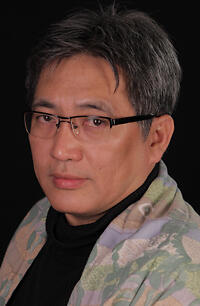
Dr. Yijia Jing is a professor in Public Administration and associate director of foreign affairs at Fudan University. He is the editor-in-chief of Fudan Public Administration Review, and serves as the vice president of International Research Society for Public Management. He is associate editor of Public Administration Review and Co-editor of International Public Management Journal. He is also the founding co-editor of a Palgrave book series---Governing China in the 21 Century.

Yijia Jing Professor in Public Administration and Associate Director of Foreign Affairs, Fudan University
Seminars
-
Abstract 
Based on first-hand participant-observation, this talk will examine the culture, politics, and spatiality of the Sunflower Movement. Taiwan's most significant social movement in decades, the Sunflower Movement not only blocked the passage of a major trade deal with China, but reshaped popular discourse and redirected Taiwan's political and cultural trajectory. It re-energized student and civil society, precipitated the historic defeat of the KMT in the 2014 local elections, and prefigured the DPP's strong position coming into the 2016 presidential and legislative election season.
 
The primary spatial tactic of the Sunflowers-- occupation of a government building-- was so successful that a series of protests in the summer of 2015 by high school students was partly conceived and represented as a "second Sunflower Movement". These students, protesting "China-centric" curriculum changes, attempted to occupy the Ministry of Education building. Thwarted by police, these students settled for the front courtyard, where a Sunflower-style pattern of encampments and performances emerged. While this movement did not galvanize the wider public as dramatically as its predecessor, it did demonstrate the staying power of the Sunflower Movement and its occupation tactics for an even younger cohort of activists.
 
The Sunflower Movement showed that contingent, street-level, grassroots action can have a major impact on Taiwan's cross-Strait policies, and inspired and trained a new generation of youth activists. But with the likely 2016 presidential win of the DPP, which has attempted to draw support from student activists while presenting a less radical vision to mainstream voters, what's in store for the future of Taiwanese student and civic activism? And with strong evidence of growing Taiwanese national identification and pro-independence sentiment, particularly among youth, what's in store for the future of Taiwan's political culture? 
 

Speaker Bio

Ian Rowen in Legislative Yuan Ian Rowen in Taiwan's Legislative Yuan during the Sunflower Student Movement protest.

Ian Rowen is PhD Candidate in Geography at the University of Colorado, Boulder, and recent Visiting Fellow at the European Research Center on Contemporary Taiwan, Academia Sinica’s Institute of Sociology, and Fudan University. He participated in both the Sunflower and Umbrella Movements and has written about them for The Journal of Asian StudiesThe Guardian, and The BBC (Chinese), among other outlets. He has also published about Asian politics and protest in the Annals of the Association of American Geographers (forthcoming) and the Annals of Tourism Research. His PhD research, funded by the US National Science Foundation, the Fulbright Program, and the Taiwan Foundation for Democracy, has focused on the political geography of tourism and protest in China, Taiwan, and Hong Kong. 


Presentation Slides

Ian Rowen Doctoral Candidate University of Colorado Dept of Geography
Seminars
Authors
News Type
News
Date
Paragraphs

The H5N1 strain of the bird flu is a deadly virus that kills more than half of the people who catch it.

Fortunately, it’s not easily spread from person to person, and is usually contracted though close contact with infected birds.

But scientists in the Netherlands have genetically engineered a much more contagious airborne version of the virus that quickly spread among the ferrets they use as an experimental model for how the disease might be transmitted among humans.

And researchers from the University of Wisconsin-Madison used samples from the corpses of birds frozen in the Arctic to recreate a version of the virus similar to the one that killed an estimated 40 million people in the 1918 flu pandemic.

It’s experiments like these that make David Relman, a Stanford microbiologist and co-director of the Center for International Security and Cooperation, say it's time to create a better system for oversight of risky research before a man-made super virus escapes from the lab and causes the next global pandemic.

“The stakes are the health and welfare of much of the earth’s ecosystem,” said Relman.

“We need greater awareness of risk and a greater number of different kinds of tools for regulating the few experiments that are going to pose major risks to large populations of humans and animals and plants.”

Terrorists, rogue states or conventional military powers could also use the published results of experiments like these to create a deadly bioweapon.

“This is an issue of biosecurity, not just biosafety,” he said.

“It’s not simply the production of a new infectious agent, it’s the production of a blueprint for a new infectious agent that’s just as risky as the agent itself.”

Image
H5N1 bird flu seen under an electron microscope. The virus is colored gold. Photo credit: CDC
Scientists who conduct this kind of research argue that their labs, which follow a set of safety procedures known at Biosafety Level 3, are highly secure and the chances of a genetically engineered virus being released into the general population are almost zero.

But Relman cited a series of recent lapses at laboratories in the United States as evidence that accidents can and do happen.

“There have been a frightening number of accidents at the best laboratories in the United States with mishandling and escape of dangerous pathogens,” Relman said.

“There is no laboratory, there is no investigator, there is no system that is foolproof, and our best laboratories are not as safe as one would have thought.”

The Centers for Disease Control and Prevention (CDC) admitted last year that it had mishandled samples of Ebola during the recent outbreak, potentially exposing lab workers to the deadly disease.

In the same year, a CDC lab accidentally contaminated a mild strain of the bird flu virus with deadly H5N1 and mailed it to unsuspecting researchers.

And a 60 year-old vial of smallpox (the contagious virus that was effectively eradicated by a worldwide vaccination program) was discovered sitting in an unused storage room at a U.S. Food and Drug Administration lab.

Earlier this year, the U.S. Army accidentally shipped samples of live anthrax to hundreds of labs around the world.

Similar problems have been reported in labs around the world. The United Kingdom has had more than 100 mishaps in its high-containment labs in recent years.

It’s difficult to judge the full scope of the problem, because many lab accidents are underreported.

Studying viruses in the lab does bring important potential benefits, such as the promise of universal vaccines, as well as cheap and effective ways of developing new drugs and other kinds of alternative defenses against naturally occurring diseases.

“It’s a very tricky balancing act,” Relman said.

“We don’t want to simply shut down the work or impede it unnecessarily.”

However, there are safer ways to conduct research, such as using harmless “avirulent” versions of the virus that would not cause widespread death and injury if it infected the general public, Relman said.

Developing better tools for risk-benefit analysis to identify and mitigate potential dangers in the early stages of research would be another important step towards making biological experiments safer.

Closer cooperation among diverse stakeholders (including domain experts, government agencies, funding groups, governing organizations of scientists and the general public) is also needed in order to develop effective rules for oversight and regulation of dangerous experiments, both domestically and abroad.

“We believe that the solutions are going to have to involve a diverse group of actors that has not yet been brought together,” Relman said.

“We need new approaches for governance in the life sciences that allow for these kinds of considerations across the science community and the policy community.”

You can read more about Relman’s views on how to limit the risks of biological engineering in this article he wrote for Foreign Affairs with co-author with Marc Lipsitch, director of Harvard’s Center for Communicable Disease Dynamics.

Hero Image
h5n1 cdc 1841
All News button
1
-

Co-sponsored by the Health Economics Seminar

We present the first direct evidence on the relative quality of public and private healthcare in a low-income setting, using a unique set of audit studies. We sent standardized (fake) patients to rural primary care providers in the Indian state of Madhya Pradesh, and recorded the quality of care provided and prices charged in each interaction. We report three main findings. First, most private providers lacked formal medical training, but they spent more time with patients and completed more essential checklist items than public providers and were equally likely to provide a correct treatment. Second, we compare the performance of qualified public doctors across their public and private practices and find that the same doctors exerted higher effort and were more likely to provide a correct treatment in their private practices. Third, in the private sector, we find that prices charged are positively correlated with provider effort and correct treatment, but also with unnecessary treatments. In the public sector, we find no correlation between provider salaries and any measure of quality. We develop a simple theoretical framework to interpret our results and show that in settings with low levels of effort in the public sector, the benefits of higher diagnostic effort in the private sector may outweigh the costs of market incentives to over treat. These differences in provider effort may partly explain the dominant market share of fee-charging private providers even in the presence of a system of free public healthcare.

Image
karthik portrait4x6
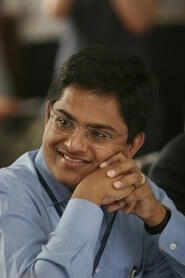
Karthik Muralidharan is an associate professor of economics at the University of California, San Diego where he joined the faculty as an assistant professor in 2008.

Born and raised in India, he earned an A.B. in economics (summa cum laude) from Harvard, an M.Phil. in economics from Cambridge (UK), and a Ph.D. in economics from Harvard. He is a Research Associate of the National Bureau of Economic Research (NBER), an Affiliate at the Bureau for Research and Economic Analysis of Development (BREAD), a Member of the Jameel Poverty Action Lab (J-PAL) network, an Affiliate at the Center for Effective Global Action (CEGA), and a Research Affiliate with Innovations for Poverty Action (IPA).

Prof. Muralidharan's primary research interests include development, public, and labor economics. Specific topics of interest include education, health, and social protection; measuring quality of public service delivery; program evaluation; and improving the effectiveness of public spending (with a focus on developing countries). Courses taught include undergraduate and graduate classes in development economics, program evaluation, and the economics of education.


Quality and Accountability in Healthcare Delivery: Audit-Study Evidence from Primary Care in India
Download pdf
Quality and Accountability in Healthcare Delivery: Audit-Study Evidence from Primary Care in India
Download pdf
Karthik Muralidharan Associate Professor of Economics at the University of California, San Diego
Seminars
-

Publicly provided long-term care (LTC) insurance with means-tested benefits is suspected to crowd out either private LTC insurance (Brown and Finkelstein, 2008), private saving (Gruber and Yelowitz, 1999; Sloan and Norton, 1997), or informal care (Pauly, 1990; Zweifel and Strüwe, 1997). This contribution predicts crowding-out effects for both private LTC insurance and informal care on the one hand and private saving and informal care on the other. These effects result from the interaction of a parent who decides about private LTC insurance before retirement and the amount of saving in retirement and a caregiver who decides about effort devoted to informal care. Some of the predictions are tested using a recent survey from China.

Image
photo
Peter Zweifel is an Emeritus of the University of Zurich. After a postdoc position with  the University of Wisconsin-Madison in 1974-75, he received tenure with the University of Zurich in 1984. Publications include more than 100 articles in refereed journals (AER, EnJ, EurJHE, JHE, JRI, JRU, PubCh) as well as Health Economics (with F. Breyer und M. Kifmann) and Insurance Economics (with R. Eisen); Energy Economics (with G. Erdmann and A. Praktiknjo) will be available by the end of 2015.

Long-term care: Is there crowding out of informal care, private insurance as well as saving?
Download pdf
Peter Zweifel Emeritus, University of Zurich, Switzerland
Seminars
Encina Hall616 Serra StreetStanford, CA 94305-6055
0
zaira.jpg

Zaira Razu is a research Associate and Project Manager at the Program on Poverty and Governance at CDDRL. She is currently working on the Governance of Public Health in Mexico project, focusing on the differences in mortality rates across income groups to analyze health disparities in the country. She is also collaborating in the design of impact and process evaluations of different interventions that seek to reduce youth violence in Mexico and the US, as well as to better understand the key dimensions of youth criminal careers: recruitment, incentives, training, and desistance. Zaira’s previous responsibilities at PovGov included a review on the current state of Political Economy scholarship in Mexico and the creation of a database of Oaxaca municipalities to analyze the relationship between community participation and the quality of public goods provision.

Zaira graduated from Stanford in June 2014 with an MA in International Policy Studies, concentrating in Democracy, Development, and the Rule of Law. She also holds a BA in Political Science from Instituto Tecnológico Autónomo de Mexico (ITAM). Zaira is interested in applied research on youth, health, and poverty alleviation policies. She has experience in impact evaluation (at the Inter-American Development Bank), and in policy design and implementation (at Fundación IDEA and in the Center Mario Molina, Mexico).


Publications

Díaz- Cayeros, A., & Razú, Z. (2014). ¿ Hacia dónde va la economía política en México?. El Trimestre Económico81(324), 783-806.


Project Manager and Research Assistant, Governance of Public Health in Mexico Project
-

Abstract: Concerns are mounting that changes in climate, land use, species invasions, and connectivity are changing the global landscape of infectious diseases. Ecological complexity makes these anthropogenic effects on infectious disease difficult to predict. Using data-driven mathematical models, I will show how mosquito-transmitted diseases such as malaria, dengue, and chikungunya may shift with changing climate. I will then discuss sources of uncertainty and how ecological understanding can help to mitigate future shifts in disease risk. Finally, I will introduce the new Center for Disease Ecology, Health, and Development based at Stanford University, which will work to improve human health and well-being through ecological solutions to infectious disease.

About the Speaker: Erin Mordecai has been an Assistant Professor in Biology at Stanford University since January 2015. Her research focuses on the ecology and evolution of infectious diseases in humans and natural systems, and in particular how infectious diseases respond to global change. She graduated from the University of Georgia in 2007 and received her PhD at the University of California Santa Barbara in 2012. She then completed an NSF Postdoctoral Research Fellowship in Biology at the University of North Carolina at Chapel Hill and North Carolina State University. 

Encina Hall

616 Serra Street

Stanford University

Erin Mordecai Assistant Professor in Biology Stanford University
Seminars
Subscribe to Environment