Security

FSI scholars produce research aimed at creating a safer world and examing the consequences of security policies on institutions and society. They look at longstanding issues including nuclear nonproliferation and the conflicts between countries like North and South Korea. But their research also examines new and emerging areas that transcend traditional borders – the drug war in Mexico and expanding terrorism networks. FSI researchers look at the changing methods of warfare with a focus on biosecurity and nuclear risk. They tackle cybersecurity with an eye toward privacy concerns and explore the implications of new actors like hackers.

Along with the changing face of conflict, terrorism and crime, FSI researchers study food security. They tackle the global problems of hunger, poverty and environmental degradation by generating knowledge and policy-relevant solutions. 

-

Abstract: In efforts to halt the Syrian government’s use of chemical weapons (CW) in that country’s civil war the United States and other outside powers applied coercive strategies, in both a deterrent and compellent mode. Outcomes varied: compellence achieved a partial success in getting Syria to give up much of its chemical stockpile, but there were multiple deterrence failures. This paper examines this record to draw lessons about factors associated with the effectiveness of coercion. Its analysis points to the interplay of three factors: credibility, motivation, and assurance. Regarding credibility, the case demonstrates that threats fulfilling many of the traditional criteria for establishing credibility can still fail. In Syria, this is partly because there were ambiguities in the scope of what was covered by deterrent warnings and partly because other factors also affect coercive outcomes. In the Syria case two additional factors were especially important. First, the domestic political motivations of the target affect whether external threats provide coercive leverage. In this case Syrian President Assad’s concern with regime survival led him to perceive the value of CW use as outweighing the likely costs even if outside powers followed through on retaliatory threats. Second, where regime survival is a concern, it is vital to pair coercive threats with appropriate assurances. Here, the case suggests that it is possible not only to provide too little assurance, but also too much. Whereas the Obama administration found it hard to offer credible assurances to Assad, the Trump administration initially conveyed assurances that were too robust, creating a sense that Syria could use CW with impunity. This analysis suggests there may have been a potentially viable path to effective coercion of the Assad regime, but the path would have involved intense tradeoffs that largely prevented decision makers from embracing it. Decision makers and outside commentators alike turned instead to a familiar schema that implies credibility is established by demonstrating a willingness to impose costs using airpower – a script that can be labeled the “resolve plus bombs” formula. Despite the frequent tendency to equate coercion with the threat or limited use of air strikes, this approach was not sufficient to change Syria’s calculations regarding chemical arms.


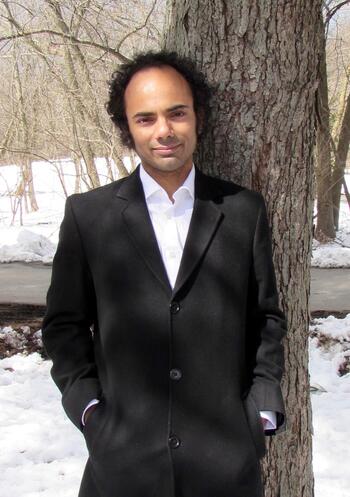
Speaker's Biography: Jeff Knopf is a professor at the Middlebury Institute of International Studies (MIIS) in Monterey, California, where he serves as chair of the M.A. program in Nonproliferation and Terrorism Studies and a senior research associate with the Center for Nonproliferation Studies (CNS). He is on sabbatical for the 2018-19 academic year and is spending the year as a visiting scholar at CISAC. This is his second stint at CISAC. Dr. Knopf received his Ph.D. in Political Science from Stanford and was previously a pre-doctoral fellow at CISAC in the days when it was still located in the old Galvez House. His most recently completed project is a forthcoming book volume he co-edited on Behavioral Economics and Nuclear Weapons. While at CISAC, Dr. Knopf will primarily be working on a project titled “Coercing Syria on Chemical Weapons.” This project examines efforts by the United States and other countries to apply deterrent and compellent strategies in attempts to stop the Syrian government from using chemical weapons and to dismantle its chemical arsenal. Dr. Knopf will also be working on a paper that explores cognitive aspects of the nuclear taboo.

Jeffrey Knopf Professor Middlebury Institute of International Studies (MIIS)
Seminars
-

Abstract: To drastically reduce emissions of greenhouse gases and expand energy access, nuclear energy may play a significant role in decarbonizing electrical grids. To the extent that this expansion involves developing new and advanced nuclear fuel cycle technologies, concerns about nonproliferation concurrently grow. To address at least one nonproliferation concern, a safeguards assessment was conducted on a conceptual nuclear waste processing technology, called pyroprocessing, using a traditional safeguards technique, called the neutron balance method. The safeguards assessment revealed that the fundamental requirements needed for the neutron balance method to work were not always observed. The diversion scenario modeled resulted in the undetected diversion of several kilograms of plutonium. The assessment found that traditional safeguards assumptions and techniques might not be adequate to meet nuclear material accountancy requirements. New approaches developed from fundamental research are needed to ensure new facilities are only being used for peaceful purposes.


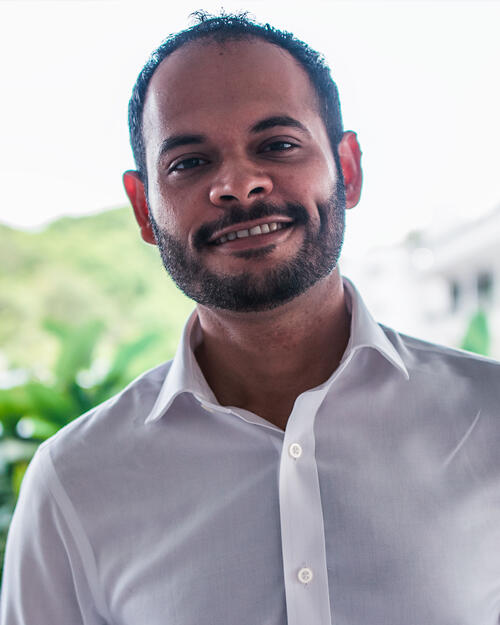
Speaker's Biography: Chantell Murphy is a Nuclear Security Postdoctoral Fellow at CISAC. Chantell Murphy earned her PhD in nuclear engineering from the University of New Mexico in 2018 and holds a MS in health physics from Georgetown University and a BS in physics from Florida State University.

Chantell Murphy worked as a graduate research assistant at Los Alamos National Laboratory supporting the nuclear engineering and nonproliferation division (NEN-5) and worked in the national security office (NSO). During her time at LANL Ms. Murphy investigated safeguards approaches for pyroprocessing facilities and helped develop an acquisition path analysis software tool called APAT for the International Atomic Energy Agency (IAEA). Ms. Murphy worked on safeguards approaches for advanced reactor designs like thorium fueled reactors, worked on knowledge retention issues for future warhead verification campaigns, and participated in and gave talks at several international safeguards and nuclear policy related workshops around the US and in Europe. Ms. Murphy also worked as a visiting scientist at the Forschungszentrum Jülich in Germany for three months developing the IAEA’s state level approach and acquisition path analysis with the Nuclear Waste Management and Reactor Safety group in the Institute of Energy and Climate Research.

Chantell Murphy’s previous experience also includes an internship at the Managing the Atom project at the Belfer Center for Science and International Affairs and work for the Congressional Commission on the Strategic Posture of the United States.

Chantell Murphy Nuclear Security Postdoctoal Fellow CISAC, Stanford University
Seminars
-
 
Abstract: 
Why were Western expectations about how Russia would develop after the Soviet collapse so misplaced? How has Putin's Russia, with a GDP less than that of Italy, managed to reassert itself so effectively on the world stage? And how should the West respond to Russia going forward? Angela Stent will discuss her new book, focusing on how Russia's relations with Europe have evolved and how Europe-- caught between Putin's Russia and Trump's America--is reassessing its options.
 
Speaker's Biography:

Angela Stent is Professor of Government and Foreign Service at Georgetown University and directs its Center for Eurasian, Russian and East European Studies. She has also served in the State Department’s Office of Policy Planning and as National Intelligence Officer for Russia and Eurasia at the National Intelligence Council. She is the author of Russia and Germany Reborn: Unification, the Soviet Collapse and the New Europe; The Limits of Partnership: U.S-Russian Relations in the Twenty-First Century and Putin’s World: Russia Against the West and with the Rest.


Angela Stent Professor of Government and Foreign Service Georgetown University
Seminars
Authors
Thomas Holme
News Type
Commentary
Date
Paragraphs

Three years into the Trump administration, “the United States and the People’s Republic of China find their bilateral relationship at a dangerous crossroads,” write Orville Schell of the Asia Society and Susan Shirk of the University of California San Diego (UCSD), co-chairs of the Task Force on U.S.-China Policy, at the opening of a recently published report, Course Correction: Toward an Effective and Sustainable China Policy. The report features the second set of findings issued by the Task Force, a group comprising China specialists from around the United States, which is convened by Asia Society’s Center on U.S.-China Relations and UCSD’s 21st Century China Center and which includes Karl Eikenberry, director of APARC’s U.S.-Asia Security Initiative.

In its first report, issued in 2017, the Task Force identified the fundamental interests of the United States in its relationship with China. Since then, more stresses and strains have beset the bilateral relations between the two countries. But while “Beijing’s recent policies under Xi Jinping’s leadership are primarily driving this negative dynamic” and the “Trump administration is justified in pushing back harder against China’s actions, note Schell and Shirk, “pushback alone isn’t a strategy. It must be accompanied by the articulation of specific goals and how they can be achieved.” The new report propose a strategy to that end, which the Task Force calls “smart competition.”

APARC caught up with Ambassador Eikenberry to learn more about the report and its recommendations.

Note: the following has been edited for clarity.

How does the February 2019 report by the Task Force on U.S.-China Policy differ from its 2017 report? 

Since our Task Force’s first report was published in February 2017, the Trump Administration’s China policy has developed significantly, its defining characteristics being demonstrated in trade and economic policy and in security strategy. Our new Task Force study takes stock of the current state of U.S.-China relations and focuses on policy analysis and policy prescription. It seems clear that President Trump’s shift from a strategy of engagement to one of more explicit competition was overdue. This report suggests the best organizing principles for the management of what will likely be an increasingly competitive U.S.-China relationship in the coming years.

How does this report frame Sino-American relations?

The report underscores the fact that this is not a zero-sum game. Emphasis is placed on finding ways and means to cooperate with China when mutually advantageous—and there are many issue areas where this is or might be possible, such as climate change and denuclearization of the Korean Peninsula. But the report also makes clear that in the domains of economic exchange, security, and political values—such as individual freedom and the primacy of the rule of law—America needs to work with like-minded allies and partners to ensure the global system that has benefitted all for over seven decades is not overturned by those seeking unilateral advantage.

Several of the report’s Task Force members were also involved in the recent China report from the Hoover Institution, Chinese Influence and American Interests: Promoting Constructive Vigilance. Where do you think these two publications intersect and part ways?

There was some overlap among the contributors to the two reports—full disclosure, I had the opportunity to participate in both projects. I think the studies are actually complementary—the portion of Course Correction devoted to PRC overseas influence activities drew upon the findings published in Chinese Influence and American Interests.

What development is of greatest concern to you as you think about the future of Sino-American relations?

I’m most concerned about the blurring of the management of economic exchange (trade and investment issues) and security competition (which includes maintaining a technological advantage over one’s competitors). The proliferation of technologies with military applications is complicating efforts of those trying to maintain robust economic relations between China and the United States. If our economies decouple, we will have a new Cold War


Hero Image
U.S. Secretary Of State Mike Pompeo Meets with Chinese Foreign Minister Wang Yi
Daisuke Suzuki /Pool/Getty Images
All News button
1
-

North Korea is the land of punditry, controversy and bad intelligence.  Policy debates swirl in Washington over how U.S. policy should address this foreign policy challenge.  Much of these debates is informed by a mix of opinion, ideology and politics.   How do we make sense of it all? Victor Cha and his Beyond Parallel microsite at CSIS try to cut through the noise to bring data to the study of North Korea and foreign policy.  He will discuss five data points that are critical to an understanding of the North Korea problem today and its policy challenges.

Image
victor cha small
Victor Cha holds the D.S. Song-KF Professorship in Government and International Affairs at Georgetown University. In 2009, he was also named as Senior Adviser for Asia and Korea Chair at the Center for Strategic and International Studies in Washington, D.C. He left the White House in 2007 after serving since 2004 as Director for Asian Affairs at the National Security Council.  At the White House, he was responsible primarily for Japan, the Korean peninsula, Australia/New Zealand and Pacific Island nation affairs.  Dr. Cha was also the Deputy Head of Delegation for the United States at the Six Party Talks in Beijing, and received two Outstanding Service commendations during his tenure at the NSC.  He is the author of five books, including the award-winning Alignment Despite Antagonism: The United States-Korea-Japan Security Triangle (Stanford University Press) (winner of the 2000 Ohira Book Prize), and The Impossible State: North Korea, Past and Future (Harper Collins Ecco, 2012) which was selected by Foreign Affairs as a “Best Book on the Asia-Pacific for 2012.” His newest book is Powerplay: Origins of the American Alliance System in Asia (Princeton University Press, 2016). He has testified before Congress numerous times on Asian security issues.  In 2018, he joined NBC and MSNBC as a News Contributor.  Prior to joining NBC, he had been a guest analyst for various media including CNN, ABC, NBC, CBS, The Colbert Report, Sports Illustrated, ESPN, Fox News, PBS, Huffington Post, Wall Street Journal, MSNBC, CNBC, BBC, and National Public Radio.  His op-eds have appeared in the Washington Post, New York Times, Los Angeles Times, USA Today, Foreign Policy, Japan Times, and Financial Times. He holds a B.A., an M.I.A., and a Ph.D. from Columbia University, as well as an M.A. from Oxford University.


Philippines Conference Room
Encina Hall, 3rd Floor
616 Serra Mall, Stanford, CA 94305

Victor Cha <i>Professor of Government, Georgetown University</i>
Seminars
-

Abstract: Ambassador Koster will address the following political-military issues during his lecture. How has the security environment in Europe evolved since 2014, with growing instability and insecurity in the North Africa and the Middle East, and an assertive Russia in the East? How has Europe and NATO reacted to these challenges? Policies, structures and capabilities have been adapted, but will it be enough to restore peace and stability in Europe ? How will the demise of the arms control architecture affect all of this in the years to come?


Speaker's Biography: Ambassador Timo S. Koster is a career diplomat at the Dutch Ministry of Foreign Affairs. As of November 2018, Mr. Koster assumed his position as Ambassador-at-large for Security Policy & Cyber. Prior to this, since 2012, he was Director for Defence Policy and Capabilities at NATO HQ in Brussels.

After finishing his law degree at the University of Amsterdam, Ambassador Koster joined the diplomatic academy of the Ministry of Foreign Affairs of the Netherlands in 1991. His first appointment was at the Royal Netherlands Embassy in Nairobi, Kenya. Back in The Hague from 1994, he served in several positions within the Ministry, including a stint as Private Secretary to the Minister for European Affairs, before moving to the Royal Netherlands Embassy in London, as Head of Economic Department, between 1998 and 2001.

In 2001, Ambassador Koster became Acting Director for European Integration at the Ministry of Economic Affairs, after which he served as a Project Director at the Ministry for Foreign Affairs. In 2003 Mr. Koster was appointed Deputy Ambassador at the Royal Netherlands Embassy in Athens, Greece. In 2008 he moved to Brussels where he served as Defence Advisor at the Netherlands Permanent Representation to NATO until 2012 when he moved to the position of Director Defence Policy & Capabilities in the NATO International Staff.

Ambassador Koster is affiliated to the Atlantic Council Washington DC as a non-resident Ambassadorial Fellow at the Brent Scowcroft Centre for International Strategy and Security.

Timo S. Koster is married with two sons and two daughters.

Timo Koster Career Diplomat Dutch Ministry of Foreign Affairs
Seminars
-
Image
Randy Schriver
Mr. Randall Schriver
is the Assistant Secretary of Defense for Indo-Pacific Security Affairs. Mr. Schriver was appointed as Assistant Secretary of Defense by President Donald Trump on 8 January 2018. Prior to his confirmation, Mr. Schriver was one of five founding partners of Armitage International LLC, a consulting firm that specializes in international business development and strategies. He was also CEO and President of the Project 2049 Institute, a non-profit research organization dedicated to the study of security trend lines in Asia.
 
Previously, Mr. Schriver served as Deputy Assistant Secretary of State for East Asian and Pacific Affairs. He was responsible for China, Taiwan, Mongolia, Hong Kong, Australia, New Zealand, and the Pacific Islands. From 2001 to 2003, he served as Chief of Staff and Senior Policy Advisor to the Deputy Secretary of State. From 1994 to 1998, he worked in the Office of the Secretary of Defense, including as the senior official responsible for the day-to-day management of U.S. bilateral relations with the People's Liberation Army and the bilateral security and military relationships with Taiwan.
 
Prior to his civilian service, he served as an active duty Navy Intelligence Officer from 1989 to 1991, including a deployment in support of Operation Desert Shield/Desert Storm. After active duty, he served in the Navy Reserves for nine years, including as Special Assistant to the Chairman of the Joint Chiefs of Staff and an attaché at U.S. Embassy Beijing and U.S. Embassy Ulaanbaatar.
 
Mr. Schriver has won numerous military and civilian awards from the U.S. government and was presented while at the State Department with the Order of the Propitious Clouds by the President of Taiwan for service promoting U.S.-Taiwan relations. Mr. Schriver received a Bachelor of Arts degree in history from Williams College and a Master of Arts degree from Harvard University.
 

Oksenberg Conference Room
616 Serra Mall
Encina Hall, 3rd Floor, Central S350
Stanford, CA 94305

Randall Schriver Assistant Secretary of Defense for Indo-Pacific Security Affairs
-

Abstract: Successful use of bots and trolls as tools of its expansionist foreign policy demonstrated the Russian government's superior capability in computational propaganda. Yet the main area of application for these tools remains inside Russia: to prop up Vladimir Putin's approval ratings and deny his opponents an opportunity to reach potential voters. In this paper, we use supervised machine learning algorithms for bot detection and sentiment analysis to do a first systematic survey of bot activity in the Russian segment of Twitter. We discover a high yet fluctuating volume of bot communication and presence of both pro- and anti-government as well as neutral bots. We also identify sources of information they spread and formulate testable hypotheses about the political strategy behind bots deployment. Finally, we discuss the implications of autocrats' reliance on domestic computational propaganda for the response to their activities abroad.


Speaker's Biography: Sergey Sanovich received his Ph.D. in Politics at NYU. He studies how autocrats use the power of persuasion to come to, and stay in, office. His ongoing research is focused on online censorship and propaganda by authoritarian regimes; elections and partisanship in electoral autocracies; and personalization of politics in both autocratic and democratic countries. To conduct his research, Sergey collects big data from social media, digitalizes archival documents, and runs field and survey experiments both online and offline.

Sergey Sanovich Cyber Fellow CISAC, Stanford University
Seminars
-

Abstract: My research investigates the formal institutionalization of inter-governmental cooperation among the three major Northeast Asian powers – China, Japan, and the Republic of Korea—in the face of a continued North Korean threat. How much of a shadow, if any, has North Korea’s nuclear weapons cast over the development of multilateralism in the region? Since 1999, the Northeast Asian region has seen intensifying institutionalization of cooperation among its major powers. In a region where the realist logic of state-centric nationalism, sovereignty, and balance of power still prevails, this new development of trilateral cooperation among the former and potential adversaries deserves serious scholarly investigation. What started as economic and functional cooperation, trilateral cooperation has since been substantially expanded to include political and security agendas at the highest level of government. What explains the emergence and endurance of trilateral cooperation and to what extent has containing the North Korean nuclear crisis shaped its institutional trajectory and outcomes? By examining the evolution of trilateral cooperation, I address some critical gaps in our understanding of formal institution building and the economic-security nexus in one of the most dynamic regions in the world.


Speaker's Biography: Yeajin Yoon is a 2018-2019 MacArthur Nuclear Security Pre-doctoral Fellow at CISAC and a doctoral candidate in the Blavatnik School of Government at the University of Oxford. Her dissertation examines the evolution of trilateral cooperation among the most militarily and economically dominant states in Northeast Asia, namely, China, Japan and the Republic of Korea, and considers when and how their relations become implicated in the North Korean nuclear crisis.


Prior to entering academia, Yeajin travelled extensively across Asia and worked with national governments, international organisations, and NGOs in the region. She led the development of the inaugural issue of the 'Oxford Government Review’ and helped facilitate a Track II dialogue on wartime history issues in Asia at Stanford University. Previously, she worked as a founding member of the Trilateral Cooperation Secretariat, the official intergovernmental organisation for China, Japan, and the Republic of Korea and managed a development fund focused on the ASEAN region at the Korean Foreign Ministry.


Yeajin received a Bachelor of Arts in Political Science with Honors from Stanford University and a Master of Public Policy degree from Oxford University.

Yeajin Yoon MacArthur Nuclear Security Pre-doctoral Fellow CISAC, Stanford University
Seminars
-

Abstract: How do nuclear-armed states coerce their adversaries in wars with limited aims without using nuclear weapons? I develop a theory of strategic substitution to explain why states use space, cyber and conventional missile weapons instead of nuclear weapons to maximize leverage against their adversaries. I also explain how they select space, cyber, and conventional missile force postures, defined as weapons and plans for using them. Threats to use space, cyber and conventional missile weapons are more credible sources of strategic leverage against adversaries in wars that do not threaten a state’s survival. I demonstrate the plausibility of the theory using China’s cyber force posture. China developed space, cyber and conventional missile weapons to solve a common problem: giving Beijing the leverage it could not gain from its nuclear weapons in a future war over Taiwanese independence involving the United States. Using original Chinese-language written sources and interviews conducted during extensive fieldwork, I show that Chinese leaders pursued cyber weapons to maximize their strategic leverage after the United States bombed the Chinese Embassy in Belgrade in 1999. As China’s vulnerability to cyber attacks grew during the 2000s, its appetite for risk in using cyber weapons declined, resulting in a change to its military cyber force posture in 2014.

Speaker Bio: Fiona Cunningham is a Post-Doctoral Fellow at CISAC. Her research interests lie at the intersection of technology and conflict, with an empirical focus on China. She received her PhD in September 2018 from the Department of Political Science at the Massachusetts Institute of Technology (MIT), where she was a member of the Security Studies Program. Her dissertation explained China’s development of space, cyber and conventional missile force postures as substitutes for using nuclear weapons to coerce adversaries. Her research is based on extensive fieldwork, including a year-long dissertation research fellowship at the Renmin University of China, Beijing, in 2015-6. She was a Pre-Doctoral Fellow in the Cyber Security Project at the Belfer Center for Science and International Affairs at the Kennedy School of Government, Harvard University, in 2017-8. Fiona’s research has been supported by the Smith Richardson Foundation, China Confucius Studies Program, and the MIT Center for International Studies. Her research on China's nuclear strategy has been published in the quarterly journal, International Security. Fiona holds a Bachelor of Arts in Politics and International Relations from the University of New South Wales and a Bachelor of Laws from the University of Sydney, both with first-class honors. She was a research associate at the Lowy Institute for International Policy in Sydney from 2009 until 2012, where she focused on extended nuclear deterrence in East Asia and nuclear nonproliferation. Fiona speaks Mandarin Chinese and French.

Fiona Cunningham Postdoctoral Fellow CISAC, Stanford University
Seminars
Subscribe to Security