Security

FSI scholars produce research aimed at creating a safer world and examing the consequences of security policies on institutions and society. They look at longstanding issues including nuclear nonproliferation and the conflicts between countries like North and South Korea. But their research also examines new and emerging areas that transcend traditional borders – the drug war in Mexico and expanding terrorism networks. FSI researchers look at the changing methods of warfare with a focus on biosecurity and nuclear risk. They tackle cybersecurity with an eye toward privacy concerns and explore the implications of new actors like hackers.

Along with the changing face of conflict, terrorism and crime, FSI researchers study food security. They tackle the global problems of hunger, poverty and environmental degradation by generating knowledge and policy-relevant solutions. 

Authors
News Type
Commentary
Date
Paragraphs

This article originally appeared at Brookings.


Ukraine is halfway through a presidential election: The first round took place on March 31, and the run-off is coming up on April 21. At the annual Kyiv Security Forum and in other conversations in Kyiv last week, I had the opportunity to catch up on the latest developments in Ukraine, and came away with five key observations.

UKRAINE AGAIN SCORES A DEMOCRATIC ELECTION

Ukraine pulled off the March 31 election with no major hitch. Voting and ballot-counting proceeded smoothly. The Central Election Commission’s vote tallies corresponded with exit poll results and a non-governmental parallel count. The International Election Observer Mission (IEOM) released a preliminary assessment that noted some problems but termed the election competitive, reported that candidates campaigned freely, and said that the electorate had a broad choice.

The fact that Ukraine held a free, competitive presidential election should come as no surprise. The previous four presidential votes—the third round of the 2004 election (after the Supreme Court ordered a rerun of the run-off following the Orange Revolution), the general and run-off rounds of the 2010 election, and the 2014 election after the Maidan Revolution—all earned free, fair, and competitive assessments. Another indicator of a free and fair election: While he made it to the run-off, incumbent President Petro Poroshenko came in a distant second.

Sadly, Ukraine’s democratic experience remains a relative rarity in the post-Soviet space. Showing no sense of irony, Russian media cherry-picked criticisms from the IEOM’s assessment to disparage the overall election, yet that election contrasted markedly with the Russian presidential election in 2018. Indeed, in early March, few Ukrainians could say with certainty which two candidates would make it to the run-off; most Russians could have said with certainty who would win their 2018 presidential election as early as 2013.

BARRING A MIRACLE, IT WILL BE PRESIDENT ZELENSKY

TV comedian Volodymyr Zelensky won the first round, capturing 30.24 percent of the popular vote to Poroshenko’s 15.95 percent. Pre-election polls projected a Zelensky win (the question was who would face him in the run-off). His rise since announcing his candidacy in late December is striking. Six or eight months ago, pundits projected a run-off between Poroshenko and former Prime Minister Yuliya Tymoshenko, who came in third.

Poroshenko received more bad news on April 11, with the release of the first polls regarding the run-off. One showed Zelensky ahead 51 percent to 21 percent, with an even bigger lead of 61 percent to 24 percent among those likely to vote. A second poll of those likely to vote gave Zelensky a yet wider margin: 71 percent to 24 percent. Those numbers pose a daunting challenge for the incumbent, who appears competitive only in western Ukraine.

Poroshenko deserves credit for overseeing some impressive reforms, and he has had to cope with a low-intensity war with Russia. Reforms, however, slowed after 2016. Voters felt that Poroshenko had not done enough to fight corruption or challenge the outsized political and economic influence of the country’s oligarchs. He also suffered from an under-performing economy. The electorate wanted change.

It is difficult to see how Poroshenko can turn things around in the short time before Sunday’s run-off, though a few still believe he has a chance. They argue the electorate emotionally cast a protest vote but now must ask who really should lead the country: Poroshenko or a political neophyte.

The president’s campaign has gone negative, seeking to portray the run-off as a choice between Poroshenko and Vladimir Putin. That appears to be having little impact. On the evening of April 11, the president crashed a TV talk show on a pro-Zelensky network and had a brief, bitter telephone exchange with his rival. The episode carried a whiff of desperation. Poroshenko says he wants to debate Zelensky, but the two cannot agree on details. Zelensky did not show up at Poroshenko’s proposed debate on April 14, and the president says he will not turn up at Zelensky’s proposed venue on April 19.

WHO IS ZELENSKY?

Ukrainians and Western diplomats are trying to figure out what a Zelensky presidency would mean. One senior Ukrainian official’s comment—the comedian “is talented and smart, but how will he govern if he wins?”—reflects the views of many.

On television, Zelensky plays a common man thrust unexpectedly into the presidency, where he wages war against the ills that trouble Ukraine. The show is called Sluha Narodu (Servant of the People). During the campaign, Zelensky gave few interviews, held no campaign rallies, and did not lay out positions in any detail, instead letting his television persona define his image.

Zelensky has described in generalities a readiness to negotiate with Putin but with the goal of recovering all Russian-occupied territories; support for joining the European Union and NATO; and a desire to end corruption and fully liberalize the economy. His supporters—who include several noted reformers—describe a Russia-wary, pro-Western candidate who will put fighting corruption at the top of his agenda. Some suggest Zelensky would take a hard line with the International Monetary Fund (IMF) and its conditions. That could prove tricky. Ukraine needs financing, and no bank matches IMF rates.

Other Ukrainians hold a darker view of a Zelensky presidency. They express concern about his links to Ihor Kolomoisky, an oligarch who owns the network that broadcasts Sluha Narodu. Kolomoisky now resides in Israel after his bank, the largest in Ukraine, was taken over by Ukraine’s central bank following charges of financial improprieties. Critics question Zelensky’s lack of political experience, his ability to deal with Putin, and his commitment to a pro-Western course.

Zelensky reportedly this week will name key members of his team, including the foreign and defense ministers, chief of the general staff, head of the Security Service of Ukraine and procurator general. That could provide indications as to his planned direction.

A debate would provide Zelensky the venue to further define his prospective presidency and allow the country’s voters an opportunity to compare and contrast the positions of the run-off candidates. But a debate likely is not in the cards. Zelensky easily bested his opponents in the first round by avoiding specifics; why change a winning strategy now?

THE RUSSIANS—THE DOG THAT DIDN’T BARK?

Many expected the Russians, who used force to seize and illegally annex Crimea in 2014 and then fostered a simmering conflict in the eastern region of Donbas, to interfere in Ukraine’s election. They undoubtedly did—but with little apparent effect.

Ukrainian officials say Russian hackers had probed the Central Election Commission’s systems but without success. One noted that the Russians seemed more focused on general destabilization of the country rather than the election.

The Kremlin has made clear it wants Poroshenko to be a one-term president. Beyond that, however, Russian officials have taken care not to endorse a particular candidate, perhaps understanding that a “Russian favorite” tag would not prove helpful. Yuriy Boyko, head of the Opposition Bloc—the closest thing in Ukraine to a pro-Russian party—visited Moscow on the eve of the election and returned with a plan to obtain cheaper gas. That might have helped him in the eastern part of the country, from where most of his votes came. He did better than expected but still finished fourth.

The fact that part of Donbas remains occupied by Russian and Russian proxy forces severely hampers the election prospects for someone such as Boyko. The population there, which historically has favored close relations with Russia, could not vote. Nor could the population of Crimea, the only part of Ukraine in which ethnic Russians constitute a majority.

IT’S NOT OVER UNTIL IT’S OVER

Ukrainians will know their next president late on April 21, though the official vote may take a week to report. The winner will be inaugurated no later than 30 days after the Central Election Commission announces the official result. But another national ballot looms on October 27: the Rada (parliament) elections.

The majority coalition that emerges after the new Rada is seated will select the prime minister. Zelensky, if he becomes president, will need to build his political party—named, not coincidentally, Sluha Narodu—to secure a large bloc in the Rada. That matters, as executive power in Ukraine is bifurcated, with the prime minister choosing most of the cabinet. Other parties could see defections from their ranks if Sluha Narodu builds steam, but speculation has already begun about the kind of opposition might emerge.

Some see a possibility that Zelensky might try to force snap elections in order to translate a big win on April 21 into a quick Rada win for Sluha Narodu. However, that does not appear legally possible. The Rada cannot be dismissed within six months of the end of its term. That clock starts ticking in late May, and procedural rules would not allow a newly inaugurated president time to call an early election before the six-month period began.

Politics in Ukraine have never been easy or straightforward, and they have at several points taken radical turns. The country may be entering one such period now. How Zelensky—assuming he wins on Sunday—takes on presidential responsibilities and manages the complex politics that follow will matter greatly for Ukraine’s ability to continue its reform path, deepen integration with Europe, secure peace, and regain occupied territories…all despite Russian efforts to return it to Moscow’s orbit.


Hero Image
steven pifer 0
All News button
1
-

EMERGING ISSUES IN CONTEMPORARY ASIA

A Special Seminar Series


RSVP required by Wednesday, April 17, 2019

RSVP Now

ABSTRACT: Why does success in combat sometimes fail to produce a stable and durable peace settlement? In the 1965 war, India successfully repelled a Pakistani invasion of the disputed territory of Kashmir, captured new territory, and launched a massive counter-offensive – but it did not improve the long-term security of Kashmir or deter future Pakistani aggression. This presentation offers an explanation that shows how war can help to establish deterrence between enduring rivals. I argue combat success is important, but must be paired with costly signals of resolve. In 1965, India achieved combat success but failed to deliver such signals of resolve: it did not permanently retain the Kashmiri territory it captured, and it deliberately limited the strategic threat posed by its counter-offensive. As a result, India defended against invasion without establishing post-war deterrence. India’s current military strategy continues to favor ineffective and potentially destabilizing concepts of deterrence. This carries implications not only for regional security, but also U.S. strategy, which increasingly depends on India to maintain a favorable and stable regional balance of power.
 
Image
Arzan Tarapore
PROFILE:
Arzan Tarapore is a nonresident fellow at the National Bureau of Asian Research, an adjunct defense analyst at the RAND Corporation, and from Fall 2019, an adjunct assistant professor at Georgetown University. His research lies at the intersection of South Asian politics and military strategy. His current book project explains the concept of strategic effectiveness, drawing on in-depth historical case studies of India’s war-fighting experience since 1965. Prior to his scholarly career, Arzan served for 13 years in the Australian Defence Department, which included operational deployments and a diplomatic posting to Washington, DC. He holds a PhD in war studies from King’s College London.


Philippines Conference RoomEncina Hall, 3rd Floor, Central616 Serra Street, Stanford, CA 94305
Arzan Tarapore Nonresident fellow at the National Bureau of Asian Research
Authors
Ketian Zhang
News Type
Commentary
Date
Paragraphs

On March 31, Taiwan’s Ministry of Foreign Affairs reported that two Chinese Air Force (PLAAF) J-11 jets crossed the median line of the Taiwan Strait. This violated the long-held tacit agreement between China and Taiwan that neither side should cross the median line.

Taiwan deemed this “an intentional, reckless & provocative action,” which triggered “a 10-minute standoff” in the air. As Asia security expert Bonnie S. Glaser notes that, if intentional, this would be the first PLAAF crossing of the median line in about 20 years. In this case, it’s likely that Taiwan, not the South China Sea, prompted Beijing’s actions.

An unresolved issue from the Chinese civil war, Taiwan has always been a “core interest” to party leaders in Beijing. Here are some key takeaways from my research on China-Taiwan relations…

Read the full article in The Washington Post.


To hear more from Ketian, don't miss her recently posted video Q&A. In addition, be sure to RSVP for her April 16 seminar "Killing the Chicken to Scare the Monkey: Explaining Coercion by China in the South China Sea."

Hero Image
The marines of China navy participate in the annual military training on January 3, 2018 in Zhanjiang,
ZHANJIANG, CHINA - JANUARY 03: The marines of China navy participate in the annual military training on January 3, 2018 in Zhanjiang, Guangdong Province of China. | Pu Haiyang/VCG via Getty Images
All News button
1
News Type
Q&As
Date
Paragraphs

We sat down with our 2018-19 Shorenstein Postdoctoral Fellow in Contemporary Asia Ketian Zhang to discuss China's use of coercion in foreign policy; her research on  South China Sea disputes; her forthcoming articles; and the fellowship experience in general. To hear more from Ketian, RSVP for her April 16 seminar "Killing the Chicken to Scare the Monkey: Explaining Coercion by China in the South China Sea."

Hero Image
Ketian Zhang participating in Q&A
Thom Holme, APARC
All News button
1
News Type
News
Date
Paragraphs

SPICE is now accepting applications for the 2019 East Asia Summer Institute for High School Teachers. This free three-day institute is SPICE’s premier professional development opportunity for teachers, combining Stanford’s deep content expertise with SPICE’s award-winning lesson plans.

SPICE/NCTA East Asia Summer Institute for High School Teachers
July 8–10, 2019
Stanford University
Application deadline: May 6, 2019

High school teachers of social studies and language arts are especially encouraged to apply.

Participants will learn from Stanford faculty and other experts about the geography, cultures, politics, economics, history, and literature of East Asia, including a special focus on U.S.–Asia relations and the Asian diaspora in the United States. Teachers will also engage in pedagogy-focused discussions and receive training on several SPICE lesson plans on East Asia, in order to help them translate their new content knowledge to the classroom. Teachers who complete the professional development seminar will be eligible for a $250 stipend and three units of credit from Stanford Continuing Studies, and they will leave Stanford with several extensive SPICE curriculum units in hand.

This professional development opportunity will focus largely on China, Japan, and Korea. For example, last year’s speakers included Kathleen Stephens (former U.S. Ambassador to the Republic of Korea), Peter Duus (renowned Stanford scholar of modern Japan), and Clayton Dube (Director of the USC U.S.-China Institute). The institute also featured speakers like author Chun Yu (who grew up in China’s Cultural Revolution) and Joseph Yasutake (who grew up in a Japanese American internment camp), whose rich personal stories brought history to life. SPICE staff led complementary interactive curriculum training sessions on China’s economic development, the atomic bombing of Hiroshima, South Korean pop culture, and East Asia’s “history wars.”

“Every speaker added a new perspective to historical and contemporary events,” remarked participant Kimberly Gavin. “[The] lectures enriched my knowledge base of topics, curriculum demonstrations gave me ideas for effective lessons in the classroom, small group discussions led to rich conversations about primary and secondary sources, and teacher sharing introduced me to new websites. There wasn’t anything that was done that wasn’t valuable to me… I told my administrator yesterday that this was the best conference I have been to as a teacher.”

More information is available at https://spice.fsi.stanford.edu/fellowships/ncta_for_high_school_teachers. Interested high school teachers can apply directly at https://forms.gle/Jd3PP8EowXyPkAyX9. The application deadline is May 6.

The 2019 East Asia Summer Institute for High School Teachers at Stanford University is made possible by the National Consortium for Teaching about Asia.

Stay informed of SPICE news by joining our email list or following us on Facebook and Twitter.


Please note: Due to unexpected funding reductions this year, we are only able to offer our high school institute in 2019. We hope to bring back our middle school institute next year.


Related articles:


Hero Image
Stanford high school teacher professional development
Participants collaborate at the 2018 East Asia Summer Institute for High School Teachers. | Rylan Sekiguchi
All News button
1
-

The 3rd Asia-Pacific Geo-Economic Strategy Forum
 

May 2, 2019

Hauck Auditorium, Hoover Institution, Stanford University

Sponsored and organized by Nikkei Inc., The Hoover Institution, and the Freeman Spogli Institue of International Studies (FSI)


RSVP REQUIRED: https://www.global-nikkei.com/19apgeo/
(RSVP starts from April 10)


Agenda

1:00pm - 1:05pm
Welcome Remark:
Adm. Gary Roughead, Hoover Institution, Stanford University


1:005pm - 1:25pm
Keynote Speech:
Itsunori Onodera, Former Minister of Defense, Japan
 

1:30pm - 2:20pm
Panel I: Indo-Pacific Strategy vs Belt & Road Initiative

Chair: Akihiko Tanaka, President, National Graduate Institute for Policy Studies

Panelists:
Masahisa Sato, State Minister for Foreign Affairs of Japan
Akio Takahara,  Tokyo University
Donald Emmerson, Freeman Spogli Institue for International Studies, Stanford University
 

2:20pm - 2:30pm
Coffee Break


2:30pm - 2:50pm
Special Speech
:
Gen. H.R. McMaster,
Hoover Institution


2:55pm - 3:50pm
Panel Discussion II: US-Japan Strategic Collaboration: Technology, Trade and Economics

Chair: Satoru Mori, Hosei University

Panelists:
Kenji Wakamiya, Former State Minister of Defense, Japan
Hideaki Watanabe, Former Commissioner of Acquisition, Technology & Logistics Agency (ATLA)
Janis Pamiljans, President, Northrop Grumman Aerospace Systems
Nelson Pedeiro, Vice President, Advanced Technology Center, Lockheed Martin
 

3:50pm - 4:00pm
Coffee Break


4:05pm - 4:55pm
Panel Discussion III: Japan`s Defense/Security Strategy

Chair: Satoshi Morimoto, Former Minister of Defense of Japan

Panelists:
Gen Nakatani, Former Minister of Defense, Japan
Itsunori Onodera, Former Minister of Defense, Japan
James Fearon, Freeman Spogli Institute for International Studies, Stanford University
 

4:55pm - 5:00pm
Closing Remark:

Adm. Gary Roughead, Hoover Institution, Stanford University


Everett and Jane Hauck Auditorium
David and Joan Traitel Building of Hoover Institution
435 Lasuen Mall, Stanford, CA 94305
Stanford University


Symposiums
-
Image
Stanford University landscape with Memorial Church and the Main Quad at the center.

The JIIA-Stanford Symposium

"The Past, Present, and Future International Order in East Asia"

May 10, 2019

Bechtel Conference Center, Encina Hall, Stanford University

Sponsored and organized by the Japan Institute for International Affairs (JIIA) and Japan Program and the US-Asia Security Initiative of the Walter H. Shorenstein Asia-Pacific Research Center (APARC) of the Freeman Spogli Institue of International Studies (FSI) at Stanford University 
 

Interstate relations in East Asia are at a critical juncture.  The post-World War II regional order, shaped by the San Francisco Treaty of 1951, underpinned by a common commitment to a liberal trade system, and led by the United States, is under stress.  The end of the Cold War, rise of China, and recent changes in America’s foreign policy orientation have transformed the environment that sustained “the San Francisco System.”  It is unclear if this system will be maintained, and if not, what will replace it.  The lineage of the San Francisco System itself reaches back to the post-World War I Versailles-Washington System.  An examination of the success and shortcomings of each of these systems can offer insights on the rise and fall of international systems, especially in an Asian context.  In this symposium, we explore the circumstances that shaped the establishment and evolution of the East Asian political, economic, and security architectures from post-WWI to present; discuss the forces that built and undermined the past and existing architecture; and debate possible regional futures.  We will emphasize the perspectives and roles of the U.S., Japan, and China, and focus on major influencing factors including historical legacies, the changing distribution of global power, alliance structures, and political ideologies.


Agenda

9:00am - 9:30am 
Registration and Breakfast 
 

9:30am - 9:45am 
Welcome Remarks: 
Gi-Wook Shin, Director, APARC, Stanford University 
Kenichiro Sasae, President, JIIA 
Takeo Hoshi, Director, Japan Program, APARC, Stanford Univeristy 
 

9:45am - 11:30am 
Panel I: Comparing “the Versailles-Washington System” and “San Francisco System”: Lessons from the Rise and Fall of International Orders in East Asia

Chair: Daniel Sneider, FSI, Stanford University

Panelists: 
Shin Kawashima, University of Tokyo 
Masaya Inoue,  Seikei University 
Lin Hsiao-ting, Hoover Institution, Stanford University 
David Kennedy, Center for International Security and Cooperation (CISAC), FSI, Stanford University 
 

11:30am - 1:15pm 
Lunch 

Keynote Speaker: Ambassador Michael Armacost


1:15pm - 3:00pm 
Panel Discussion II: Japanese, U.S. and Chinese Interests and Security

Chair: Kenichiro Sasae, JIIA 

Panelists: 
Ken Jimbo, Keio University 
Tetsuo Kotani, JIIA 
Mike Lampton, APARC, Stanford University 
Jim Schoff, Carnegie Endowment for International Peace (CEIP) 
 

3:00pm - 3:30pm 
Coffee Break 
 

3:30pm - 5:15pm 
Panel Discussion III: Alternative Future East Asia Systems

Chair: Phillip Lipscy, FSI, Stanford University 

Panelists: 
Jim Fearon, FSI, Stanford University 
Ryo Sahashi, University of Tokyo 
Kenichiro Sasae, President, JIIA 
Tom Christensen, Columbia University 
 

5:15pm - 5:35pm 
Rapporteurs' review of symposium discusisons 
 

5:35pm - 5:45pm 
Closing Remarks: 
Karl Eikenberry, Director, US-Asia Security Initiative, APARC, Stanford University 
Kenichiro Sasae, President, JIIA 
 

5:45pm - 6:30pm 
Reception (Encina Lobby)

Bechtel Conference Center
616 Serra Mall
Encina Hall, Central, 1st Floor
Stanford, CA 94305

Symposiums
-

Abstract: President Trump may talk about the Middle East differently than Obama did. But the two seem to share the view that the United States is too involved in the region and should devote fewer resources and less time to it. The reduced appetite for U.S. engagement in the region reflects, not an ideological predilection or an idiosyncrasy of these two presidents, but a deeper change in both regional dynamics and broader U.S. interests. Despite this, the United States exists in a kind of Middle Eastern purgatory—too distracted by regional crises to pivot to other global priorities but not invested enough to move the region in a better direction. This worst-of-both-worlds approach exacts a heavy price. It sows uncertainty among Washington’s Middle Eastern partners, which encourages them to act in risky and aggressive ways. It deepens the American public’s frustration with the region’s endless turmoil, as well as with U.S. efforts to address it. It diverts resources that could otherwise be devoted to confronting a rising China and a revanchist Russia. And all the while, by remaining unclear about the limits of its commitments, the United States risks getting dragged into yet another Middle Eastern conflict. 

 
It is time for Washington to put an end to wishful thinking about its ability to establish order on its own terms or to transform self-interested and shortsighted regional partners into reliable allies—at least without incurring enormous costs and long-term commitments. That means making some ugly choices to craft a strategy that will protect the most important U.S. interests in the region, without sending the United States back into purgatory. Karlin and Wittes will outline the choices before the next U.S. president and their view of a realistic, sustainable strategy for the United States in the Middle East. 
 
Tamara Wittes' Biography: Tamara Cofman Wittes is a senior fellow in the Center for Middle East Policy at Brookings. Wittes served as deputy assistant secretary of state for Near Eastern affairs from November of 2009 to January 2012, coordinating U.S. policy on democracy and human rights in the Middle East during the Arab uprisings. Wittes also oversaw the Middle East Partnership Initiative and served as deputy special coordinator for Middle East transitions.


Wittes is a co-host of Rational Security, a weekly podcast on foreign policy and national security issues. She writes on U.S. Middle East policy, regional conflict and conflict resolution, the challenges of global democracy, and the future of Arab governance. Her current research is for a forthcoming book, Our SOBs, on the tangled history of America’s ties to autocratic allies.


Wittes joined Brookings in December of 2003. Previously, she served as a Middle East specialist at the U.S. Institute of Peace and director of programs at the Middle East Institute in Washington. She has also taught courses in international relations and security studies at Georgetown University. Wittes was one of the first recipients of the Rabin-Peres Peace Award, established by President Bill Clinton in 1997.


Wittes is the author of "Freedom’s Unsteady March: America’s Role in Building Arab Democracy" (Brookings Institution Press, 2008) and the editor of "How Israelis and Palestinians Negotiate: A Cross-Cultural Analysis of the Oslo Peace Process" (USIP, 2005). She holds a bachelor's in Judaic and Near Eastern studies from Oberlin College, and a master's and doctorate in government from Georgetown University. She serves on the board of the National Democratic Institute, as well as the advisory board of the Israel Institute, and is a member of the Council on Foreign Relations and Women in International Security.


Mara Karlin's Biography: Mara Karlin, PhD, is Director of Strategic Studies at Johns Hopkins University’s School of Advanced International Studies (SAIS). She is also an Associate Professor at SAIS and a nonresident senior fellow at The Brookings Institution. Karlin has served in national security roles for five U.S. secretaries of defense, advising on policies spanning strategic planning, defense budgeting, future wars and the evolving security environment, and regional affairs involving the Middle East, Europe, and Asia. Most recently, she served as the deputy assistant secretary of defense for strategy and force development.  Karlin has been awarded Department of Defense Medals for Meritorious and Outstanding Public Service, among others. She is the author of Building Militaries in Fragile States: Challenges for the United States (University of Pennsylvania Press; 2018).

Tamara Wittes Senior fellow, Center for Middle East Policy Brookings
Mara Karlin Senior fellow,Center for 21st Century Security and Intelligence SAIS and Brookings
Seminars
-

RSVPs for this event are now closed. This event is open only to the Stanford community; a valid Stanford ID will be required to enter. 

NOTE: THIS EVENT IS CLOSED TO THE MEDIA

Image
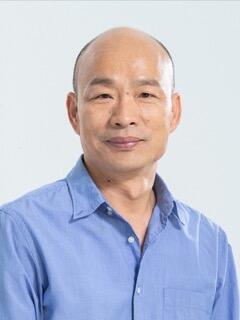
Kaohsiung Mayor Han Kuo-yu

Han Kuo-yu was elected Mayor of Kaohsiung, Taiwan, in November 2018, becoming the first member of the Kuomintang (KMT) to hold that office since 1998. He served as a member of the Legislative Yuan from Taipei County from 1993-2002, and later became the general manager of the Taipei Agricultural Products Marketing Corporation. 

Mr. Han graduated from Soochow University (Taipei) with a degree in English literature, and earned a master’s degree in law from National Chengchi University’s Graduate Institute of East Asian Studies.
 
This event is co-sponsored by the Hoover Institution and the Taiwan Democracy and Security Project, part of the U.S.-Asia Security Initiative. 
 

Philippines Room
616 Serra Mall
Encina Hall, 3rd Floor, Central (C330)
Stanford, CA 94305

Han Kuo-yu Mayor of Kaohsiung, Taiwan
-

Massive changes in the global food sector over the next few decades – driven by climate change and other environmental stresses, growing population and income, advances in technology, and shifts in policies and trade patterns – will have profound implications for the oceans. Roz Naylor, Senior Fellow and Founding Director of Stanford’s Center on Food Security and the Environment,  will discuss the interplay between terrestrial and marine food systems, highlighting the rising role of aquaculture in helping to meet the nutritional demands of 9-10 billion people by 2050. As a platform for her talk, she will introduce a new research initiative at Stanford on “Oceans and the Future of Food”, co-led by the Center for Oceans Solutions (COS) and the Center on Food Security and the Environment (FSE).

Free Admission is by reservation only. Please call 831-655-6200 between 8:30AM – 5:00PM, Mon-Fri, or RSVP at the Friends of Hopkins web page.

Contact:
Amanda Whitmire
831-655-6200
thalassa@stanford.edu

Boat Works Lecture Hall, Hopkins Marine Station

Lectures
Subscribe to Security