Congratulations to CISAC honors program Class of 2019! On June 14, students in the CISAC Interschool Honors Program in International Studies graduated in a conferral of honors ceremony on the front lawn of Encina Hall.
CISAC is proud to add our 11 new graduates to our expanding list of alumni. The CISAC honors program, launched in 2001, consists of a two-week honors college program in Washington D.C., tours of government agencies, meetings with influential policy makers, and weekly seminars with CISAC faculty. Honors students are also required to research and complete an original thesis on an important national security issue. The 2019 program was co-directed by Professors Martha Crenshaw and Coit “Chip” Blacker. The occasion marked their last year teaching in the program, as both are retiring this year.
The graduates are heading to a wide variety of careers, from graduate education to investment banking. A sample of this class’s upcoming plans includes:
- graduate degrees from Trinity College, Dublin, Harvard, Stanford, and Cambridge Universities;
- a position on the Senate Committee on Foreign Relations Minority staff;
- an assistant product manager at Schmidt Futures;
- a reporter at Wall Street Journal's Washington bureau; and
- an investment associate at Bridgewater Associates.
Several honors students also won awards for their outstanding work as undergraduates.
Philip Clark, ’19, won the Terman Award in Management Science & Engineering, the Kennedy Honors Thesis Prize, and the Hoefer Prize. The Terman Award is presented to the top five percent of each year's School of Engineering seniors. The Kennedy Prize is awarded annually to the single best thesis in each of the four areas of humanities, social sciences, natural sciences, and engineering and applied sciences. Recipients of this award have accomplished exceptionally advanced research in the field and have shown strong potential for publication in peer-reviewed scholarly works. The Hoefer Prize recognizes outstanding Stanford undergraduate writing in Writing in the Major courses
Andrew Milich, ’19, won the Terman Award in Computer Science and the William J. Perry Prize. The William J. Perry Prize is awarded by CISAC to a student for excellence in policy-relevant research in international security studies.
Kaylana Mueller-Hsia, ’19, won the John Holland Slusser World Peace Prize. The Slusser Prize is awarded by the John Holland Slusser World Peace Fund to the thesis that best demonstrates excellence in the analysis of one or more steps towards world peace.
Read below for more on this year’s graduates and their theses:
Philip Clark
Climbing to “Strategic Commanding Heights”: Understanding Chinese Technology Investment in the United States
Thesis Advisor: Amy Zegart
"The rise of China ranks among the most important American foreign policy challenges. Philip’s path-breaking thesis finds that one of Beijing’s most powerful tools to secure commercial and military advantage is perfectly legal and largely overlooked: venture capital investment in American high-tech startups. The thesis creates and analyzes two original datasets linking Chinese venture capital investment to the technological priorities of the US and Chinese military. It uncovers patterns of investor ties to the Chinese Communist Party. And in two richly researched case studies, Philip develops a new theoretical model explaining when, why, and how China succeeded in surging its investment in a coordinated fashion. Philip has produced the best analysis of the topic yet written in the academy or government, and its implications are both important and unsettling."
Alexa Corse
Election Cybersecurity: Assessing the Roles of Federalism and Partisanship
Thesis Advisor: Andrew Hall
"Securing America’s elections is one of the most pressing and salient policy challenges facing the country today. Why are we struggling to do it? A common narrative is that partisanship is to blame, but Alexa’s thesis raises important doubts about this account. Her thesis sheds light on the fiercely independent views of election administrators and their suspicion of national interventions into the electoral system, and, through a series of case studies, shows that this suspicion is likely more important than simple partisan disagreement in frustrating the federal government’s efforts to offer a unified approach to election security. In offering a masterful account of this process, Alexa’s thesis makes us rethink the problem of election security---no small feat for a thesis project, and an accomplishment she should take great pride in having achieved."
Federico Derby
A Green Light at the End of Kim’s Dock? North Korea and International Cooperation on the Environment
Thesis Advisor: Siegfried Hecker
"Federico’s thesis on North Korea’s compliance with multinational environmental agreements is a tour de force. He conceived and developed a novel multispectral satellite imagery analysis technique to gather information on agreement compliance that is outside the reach of normal confirmation mechanisms in such a closed and isolated country. He combined this innovative technical approach with meticulously researched understanding of international environmental agreements to conclude that North Korea complied with such agreements when compliance supported the stability of the Kim regime. His study represents an outstanding example CISAC’s objectives of combining the best of the technical and social sciences."
Jake Dow
A Path Dependent Prerogative: Why British Prime Ministers Gave Up Their War Powers
Thesis Advisor: Kenneth Schultz
"Jake’s thesis explains a remarkable development. Before 2003, the British parliament had never taken a vote to authorize the use of military force before an operation commenced; the power to start a war was held by the Crown and delegated to the prime minister. Starting with the Iraq War in 2003, however, every use of British military force has been preceded by a parliamentary vote. By examining parliamentary debates and reports, public statements, and government documents, Jake shows how a decision made for short-term political benefit in 2003 unexpectedly led to a durable change in how war powers are wielded. The unprecedented vote on Iraq changed beliefs about the legitimate role of parliament, leading subsequent PMs to expect political risks from acting approval. Jake’s thesis is an excellent example of careful research presented through compelling historical narrative."
 Megan Haines
The French Fourth Republic’s Decision to Build a Bomb: Prestige, Politics, and Alliances
Thesis Advisor: Coit Blacker
"The decision by French policymakers to acquire nuclear weapons is said to reflect France’s determination to restore the country’s prestige and to assure its great-power status following its defeat and occupation in World War II. In this carefully researched and insightful thesis, Megan presses beyond this conventional wisdom to determine what role other factors may have played in France’s decision “to go nuclear.” She finds that while prestige did in fact constitute a kind of permissive condition, two other factors – France’s deep suspicions about the commitment of its NATO allies to come the country’s defense and the determination of conservative politicians to press ahead with nuclearization – provide a valuable lens through which to view and understand the decision. It’s a fascinating story, told with a keen sensitivity to the highly contingent way in which the French nuclear weapons program unfolded and the many obstacles that both civilian and military decisionmakers faced in achieving their goal."
Katherine Irajpanah
War Power Moves: Executive Incentives for Unilateral Action
Thesis Advisors: Condoleezza Rice and Kenneth Schultz; Robert Rakove
"Katherine’s thesis wrestles with a core challenge in today’s foreign policy debates: who has the power to wage war? If policy-makers want to know how Congress can constrain America’s growing military footprint, they will be well-served by this important piece of research. I have advised numerous theses in my career. Katherine’s is among the two or three best that I have seen in 30 years. Not only is the product good, but she has tackled it with rigor and enthusiasm. She is a superlative student and full of exceptional promise as she heads to Harvard for graduate school."
Irene Kim
Keen to Screen: The European Union Response to Growing Chinese Investment
Thesis Advisors: Martha Crenshaw, Christophe Crombez
“In her Honors Thesis ‘Keen to Screen: the European Union Response to Growing Chinese Investment’ Irene Kim presents a thorough analysis of the EU’s efforts to develop a framework for the screening of foreign direct investment in the EU. The thesis examines the divergent opinions and interests that are typically at play in international politics and EU decision-making, in this case concerns for national security, protectionist impulses, the desire to grow and attract foreign investment, and free-trade economic liberalism. Irene clearly shows how the new framework represents a rather toothless compromise that reflects these rivaling concerns, and can thus be considered a glass half empty, or half full."
Andrew Milich
Free, Open-Source, and Anonymous: Why Deep Learning Regulators Are in Deep Water
Thesis Advisor: Amy Zegart
"Artificial intelligence provokes fear and wonder in equal measure – conjuring the specter of killer robots and the promise of driverless cars. Andrew’s thesis examines the spread of one aspect of AI breakthroughs: deep learning facial recognition technology. He asks two critical questions: what does the proliferation process of deep learning look like? And what can be done to prevent its malicious use? Andrew offers the first-ever analysis of deep learning proliferation. He compares deep learning to other dual-use technologies such as nuclear and chemical weapons. And he develops an award-winning technical model that undermines the accuracy of facial recognition applications. Andrew finds that past approaches like export controls are unlikely to curb the spread of deep learning, but technical countermeasures hold considerable promise to protect privacy and mitigate the risks of this technology. The thesis makes cutting-edge contributions to both engineering and policy and is poised to garner significant attention among senior U.S. officials."
 Kaylana Mueller-Hsia
Servers and Sovereignty: Explaining the Rise of Data Localization Laws
Thesis Advisors: Andrew Grotto, David Cohen
"Kaylana's thesis explored why some democracies mandate that certain data be stored within their national borders, despite compelling economic and other reasons for why these data localization mandates can harm their citizens and businesses. These data localization practices are becoming more common internationally, creating new challenges for governments, civil society and businesses. Kaylana made original contributions to our understanding of how notions of sovereignty, under the right conditions, can influence governments' evaluation of the pros and cons of data localization. I couldn't be prouder of the efforts she put into this thesis and the final work product."
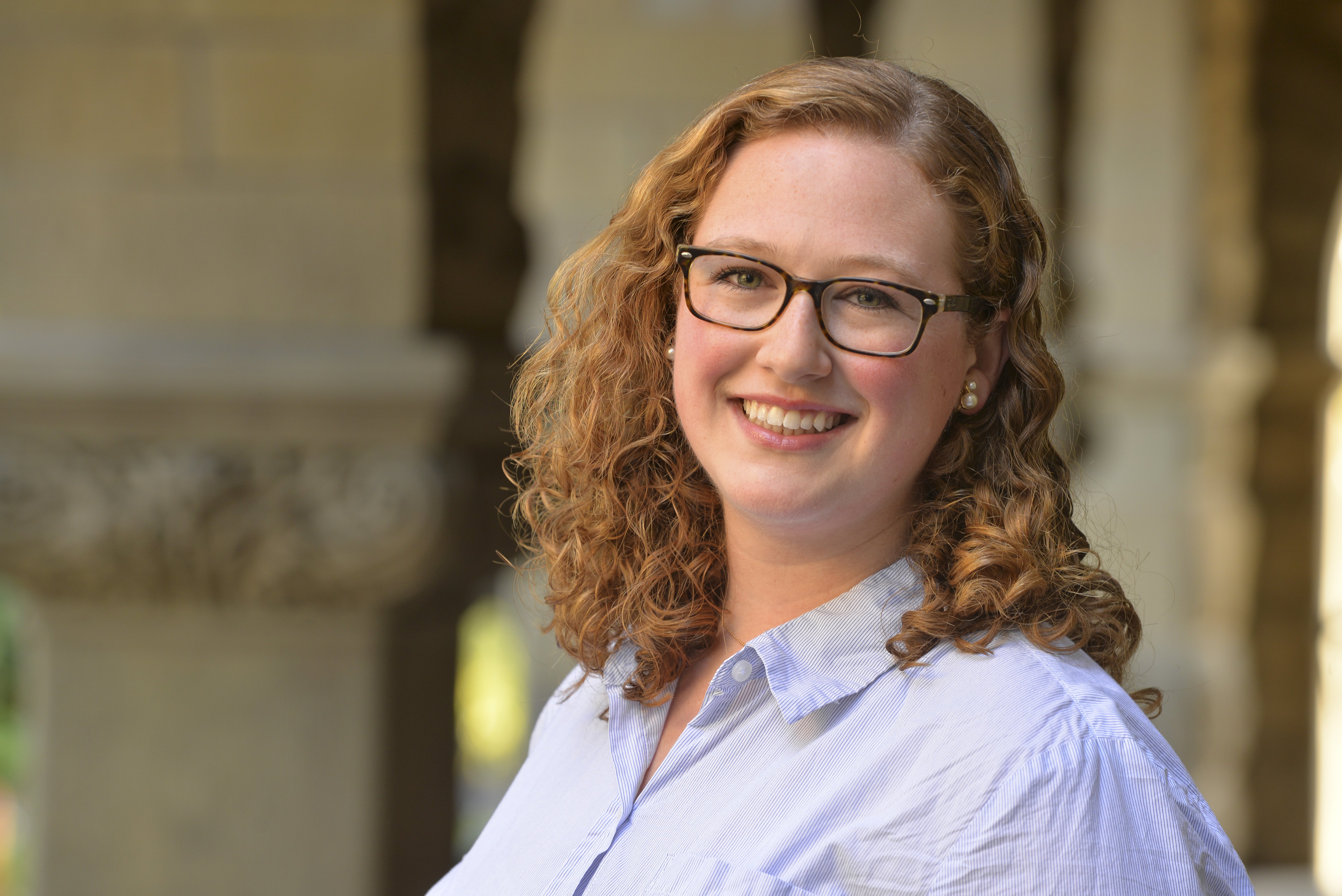 Elizabeth Shneider
The Iranian Rubik’s Cube: Understanding the Impacts of Pressure, Engagement, and Domestic Determinants on Nuclear Negotiations with Iran
Thesis Advisors: Colin Kahl, Tess Bridgeman
"Under what conditions can states with profound conflicts of interest and deep historical enmity reach a peaceful accommodation? Elizabeth’s terrific thesis draws on a wide range of primary and secondary source material and an impressive series of interviews to explain how nuclear negotiations succeeded in producing the Iran Nuclear Deal after more than a decade of failed negotiations. She convincingly rebuts the conventional wisdom that U.S.-led sanctions were sufficient to produce a deal. Instead, she persuasively argues that it required a combination of five factors—economic pressure, broad international diplomatic isolation of Iran, a willingness to compromise, a prioritization of direct engagement, and a conducive domestic political environment in both countries—that finally produced an agreement. The absence of one or more of these factors frustrated nuclear diplomacy prior to 2013-2015 and, today, it suggests that President Trump’s current policy of “maximum pressure” toward Iran is unlikely to produce a “better deal."
Matthew Bryan Wigler
Compact and Consensus: American Foreign Policy and the Partisan Tide at the Water’s Edge
Thesis Advisor: Colin Kahl
"For decades, even as political polarization and partisanship has grown the United States, it was presumed that this divide had less impact on foreign policy than domestic affairs. Matthew’s excellent thesis questions that assumption. It draws the crucial distinction between ideological polarization, on the one hand, and affective polarization, on the other. Through detailed case studies, Matthew convincingly traces the rise and fall of U.S. foreign policy consensus and compact over the past seven decades. His analysis shows that today, neither ideological or personal clashes stop at the water’s edge, contributing to an erosion of support for liberal internationalism and a profound dysfunction in contemporary U.S. foreign policy."