-

Image
Fiona Griffith Conference poster

This conference focuses on medieval women married to or living with priests, with the goal of restoring priests’ wives to scholarship on gender, spirituality, family life, and the church, particularly in western Europe. Speakers will explore the lives and circumstances of priests’ women, the sources that can reveal or shed light on their status or experiences, and the various roles—social as well as cultural—that they played within the family, their local communities, and the church more broadly.  More information about the project can be found here

Organized by the Department of History with generous funding from France-Stanford Center for Interdisciplinary Studies. Cosponsored by Department of Religious Studies, Center for Medieval and Early Modern Studies, Division of Literatures, Cultures, and Language, and The Europe Center.

Cecil H. Green Library, Hohbach Hall
557 Escondido Mall Stanford, CA

Lane History Corner

450 Serra Mall

200-118
 

0
Professor of History
fiona_griffiths_image.jpg

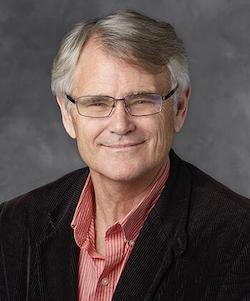
Fiona Griffiths is a historian of medieval Western Europe, focusing on intellectual and religious life from the ninth to the thirteenth century. Her work explores the possibilities for social experimentation and cultural production inherent in medieval religious reform movements, addressing questions of gender, spirituality, and authority, particularly as they pertain to the experiences and interactions of religious men (priests or monks) with women (nuns and clerical wives). Griffiths is the author of Nuns’ Priests’ Tales: Men and Salvation in Medieval Women's Monastic Life, The Middle Ages Series (The University of Pennsylvania Press: 2018); and The Garden of Delights: Reform and Renaissance for Women in the Twelfth Century, The Middle Ages Series (The University of Pennsylvania Press: 2007); as well as co-editor of Sensory Reflections: Traces of Experience in Medieval Artifacts, (with Kathryn Starkey (De Gruyter: 2018); and Partners in Spirit: Men, Women, and Religious Life in Germany, 1100-1500, (with Julie Hotchin) (Brepols: 2014). Her essays have appeared in Speculum, Church History, the Journal of Medieval History, and Viator. She has held fellowships from the National Endowment for the Humanities; the Alexander von Humboldt Foundation; the Radcliffe Institute for Advanced Study; the Stanford Humanities Center; and the Institute of Historical Research (University of London).

Griffith's research was featured in The Europe Center October 2017 Newsletter.

Affiliated faculty at The Europe Center
Seminars
-

Join the Program on Democracy and the Internet (PDI) and moderator Nate Persily, in conversation with Aleksandra Kuczerawy for European Developments in Internet Regulation.

This session is part of the Fall Seminar Series, a months-long series designed to bring researchers, policy makers, scholars and industry professionals together to share research, findings and trends in the cyber policy space. Both in-person (Stanford affiliation only) and virtual attendance (open to public) is available; registration is required.

Aleksandra Kuczerawy is a postdoctoral scholar at the Program on Platform Regulation and has been a postdoctoral researcher at KU Leuven’s Centre for IT & IP Law and is assistant editor of the International Encyclopedia of Law (IEL) – Cyber Law. She has worked on the topics of privacy and data protection, media law, and the liability of Internet intermediaries since 2010 (projects PrimeLife, Experimedia, REVEAL). In 2017 she participated in the works of the Committee of experts on Internet Intermediaries (MSI-NET) at the Council of Europe, responsible for drafting a recommendation by the Committee of Ministers on the roles and responsibilties of internet intermediaries and a study on Algorithms and Human Rights.

Nathaniel Persily
Aleksandra Kuczerawy Postdoctoral Scholar at the Program on Platform Regulation (PDI)
Seminars
-
chenyan jia headshot on flyer

Join the Program on Democracy and the Internet (PDI) and moderator Nate Persily, in conversation with Chenyan Jia for The Evolving Role of AI In Political News Consumption: The Effects of Algorithmic vs. Community Label on Perceived Accuracy of Hyper-partisan Misinformation.

This session is part of the Fall Seminar Series, a months-long series designed to bring researchers, policy makers, scholars and industry professionals together to share research, findings and trends in the cyber policy space. Both in-person (Stanford affiliation only) and virtual attendance (open to the public) is available; registration is required.

Chenyan Jia (Ph.D., The University of Texas at Austin) is a postdoctoral scholar in The Program on Democracy and the Internet (PDI) at Stanford University. In 2023 Fall, she will be joining Northeastern University as an Assistant Professor in the School of Journalism in the College of Arts, Media, and Design with a joint appointment in the Khoury College of Computer Sciences. She has been working as a research assistant for UT's Human–AI Interaction Lab.

Her research interests lie at the intersection of communication and human-computer interaction. Her work has examined (a) the influence of emerging media technologies such as automated journalism and misinformation detection algorithms on people’s political attitudes and news consumption behaviors; (b) the political bias in news coverage through NLP techniques; (c) how to leverage AI technologies to reduce bias and promote democracy.

Her research has appeared in mass communication journals and top-tier AI and HCI venues including Human-Computer Interaction Journal (CSCW), Journal of Artificial Intelligence, International Journal of Communication, Media and Communication, ICLR, ICWSM, EMNLP, ACL, and AAAI. Her research has been awarded the Best Paper Award at AAAI 21. She was the recipient of the Harrington Dissertation Fellowship and the Dallas Morning News Graduate Fellowship for Journalism Innovation.

YOUTUBE RECORDING

Nathaniel Persily
Chenyan Jia Postdoctoral Scholar at the Program on Democracy and the Internet (PDI) 
Seminars
-
meicen sun headshot on blue background advertising seminar

Join the Program on Democracy and the Internet (PDI) and moderator Nate Persily, in conversation with Meicen Sun for Internet Control as A Winning Strategy: How the Duality of Information Consolidates Autocratic Rule in the Digital Age.

This paper advances a new theory on how the Internet as a digital technology helps consolidate autocratic rule. Exploiting a major Internet control shock in China in 2014, this paper finds that Chinese data-intensive firms have gained from Internet control a 10% increase in revenue over other Chinese firms, and about 1-2% over their U.S. competitors. Meanwhile, the same Internet control has incurred an up to 25% reduction in research quality for Chinese scholars conditional on the knowledge-intensity of their discipline. This occurred specifically via a reduction in the access to cutting-edge knowledge from the outside world. These findings suggest that while politically motivated information flow restrictions do take a toll on the country’s long-term capacity for innovation, they lend a short-term benefit to its data-intensive sectors. Conventional wisdom on the inherent limit to information control by autocracies overlooks this crucial protectionist benefit that aids in autocratic power consolidation in the digital age. 

This session is part of the Fall Seminar Series, a months-long series designed to bring researchers, policy makers, scholars and industry professionals together to share research, findings and trends in the cyber policy space. Both in-person and virtual attendance is available; registration is required.

Meicen Sun is a postdoctoral scholar with the Program on Democracy and the Internet at Stanford University. Her research examines the political economy of information and the effect of information policy on the future of innovation and state power. Her writings have appeared in academic and policy outlets including Foreign Policy Analysis, Harvard Business Review, World Economic Forum, the Asian Development Bank Institute, and The Diplomat among others. She had previously conducted research at the Center for Strategic and International Studies and at Georgetown University in Washington, DC, and at the UN Regional Centre for Peace and Disarmament in Africa. Bilingual in English and Chinese, she has also written stories, plays, and music and staged many of her works -- in both languages -- in China, Singapore and the U.S. Sun has served as a Fellow on the World Economic Forum's Global Future Council on China and as a Research Affiliate with the MIT Initiative on the Digital Economy. She holds an A.B. with Honors from Princeton University, an A.M. with a Certificate in Law from the University of Pennsylvania, and a Ph.D from the Massachusetts Institute of Technology.

Nathaniel Persily
Meicen Sun Postdoctoral scholar with the Program on Democracy and the Internet
Seminars
News Feed Image
meicen-sun-seminar-v2_1.png
-
rasmus kleis nielsen headshot on blue background

Join the Program on Democracy and the Internet (PDI) and moderator Nate Persily, in conversation with Rasmus Kleis Nielsen, Director of the Reuters Institute for the Study of Journalism and Professor of Political Communication at the University of Oxford, for a look at how platforms shape the media and society.
 
Based on analysis of the relations between platform companies including Google and Meta, and news publishers in France, Germany, the UK, and the US, the session will explore key aspects of the “platform power” a few technology companies have come to exercise in public life, the reservations news publishers have about platforms—and the reasons why they often embrace them anyway.
 
This session is part of the Fall Seminar Series, a months-long series designed to bring researchers, policy makers, scholars and industry professionals together to share research, findings and trends in the cyber policy space. Both in-person and virtual attendance is available; registration is required.

Rasmus Kleis Nielsen is Director of the Reuters Institute for the Study of Journalism and Professor of Political Communication at the University of Oxford. He was previously Director of Research at the Reuters Institute and Editor-in-Chief of the International Journal of Press/Politics.

His work focuses on changes in the news media, on political communication, and the role of digital technologies in both. He has done extensive research on journalism, American politics, and various forms of activism, and a significant amount of comparative work in Western Europe and beyond.

Nathaniel Persily
Rasmus Kleis Nielsen Director of the Reuters Institute for the Study of Journalism
Seminars
-
Banner image for webinar "Asian Perspectives on the U.S.-China Competition: Assessing India's Role", featuring photo portraits of speakers Suhasini Haidar, Arvind Subramanian, and Arzan Tarapore

India’s role and prospects as a strategic competitor to China come down to two broad factors: its intent and its capacity. In the midst of intensifying U.S.-China competition, this webinar examines India’s intent and capacity to be an effective player in the Indo-Pacific’s strategic competition. On intent, India has steadfastly insisted since 2020 that the bilateral relationship cannot progress unless “peace and tranquility” are restored to their unsettled border; but in recent months India has also engaged diplomatically with China. On capacity, India’s economic performance lies at the core of its national power, but reforms have been haphazard and its recent economic performance has attracted doubts over its long-term potential. Has India struck the right balance of defiance and conciliation in its foreign policy? Is it doing enough to unleash its enormous economic and demographic potential? In both dimensions, how robust is – and should be – coordination with the United States?


Speakers:

Image
Square headshot of Ms Suhasini Haidar
Suhasini Haidar is the Diplomatic Editor of The Hindu, one of India’s oldest and most respected national dailies, and hosts a weekly online show "WorldView with Suhasini Haidar." Over the course of her 28-year reporting career, Suhasini has reported from across the region and the world, including Kashmir, where she was injured in a bomb blast. In India, she has covered the foreign affairs beat for over a decade, and was the recipient of the most prestigious Indian print journalism award, the Prem Bhatia. Suhasini began her career at CNN's United Nation's bureau in New York. She holds Bachelor's degree at Lady Shriram College in Delhi, and a Masters in Broadcast Journalism at Boston University

Image
Square headshot photo of Dr Arvind Subramanian
Arvind Subramanian is the Meera & Vikram Gandhi Fellow at the Saxena Center for Contemporary South Asia, and a Senior Fellow at the Watson Institute for International and Public Affairs, at Brown University. He was previously a professor of economics at Ashoka University, and the chief economic adviser to the Government of India between 2014 and 2018. Prior to that, he taught at Harvard, researched at the Peterson Institute for International Economics, and worked at the IMF and GATT. In 2018, Professor Subramanian published Of Counsel: The Challenges of the Modi-Jaitley Economy, reflecting on his time guiding India’s economy. He holds a DPhil from Oxford.

Moderator:

Image
Square headshot photograph of Arzan Tarapore
Arzan Tarapore is the South Asia research scholar at the Shorenstein Asia-Pacific Research Center at Stanford University, where he leads the South Asia Initiative. His research focuses on military strategy, Indian defense policy, and contemporary Indo-Pacific security issues. Prior to his scholarly career, he served as an analyst in the Australian Defence Department. Arzan holds a PhD from King’s College London.


This event is part of APARC’s 2022 Fall webinar series, Asian Perspectives on the U.S.-China Competition. 

Arzan Tarapore

Virtual via Zoom

Suhasini Haidar Diplomatic Editor The Hindu
Arvind Subramanian Meera & Vikram Gandhi Fellow Saxena Center for Contemporary South Asia
Seminars
News Feed Image
fall_2022_series_event_nov_1.png
-
Portraits of speakers Chisako T. Masuo, Ryo Sahashi, and Kiyoteru Tsutsui.

In the context of growing tensions between the U.S. and China, many Asian countries have faced the challenge of balancing their relationships with the two countries. Given its security alliance with the U.S. is a cornerstone of its foreign policy, Japan seems to be more closely aligned with the U.S. than any other country. However, Japan’s most important trade partner is China, and it cannot overlook its economic relations with China in making foreign policy decisions. What should Japan’s approach be with the increasingly authoritarian regime in China expanding its ambitions to compete with the U.S. while domestic turmoil hampers the U.S. capacity to project its power and influence in the Indo-Pacific region? As a growing number of trade agreements in the region, such as CPTPP (Comprehensive and Progressive Agreement for Trans-Pacific Partnership), RCEP (Regional Comprehensive Economic Partnership), and now IPEF (Indo-Pacific Economic Framework) create an alphabet soup of intersecting economic relations, how should Japan navigate the treacherous terrain to ensure its economic security and energy sufficiency? To answer these questions, this webinar features two leading Japanese experts in Chinese politics, economy, and diplomacy — Chisako Masuo and Ryo Sahashi.

Speakers

Image
Square photo portrait of Dr. Chisako T. Masuo
Chisako T. Masuo (益尾知佐子) is a Professor at the Faculty of Social and Cultural Studies, Kyushu University, and an Adjunct Fellow at the Japan Institute of International Affairs (JIIA). She was given the Nakasone Yasuhiro Award of Excellence in 2021 for her contribution to China studies and for the policy discussions regarding China’s Coast Guard Law. She received Ph.D. from the University of Tokyo in 2008. Her research topics include Chinese domestic politics, foreign and maritime policies, and international relations with regard to China. Professor Masuo was a visiting scholar at the Chinese Academy of Social Sciences and China Foreign Affairs University in 2019, and a coordinated research scholar working with the late Professor Ezra F. Vogel at the Harvard-Yenching Institute from 2014-2015. She is the author of China’s Behavioural Principles: International Relations Determined by the Domestic Currents (Tokyo: Chuko Publishing, 2019), as well as China Looks Back: Mao’s Legacy in the Open-Door Era (University of Tokyo Press, 2010), and a co-author of A Diplomatic History of China (University of Tokyo Press, 2017) all in Japanese. She also writes articles and book chapters in English and Chinese.

Image
Square photo portrait of Dr. Ryo Sahashi
Ryo Sahashi is an Associate Professor of International Relations, Institute for Advanced Studies on Asia, the University of Tokyo. Dr. Sahashi specializes on international politics in East Asia. His recent book is US-China Rivalry: A Shift of American Strategy and Divided Worlds (Tokyo: Chuko, 2021), In a Search for Coexistence: the United States and Two Chinas during the Cold War (Tokyo: Keiso, 2015), and he edits East Asian Order in the Post-Cold War Era (Tokyo: Keiso, 2020). In English, he edits Looking for Leadership: The Dilemma of Political Leadership in Japan (Tokyo and New York: Japan Center for International Exchange, 2015), and his recent articles appears on China International Strategy Review, Contemporary Politics, and Journal of Contemporary China. he serves as a Member for Council on the Actual State of Land Use, Advisory Panel on Science & Technology Diplomacy, and Expert Panel on 50th Year of Japan-ASEAN Friendship and Cooperation. He also works as Faculty Fellow, Research Institute of Economy, Trade, and Industry; Visiting Fellow, 21st Century Policy Institute, Keidanren; Research Fellow of Japan Center for International Exchange. He has been Japan Scholar, Wilson Center, Visiting Associate Professor, Walter H. Shorenstein Asia Pacific Research Center, Stanford University and Professor, Kanagawa University. He received his B.A. from International Christian University and his Ph.D. from the Graduate Schools for Law and Politics at the University of Tokyo.

Moderator

Image
Square photo portrait of Kiyoteru Tsutsui
Kiyoteru Tsutsui is the Henri H. and Tomoye Takahashi Professor, Professor of Sociology, Senior Fellow at the Freeman Spogli Institute for International Studies, and Deputy Director of the Walter H. Shorenstein Asia-Pacific Research Center, where he is also Director of the Japan Program. He is the author of Rights Make Might: Global Human Rights and Minority Social Movements in Japan (Oxford University Press, 2018), co-editor of Corporate Responsibility in a Globalizing World (Oxford University Press, 2016) and co-editor of The Courteous Power: Japan and Southeast Asia in the Indo-Pacific Era (University of Michigan Press, 2021). 

Kiyoteru Tsutsui

Virtual via Zoom Webinar

Chisako T. Masuo Professor, Faculty of Social and Cultural Studies Kyushu University
Ryo Sahashi Associate Professor of International Relations, Institute for Advanced Studies on Asia University of Tokyo
Seminars
-
joan donovan and emily dreyfuss headshots with book cover Meme wars

Join the Program on Democracy and the Internet (PDI) and moderator Nate Persily, in conversation with Dr. Joan Donovan, Research Director of the Shorenstein Center on Media, Politics and Public Policy, and Emily Dreyfuss, a journalist who covers the impact of technology on society, with a focus on social media and information systems.

Memes have long been dismissed as inside jokes with no political importance. Nothing could be further from the truth. Memes are bedrock to the strategy of conspiracists such as Alex Jones, provocateurs like Milo Yiannopoulos, white nationalists like Nick Fuentes, and tacticians like Roger Stone. While the media and most politicians struggle to harness the organizing power of the internet, the “redpill right” weaponizes memes, pushing conspiracy theories and disinformation into the mainstream to drag people down the rabbit hole. These meme wars stir strong emotions, deepen partisanship, and get people off their keyboards and into the streets--and the steps of the US Capitol.  Meme Wars is the first major account of how “Stop the Steal” went from online to real life, from the wires to the weeds. Leading media expert Joan Donovan, PhD, veteran tech journalist Emily Dreyfuss, and cultural ethnographer Brian Friedberg pull back the curtain on the digital war rooms in which a vast collection of antiesablishmentarians bond over hatred of liberal government and media. Together as a motley reactionary army, they use memes and social media to seek out new recruits, spread ideologies, and remake America according to their desires.

This session is part of the Fall Seminar Series, a months-long series designed to bring researchers, policy makers, scholars and industry professionals together to share research, findings and trends in the cyber policy space. Both in-person and virtual attendance is available; registration is required.

Dr. Joan Donovan is the Research Director of the Shorenstein Center on Media, Politics and Public Policy. Dr. Donovan leads the field in examining internet and technology studies, online extremism, media manipulation, and disinformation campaigns.

Dr. Donovan leads The Technology and Social Change Project (TaSC). TaSC explores how media manipulation is a means to control public conversation, derail democracy, and disrupt society. TaSC conducts research, develops methods, and facilitates workshops for journalists, policy makers, technologists, and civil society organizations on how to detect, document, and debunk media manipulation campaigns.

Emily Dreyfuss is a journalist who covers the impact of technology on society, with a focus on social media and information systems. She is the senior editor of the Technology and Social Change (TaSC) team and the co-lead of the Harvard Shorenstein Center News Leaders summit. Emily got her start in journalism as a local newspaper reporter, then as an editor at an alt-weekly, before entering the tech reporting fray as an editor at CNET. She was a senior writer and editor at WIRED for many years and most recently helped launch the tech news site Protocol. As a 2017-2018 Harvard Nieman Berkman Klein fellow, Emily studied ephemerality and the internet. She is interested in how technology accelerates change.

Nathaniel Persily
Joan Donovan Substack
Emily Dreyfuss
Seminars
News Feed Image
meme-wars.png
-

SCCEI Fall Seminar Series 


Tuesday, November 29, 2022      11:00 am -12:15 pm Pacific Time

Goldman Room E401, Encina Hall, 616 Jane Stanford Way | Zoom Meeting 


Cost-Sharing in Medical Care Can Increase Adult Mortality in Lower-Income Countries


About the Speaker

Image
Grant Miller

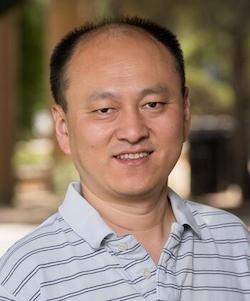
As a health and development economist based at the Stanford School of Medicine, Dr. Grant Miller's overarching focus is research and teaching aimed at developing more effective health improvement strategies for developing countries.

His agenda addresses three major interrelated themes: First, what are the major causes of population health improvement around the world and over time? His projects addressing this question are retrospective observational studies that focus both on historical health improvement and the determinants of population health in developing countries today. Second, what are the behavioral underpinnings of the major determinants of population health improvement? Policy relevance and generalizability require knowing not only which factors have contributed most to population health gains, but also why. Third, how can programs and policies use these behavioral insights to improve population health more effectively? The ultimate test of policy relevance is the ability to help formulate new strategies using these insights that are effective.


Seminar Series Moderators

Image
Headshot of Dr. Scott Rozelle

Scott Rozelle is the Helen F. Farnsworth Senior Fellow and the co-director of Stanford Center on China's Economy and Institutions in the Freeman Spogli Institute for International Studies and Stanford Institute for Economic Policy Research at Stanford University.  For the past 30 years, he has worked on the economics of poverty reduction. Currently, his work on poverty has its full focus on human capital, including issues of rural health, nutrition and education. For the past 20 year, Rozelle has been the chair of the International Advisory Board of the Center for Chinese Agricultural Policy, Chinese Academy of Sciences (CAS). Most recently, Rozelle's research focuses on the economics of poverty and inequality, with an emphasis on rural education, health and nutrition in China. In recognition of this work, Dr. Rozelle has received numerous honors and awards. Among them, he became a Yangtse Scholar (Changjiang Xuezhe) in Renmin University of China in 2008. In 2008 he also was awarded the Friendship Award by Premiere Wen Jiabao, the highest honor that can be bestowed on a foreigner. 


Image
hongbin li headshot

Hongbin Li is the Co-director of Stanford Center on China's Economy and Institutions, and a Senior Fellow of Stanford Institute for Economic Policy Research (SIEPR) and the Freeman Spogli Institute for International Studies (FSI). Hongbin obtained his Ph.D. in economics from Stanford University in 2001 and joined the economics department of the Chinese University of Hong Kong (CUHK), where he became full professor in 2007. He was also one of the two founding directors of the Institute of Economics and Finance at the CUHK. He taught at Tsinghua University in Beijing 2007-2016 and was C.V. Starr Chair Professor of Economics in the School of Economics and Management. He founded the Chinese College Student Survey (CCSS) in 2009 and the China Employer-Employee Survey (CEES) in 2014.

Hongbin’s research has been focused on the transition and development of the Chinese economy, and the evidence-based research results have been both widely covered by media outlets and well read by policy makers around the world. He is currently the co-editor of the Journal of Comparative Economics.


A NOTE ON LOCATION

This seminar is a hybrid event. Please join us in person in the Goldman Conference Room located within Encina Hall on the 4th floor of the East wing, or join remotely via Zoom.

Questions? Contact Heather Rahimi at hrahimi@stanford.edu


Scott Rozelle
Hongbin Li

Hybrid Event: Goldman Room E409, Encina Hall | Zoom Meeting

Encina Commons Room 101,
615 Crothers Way,
Stanford, CA 94305-6006

(650) 723-2714 (650) 723-1919
0
Henry J. Kaiser, Jr. Professor
Professor, Health Policy
Senior Fellow at the Freeman Spogli Institute for International Studies
Senior Fellow at the Stanford Institute for Economic Policy Research
Professor, Economics (by courtesy)
grant_miller_vert.jpeg PhD, MPP

As a health and development economist based at the Stanford School of Medicine, Dr. Miller's overarching focus is research and teaching aimed at developing more effective health improvement strategies for developing countries.

His agenda addresses three major interrelated themes: First, what are the major causes of population health improvement around the world and over time? His projects addressing this question are retrospective observational studies that focus both on historical health improvement and the determinants of population health in developing countries today. Second, what are the behavioral underpinnings of the major determinants of population health improvement? Policy relevance and generalizability require knowing not only which factors have contributed most to population health gains, but also why. Third, how can programs and policies use these behavioral insights to improve population health more effectively? The ultimate test of policy relevance is the ability to help formulate new strategies using these insights that are effective.

Faculty Fellow, Stanford Center on Global Poverty and Development
Faculty Affiliate, Stanford Center for Latin American Studies
Faculty Affiliate, Woods Institute for the Environment
Faculty Affiliate, Interdisciplinary Program in Environment & Resources
Faculty Affiliate, Stanford Center on China's Economy and Institutions
CV
Date Label
Seminars
-
Flyer for a webinar about U.S.-China relations with portraits of speaker Laura Stone and moderator Jean Oi.

This event is part of APARC’s 2022 Fall webinar seriesAsian Perspectives on the US-China Competition.

The China Program brings Inaugural China Policy Fellow Laura Stone to provide on the ground views of what the U.S.-China competition means for the region. As Asia perspectives on U.S.-China competition and Chinese intentions in the region develop and change, Laura will give us insights into how Washington stakeholders’ understanding of these perspectives has shifted and evolved. In a complex iterative process, Chinese and U.S. actions — and the reactions from the countries and countries and entities in Asia — shape a dynamic policy process within the region.

Speaker

Image
Laura Stone2
Laura Stone joins the Walter H. Shorenstein Asia-Pacific Research Center (Shorenstein APARC) as Visiting Scholar and Inaugural China Policy Fellow for the 2022-2023 academic year. She was formerly the Acting Deputy Assistant Secretary for China and Mongolia, the Director of the Office of Chinese and Mongolian Affairs, and the Director of the Economic Policy Office in the Bureau of East Asia and Pacific Affairs. She served three tours in Beijing as well as tours in Bangkok, Tokyo, the Public Affairs Bureau, the Pentagon Office of the Secretary of Defense, and the Bureau of Intelligence and Research. Most recently, she serves the U.S. Department of State as Deputy Coordinator for the Secretary's Office for COVID Response and Health Security. While at APARC, she will be conducting research with the China Program and Professor Jean Oi regarding contemporary China affairs and U.S.-China policy.

Jean C. Oi

Virtual event via Zoom

Laura M. Stone
Seminars
Subscribe to Seminars