-
CP_Nov2_Bill Kirby

America’s preeminence in higher education is relatively new, and there is no reason to assume that U.S. schools will continue to lead the world a century from now. Will China challenge its position in the twenty-first? The modern university was born in Germany. In the twentieth century, the United States leapfrogged Germany to become the global leader in higher education. Today, American institutions dominate nearly every major ranking of global universities. However, America’s supremacy in higher education is under great stress, particularly at its public universities. At the same time Chinese universities are on the ascent. Thirty years ago, Chinese institutions were reopening after the catastrophe of the Cultural Revolution; today they are some of the most innovative educational centers in the world. Will China threaten American primacy?

Please join us for the China Program’s Author Series.

The book is available for purchase here

Speaker

Image
William Kirby.jpg
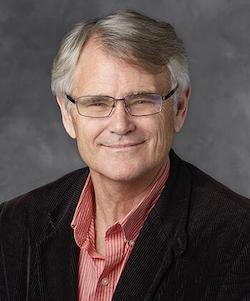
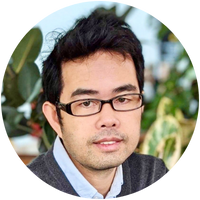
William C. Kirby is T. M. Chang Professor of China Studies at Harvard University and Spangler Family Professor of Business Administration at Harvard Business School. He is a University Distinguished Service Professor. Professor Kirby serves as Chairman of the Harvard China Fund and Faculty Chair of the Harvard Center Shanghai. At Harvard he has served as Director of the Fairbank Center for Chinese Studies, Chairman of the History Department, and Dean of the Faculty of Arts and Sciences. His current projects include case studies of trend-setting Chinese businesses and a comparative study of higher education in China, Europe, and the United States. His recent books include Can China Lead? (Harvard Business Review Press) and China and Europe on the New Silk Road (Oxford University Press). His latest book, Empires of Ideas: Creating Modern Universities from Germany to America to China (Harvard University Press), is now available.

Discussant

Image
Andrew G. Walder
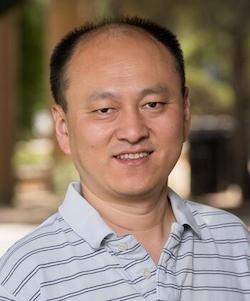
Andrew G. Walder is the Denise O'Leary and Kent Thiry Professor at Stanford University, where he is also a senior fellow in the Freeman Spogli Institute for International Studies. Previously, he served as chair of the Department of Sociology, and as director of the Walter H. Shorenstein Asia-Pacific Research Center and of the Division of International, Comparative and Area Studies in the School of Humanities and Sciences.

Jean C. Oi

In-Person at Philippines Room, Encina Hall 3rd Floor

William C. Kirby
Seminars
-

Seminar Recording

About the Event: In this seminar, energy and natural resources sector policies of the three former communist countries in Asia - Mongolia, Kazakhstan, and Kyrgyzstan - in close geographic proximity to Russia and China will be considered. There are similarities in the nature of transition from communist regime to democratic societies in these three states, although major differences in social and cultural issues exist. The reliance on energy in neighboring countries Russia and China as well as export of raw materials to these markets have major influence on specific policy agenda. Particular attention is given to energy minerals and trade balance and imbalance thereof. 

About the Speaker: Dr. Undraa Agvaanluvsan currently serves as the president of Mitchell Foundation for Arts and Sciences. She is also an Asia21 fellow of the Asia Society and co-chair of Mongolia chapter of the Women Corporate Directors, a global organization of women serving in public and private corporate boards. During 2021-22, she served on the WCD Global Committee on Diversity and Inclusion. Dr. Undraa Agvaanluvsan is a former Member of Parliament of Mongolia and the chair of the Parliamentary subcommittee on Sustainable Development Goals. Prior to being elected as a legislator, she served as an Ambassador-at-large in charge of nuclear security issues at the Ministry of Foreign Affairs of Mongolia, where she worked on nuclear energy and fuel cycle, uranium and rareearth minerals development policy. She is a nuclear physicist by training, obtained her PhD at North Carolina State University, USA and diploma in High Energy Physics at the International Center for Theoretical Physics, Trieste, Italy. She conducted research at Lawrence Livermore National Laboratory in California, USA and taught energy policy at International Policy Studies Program at Stanford University, where she was a Science fellow and visiting professor at Stanford's Center for International Security and Cooperation. She published more than 90 papers, conference proceedings, and articles on neutron and proton induced nuclear reactions, the nuclear level density and radiative strength functions, quantum chaos and the Random Matrix Theory, including its application to the modeling of electric-grid resilience.

 All CISAC events are scheduled using the Pacific Time Zone.

William J. Perry Conference Room

Undraa Agvaanluvsan
Seminars
News Feed Image
headshot_undraa_agvaanluvsan.jpeg
-

Seminar Recording

About the Event: We cannot understand much of anything about power politics without morality. Yet up to this point we have tried to do just that. By turning our attention to how states respond to being wronged rather than when they do right and realizing the moral basis of the groups that interact in foreign affairs, I show that morality is virtually everywhere in international relations – in the perception of threat, the persistence of conflict, the judgment of domestic audiences, and the articulation of expansionist goals. The inescapability of our moral impulses owes to their evolutionary origins in helping individuals solve recurrent problems in their anarchic environment. Rather than a transcendence of material reality, morality is material reality. 

About the Speaker: Brian C. Rathbun is Professor of Political Science and International Relations at the University of Southern California. He is the author of four other books on international affairs and is a distinguished scholar of the International Studies Association. His latest book with Cambridge University Press, Reasoning of State, won the 2020 award for best book on foreign policy from the American Political Science Association.

 All CISAC events are scheduled using the Pacific Time Zone.

William J. Perry Conference Room

Brian Rathbun University of Southern California
Seminars
News Feed Image
headshot_brian_rathbun.png
-
joshua tucker headshot for echo chambers, rabbit holes and algorithmic bias seminar

Join the Program on Democracy and the Internet (PDI) and moderator Nate Persily, for the next seminar in the Fall Seminar SeriesEcho Chambers, Rabbit Holes, and Algorithmic Bias: How YouTube Recommends Content to Real Users with Joshua Tucker, Professor of Politics, Director of the Jordan Center for the Advanced Study of Russia, Co-Director of New York University's Center for Social Media and Politics(CSMaP), Affiliated Professor of Russian and Slavic Studies, and Affiliated Professor of Data Science.

To what extent does the YouTube recommendation algorithm push users into echo chambers, ideologically biased content, or rabbit holes? Despite growing popular concern, recent work suggests that the recommendation algorithm is not pushing users into these echo chambers. However, existing research relies heavily on the use of anonymous data collection that does not account for the personalized nature of the recommendation algorithm. We asked a sample of real users to install a browser extension that downloaded the list of videos they were recommended. We instructed these users to start on an assigned video and then click through 20 sets of recommendations, capturing what they were being shown in real time as they used the platform logged into their real accounts. Using a novel method to estimate the ideology of a YouTube video, we demonstrate that the YouTube recommendation algorithm does, in fact, push real users into mild ideological echo chambers where, by the end of the data collection task, liberals and conservatives received different distributions of recommendations from each other, though this difference is small. While we find evidence that this difference increases the longer the user followed the recommendation algorithm, we do not find evidence that many go down `rabbit holes' that lead them to ideologically extreme content. Finally, we find that YouTube pushes all users, regardless of ideology, towards moderately conservative and an increasingly narrow range of ideological content the longer they follow YouTube's recommendations.

This session is part of the Fall Seminar Series, a months-long series from the Program on Democracy and the Internet, designed to bring researchers, policy makers, scholars and industry professionals together to share research, findings and trends in the cyber policy space. Both in-person and virtual attendance is available; registration is required. Lunch will be provided for in-person attendees. 

About the Speaker:

Joshua A. Tucker is Professor of Politics, an affiliated Professor of Russian and Slavic Studies, and an affiliated Professor of Data Science at New York University.  He is the Director of NYU’s Jordan Center for Advanced Study of Russia. He is one of the co-founders and co-Directors of the NYU  Center for Social Media and Politics (CSMaP) and the Social Media and Political Participation (SMaPP) laboratory. 

Nathaniel Persily
Joshua Tucker NYU
Seminars
-
tim hwang headshot with text microeconomics of disinformation over the top

Join the Program on Democracy and the Internet (PDI) and moderator Nate Persily, in conversation with Tim Hwang, General Counsel of Substack, for a look at how microeconomics and disinformation are connected. Despite the tendency to wildly speculate on the future of disinformation and next-generation psychological operations, the vast majority of propagandists are rank pragmatists. How might microeconomic principles help us understand how disinformation campaigns are actually organized, and the kinds of tactics they are likely to deploy going into the future? This session will explore some early research exploring the small but critical incentives that shape tactical decisionmaking around disinformation efforts, and how such a framework might be used to ground threat modeling going forwards. 

This session is part of the Fall Seminar Series, a months-long series designed to bring researchers, policy makers, scholars and industry professionals together to share research, findings and trends in the cyber policy space. Both in-person and virutal attendance is available; registration is required.

About the Speaker:

Tim Hwang is a writer and researcher, currently the general counsel at Substack. He’s the author of Subprime Attention Crisis, a book about the online advertising bubble. He’s a research fellow at the Center for Security and Emerging Technology, is on the board of Meedan, and is an investor in Temescal Brewing. Previous work includes serving as the director of the Harvard-MIT Ethics and Governance of AI Initiative, $27M philanthropic fund and research effort working to advance the development of machine learning in the public interest. He also was the global public policy lead for artificial intelligence and machine learning at Google.

Nathaniel Persily
Tim Hwang Substack
Seminars
News Feed Image
october11-v2.png
-

The Hoover Project on China’s Global Sharp Power and the Stanford Center for International Security and Cooperation 
invite you to

Danger Zone: The Coming Conflict with China

Featuring

Hal Brands

Hal Brands

Distinguished Professor of Global Affairs, Johns Hopkins School of Advanced International Studies (SAIS)
Michael Beckley

Michael Beckley

Associate Professor of Political Science, Tufts University
Larry Diamond

Larry Diamond

Senior Fellow, Hoover Institution
Glenn Tiffert

Glenn Tiffert

Research Fellow, Hoover Institution

About the Speakers

Hal Brands is the Henry A. Kissinger Distinguished Professor of Global Affairs at the Johns Hopkins School of Advanced International Studies (SAIS) and a senior fellow at the American Enterprise Institute. He writes a weekly column for Bloomberg Opinion on foreign policy and is the author or editor of several books, including his newest books, The Twilight Struggle: What the Cold War Teaches Us About Great-Power Rivalry Today, and Danger Zone: The Coming Conflict with China, with Michael Beckley. He is a member of the State Department’s Foreign Affairs Policy Board and previously worked as a special assistant to the secretary of defense.

Michael Beckley is an associate professor of political science at Tufts University and a nonresident senior fellow at the American Enterprise Institute. He is a leading expert on the balance of power between the United States and China, and the author of two books and multiple award-winning articles. Previously, Professor Beckley was an International Security Fellow at Harvard's Kennedy School of Government and worked for the U.S. Department of Defense, the RAND Corporation, and the Carnegie Endowment for International Peace. He continues to advise offices within the U.S. intelligence community and U.S. Department of Defense.

Larry Diamond is a senior fellow at the Hoover Institution, ​Mosbacher Senior Fellow in Global Democracy at the Freeman Spogli Institute for International Studies (FSI), and a Bass University Fellow in Undergraduate Education at Stanford University. He co-chairs the Hoover Institution’s programs on China’s Global Sharp Power and on Taiwan in the Indo-Pacific Region.

Glenn Tiffert is a research fellow at the Hoover Institution and a historian of modern China. He co-chairs the Hoover project on China’s Global Sharp Power and works closely with government and civil society partners to document and build resilience against authoritarian interference with democratic institutions. Most recently, he co-authored and edited Global Engagement: Rethinking Risk in the Research Enterprise (2020).

Hybrid

Hal Brands Johns Hopkins School of Advanced International Studies
Michael Beckley Tufts University
Larry Diamond (Host) Hoover Institution
Glenn Tiffert (Discussant) Hoover Institution
Seminars
-

SCCEI Fall Seminar Series 


Tuesday, December 6, 2022      11:00 am -12:15 pm Pacific Time

Goldman Room E401, Encina Hall, 616 Jane Stanford Way | Zoom Meeting 


Gaslighting: How Comment Section Controls on Social Media Shapes Public Opinion in China

Existing literature on information manipulation in authoritarian regimes has examined government strategies for censorship and propaganda separately. This project seeks to bridge the gap by focusing on the intersection of propaganda and censorship in China, where government-affiliated accounts post propaganda content on social media and moderate comments under these posts. To do so, we collect a massive amount of high-frequency user engagement data of top government-affiliated accounts on Sina Weibo, followed by three online survey experiments to investigate effect mechanisms. We show that comment section controls effectively shift public opinion in favor of the government by changing the public’s second-order beliefs of the government or government policies. 


About the Speaker 
 

Image
Headshot of Dr. Yiqing Xu.

Yiqing Xu is an Assistant Professor at Department of Political Science, Stanford University. His primary research covers methodology and comparative politics, focusing on China. He received a PhD in Political Science from Massachusetts Institute of Technology (2016), an MA in Economics from China Center for Economic Research at Peking University (2010) and a BA in Economics (2007) from Fudan University.

His work has appeared in American Political Science Review, American Journal of Political Science, Journal of Politics, Political Analysis, Political Science Research and Methods, among other peer-reviewed journals. He has won several professional awards, including the best article award from American Journal of Political Science in 2016 and the Miller Prize (2018, 2020) for the best work appearing in Political Analysis the preceding year.


Seminar Series Moderators

Image
Headshot of Dr. Scott Rozelle

Scott Rozelle is the Helen F. Farnsworth Senior Fellow and the co-director of Stanford Center on China's Economy and Institutions in the Freeman Spogli Institute for International Studies and Stanford Institute for Economic Policy Research at Stanford University.  For the past 30 years, he has worked on the economics of poverty reduction. Currently, his work on poverty has its full focus on human capital, including issues of rural health, nutrition and education. For the past 20 year, Rozelle has been the chair of the International Advisory Board of the Center for Chinese Agricultural Policy, Chinese Academy of Sciences (CAS). Most recently, Rozelle's research focuses on the economics of poverty and inequality, with an emphasis on rural education, health and nutrition in China. In recognition of this work, Dr. Rozelle has received numerous honors and awards. Among them, he became a Yangtse Scholar (Changjiang Xuezhe) in Renmin University of China in 2008. In 2008 he also was awarded the Friendship Award by Premiere Wen Jiabao, the highest honor that can be bestowed on a foreigner. 


Image
hongbin li headshot

Hongbin Li is the Co-director of Stanford Center on China's Economy and Institutions, and a Senior Fellow of Stanford Institute for Economic Policy Research (SIEPR) and the Freeman Spogli Institute for International Studies (FSI). Hongbin obtained his Ph.D. in economics from Stanford University in 2001 and joined the economics department of the Chinese University of Hong Kong (CUHK), where he became full professor in 2007. He was also one of the two founding directors of the Institute of Economics and Finance at the CUHK. He taught at Tsinghua University in Beijing 2007-2016 and was C.V. Starr Chair Professor of Economics in the School of Economics and Management. He founded the Chinese College Student Survey (CCSS) in 2009 and the China Employer-Employee Survey (CEES) in 2014.

Hongbin’s research has been focused on the transition and development of the Chinese economy, and the evidence-based research results have been both widely covered by media outlets and well read by policy makers around the world. He is currently the co-editor of the Journal of Comparative Economics.


A NOTE ON LOCATION

This seminar is a hybrid event. Please join us in person in the Goldman Conference Room located within Encina Hall on the 4th floor of the East wing, or join remotely via Zoom.

Questions? Contact Heather Rahimi at hrahimi@stanford.edu


Scott Rozelle
Hongbin Li

Hybrid Event: Goldman Room E409, Encina Hall | Zoom Meeting

Seminars
-
Flyer for a talk by Jacques Bertrand with his portrait

In the years following the 2011 general election in Myanmar, there were reasons to think that the country might be growing more democratic, and that dialogue between rulers and ethnic minorities might alleviate the latter's long-standing rebellions against the state.  Instead, in 2021, a military coup ended democratic reform, triggered mass opposition, and plunged Myanmar back into civil war.  In ostensibly democratic Indonesia and the Philippines, on the other hand, rebellions respectively by the Moros and the Acehnese transitioned to peace.  Could one conclude, from this and other evidence, that autocracy engenders and prolongs ethnic civil war, and that, in contrast, democracy alleviates or even resolves it?  Jacques Bertrand, in two recent books (noted in his bio below), challenges the notion that democracy necessarily fosters peaceful outcomes.  He stresses the importance of interactive process between the state and its opponents and argues for a dynamic and contingent understanding of democracy’s impact. Although democratic institutions and negotiations can help to resolve deep and enduring conflicts, he concludes, they can also be used and have been used, mainly by the state, to manipulate and undermine insurgent ethnic minority groups.

Image
Bertrand 102422
Jacques Bertrand is a professor of political science at the University of Toronto, where he also directs the Collaborative Master’s Specialization in Contemporary East and Southeast Asian Studies at the Asian Institute in the Munk School of Global Affairs and Public Policy. He both founded and headed the institute’s Centre for Southeast Asian Studies and is a co-founder of the university’s Postcor Lab, a research hub for the study of civil wars and war-to-peace transitions.

Professor Bertrand has worked for many years on issues of ethnic conflict, nationalism, and secessionism in Southeast Asia.  His research has been funded by the Social Sciences and Humanities Research Council of Canada, the United States Institute of Peace, and the International Development Research Centre.  His latest book, just published in July 2022 and co-authored with Ardeth Thawnghmung and Alexandre Pelletier, is Winning by Process: The State and Neutralization of Ethnic Minorities in Myanmar. His sole-authored Democracy and Nationalist Struggles in Southeast Asia: From Secessionist Mobilization to Conflict Resolution appeared in 2021.

Discussant:

Image
Marciel 041922
Scot Marciel is Oksenberg-Rohlen Fellow at the Freeman Spogli Institute for International Studies, affiliated with the Walter H. Shorenstein Asia-Pacific Research Center. Previously, he was a 2020-22 Visiting Scholar and Visiting Practitioner Fellow on Southeast Asia at APARC.  A retired diplomat, Mr. Marciel served as U.S. Ambassador to Myanmar from March 2016 through May 2020, leading a mission of 500 employees during the difficult Rohingya crisis and a challenging time for both Myanmar’s democratic transition and the United States-Myanmar relationship.  Prior to serving in Myanmar, Ambassador Marciel served as Principal Deputy Assistant Secretary for East Asia and the Pacific at the State Department, where he oversaw U.S. relations with Southeast Asia.

Donald K. Emmerson

Via Zoom Webinar

Lee Kong Chian NUS-Stanford Fellow on Contemporary Southeast Asia, 2022-23
Seminars
-
Gita Wirjawan and text about his Oct 17, 2022 talk, "Whither Southeast Asia?"

What are Southeast Asia’s prospects?  How well equipped and prepared are its people to cope with current and future shocks from inside and outside their region?  With significant exceptions including the wars in Indochina after 1945 and the 1965-66 bloodshed in Indonesia, Southeast Asia’s modern history since World War II has been relatively peaceful.  In recent times the region has had its share of turbulence.  Nevertheless, the multidimensional 2022 Global Peace Index ranks nine of the ten Southeast Asian states as more peaceful than the United States.  On the 2021 Democracy Index, four of the Southeast Asian ten are outright “authoritarian,” while the other six join the US in being “flawed democracies.”  What do these and related trends imply?  In addition to politics and geopolitics, visiting scholar Gita Wirjawan’s view of Southeast Asia’s future will touch upon socioeconomic, cultural, and environmental aspects as well.

Image
Gita Wirjawan 101722
Gita Wirjawan is an Indonesian entrepreneur and philanthropist and a 2022-23 visiting scholar at APARC.  Having established a successful investment business in Indonesia, the Ancora Group, he created the Ancora Foundation.  The foundation has endowed scholarships for Indonesians to attend Stanford and other high-ranked universities around the world and has funded the training of teachers at hundreds of Indonesian kindergartens serving underprivileged children.  Wirjawan’s public service has included positions as Indonesia’s minister of trade, chairman of its Investment Coordinating Board, and chair of a 159-nation WTO ministerial conference in 2012 that focused on easing global trade barriers.  He led his country’s national badminton association in 2012-16 when Indonesia won four gold medals in the sport at world championships including the Olympics.  He advises Indonesia’s School of Government and Public Policy (SGPP) and Yale’s School of Management, among other institutions.  At SGPP he hosts a public-policy podcast called endgame, to which an estimated 471 thousand people subscribe.  His degrees are from the Harvard Kennedy School (MPA), Baylor University (MBA), and the University of Texas at Austin (BSc).

Donald K. Emmerson

Via Zoom Webinar

0
Visiting Scholar at APARC, 2022-24
Gita_Wirjawan.jpg

Gita Wirjawan joined the Walter H. Shorenstein Asia-Pacific Research Center (Shorenstein APARC) as a visiting scholar for the 2022-23 and 2023-2024 academic years. In the 2024-25 year, he is a visiting scholar with Stanford's Precourt Institute for Energy. Wirjawan is the chairman and founder of Ancora Group and Ancora Foundation, as well as the host of the podcast "Endgame." While at APARC, he researched the directionality of nation-building in Southeast Asia and sustainability and sustainable development in the U.S. and Southeast Asia.

Date Label
2022-23 Visiting Scholar, APARC
Seminars
-

Register: bit.ly/3UHwDTF

Co-sponsored by Peking University and the Asia Health Policy Program

Time cost of healthcare is important but is largely overlooked in the literature. This paper investigates how time cost affects the healthcare usage in both China and the US. Using the retirement age policy in both countries, we first employ a Regression Discontinuity Design (RDD) and show that the hospitalization rate persistently increases by 20-30 percent just after retirement age. The effects are larger and more significant among the people with higher time costs prior to retirement. Then, we use the school starting date and provide further significant evidence of the impact of time cost on hospitalization among the age-eligible children. These results underline the remarkable impact of time cost on healthcare usage and provide a more comprehensive picture of moral hazard in health insurance.

Image
Wei Huang 102022
Dr HUANG Wei is an Associate Professor at the National School of Development (NSD), Peking University. Previously, he was an assistant professor at Emory University and National University of Singapore. He received his Ph.D. in economics from Harvard in 2016. His research fields include public economics, labor economics, and health economics. His research work has been published in journals such as Review of Economic and Statistics, American Economic Journal: Applied Economics, Nature, Journal of Economic Perspectives, Journal of Development Economics, Journal of Labor Economics, etc. He is a co-editor for Economics of Transition.

Jianan Yang

Via Zoom Webinar.

Wei Huang Associate Professor, the National School of Development (NSD), Peking University
Seminars
Subscribe to Seminars