-

Co-sponsored with Stanford University Libraries

About the Event: Join us for an engaging conversation with the Ambassador of Estonia to the U.S. Kristjan Prikk, Rose Gottemoeller, and Steven Pifer, who will discuss Russia's war in Ukraine - what's at stake and what we should do about it.
Russia's unprovoked war against Ukraine has brought about the most serious reassessment of the European security realities since the end of the Cold War. The epic clash of political wills, the magnitude of military operations, and the scale of atrocities against the Ukrainian people are beyond anything Europe has seen since World War II. The past nine months have forced many to reassess what is possible and impossible in international security A.D. 2022. What is this war about, after all? What's at stake in this – to paraphrase former British PM Chamberlain – "quarrel in a faraway country, between people of whom most Americans know nothing?" What should be the lessons for U.S. strategists and policymakers? What are the wider implications for U.S. national security interests, particularly those related to the Indo-Pacific? How has the Alliance supported Ukraine since the war started? What should the end of this war look like and how to get there?

All these questions are relevant and should be carefully weighed with current information from the war as well as historic perspective and regional knowledge in mind.

About the Speakers: 

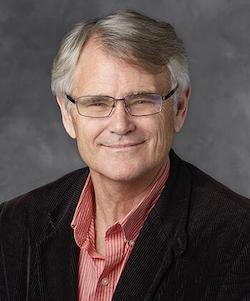
Estonia's Ambassador to the U.S. Mr. Kristjan Prikk started his mission in Washington, D.C. in May 2021. He is a graduate of the USA Army War College and has served as the National Security Coordinator to the Prime Minister. Prior to arriving in D.C., he was the Permanent Secretary of the Estonian Ministry of Defense. Among his previous assignments are two other tours in Washington as an Estonian diplomat and work on NATO-Russia and NATO-Ukraine topics at a time when these relationships were considerably less charged than today.

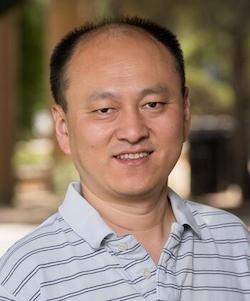
Rose Gottemoeller is the Steven C. Házy Lecturer at Stanford University's Freeman Spogli Institute for International Studies and its Center for International Security and Cooperation. Before joining Stanford, Gottemoeller was the Deputy Secretary General of NATO from 2016 to 2019, where she helped to drive forward NATO's adaptation to new security challenges in Europe and in the fight against terrorism.  Prior to NATO, she served for nearly five years as the Under Secretary for Arms Control and International Security at the U.S. Department of State, advising the Secretary of State on arms control, nonproliferation and political-military affairs. 

Steven Pifer is an affiliate of the Center for International Security and Cooperation as well as a non-resident senior fellow with the Brookings Institution. He was a William J. Perry Fellow at the center from 2018-2022 and a fellow at the Robert Bosch Academy in Berlin from January-May 2021. Pifer's research focuses on nuclear arms control, Ukraine, Russia, and European security. A retired Foreign Service officer, Pifer's more than 25 years with the State Department focused on U.S. relations with the former Soviet Union and Europe, as well as arms control and security issues, and included service as the third US ambassador to Ukraine.

 All CISAC events are scheduled using the Pacific Time Zone.

Green Library, East Wing 

Kristjan Prikk
Rose Gottemoeller
Steven Pifer
Seminars
News Feed Image
640px-flag_of_ukraine_clear.png
-
Event flyer with portraits of Richard Heydarian, Huong Le Thu, and Don Emmerson

When the U.S. Senate voted to expand NATO into the USSR’s sphere of influence in Europe in 1988, American diplomat-scholar George Kennan called it "the beginning of a new [U.S.-Russia] cold war” and said that Moscow would “gradually react quite adversely." Russia invaded Ukraine in February 2022 following a joint statement by Moscow and Beijing criticizing the United States. In May 2022, China's Foreign Minister Wang Yi said U.S.-China relations were on the "brink of a new Cold War.”  What does this mean for Southeast Asians? Are they refusing to choose between the United States and its opponents? How much does the fate of Ukraine matter to Southeast Asians? Do they want peace or justice—to prevent big-power escalation or to reverse imperial expansion? How are they balancing those different views and the contending pressures to side with the United States or Russia+China?

This event is part of APARC’s 2022 Fall webinar seriesAsian Perspectives on the US-China Competition.

Image
Heydarian 112922
Richard Heydarian is a Manila-based scholar and columnist serving as a senior lecturer at the Asian Center, University of the Philippines Diliman. His academic career has included professorial positions in political and social science at the University of the Philippines, Ateneo de Manila University, De La Salle University, and a visiting fellowship at National Chengchi University. As a columnist, he has written for leading publications such as Foreign Affairs, The Guardian, and The New York Times, and has regularly contributed, for example, to Al Jazeera English, Nikkei Asian Review, South China Morning Post, and The Straits Times. His books include The Indo-Pacific: Trump, China, and the New Struggle for Global Mastery (2019); The Rise of Duterte: A Populist Revolt against Elite Democracy (2017), and Asia's New Battlefield: The USA, China and the Struggle for the Western Pacific (2015).

Image
Huong Le Thu 112922
Huong Le Thu, an Australia-resident analyst of geopolitics in Southeast Asia, is a principal policy fellow at the Perth USAsia Centre, University of Western Australia and a non-resident fellow in CSIS Washington’s Southeast Asia Program. She has worked in universities and think tanks in Australia, Singapore, and Taiwan, and has held visiting positions in the University of Malaya and the ASEAN Secretariat among other places.  Her scholarly writings have appeared in journals including Asia Policy, Asia-Pacific Review, Asian Security, and Foreign Policy, and  she has been quoted in the Financial Times, The Japan Times, The New York Times, The Straits Times, and The Washington Post among other media.  Her degrees are from the National Chengchi University (PhD) and Jagiellonian University in Poland (MA).  She speaks five languages and has published in four of them.

Donald K. Emmerson

Via Zoom webinar

Richard Heydarian Senior Lecturer, Asian Center, University of the Philippines Diliman
Huong Le Thu Principal Policy Fellow, PerthUSA Centre, University of Western Australia
Seminars
-
Illustration of the globe as a chessboard with the king piece draped in China's flag with portraits of speakers David Shambaugh, Glenn Tiffert, and Jean Oi.

This event is co-sponsored by the Hoover Project on China’s Global Sharp Power. 

If you cannot join in person but would like to attend virtually, please join us via Zoom meeting. Meeting ID: 953 0045 6111 Password: 120122

Since the founding of the People’s Republic of China over 70 years ago, five paramount leaders have shaped the fates and fortunes of the nation and the ruling Chinese Communist Party: Mao Zedong, Deng Xiaoping, Jiang Zemin, Hu Jintao, and Xi Jinping. Drawing on his recent book, China’s Leaders: From Mao to Now, in this lecture Professor David Shambaugh will explore the differing backgrounds, contrasting leadership styles, and impact of each paramount leader.

Speaker

Image
David Shambaugh Headshot
David Shambaugh is the Gaston Sigur Professor of Asian Studies, Political Science & International Affairs, and Director of the China Policy Program, Elliott School of International Affairs, at George Washington University. Professor Shambaugh joined the George Washington faculty after serving as Reader in Chinese Politics at the University of London’s SOAS and as editor of The China Quarterly. As an author, Professor Shambaugh has published 35 books, including most recently International Relations of Asia (3rd ed., 2022), China’s Leaders: From Mao to Now (2021), Where Great Powers Meet: America & China in Southeast Asia (2021), and China & the World (2020).

Chair

Image
Jean Oi Headshot
Jean C. Oi is the William Haas Professor of Chinese Politics in the Department of Political Science and a senior fellow in the Freeman Spogli Institute for International Studies at Stanford University. She directs the China Program at the Walter H. Shorenstein Asia-Pacific Research Center (APARC) and is the Lee Shau Kee Director of the Stanford Center at Peking University.

Discussant 

Image
Glenn Tiffert Headshot
Glenn Tiffert is a research fellow at the Hoover Institution and a historian of modern China. He co-chairs the Hoover project on China’s Global Sharp Power and works closely with government and civil society partners to document and build resilience against authoritarian interference with democratic institutions. Most recently, he co-authored and edited Global Engagement: Rethinking Risk in the Research Enterprise (2020).

Jean C. Oi

Hybrid at Philippines Room, Encina Hall 3rd Floor

David Shambaugh
Glenn Tiffert
Seminars
-
Simon Hix

For the past few decades political scientists of electoral politics in Europe have focused on the emergence of 'left-libertarian' values in the European electorate, particularly amongst younger voters. What has largely been ignored, though, is the growing size of voters in many countries who have 'right-libertarian' values. Using European Social Survey data, I estimate the change in the size of this proportion of the electorate across time and across country. I also find these voters with these values tend to be younger, more highly educated, and employed in the private sector. I also look at their vote-choice, and find that they are increasingly pivotal, as they switch their votes away from mainstream centre-right parties to Liberal, Green and even Social Democratic parties.


Simon Hix is the Stein Rokkan Chair in Comparative Politics at the European University Institute, in Florence, Italy. Before taking up this position in September 2021, he was the Harold Laski Professor of Political Science and the Pro-Director (Vice President) for Research at the London School of Economics and Political Science. Simon is a leading researcher, teacher, and commentator on comparative European and EU politics, and his research has focused on comparative democratic institutions, voting and party behaviour, and legislative behaviour. Simon also has extensive experience of consulting policy-makers and parties on electoral system and parliamentary reforms and party strategies.

*If you need any disability-related accommodation, please contact Shannon Johnson at sj1874@stanford.edu. Requests should be made by March 30, 2023.

Anna Grzymała-Busse

Encina Hall 2nd floor, William J. Perry Conference Room

Simon Hix, European University Institute
Seminars
-
Stefanie Walter

Voter-endorsed challenges to international institutions present a growing problem for international cooperation. This talk discusses the challenges that unilateral, voter-endorsed attempts by one member state to withdraw from or renegotiate the terms of existing international institutions create for the institution’s other member states. It argues that such voter-endorsed “cooperation challenges” tend to reverberate abroad: First, they influence public and elite views about the merits of the international institution and thus can create contagion effects, but can also have stabilizing effects depending on how the they highlight the risks and opportunities associated with exit and renegotiation. Second, the loss of, or change in the distribution of, cooperation gains can have considerable effects on the institutions’ other member states.

Finally, these reverberations abroad influence how member states respond to unilateral voter-endorsed “cooperation challenges.” Drawing on comparative case studies of a diverse set of voter-endorsed challenges to international institutions and on survey evidence from the EU-27 as well as a panel of Swiss respondents, the talk shows that this framework can help us better understand the (non-)existence of contagion effects across member states, variation in the responses of the remaining member states to voter-endorsed challenges to international institutions, and the ultimate outcomes of such cooperation challenges.


Stefanie Walter is Full Professor for International Relations and Political Economy at the Department of Political Science at the University of Zurich. Her research examines distributional conflicts, political preferences and economic policy outcomes related to globalization, European integration, and financial crises. Current projects examine the backlash against globalization, and challenges to international cooperation.

Stefanie Walter’s work has been published in journals such as the Annual Review of Political Science, American Journal of Political Science, Comparative Political Studies, and International Organization. She is the author of “Financial Crises and the Politics of Macroeconomic Adjustments” (2013, Cambridge University Press) and co-author of “The Politics of Bad Options” (2020, Oxford University Press).

*If you need any disability-related accommodation, please contact Shannon Johnson at sj1874@stanford.edu. Requests should be made by January 12, 2023.

Anna Grzymała-Busse

Encina Hall 2nd floor, William J. Perry Conference Room

Stefanie Walter, University of Zurich
Seminars
-

Register: bit.ly/3FTrJhg

Incentives for health behaviors are an increasingly important policy tool in both developed and developing countries, and there is widespread interest in improving their effectiveness. However, different contracts are likely to be more effective for different people. Mechanism design offers two strategies to improve contract effectiveness—tagging on observables (i.e., 3rd-degree price discrimination), and offering a menu of contract choices (i.e., 2nd-degree price discrimination)—but a key concern with both is that participants with private information might self-select into contracts that are favorable to the agent but less effective from the perspective of the principal. We adapt each of these strategies to customize incentive contracts for walking. Using a randomized controlled trial among more than 5,000 adults in urban India, we show that both mechanisms increase physical activity, leading to a 75% increase in steps walked relative to the effect of a one-size-fits-all benchmark. Moreover, we find that the concern that participants will self-select into less effective contracts is not only misplaced, but exactly backwards. Instead, a common force in health behavior settings—commitment motives—leads agents to prefer more effective contracts under both mechanisms. In particular, sophisticated time-inconsistent agents demand contracts that commit their future selves to walk more, bringing their preferences in partial alignment with the principal and improving the effectiveness of customization.


Ariel Zucker 111722Ariel Zucker is an assistant professor in the Department of Economics at UC Santa Cruz. Her research studies policies to improve health and environmental conditions among underserved communities worldwide. Many of her projects focus on countering behavioral biases in personal decision making. Prior to arriving in Santa Cruz, Dr. Zucker did a postdoc at UC Berkeley ARE, and earned her Ph.D. in economics from MIT.

Jianan Yang

Via Zoom Webinar.

Ariel Zucker Assistant Professor of Economics, University of California Santa Cruz
Seminars
-
Aleksandra Kuczerawy headshot on a blue background with text European Developments in Internet Regulation

Join the Program on Democracy and the Internet (PDI) and moderator Daphne Keller, in conversation with Aleksandra Kuczerawy for European Developments in Internet Regulation.

This session is part of the Fall Seminar Series, a months-long series designed to bring researchers, policy makers, scholars and industry professionals together to share research, findings and trends in the cyber policy space. Both in-person (Stanford-affiliation required) and virtual attendance (open to the public) is available; registration is required.

The Digital Services Act is a new landmark European Union legislation addressing illegal and harmful content online. Its main goals are to create a safer digital space but also to enhance protection of fundamental rights online. In this talk, Aleksandra Kuczerawy will discuss the core elements of the DSA, such as the layered system of due diligence obligations, content moderation rules and the enforcement framework, while providing underlying policy context for the US audience.

Aleksandra Kuczerawy is a postdoctoral scholar at the Program on Platform Regulation and has been a postdoctoral researcher at KU Leuven’s Centre for IT & IP Law and is assistant editor of the International Encyclopedia of Law (IEL) – Cyber Law. She has worked on the topics of privacy and data protection, media law, and the liability of Internet intermediaries since 2010 (projects PrimeLife, Experimedia, REVEAL). In 2017 she participated in the works of the Committee of experts on Internet Intermediaries (MSI-NET) at the Council of Europe, responsible for drafting a recommendation by the Committee of Ministers on the roles and responsibilties of internet intermediaries and a study on Algorithms and Human Rights.

Daphne Keller
Aleksandra Kuczerawy Postdoctoral Scholar at the Program on Platform Regulation (PPR)
Seminars
-
Image
Book cover of Privilege and Anxiety by Hagen Koo

The middle classes in most advanced economies today are frequently described as being “squeezed” and “shrinking.”  Hagen Koo’s recent book, Privilege and Anxiety, examines what has happened to the Korean middle class in the era of rapid globalization and demonstrates that the middle class experiences far more complex changes than usually assumed. Koo argues that globalization inserts an axis of polarization into the middle class, separating a small minority that benefits from the globalized economy and a large majority that suffers from it. This internal differentiation generates new class dynamics, as the newly affluent seek to distinguish themselves from the rest of the middle class and establish a new, privileged class position. The rest of the middle class tries to follow the affluent’s class practices, suffering great anxieties and frustrations. The middle class thus turns into an arena of intense class distinction struggles, bringing great anxieties to both the affluent and the lower segments of the middle.


Image
Portrait of Hagen Koo

Hagen Koo is Professor Emeritus of Sociology at the University of Hawaii at Manoa. Born in Korea, Koo received his BA in Korea and briefly worked as a journalist before coming to America where he received a PhD at Northwestern University. He has published extensively on economic development and social change in South Korea. His major work includes Korean Workers: The Culture and Politics of Class Formation (Cornell University Press, 2001). After his retirement in 2017, he spends more time in Korea studying the changing social fabric of Korean society in the global era. Privilege and Anxiety (Cornell University Press, 2022) represents his most recent work.

Discussants:

Alek Sigley is a PhD student at Stanford University's Modern Thought and Literature program, where he is writing a dissertation on North Korea. From 2018-2019 he studied for a master's degree in contemporary North Korean fiction at Kim Il Sung University's College of Literature. He speaks Mandarin, Korean and Japanese. Follow him on Twitter @AlekSigley.

Elisa Kim is a PhD candidate in the department of sociology at Stanford University. Her dissertation theorizes on racialization by systematically investigating the portrayal of minority groups in South Korean newspapers across time using computational methods. Prior to the PhD, she majored in Asian American Studies at Pomona College and has an MA in East Asian Studies from Stanford, researching the relational landscape of North Korean human rights organizations.

This event is made possible by generous support from the Korea Foundation and other friends of the Korea Program.

Gi-Wook Shin

Via Zoom. Register at https://bit.ly/3z8fJog

Hagen Koo Professor Emeritus of Sociology Author The University of Hawaii at Manoa
Seminars
-
Flyer for webinar "Media, Politics, and Polarization in Asia" with portraits of speakers Cherian George and Zuraidah Ibrahim.

Stark contradictions mark Asia’s news and information landscape.  Citizens have gained unprecedented ability to express and inform themselves through media.  Yet the internet, once thought of as a great liberator and equalizer, has been harnessed by powerful interests.  Social media platforms, even as they facilitate collective action, have deepened divisions, circulated hate, and undermined public-interest journalism.  What are the political and other effects of this combination of abundant informative discourse and divisive manipulative bias?  A media scholar and a media practitioner with professional experience in both Southeast Asia and Hong Kong will reflect on these contrary trends and their implications.

Image
Cherian George 110922
Cherian George, a media professor at Hong Kong Baptist University, is a visiting scholar at Stanford’s Department of Communication. His books include Red Lines: Political Cartoons and the Struggle Against Censorship, a double finalist for the American Association of Publishers PROSE award for scholarly books (2021); Media and Power in Southeast Asia (2019); and Hate Spin: The Manufacture of Religious Offense and its Threat to Democracy (2016).

Image
Zuraidah Ibrahim 110922
Zuraidah Ibrahim is executive managing editor at Hong Kong’s English language daily, South China Morning Post, where her responsibilities include overseeing Hong Kong and international coverage. She was previously deputy editor and political editor of Singapore’s Straits Times. Her books include Rebel City: Hong Kong’s Year of Water and Fire (2020); Singapore Chronicles: Opposition (2017); and Lee Kuan Yew: Hard Truths to Keep Singapore Going (2011).

Donald K. Emmerson

Via Zoom Webinar

Cherian George Professor of Media Studies, Hong Kong Baptist University
Zuraidah Ibrahim Executive Managing Editor, South China Morning Post
Seminars
-
Portraits of Karen Makishima, Kenji Kushida, and Kiyoteru Tsutsui.

Established on September 1, 2021, Japan’s Digital Agency has already taken critical, concrete steps towards creating a basis for much-needed productivity enhancements using digital tools, and embedding Japan more solidly in global IT infrastructure. Located in a brand new, commercial building outside the Kasumigaseki area, the agency began with approximately a third of its 600+ employees from the private sector to create a new organizational and working culture. It selected global IT firms to provide "government cloud" services, aiming to integrate fragmented local and central government IT services. In COVID times, it quickly rolled out a nationwide database and app for confirming the vaccination status of the population and is poised to take on more ambitious goals such as expanding the My Number system toward universal use by the Japanese population. In this conversation, we will hear from former Minister Makishima about how the Digital Agency is spearheading Japan's digital transformation and what challenges might lie ahead.


Panelists

Image
Square photo portrait of Karen Makishima

Karen Makishima is a member of the House of Representatives in Japan from the Kanagawa 17th district since 2012. She previously served as the Minister for Digital, Minister in charge of Administrative Reform, Minister of State for Regulatory Reform, and Minister of State in charge of affairs concerning the Cybersecurity Strategic Headquarters. Dr. Makishima is a member of the Liberal Democratic Party and serves as the Deputy Chairperson of the Diet Affairs Committee. She holds a PhD from the Graduate School of International Christian University, an MA from George Washington University, and graduated from the Women’s Campaign School at Yale University.

She previously worked at the NHK (Japan Broadcasting Corporation) Washington D.C. Office as a coordinator for documentary programs. Dr. Makishima also authored the book “Seiji wa ‘uta’ ni naru (Politics become ‘song’)”, which hit number 1 sales at Amazon.com under the diplomacy and international relations category (July 28th, 2009).

Discussant

Image
Square photo portrait of Kenji Kushida
Kenji E. Kushida is Senior Fellow at the Asia Program in the Carnegie Endowment for International Peace (CEIP) directing Japan research and programming themed “Innovative Japan, Global Japan” and he leads the Japan-Silicon Valley Innovation Initiative@Carnegie. He is also an International Research Fellow at the Canon Institute for Global Studies (CIGS) and nonresident senior fellow at the Tokyo Institute for Policy Studies (TIPS). He holds a PhD in political science from the University of California, Berkeley, an MA in East Asian studies and BAs in economics and East Asian studies, all from Stanford University.

Kushida’s research streams include Information Technology innovation, Silicon Valley’s economic ecosystem, Japan’s political economic transformation since the 1990s, and the Fukushima nuclear disaster. He has published several books and numerous articles in each of these streams, including the series “Startup Japan” from Carnegie and journal articles “The Politics of Commoditization in Global ICT Industries,” “Cloud Computing: From Scarcity to Abundance,” and others. His latest business book in Japanese is “The Algorithmic Revolution Disruption: a Silicon Valley Vantage on IoT, Fintech, Cloud, and AI” (Asahi Shimbun Shuppan 2016).

He has appeared in media including The New York Times, Washington Post, Nihon Keizai Shimbun, Nikkei Business, NHK, PBS NewsHour, and NPR, and he advises companies and governments.

He is a fellow of the US-Japan Leadership Program, a Trilateral Commission David Rockefeller Fellow alumni, member of the G1 Next Generation Leaders, and a Mansfield Foundation Network for the Future member.

Moderator

Image
Square photo portrait of Kiyoteru Tsutsui
Kiyoteru Tsutsui is the Henri H. and Tomoye Takahashi Professor, Professor of Sociology, Senior Fellow at the Freeman Spogli Institute for International Studies, and Deputy Director of the Walter H. Shorenstein Asia-Pacific Research Center, where he is also Director of the Japan Program. He is the author of Rights Make Might: Global Human Rights and Minority Social Movements in Japan (Oxford University Press, 2018), co-editor of Corporate Responsibility in a Globalizing World (Oxford University Press, 2016) and co-editor of The Courteous Power: Japan and Southeast Asia in the Indo-Pacific Era (University of Michigan Press, 2021). 


Image
Logo for Carnegie Endowment for International Peace
This event is co-sponsored by the Carnegie Endowment for International Peace

Kiyoteru Tsutsui

Virtual via Zoom

Karen Makishima Member of the House of Representatives for Kanagawa's 17th district
Kenji Kushida Senior Fellow Carnegie Endowment for International Peace
Seminars
Subscribe to Seminars