Democracy promotion
Paragraphs

Contrary to prevailing assumptions (and authoritarian aspirations), Larry Diamond argues that promoting democracy is not a dying or hopeless mission for the U.S. Here is why it remains an imperative, and how we can build it back better in the years to come.

All Publications button
1
Publication Type
Commentary
Publication Date
Journal Publisher
NOTUS Perspectives
Authors
Larry Diamond
News Type
News
Date
Paragraphs

Sunday morning, we awoke to the good news that Jesús Armas, a Venezuelan civic leader and 2022 alumnus of the Fisher Family Summer Fellows Program at Stanford University's Center on Democracy, Development and the Rule of Law (CDDRL), had been released from prison after more than a year in detention. He was forcibly disappeared and detained in Venezuela by security forces in December 2024 following the country’s stolen presidential election earlier that year. We are deeply relieved that he is now free from imprisonment in El Helicoide — a place, Jesús wrote upon his release, “that has been a symbol of torture, evil, and authoritarianism.”

Jesús is a dedicated public servant, engineer, and activist who has worked bravely with the opposition to promote peaceful democratic participation, free and fair elections, and civic unity in Venezuela. His detention occurred amid a broader wave of arrests targeting opposition organizers, journalists, and civil society actors in the country, and his case drew sustained international concern.

Reflecting on his experience, Jesús wrote that “nobody should be behind bars for thinking differently,” underscoring the principle that peaceful dissent must not be met with imprisonment.

We hope this development contributes to continued progress toward the release of all individuals unjustly detained for peaceful civic and political engagement, in Venezuela and beyond, and toward renewed respect for human dignity, fundamental rights, and the rule of law.

Read More

DAL Webinar 2.13.26
Seminars

Rebuilding Democracy in Venezuela: Political Challenges and Pathways Forward

Join us for the first event in a 4-part webinar series hosted by the Democracy Action Lab — "Rebuilding Democracy in Venezuela." Friday, February 13, 12:00 - 1:00 pm PT. Click to register for Zoom.
Rebuilding Democracy in Venezuela: Political Challenges and Pathways Forward
man holds a portrait of nicolas maduro during a march
News

Venezuela After Maduro, Explained

A Democracy Action Lab panel weighed competing scenarios for Venezuela’s political future amid elite continuity, economic crisis, and international intervention.
Venezuela After Maduro, Explained
Lilian Tintori, Waleed Shawky, and Gulika Reddy
News

Confronting Repression: Strategies for Supporting Political Prisoners

A panel discussion featuring 2025 Fisher Family Summer Fellows Lilian Tintori and Waleed Shawky, along with Gulika Reddy, Director of the International Human Rights and Conflict Resolution Clinic at Stanford Law School, explored the human cost of political imprisonment, the barriers advocates face, and the strategies available to combat them.
Confronting Repression: Strategies for Supporting Political Prisoners
Hero Image
Jesús Armas stands in a crowd in front of a Venezuelan flag following his release from prison, holding a t-shirt that reads "Release all political prisoners" in Spanish.
Jesús Armas stands in a crowd following his release from prison, holding a t-shirt that reads "Release all political prisoners" in Spanish.
Image via @jesusarmasccs on Instagram
All News button
1
Subtitle

A Venezuelan civic leader and alumnus of CDDRL’s Fisher Family Summer Fellows Program, Armas was kidnapped by security forces following the country’s 2024 presidential election.

Date Label
In Brief
  • A 2022 Fisher Family Summer Fellow at Stanford's Center on Democracy, Development and the Rule of Law, Jesús Armas was freed after prolonged detention in Venezuela’s El Helicoide prison.
  • He was detained after the country’s 2024 presidential election amid arrests of opposition organizers and civil society actors.
  • His case reflects broader international concern over detention for peaceful political expression.
Display Hero Image Wide (1320px)
No
Authors
News Type
News
Date
Paragraphs

On Jan. 7, the Democracy Action Lab convened a panel to assess Venezuela’s political landscape following the U.S. administration’s recent removal and arrest of leader Nicolás Maduro.

The event, “Venezuela After Maduro: Democracy, Authoritarian Rebalancing, or Chaos,” included speakers María Ignacia CurielHéctor FuentesDorothy KronickHarold Trinkunas, and Diego A. Zambrano. Moderated by Alberto Díaz-Cayeros, the discussion offered analyses of post-extraction scenarios that drew on comparative experiences, Venezuelan political dynamics, and theories of post-authoritarian and post-conflict transitions. 

Housed in the Center on Democracy, Development and the Rule of Law (CDDRL), the Democracy Action Lab (DAL) combines rigorous research with practitioner collaborations. It is co-directed by Beatriz Magaloni and Díaz-Cayeros, both senior fellows at the Freeman Spogli Institute for International Studies (FSI). During the panel discussion, Díaz-Cayeros said that DAL is collecting and sharing resources on the situation in Venezuela.

Authoritarian rebalance 


Maduro served as president of Venezuela for more than 10 years before he was ousted Jan. 3 in a U.S. military operation that brought him to America to face narco-terrorism charges.

Trinkunas, a senior research scholar at FSI’s Center for International Security and Cooperation (CISAC), discussed the possibility of Venezuela transitioning to democracy, especially given the opposition's overwhelming victory in the 2024 presidential elections. But an authoritarian rebalancing looms large, he noted.

“We have to remember that all the institutions of power and all the electoral offices in Venezuela below the president are held by supporters of the regime,” he said.

Trinkunas recalled political scientist Alexander B. Downs’ book, “Catastrophic Success,” which examined the negative consequences of foreign-imposed regime changes and highlighted that such interventions often lead to civil war and violent removals of leaders.

“About one-third to 40% of all regimes installed by a foreign intervention end up in civil conflict within 10 years,” Trinkunas said. And, almost half of leaders installed by foreign powers withdraw from or are pushed from office before their terms are up.

He foresees a divergence between the interests of the intervening power, the U.S., and Venezuela’s power elites and population under the proposed arrangement. “The people with the guns stay employed.” And they may not be eager to cooperate if it involves sharing Venezuela’s mineral wealth with the United States government.

Díaz-Cayeros said, “Nothing has changed in the basic underlying economic conditions of Venezuela that has forced an exodus of 8 million people.” Days after the arrest of Maduro, the government in office is still the same government that came into office through an electoral fraud, he added.

We have to remember that all the institutions of power and all the electoral offices in Venezuela below the president are held by supporters of the regime.
Harold Trinkunas
Senior Research Scholar, CISAC

Status quo interests


Curiel, a research scholar at CDDRL, research manager for the Democracy Action Lab, and a native of Venezuela, described the ecosystem of armed actors in Venezuela and outlined how both state and non-state security forces have the incentives and capabilities to preserve the status quo. 

“They’ve had arrangements that have been important for their survival, up until now. And so, there’s a question that these groups face with the loss of Maduro and [his wife Cilia] Flores,” she said.

To the extent they perceive their arrangements are under threat, they might respond with violence or engage in chaos, Curiel added. This is further complicated by the fact that different armed groups are loyal to different members of the governing coalition, creating competing power centers.

Fuentes, a CDDRL visiting scholar and Venezuelan native, noted that the situation in Venezuela remains extremely fluid and that it is still too early to determine whether Maduro’s removal will lead to authoritarian rebalancing or a genuine democratic transition. He argued that policymakers face a real tension between two objectives: stabilizing the country while accounting for the complexity and fragility of the Venezuelan state, and recognizing that stabilization without a clear commitment to democratic transition as the ultimate goal is not sustainable.

“The stability is not going to happen unless you promise and commit to the final goal of a democratic transition,” said Fuentes, a lawyer and policy expert from Venezuela.

He explained that the regime’s basic instinct is to resist and survive any U.S. involvement in the way its key ally, Cuba, has done through the decades.

Stability is not going to happen unless you promise and commit to the final goal of a democratic transition.
Héctor Fuentes
Visiting Scholar, CDDRL

Zambrano, a Stanford law professor and CDDRL affiliated faculty member who grew up in Venezuela, said he was guardedly optimistic about a democratic transition and supported the military operation that removed Maduro. As for the legal implications of the capture of Maduro, he cited prior examples of the U.S. taking military action in Kosovo, Libya, and Panama, among others, without Congressional approval and in apparent violation of international law.

The international law prohibition on the use of force “has been violated [maybe] 40 times” in the last few decades, he said. “This is one more violation. Is that good? No, that’s not good, but it’s not a drastic change the way the Russian invasion of Ukraine was,” because the latter implicated the international prohibition on the annexation of territory. Moreover, in Venezuela’s case, the Venezuelan people welcomed the U.S. intervention.

Kronick, an associate professor of public policy at UC Berkeley and Stanford alum, observed that U.S. officials at a January 3 press conference didn’t mention democracy and totally dismissed María Corina Machado, whom she described as “Venezuela's most popular politician and the driving force behind the opposition candidate in last year's presidential election.”

The 2024 Venezuelan presidential election was highly controversial, given that both the opposition showed incontrovertible evidence, widely verified by the international community, that the election was stolen by Maduro and that the opposition actually won by a landslide.

Kronick said the acting president of Venezuela, Delcy Rodríguez, is clearly not a democratic activist and has been a key member of the regime for years. “It’s a little bit hard to be optimistic about the prospects for democratization,” given her current role.

On the other hand, Venezuela has very capable election-vote-counting technology and decades of high-turnout elections, all of which could potentially facilitate re-democratization. 

This kind of U.S. unilateral action strikes a very deep chord in the Latin American psyche. And it doesn’t really matter if someone is on the left or on the right.
Alberto Díaz-Cayeros
Senior Fellow, FSI; Co-Director, Democracy Action Lab

‘Gangster diplomacy’


In the question-and-answer session, Michael McFaul, former FSI director, described the Trump Administration’s current attempt to take more than $2 billion in oil from Venezuela as “gangster diplomacy” and a “travesty.” 

Díaz-Cayeros said, “This kind of U.S. unilateral action strikes a very deep chord in the Latin American psyche. And it doesn’t really matter if someone is on the left or on the right” in Latin and South America.”

Kathryn Stoner, Mosbacher Director of CDDRL, noted that the U.S. arrest of Maduro raises troubling questions about whether Russia would attempt a similar action against Ukraine’s leaders in the future. “What then stops Putin, other than the incompetence of the Russian armed forces, from going in and trying to get (President Volodymyr) Zelensky or any other high leader in Ukraine?”

Kronick suggested audience members read a recent Foreign Affairs essay, “A Grand Bargain With Venezuela,” in which the author argues for a “pacted transition,” a negotiated, power-sharing arrangement, as the most viable path for Venezuela. This would involve an agreement between the current regime and opposition to coexist and gradually democratize, rather than one side seeking total victory.

“Whether you read this and think this is pie in the sky and this is never going to happen, or you think this is what we need to really push for, I think it’s really worth engaging with, so I’ll end with that recommendation,” she said.
 

In October 2025, CDDRL launched the Democracy Action Lab, a new initiative designed to apply the findings of leading-edge research to practice in the global effort to defend and revitalize democracy. DAL’s agenda is organized around four key issues — how democratic erosion unfolds; how practitioners navigate strategic dilemmas; how diasporas may influence political struggles at home; and how citizens’ beliefs and trade-offs shape their commitments to democracy.

Read More

Leopoldo López
News

“Venezuela can be the spark for a fourth wave of democratization,” says Leopoldo López

López, a political leader and prominent advocate for democracy in Venezuela, shared his vision for uniting global efforts to champion freedom and push back against authoritarianism with a Stanford audience on December 2, 2024.
“Venezuela can be the spark for a fourth wave of democratization,” says Leopoldo López
María Corina Machado spoke to a Stanford audience in a special video address on November 18, and engaged in a conversation with Larry Diamond.
News

Venezuela: Cultivating Democratic Resilience Against Authoritarianism

María Corina Machado, the leader of the Venezuelan pro-democracy movement, suggests that a strong international response to Venezuelan authoritarianism will help overcome electoral fraud against democracy in her country.
Venezuela: Cultivating Democratic Resilience Against Authoritarianism
A person cast a vote during the presidential elections at Escuela Ecológica Bolivariana Simón Rodríguez on July 28, 2024 in Fuerte Tiuna, Caracas, Venezuela.
Commentary

Exploring the Implications of Venezuela’s 2024 Presidential Election with Héctor Fuentes

Fuentes, a lawyer, human rights advocate, and agent of social change in Venezuela, is a member of the 2024 class of Fisher Family Summer Fellows at the Center on Democracy, Development and the Rule of Law.
Exploring the Implications of Venezuela’s 2024 Presidential Election with Héctor Fuentes
Hero Image
man holds a portrait of nicolas maduro during a march
A man holds a portrait of Nicolas Maduro during a march in Caracas, Venezuela, on January 6, 2026.
Jesus Vargas/Getty Images
All News button
1
Subtitle

A Democracy Action Lab panel weighed competing scenarios for Venezuela’s political future amid elite continuity, economic crisis, and international intervention.

Date Label
-
Venezuela Panel Event

The U.S. military operation known as Operation Absolute Resolve, which resulted in the capture and removal of Nicolás Maduro from Venezuela, represents a watershed moment in hemispheric politics. The operation, characterized by precision targeting, limited duration, and the absence of a formal occupation, has nonetheless created a profound political rupture inside Venezuela and raised far-reaching questions about sovereignty, legitimacy, governance, and democratic reconstruction.

This event convenes scholars and practitioners to examine what comes after such a military intervention, providing an analysis of post-extraction scenarios, drawing on comparative experience, Venezuelan political dynamics, and theories of post-authoritarian and post-conflict transitions.

The discussion does not seek to justify or condemn the intervention itself. Rather, it aims to assess the range of plausible futures now confronting Venezuela and the conditions under which the current rupture could lead to authoritarian rebalancing, prolonged disorder, or democratic recovery.

SPEAKERS:

  • María Ignacia Curiel
  • Héctor Fuentes
  • Dorothy Kronick
  • Harold Trinkunas
  • Diego A. Zambrano
     

MODERATOR: Alberto Díaz-Cayeros 

About the Speakers

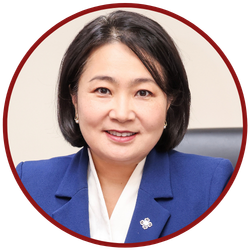
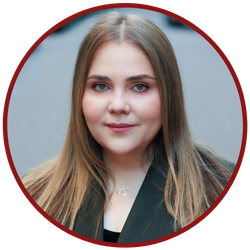
Maria Curiel

Maria Ignacia Curiel

Research Scholar, CDDRL; Research Affiliate, Poverty, Violence, and Governance Lab
Link to bio

María Ignacia Curiel is a Research Scholar at the Center on Democracy, Development and the Rule of Law and Research Affiliate of the Poverty, Violence and Governance Lab at Stanford University. Curiel is an empirical political scientist using experimental, observational, and qualitative data to study questions of violence and democratic participation, peacebuilding, and representation.

Her research primarily explores political solutions to violent conflict and the electoral participation of parties with violent origins. This work includes an in-depth empirical study of Comunes, the Colombian political party formed by the former FARC guerrilla, as well as a broader analysis of rebel party behaviors across different contexts. More recently, her research has focused on democratic mobilization and the political representation of groups affected by violence in Colombia, Mexico, and Venezuela.

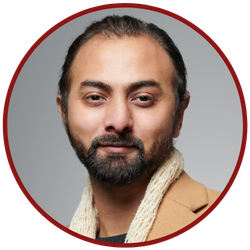
Hector Fuentes

Héctor Fuentes

Visiting Scholar, Center on Democracy, Development and the Rule of Law at the Freeman Spogli Institute for International Studies
Link to bio

Hector Fuentes is a Visiting Scholar at Stanford’s Center on Democracy, Development and the Rule of Law at Stanford University. His research focuses on Venezuelan elections, exploring the dynamics that led to this semi-competitive election, analyzing the strategic successes of the opposition, and identifying windows of opportunity for fostering a transition to democracy in Venezuela.

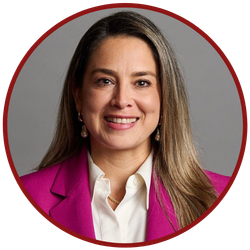
Dorothy_Kronick

Dorothy Kronick

Associate Professor of Public Policy, Goldman School of Public Policy at Berkeley
Link to bio

Dorothy Kronick is an Associate Professor of Public Policy at the Goldman School of Public Policy at Berkeley. She studies contemporary Latin American politics, focusing on Venezuelan politics and the politics of crime and policing. Her work has been published in the American Political Science Review, the Journal of Politics, Science, and Science Advances, among other outlets. Her commentary on Venezuelan politics has appeared in the New York Times and the Washington Post.

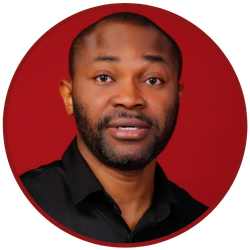
Harold Trinkunas

Harold Trinkunas

Deputy Director and a Senior Research Scholar at the Center for International Security and Cooperation at the Freeman Spogli Institute for International Studies
Link to bio

Harold Trinkunas is a Senior Research Scholar and the Deputy Director at the Center for International Security and Cooperation at the Freeman Spogli Institute for International Studies at Stanford University. His work has examined civil-military relations, ungoverned spaces, terrorist financing, emerging power dynamics, and global governance.

Diego Zambrano

Diego A. Zambrano

Associate Professor of Law, Stanford Law School & CDDRL Affiliated Faculty
Link to bio

Diego A. Zambrano is a Professor of Law and Associate Dean for Global Programs at Stanford Law School, specializing in the areas of civil litigation and comparative law. He is also the faculty director of the Neukom Center for the Rule of Law and Faculty Affiliate at the Center on Democracy, Development and Rule of Law at Stanford University. 

Alberto Díaz-Cayeros

Alberto Díaz-Cayeros

Senior Fellow, Freeman Spogli Institute (FSI), Affiliated faculty at the Center on Democracy, Development and the Rule of Law (CDDRL), Co-director, Democracy Action Lab (DAL)
Link to bio

Alberto Diaz-Cayeros joined the FSI faculty in 2013 after serving for five years as the director of the Center for US-Mexico studies at the University of California, San Diego. He earned his Ph.D at Duke University in 1997. He was an assistant professor of political science at Stanford from 2001-2008, before which he served as an assistant professor of political science at the University of California, Los Angeles. Diaz-Cayeros has also served as a researcher at Centro de Investigacion Para el Desarrollo, A.C. in Mexico from 1997-1999. His work has focused on federalism, poverty and violence in Latin America, and Mexico in particular. He has published widely in Spanish and English. His book Federalism, Fiscal Authority and Centralization in Latin America was published by Cambridge University Press in 2007 (reprinted 2016). His latest book (with Federico Estevez and Beatriz Magaloni) is: The Political Logic of Poverty Relief Electoral Strategies and Social Policy in Mexico. His work has primarily focused on federalism, poverty and economic reform in Latin America, and Mexico in particular, with more recent work addressing crime and violence, youth-at-risk, and police professionalization. He currently serves as the co-director of the Democracy Action Lab at the Center on Democracy, Development and the Rule of Law (CDRRL) at the Freeman Spogli Institute (FSI).

Alberto Díaz-Cayeros

William J. Perry Conference Room, Encina Hall 2nd Floor 

Virtual to Public. If prompted for a password, use: 123456
Only those with an active Stanford ID with access to the William J. Perry Conference Room in Encina Hall may attend in person.

Encina Hall, Suite 052
616 Jane Stanford Way
Stanford, CA 94305-6055

0
Research Scholar
Research Manager, Democracy Action Lab
Poverty, Violence, and Governance Lab Research Affiliate, 2024-25
CDDRL Postdoctoral Fellow, 2023-24
maria_curiel_2024.jpg

María Ignacia Curiel is a Research Scholar at the Center on Democracy, Development and the Rule of Law and Research Affiliate of the Poverty, Violence and Governance Lab at Stanford University. Curiel is an empirical political scientist using experimental, observational, and qualitative data to study questions of violence and democratic participation, peacebuilding, and representation.

Her research primarily explores political solutions to violent conflict and the electoral participation of parties with violent origins. This work includes an in-depth empirical study of Comunes, the Colombian political party formed by the former FARC guerrilla, as well as a broader analysis of rebel party behaviors across different contexts. More recently, her research has focused on democratic mobilization and the political representation of groups affected by violence in Colombia, Mexico, and Venezuela.

Curiel's work has been supported by the Folke Bernadotte Academy, the Institute for Humane Studies, and the APSA Centennial Center and is published in the Journal of Politics. She holds a Ph.D. in Political Science and dual B.A. degrees in Economics and Political Science from New York University.

Date Label
María Ignacia Curiel Research Scholar Research Manager Panelist Democracy Action Lab (DAL) and CDDRL, Freeman Spogli Institute for International Studies (FSI)
0
hector_fuentes.jpg

Héctor Fuentes is a Visiting Scholar at Stanford’s Center on Democracy, Development and the Rule of Law (2024-25). His research focuses on the critical juncture of the 2024 Venezuelan elections, exploring the dynamics that led to this semi-competitive election, analyzing the strategic successes of the opposition, and identifying windows of opportunity for fostering a transition to democracy in Venezuela. As the Director of EstadoLab, he has co-authored influential pieces on state fragility and democracy in Venezuela, as well as on state fragility across South America.

Héctor holds a Master of Global Affairs from Tsinghua University, where he was a Schwarzman Scholar, and a Master of Public Policy from the University of Oxford, supported by a Chevening Scholarship. His legal training was completed at the Central University of Venezuela, where he graduated as valedictorian. Throughout his career, Héctor has built extensive expertise in institutional capacity building, rule of law strengthening, and natural resource governance.

In addition to his research and academic work, Héctor has been actively involved in democracy promotion efforts in Venezuela. He co-founded EstadoLab, leading national campaigns that reached millions of young people and supported their participation in pro-democracy initiatives. He has also worked on various international projects aimed at rebuilding state capacity and promoting justice reform.

CDDRL Visiting Scholar, 2024-26
Fisher Family Summer Fellow, 2024
Date Label
Héctor Fuentes Visiting Scholar Panelist Freeman Spogli Institute for International Studies (FSI)
Dorothy Kronick Associate Professor of Public Policy Panelist Goldman School of Public Policy, U.C. Berkeley
Harold Trinkunas Senior Research Scholar & Deputy Director Panelist Center for International Security and Cooperation (CISAC) at the Freeman Spogli Institute for International Studies (FSI)

Room N346, Neukom Building
555 Nathan Abbott Way
Stanford, CA 94305

650.721.7681
0
Professor of Law, Stanford Law School
diego-zambrano-3-1024x684_square.jpg

Diego A. Zambrano’s primary research and teaching interests lie in the areas of civil procedure, transnational litigation, and judicial federalism. His work explores the civil litigation landscape: the institutions, norms, and incentives that influence litigant and judicial behavior. Professor Zambrano also has an interest in comparative constitutional law and legal developments related to Venezuela. He currently leads an innovative Stanford Policy Lab tracking “Global Judicial Reforms” and has served as an advisor to pro-democracy political parties in Venezuela. In 2021, Professor Zambrano received the Barbara Allen Babcock Award for Excellence in Teaching.

Professor Zambrano’s scholarship has appeared or is forthcoming at the Columbia Law Review, University of Chicago Law Review, Michigan Law Review, Northwestern University Law Review, Stanford Law Review, and Virginia Law Review, among other journals, and has been honored by the American Association of Law Schools (AALS) and the National Civil Justice Institute. Professor Zambrano will be a co-author of the leading casebook Civil Procedure: A Modern Approach (8th ed. 2024) (with Marcus, Pfander, and Redish). In addition, Professor Zambrano serves as the current chair of the Federal Courts Section of the AALS. He also writes about legal issues for broader public audiences, with his contributions appearing in the Wall Street Journal, BBC News, and Lawfare.

After graduating with honors from Harvard Law School in 2013, Professor Zambrano spent three years as an associate at Cleary Gottlieb in New York, focusing on transnational litigation and arbitration. Before joining Stanford Law School in 2018, Professor Zambrano was a Bigelow Teaching Fellow at the University of Chicago Law School.

CDDRL Affiliated Faculty
Date Label
Diego A. Zambrano Associate Professor of Law, CDDRL Affiliated Faculty Panelist Stanford Law School
Panel Discussions
Date Label
Authors
Noa Ronkin
News Type
News
Date
Paragraphs

Stanford University's Walter H. Shorenstein Asia-Pacific Research Center (APARC) is pleased to invite nominations for the 2026 Shorenstein Journalism Award. The award, which carries a cash prize of US$10,000, recognizes outstanding journalists and news media outlets for excellence in covering the complexities of the Asia-Pacific region. The 2026 award will honor a Western news media outlet or a journalist whose substantial body of work has primarily appeared in Western news media. APARC welcomes award nomination submissions from news editors, publishers, scholars, news outlets, journalism organizations, and entities focused on researching and analyzing the Asia-Pacific region. Entries are due by February 15, 2026.

The award defines the Asia-Pacific region broadly as including Northeast Asia, Southeast Asia, South Asia, Central Asia, and Australasia. Both individual journalists with a considerable body of work and news media outlets are eligible for the award. Nominees’ work may be in traditional forms of print or broadcast journalism and/or in new forms of multimedia journalism. The Award Selection Committee oversees the judging of nominees and is responsible for selecting honorees.

An annual tradition since 2002, the award honors the legacy of Mr. Walter H. Shorenstein, APARC's benefactor, and his twin passions for promoting excellence in journalism and understanding of Asia. Throughout its history, the award has recognized world-class journalists and news media who push the boundaries of coverage of the Asia-Pacific region and champion press freedom and human rights.

Recent honorees include Netra News, Bangladesh's premier public interest journalism outlet; Chris Buckley, the New York Times' chief China correspondent; The Caravan, India’s esteemed magazine of long-form journalism; Emily Feng, then NPR's Beijing correspondent; and Nobel Laureate Maria Ressa, CEO and president of the Philippines-based news organization Rappler. Visit the award page to learn more.

Award nominations are accepted electronically through Sunday, February 15, 2026, at 11:59 PM PST.  Visit the award nomination entry page for information about the nomination procedures and to submit an entry.

APARC will announce the winner by May 2026.

Please direct all inquiries to aparc-communications@stanford.edu.

Read More

Tasneem Khalil delivers remarks at a lectern.
News

Shorenstein Journalism Award Honors Netra News, Spotlights Public Interest Reporting Advancing Democracy and Accountability in Bangladesh

The 2025 Shorenstein Journalism Award recognized Netra News, Bangladesh’s premier independent media outlet, at a celebration featuring Tasneem Khalil, its founding editor-in-chief, who discussed its mission and joined a panel of experts in considering the prospects for democracy in Bangladesh.
Shorenstein Journalism Award Honors Netra News, Spotlights Public Interest Reporting Advancing Democracy and Accountability in Bangladesh
Japanese Prime Minister Sanae Takaichi delivers remarks while seated in front of the Japanese flag.
Commentary

Japan's Prime Minister Takaichi: A First-Month Report Card

Stanford sociologist Kiyoteru Tsutsui, director of the Shorenstein Asia-Pacific Research Center and the Japan Program, evaluates Japanese Prime Minister Sanae Takaichi's first month in office.
Japan's Prime Minister Takaichi: A First-Month Report Card
Weitseng Chen presents at a lectern.
News

Reassessing the Rule of Law: How Legal Modernization Can Lead to Authoritarianism

Weitseng Chen of the National University of Singapore explores how legal modernization can entrench rather than erode authoritarian power, an unexpected result of a legal mechanism that underpins functioning democracies.
Reassessing the Rule of Law: How Legal Modernization Can Lead to Authoritarianism
Hero Image
Stanford campus scene with a palm tree seen through an arch. Text about call for nominations for the 2026 Shorenstein Journalism Award.
All News button
1
Subtitle

Sponsored by Stanford University’s Shorenstein Asia-Pacific Research Center, the annual award recognizes outstanding journalists and news media outlets for excellence in covering the Asia-Pacific region. News editors, publishers, scholars, and organizations focused on Asia research and analysis are invited to submit nominations for the 2026 award through February 15, 2026.

Date Label
Authors
Larry Diamond
News Type
Commentary
Date
Paragraphs

As we gather here to celebrate freedom and to recommit ourselves to the democratic cause, we face a powerful authoritarian tide. The remarkable third wave of global democratization ran out of steam two decades ago. Since then, many countries have fallen under the spell of illiberal and even authoritarian populism. Anti-establishment parties have swept into power promising to elevate “the people” over corrupt ruling elites and decrepit institutions, only to betray them more deeply through corruption and abuse of power. These include not just emerging-market democracies like Venezuela and Turkey but wealthier democracies in Europe and the United States, whose stability as liberal democracies we took for granted. 

In this global trend away from freedom, authoritarian populists have implemented a common playbook to polarize politics, punish independent media and civil society, undermine judicial independence, purge neutral watchdog institutions, politicize the civil service and security apparatus, and weaponize the state to persecute critics and opponents.

Once this authoritarian project settles into power, truth decays, the rule of law crumbles, fear sets in, and submission becomes the norm. Moreover, authoritarian populists draw from one another — and from powerful autocracies like Russia and China — the narrative arguments, political techniques, resource flows, and technological tools to accelerate their bids for hegemony.


The longer these authoritarian parties are in power, the more they eviscerate democratic institutions. But they are not invincible or irreversible.
Larry Diamond
Mosbacher Senior Fellow in Global Democracy, FSI


The longer these authoritarian parties are in power, the more they eviscerate democratic institutions. But they are not invincible or irreversible. Incipient authoritarianism has been turned back in countries as diverse as Brazil, Poland, Sri Lanka, and Senegal. The slide away from liberal democracy has been reversed recently in Botswana and Mauritius. An executive coup against democracy was defeated in South Korea. Young people in Bangladesh overthrew a dictator last year in a remarkable upsurge of protest. And the longstanding autocracies in Venezuela and Turkey are looking increasingly desperate and unpopular. These examples bear lessons we must learn and promote if we are to ignite — as we surely can — a new era of democratic progress.

First, we must study what it takes to defeat autocrats at the ballot box. Typically, electoral battles are not a straight contrast between democracy and autocracy. Voters weigh their circumstances of life as well. Fortunately, autocrats have other failings besides their corruption, lawlessness, and abuse of power: sooner or later, they fail to deliver on their material promises. Successful democratic campaigns target the populists’ hypocrisy and address not just people’s political rights but their economic and social needs. 

To defeat autocrats, democratic forces must offer specific, credible plans to meet the core policy challenges of economic growth and distribution, fairness and inclusion, education, health care, infrastructure, public safety, and national security. 

But people everywhere also need a vision of what constitutes a good and just form of government. Here, democracies have dropped the ball in making the case FOR democracy as the best form of government. Decades ago, as they fought dictatorships and then came to power, democracies taught their young people the values, ideas, and history of democracy. But as new democracies stabilized, the existence of a democratic culture came to be assumed, and countries forgot the terrible price they paid under dictatorship — the fear, falsehoods, powerlessness, and repression, the lack of accountability, voice, justice, and human dignity. We can make the practical case for democracy — it performs better over time. But we cannot pin the argument on performance, which may fail at specific points in time.


Ultimately, the case for democracy is that being able to speak truth to power, to hold it accountable, and to change those who exercise it is a core element of human dignity and a basic human right.
Larry Diamond
Mosbacher Senior Fellow in Global Democracy, FSI


Ultimately, the case for democracy is that being able to speak truth to power, to hold it accountable, and to change those who exercise it is a core element of human dignity and a basic human right. The freedoms to speak, publish, pray, organize, and assemble are inalienable human rights. As are the rights to a fair and impartial trial and to have all citizens be treated equally under the law. It is only democracy — never autocracy — that protects these rights and treats citizens with dignity by investing sovereignty in them, not some self-appointed minority. Liberty and democracy are intertwined.

We must make these points relentlessly, creatively, and convincingly, not just in the schools, at successively higher levels of instruction and deliberation, but through the social media platforms where people live their information lives. Russia, China, Iran, and other autocracies wage extensive propaganda campaigns to trash liberal values and institutions. They portray democracy as lacking in dynamism, capacity, and masculine strength. These arguments are false, offensive, and degrading to the human spirit. But they will not fail of their own accord. They need to be defeated by better, more inspiring arguments and narratives about why people need freedom to thrive, and why societies need democracy to have freedom.

Today, there are four arenas of struggle for the future of freedom, and democrats must prevail in all of them. The core battle is now in the countries that have been sliding back from democracy to autocracy. 


In almost every instance where authoritarian projects have been defeated, it has been through elections. Illiberal populists crave the legitimacy that comes from victory in multiparty elections. But corruption and misrule erode their electoral support. So, they need elections that are competitive enough to validate their claim to rule but rigged enough to minimize the risk of defeat. The pathway to restoring democracy is to seize the electoral opportunity, flood the zone with election workers and observers, and wage an effective campaign so that people who have grown weary of authoritarian abuse can defeat it at the ballot box.

To win, democrats must forge a unified coalition across factional and ideological divides. They must offer concrete policy ideas to improve people’s lives. They need a narrative about what has happened to justice and democracy, and why restoring these will help to make the country great again. A campaign is not a legal brief. It must inspire and excite. It requires strong, compelling leadership. It must engage diverse sections of society, including people who once supported the authoritarian populists but are now disillusioned. Democrats must also express patriotism and show that illiberal populists wave a false flag. Democrats are the truer patriots because they recognize democracy and liberty as pillars of national greatness.

These lessons can help to restore democracy where it has been lost and to secure it in a second arena, when it is under challenge from authoritarian populist parties. But there are two other arenas of struggle in which we must prevail. Globally, democrats cannot let the world’s powerful authoritarian states capture and hollow out the global institutions to defend freedom — the UN Human Rights Council, the international and regional instruments of electoral observation and assistance, and the rules that govern the flows of data and information. Neither can we shrink from the global battle to support democratic values and free flows of information, and to lend technical and financial support to peoples, parties, media, and movements around the world struggling for freedom. 

In the face of isolationist efforts to defund and withdraw from this cause, we must convince democratic publics that we can only secure our own freedom by supporting that of others. A more democratic world will be a safer, fairer, less corrupt, more peaceful, and prosperous world.


There is no more urgent priority than to give the Ukrainian people the weapons, resources, and economic sanctions to defeat Russian aggression. Similarly, we must ensure that Taiwan’s democracy does not suffer the same aggression from the People’s Republic of China.
Larry Diamond
Mosbacher Senior Fellow in Global Democracy, FSI


All of that has been under existential challenge in Ukraine since Russia’s brutal invasion in February of 2022. Resisting aggression is the fourth arena of struggle. There is no more urgent priority than to give the Ukrainian people the weapons, resources, and economic sanctions to defeat Russian aggression. Similarly, we must ensure that Taiwan’s democracy does not suffer the same aggression from the People’s Republic of China. Taiwan must have the weapons, trade, and international dignity it needs to survive. We must preserve the status quo across the strait by making clear that the US and other democracies stand behind the resolve of a free people to chart their own destiny in Taiwan — as we do in Ukraine.

We meet here today just a short distance from the grotesque wall that stood for decades as the dividing line between freedom and tyranny. 36 years ago — almost to this day — the wall was torn down. Few imagined it would happen when it did. But it did because of democratic conviction and resolve. Now, we are in a new cold war with global authoritarianism. The history of Berlin should constantly remind us that freedom is fragile, but it can also be resilient. We must never lose faith in the rightness of our cause and the obligation we bear once again to defend freedom in an hour of peril.

Professor Diamond delivered this speech at the Berlin Freedom Conference on November 10, 2025.

Read More

Sunset with overlaid American flag and Statue of Liberty
Q&As

Turbulent Times For Democracy

Hoover scholar Larry Diamond calls for respect, collaboration, and a crackdown on young people’s smartphones.
Turbulent Times For Democracy
Larry Diamond on World Class Podcast
Commentary

How Democracy Is Doing Around the World

On the World Class podcast, Larry Diamond and Michael McFaul compare how civic discourse and political institutions are holding up in the United States, South Korea, Taiwan, and other democracies.
How Democracy Is Doing Around the World
Larry Diamond and Francis Fukuyama speaking at a round table in front of a wall of books on a shelf.
Commentary

CDDRL Scholars Explore Impacts of Executive Orders and Policy Changes on Global Democracy

In a new video series, Francis Fukuyama and Larry Diamond discuss how democracy-promoting programs are being eroded under the new administration.
CDDRL Scholars Explore Impacts of Executive Orders and Policy Changes on Global Democracy
Hero Image
Larry Diamond delivered remarks to the Berlin Freedom Conference on November 10, 2025.
Courtesy of Democracy Without Borders
All News button
1
Subtitle

Professor Larry Diamond's remarks to the Berlin Freedom Conference, November 10, 2025.

Date Label
Authors
Nora Sulots
News Type
News
Date
Paragraphs

The Fisher Family Summer Fellows on Democracy and Development Program at Stanford University's Center on Democracy, Development and the Rule of Law is now accepting applications for our summer 2026 program. The deadline to apply is 11:59 pm PST on Thursday, January 15, 2026.

The program brings together an annual cohort of approximately 30 mid-career practitioners from countries in political transition who are working to advance democratic practices and enact economic and legal reform to promote human development. Launched by CDDRL in 2005, the program was previously known as the Draper Hills Summer Fellows Program. The new name reflects an endowment gift from the Fisher family — Sakurako (Sako), ‘82, and William (Bill), MBA ‘84 — that secures the future of this important and impactful program.

From Afghanistan to Zimbabwe, our program participants are selected from among hundreds of applicants every year for the significant contributions they have already made to their societies and their potential to make an even greater impact with some help from Stanford. We aim to give them the opportunity to join a global network of over 500 alumni from 97 countries who have all faced similar sets of challenges in bringing change to their countries.

The Fisher Family Summer Fellows Program provides an intensive 3-week on-campus forum for civil society leaders to exchange experiences and receive academic and policy training to enrich their knowledge and advance their work. Delivered by a leading Stanford faculty team composed of Michael McFaul, Kathryn Stoner, Francis Fukuyama, Larry Diamond, Erik Jensen, and more, the program allows emerging and established global leaders to explore new institutional models and frameworks to enhance their ability to promote good governance, accountable politics, and find new ways to achieve economic development in their home countries.

Prospective fellows from Ukraine are also invited to apply for our Strengthening Ukrainian Democracy and Development (SU-DD) Program, which runs concurrently with the Fisher Family Summer Fellows Program. The SU-DD program provides a unique opportunity for mid-career practitioners working on well-defined projects aimed at strengthening Ukrainian democracy, enhancing human development, and promoting good governance. Applicants to the SU-DD program will use the Fisher Family Summer Fellows Program application portal to apply and indicate their interest there. You will then be directed to a series of supplemental questions specific to the SU-DD program, including requiring a detailed description of your proposed project.

Read More

2025 Fisher Family Summer Fellows
News

Spotlight on the 2025 Summer Fellows

The Fellow Spotlight Series is an inspiring and moving series of "TED"-style talks given by each of our 2025 Fisher Family Summer Fellows to share their backstories and discuss their work.
Spotlight on the 2025 Summer Fellows
2025 Strengthening Ukrainian Democracy and Development fellows
News

Ukrainian Leaders Advance Postwar Recovery Through Stanford Fellowship

Meet the four fellows participating in CDDRL’s Strengthening Democracy and Development Program and learn how they are forging solutions to help Ukraine rise stronger from the challenges of war.
Ukrainian Leaders Advance Postwar Recovery Through Stanford Fellowship
FFSF Class of 2025 with 20th Anniversary logo
News

Announcing the 20th Anniversary Cohort of the Fisher Family Summer Fellows on Democracy and Development Program

In July 2025, the Center on Democracy, Development and the Rule of Law will welcome a diverse cohort of 27 experienced practitioners from 18 countries who are working to advance democratic practices and economic and legal reform in contexts where freedom, human development, and good governance are fragile or at risk.
Announcing the 20th Anniversary Cohort of the Fisher Family Summer Fellows on Democracy and Development Program
Hero Image
2025 Summer Fellows role play during a case study session Chloe Davis
All News button
1
Subtitle

The program will run from Sunday, July 19, to Friday, August 7, 2026. Applications are due by 11:59 pm PST on Thursday, January 15, 2026.

Date Label
Subscribe to Democracy promotion