Diplomacy
-
Steven E. Miller is Director of the International Security Program, Editor-in-Chief of the quarterly journal, International Security and also co-editor of the International Security Program's book series, BCSIA Studies in International Security (which is published by the MIT Press). Previously, he was Senior Research Fellow at the Stockholm International Peace Research Institute (SIPRI) and taught Defense and Arms Control Studies in the Department of Political Science at the Massachusetts Institute of Technology. Miller is a Fellow of the American Academy of Arts and Sciences, where he has been a member of their Committee on International Security Studies (CISS). He is also co-chair of the U.S. Pugwash Committee, a member of the Council of International Pugwash, a member of the Advisory Committee of the Stockholm International Peace Research Institute (SIPRI), a member of the Scientific Committee of the Landau Network Centro Volta (Italy), and formerly a member of the Council of the International Institute for Strategic Studies (IISS).  Miller was born and raised in North Hollywood, California. He did his undergraduate degree at Occidental College in Los Angeles. He received a Master of Arts in Law and Diplomacy (MALD) and a PhD in international relations from the Fletcher School of Law and Diplomacy. He is married to Deborah K. Louis. They have two sons: Jonathan (1989) and Nicholas (1997).

Reuben W. Hills Conference Room

Steven E. Miller Editor-in-Chief Speaker <i>International Security</i>
Seminars
-

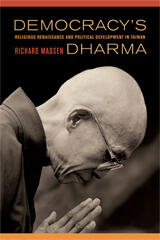
This is a CDDRL's Special Event within our Democracy in Taiwan Program. It is also co-sponsored by the Public Diplomacy/Emerging Publics Project of the Center for the Pacific Rim at University of San Francisco. In this seminar, Dr. Richard Madsen will talk about his new book that explores the religious renaissance that has reformed, revitalized, and renewed the practices of Buddhism and Daoism in Taiwan and how this religious renaissance embraces democracy modernity.  

Image
10896
Richard Madsen is distinguished professor and chair of the sociology department at the University of California, San Diego and a co-author (with Robert Bellah et al.) of The Good Society and Habits of the Heart which received the Los Angeles Times Book Award and was jury nominated for the Pulitzer Prize. He has authored or co-authored five books on China, including Morality and Power in a Chinese Village for which he received the C. Wright Mills Award; China's Catholics: Tragedy and Hope in an Emerging Civil Society; and China and the American Dream.  He also co-edited (with Tracy B. Strong) The Many and the One: Religious and Secular Perspectives on Ethical Pluralism in the Modern World. His latest book is Democracy’s Dharma: Religious Renaissance and Political Development in Taiwan.

Richard Madsen received an MA in Asian studies and a Ph.D. in sociology from Harvard.

"Madsen is a genial and well-informed guide, both to social-political change in Taiwan and to the ins and outs of religious movements. His engaging writing skillfully interweaves profound insights and themes into the descriptive analytical narrative. Democracy's Dharma presents new material based on recent research while offering a fresh spin on thinking about Asian religions."–Thomas Gold, editor of Social Connections in China: Institutions, Culture, and the Changing Nature of Guanxi

Philippines Conference Room

Richard Madsen Distinguished Professor Speaker Department of Sociology at the University of California, San Diego
Conferences
-
Mr. Melia has been Deputy Executive Director since May 2005.  He was previously Director of Research at the Institute for the Study of Diplomacy, and Adjunct Professor in the School of Foreign Service, at Georgetown University in Washington, DC where he continues to teach graduate courses about democracy promotion. For more than a dozen years, Melia held senior posts at the National Democratic Institute for International Affairs (NDI), a leading non-governmental organization engaged in the promotion of democracy worldwide. From 1998 to 2001, he was the Institute's Vice President for Programs. Earlier, he managed the Institute's programs in Central and Eastern Europe (1988 to 1993), in the Middle East (1993 to 1996), and directed programs in more than a dozen African countries. 

Mr. Melia was Associate Director of the Free Trade Union Institute of the AFL-CIO (1986 to 1988). Prior to that he served for six years as Legislative Assistant for foreign and defense policy to U.S. Senator Daniel Patrick Moynihan (D-NY).  Thomas Melia received his M.A. in Africa Studies from the Johns Hopkins University School of Advanced International Studies.

CISAC Conference Room

Thomas O. Melia Deputy Executive Director Speaker Freedom House
Seminars
-
In the midst of leadership changes and rethinking of the Six-Party Talks, the time is ripe for reassessing how multilateralism can be advanced in Northeast Asia. The earlier stress on economic integration as the engine of regionalism has lost credibility, although the forces of interdependence continue to grow. The tendency to treat security in isolation also may be receding, as the Six-Party Talks and Sino-U.S. relations both reveal the multi-sided nature of building trust. At the same time, the pessimism associated with overemphasis on the history issue between Japan and its neighbors has receded in the face of renewed Sino-Japanese and South Korean-Japanese diplomacy. Yet, finding common ground in strategic thinking about the future of multilateralism demands a new approach that takes into account lessons from recent years.

As the building blocks of a new approach, this presentation will focus on four themes: 1) re-examination of ways to accelerate regionalism, with attention to leadership, energy cooperation, and the role of Russia; 2) development of a more comprehensive outlook on values, with attention to shared modernity, gradualism, and the role of Japan; 3) discussion of the next phase in managing North Korea, attentive to Sino-U.S. accord and the role of South Korea; and 4) evaluation of U.S. priorities and how a new president may view Northeast Asia within an overall agenda.   The objective of this talk will be to stimulate thinking on a region at a crossroads in order to capitalize on recent currents of change.

Gil Rozman attended Princeton's Critical Languages Program, returning to Carleton College as an independent major in Chinese and Russian studies. He received his PhD in sociology at Princeton with a field on Chinese, Japanese, and Russian societies and a plan to concentrate on historical comparisons first and on the domestic roots of international relations later. His books have appeared in clusters, including: four on comparative pre-modern urban development and stages of modernization; three on debates in the Soviet Union, China, and Japan over bilateral relations and changes in socialism; two on regionalism; and four on strategic thinking in Northeast Asia. Although he is still learning about Korea, many recent writings have looked at Korea within a regional context.

Philippines Conference Room

Gil Rozman Professor of Sociology Speaker Princeton University
Seminars
Authors
Daniel C. Sneider
News Type
Commentary
Date
Paragraphs
%people1%, associate director for research at Shorenstein APARC, gives a few cautionary lessons on U.S.-Korea relations.
Earlier this month I visited Seoul as a member of “New Beginnings,” a study group of former American policymakers and experts on Korea, co-organized by the Shorenstein Asia-Pacific Research Center at Stanford, and The Korea Society. We formed this group last year, anticipating that the upcoming Korean elections and the American presidential elections afterwards would offer an opportunity to embark upon a “new beginning” in our alliance.

After several days of meetings in Seoul, most importantly with President-elect Lee Myeong-bak and his senior advisors, we came away convinced that our hopes for a “new beginning” were more than justified. As President Lee takes office, it is clear that his administration is deeply committed to restoring the alliance to its previous place as the foundation of Korean foreign and security policy. Equally important, the new government is focused on the need to boost economic growth based on the free flow of trade and investment, and sees the conclusion of the Free Trade Agreement with the United States as central to that goal.

For those of us who have long argued that a vibrant Korea is vital to America’s interests, these were welcome words. It is no secret that there was a perception in the United States that President Roh Moo-hyun, backed by a significant portion of the Korean people, no longer saw the alliance as a strategic imperative for Korea. Unfortunately, many Americans, particularly in Congress, had begun to share this view of the alliance, fueled by a mistaken belief that Koreans were “anti-American.”

This view of President Roh and of Korea was unfair and even distorted. President Roh deserves credit, particularly in the last two years, for taking important steps to improve alliance relations, not least his promotion of the negotiation of the FTA. He made unpopular decisions, such as the dispatch of troops to Iraq, in order to preserve a cooperative atmosphere. And as we saw demonstrated in the election, public opinion in Korea regarding the United States has shifted dramatically since the emotional days of 2002.

The Lee administration can anticipate a warm greeting in Washington, as is already clear in the preparations for his visit next month. The new President has sounded all the right notes – seeking closer cooperation on North Korea policy, restoring positive ties with Japan, America’s other vital ally in Northeast Asia, and building a broader strategic partnership with the U.S. beyond the Korean peninsula.

Amidst the renewed embrace of the alliance, it is worth however keeping a few cautionary lessons from the past in mind:

1. Not everything will be Smooth Sailing

Despite the welcome official rhetoric, it is no secret that the relationship between the United States and the Republic of Korea has never been entirely smooth. From its earliest days, born out of Korea’s liberation and the trials of the Korean War, the alliance has been marked by both close cooperation and by clashes over key policy goals. While bound together by strategic necessity, the national interests of Korea and the United States have not always been identical.

There is nothing unusual about such differences among allies. Look for example at the tensions that plagued U.S.-European relations over the disastrous decision to invade Iraq. Even with the best of intentions, there will be moments of conflict between Seoul and Washington. What is important is how governments manage those differences to protect the underlying relationship. Both Koreans and Americans need to remember the virtues of quiet diplomacy, trying to avoid negotiating their differences through the media.

2. All politics is local

Alliance relations can no longer be managed solely by diplomats or by friends meeting behind closed doors. Those ties are crucial but both Korea and the United States are democracies in which the issues that are at the core of the relationship – from trade to the alignment of military forces – are matters of public discussion. Domestic politics shapes policy decisions but both Koreans and Americans sometimes forget the pressures operating on the other side.

This is particularly important in an election year. The Korean National Assembly election in April is already having an impact, delaying ratification of the FTA. The U.S. election will mean FTA ratification by the U.S. Congress this year may be impossible. Presidential candidates are taking positions that they may adjust after gaining power. On another level, the new government in Seoul needs to remember that the Bush administration is a lame duck affair and begin to prepare for a new government in Washington.

3. Expect the Unexpected, particularly with North Korea

The limited progress on the nuclear negotiations with North Korea has temporarily brought closer coordination between Korea and the US. But it would be foolish to assume that this trend will necessarily continue. The negotiations are already facing a slowdown as negotiators grapple with much tougher problems. If they break down, both Seoul and Washington, along with their other partners in the 6-party talks, will face some hard questions about how to respond. Any attempt to pressure Pyongyang is likely to bring an escalatory response, not least to test the new government in Seoul.

It is possible that Seoul and Washington will once again be somewhat out of synch. Ironically, the Bush administration – and whatever follows it -- may favor greater concessions than the new administration in Seoul would prefer to make.

These differences are manageable. The key is real policy coordination between the US and Korea – and the inclusion of Japan in a revived trilateral coordination mechanism. If both sides keep that commitment, we will indeed have made a “new beginning” in our alliance.

Daniel Sneider is the Associate Director for Research at Stanford University’s Walter H. Shorenstein Asia-Pacific Research Center. A former foreign correspondent, Sneider covered Korea for the Christian Science Monitor.
All News button
1
-

During the Cold War, China was regarded in many corners of Southeast Asia as a sponsor of subversion and communist insurgency. Until the “four modernizations,” its anemic economy and limited ability to project power offered little incentive for Southeast Asian governments to cozy up to Beijing. Relations were often frosty or worse. Clearly, times have changed. Essentially all of the states in Southeast Asia have robust diplomatic and economic engagements with the PRC. Yet security concerns have not evaporated. Most Southeast Asian governments now embrace China, but “hedge” by setting up fall-back security options with the United States and other partners in case the PRC becomes more menacing.

This seminar will explore some of the nuances in Southeast Asian “hedging” strategies. How do various governments view China’s intentions and capabilities? How have they variously sought to engage the United States and others to gain and retain security without antagonizing Beijing? How do these strategies relate to multilateral diplomacy in ASEAN and related forums, and how do they affect the overall “balance of power” in the Asia-Pacific region? Lastly, what pitfalls might hedging entail? These questions are critical, because the reaction of Southeast Asian states to China’s rise will have a major effect on the shape and stability of regional security for years to come.

John D. Ciorciari is a 2007-08 Shorenstein Fellow and is currently completing a manuscript entitled Hedging: Southeast Asian Alignments with the Great Powers since the Fall of Saigon.  He has extensive work experience in Southeast Asia, both as an academic and as a U.S. government official.  He also served as a Visiting Fellow at the Institute of Defence and Strategic Studies in Singapore in 2003-04.  He holds a JD from Harvard Law School and DPhil from the University of Oxford.

Daniel and Nancy Okimoto Conference Room

Hoover Institution
Stanford, CA 94305

0
Affiliate - Southeast Asia Forum
CiociariHeadshot.jpg JD, PhD

John D. Ciorciari was a Shorenstein Postdoctoral Fellow at Shorenstein APARC for 2007-2008.  Dr. Ciorciari will remain at Stanford for the academic year 2008-09 as a National Fellow of the Hoover Institution. His current research centers on the alignment policies of small states and middle powers in the Asia-Pacific region. He focuses particularly on the phenomenon of "hedging," whereby secondary states pursue a balance of security and autonomy vis-a-vis the great powers.

Dr. Ciorciari also has interests in international human rights law and international finance. Before coming to Stanford, he served as Deputy Director of the Office of South and Southeast Asia at the U.S. Treasury Department. He has published articles on the reform of the Bretton Woods institutions and is currently undertaking a project on financial cooperation in East Asia.

In addition, he serves as a Senior Legal Advisor to the Documentation Center of Cambodia, which assists the Khmer Rouge tribunal and conducts research into the history of Democratic Kampuchea. He has published a range of scholarly works on international criminal law and the Khmer Rouge accountability process.

Dr. Ciorciari received an AB and JD from Harvard, where he was editor-in-chief of the Harvard International Law Journal. He received his MPhil and DPhil from Oxford, where he was a Fulbright Scholar and Wai Seng Senior Research Scholar.

John Ciorciari 2007-2008 Shorenstein Fellow Speaker
Seminars
Authors
David G. Victor
News Type
Commentary
Date
Paragraphs
David G. Victor is a professor at Stanford Law School and director of the Program on Energy & Sustainable Development; he is also adjunct senior fellow at the Council on Foreign Relations.

Earlier this month Chinese revelers welcomed the new lunar year with a few more candles than usual. The country was gripped by a crisis in electric power production that caused California-style blackouts across the central and southern parts of the country. Power plants could not keep up with demand, especially because they didn't have enough coal on hand to burn.

The immediate causes of China's power crisis are straightforward. Snow storms disrupted the railroads that carry most coal to power plants. Record low temperatures also boosted demand for electricity and coal. But there was a deeper cause at work. China's free-market policies—the same ones that led to China's extraordinary growth in the past decade—have eroded the government's ability to control its economy. Economic activity, by design, is shifting away from state-owned enterprises and central planning. But Beijing doesn't have structures in place to control those aspects of the economy it doesn't own outright. Market reforms are making Beijing less and less relevant to what's really going on in the economy, threatening to turn China into a "weak state." And it's not just China—India, too, is having trouble regulating its industry and economy. The phenomenon is a dark cloud on the Asian century.

If this all sounds abstract, consider that China's blackouts were mainly a byproduct of the government's struggle to manage the planned and market-based parts of the economy side-by-side. Today, the Chinese leadership is worrying about inflation, but they have few useful tools to slow the rise in prices. A few years ago, Beijing might have dampened industrial growth by closing the spigot of finance from state-owned banks. But many newly deregulated state enterprises, as well as new privately owned companies, have found other sources of capital, including caches of massive profits accumulated over the years. One of the few industries Beijing still controls is power—it owns nearly every aspect of the grid, from generators to distributors. So Beijing decided to try and quell inflation by lowering electricity prices.

The energy industry, however, is bigger than just power generation and distribution. It includes the coal industry, which has been the object of market reforms. Starting two years ago the country largely abandoned the traditional planning system for allocating and pricing coal, the main fuel for power generators and one of the power companies' largest costs. Suppliers and buyers were allowed to negotiate on their own terms. With demand for electricity skyrocketing, suppliers had the upper hand, and coal prices rose. With Beijing keeping prices artificially low, power plants could not pass these costs to the consumer. They responded by cutting back on coal orders. As coal inventories dwindled, power generators cut back on capacity, and the lights went out.

Beijing's lack of practical control over large swaths of industry explains an increasing number of China's woes. The environment is a case in point. The government has an elaborate apparatus for environmental regulation, with strict laws on the books, but it is unwilling to enforce the measures for fear of stepping on the toes of local authorities, who usually push industrial development at the expense of greenery. Changing that power structure will require politically dangerous rewiring of the ruling Communist Party's power base. To be sure, Beijing is still powerful in some areas such as Internet regulation. And its recent success in imposing safety standards to close dangerous small coal mines, another area where Beijing is flexing its muscle, probably inadvertently contributed to the current coal crisis. Overall, however, what's most striking is Beijing's inability to impose needed regulation nor to predict what will happen when it does regulate. For example, a keystone in the government's effort to avoid future energy crises is an aggressive plan to improve energy efficiency about 4 percent per year over the current decade. The actual effect of Beijing's efficiency policies is barely one third that level.

These are not passing problems. They reveal a deep weakness in China's administration because the government has been unable to replace its Soviet-style planning system with an alternative scheme that is better suited to a market economy. Like an American film on the Wild West, much of the economy is governed by central strictures that don't really have much impact.

India is also plagued by administrative weakness—and the problems are getting worse as the Indian economy takes off and government struggles to address the byproducts of rapid economic growth. Large pockets of the Indian power grid are unreliable because Indian policymakers tinker with electricity prices in an effort to deliver political favors. (Electricity supplied to most Indian farms costs almost nothing and in some parts of the country is actually free. India has many farmers and they vote; politicians court them with stunts like free power. Poor accounting systems allow others who steal power to blame the farmers.) That tinkering has put most Indian power utilities into bankruptcy. The problems would be even worse if most of the power sector were not actually owned by the central and state governments in India, which shuffle money around to keep the companies afloat. Unable to get reliable power that is essential to industrial production, most large power users build their own power supplies. By some estimates, one third of the country's power plants are of this "captive" variety—by design, disconnected from the government-controlled grid so they are more reliable and also immune from political meddling.

The rise of weak states on the world stage will affect every aspect of international relations. It could send globalization astray. It will be hard to realize the full benefits of trade, for example, if essential countries are unable to enforce safety standards and trade laws. Fixing these problems may require a new style of international diplomacy that relies less heavily on deals such as treaties with central governments. Instead, specific contracts might be written directly with the segments of society that are best administered and most able to change their behavior. Taming the volcanic growth in Chinese emissions of greenhouse gases, for example, may depend less on whatever deal is crafted with Beijing and more on specific commitments that the West can work out with bosses in the Chinese power sector. How can China be a "responsible stakeholder" in the world economy if it can't actually follow through with commitments it makes in the international arena?

As the pundits gaze at the coming Asian century, they have wondered how Asia's new powers will reshape the world. But the big challenge in the coming Asian century may not be these new countries' burgeoning strength but their weakness.

All News button
1
-
Robin Wright is an American journalist currently covering U.S. foreign policy for The Washington Post. She has reported for The Washington Post, The Los Angeles Times, The Sunday Times (of London), CBS News and The Christian Science Monitor, and has served as a foreign correspondent in the Middle East, Europe, and Africa. She has also written for The New Yorker, The Atlantic Monthly, Foreign Affairs, Foreign Policy, The New York Times, and The International Herald Tribune.

Awards and Honors
Wright received the U.N. Correspondents Association Gold Medal for coverage of international affairs, the National Magazine Award for reportage from Iran in The New Yorker, and the Overseas Press Club Award for "best reporting in any medium requiring exceptional courage and initiative" for coverage of African wars. For coverage of U.S. foreign policy, she was named journalist of the year by the American Academy of Diplomacy for “distinguished reporting and analysis of international affairs ” and won the National Press Club Award and the Weintal Prize for diplomatic reporting. Wright has also been the recipient of a John D. and Catherine T. MacArthur Foundation grant.

Wright has been a fellow at the Carnegie Endowment for International Peace, the Brookings Institution, Yale University, Duke University, Stanford University, the University of California at Santa Barbara and the University of Southern California. She also lectures extensively around the United States and has been a television commentator on ABC, NBC, CBS, CNN and MSNBC programs, including "Meet the Press," "Face the Nation," "This Week," “Nightline," the PBS Newshour, "Frontline," and "Larry King Live."

Philippines Conference Room

Robin Wright Diplomatic Correspondent Speaker The Washington Post
Seminars

Stanford Law School
Transatlantic Technology Law Forum
Crown Quadrangle
559 Nathan Abbott Way
Stanford, CA 94305-8610

0
Research Affiliate, Stanford-Vienna Transatlantic Technology Law Forum
FCE_Heindl_Photo.jpg JD, JSD, LLM

Petra Heindl is a TTLF Fellow of the Stanford-Vienna Transatlantic
Technology Law Forum and an FCE Research Affiliate. Her research work is
connected with the Vienna Technology Law Program of the University of
Vienna School of Law as well, where she earned her JSD. Her research
focuses on transatlantic software copyright issues and software piracy.
She is also a senior associate with Binder Grösswang Attorneys at Law in
Vienna, Austria, working in the field of M&A and corporate law in an
international, primarily European, environment.

Heindl received her JD and JSD from the University of Vienna School of Law
in Austria and studied European Union law at the Lapland University of
Rovaniemi, Finland. After graduating from the Vienna Law School, she
specialized in European Union business law at the Danube University Krems
in Austria, where she completed an LLM in European Union law. In addition,
she earned an LLM in U.S. Law from Santa Clara University School of Law.

-
Professor Mito will offer a critical analysis of the constitutional revision debate in contemporary Japan and its implications for Japan's foreign relations. He argues that the justification for constitutional revision is based on political myth rather than historical reality. It is strongly felt that a militarized Japan will not enhance its independence or its international prestige. Some fear that a new Japan will end up as part of the American defense mechanism supporting US hegemony and its global strategy. Mito argues that any constitutional revision and the resultant remilitarization can affect the balance of power in the international system beyond its national borders. His major objective is to critically assess the argument for constitutional revision and the implications of the current revision debate.

Takamichi Tam Mito is professor of International Political Economy in the Department of Japanese Studies at the Chinese University of Hong Kong. A graduate of International Christian University (B.A.), he studied also at the Universities of Keele, Toronto, London, and Tsukuba (M.I.A. & Ph.D. in Law). Prior to his current appointment, he taught at the Universities of Cambridge, London, and Toronto and at Monash and Kyushu Universities. At Kyushu he was Foundation Professor of International Japanese Studies and Study Abroad Program. He also worked as a manager in the Department of Financial Engineering at Citicorp Investment Bank Ltd in London.

His major publications include: State Power and Multinational Oil Corporations: a Study of Market Intervention in Canada and Japan (Fukuoka: Kyushu University Press, 2001); The Political Economy of the Oil Market: A Comparative Study of Japan and Canada (Fukuoka: Kyushu University Press, in Japanese 2006); Sengo Nihon Seiji to Heiwa Gaiko (Postwar Japanese Politics and Peace Diplomacy) (Kyoto: Horitsubunkasha, 2007). His 2001 publication received an award by Japan Society for the Promotion of Science. Currently, he is completing six books on Japanese studies in the Asia-Pacific Region as a co-editor and contributor (forthcoming in 2008 and 2009) and also a book length study of the impact of government policy on the industrial growth, structure, and performance of the oil industry in modern Japan as a single author. He is the recipient of many research grants from various prestigious bodies including the governments of Australia, Canada, Hong Kong and Japan.

He has served for many professional and governmental bodies including Japan Agency for International Cooperation as a visiting professor of Japanese studies, Public Policy Studies Association in Japan, as the founding director; and the Japan Association of International Students' Education, as a founding vice president.

Philippines Conference Room

Takamichi Tam Mito Professor, International Political Economy, Department of Japanese Studies Speaker Chinese University of Hong Kong
Seminars
Subscribe to Diplomacy