Diplomacy
News Type
Commentary
Date
Paragraphs
What is strategic thinking? Are the foreign policies of some Southeast Asian states more strategic than those of others? If so, in what way, and with what implications for U.S. policy?
 
APARC's Southeast Asia Program Director Donald K. Emmerson examines these questions at the seminar "Beyond the Grass and the Elephants: Strategic Thinking in Southeast Asia," hosted by the New York Southeast Asia Network on September 19, 2019.
 
Watch the video here:
 

Hero Image
U.S. Secretary of State Michael R. Pompeo meets with Chinese State Councilor and Foreign Minister Wang Yi in Bangkok, Thailand, on August 1, 2019.
U.S. Secretary of State Michael Pompeo meets with Chinese State Councilor and Foreign Minister Wang Yi in Bangkok, Thailand on August 1, 2019.
State Department Photo by Ron Przysucha/ Public Domain
All News button
1
-

The Sino-Japanese competition for influence in Asia is often overlooked by Western observers. While the US-Japan Alliance has been the cornerstone of security in East Asia for over a half-century, under Prime Minister Shinzo Abe, Japan has modernized its military, steadily enhanced it regional activities, and deepened relations with countries around the region. Economically, as well, Tokyo has offered a counterpart to Chinese investment and development aid. The alliance with the United States is a indispensable element in Japan's regional strategy, one which Beijing would like to disrupt. How has China pursued its goal of driving a wedge between Tokyo and Washington? From military buildup, through pressure in the East China Sea, to diplomatic initiatives, Beijing has sought to raise the perceived risk to both Japan and the United States of maintaining their unique relationship. What are the prospects for the future of the US-Japan alliance, especially in the post-Abe era?


SPEAKER

Image
auslin headshout

Michael Auslin is the Payson J. Treat Fellow in Contemporary Asia at the Hoover Institution, Stanford University. A historian by training, he specializes in contemporary and historical U.S. policy in Asia and political and security issues in the Indo-Pacific region. A best-selling author, Dr. Auslin’s latest book is The End of the Asian Century:  War, Stagnation, and the Risks to the World’s Most Dynamic Region (Yale). He is a longtime contributor to the Wall Street Journal and National Review, and his writing appears in other leading publications, including The Atlantic, Financial Times, Foreign Affairs, and Politico. He comments regularly for U.S. and foreign print and broadcast media. Previously, Dr. Auslin was an associate professor of history at Yale University, a resident scholar at the American Enterprise Institute, and a visiting professor at the University of Tokyo.  He is a Fellow of the Royal Historical Society, and has been named a Young Global Leader by the World Economic Forum, a Fulbright Scholar, and a Marshall Memorial Fellow by the German Marshall Fund, among other honors, and serves on the board of the Wilton Park USA Foundation. He received a BSc from Georgetown University’s School of Foreign Service and his PhD in History from the University of Illinois at Urbana-Champaign.


PARKING

Please note there is significant construction taking place on campus, which is greatly affecting parking availability and traffic patterns at the university. Please plan accordingly. Nearest parking garage is Structure 7, below the Graduate School of Business Knight School of Management.
 

Seminars
-

THE EVENT IS OPEN TO THE PUBLIC, BUT REGISTRATION IS REQUIRED. SEE BELOW FOR REGISTRATION LINK.

Japan and South Korea enjoyed a period of relatively stable trade and diplomatic relations, with expanding trade, deepening cultural and social ties, and a consistent but relatively managed level of friction. They both remain critical US allies in the region, with North Korea’s security threats and the rising power of China creating uncertainty in the regional security landscape. However, the sudden escalation of diplomatic and trade disputes between South Korea and Japan has alarmed numerous observers, angered people in both countries, and is generally confusing to many around the world to whom the two countries seem to have much to lose and little to gain by this escalation.

This event will shed light into the critical questions surrounding this current conflict. What has been the historical trajectory of the two countries’ diplomatic and trade relations? Is the current escalation part of the historical pattern of cycles of conflict and tension, or an aberration? What are the underlying forces at work that are driving the conflict? Are these new forces, or the same historical forces coming to a head? How much are factors from the international environment, such as the behavior of the United States, influencing the current escalation of trade conflict? What are the domestic political dynamics at work in each of the countries? What has been the historical role of the US in the South Korea-Japan relationship, and is it different this time? This conference brings together experts in the international affairs and trade relations of South Korea, Japan, and the United States. 

This event is sponsored jointly by Japan Program and Korea Program at the Shorenstein APARC, Stanford University.
 

AGENDA

1:00pm-1:05pm         Opening Remarks, Gi-Wook Shin, Director of Shorenstein APARC, Stanford University

1:05pm-2:25pm         Panel 1 – Diplomacy and International Relations

Panelists

Kak-Soo Shin, former Korean Ambassador to Japan

Hitoshi Tanaka, Chairman of the Institute for International Strategy at the Japan Research Institute, ltd.

Joseph Yun, former Deputy Assistant Secretary of the State for Korea and Japan; former Special Representative on North Korea

Kenji Kushida (Moderator), Research Scholar, Shorenstein APARC Japan Program, Stanford University

2:25pm-2:45pm         Panel 1 Audience Q&A

2:45pm-3:00pm         Break

3:00pm-4:20pm         Panel 2 - Trade Issues                   

Panelists

Yukiko Fukagawa, Professor, School of Political Science and Economics at Waseda University

Seokyoung Choi, former Korean Ambassador to WTO and UN in Geneva; former Deputy Minister for Trade

Aiko Lane, Executive Director of the US-Japan Business Council, U.S. Chamber of Commerce

Yong Suk Lee (Moderator), Deputy Director, Shorenstein APARC Korea Program, Stanford University

4:20pm-4:40pm         Panel 2 Audience Q&A

4:40pm-4:45pm         Closing Remarks, Gi-Wook Shin, Director of Shorenstein APARC


PARKING

Pay parking spaces for the event will be available in the Galvez Event Lot and parking instructions including walking directions from the Galvez Lot to Encina Hall will be sent out to all registered attendees the week of the event.

RSVP

Required by 10/17/19. Limited seating available.

Registration link: https://www.eventbrite.com/e/japan-south-korea-on-the-brink-escalating-friction-amidst-an-uncertain-world-tickets-72308158649

MEDIA

If you are part of the media and attending the event, please contact Noa Ronkin at noa.ronkin@stanford.edu

Bechtel Conference Center
Encina Hall, First floor, Central
616 Serra Mall, Stanford, CA 94305

Panel Discussions
Authors
Noa Ronkin
News Type
Commentary
Date
Paragraphs

A group of more than 100 leading American Asia specialists, former U.S. officials and military officers, and foreign policy experts has signed an open letter calling on President Trump and Congress to develop a U.S. approach to China that is focused on creating enduring coalitions with other countries in support of economic and security objectives rather than on efforts to contain China’s engagement with the world.

The signatories include five FSI scholars: Shorenstein APARC Fellow Thomas Fingar, Oksenberg-Rohlen Fellow David M. Lampton, FSI Senior Fellow and APARC’s China Program Director Jean C. Oi, CISAC Senior Fellow Scott D. Sagan, and FSI Senior Fellow Andrew G. Walder.

In the letter, published in the Washington Post, the signatories express their concern about the growing deterioration in U.S.-China relations and outline several elements of what they describe as a more effective U.S. policy toward China.

China’s troubling behavior in recent years, the signatories write, presents serious challenges that require a firm U.S. response. The best American strategy “is to work with our allies and partners to create a more open and prosperous world in which China is offered the opportunity to participate.”

China’s engagement in the international system is essential to the system’s survival, argue the signatories, and “efforts to isolate China will simply weaken those Chinese intent on developing a more humane and tolerant society.”

Read the full letter in the Washington Post.


The views expressed by the signatories to the open letter are their own and are not opinion or information of Stanford University or of FSI.


Hero Image
Journalists watch a live broadcast of China's President Xi Jinping speaking during the first session of the G20 summit on June 28, 2019 in Osaka, Japan.
Journalists watch a live broadcast of China's President Xi Jinping speaking during the first session of the G20 summit on June 28, 2019 in Osaka, Japan. President Trump and Xi met at the G20 for the first time in seven months to discuss deteriorating ties between the world's two largest economies.
Tomohiro Ohsumi/Getty Images
All News button
1
Authors
Noa Ronkin
News Type
News
Date
Paragraphs

Forty years after the establishment of diplomatic relations between the United States and China, the two superpowers are competing and contesting every arena, from trade to AI research and from space exploration to maritime rights. Instead of what Americans referred to as engagement and Chinese called reform and opening, many experts and analysts now characterize the relations between the two countries as dangerously brittle. Some see a new kind of Cold War in the making. Such assertions, however, argues Shorenstein APARC Fellow Thomas Fingar, “both ignore history and impute a level of fragility that has not existed for many years.”

Fingar reflects on the U.S.-China bilateral relationship in a new article, “Forty years of formal—but not yet normal—relations,” published in the China International Strategy Review. He claims that the relationship is resilient and not destined for conflict, albeit it is beset by a host of aspirational, perceptual, and structural differences.

A political scientist and China specialist who served over two decades in senior government positions, Fingar urges readers to remember that assertions of fragility of the U.S.-China relationship undervalue the strength, scope, and significance of interdependence, shared interests, and constituencies in both countries. These, he says, have a substantial stake in the maintenance of at least minimally cooperative relations.

U.S.-China relations are indeed highly asymmetrical: Chinese citizens and organizations have far greater access to the United States than Americans do to China, notes Fingar. He also recognizes that the troubles that have soured the relationship are more intricate and often more sensitive than those of the past. Decades ago, most of the issues that arose were handled at the governmental level. But now “the number and variety of players with stakes in the relationship and disputes with counterpart actors are much greater.” Furthermore, explains Fingar, the U.S. business community is expressing a stronger voice for government action to change Chinese behavior and is not as consistent an advocate of stability in U.S. policy toward China as it used to be. “This is an extremely important development,” he says, “because it reverses a key dynamic in the U.S.-China relationship.”

Ultimately, however, the two countries and our institutions and people are linked by myriad ties that bring mutual benefits as well as the constraints of interdependence. “I remain confident that we will continue to be able to manage the relationship,” concludes Fingar. He expresses disappointment, though, that normalization of U.S.-China relations remains a work in progress and cautions that merely managing the relationship to prevent it from deteriorating is an unsatisfactory goal that should be unacceptable to both sides. Not only does such a low bar limit what each counterpart can achieve, but it also inhibits the kind of cooperation required to address transnational challenges like climate change, infectious disease, and proliferation of dangerous technologies.


Hero Image
A display for facial recognition and artificial intelligence is seen on monitors at Huawei's Bantian campus on April 26, 2019 in Shenzhen, China.
A display for facial recognition and artificial intelligence is seen on monitors at Huawei's Bantian campus in Shenzhen, China. The U.S. government battle with the Chinese telecom giant represents multiple concerns about China's technological prowess.
Kevin Frayer/ Getty Images
All News button
1
News Type
Blogs
Date
Paragraphs

"Being at Stanford is a unique experience... Over time I just became interested in how cyberspace is very realistically connected to our everyday life, and on a larger scale, national security." Read more on our FSI blog on how our MIP student, Maho Sugihara, is focusing on cyber policy and its security implications. #MIPFeatureFriday

Hero Image
q79duzj
All News button
1
News Type
News
Date
Paragraphs

SPICE is now accepting applications for the 2019 East Asia Summer Institute for High School Teachers. This free three-day institute is SPICE’s premier professional development opportunity for teachers, combining Stanford’s deep content expertise with SPICE’s award-winning lesson plans.

SPICE/NCTA East Asia Summer Institute for High School Teachers
July 8–10, 2019
Stanford University
Application deadline: May 6, 2019

High school teachers of social studies and language arts are especially encouraged to apply.

Participants will learn from Stanford faculty and other experts about the geography, cultures, politics, economics, history, and literature of East Asia, including a special focus on U.S.–Asia relations and the Asian diaspora in the United States. Teachers will also engage in pedagogy-focused discussions and receive training on several SPICE lesson plans on East Asia, in order to help them translate their new content knowledge to the classroom. Teachers who complete the professional development seminar will be eligible for a $250 stipend and three units of credit from Stanford Continuing Studies, and they will leave Stanford with several extensive SPICE curriculum units in hand.

This professional development opportunity will focus largely on China, Japan, and Korea. For example, last year’s speakers included Kathleen Stephens (former U.S. Ambassador to the Republic of Korea), Peter Duus (renowned Stanford scholar of modern Japan), and Clayton Dube (Director of the USC U.S.-China Institute). The institute also featured speakers like author Chun Yu (who grew up in China’s Cultural Revolution) and Joseph Yasutake (who grew up in a Japanese American internment camp), whose rich personal stories brought history to life. SPICE staff led complementary interactive curriculum training sessions on China’s economic development, the atomic bombing of Hiroshima, South Korean pop culture, and East Asia’s “history wars.”

“Every speaker added a new perspective to historical and contemporary events,” remarked participant Kimberly Gavin. “[The] lectures enriched my knowledge base of topics, curriculum demonstrations gave me ideas for effective lessons in the classroom, small group discussions led to rich conversations about primary and secondary sources, and teacher sharing introduced me to new websites. There wasn’t anything that was done that wasn’t valuable to me… I told my administrator yesterday that this was the best conference I have been to as a teacher.”

More information is available at https://spice.fsi.stanford.edu/fellowships/ncta_for_high_school_teachers. Interested high school teachers can apply directly at https://forms.gle/Jd3PP8EowXyPkAyX9. The application deadline is May 6.

The 2019 East Asia Summer Institute for High School Teachers at Stanford University is made possible by the National Consortium for Teaching about Asia.

Stay informed of SPICE news by joining our email list or following us on Facebook and Twitter.


Please note: Due to unexpected funding reductions this year, we are only able to offer our high school institute in 2019. We hope to bring back our middle school institute next year.


Related articles:


Hero Image
Stanford high school teacher professional development
Participants collaborate at the 2018 East Asia Summer Institute for High School Teachers.
Rylan Sekiguchi
All News button
1
Paragraphs
Kim Jong-un showcased a series of summit meetings throughout 2018, including the first-ever meeting of a North Korean leader with a sitting US president. North Korea improved its strained relations with China and South Korea. The country’s denuclearization has yet to be seen, but these events sparked considerable debate about the future.
 
All Publications button
1
Publication Type
Journal Articles
Publication Date
Journal Publisher
Asian Survey
Authors
Gi-Wook Shin
Rennie Moon
-

RSVPs for this event are now closed. This event is open only to the Stanford community; a valid Stanford ID will be required to enter. 

NOTE: THIS EVENT IS CLOSED TO THE MEDIA

Image
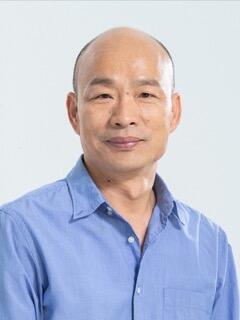
Kaohsiung Mayor Han Kuo-yu

Han Kuo-yu was elected Mayor of Kaohsiung, Taiwan, in November 2018, becoming the first member of the Kuomintang (KMT) to hold that office since 1998. He served as a member of the Legislative Yuan from Taipei County from 1993-2002, and later became the general manager of the Taipei Agricultural Products Marketing Corporation. 

Mr. Han graduated from Soochow University (Taipei) with a degree in English literature, and earned a master’s degree in law from National Chengchi University’s Graduate Institute of East Asian Studies.
 
This event is co-sponsored by the Hoover Institution and the Taiwan Democracy and Security Project, part of the U.S.-Asia Security Initiative
 

Philippines Room
616 Serra Mall
Encina Hall, 3rd Floor, Central (C330)
Stanford, CA 94305

Han Kuo-yu Mayor of Kaohsiung, Taiwan
-

Image
sagan 3x2 copy
The volatile relationship between the United States and North Korea has left the American public questioning whether North Korea is a threat or not. Existing polls suffer from poor design and, thus, provide a confusing and often contradictory narrative of U.S. public opinion on North Korea. As a result, a number of critical questions remain unanswered: Are Americans willing to live with the North Korean nuclear threat? Under what conditions would the public support using military force to accomplish what sanctions and diplomacy have not? What are the characteristics of the individuals willing to risk war against North Korea today? Professor Scott D. Sagan will discuss the findings of a recent survey experiment and offer a unique perspective to the ongoing public debate.

Scott D. Sagan is the Caroline S.G. Munro Professor of Political Science, the Mimi and Peter Haas University Fellow in Undergraduate Education, and Senior Fellow at the Center for International Security and Cooperation and the Freeman Spogli Institute at Stanford University. Before joining the Stanford faculty, Sagan was a lecturer in the Department of Government at Harvard University. From 1984 to 1985, he served as special assistant to the director of the Organization of the Joint Chiefs of Staff in the Pentagon. Sagan has also served as a consultant to the office of the Secretary of Defense and at the Sandia National Laboratory and the Los Alamos National Laboratory. In 2017, he received the International Studies Association’s Susan Strange Award which recognizes the scholar whose “singular intellect, assertiveness, and insight most challenge conventional wisdom and intellectual and organizational complacency" in the international studies community. Sagan was also the recipient of the National Academy of Sciences William and Katherine Estes Award in 2015, for his pioneering work addressing the risks of nuclear weapons accidents and the causes of nuclear proliferation.     


Okimoto Conference Room
Encina Hall, 3rd Floor
616 Serra Street, Stanford

Scott D. Sagan <i>Caroline S.G. Munro Professor of Political Science, Stanford University</i>
Seminars
Subscribe to Diplomacy