Early this year, Vladimir Putin had big plans for an excellent spring: first, constitutional amendments approved by the legislative branch and public allowing him the opportunity to remain in power until 2036, followed by a huge patriotic celebration of the 75th anniversary of the defeat of Nazi Germany. Well, stuff happens—specifically, COVID-19. Putin’s spring has turned out quite differently from what he had hoped.
Big Plans for the Spring
The president surprised Russians on January 15 in his annual speech to the Federal Assembly (the lower house of the Russian legislative branch). He proposed amending the constitution to reduce the authority of the presidency, increase the power of the Federal Assembly, and provide a legal basis for a State Council.
The amendments prompted speculation that Putin, who likes to have options, sought to create ways to hold on to power after 2024, when term limits would require him to step down from the presidency. He might become an empowered prime minister or head the State Council.
Then, on March 10, another surprise. A Federal Assembly deputy proposed an additional amendment that would, in effect, allow Putin to run for president twice more, opening the possibility that he could remain in office until 2036. He had consistently argued in the past against ending term limits. However, according to the Kremlin spokesperson, Putin was so taken with the deputy’s justification that he changed his mind on the spot.
Things can move fast in Russia—especially when Putin wants them. On March 11, the Federal Assembly approved the constitutional amendments by a vote of 383-0, and the Federal Council (Russia’s senate) gave its approval 160-1. (Nothing like having a rubber-stamp legislative branch.) Within two days, all 85 regional parliaments had approved the amendments. The Constitutional Court worked over a weekend and, on March 16, unsurprisingly found the amendments consistent with the constitution.
All told, it took just six days to check the legal requirements for amending the constitution. Putin, however, desired more. He called in January for a nationwide referendum on April 22 to approve the package of amendments. The constitution provides no requirement for such a vote. Putin wanted it to further legitimize the changes to the constitution. Popular endorsement would undercut any future challenge should he decide to run for reelection in 2024.
Topping off the spring would be the May 9 celebration of the 75th anniversary of VE Day. Putin has built this holiday up to rival New Year’s Day, traditionally the biggest holiday for Russians. The celebration of World War II veterans and a large military parade on Red Square not only remind Russians of their country’s part in defeating Hitler, but they also play well to the themes of nationalism and Russia’s place as a great power on the world stage that Putin has embraced and perpetuated, particularly over the past eight years.
COVID-19 Intrudes
Alas for Putin, reality intruded. The number of COVID-19 cases began to grow in mid-March. As of April 21, the country reported over 52,000 cases, with more than half of those just in Moscow. The number undoubtedly is understated—as in many countries—if for no other reason than some are asymptomatic or suffer mild symptoms. There are also indications that local health authorities are underreporting cases.
Moscow’s mayor adopted a shelter-at-home policy, but with lots of exceptions. While the mayor asserted that the city’s hospitals had sufficient capacity, medical staff described more difficult situations, and videos showed ambulances in line to wait hours to admit patients. The health infrastructure outside of Moscow and other large cities is weaker, raising concern about the virus’s impact in rural areas.
Much like his American counterpart, Putin responded slowly to the mushrooming health crisis, leaving it to mayors and regional authorities to manage. Sounding a lot like Donald Trump in February, Putin told Russians on April 19 (Orthodox Easter) “the situation is under full control.” He has raised his public profile the past ten days, conducting videoconferences from his residence outside Moscow. Russia, however, may be just beginning its COVID-19 trial.
As the number of cases grew in March, questions arose about the feasibility of the April 22 referendum. Putin apparently very much desired it, and the Kremlin wanted a large turnout to bolster the referendum’s legitimacy. Some suggested the referendum could be conducted over several days, allowing voters to space out visits to polling stations. But the Kremlin bowed to reality and announced on March 25 that the referendum would be postponed.
Likewise, the Kremlin hoped that the May 9 commemoration could go forward, and troops began practicing for the military parade (one video showed thousands of soldiers in close formation with no masks). However, the day’s heroes—World War II veterans now in their 90s—constitute an age-group very vulnerable to COVID-19. Going forward with a celebration that could devastate their ranks hardly made sense. On April 16, Putin announced a postponement.
The Economic Prognosis Looks Grim
Instead of a big public endorsement of his constitutional amendments and a patriotic gala on May 9, Putin faces a daunting challenge: the combination of COVID-19 and an economy in trouble. Under the virus’s impact, Russia’s already anemic economy is headed for recession. The International Monetary Fund expects it to contract by 5.5 percent in 2020.
Complicating the economic picture for the Kremlin is continued application of Western sanctions due to Russia’s seizure of Crimea and its conflict with Ukraine in Donbas. Economists estimate they cost Russia 1-1.5 percent of its gross domestic product. While Russian officials downplay the effect, they miss few opportunities to ask for their removal. For example, Putin used his intervention in the March 26 videoconference of G20 leaders to call for an end to all international sanctions.
COVID-19 has another negative impact on the Russian economy. It has crashed global demand for oil, by far Russia’s most important export. Perhaps not expecting the economic consequences of the virus, Russia on March 6 did not agree to an OPEC proposal to reduce production. Igor Sechin, head of the Rosneft Oil Company and a close associate of Putin, reportedly wanted to drive the price down to push U.S. shale oil producers out of the market (their production has boosted the United States to supplant Russia and Saudi Arabia as the world’s largest oil producer).
The price dropped, more than Sechin might have anticipated. Saudi Arabia responded to Russia’s refusal to cut production by boosting its own output and cutting the price. On March 8, the price of oil fell 30 percent. The resulting havoc hurt both sides. On April 9, Russia and OPEC agreed to cut production by about 10 million barrels per day.
Whether that will suffice is uncertain. The global economic slowdown has caused demand for oil to drop by 20-25 millions barrels per day. On April 21, the price of a barrel of Brent oil fell below $20, a price not seen since 2002. That was down from $74 one year earlier (the Russian government budget was designed to balance at a price of $42 per barrel). The per barrel export duty collected by the Russian government fell to below $1, also the lowest since 2002. Russia has to cut 2.5 million of barrels per day of production to meet its part of the April 9 agreement. With oil storage facilities nearing capacity, there may well be further price drops before things turn around.
None of this is good news for the Russian economy, but how hard a hit it will take remains to be seen. Thus far, the Kremlin has adopted a stimulus package to counter the COVID-19 economic consequences that is relatively modest, especially compared to programs being implemented by the United States, Germany, Britain and other industrial countries.
Managing the health crisis and its economic consequences, which could affect Putin’s approval rating—something to which the Kremlin pays extraordinarily close attention—is now the Russian president’s top preoccupation. This is not anything like he anticipated three months ago.

 FSI scholars approach their research on the environment from regulatory, economic and societal angles. The Center on Food Security and the Environment weighs the connection between climate change and agriculture; the impact of biofuel expansion on land and food supply; how to increase crop yields without expanding agricultural lands; and the trends in aquaculture. FSE’s research spans the globe – from the potential of smallholder irrigation to reduce hunger and improve development in sub-Saharan Africa to the devastation of drought on Iowa farms.
 Karen Eggleston is a senior fellow at the Freeman Spogli Institute for International Studies (FSI) at Stanford University, director of the Stanford Asia Health Policy Program, and deputy director of the Walter H. Shorenstein Asia-Pacific Research Center at FSI. She is also a fellow with the Stanford Center for Innovation in Global Health and a faculty research fellow of the National Bureau of Economic Research (NBER). Eggleston earned her PhD in public policy from Harvard University, studied in China for two years, and was a Fulbright scholar in South Korea. Her research focuses on comparative health systems and health reform in Asia, especially China; government and market roles in the health sector; supply-side incentives; healthcare productivity; and economic aspects of demographic change.
 Thomas Fingar is a Shorenstein Distinguished Fellow in the Shorenstein Asia-Pacific Research Center at Stanford University. From May 2005 through December 2008, he served as the first deputy director of national intelligence for analysis and, concurrently, as chairman of the National Intelligence Council. Previous positions include assistant secretary of state for Intelligence and Research (2000-2001, 2004–2005), principal deputy assistant secretary (2001–2003), deputy assistant secretary for analysis (1994–2000), director of the Office of Analysis for East Asia and the Pacific, and chief of the China Division. Fingar is a graduate of Cornell University (AB in government and history) and Stanford University (MA and PhD, both in political science). His most recent books are Uneasy Partnerships: China’s Engagement with Japan, the Koreas, and Russia in the Era of Reform (editor) (Stanford University Press, 2017); The New Great Game: China’s Relations with South and Central Asia in the Era of Reform (editor) (Stanford University Press, 2016); and Reducing Uncertainty: Intelligence Analysis and National Security (Stanford University Press, 2011).
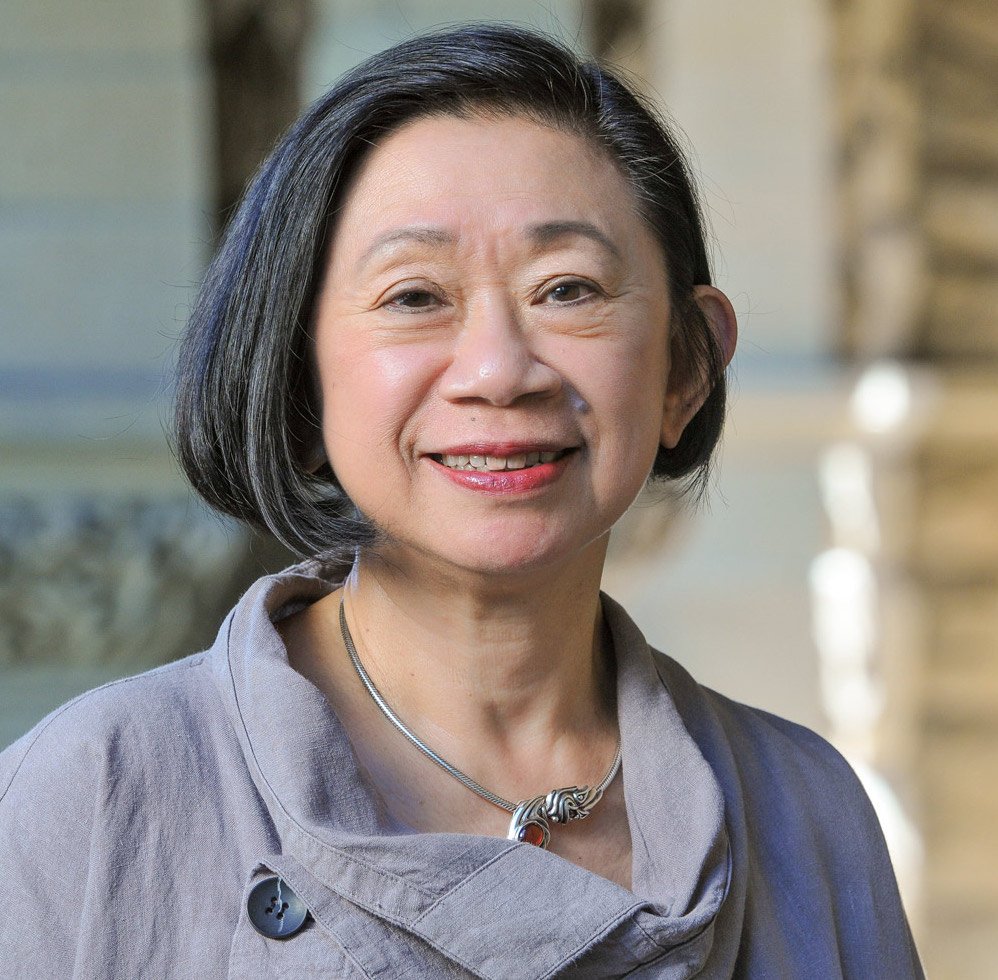 Jean C. Oi is the William Haas Professor of Chinese Politics in the Department of Political Science and a senior fellow in the Freeman Spogli Institute for International Studies at Stanford University. She directs the China Program at the Walter H. Shorenstein Asia-Pacific Research Center and is the Lee Shau Kee Director of the Stanford Center at Peking University. Oi has published extensively on China’s reforms. Recent books include Zouping Revisited: Adaptive Governance in a Chinese County, coedited with Steven Goldstein (Stanford University Press, 2018), and Challenges in the Process of China’s Urbanization, coedited with Karen Eggleston and Yiming Wang (2017). Current research is on fiscal reform and local government debt, continuing SOE reforms, and the Belt and Road Initiative.
 Andrew G. Walder is the Denise O’Leary and Kent Thiry Professor of Sociology in the School of Humanities and Sciences, and a senior fellow in the Freeman Spogli Institute for International Studies at Stanford University. A political sociologist, Walder has long specialized in the study of contemporary Chinese society and political economy. After receiving his PhD at the University of Michigan, he taught at Columbia, Harvard, and the Hong Kong University of Science and Technology. At Stanford he has served as chair of the Department of Sociology, director of the Asia-Pacific Research Center, and director of the Division of International, Comparative, and Area Studies in the School of Humanities and Sciences. His most recent books are Fractured Rebellion: The Beijing Red Guard Movement (2009), China under Mao: A Revolution Derailed (2015), and Agents of Disorder: Inside China’s Cultural Revolution (2019).