Environment

FSI scholars approach their research on the environment from regulatory, economic and societal angles. The Center on Food Security and the Environment weighs the connection between climate change and agriculture; the impact of biofuel expansion on land and food supply; how to increase crop yields without expanding agricultural lands; and the trends in aquaculture. FSE’s research spans the globe – from the potential of smallholder irrigation to reduce hunger and improve development in sub-Saharan Africa to the devastation of drought on Iowa farms. David Lobell, a senior fellow at FSI and a recipient of a MacArthur “genius” grant, has looked at the impacts of increasing wheat and corn crops in Africa, South Asia, Mexico and the United States; and has studied the effects of extreme heat on the world’s staple crops.

0
rsd21_040_1561a_-_taimur_ahmad.jpg

Taimur is joining MIP after spending the past 3 years as a management consultant at McKinsey, focusing on operational transformations, strategy development, and design thinking across various industries. Prior to that, he was working on an agricultural development project in Pakistan as a quantitiave research assistant, focusing on improving yields and incomes in some of the poorest villages of the country. His interests are at the intersection of economic development, energy systems, social theory, and new technologies. At MIP, he is particularly focusing on how a better understanding of the monetary system, energy inequality, and blockchain technology can help solve the climate crisis. He has a background in International Economics from Georgetown University (Qatar campus), where he was awarded the Abu Hamid Al Ghazzali Best Graduating Student Award. In his free time, he enjoys hiking, and avidly watching/playing football (soccer), tennis, and cricket.

Master's in International Policy Class of 2023
0
joyce_lin_headshot_-_joyce_lin.jpg

Joyce is a Master’s in International Policy candidate at Stanford, where she specializes in energy, natural resources and the environment. She is also one of the editors-in-chief of Stanford International Policy Review. Joyce’s research interests lie at the intersection of economic diplomacy and environmental governance. Previously, Joyce worked at AidData, an international development research lab, where she studied Chinese public diplomacy efforts in two major world regions and led the assembling of a novel dataset that tracked $843 billion in Chinese development financing around the world. She has also worked for UN Women’s China office and the US-ASEAN Business Council in the past. Joyce received a B.A. in International Affairs and Economics from the George Washington University. Born and raised in Singapore, Joyce is bilingual in English and Mandarin Chinese. In her spare time, Joyce enjoys reading, baking, painting, and playing board games.

Master's in International Policy Class of 2023
0
headshot_-_calli_obern_-_calli_c._obern.jpeg

Calli Obern is pursuing her Master’s in International Policy at Stanford University, specializing in energy, natural resources, and the environment. Calli is also a research fellow with Ecospherics, an advisory firm on environmental and national security issues and has researched Chinese investments in Asia at Stanford. Previously, Calli managed US-China dialogues on climate and energy at the Aspen Institute. Calli received a B.A. from Occidental College in 2016, where she studied Diplomacy and World Affairs and Mandarin Chinese. In her free time, Calli enjoys running, singing karaoke, practicing foreign languages, and playing Euchre, the best Midwestern card game.

Master's in International Policy Class of 2022
-

Asia Health Policy Program (AHPP) 2021-22 Colloquium series "Aligning Incentives for Better Health and More Resilient Health Systems in Asia”

How can policymakers quantify the net value of medical spending? For what medical conditions has the “bang for the buck” been greatest, and for what conditions has spending outstripped gains in health improvement? Join this virtual workshop to learn about cutting-edge methods that can be applied to health system data to understand the net value of changes in medical spending over time, and how policymakers can track the effectiveness of policies to increase productivity of medical spending. In addition to several Asian policymakers already involved, virtual workshop participants will have the opportunity to pose questions to the expert speakers about applying these methods to their own health system settings, including advice about data, outcomes, and relevance for specific policy questions.

Image
Cutler, David
David Cutler is the Otto Eckstein Professor of Applied Economics in the Department of Economics, Harvard University, with secondary appointments at the Kennedy School of Government and the School of Public Health. He was associate dean of the Faculty of Arts and Sciences for Social Sciences from 2003-2008. Professor Cutler served on the Council of Economic Advisers and the National Economic Council during the Clinton Administration and has advised several presidential campaigns, including as Senior Health Care Advisor for the Obama Presidential Campaign. He is a Research Associate at the National Bureau of Economic Research and a member of the Institute of Medicine, and he has held positions with the National Institutes of Health and the National Academy of Sciences

Image
Dunn, Abe
Abe Dunn is the Assistant Chief Economist at the Bureau of Economic Analysis.  His work has focused on the production and development of a new satellite account for health care and on evaluating and using alternative data sources for measurement purposes.  The Health Care Satellite Account uses billions of medical care claims from public and private sources to improve measurement for the U.S. health care sector, which allows researchers to analyze spending trends by medical condition.  Dr. Dunn has published research on a range of topics with a particular focus on health economic issues and measurement.  Most recently, his research has focused on measuring both the cost and the quality of medical care treatments. He received his PhD from the University of Texas at Austin with a primary focus in the areas of health economics and industrial organization.

Image
Weaver, Marcia 120121
Professor Marcia Weaver earned a PhD in economics at the University of Chicago. She specializes in cost-effectiveness analysis and has published 87 peer-reviewed articles. At the Institute for Health Metrics and Evaluation (IHME), she leads the research team on cost-effectiveness analyses of interventions to reduce the burden of disease. Prior to joining IHME she served as principal investigator of the Integrated Infectious Disease Capacity Building Evaluation in partnership with the Infectious Diseases Institute in Uganda. In the United States, she published on cost-effectiveness of interventions for people with HIV, chronic mental illness and substance abuse, and on a joint campaign to promote influenza and pneumococcal vaccines. Professor Weaver also has extensive experience with evaluating the effects of clinical training programs in Botswana, Indonesia, Namibia, South Africa, Thailand, and the Caribbean region, and served as a long-term advisor on health system reform to ministries of health in Niger and Central African Republic.

Via Zoom Webinar
Register: https://bit.ly/3D8yRBu

David M. Cutler Otto Eckstein Professor of Applied Economics, Harvard University
Abe C. Dunn Assistant Chief Economist, US Bureau of Economic Analysis
Marcia R. Weaver Research Professor, Health Metrics Sciences and Global Health, University of Washington
Seminars
-
Singapore’s typically robust economy and stable hegemonic-party polity today face arguably their most serious challenges in half a century. The hyper-global affluent nation-state is more vulnerable than most to de-globalization trends accelerated by the global pandemic and climate change, increased disallowance of international competition based on tax avoidance and state subsidies for multinationals, and pressures to unwind global supply-chains given the growing prioritization of resilience over efficiency, and rising geopolitical tensions, particularly in U.S.-China relations. These external developments coincide and interact with domestic social pressures over intertwined race, immigration, and inequality concerns that arguably give an edge to the previously weak political opposition. The PAP government’s responses to date include both promises of more “liberal” welfare policies and the enactment of more “authoritarian” restrictions on freedom of expression and association.
 
Image
Linda Lim 030822
Linda Lim is a Singaporean economist who is professor emerita of corporate strategy and international business at the Stephen M. Ross School of Business at the University of Michigan, where she formerly served as director of the Center for Southeast Asian Studies.  She has studied and published extensively on the Singapore economy, edited the SG50 (50th anniversary) volume Singapore's Economic Development: Retrospection and Reflections (2016), and reprinted select articles in the collection, Business, Government and Labor: Essays on Economic Development in Singapore and Southeast Asia (2018), which includes her work on women workers, and on Overseas Chinese business in Southeast Asia.  Linda served from 1998-2016 on the boards of two U.S. public companies with tech manufacturing operations in China, including the sale of one to a Chinese company, and from 2015-2018 directed and taught in custom executive education programs for senior executives of Chinese financial SOEs, on international business, industrial policy and technology development.  In 2019 she co-founded AcademiaSG, a website that champions academic freedom and publishes commentaries by and organizes webinars featuring scholars of Singapore on salient social issues such as race, inequality, international relations, and the environment. Her latest article on "The American Economy and Business" appears in Tommy Koh and Daljit Singh, eds., America: A Singapore Perspective (2021).

Via Zoom Webinar
Register: https://bit.ly/3qRAPE6

Linda Lim Professor Emerita of Corporate Strategy and International Business, Stephen M. Ross School of Business, the University of Michigan
Discussant:
0
Senior Fellow Emeritus at the Freeman Spogli Institute for International Studies
Affiliated Faculty, CDDRL
Affiliated Scholar, Abbasi Program in Islamic Studies
aparc_dke.jpg PhD

At Stanford, in addition to his work for the Southeast Asia Program and his affiliations with CDDRL and the Abbasi Program in Islamic Studies, Donald Emmerson has taught courses on Southeast Asia in East Asian Studies, International Policy Studies, and Political Science. He is active as an analyst of current policy issues involving Asia. In 2010 the National Bureau of Asian Research and the Woodrow Wilson International Center for Scholars awarded him a two-year Research Associateship given to “top scholars from across the United States” who “have successfully bridged the gap between the academy and policy.”

Emmerson’s research interests include Southeast Asia-China-US relations, the South China Sea, and the future of ASEAN. His publications, authored or edited, span more than a dozen books and monographs and some 200 articles, chapters, and shorter pieces.  Recent writings include The Deer and the Dragon: Southeast Asia and China in the 21st Century (ed., 2020); “‘No Sole Control’ in the South China Sea,” in Asia Policy  (2019); ASEAN @ 50, Southeast Asia @ Risk: What Should Be Done? (ed., 2018); “Singapore and Goliath?,” in Journal of Democracy (2018); “Mapping ASEAN’s Futures,” in Contemporary Southeast Asia (2017); and “ASEAN Between China and America: Is It Time to Try Horsing the Cow?,” in Trans-Regional and –National Studies of Southeast Asia (2017).

Earlier work includes “Sunnylands or Rancho Mirage? ASEAN and the South China Sea,” in YaleGlobal (2016); “The Spectrum of Comparisons: A Discussion,” in Pacific Affairs (2014); “Facts, Minds, and Formats: Scholarship and Political Change in Indonesia” in Indonesian Studies: The State of the Field (2013); “Is Indonesia Rising? It Depends” in Indonesia Rising (2012); “Southeast Asia: Minding the Gap between Democracy and Governance,” in Journal of Democracy (April 2012); “The Problem and Promise of Focality in World Affairs,” in Strategic Review (August 2011); An American Place at an Asian Table? Regionalism and Its Reasons (2011); Asian Regionalism and US Policy: The Case for Creative Adaptation (2010); “The Useful Diversity of ‘Islamism’” and “Islamism: Pros, Cons, and Contexts” in Islamism: Conflicting Perspectives on Political Islam (2009); “Crisis and Consensus: America and ASEAN in a New Global Context” in Refreshing U.S.-Thai Relations (2009); and Hard Choices: Security, Democracy, and Regionalism in Southeast Asia (edited, 2008).

Prior to moving to Stanford in 1999, Emmerson was a professor of political science at the University of Wisconsin-Madison, where he won a campus-wide teaching award. That same year he helped monitor voting in Indonesia and East Timor for the National Democratic Institute and the Carter Center. In the course of his career, he has taken part in numerous policy-related working groups focused on topics related to Southeast Asia; has testified before House and Senate committees on Asian affairs; and been a regular at gatherings such as the Asia Pacific Roundtable (Kuala Lumpur), the Bali Democracy Forum (Nusa Dua), and the Shangri-La Dialogue (Singapore). Places where he has held various visiting fellowships, including the Institute for Advanced Study and the Woodrow Wilson International Center for Scholars. 


Emmerson has a Ph.D. in political science from Yale and a BA in international affairs from Princeton. He is fluent in Indonesian, was fluent in French, and has lectured and written in both languages. He has lesser competence in Dutch, Javanese, and Russian. A former slam poet in English, he enjoys the spoken word and reads occasionally under a nom de plume with the Not Yet Dead Poets Society in Redwood City, CA. He and his wife Carolyn met in high school in Lebanon. They have two children. He was born in Tokyo, the son of U.S. Foreign Service Officer John K. Emmerson, who wrote the Japanese Thread among other books.

Selected Multimedia

Date Label
Director, Southeast Asia Program, Asia-Pacific Research Center, Stanford University
Seminars
0
stanford-profile.jpg

Soomin Jun is a Master’s in International Policy Class of '22 at Stanford. Soomin is interested in finding unconventional solutions for public policy through prioritizing inclusivity in policymaking. Over the summer, she interned at the Asia-Pacific Economic Cooperation (APEC), where she analyzed the economic impacts of climate change in the region and researched strategies to build resilient economies post-COVID-19.

Prior to Stanford, Soomin spent four years with The Asia Foundation in Mongolia. She worked closely with Ulaanbaatar City to mitigate risks from economic volatility rooted in Mongolia’s extractive industry-based economy. One of her accomplishments includes establishing Mongolia’s first Women’s Business Center and Incubator, a Center with over 5,000 clients that promotes women’s role in the higher-value-added sectors such as tech start-ups.

Soomin holds a B.A. from the University of North Carolina at Chapel Hill with the highest distinction, where she completed a double major in Economics and Global Studies and a minor in Chinese. In her free time, Soomin enjoys playing golf and practicing yoga.

Master's in International Policy Class of 2022
-

America in One Room: Climate and Energy, a Helena project, is the largest controlled experiment with "in-depth deliberation" ever held in the U.S.  It addressed this question: What would the American public really think about our climate and energy challenges if it had the chance to deliberate about them in-depth, with good and balanced information?
 
If the American people—or in this case, a representative sample of them—could consider the pros and cons of our different energy options, which would they support? Which would they cut back on? What possible paths to Net Zero would seem plausible to them? Which proposals would they resist? Can the public arrive at solutions to our climate and energy dilemmas that transcend our great divisions, especially our deep partisan differences? Can they also find common ground across differences in age, race, and region?
 
These and other questions will be discussed on Wednesday, December 1, 2021, 12:30-2:00 pm PST
 

Register Now

Panelists will include:

  • Nicole Ardoin, Director, Emmett Interdisciplinary Program in Environment and Resources (E-IPER), Associate Professor of Education and Senior Fellow at the Woods Institute for the Environment, Stanford University
  • Rep. John Curtis, United States House of Representative, (R-UT)
  • Larry Diamond, Senior Fellow at the Hoover Institution and the Freeman Spogli Institute for International Studies, Stanford University
  • Noah Diffenbaugh, Kara J Foundation Professor and Kimmelman Family Senior Fellow at the Woods Institute for the Environment, Stanford University
  • Chris Field, Perry L. McCarty Director of the Stanford Woods Institute for the Environment and the Melvin and Joan Lane Professor for Interdisciplinary Environmental Studies, Stanford University
  • James Fishkin, the Janet M. Peck Professor of International Communication and Director, Center for Deliberative Democracy, Stanford University
  • Rep. Ro Khanna, United States House of Representatives (D-CA)
  • Alice Siu, Associate Director, Center for Deliberative Democracy, Stanford University
  • Peter Weber, Co-Chair Emeritus, California Forward


This webinar is hosted by:
Stanford Woods Institute for the Environment
Center on Democracy, Development and the Rule of Law
Stanford Center for Deliberative Democracy
Stanford Crowdsourced Democracy Team
California Forward
Other sponsors of America in One Room: Climate and Energy are listed here

Online via Zoom

Panel Discussions
0
rsd21_040_1327a_-_dani_ignacio_gajardo_orellana.jpg

Daniel Gajardo, from Santiago, Chile, graduated from Pontificia Universidad Católica de Chile with a bachelor’s degree in civil engineering and a diploma in hydraulic engineering. Daniel aspires to address environmental problems with an interdisciplinary approach, combining social and environmental sciences. He has worked as head of consulting in TriCiclos, a Latin American circular economy company, and he co-founded Engineers Without Borders Chile, a nonprofit seeking to improve the quality of life of underserved communities through the application of humanitarian engineering methodologies. He has been recognized with multiple awards, including Best Graduating Student by Pontificia’s School of Engineering, Best Graduate by Pontificia Universidad Católica de Chile's alumni foundation, and for his leadership skills and social commitment by the Chilean Institute of Engineers.

Master's in International Policy Class of 2022
Authors
Soomin Jun
News Type
Blogs
Date
Paragraphs

The Asia-Pacific Economic Cooperation (APEC) is a regional economic forum with 21 member economies, including the US, China, and Russia, headquartered in Singapore. As a summer graduate intern at APEC, I worked closely with APEC’s policy unit that oversees and conducts policy research and analysis for publications and reports, which are used as key discussion agendas in ministerial level discussions and conferences. The Policy Support Unit (PSU)’s core areas of work are 1) trade and investment liberalization and facilitation, 2) structural reform, 3) connectivity including supply chain connectivity and global supply chains, 4) economic and financial analysis, and 5) sustainable economic development. During my summer internship, I was able to gain direct experience with almost all of these core areas through conducting quantitative and qualitative research.

As a graduate intern at APEC, I worked closely with APEC’s policy unit that oversees and conducts policy research for publications and reports used in ministerial meetings.
Image
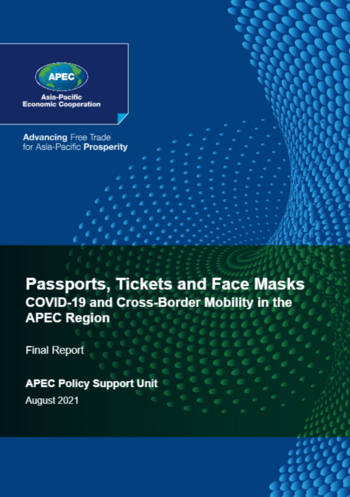
Figure 1: PSU’s publication on cross-border mobility

The PSU has been working on a publication that analyzed the impacts of travel restrictions during the pandemic. The report provided evidence and policy recommendations for APEC economies to resume cross-border travel in a safe and equitable way. I was tasked to draft two sections of the report, including a literature review of various multilateral organizations’ initiatives on safe re-opening, and an analysis of the disproportionate impacts of travel restrictions on vulnerable population, especially women. Women were not only experiencing economic impacts from border closures, such as loss of jobs and business closures, but women seeking abortion procedures in countries with restrictive regulations faced significant challenges when cross-border travel was limited to “essential workers.” Such challenges were even more pronounced for lower-income women or women with disabilities who may not be able to access services through other means domestically. 

I also worked on drafting APEC’s flagship publication, APEC in Charts 2021, which resides within APEC’s fourth core area of work, economic and financial analysis. APEC in Charts is an annual publication that provides a visual overview of the region’s economic, trade and investment performance. Using data from international organizations like the World Bank, International Monetary Fund, and the United Nations, I calculated aggregate statistics for the APEC region on the following indicators: trend in trade, tariff liberalization indicators such as free trade agreements, trend in FDI inflows and outflows, COVID-19 vaccination status, and various sustainability indicators such as household food waste and greenhouse gas emissions trends.

Since APEC includes Taiwan and Hong Kong, both of which did not have disaggregated data, the most challenging part of this task was to locate and calculate the information using limited data. While data disaggregation was challenging, I was thankful for all those nights that I stayed up in the first quarter to complete data aggregation for economic analysis assignments for the Global Economy course, INTLPOL 302, which built a foundation for key skills required at APEC.

Figure 2: APEC in Charts 2021 publication
APEC in Charts 2021 publication

I also immersed myself in the topic of climate change over the summer. Policy actions on climate change became one of the center of APEC’s agendas to build economic resilience post-COVID. I drafted a section on climate change in APEC’s Regional Trends Analysis (ARTA) report by conducting quantitative and qualitative research on green indicators. Calculating carbon emissions was one challenge, but comparing how much each economy had pledged to reduce emissions and what it would actually take to keep global warming below 2°C was another challenge. 

Climate change was not a topic I was very familiar with from a research standpoint, but I took the opportunity to self-educate through reading various literature, including the most recent publication from the Intergovernmental Panel on Climate Change (IPCC). It was striking that more than 60% of global greenhouse gases were generated by APEC economies. Unless APEC as a region curbs cumulative emissions, the expected repercussions are disastrous. Again, the most vulnerable – including women and girls, migrants, those in poverty, mountain communities and people in urban slums – will experience more severe consequences, and the repercussions are even more pronounced for those in developing nations.

This 11-week internship experience at APEC over the summer was a rewarding one that helped me understand the way multilateral organizations work. I was motivated by working with an organization responsible for shaping economic policies through cooperation to build resilience in the post-COVID world. Plus, I was able to tone up key techniques learned from MIP’s core courses such as STATA and advanced excel skills. Although it was a remote internship, I benefited from learning from my fellow interns and co-researchers on their broad range of expertise and experience. I strongly recommend future MIP students work with APEC over the summer as policy interns!

Soomin Jun, Master's in International Policy ('22)

Soomin Jun

Ford Dorsey Master’s in International Policy Class of ’22
See Full Profile
Hero Image
Soomin Jun, Master's in International Policy ('22)
All News button
1
Subtitle

Working with the Asia-Pacific Economic Cooperation, Soomin Jun (Master’s in International Policy '22) found new connections between her interests in supporting the economic development of marginalized groups with policies like climate change.

-
The Malayan Emergency (1948-1960) is perhaps most famous for Sir Gerald Walter Robert Templer’s famous phrase about the need to win the “hearts and minds” of civilians to defeat a communist insurgency. Less examined is how gender was a central prism through which military officials hoped to achieve their aims. For example, British officials produced one Chinese-language propaganda cartoon that warned communist women of the dangers of giving birth in the jungle. It depicted a pregnant woman laying on bamboo in pain, surrounded by angry-faced men in uniform. Once the men informed a British official about their position, she got airlifted out by helicopter and enjoyed a comfortable hospital bed under the attentive care of a smiling woman. This optimistic depiction of becoming a British informant hints at the central and contested role of women and gender during the anti-communist “emergency,” and during British decolonization more broadly. The Malayan Emergency relied not only military occupation, but also on the reconfiguration of gender expectations following the Japanaese occupation. This, they believed, was central to bringing peace and stability back to Malaya.
 
Image
Kate Imy 120221
Kate Imy is a historian of war and empire in the 20th-century British imperial world. She is currently an Assistant Professor of History at the University of North Texas, having completed her PhD at Rutgers. Her first book, Faithful Fighters: Identity and Power in the British Indian Army (Stanford University Press, 2019), won the NACBS Stansky prize and an award from the American Historical Association. She has conducted research and presented in Australia, India, Nepal, New Zealand, Singapore, and the United Kingdom. Her next book project, “Losing Hearts and Minds: Race, War, and Empire in Singapore and Malaya, 1915-1960,” is the focus of her Lee Kong Chian NUS-Stanford Fellowship on Southeast Asia.

Via Zoom Webinar
Register: bit.ly/3wxD1RC

2021-2022 Lee Kong Chian NUS-Stanford Fellowship on Southeast Asia
Seminars
Subscribe to Environment