Environment

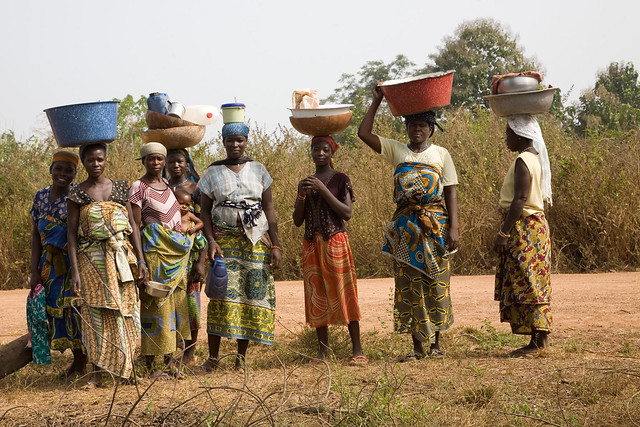
FSI scholars approach their research on the environment from regulatory, economic and societal angles. The Center on Food Security and the Environment weighs the connection between climate change and agriculture; the impact of biofuel expansion on land and food supply; how to increase crop yields without expanding agricultural lands; and the trends in aquaculture. FSE’s research spans the globe – from the potential of smallholder irrigation to reduce hunger and improve development in sub-Saharan Africa to the devastation of drought on Iowa farms. David Lobell, a senior fellow at FSI and a recipient of a MacArthur “genius” grant, has looked at the impacts of increasing wheat and corn crops in Africa, South Asia, Mexico and the United States; and has studied the effects of extreme heat on the world’s staple crops.

-

In the wake of the 2008 financial crisis and with the advent of a new Japanese government, the long-simmering concept of an East Asian Community (EAC) has come to a boil. Trilateral discussions among China, Japan, and South Korea--the "Plus Three"--have accelerated, including early steps toward formation of a trilateral free trade area. The Obama administration has responded with new interest in regionalism, including discussion of new trans-Pacific trade agreements and a bid to join the budding East Asia Summit process. In November 2010, the trans-Pacific APEC will convene in Japan, and the next annual meeting, in 2011, will take place in Hawaii.

This period could shape the future of regionalism in East Asia, but many questions have yet to be answered. Will former Prime Minister Yukio Hatoyama's initiative to build a new regional order on the core of Japan-China-ROK ties bear fruit? How does this concept of an EAC compare to other visions of regional integration, from APEC to the ASEAN-plus process? Will the ASEAN member nations cede leadership of the drive for tighter integration to Northeast Asia? Will the gravitational power of China's booming economy overwhelm concerns about its political system, military nontransparency, and possible ambition for regional hegemony? What role will the United States seek to play in Asian regionalism, and what will Asia's response be?

On September 9 and 10, 2010, the Walter H. Shorenstein Asia-Pacific Research Center (Shorenstein APARC) at Stanford University convened the second Stanford Kyoto Trans-Asian Dialogue. This distinguished gathering discussed the latest research into the course of regionalism across several dimensions: regional vs. trans-Pacific trade and production networks; traditional and nontraditional security; the intersection of historical memories and national cultures in forging, or thwarting, a new regional identity; and possible futures for the regional order and how it might interact with other transnational institutions.

The goal of the Dialogue was to facilitate discussion, on an off-the-record basis, among scholars, policymakers, media, and other experts from across Asia and the United States, and to establish trans-Asian networks that focus on issues of common concern.

The first Stanford Kyoto Trans-Asian Dialogue was held September 10-11, 2009, in Kyoto, on the theme of "Energy, Environment, and Economic Growth in Asia."

Kyoto International Community House Event Hall
2-1 Torii-cho, Awataguchi,
Sakyo-ku Kyoto, 606-8536
JAPAN

Seminars
Authors
News Type
News
Date
Paragraphs
New scientific tool, GAPI, assesses impact of global aquaculture. FSE research associate Alice Chiu on the advisory committee that pulled together this new tool and report.

Industrial-scale aquaculture production magnifies environmental degradation, according to the first global assessment of the effects of marine finfish aquaculture (e.g. salmon, cod, turbot and grouper) released today. This is true even when farming operations implement the best current marine fish farming practices.

University of Victoria marine ecologist Dr. John Volpe and his research team have developed the Global Aquaculture Performance Index (GAPI), an unprecedented system for objectively measuring the environmental performance of fish farming.

"Scale is critical," says Volpe. "Over time, the industry has made strides in reducing the environmental impact per ton of fish, but this does not give a complete picture. Large-scale farming of salmon, for example, even under the best current practices, creates large-scale problems."

The fish farming industry is an increasingly important source of seafood, especially as many wild fisheries are in decline. Yet farming of many marine fish species has been criticized as causing ecological damage. For instance, the researchers found that the relatively new marine finfish aquaculture sector in China and other Asian countries lags in environmental performance.

Adds Volpe: "The fastest growing sector is Asia, where we found a troubling combination of poor environmental performance and rapidly increasing production."

With support from the Lenfest Ocean Program, Volpe and his team developed GAPI, which uses 10 different criteria to assess and score environmental impacts. Incorporating information such as the application of antibiotics and discharge of water pollutants, GAPI allows researchers to gauge which farmed species and countries of production have the best or worst environmental performance.

The researchers examined the environmental impact of marine fish farming per ton of fish produced and the cumulative environmental impact for each country producing a major farmed species.

"GAPI provides a valuable tool for developing environmentally responsible fish farming. Governments can use GAPI to inform policies and regulations to minimize the environmental footprint of fish farming. Farmers can use it to improve production practices. And buyers can use it to compare and select better, more environmentally friendly seafood options," says Chris Mann, senior officer and director of the Pew Environment Group's Aquaculture Standards Project, which collaborated on the work.

For further information on GAPI, including a summary of the methodology and findings, visit www.lenfestocean.org.

The GAPI 2010 report released today is based on 2007 data, the most recent year for which data for all aquaculture indicators are available. GAPI analysis will be updated periodically as additional data becomes available. For additional information, updated research and analysis, please see the GAPI website at www.gapi.ca.

The Lenfest Ocean Program supports scientific research aimed at forging solutions to the challenges facing the global marine environment. The program was established in 2004 by the Lenfest Foundation and is managed by the Pew Environment Group.

The University of Victoria is a national and international leader in the study of the oceans, with expertise as far-ranging as ocean-climate interactions, ocean observation systems, physical and chemical oceanography, marine ecology, coastal resource management and ocean engineering

Hero Image
fishfeed
All News button
1
-

The Center for Northeast Asian Policy Studies and the Economic Research Institute for Northeast Asia (ERINA) will host a seminar on the potential areas of cooperation between the U.S., Japan, and China on developing clean coal technology and clean energy markets and policies titled, "Developing Clean Energy Markets: Toward China-Japan-U.S. Trilateral Cooperation" on October 25, 2010.

Researcher He will be participating in the Prospects and Bottlenecks for Clean Energy Cooperation portion of the seminar.

Event Summary from Brookings

In recent years, the United States and China have engaged in high-profile discussions and collaborated on various aspects of clean energy. The United States and China have also separately worked with Japan. However, these nations-the world's three largest economies and three of the four largest energy consumers-have not worked together in a trilateral format.

On October 25, the Center for Northeast Asian Policy Studies at Brookings and the Economic Research Institute for Northeast Asia hosted a seminar featuring presentations by experts from Japan, China, and the U.S. Panelists will describe existing bilateral cooperation on developing clean energy markets and policies, and will illuminate opportunities for truly trilateral cooperation, especially in the areas of energy efficiency and clean coal.

After each panel, the speakers took audience questions.

More information about this event on www.brookings.edu

Falk Auditorium
The Brookings Institution
1775 Massachusetts Ave., NW
Washington, DC

616 Serra St.
E420 Encina Hall
Stanford, CA 94305

(650) 725-4249 (650) 724-1717
0
Research Associate
Gang.jpg

Gang He's work focuses on China's energy and climate change policy, carbon capture and sequestration, domestic coal and power sectors and their key role in both the global coal market and in international climate policy framework.  He also studies other issues related to energy economics and modeling, global climate change and the development of lower-carbon energy sources. 

Prior to joining PESD, he was with the World Resources Institute as a Cynthia Helms Fellow.  He has also worked for the Global Roundtable on Climate Change of the Earth Institute at Columbia University. With his experiences both in US and China, he has been actively involved in the US-China collaboration on energy and climate change. 

Mr. He received an M.A. from Columbia University on Climate and Society, B.S. from Peking University on Geography, and he is currently doing a PhD in the Energy and Resources Group at UC Berkeley.

Gang He Panelist
Seminars
Paragraphs

Expanding croplands to meet the needs of a growing population, changing diets, and biofuel production comes at the cost of reduced carbon stocks in natural vegetation and soils. Here, we present a spatially explicit global analysis of tradeoffs between carbon stocks and current crop yields. The difference among regions is striking. For example, for each unit of land cleared, the tropics lose nearly two times as much carbon (∼120 tons·ha-1 vs. ∼63 tons·ha-1) and produce less than one-half the annual crop yield compared with temperate regions (1.71 tons·ha-1·y-1 vs. 3.84 tons·ha-1·y-1). Therefore, newly cleared land in the tropics releases nearly 3 tons of carbon for every 1 ton of annual crop yield compared with a similar area cleared in the temperate zone. By factoring crop yield into the analysis, we specify the tradeoff between carbon stocks and crops for all areas where crops are currently grown and thereby, substantially enhance the spatial resolution relative to previous regional estimates. Particularly in the tropics, emphasis should be placed on increasing yields on existing croplands rather than clearing new lands. Our high-resolution approach can be used to determine the net effect of local land use decisions.

All Publications button
1
Publication Type
Journal Articles
Publication Date
Journal Publisher
Proceedings of the National Academy of Sciences
Authors
Holly Gibbs
-

Foreign Affairs editor Gideon Rose will describe how the United States has failed in the aftermaths of every major 20th-century war-from WWI to Afghanistan-routinely ignoring the need to create a stable postwar environment. He will argue that Iraq and Afghanistan are only the most prominent examples of such bunging, not the exceptions to the rule. Rose will draw upon historic lessons of American military engagement and explain how to effectively end our wars.

Gideon Rose is  the editor of Foreign Affairs. He served as managing editor of the magazine from 2000 to 2010 . From 1995 to December 2000 he was Olin senior fellow and deputy director of national security studies at the Council on Foreign Relations (CFR), during which time he served as chairman of CFR's Roundtable on Terrorism and director of numerous CFR study groups. He has taught American foreign policy at Columbia and Princeton Universities. From 1994 to 1995 Rose served as associate director for Near East and South Asian affairs on the staff of the National Security Council. From 1986 to 1987, he was assistant editor at the foreign policy quarterly The National Interest, and from 1985 to 1986 held the same position at the domestic policy quarterly The Public Interest. Rose received his BA from Yale University and his PhD from Harvard University.

Oksenberg Conference Room

Gideon Rose Editor, Foreign Affairs Speaker
Seminars

Y2E2 (Energy & Environment Building)
473 Via Ortega, room 349
Stanford, CA 94305-4205

0
PhD student, Environmental Earth System Science
durban.jpg

Lobell laboratory

Dan's research uses statistical models to capture the effects of changes in temperature and precipitation averages and extremes on U.S. corn and soybean yields, with an emphasis on the interacting roles of soil moisture, carbon dioxide, and high water demand.

Dan earned his B.S. and M.S. in mechanical and aerospace engineering at Stanford, and worked as a consultant in these fields before deciding to turn his penchant for modeling physical systems toward the earth sciences. Returning to Stanford to work with Prof. David Lobell, he has focused on statistical modeling of climate impacts on crop yields in the U.S. Corn Belt, with an emphasis on extreme temperature and precipitation events and their interactions. Current research interests include quantifying the magnitude of carbon dioxide's benefit to water use efficiency, and global trends in crop water demand. His papers have appeared Climatic Change and Environmental Research Letters.

Subscribe to Environment