Security

FSI scholars produce research aimed at creating a safer world and examing the consequences of security policies on institutions and society. They look at longstanding issues including nuclear nonproliferation and the conflicts between countries like North and South Korea. But their research also examines new and emerging areas that transcend traditional borders – the drug war in Mexico and expanding terrorism networks. FSI researchers look at the changing methods of warfare with a focus on biosecurity and nuclear risk. They tackle cybersecurity with an eye toward privacy concerns and explore the implications of new actors like hackers.

Along with the changing face of conflict, terrorism and crime, FSI researchers study food security. They tackle the global problems of hunger, poverty and environmental degradation by generating knowledge and policy-relevant solutions. 

-

Abstract: This dissertation chapter examines signaling credibility in Chinese foreign policy over 1949-2010.  The analysis is based on two new datasets: all 2,000 diplomatic interactions between the United States and China over 1949-2010 and sentiment trends in all 50,000 People's Daily articles on the United States over 1949-2010.  I find that China's bellicosity toward the United States is a reliable predictor of conflict initiation the following month.  I also find that Chinese foreign policy is responsive to urban unemployment.  I find no evidence that China's signaling credibility is affected by its military capabilities.

About the Speaker: Erin Baggott is a Zukerman predoctoral fellow at CISAC for 2014-2015.  She is completing her PhD in international relations at the Harvard University Department of Government.  She studies Chinese foreign policy with techniques from computational social science and machine learning.  Her dissertation examines the sources of trust, distrust, cooperation, and conflict in US-China relations over 1949-2012, using day-level datasets of actions and perceptions on both sides.

Previously, she completed a MSc in Modern Chinese Studies at the University of Oxford and a BA in Government and Economics at Harvard College.  She speaks fluent Mandarin Chinese and has conducted several summers of field research in Beijing.


Predication Chapter, Erin Baggott
Download pdf

Encina Hall (2nd Floor)

Erin Baggott Zukerman Predoctoral Fellow CISAC
Seminars
News Type
News
Date
Paragraphs

In the late 19th and early 20th centuries, an "open borders" United States absorbed millions of European immigrants in one of the largest mass migrations ever. New research by Stanford economist Ran Abramitzky challenges the perception that immigrants lagged behind native-born Americans in job pay and career growth.
 

BY CLIFTON B. PARKER

European immigrants to America during the country's largest migration wave in the late 19th and early 20th centuries had earnings comparable to native-born Americans, contrary to the popular perception, according to new Stanford research.

"Our paper challenges conventional wisdom and prior research about immigrant assimilation during this period," said Ran Abramitzky, an associate professor of economics at Stanford, faculty affiliate of The Europe Center and author of the research paper in the Journal of Political Economy.

New research challenges conventional wisdom about immigrant assimilation during the bygone era of open borders and mass migration.
Photo Credit: Lewis Hine/Library of Congress

New research challenges conventional wisdom about immigrant assimilation during the bygone era of open borders and mass migration.

Abramitzky and his colleagues found the average immigrant in that period did not face a substantial "earnings penalty" – lower pay than native-born workers – upon their arrival.

"The initial earnings penalty is overstated," said Abramitzky.

He said the conventional view is that the average European immigrants held substantially lower-paying jobs than native-born Americans upon first arrival and caught up with natives' earnings after spending some time in the United States. But that perception does not hold up to the facts, he said.

Abramitzky's co-authors include Leah Platt Boustan from the University of California, Los Angeles, and Katherine Eriksson from California Polytechnic State University.

The researchers examined records on 21,000 natives and immigrants from 16 European countries in U.S. Census Bureau data from 1900 to 1910 to 1920.

"Even when U.S. borders were open, the average immigrant who ended up settling in the United States over the long term held occupations that commanded pay similar to that of U.S. natives upon first arrival," Abramitzky said.

In that bygone era of "open borders," Abramitzky said, native-born Americans were concerned that immigrants were not assimilating properly into society – yet, on the whole, this concern appears to be unfounded. "Such concerns are echoed in today's debate over immigration policy," he added.

At the same time, Abramitzky said that immigrants from poorer countries started out with lower paid occupations relative to natives and did not manage to close this gap over time.

"This pattern casts doubt on the conventional view that, in the past, immigrants who arrived with few skills were able to invest in themselves and succeed in the U.S. economy within a single generation," Abramitzky and his colleagues wrote.

Age of migration

America took in more than 30 million immigrants during the Age of Mass Migration (1850-1913), a period when the country had open borders. By 1910, 22 percent of the U.S. labor force – and 38 percent of workers in non-southern cities – was foreign-born (compared with 17 percent today).

As the research showed, immigrants then were more likely than natives to settle in states with a high-paying mix of occupations. Location choice was an important strategy they used to achieve occupational parity with native-born Americans.

"This Age of Mass Migration not only is of interest in itself, as one of the largest migration waves in modern history, but also is informative about the process of immigrant assimilation in a world without migration restrictions," Abramitzky said.

Over time, many of the immigrants came from the poorer regions of southern and eastern Europe.

Abramitzky pointed out that native-born Americans in the late 19th and early 20th centuries were concerned about poverty in immigrant neighborhoods and low levels of education among children, many of whom left school early to work in industry.

Consequently, American political progressives championed a series of reforms, including U.S. child labor laws and compulsory schooling requirements.

Still, some natives believed that new arrivals would never fit into American society. And so, in 1924, Congress set a strict quota of 150,000 immigrant arrivals per year, with more slots allocated to immigrants from northern and western European countries than those from southern and eastern Europe.

But those early-20th-century fears of unassimilated immigrants were baseless, according to Abramitzky.

"Our results indicate that these concerns were unfounded: The average long-term immigrants in this era arrived with skills similar to those of natives and experienced identical rates of occupational upgrading over their life cycle," he wrote.

How does this lesson apply to today's immigration policy discussion? Should the numbers of immigrants and their countries of origin be limited and those with higher skills be given more entry slots?

Abramitzky said stereotyping immigrants has affected the political nature of the contemporary debate.

"These successful outcomes suggest that migration restrictions are not always necessary to ensure strong migrants' performance in the labor market," he said.

Hero Image
Image of "First sight of New York Bay -- arrival of a European steamer" by James Wells Champney
First sight of New York Bay--arrival of a European steamer.
James Wells Champney/New York Public Library
All News button
1
Date Label

Stanford Law School
Neukom Building
Room N255

(650) 736-8090 (voice)
0
Distinguished Austrian Chair Professor (2013-2014)
Visiting Professor, Stanford Law School
Professor of Law, University of Vienna, Austria
manfred_nowak.jpg

Manfred Nowak graduated from the Vienna Law School (Dr. iur. 1973) and from Columbia University New York (LL.M. 1975). He has been professor at the Institute of Constitutional and Administrative Law at the University of Vienna since 1986. He was member of the Austrian Delegation to the U.N. Commission on Human Rights (1986 and 1993) as well as director of the Netherlands Institute of Human Rights (SIM) at the University of Utrecht (1987-1989). In 1989, he founded the Austrian Ludwig Boltzmann Institute of Human Rights in Vienna and coordinated NGO-parallel events during the 1993 UN Conference for Human Rights in Vienna while he also was Professor of Law at the Austrian Federal Academy of Public Administration in Vienna until 2002.

As U.N. expert on missing persons in the former Yugoslavia he started a process aiming at the identification of missing persons through exhumation of mortal remains between 1994 and 1997.

From 1996-2003, Manfred Nowak was a judge at the Human Rights Chamber in Bosnia. Since 2000, he is head of an independent human rights commission at the Austrian Interior Ministry. From 2002 to 2003 he was visiting professor at the Raoul Wallenberg of Human Rights and Humanitarian Law at the University of Lund. He has been a UN expert on legal questions on enforced disappearances since 2002 and was appointed UN Special Rapporteur on Torture and other Cruel, Inhuman or Degrading Treatment in 2004 with a mandate until 2010.

In addition, Manfred Nowak is also Chairperson of the European Masters Degree in Human Rights and Democratisation (since 2000). Manfred Nowak has published more than 400 books and articles on international, constitutional, administrative, and human rights law, including the standard commentary on the International Covenant on Civil and Political Rights. He was awarded the UNESCO Prize for the Teaching of Human Rights in 1994 and the Bruno Kreisky Prize for Human Rights in 2007.


CV
Authors
Shelby Speer
News Type
News
Date
Paragraphs

Stanford’s Center for International Security and Cooperation (CISAC) has established the Security Research Seed Grant Program, which is designed to provide small grants for early-stage, security-related doctoral research at Stanford.

The program offers grants ranging from $1,000 to $5,000 each year in an effort to engage a broader pool of doctoral students in CISAC activities and to foster interdisciplinary connections across engineering, humanities and the sciences and social sciences.

Eligibility: Stanford University doctoral students in any department or field conducting research relevant to one of CISAC’s six core research areas is eligible:

• Nuclear Security and Risk

• Cybersecurity

• Biosecurity and Global Health

• Terrorism, Insurgency, and Homeland Security

• Governance, Organizations, and Security

• Migration and Transnational Flows

Proposals should clearly state the research question to be addressed, the methods to be used, and the policy relevance of the project. CISAC will award of total of $10,000 each year to individual researchers as well as research teams. Awards may cover a range of expenses, including (but not limited to):

• Travel for field studies, archival research

• Undergraduate research assistance

• Experimental or survey design costs

• Books and other research materials

Requirements: Winners must write a short report on the use of grant funds and present their work at a CISAC workshop or reading group within a year of receiving the grant.

Applications: Send a short project proposal of no more than 1,000 words, a budget and CV(s) to Shelby Speer (sspeer@stanford.edu) by Sept. 15. Grants will be awarded by Nov. 1 for the 2014-2015 academic year.

Hero Image
1 Rebecca
CISAC fellow Rebecca Slayton and former science fellow Sonja Schmid.
Rod Searcey
All News button
1
-

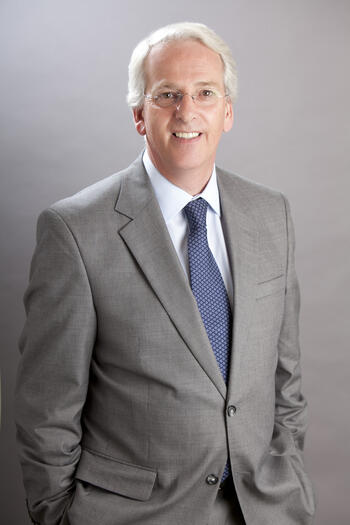
Since Kim Jong Un came to power, interest in North Korea (DPRK) has increased but it is difficult to judge whether the growing range of media reports and the commentaries based on them are accurate or not. Spending almost 30 months in the DPRK from March 2012, mainly in Pyongyang but also making visits outside, offered an opportunity to collect up-to-date materials, especially photographs, which may offer an insight into the changes taking place. These might offer a new angle to be considered and hopefully stimulate further discussion about what is really happening in the DPRK now.

Mike Cowin, former deputy head of mission at the British Embasy in Pyongyang, joined the Korea Program at Stanford's Shorenstein Asia-Pacific Research  Center as the 2014–15 Pantech Fellow. He is a specialist on Korea and Japan, has been a member of the Research Cadre of the Foreign & Commonwealth Office (FCO) of the United Kingdom since 1988. He has also served in the British embassies in Tokyo from 1992 to 1997, in Seoul from 2003 to 2007, and in Pyongyang as deputy head of mission since March 2012.

He has spent most of his career in London working on policy related research, providing advice to relevant policy desks and acting as the interface between the FCO and academic and research institutions.

Philippines Conference Room,
Encina Hall 3rd floor,
Stanford University

Shorenstein APARCStanford UniversityEncina Hall, Room E301Stanford,  CA  94305-6055
(650) 723-9404 (650) 723-6530
0
mike_cowin.jpg

Mike Cowin, former deputy head of mission at the British Embassy in Pyongyang, North Korea, joins the Korean Studies Program at the Shorenstein Asia-Pacific Research Center as the 2014–15 Pantech Fellow. Having spent twenty years covering Korean issues for the British Government, Cowin brings immense insight not only on North Korea but also on Northeast Asia. During his time at the Center, Cowin will focus his research on economic and social deverlpment that he has seen taking place in North Korea while serving there. Cowin, a specialist on Korea and Japan, has been a member of the Research Cadre of the Foreign & Commonwealth Office (FCO) of the United Kingdom since 1988. He has also served in the British embassies in Tokyo from 1992 to 1997, in Seoul from 2003 to 2007, and presently in Pyongyang, as deputy head of mission, since March 2012. He has spent most of his career in London working on policy related research, providing advice to relevant policy desks and acting as the interface between the FCO and academic and research institutions.

Pantech Fellow, 2014-2015
Speaker 2014-15 Pantech Fellow, Stanford University
Seminars
Paragraphs

In many discussions of climate change impacts in agriculture, the large magnitudes of expected impacts toward the end of the century are used to emphasize that most of the risks are to future generations. However, this perspective misses the important fact that demand growth for food is expected to be much slower after 2050 than before it, and that the next two decades represent the bulk of growth before 2050. Thus, impacts of smaller magnitude in the near-term can be as or more consequential for food prices or food security as larger magnitude impacts in the future. Here we estimate the risks that climate trends over the next 10 or 20 years could have large impacts on global yields of wheat and maize, with a focus on scenarios that would cut the expected rates of yield gains in half. We find that because of global warming, the chance of climate trends over a 20 year period causing a 10% yield loss has increased from a less than 1 in 200 chance arising from internal climate variability alone, to a 1 in 10 chance for maize and 1 in 20 chance for wheat. Estimated risks for maize are higher because of a greater geographic concentration than wheat, as well as a slightly more negative aggregate temperature sensitivity. Global warming has also greatly increased the chance of climate trends large enough to halve yield trends over a 10 year period, with a roughly 1 in 4 chance for maize and 1 in 6 chance for wheat. Estimated risks are slightly larger when using climate projections from a large ensemble of a single climate model that more fully explores internal climate variability, than a multi-model ensemble that more fully explores model uncertainty. Although scenarios of climate impacts large enough to halve yield growth rates are still fairly unlikely, they may warrant consideration by institutions potentially affected by associated changes in international food prices.

All Publications button
1
Publication Type
Journal Articles
Publication Date
Journal Publisher
Environmental Research Letters
Authors
David Lobell
Number
7
News Type
News
Date
Paragraphs

CISAC Consulting Professor Thomas Hegghammer writes in this Lawfare Foreign Policy Essay: Calculated Caliphate that the move by the Islamic State in Iraq and Syria (ISIS) to declare itself an Islamic State with a caliphate as its leader is a "bold and unprecedented" move.

Hegghammer, director of terrorism research at the Norwegian Defence Research Establishment and a leading scholar of the jihadist movement, explores the motivations, both strategic and ideological, behind the recent ISIS revelations in Iraq.

Hero Image
1 Hegghammer
All News button
1
News Type
News
Date
Paragraphs

This study conducted by professors Massimiliano Gaetano Onorato (IMT Institute for Advanced Studies Lucca), Kenneth Scheve (Stanford University) and David Stasavage (New York University) is the first systematic examination of the determinents of military mobilization over a very long time period. Looking at a new data set from thirteen great powers between 1600 and 2000, the authors argue that changes in transportation and communication technology were the most important factors influencing the size of armies.

For a more information, please visit the publication's webpage by clicking on the article title below.

All News button
1
Paragraphs

This article investigates how technology has influenced the size of armies. During the nineteenth century, the development of the railroad made it possible to field and support mass armies, significantly increasing the observed size of military forces. During the late twentieth century, further advances in technology made it possible to deliver explosive force from a distance and with precision, making mass armies less desirable. The authors find support for their technological account using a new data set covering thirteen great powers between 1600 and 2000. They find little evidence that the French Revolution was a watershed in terms of levels of mobilization.

All Publications button
1
Publication Type
Journal Articles
Journal Publisher
Journal of Economic History
Authors
News Type
News
Date
Paragraphs

2014 Undergraduate Internship Program Winners Announced

 
A key priority of The Europe Center is to provide Stanford’s undergraduate student community with opportunities to develop a deep understanding of contemporary European society and affairs.  By promoting knowledge about the opportunities and challenges facing one of the world’s most economically and politically integrated regions, the Center strives to equip our future leaders with the tools necessary to tackle complex problems related to governance and economic interdependence both in Europe and in the world more broadly.
 
To this end, the Center recently spearheaded a new initiative, The Europe Center Undergraduate Internship Program in Europe.  The Center is sponsoring four undergraduate student internships with leading think tanks and international organizations in Europe in Summer 2014.  Laura Conigliaro (International Relations, 2015) will join the Centre for European Policy Studies (CEPS), where she will work on a policy-related research project.  Additionally, Elsa Brown (Political Science, 2015), Noah Garcia (BA International Relations and MA Public Policy, 2015), and Jana Persky (Public Policy, 2016) will be joining Bruegel, a leading European think tank, where they will work on public policy briefs for the new European Union Commission that will take office in Fall 2014.  The Center is actively seeking to develop ties with business, governmental, and non-governmental organizations in Europe that can participate in The Europe Center Undergraduate Internship Program in future years.


Workshop Recap:  Comparative Approaches to the Study of Immigration, Ethnicity, and Religion

 
On May 9, 2014 and May 10, 2014, The Europe Center hosted the Fourth Annual Workshop on Comparative Approaches to the Study of Immigration, Ethnicity, and Religion.  Speakers drew from a range of national and international universities.  Some of the papers presented included:
 
“Does Naturalization Foster the Political Integration of Immigrants?  Evidence from a Regression Discontinuity Design in Switzerland,” Jens Hainmueller (Stanford) & Dominik Hangartner (LSE).
 
“The Rhetoric of Closed Borders:  Quotas, Lax Enforcement and Illegal Migration,” Giovanni Facchini (Nottingham) & Cecilia Testa (Royal Holloway).
 
“How State Support of Religion Shapes Religious Attitudes Toward Muslims,” Mark Helbling (WZB Berlin).
 
“Opposition to Race Targeted Policies -- Ideology or Racism?  Particular or Universal?  Experimental Evidence from Britain,” Robert Ford (Manchester).
 
“Nature over Nurture:  Explaining Muslim Integration Discrepancies in Britain, France, and the United States,” Justin Gest (Harvard).
 
Other speakers included:  Efrén Pérez (Vanderbilt), Lauren Prather (Stanford), Jorge Bravo (Rutgers), Harris Mylonas (George Washington), Harris Mylonas (George Washington), Rahsaan Maxwell (UNC-Chapel Hill), and Matthew Wright (American).
 
We welcome you to visit our website for additional details about this event.


Recordings of The Europe Center Special Events Available Online

 
On May 29, 2014, Josef Joffe, FSI Senior Fellow, Hoover Institution Research Fellow, and publisher/editor of the German weekly Die Zeit, talked about his latest book, The Myth of America’s Decline:  Politics, Economics, and a Half Century of False Prophesies.  Stephen Krasner and Kathyrn Stoner served as discussants.  We welcome you to visit our website for an audio recording of the event. 
 
On April 30, May 1, and May 2, 2014, Adam Tooze, Barton M. Briggs Professor of History at Yale University, delivered The Europe Center Lectureship on Europe and the World.  This series of three lectures focused successively on diplomatic, economic, and social aspects of the troubled interwar history of Europe and its relationship with the wider world.  Video recordings of the lectures are available for viewing on our website.


Student Scholar Profile:  Jessie Marino

 
The Europe Center regularly sponsors the research of undergraduate and graduate students through our research grant, internship, and scholarly exchange programs.  We would like to introduce you to some of the students that we support and the projects on which they are working.  Our featured student this month has been sponsored by the Center’s Program on Sweden, Scandinavia, and the Baltic Region.
 
 
Image of Serge Vuille and Mark Knoop performing Jessie Marino's original piece Jessie Marino, a DMA candidate in Composition at Stanford, recently returned from Copenhagen’s SPOR festival, where she was selected as one of five artists from a field of 140 (representing 34 nationalities) to perform her original work, titled “Heartfelt bird, vivid and great in style.”  “I was commissioned by the SPOR Festival to compose a new piece featuring percussionist Serge Vuille and pianist Mark Knoop (photo inset) which was featured in a concert of all world premiere works,” writes Marino.  “This event allowed me to meet new musicians, artists, curators, and composers who are working under similar guises and to exchange ideas about how our art can expand and develop in the 21st century.” 
 
Image of Stanford PhD student Jessie MarinoMarino (inset) is also a recipient of a summer travel grant from the Center’s Graduate Student Grant Program.  She will be traveling to Germany to attend the 2014 Darmstadt International Summer Course for New Music.  Marino writes that the opportunity will give her the chance to “practice and perform my own compositions,” to “work and develop new ideas with composers and academics,” and to “attend lectures on current research, developments and discoveries in sound production and music technology.”


Featured Faculty Research:  David Laitin

 
The Europe Center serves as a research hub bringing together Stanford faculty members, students, and researchers conducting cutting-edge research on topics related to Europe.  Our faculty affiliates draw from the humanities, social sciences, and business and legal traditions, and are at the forefront of scholarly debates on Europe-focused themes.  The Center regularly highlights new research by faculty affiliates that is of interest to the broader community.  
 
 
Image of David Laitin, Stanford UniversityDavid Laitin and his co-author Rafaela Dancygier’s article in the Annual Review of Political Science, “Immigration into Europe: Economic Discrimination, Violence, and Public Policy,” investigates and reviews recent research on changing Western European demographic patterns, and its implications for labor-market discrimination, immigrant-state relations, and immigrant-native violence.  The authors “discuss some of the methodological challenges that scholars have not fully confronted in trying to identify the causes and consequences of discrimination and violence,” and propose pathways to resolve contradictory results in existing studies regarding the economic consequences of immigration policymaking.  Laitin is the James T. Watkins IV and Elise V. Watkins Professor of Political Science at Stanford University.  
 
Additional information about The Europe Center’s research program on migration can be found here, and a copy of the research article can be found here.  


Events 

 
The regular seminar series sponsored by The Europe Center will be on break during the summer months.  We invite you to attend the following event of interest:
 
August 20, 2014
7:00 pm -- 9:00 pm
Film Screening 
Forasters (Outsiders), dir. Ventura Pona
Joan Ramon Resina, Director of The Europe Center’s Iberian Studies Program, will lead a Q&A session after the film.  The screening is part of the summer film series, “Beyond Boundaries:  Race, Gender and Culture Across the Globe,” organized by the Stanford Global Studies Division.
Braun Corner (Building 320), Room 105
 

We welcome you to visit our website for additional details.  Here is wishing you a pleasant and productive summer.

All News button
1
Subscribe to Security