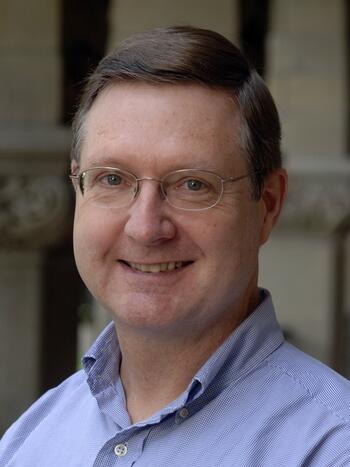
FSI scholars produce research aimed at creating a safer world and examing the consequences of security policies on institutions and society. They look at longstanding issues including nuclear nonproliferation and the conflicts between countries like North and South Korea. But their research also examines new and emerging areas that transcend traditional borders – the drug war in Mexico and expanding terrorism networks. FSI researchers look at the changing methods of warfare with a focus on biosecurity and nuclear risk. They tackle cybersecurity with an eye toward privacy concerns and explore the implications of new actors like hackers.
Along with the changing face of conflict, terrorism and crime, FSI researchers study food security. They tackle the global problems of hunger, poverty and environmental degradation by generating knowledge and policy-relevant solutions.
Encina Hall
616 Jane Stanford Way
Stanford, CA 94305-6055
0
Senior Fellow, Freeman Spogli Institute for International Studies
Ken Olivier and Angela Nomellini Professor of International Studies, Department of Political Science
Peter and Helen Bing Senior Fellow, Hoover Institution
mcfaul_headshot_2025.jpg
PhD
Michael McFaul is the Ken Olivier and Angela Nomellini Professor of International Studies in Political Science, Senior Fellow at the Freeman Spogli Institute for International Studies, and the Peter and Helen Bing Senior Fellow at the Hoover Institution, all at Stanford University. He joined the Stanford faculty in 1995 and served as FSI Director from 2015 to 2025. He is also an international affairs analyst for MSNOW.
McFaul served for five years in the Obama administration, first as Special Assistant to the President and Senior Director for Russian and Eurasian Affairs at the National Security Council at the White House (2009-2012), and then as U.S. Ambassador to the Russian Federation (2012-2014).
He is a recipient of numerous awards, including an honorary PhD from Montana State University; the Order for Merits to Lithuania from President Gitanas Nausea of Lithuania; Order of Merit of Third Degree from President Volodymyr Zelenskyy of Ukraine, and the Dean’s Award for Distinguished Teaching at Stanford University. In 2015, he was the Distinguished Mingde Faculty Fellow at the Stanford Center at Peking University.
McFaul was born and raised in Montana. He received his B.A. in International Relations and Slavic Languages and his M.A. in Soviet and East European Studies from Stanford University in 1986. As a Rhodes Scholar, he completed his D. Phil. in International Relations at Oxford University in 1991.
International Working Group on Russian Sanctions
The International Working Group on Russian Sanctions aims to provide expertise and experience to governments and companies around the world by assisting with the formulation of sanctions proposals that will increase the cost to Russia of invading Ukraine, and support democratic Ukraine in the defense of its territorial integrity and national sovereignty.
CISAC
Stanford University
Encina Hall, C235
Stanford, CA 94305-6165
(650) 723-6927
(650) 725-0597
0
naimark@stanford.edu
Senior Fellow, by courtesy, at the Freeman Spogli Institute for International Studies
Robert & Florence McDonnell Professor of East European Studies
Professor of History
Professor, by courtesy, of German Studies
Senior Fellow at the Hoover Institution
Naimark,_Norman.jpg
MS, PhD
Norman M. Naimark is the Robert and Florence McDonnell Professor of East European Studies, a Professor of History and (by courtesy) of German Studies, and Senior Fellow of the Hoover Institution and (by courtesy) of the Freeman-Spogli Institute for International Studies. Norman formerly served as the Sakurako and William Fisher Family Director of the Stanford Global Studies Division, the Burke Family Director of the Bing Overseas Studies Program, the Convener of the European Forum (predecessor to The Europe Center), Chair of the History Department, and the Director of Stanford’s Center for Russian, East European, and Eurasian Studies.
Norman earned his Ph.D. in History from Stanford University in 1972 and before returning to join the faculty in 1988, he was a professor of history at Boston University and a fellow of the Russian Research Center at Harvard. He also held the visiting Catherine Wasserman Davis Chair of Slavic Studies at Wellesley College. He has been awarded the Officer's Cross of the Order of Merit of the Federal Republic of Germany (1996), the Richard W. Lyman Award for outstanding faculty volunteer service (1995), and the Dean's Teaching Award from Stanford University for 1991-92 and 2002-3.
Norman is interested in modern Eastern European and Russian history and his research focuses on Soviet policies and actions in Europe after World War II and on genocide and ethnic cleansing in the twentieth century. His published monographs on these topics include The History of the "Proletariat": The Emergence of Marxism in the Kingdom of Poland, 1870–1887 (1979, Columbia University Press), Terrorists and Social Democrats: The Russian Revolutionary Movement under Alexander III (1983, Harvard University Press), The Russians in Germany: The History of The Soviet Zone of Occupation, 1945–1949 (1995, Harvard University Press), The Establishment of Communist Regimes in Eastern Europe (1998, Westview Press), Fires of Hatred: Ethnic Cleansing In 20th Century Europe (2001, Harvard University Press), Stalin's Genocides (2010, Princeton University Press), and Genocide: A World History (2016, Oxford University Press). Naimark’s latest book, Stalin and the Fate of Europe: The Postwar Struggle for Sovereignty (Harvard 2019), explores seven case studies that illuminate Soviet policy in Europe and European attempts to build new, independent countries after World War II.
Affiliated faculty at The Europe Center
Affiliated faculty at the Center on Democracy, Development and the Rule of Law
Hide publication sections
Off
The Sakurako and William Fisher Family Director of the Stanford Global Studies Division and Robert and Florence McDonnell Professor in East European Studies
Speaker
Stanford University
Kathryn Stoner
Faculty Director, Susan Ford Dorsey Program in International Policy Studies and Senior Fellow, Freeman Spogli Institute
Speaker
Stanford University
Abstract: The industrial and agricultural revolutions have profoundly transformed the world. However, an unintended consequence of these revolutions is that we are affecting the climate of Earth. I will describe the rapidly changing energy landscape, an “epidemiological” approach to assessing the risks of climate change, and its impact to international security. I will then give a perspective on mitigating these risks with science, technology and policy with emphasis on developing the lowest cost solution.
About the Speaker: Steven Chu is the William R. Kenan, Jr., Professor of Physics and Molecular & Cellular Physiology at Stanford University. His research spans atomic and polymer physics, biophysics, biology, biomedicine and batteries. He shared the 1997 Nobel Prize in Physics for the laser cooling and trapping of atoms.
From January 2009 until April 2013, Dr. Chu was the 12th U.S. Secretary of Energy and the first scientist to hold a cabinet position since Ben Franklin. During his tenure, he began ARPA-E, the Energy Innovation Hubs, the Clean Energy Ministerial meetings, and was tasked by President Obama to assist BP in stopping the Deepwater Horizon oil leak. Prior to his cabinet post, he was director of the Lawrence Berkeley National Laboratory, Professor of Physics and Molecular and Cell Biology at UC Berkeley, the Theodore and Francis Geballe Professor of Physics and Applied Physics at Stanford University, and head of the Quantum Electronics Research Department at AT&T Bell Laboratories.
Dr. Chu is a member of the National Academy of Sciences, the American Philosophical Society, the American Academy of Arts and Sciences, the Academia Sinica, and is a foreign member of the Royal Society, the Royal Academy of Engineering, the Chinese Academy of Sciences, and the Korean Academy of Sciences and Technology. He has been awarded 24 honorary degrees, published more than 250 scientific papers, and holds 10 patents.
Steven Chu
William R. Kenan, Jr., Professor of Physics and Molecular & Cellular Physiology
Speaker
Stanford University
Senior Fellow, Freeman Spogli Institute for International Studies
Professor, Management Science & Engineering (by courtesy)
doug-headshot_tight.jpeg
MD, MS
Douglas K. Owens is the Henry J. Kaiser, Jr. Professor, Chair of the Department of Health Policy in the Stanford University School of Medicine and Director of the Center for Health Policy (CHP) in the Freeman Spogli Institute for International Studies (FSI). He is a general internist, a Professor of Management Science and Engineering (by courtesy), at Stanford University; and a Senior Fellow at the Freeman Spogli Institute for International Studies.
Owens' research includes the application of decision theory to clinical and health policy problems; clinical decision making; methods for developing clinical guidelines; decision support; comparative effectiveness; modeling substance use and infectious diseases; cardiovascular disease; patient-centered decision making; assessing the value of health care services, including cost-effectiveness analysis; quality of care; and evidence synthesis.
Owens chaired the Clinical Guidelines Committee of the American College of Physicians for four years. The guideline committee develops clinical guidelines that are used widely and are published regularly in the Annals of Internal Medicine. He was a member and then Vice-Chair and Chair of the U.S. Preventive Services Task Force, which develops national guidelines on preventive care, including guidelines for screening for breast, colorectal, prostate, and lung cancer. He has helped lead the development of more than 50 national guidelines on treatment and prevention. He also was a member of the Second Panel on Cost Effectiveness in Health and Medicine, which developed guidelines for the conduct of cost-effectiveness analyses.
Owens also directed the Stanford-UCSF Evidence-based Practice Center. He co-directs the Stanford Health Services Research Program, and previously directed the VA Physician Fellowship in Health Services Research, and the VA Postdoctoral Informatics Fellowship Program.
Owens received a BS and an MS from Stanford University, and an MD from the University of California-San Francisco. He completed a residency in internal medicine at the University of Pennsylvania and a fellowship in health research and policy at Stanford. Owens is a past-President of the Society for Medical Decision Making. He received the VA Undersecretary’s Award for Outstanding Achievement in Health Services Research, and the Eisenberg Award for Leadership in Medical Decision Making from the Society for Medical Decision Making. Owens also received a MERIT award from the National Institutes on Drug Abuse to study HIV, HCV, and the opioid epidemic. He was elected to the American Society for Clinical Investigation (ASCI) and the Association of American Physicians (AAP.)
Chair, Department of Health Policy, School of Medicine
Director, Center for Health Policy, Freeman Spogli Institute for International Studies
CISAC
Stanford University
Encina Hall, E209
Stanford, CA 94305-6165
0
relman@stanford.edu
Senior Fellow at the Freeman Spogli Institute for International Studies
Thomas C. and Joan M. Merigan Professor
Professor of Medicine
Professor of Microbiology and Immunology
1-RSD13_085_0052a-001.jpg
MD
David A. Relman, M.D., is the Thomas C. and Joan M. Merigan Professor in the Departments of Medicine, and of Microbiology and Immunology at Stanford University, and Chief of Infectious Diseases at the Veterans Affairs Palo Alto Health Care System in Palo Alto, California. He is also Senior Fellow at the Freeman Spogli Institute for International Studies (FSI) at Stanford, and served as science co-director at the Center for International Security and Cooperation at Stanford from 2013-2017. He is currently director of a new Biosecurity Initiative at FSI.
Relman was an early pioneer in the modern study of the human indigenous microbiota. Most recently, his work has focused on human microbial community assembly, and community stability and resilience in the face of disturbance. Ecological theory and predictions are tested in clinical studies with multiple approaches for characterizing the human microbiome. Previous work included the development of molecular methods for identifying novel microbial pathogens, and the subsequent identification of several historically important microbial disease agents. One of his papers was selected as “one of the 50 most important publications of the past century” by the American Society for Microbiology.
Dr. Relman received an S.B. (Biology) from MIT, M.D. from Harvard Medical School, and joined the faculty at Stanford in 1994. He served as vice-chair of the NAS Committee that reviewed the science performed as part of the FBI investigation of the 2001 Anthrax Letters, as a member of the National Science Advisory Board on Biosecurity, and as President of the Infectious Diseases Society of America. He is currently a member of the Intelligence Community Studies Board and the Committee on Science, Technology and the Law, both at the National Academies of Science. He has received an NIH Pioneer Award, an NIH Transformative Research Award, and was elected a member of the National Academy of Medicine in 2011.
CDDRL
Encina Hall, C152
616 Jane Stanford Way
Stanford, CA 94305-6055
(650) 725-2705
(650) 724-2996
0
sstedman@stanford.edu
Senior Fellow at the Freeman Spogli Institute for International Studies
Professor, by courtesy, of Political Science
Stedman_Steve.jpg
PhD
Stephen Stedman is a Senior Fellow at the Freeman Spogli Institute for International Studies (FSI) and the Center on Democracy, Development and the Rule of Law (CDDRL), an affiliated faculty member at CISAC, and professor of political science (by courtesy) at Stanford University. He is director of CDDRL's Fisher Family Honors Program in Democracy, Development and Rule of Law, and will be faculty director of the Program on International Relations in the School of Humanities and Sciences effective Fall 2025.
In 2011-12 Professor Stedman served as the Director for the Global Commission on Elections, Democracy, and Security, a body of eminent persons tasked with developing recommendations on promoting and protecting the integrity of elections and international electoral assistance. The Commission is a joint project of the Kofi Annan Foundation and International IDEA, an intergovernmental organization that works on international democracy and electoral assistance.
In 2003-04 Professor Stedman was Research Director of the United Nations High-level Panel on Threats, Challenges and Change and was a principal drafter of the Panel’s report, A More Secure World: Our Shared Responsibility.
In 2005 he served as Assistant Secretary-General and Special Advisor to the Secretary- General of the United Nations, with responsibility for working with governments to adopt the Panel’s recommendations for strengthening collective security and for implementing changes within the United Nations Secretariat, including the creation of a Peacebuilding Support Office, a Counter Terrorism Task Force, and a Policy Committee to act as a cabinet to the Secretary-General.
His most recent book, with Bruce Jones and Carlos Pascual, is Power and Responsibility: Creating International Order in an Era of Transnational Threats (Washington DC: Brookings Institution, 2009).
Director, Fisher Family Honors Program in Democracy, Development and Rule of Law
Director, Program in International Relations
Affiliated faculty at the Center for International Security and Cooperation
Richard E. Behrman Professor of Child Health and Society
Senior Fellow, Freeman Spogli Institute for International Studies
rsd15_081_0253a.jpg
MD, MPH
Dr. Paul Wise is dedicated to bridging the fields of child health equity, public policy, and international security studies. He is the Richard E. Behrman Professor of Child Health and Society and Professor of Pediatrics, Division of Neonatology and Developmental Medicine, and Health Policy at Stanford University.He is also co-Director, Stanford Center for Prematurity Research and a Senior Fellow in the Center on Democracy, Development, and the Rule of Law, and the Center for International Security and Cooperation, Freeman Spogli Institute for International Studies, Stanford University. Wise is a fellow of the American Academy of Arts and Sciences and has been working as the Juvenile Care Monitor for the U.S. Federal Court overseeing the treatment of migrant children in U.S. border detention facilities.
Wise received his A.B. degree summa cum laude in Latin American Studies and his M.D. degree from Cornell University, a Master of Public Health degree from the Harvard School of Public Health and did his pediatric training at the Children’s Hospital in Boston.His former positions include Director of Emergency and Primary Care Services at Boston Children’s Hospital, Director of the Harvard Institute for Reproductive and Child Health, Vice-Chief of the Division of Social Medicine and Health Inequalities at the Brigham and Women’s Hospital and Harvard Medical School and was the founding Director or the Center for Policy, Outcomes and Prevention, Stanford University School of Medicine.He has served in a variety of professional and consultative roles, including Special Assistant to the U.S. Surgeon General, Chair of the Steering Committee of the NIH Global Network for Women’s and Children’s Health Research, Chair of the Strategic Planning Task Force of the Secretary’s Committee on Genetics, Health and Society, a member of the Advisory Council of the National Institute of Child Health and Human Development, NIH, and the Health and Human Secretary’s Advisory Committee on Infant and Maternal Mortality.
Wise’s most recent U.S.-focused work has addressed disparities in birth outcomes, regionalized specialty care for children, and Medicaid. His international work has focused on women’s and child health in violent and politically complex environments, including Ukraine, Gaza, Central America, Venezuela, and children in detention on the U.S.-Mexico border.
Core Faculty, Center on Democracy, Development and the Rule of Law
Affiliated faculty at the Center for International Security and Cooperation
Under the leadership of Prime Minister Shinzo Abe, Japan has embarked on a historically important shift in its defense policy, taking on a more active regional security role and re-interpreting the Japanese constitution to allow for the country to participate in acts that are no longer strictly defined as defense of Japan's own territory. What do these changes mean for Japan's relations with its neighbors? For the alliance with the United States? Are these changes truly within the bounds of the Japanese constitution? And what are the politics of the debate within Japan over this historic change in defense and security policy?
Panelist: Ryo Sahashi - Visiting Associate Professor, Shorenstein APARC at Stanford University and Associate Professor of International Politics, Faculty of Law at Kanagawa University
Daniel C. Sneider - Associate Director for Research, Shorenstein APARC at Stanford University
Moderator: Takeo Hoshi - Henri H. and Tomoye Takahashi Senior Fellow in Japanese Studies at FSI; Professor, by courtesy, of Finance, Graduate School of Business and Director, Japan Studies Program, Shorenstein APARC at Stanford University
Former Henri H. and Tomoye Takahashi Senior Fellow in Japanese Studies at the Freeman Spogli Institute for International Studies
Former Professor, by courtesy, of Finance at the Graduate School of Business
takeo_hoshi_2018.jpg
PhD
Takeo Hoshi was Henri and Tomoye Takahashi Senior Fellow at the Freeman Spogli Institute for International Studies (FSI), Professor of Finance (by courtesy) at the Graduate School of Business, and Director of the Japan Program at the Shorenstein Asia-Pacific Research Center (APARC), all at Stanford University. He served in these roles until August 2019.
Before he joined Stanford in 2012, he was Pacific Economic Cooperation Professor in International Economic Relations at the Graduate School of International Relations and Pacific Studies (IR/PS) at University of California, San Diego (UCSD), where he conducted research and taught since 1988.
Hoshi is also Visiting Scholar at Federal Reserve Bank of San Francisco, Research Associate at the National Bureau of Economic Research (NBER) and at the Tokyo Center for Economic Research (TCER), and Senior Fellow at the Asian Bureau of Finance and Economic Research (ABFER). His main research interest includes corporate finance, banking, monetary policy and the Japanese economy.
He received 2015 Japanese Bankers Academic Research Promotion Foundation Award, 2011 Reischauer International Education Award of Japan Society of San Diego and Tijuana, 2006 Enjoji Jiro Memorial Prize of Nihon Keizai Shimbun-sha, and 2005 Japan Economic Association-Nakahara Prize. His book titled Corporate Financing and Governance in Japan: The Road to the Future (MIT Press, 2001) co-authored with Anil Kashyap (Booth School of Business, University of Chicago) received the Nikkei Award for the Best Economics Books in 2002. Other publications include “Will the U.S. and Europe Avoid a Lost Decade? Lessons from Japan’s Post Crisis Experience” (Joint with Anil K Kashyap), IMF Economic Review, 2015, “Japan’s Financial Regulatory Responses to the Global Financial Crisis” (Joint with Kimie Harada, Masami Imai, Satoshi Koibuchi, and Ayako Yasuda), Journal of Financial Economic Policy, 2015, “Defying Gravity: Can Japanese sovereign debt continue to increase without a crisis?” (Joint with Takatoshi Ito) Economic Policy, 2014, “Will the U.S. Bank Recapitalization Succeed? Eight Lessons from Japan” (with Anil Kashyap), Journal of Financial Economics, 2010, and “Zombie Lending and Depressed Restructuring in Japan” (Joint with Ricardo Caballero and Anil Kashyap), American Economic Review, December 2008.
Hoshi received his B.A. in Social Sciences from the University of Tokyo in 1983, and a Ph.D. in Economics from the Massachusetts Institute of Technology in 1988.
Former Director of the Japan Program at the Shorenstein Asia-Pacific Research Center
Walter H. Shorenstein Asia Pacific Research Center Freeman Spogli Institute for International Studies Encina Hall, Rm. E313 616 Serra Street Stanford, CA 94305-6055
(650) 725-5781
0
sahashi@stanford.edu
Visiting Associate Professor
ryo_sahashi.jpg
PhD
Ryo Sahashi is a visiting associate professor of the Walter H. Shorenstein Asia-Pacific Research Center (Shorenstein APARC) from April 2014 to March 2015. He joins APARC from Kanagawa University, where he concurrently serves as an associate professor of international politics. He will be writing a book on U.S. strategy toward China, Taiwan, and Northeast Asia since the Cold War.
Sahashi is a specialist on the regional security architecture in East Asia and Japan’s international relations. His articles are published in Chinese, English, and Japanese, including “Security Arrangements in the Asia-Pacific: a Three-Tier Approach,” William T. Tow and Rikki Kerstain (eds.); Bilateral Perspectives on Regional Security: Australia, Japan and the Asia-Pacific Region, New York: Palgrave MacMillan, 2012, pp.214-240; “Security Partnership in Japanese Asia Strategy: Creating Order, Building Capacity, and Sharing Burden,” ifri Policy Papers, February 2013; “The rise of China and the transformation of Asia-Pacific security architecture,” William T. Tow and Brendan Taylor (eds.); Contending Cooperation: Bilateralism, Multilateralism, and Asia-Pacific Security, London and New York: Routledge, 2013, pp.135-156. His newest articles on Japan-Taiwan relations and on Japan’s foreign policy since DPJ era (2009-) will soon be available.
He also serves as Research Fellow at Japan Center for International Exchange. In the past, he was the visiting researcher at the Japanese House of Councilors and German Fund of the United States. His early academic career as faculty started with the University of Tokyo and Australian National University.
He is an active commentator and contributor to international media, including NHK (Asian Voice & Newsline), CCTV, APF, Newsweek, Defense News, Stars and Stripes, Global Times, China Dairy, Asia Pacific Bulletin, and East Asia Forum.
Sahashi is a graduate from International Christian University, spending junior year at University of Illinois at Urbana-Champaign, and earned his LL.M. and Ph.D. from the Graduate Schools for Law and Politics at the University of Tokyo.
Stanford University
Encina Hall, Room E301
Stanford, CA 94305-6055
0
dsneider@stanford.edu
Lecturer in International Policy at the Ford Dorsey Master’s in International Policy
2011_Dan_Sneider_2_Web.jpg
MA
Daniel C. Sneider is a lecturer in international policy at Stanford's Ford Dorsey Master’s in International Policy and a lecturer in East Asian Studies at Stanford. His own research is focused on current U.S. foreign and national security policy in Asia and on the foreign policy of Japan and Korea. Since 2017, he has been based partly in Tokyo as a Visiting Researcher at the Canon Institute for Global Studies, where he is working on a diplomatic history of the creation and management of the U.S. security alliances with Japan and South Korea during the Cold War. Sneider contributes regularly to the leading Japanese publication Toyo Keizai as well as to the Nelson Report on Asia policy issues.
Sneider is the former Associate Director for Research at the Walter H. Shorenstein Asia-Pacific Research Center at Stanford. At Shorenstein APARC, Sneider directed the center’s Divided Memories and Reconciliation project, a comparative study of the formation of wartime historical memory in East Asia. He is the co-author of a book on wartime memory and elite opinion, Divergent Memories, from Stanford University Press. He is the co-editor, with Dr. Gi-Wook Shin, of Divided Memories: History Textbooks and the Wars in Asia, from Routledge and of Confronting Memories of World War II: European and Asian Legacies, from University of Washington Press.
Sneider was named a National Asia Research Fellow by the Woodrow Wilson International Center for Scholars and the National Bureau of Asian Research in 2010. He is the co-editor of Cross Currents: Regionalism and Nationalism in Northeast Asia, Shorenstein APARC, distributed by Brookings Institution Press, 2007; of First Drafts of Korea: The U.S. Media and Perceptions of the Last Cold War Frontier, 2009; as well as of Does South Asia Exist?: Prospects for Regional Integration, 2010. Sneider’s path-breaking study “The New Asianism: Japanese Foreign Policy under the Democratic Party of Japan” appeared in the July 2011 issue of Asia Policy. He has also contributed to other volumes, including “Strategic Abandonment: Alliance Relations in Northeast Asia in the Post-Iraq Era” in Towards Sustainable Economic and Security Relations in East Asia: U.S. and ROK Policy Options, Korea Economic Institute, 2008; “The History and Meaning of Denuclearization,” in William H. Overholt, editor, North Korea: Peace? Nuclear War?, Harvard Kennedy School of Government, 2019; and “Evolution or new Doctrine? Japanese security policy in the era of collective self-defense,” in James D.J. Brown and Jeff Kingston, eds, Japan’s Foreign Relations in Asia, Routledge, December 2017.
Sneider’s writings have appeared in many publications, including the Washington Post, the New York Times, Slate, Foreign Policy, the New Republic, National Review, the Far Eastern Economic Review, the Oriental Economist, Newsweek, Time, the International Herald Tribune, the Financial Times, and Yale Global. He is frequently cited in such publications.
Prior to coming to Stanford, Sneider was a long-time foreign correspondent. His twice-weekly column for the San Jose Mercury News looking at international issues and national security from a West Coast perspective was syndicated nationally on the Knight Ridder Tribune wire service. Previously, Sneider served as national/foreign editor of the Mercury News. From 1990 to 1994, he was the Moscow bureau chief of the Christian Science Monitor, covering the end of Soviet Communism and the collapse of the Soviet Union. From 1985 to 1990, he was Tokyo correspondent for the Monitor, covering Japan and Korea. Prior to that he was a correspondent in India, covering South and Southeast Asia. He also wrote widely on defense issues, including as a contributor and correspondent for Defense News, the national defense weekly.
Sneider has a BA in East Asian history from Columbia University and an MPA from the John F. Kennedy School of Government at Harvard University.
Intense competition between the United States and China will be one of the significant global issues in the years to come. Stanford international security fellow Karl Eikenberry says there's no reason the two nations should repeat the "Thucydides Trap," which refers to seemingly inevitable and violent conflicts between rising and existing powers.
The United States and China can peacefully co-exist if they avoid history's most dangerous geopolitical pitfalls, according to a Stanford expert.
The key is not to presume an inevitable conflict, said Karl Eikenberry, the William J. Perry Fellow in International Security at Stanford's Center for International Security and Cooperation and a faculty member of the Shorenstein Asia–Pacific Research Center.
"More often than not, the subsequent competition between the rising and status quo powers results in increasingly bitter conflicts and ultimately ends in all-out war," he wrote in a recent journal article.
A retired U.S. Army lieutenant general, Eikenberry was the U.S. ambassador to Afghanistan from 2009 until 2011. He also served as the defense attaché in the American embassy in the People's Republic of China. He earned an interpreter's certificate in Mandarin Chinese from the British Foreign Commonwealth Office and an advanced degree in Chinese history from Nanjing University.
Eikenberry said that colliding powers sometimes fall prey to the "Thucydides Trap," which harkens back to the Peloponnesian War from 431 B.C. to 404 B.C. when the rising Greek city-state of Athens fought the reigning city-state of Sparta. The Greek historian Thucydides famously wrote, "It was the rise of Athens and the fear that this inspired in Sparta that made war inevitable."
Today, Eikenberry wrote, pundits and experts use the term "Thucydides Trap" to describe the phenomenon of a rising power provoking so much fear in a status quo power that it ultimately leads to conflict between the two.
Economic bond
However, Eikenberry pointed out, more differences abound than similarities to Sparta and Athens in the case of the United States and China. For starters, the two countries are deeply intertwined in a global marketplace, whereas Sparta and Athens were separate economies.
"The type of economic interaction matters," Eikenberry said in an interview.
For example, on the eve of the First World War, trade among major European powers was at high levels by historical standards, he said. Yet that did not prevent the outbreak of a cataclysmic war. As for the United States and China, they have a different trading relationship than the European powers in the early 20th century.
"China and the U.S. today enjoy a high level of bilateral trade and China holds a significant amount of American debt. More stabilizing, though, would be increased mutual direct investment," he said.
Eikenbery wrote in his essay that the Sino-American relationship offers its partners particular benefits difficult to find in other countries – such as the world-leading quality of U.S. higher education and the "safe harbor" appeal of U.S. treasury notes as a safe Chinese investment.
"Athens did not hold $1 trillion worth of Spartan treasury notes. Also, huge numbers of Athenian students did not live and study in Sparta. In short, Athens and Sparta were distinct and rival city-states with very little integration or sharing of sector-specific resources or services," he said.
On top of this, Washington and Beijing are in discussions on a bilateral investment treaty, he said. "A good treaty would hopefully encourage more economic activity that in the long term would make military conflict even more costly than it already is."
Values and history count
Still, concerns exist. The differences in belief systems between the United States and China cannot be ignored when one contemplates the future, Eikenberry wrote.
"The United States places a heavy emphasis on democracy, freedom and human rights. By contrast, Chinese President Xi Jinping has cautioned party members against advocacy of constitutional democracy, universal values, civil society, neo-liberalism, media freedom, historical nihilism (excessive criticism of the party's past) and questioning reform. In China, democracy is still considered subversive," he wrote.
In the end, values and history do matter, Eikenbery said. They shape how nations perceive the world and pursue their strategic goals.
"The United States has defined itself as an exceptional nation that has championed democracy and freedom. It sees itself on the winning side of mankind. By contrast, China, feeling aggrieved and humiliated, sees a great need to restore itself to its rightful place in the world as a rich and strong nation," he wrote.
If values like freedom and democracy matter, does this bode well for the United States in its competition with China? Perhaps, Eikenberry said.
"Americans are questioning their government's performance, especially at the federal level. But the debate is over methods and processes, not whether democracy has run its course," he said in an interview.
The liberal democratic political model has proven itself over the past couple hundred of years, he noted. "States ruled by closed autocracies have had occasional good runs – sometimes for a few decades – but most have ended failures. I bet on the former," he added.
How the future unfolds for America and China depends on a proper reading of history and political context, Eikenberry said.
"Mismanaged by one or both sides, conflict is possible," he said.
But there's no need for leaders in Washington and Beijing to cast themselves as tragic actors condemned to re-enact the Peloponnesian War.
"To do so would make for a bad reading of history, poor political science and a very flimsy basis for statecraft," he said.
He would advise U.S. and Chinese leaders to focus on fixing their respective political systems. A lot is at stake, not only in both countries, but also for others around the world.
"Failure on China's part would, in the long-term, have severe consequences for its internal and global stability. Failure on America's part would erode its material and moral claim to world leadership," he said.
Meetings like this one in 2012 between President Obama and Chinese leader Xi Jinping can ease tensions between the two nations if leaders promote healthy interactions, according to Karl Eikenberry of Stanford's Freeman Spogli Institute for International Studies.
Abstract: In 2011 I joined a team of global security analysts at Lawrence Livermore National Laboratory (LLNL) to develop a systematic methodology for “information-driven” safeguards for the International Atomic Energy Agency (IAEA). This methodology would link the IAEA’s nuclear inspection schedules, within a given state, to a heterogenous body of information about the state. As the lone physicist in the group, I was quickly fashioned as the “quantitative guy”, who would produce quantitative frameworks to make information-driven safeguards “more objective”, and “less political”. But as my quantitative contributions earned the respect of my peers, I became leery of the role they might play in the political shift I saw afoot. If safeguards was to be information-driven, then whose information would “drive” the IAEA?
In this presentation, I tell the story of my experience as the “quant guy” at LLNL in order to explore a broader question: when is it useful to deploy quantitative methods of highly complex phenomena in matters of social consequence? I borrow from a distinction commonly made in the science studies literature - between disciplinary and mechanical objectivity - to argue that quantitative models serve us best when they are used not to “remove bias” or “increase rigor”, but to aid subjective judgement and facilitate communication.
About the Speaker: Chris Lawrence received his PhD in nuclear science at University of Michigan in 2014, and has published in the fields of nuclear detection and solid-state physics. His dissertation introduced novel neutron-spectroscopy techniques for the verification of warhead dismantlement. In 2011 he worked on nuclear safeguards policy issues in the Global Security Division at Lawrence Livermore National Laboratory. He is currently a Stanton Nuclear Security Fellow at CISAC, where he studies the creation and deployment of knowledge about nuclear programs and treaty compliance.
Encina Hall (2nd floor)
Christopher Lawrence
Stanton Nuclear Security Postdoctoral Fellow
Speaker
CISAC
Two-dozen congressional staffers joined academic and Silicon Valley experts at Stanford’s inaugural cybersecurity boot camp to discuss ways to protect the government, the public and industry from cyber attacks, network crimes and breaches of personal privacy.
The staffers listened to presentations from 25 business and technology leaders, as well as experts in privacy, civil liberties and intelligence during the three-day boot camp. They also took part in a role-playing exercise dealing with a cyber crisis, posing as staffers from the White House, Homeland Security, the State and Defense departments, as well as private enterprise.
The idea behind the workshop was to give Capitol Hill staffers the knowledge and contacts that will help them better craft legislation and policies on cybersecurity.
“We’re 3,000 miles away from Washington and we’re at ground zero for the tech revolution,” said CISAC Co-Director Amy Zegart. She is also the Davies Family Senior Fellow at the Hoover Institution, which co-sponsored the boot camp that that ran from Aug. 18-20.
“The boot camp is an important early step in what we envision to be a continuing, leading and lasting cyber program,” said Zegart, co-convener with Herbert Lin, chief scientist at the Computer Science and Telecommunications Board, National Research Council of the National Academies, who joins Stanford in January as a senior scholar for cyber research and policy at CISAC and research fellow at the Hoover Institution.
Zegart had three goals for the boot camp. One was to bring together computer and social scientists across campus and across the country “to broaden and deepen our cutting-edge scholarship.”
Then, from the networking that naturally took place, Zegart hopes to create a Track II cybersecurity council that will convene regularly with leaders from the U.S. government, scholars and key stakeholders from the private industry.
“And finally, we want enhanced education programs not only for students here at Stanford, but key stakeholders for cybersecurity policy,” she said.
The presentations were videotaped and will be packaged and used for educational purposes at Stanford and eventually be made public online.
Some of the staffers said the boot camp exceeded their expectations and they were grateful for the jam-packed, 72-hour crash course in all things cyber.
“What Stanford has done really successfully here is they brought together people from D.C. who wouldn’t necessarily talk to each other, from different committees, from different sides of the aisle,” said Jamil Jaffer, Republican chief counsel and senior advisor to the Senate Committee on Foreign Relations. “Then from the valley community they brought lawyers, educators and technologists – you name it – from across the spectrum in a way that I’ve never seen before.”
He said he hoped CISAC and the Hoover Institution, which co-sponsored the Stanford Congressional Cyber Boot Camp, would convene the next boot camp with the New York business community as well.
“I think there’s a real opportunity to build bridges between these three major cities; I think we need to have these conversations together,” he said.
Staffers also exchanged views about the wide gap between the government and Silicon Valley tech companies with regard to privacy when they met with senior security chiefs at Google during a visit to the nearby Google X campus.
And there were plenty of lively debates about Internet security vs. privacy and whether the government should step in to police public networks.
Benjamin Wittes of Brookings and Hoover faced off with Jennifer Granick, director of Civil Liberties at the Stanford Center for Internet and Society at the Law School.
“Liberty is a feature of security – and security is a feature of liberty,” Wittes said. “So the urge to think that any security measure is going to negatively impact your liberty, or conversely that anything that augments online liberty is going to have negative implications on security is a very easy, and I would say, very lazy instinct.”
Granick countered by saying most professionals in Silicon Valley do not trust the government to police the Internet without secret hacks. For example, documents leaked by former NSA contractor Edward Snowden indicated the National Security Agency tapped into fiber optic cables transmitting data for Yahoo and Google.
“Last night you heard Eric Schmidt say that the NSA had hacked Google,” she said, referring to a keynote dinner conversation between the Google chairman and former Secretary of State Condoleezza Rice, a professor at Stanford's Graduate School of Business and a senior fellow at Hoover and the Freeman Spogli Institute.
The NSA has denied hacking into Google and Yahoo.
“Everyone here in Silicon Valley agrees with what he says,” she said. “Don’t fool yourself that he’s just saying that because that’s just Google marketing. Everybody at Twitter believes it; everybody at Facebook believes it. I am embedded in the privacy world and we’re all worried about consumer privacy and what these companies are doing with this information – but that doesn’t mean we trust the government to protect us.”
Aside from the government trust debate, other big takeaways were that surprisingly little is secure on the Internet and the threat of cyber attacks against the United States is one of the biggest issues facing Washington policymakers today.
They heard a warning in stark and unambiguous language from Jane Holl Lute, president of the Council on CyberSecurity and a consulting professor at CISAC.
"It's no longer possible to ignore this issue," said Lute, who until last year was deputy secretary for the Department of Homeland Security, where she was responsible for the day-to-day management of the department's efforts to prevent terrorism and enhance security. "Life online is fundamentally unsafe.”
She emphasized that the Internet is about "the power to connect, not to protect" and stressed the importance of practicing "cyber hygiene" to reduce problems. This includes monitoring the hardware and software running on a network, limiting administrative permissions, and real-time patching and monitoring of system vulnerabilities.
If organizations would just follow these steps, she said, 80 to 90 percent of cyber attacks would be prevented.
"We know a lot, but we're just not doing it,” she said.
Lute emphasized that today's world has an "existential reliance" on the Internet – more than 3 billion people in the world, including 80 percent of North Americans, have access to the Internet. All of this dependence comes against the reality that many companies and sites do not carry out basic hygiene to protect their networks.
The U.S. Senate and House staffers attending the boot camp come from both political parties and work on the U.S. Senate Select Committee on Intelligence and the Homeland Security, Appropriations, Judiciary, Energy and Commerce committees. The group also includes staffers working with House Minority Leader Nancy Pelosi, D-Calif., U.S. Sen. John McCain, R-Ariz., and Ed Markey, D-Mass., among others.
Senior executives from Microsoft, Visa, Palantir, Palo Alto Networks and U.S. Venture Partners had a robust discussion about how their companies battle cyber crime and share network data.
Ellen Richey, global head of enterprise risk for Visa, talked about her frustration with the international organized crime rings that attack financial institutions and credit cards companies.
“And they’re using that money to finance other types of illicit activities, such as human trafficking, drugs and terrorism, yet their governments don’ t go after them, or if they do go after them, they are released due to corruption in the courts,” Richey said.
She said Visa believes that at the end of the day, it’s not possible to adopt measures that are going to adequately protect against the growing threat of cyber crimes.
“So we believe that the ultimate answer for us is to get vulnerable data out of their hands,” Richey said. “You’ve got to shrink the battlefield.”
Facebook CSO Joe Sullivan addresses the boot camp, Aug. 20, 2014.
And the staffers heard a plea by Joe Sullivan, chief security officer at Facebook, to join them in the valley’s quest for better network security.
“The pace that we work at here in Silicon Valley is amazing. It’s exciting and fun to be a part of – but it’s really scary, too,” said Sullivan, a former federal prosecutor devoted to high-tech crime. “There are challenges that we have to deal with every day and we have to have really large and nimble security teams that are thinking about the next big thing before it launches.
“The question is: are government agencies thinking about these issues? Far too often – that is not the case. Hopefully when you go back to Washington you think about how we engage companies, how we engage with government agencies, think about the roles that we all play.”
Sullivan talked about Facebook’s “white hat” program, in which the social network invites users to find security vulnerabilities and report them for a bounty.
He said they have spent $3 million in the last three years in payouts to users around the world, such as the young Palestinian man who was able to hack into Facebook CEO Mark Zuckerberg’s page to warn him of a security flaw.
“We’ve focused on encryption, we’ve hired a lot of people and we’ve looked at data center traffic and all those things,” Sullivan said. “But one of the areas where I think we’ve tried to be at the forefront is about talking about security in a more open way.”
Sullivan said he believes there’s a “disconnect” when one talks about security between the private and public sectors and consumers.
“I feel like when the government talks about security, they’re talking about surveillance,” Sullivan said. “I think when consumers talk about security, they’re talking about safety.”
The big tech companies – Facebook, Microsoft and Google – must take “full ownership” of network security, though he wishes that were not always the case.
“We honestly don’t count on any government agency anywhere in the world to make the people who use Facebook secure,” he said. “We realize we have to do it on our own. Is that a good thing or a bad thing? I would suggest it’s a bad thing. I think we’d all like more help in securing our services.”
For more details about the boot camp speakers and program, visit this website.
Welcome Remarks – Eric T. Wakin, Robert H. Malott Director of Hoover Institution Library & Archives
Opening Remarks – Amir Weiner, Stanford University
9:15-10:45 AM – Chair: Amir Weiner
Toomas Hiio, Estonian War Museum. Multi-ethnic (or Multi-national) Student Body of the University of Tartu and the WW I: Choices, Political Movements, Volunteers, Mobilizations, and Postwar Consequences
Darius Staliunas, Lithuanian Institute of History. Anti-Jewish Violence in Lithuania at the Turn of the 20th Century
11:00 AM – 12:30 PM Chair: Aivars Stranga, The University of Latvia
Ēriks Jēkabsons, University of Latvia. The War for Independence of Latvia and the United States
Tomas Balkelis, Vilnius University. Paramilitarism in Lithuania: Violence, Civic Activism and Nation-making, 1918–1920
Conference organizers: Professors Lazar Fleishman (Slavic Department) and Amir Weiner (History Department)
Sponsored by: Hoover Institution Library and Archives, Office of the Provost, Stanford School of Humanities and Sciences, Stanford Global Studies Division, The Europe Center, Stanford University Libraries, Division of Literatures, Cultures, & Languages, Department of Slavic Languages and Literatures, Department of History, Center for Russian, East European and Eurasian Studies, and the Stanford Humanities Center.
Abstract: It is often said that economists in general, and CIA analysts in particular, failed to understand until very late in the game just how serious the USSR's economic problems were. That failure, it was widely claimed, was the root cause of a more general failure on the part of the U.S. policy community to understand what was going on in the Soviet Union during the later Cold War period. It turns out, however, that the Soviet economic problem was understood from the mid-1960s on; in intellectual terms, the analysis was quite impressive. The Soviets themselves, moreover, understood the problem in much the same way as Western economists did. All this provides us with a key--perhaps the key--to understanding great power politics during the latter part of the Cold War.
About the Speaker: Marc Trachtenberg is Professor of Political Science at the University of California - Los Angeles. He studies national security strategy, diplomatic history, and international relations. He has been Fellow of the Woodrow Wilson Foundation, the John Simon Guggenheim Foundation, the German Marshall Fund, and the SSRC/MacArthur Foundation. His award-winning book, A Constructed Peace: The Making of the European Settlement, 1945-1963 (Princeton University Press, 1999), explores the profound impact of nuclear weapons on the conduct of international relations during the Cold War, making extensive use of newly opened documentary archives in Europe and the United States. History and Strategy (Princeton University Press, 1991) studies seminal events like the onset of World War I and the Cuban Missile Crisis to shed light on the role of force in international affairs. Professor Trachtenberg teaches courses on the history of international relations, international security, and historical research methods.
The Soviet Economic Decline and Great Power Politics
About the Topic: Large scientific and technological advances in many European countries and the establishment of the European technology platform IGD-TP have increased our understanding of how to construct, exploit, and close a future geological repository and how to reduce uncertainties in demonstrating its long term safety. Essentially all major safety analyses have demonstrated that the risk of disposal will be of little consequence. Particularly durable confinement is assured in clay formations as is foreseen for disposal in France, Switzerland and Belgium, but strong confinement can also be realized in more water permeable granite formation by very effective engineered barrier system like those foreseen in Sweden and Finland. Still, there is not yet an operating geologic repository for highly radioactive waste worldwide. The first geological European repositories are expected to accept spent fuel, high-level waste in 2025. Yet there remains substantial public concern.
Professor Grambow will lay out the current state of the art safety case, focusing mainly on the scientific programs, the ongoing planning of repository construction and the public debate in France, a country with one of the largest nuclear energy programs worldwide.
About the Speaker: Bernd Grambow is a Professor of excellence at the Ecole des Mines de Nantes, France. He graduated at the Frei Universität Berlin, worked for one year at the Pacific Northwest National Laboratory (Washington State), followed by research positions in Hahn Meitner Institute Berlin and Forschungszentrum Karlsruhe. He currently holds the Chair on nuclear waste disposal in Nantes and is head of the Subatech laboratory on high energy nuclear physics and radiochemistry, a mixed research unit between the CNRS-IN2P3, the Ecole des Mines of Nantes and the University of Nantes. Coordinator of various European projects and former director of the national CNRS-academic/industrial research network NEEDS “nuclear: environment, energy, waste, society”, his areas of scientific expertise are radiochemistry, nuclear waste disposal science, geochemical modeling, radionuclide migration in the environment, chemical thermodynamics, and dynamics of solid/liquid interfaces. He has published 143 peer-reviewed research papers. In 2008 he received the Grand Prix Ivan Pechès of the French Academie of Science and in 2014 he became Chevalier of the Ordre des Palmes Académiques.
Radioactive waste disposal in European clay formations: science, safety and society
CISAC
Stanford University
Encina Hall, E203
Stanford, CA 94305-6165
(650) 725-8641
0
rewing1@stanford.edu
1946-2024
Senior Fellow at the Freeman Spogli Institute for International Studies
Frank Stanton Professor in Nuclear Security
Professor of Geological Sciences
rodewingheadshot2014.jpg
MS, PhD
Rod Ewing was the Frank Stanton Professor in Nuclear Security and Co-Director of the Center for International Security and Cooperation in the Freeman Spogli Institute for International Studies and a Professor in the Department of Geological Sciences in the School of Earth, Energy and Environmental Sciences at Stanford University. He was also the Edward H. Kraus Distinguished University Professor Emeritus at the University of Michigan, where he had faculty appointments in the Departments of Earth & Environmental Sciences, Nuclear Engineering & Radiological Sciences and Materials Science & Engineering. He was a Regents' Professor Emeritus at the University of New Mexico, where he was a member of the faculty from 1974 to 1997. Ewing received a B.S. degree in geology from Texas Christian University (1968, summa cum laude) and M.S. (l972) and Ph.D. (l974, with distinction) degrees from Stanford University where he held an NSF Fellowship. His graduate studies focused on an esoteric group of minerals, metamict Nb-Ta-Ti oxides, which are unusual because they have become amorphous due to radiation damage caused by the presence of radioactive elements. Over the past thirty years, the early study of these unusual minerals has blossomed into a broadly-based research program on radiation effects in complex ceramic materials. In 2001, the work on radiation-resistant ceramics was recognized by the DOE, Office of Science – Decades of Discovery as one of the top 101 innovations during the previous 25 years. This has led to the development of techniques to predict the long-term behavior of materials, such as those used in radioactive waste disposal.
He was the author or co-author of over 750 research publications and the editor or co-editor of 18 monographs, proceedings volumes or special issues of journals. He had published widely in mineralogy, geochemistry, materials science, nuclear materials, physics and chemistry in over 100 different ISI journals. He was granted a patent for the development of a highly durable material for the immobilization of excess weapons plutonium. He was a Founding Editor of the magazine, Elements, which is now supported by 17 earth science societies. He was a Principal Editor for Nano LIFE, an interdisciplinary journal focused on collaboration between physical and medical scientists. In 2014, he was named a Founding Executive Editor of Geochemical Perspective Letters and appointed to the Editorial Advisory Board of Applied Physics Reviews.
Ewing had received the Hawley Medal of the Mineralogical Association of Canada in 1997 and 2002, a Guggenheim Fellowship in 2002, the Dana Medal of the Mineralogical Society of America in 2006, the Lomonosov Gold Medal of the Russian Academy of Sciences in 2006, a Honorary Doctorate from the Université Pierre et Marie Curie in 2007, the Roebling Medal of the Mineralogical Society of America in 2015, Ian Campbell Medal of the American Geoscience Institute, 2015, the Medal of Excellence in Mineralogical Sciences from the International Mineralogical Association in 2015, the Distinguished Public Service Medal of the Mineralogical Society of America in 2019, and was a foreign Fellow of the Royal Society of Canada. He was also a fellow of the Geological Society of America, Mineralogical Society of America, Mineralogical Society of Great Britain and Ireland, American Geophysical Union, Geochemical Society, American Ceramic Society, the American Association for the Advancement of Science and the Materials Research Society. He was elected a Fellow of the National Academy of Engineering in 2017.
He was president of the Mineralogical Society of America (2002) and the International Union of Materials Research Societies (1997-1998). He was the President of the American Geoscience Institute (2018). Ewing had served on the Board of Directors of the Geochemical Society, the Board of Governors of the Gemological Institute of America and the Science and Security Board of the Bulletin of the Atomic Scientists.
He was co-editor of and a contributing author of Radioactive Waste Forms for the Future (North-Holland Physics, Amsterdam, 1988) and Uncertainty Underground – Yucca Mountain and the Nation’s High-Level Nuclear Waste (MIT Press, 2006). Professor Ewing had served on thirteen National Research Council committees and board for the National Academy of Sciences, Engineering and Medicine that have reviewed issues related to nuclear waste and nuclear weapons. In 2012, he was appointed by President Obama to serve as the Chair of the Nuclear Waste Technical Review Board, which is responsible for ongoing and integrated technical review of DOE activities related to transporting, packaging, storing and disposing of spent nuclear fuel and high-level radioactive waste; he stepped down from the Board in 2017.