Security

FSI scholars produce research aimed at creating a safer world and examing the consequences of security policies on institutions and society. They look at longstanding issues including nuclear nonproliferation and the conflicts between countries like North and South Korea. But their research also examines new and emerging areas that transcend traditional borders – the drug war in Mexico and expanding terrorism networks. FSI researchers look at the changing methods of warfare with a focus on biosecurity and nuclear risk. They tackle cybersecurity with an eye toward privacy concerns and explore the implications of new actors like hackers.

Along with the changing face of conflict, terrorism and crime, FSI researchers study food security. They tackle the global problems of hunger, poverty and environmental degradation by generating knowledge and policy-relevant solutions. 

Authors
News Type
News
Date
Paragraphs

When Harold Trinkunas joined CISAC in September, it was like coming home again.

Trinkunas will serve in the concomitant role of senior research scholar and associate director for research. One of the nation’s leading Latin America experts, he comes to CISAC from the Brookings Institution, where he was the Charles W. Robinson Chair and senior fellow as well as director of the Latin America Initiative in the Foreign Policy program.

“This is a great opportunity to work in collaborative ways with exceptional scholars around some very important themes in today’s world,” Trinkunas said, noting the urgency of such issues as risks posed emerging technology, the future of the global order, and international security.

CISAC co-directors Amy Zegart and David Relman wrote in their introduction of Trinkunas that his “leadership will continue to advance the center's mission of training the next generation of international security specialists; developing original policy-relevant scholarship; and extending our outreach to global policymakers to improve the peace and security of our world.”

Evolving global realities

Born and raised in Venezuela, Trinkunas earned his doctorate in political science from Stanford University in 1999 and has been a predoctoral fellow and later a visiting professor at CISAC.  His first exposure to CISAC took place when he served as a teaching assistant to Scott Sagan in 1992.

Image
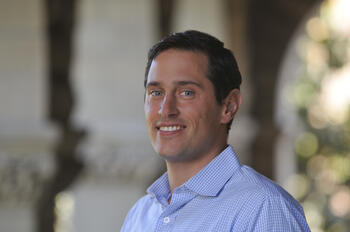
trinkunas harold

Through the years, CISAC has evolved and adjusted its focus to reflect the global security realities, Trinkunas said. “CISAC has successfully adapted to the changing times since its inception.” Research at CISAC spans such topics, including biosecurity and global health, terrorism, cybersecurity, governance, and nuclear risk and cooperation, to name a few.

Trinkunas is looking forward to the mentoring aspect of working with predocs and postdocs while tapping into the CISAC alumni network to open doors for those rising scholars.

“The Center has developed so many positive connections to scholars, policymakers, foundations, and civil society and the private sector more broadly, both in this country and around the word. One of my goals will be to build on those relationships in a way that’s rewarding for all parties,” said Trinkunas, who also served as an associate professor and chair of the National Security Affairs Department at the Naval Postgraduate School.

Security and governance

His newest book, Aspirational Power: Brazil's Long Road to Global Influence, co-authored with David Mares of UC San Digo, was published this summer by Brookings Institution Press. 

Trinkunas is especially interested in the intersections of security and governance. In his research, he has examined civil-military relations, ungoverned spaces, terrorist financing, emerging power dynamics, and global governance.

“Latin America is the part of the world that I know most about,” he said, adding that the region particularly stands out due to the decreasing number of wars and conflicts between states over the past few decades, even as problems of criminal violence have become more salient.

Part of the reason for region-wide stability, Trinkunas explained, is that democratization led many elected leaders to de-emphasize the role of military responses to interstate disputes in an effort to reduce the importance of the armed forces in domestic politics.

In a region with a history of military dictatorship, many democratic leaders saw their own armed forces as a more significant threat to their permanence in power than their neighbors’ militaries, he said.

In addition, the U.S. foreign policy toward the region has tended to become less interventionist over time and has focused instead on minimizing the use of force as a solution to interstate disputes in the region. Recent efforts to normalize of the U.S.-Cuba relationship are a reflection of this trend, Trinkunas added.


Hero Image
encina CISAC
All News button
1
-

Conflicting views of international law versus national interest are churning the South China Sea. In The Hague on 12 July 2016, an Arbitral Tribunal ruled in favor of the Republic of the Philippines and against the People’s Republic of China regarding the latter’s claims and behavior in the South China Sea. Beijing has denounced the decision and refuses to abide by it. The Philippines’ new and outspoken president has refused to press China toward compliance, seemingly preferring to seek economic benefits from China instead. The US and Japan, among other countries, have supported the ruling, but in a muted fashion, as if to avoid antagonizing China. 

Did the Arbitral Court do the right or the wrong thing? Did the judges (in)correctly interpret the UN Convention on the Law of the Sea (UNCLOS)? Has the unwillingness of Manila and Washington to champion the court’s decision made the prospect of Beijing’s eventual dominance in Southeast Asia more likely? Has China’s self-assigned and so far successful impunity undermined global compliance with UNCLOS? Or does Beijing’s pragmatic emphasis on realpolitik over moralpolitik point the way toward a practical alleviation of tensions that global jurisprudence cannot achieve? And what if the court’s ruling were applied to other sweeping maritime claims to land features in the Pacific, including the exclusive economic zones drawn by Tokyo around Okinotorishima or by Washington around its mid-ocean “Minor Outlying Islands”? Would the US comply? And lastly: What next?

Image
jbatongbacal 300x300
Image
yannhuei song 300x300
Jay L. Batongbacal
and Yann-huei Song are internationally regarded experts on the Law of the Sea with extensive knowledge of and experience in maritime affairs. Prof. Batongbacal’s many publications include a recent chapter in Power, Law, and Maritime Order in the South China Sea (2015). His doctorate in Jurisprudential Science is from Dalhousie University (2010). Prof. Song’s many publications include a recent volume, The United States and Maritime Disputes in the South China Sea (2016). His doctorate in the Science of Law is from the University of California-Berkeley (2000).


Jay L. Batongbacal Associate Professor, College of Law, and Director, Institute for Maritime Affairs and Law of the Sea, University of the Philippines, Manila, Philippines
Yann-huei Song Research Fellow, Institute of European and American Studies, Academia Sinica, and Adjunct Professor, School of Law, Soochow University, Taipei, Taiwan
Seminars
Authors
News Type
News
Date
Paragraphs

CISAC's William J. Perry created a free, public 10-week course for people to learn more about the looming dangers of nuclear catastrophe. His new MOOC, developed with the support of Stanford’s Office of the Vice Provost for Teaching and Learning, offers a chance to take that message to a much larger audience.


Living at the Nuclear Brink: Yesterday and Today is an online course (a "MOOC") taught by former Defense Secretary William J. Perry and a team of international experts. 

“I believe that the likelihood of a nuclear catastrophe is greater today than it was during the cold war,” said Perry, who recently wrote a New York Times op-ed on why America should dismantle its ICBM missile systems.

Because the continued risk of nuclear catastrophe isn’t widely recognized, Perry believes, “our nuclear policies don’t reflect the danger. So I’ve set off on a mission to educate people on how serious the problem is. Only then can we develop the policies that are appropriate for the danger we face.” 

The course offers participants the chance to ask questions and participate in discussions via an online forum, which Perry and his fellow experts will address during weekly video chats. Each week, Perry will be joined in conversation by top thinkers, including CISAC's Martha Crenshaw, David Holloway and Siegfried Hecker, Scott D. Sagan, and Philip Taubman. George Shultz, the former secretary of state, will also participate. Outside experts include Ploughshares Fund president Joseph Cirincione, nuclear negotiator James Goodby, former Russian Deputy Minister of Defense Andre Kokoshin, and Joseph Martz of the Los Alamos National Laboratory.

Learn more about "Living at the Nuclear Brink" in this story or watch a video. Register for the course here. It is now open for enrollment and begins Oct. 4.  

Hero Image
nuclear danger
William J. Perry has created a new, free online course for people to learn about the risk of nuclear catastrophe.
CISAC
All News button
1
Authors
News Type
News
Date
Paragraphs

The CISAC lecture series, "Security Matters," surveyed the most pressing security issues facing the world today. Topics include cybersecurity, nuclear proliferation, insurgency and intervention, terrorism, biosecurity, lessons learned from the Cold War and Cuban Missile Crisis – as well as the future of U.S. leadership in the world.

The lectures come almost entirely from the 2014 winter term of International Security (PS114S), co-taught by intelligence expert and CISAC Co-Director Amy Zegart and terrorism authority Martha Crenshaw co-taught the Security Matters class in 2015. (Zegart recently co-wrote a journal paper on why the U.S. might adjust its national security approach in light of a changing international order.)

“This series is the first in what we hope will be a continuing experiment of new modes and methods to enhance our education mission,” said Zegart. “We have two goals in mind: The first is to expand CISAC's reach in educating the world about international security issues. The second is to innovate inside our Stanford classrooms.

Guest lecturers for the Security Matters series include former Secretary of Defense William Perry and former U.S. Ambassador to Afghanistan Karl Eikenberry; former FBI Director Robert Mueller gives us an Inside-the-Beltway look at the day after the 9/11 terrorist attacks. Other lectures are by notable Stanford professors such as plutonium science expert Siegfried Hecker, political scientist Francis Fukuyama, nuclear historians and political scientists David Holloway and Scott Sagan, and tProfessor Abbas Milani explains Iran’s nuclear ambitions; Eikenberry lectures on the Afghanistan War and the future of Central Asia; and former Deputy Secretary of Homeland Security Jane Holl Lute talks about the importance of cybersecurity. 

The series of 30 classroom and office lectures is broken down into 157 shorter clips. The talks are packaged under these security themes:

Into the Future: Emerging Insecurities

Insurgency, Asymmetrical Conflict and Military Intervention

Terrorism and Counterterrorism

The Proliferation of Nuclear Weapons

International Security and State Power


Hero Image
gettyimages 56667803
A computer workstation bears the National Security Agency logo inside the Threat Operations Center inside the Washington suburb of Fort Meade, Maryland, intelligence gathering operation in 2006. The Security Matters class lectures examined the many facets of U.S. and global security.
PAUL J. RICHARDS/AFP/Getty Images
All News button
1
Authors
News Type
News
Date
Paragraphs

Martin Hellman is not your average cryptography pioneer.

Hellman, who is known for his invention of public key cryptography (along with Whitfield Duffie and Ralph Merkle), has a life’s journey to share in story form, one that weaves together the most complex global flashpoints of our age with the deeply personal of any age. He and his wife’s new bookA New Map for Relationships: Creating True Love at Home and Peace on the Planet, spans far and wide, covering nuclear risks in North Korea, Iran, and America’s Middle Eastern wars.

But that is not all. He and his wife Dorothie Hellman open up about their marital struggles to show how they eventually reached a point of harmony and true love for each other. As Martin Hellman sees it, conflict in the international and interpersonal arenas has much in common.

“You can’t separate nuclear war from conventional war and conventional war from personal war,” he said in an interview. Hellman is a professor emeritus of electrical engineering and faculty affiliate at Stanford’s Center for International Security and Cooperation.  

Just as he and Dorothie (self-acknowledged polar opposites) often butted heads during the first 10 or 15 years of marriage, nations too navigate dangerously outmoded “maps” to protect their national security and interests. Yet these “maps” are soon outdated, whether on the global stage or in the home. Hellman said, however, that differences of opinion, which revolve around fights to prove who is “right,” could instead be transformed into opportunities to learn from one another – and to expand peace in the world.

“You have to believe in the seemingly impossible gifts of unconditional love and greater peace in the world, and then dedicate yourself to discovering how to achieve them,” he said.

Cultivating inner, outer peace

He said that society only truly changes based on individual changes, so he calls for action in how people live their everyday lives. When countries fail to respect each other – and ignore the influence of history on those countries – then conflict is more likely, and it is similar to a person disrespecting another.

“You will see an immediate payoff as your relationships flower,” he wrote in the book. “The small impact that each of us can have on changing the world does not feel concrete enough to most people, but seeing progress in your personal relationships is very concrete.”

That dedication to unconditional love, he said, is the way that individuals can become models for what is needed globally.

And the time is now, he suggests, for such change if our living generations are to leave a more peaceful world for those who follow us. From Afghanistan to Cuba, Russia, Iraq to North Korea and beyond, the countries of the world need a journey of healing and reconciliation, as he writes in the book.

Today, the stakes could not be higher, Hellman noted. Long-running strategies like nuclear deterrence are risky and illogical – over time, given probability theory and the chances of mistake or malice, they won’t work.

“The United States thinks it’s a superpower, but how can we be when Russia or China could destroy us in less than a hour?” he said. “How is that being a superpower?”

As William J. Perry, the former U.S. Secretary of Defense and Stanford professor emeritus at CISAC, said on behalf of the Hellmans’ book, “The struggle for interpersonal dominance can lead to the end of a marriage, but the struggle for geopolitical dominance can lead to the end of civilization.”


Hero Image
peace
A man adjusts a spotlight above the stage before world leaders' family picture during the Nuclear Security Summit in The Hague March 25, 2014. In his new book, CISAC's Martin Hellman writes that when nations and people get together to talk and learn from one another, peace can be the result.
REUTERS/Robin Van Lonkhuijsen/Pool.
All News button
1
-

Sorry, we've reached registration capacity. Please contact us if you would like to be added to the waitlist.

Two decades after the integration of much of Eastern Europe into the EU, Europe is faced with increasingly complex security challenges—refugee migrations from the mid-East and north-Africa;  Russia’s cross territorial incursions, hybrid warfare, and war on information; strains on social welfare economies; shifting sources of energy; and of course the daily threat of terrorism.    On each of these issues, Germany has embraced a leadership role, representing a paradigm shift for a nation that even 70 years after the end of the Second World War is still reluctant to assert itself.  US Ambassador to Germany John B. Emerson will address how Germany is reshaping its security policy as it relates to military engagement, intelligence and counter-terrorism, technology, energy, transatlantic trade, and the longer-term threats posed by a changing climate.   In addition, he will discuss the emerging political dynamic in Germany and in particular the challenges Chancellor Merkel is facing domestically as Germany seeks to integrate well over a million refugees. 

John Emerson was appointed U.S. Ambassador to Germany in 2013. Prior to that, he served as President Clinton’s Deputy Director of Presidential Personnel, and Deputy Director of Intergovernmental Affairs, where he was the President’s liaison to the nation’s governors senior staff. Mr. Emerson also coordinated the Economic Conference of the Clinton-Gore transition team and led the Administration’s efforts to obtain congressional approval of the GATT Uruguay Round Agreement in 1994, and the extension of China’s MFN trading status in 1996. In 2010, President Obama appointed Mr. Emerson to serve on the President’s Advisory Committee for Trade Policy and Negotiations.  Ambassador Emerson was the 2015 recipient of the State Department's prestigious Sue M. Cobb Award for Exemplary Diplomatic Service, which is given annually to one non-career Ambassador who has used their private sector leadership and management skills to make a substantive impact on bilateral or multilateral relations through proactive diplomacy.


John Emerson, US Ambassador to Germany US Ambassador to Germany Speaker
Lectures
-

Abstract: Current technologies and practices have created large stores of medical data, including electronic medical records, genomic data, and mobile-health measurements.  There is great promise for discovery and implementation of more efficient and effective health care, but there are also tensions between the sharing of data and the ability to make assurances about security and privacy to patients and study participants.  I will discuss these challenges in the setting of genomic research and medical record data mining.  In many cases, social mechanisms are likely to be the more reliable safeguards than technical mechanisms for privacy, security, and obfuscation.

About the Speaker: Russ Biagio Altman is a professor of bioengineering, genetics, medicine, and biomedical data science (and of computer science, by courtesy) and past chairman of the Bioengineering Department at Stanford University. His primary research interests are in the application of computing and informatics technologies to problems relevant to medicine. He is particularly interested in methods for understanding drug action at molecular, cellular, organism and population levels.  His lab studies how human genetic variation impacts drug response (e.g. http://www.pharmgkb.org/). Other work focuses on the analysis of biological molecules to understand the actions, interactions and adverse events of drugs (http://feature.stanford.edu/).  He helps lead an FDA-supported Center of Excellence in Regulatory Science & Innovation (https://pharm.ucsf.edu/cersi). Dr. Altman holds an A.B. from Harvard College, and M.D. from Stanford Medical School, and a Ph.D. in Medical Information Sciences from Stanford. He received the U.S. Presidential Early Career Award for Scientists and Engineers and a National Science Foundation CAREER Award. He is a fellow of the American College of Physicians (ACP), the American College of Medical Informatics (ACMI), the American Institute of Medical and Biological Engineering (AIMBE), and the American Association for the Advancement of Science (AAAS). He is a member of the National Academy of Medicine (formerly the Institute of Medicine, IOM) of the National Academies.  He is a past-President, founding board member, and a Fellow of the International Society for Computational Biology (ISCB), and a past-President of the American Society for Clinical Pharmacology & Therapeutics (ASCPT).  He has chaired the Science Board advising the FDA Commissioner, currently serves on the NIH Director’s Advisory Committee, and is Co-Chair of the IOM Drug Forum.  He is an organizer of the annual Pacific Symposium on Biocomputing (http://psb.stanford.edu/), and a founder of Personalis, Inc.  Dr. Altman is board certified in Internal Medicine and in Clinical Informatics. He received the Stanford Medical School graduate teaching award in 2000, and mentorship award in 2014.

Encina Hall, 2nd floor

Russ Altman Professor of Bioengineering, of Genetics, of Medicine Stanford University
Seminars
-

Photo courtesy of wbur.org April 2015Northeast Asia is now a central arena to determine the future of nuclear safety and security. The Fukushima nuclear accident, and its ongoing aftermath, is at the forefront of the debate over the utility of nuclear energy in resolving global issues of climate change and energy security. And North Korea’s headlong rush towards acquisition of nuclear weapons and delivery systems has sparked talk of going nuclear in both South Korea and Japan and discussion over how to provide extended deterrence, including the role of missile defense.

The Shorenstein Asia-Pacific Research Center has brought together the representatives of the three principle powers in the region – China, Japan and South Korea – together with our own academic expert to discuss these issues.


Panelists:

Liyou Zha, Deputy Consul General of the Peoples Republic of China, San Francisco

Born in 1964, Jiangsu Province, Consul Zha began his career in 1987 at the State Economic Commission and moved from there to work in the Organization Department of the Communist Party of China. He began his service in the Foreign Ministry in 1990 with the Department of Consular Affairs and the Department of Personnel. From 2012 he served at Chinese Embassy in the United States as Counselor and Deputy Head of Office for Congressional and State Government Affairs. He has served as Deputy Consul General of the People's Republic of China in San Francisco since March 2015. 

Shouichi Nagayoshi, Deputy Consul General of Japan, San Francisco

Deputy Consul General Shoichi Nagayoshi began his career with the Ministry of Foreign Affairs of Japan in 1988. His assignments overseas have included posts in the United Kingdom, Ghana, New York, and Malaysia. His assignments in Tokyo have included works at European Affairs Bureau, Disarmament, Non-Proliferation and Science Department and Foreign 

Jimin Kim, Deputy Consul General of the Republic of Korea, San Francisco

Has been Deputy Consul General of the Republic of Korea in San Francisco since August 2016. Most recently, he served as Director of Protocol from 2015 to 2016. He has been a career diplomat for almost 20 years. His prior foreign mission posts include First Secretary at the Korean Embassy in Japan from 2008-2011 and Counselor at the Korean Embassy in the Dominican Republic from 2011 to 2013. Consul Kim received a B.S. in Foreign Service from Georgetown University and an M.A. in International Affairs from Columbia University. He was awarded the Citation of the Foreign Minister in 2011.

Phillip Lipscy, The Thomas Rohlen Center Fellow at the Freeman Spogli Institute for International Studies, Assistant Professor of Political Science

Takeo Hoshi (moderator), Henri H. and Tomoye Takahashi Senior Fellow in Japanese Studies at the Freeman Spogli Institute for International Studies

Panel Discussions
Authors
News Type
News
Date
Paragraphs

With each passing day, computer hacking against countries, organizations and people is forcing the subject of cybersecurity to the top of national security agendas.

An estimated 42.8 million cyber attacks will take place this year, according to experts. Scaling up to meet this challenge is why more than 140 people from science, politics, business and the military attended the fourth annual Cyber Security Summit at Stanford’s Center for International Security and Cooperation (CISAC) on Sept. 19-20.

The Munich Security Conference and Deutsche Telekom sponsored the event. CISAC is in the Freeman Spogli Institute for International Studies. Participants delved deep into issues associated with today’s online world, including how to balance privacy and civil liberties with the need for intelligence, for example. Discussions ranged on questions such as:

• What will the future of warfare look like – human soldiers or killer robots?

• How do we ensure that technological progress does not escape human control?

• What are the biggest challenges combatting the online activities of groups like the Islamic State?

• What are the possible cyberspace conflicts between the U.S., Russia and China?

• Are countries ready for cyber attacks against key infrastructure such as energy, water and utilities, or the U.S. election system, for example?

Electoral impact

In a talk on cyber attacks and the U.S. elections, panelists discussed how such electoral manipulation in the ongoing presidential campaign might happen, and what could be done about it. While it was noted that foreign adversaries could undermine the American public’s confidence in its election system, one expert pointed out that it’s unlikely to occur undetected on a widespread basis.

Credibility is now the battlefield, one panelist said. If hacking occurs, how will an election be validated? The track record shows that Russian has attempted to influence elections in Eastern Europe, so hacking into U.S. political entities is their way to sow doubt among voters.

The economic costs of cyber attacks – $400 to $500 billion a year was one participant’s estimate – and “cyberspace norms” were other issues explored. Countries and companies are grappling with the losses associated with these incursions, and with how – and who – should set the rules for the “digital game.”

On encryption, questions in one discussion revolved around how the public and private sectors can resolve such issues, how far data privacy could be compromised for effective intelligence work, and vice versa.

Online jihadism was another subject. The conference panelists talked about which tools are most effective in countering jihadist propaganda and recruitment on the Internet. Also, the need for Europe and the U.S. to work together on such fronts was mentioned.

CISAC and FSI participants included Amy Zegart, co-director of CISAC and senior fellow at the Hoover Institution; Michael McFaul, director of the Freeman Spogli Institute and senior fellow at the Hoover Institution; Martin Hellman, professor emeritus of electrical engineering; among others. Other attendees hailed from U.S. and European Union agencies and businesses, and local Silicon Valley companies.

Zegart said a collaborative spirit and drive for innovation characterizes Stanford. “In the past three years, we have built an exciting program dedicated to educating current and future cyber leaders, producing policy-driven knowledge, and convening leaders across sectors and borders,” she wrote in the program guide.

McFaul, in his opening statement, noted the origins of CISAC – it was created when there was a different technological concern – nuclear materials. Then, scientists and social scientists at CISAC got together to work on nuclear proliferation. Today, the threat is cyber attacks, and CISAC is confronting this challenge. He said the scariest briefing he had in his ambassador position at the U.S. Department of State was on cybersecurity.

For his discussion on terrorism, Hellman brought pages of pro-encryption quotes from government officials. He suggested end-to-end encryption was good for Americans.

Crossing borders

The Munich Security Conference is considered to be the most important informal meeting on security policy. Outside speakers included Michael Cherthoff, former secretary of Homeland Security; Jane Holl Lute, the under secretary general for the United Nations; and Christopher Painter, coordinator for cyber issues at the U.S. Department of State.

Wolfgang Ischinger, the chair of the Munich Security Conference, said at the press conference that, “cybersecurity has over the last few years evolved to be one of the most indispensable agenda items.”

The “quest for rules” in cyberspace, he noted, is overwhelmingly difficult and vitally important.

Thomas Kremer, board member for co-sponsor Deutsche Telekom AG, said, “cyber attacks don’t accept national borders.” Cybersecurity has become a global issue, he explained, with ramifications for countries, companies and everyday people.

He added, “Our chances to fight cyber crime are far better when we collaborate.”

Stanford and CISAC are at the forefront of the national discussion on cybersecurity. The university launched the Stanford Cyber Initiative; hosted President Obama’s cybersecurity summit and defense secretary Ashton Carter’s unveiling of a new U.S. cyber strategy; and CISAC and the Hoover Institution have teamed up in recent years for media roundtables and Congressional bootcamps on cybersecurity.

Finally, CISAC senior research scholar Joe Felter and other experts held Hacking for Defense & Diplomacy class for educators and sponsors on Sept. 7-9. (See the final class presentations here). In spring 2016, they held the first such class to train students in cybersecurity for defense purposes. Steve Blank, a consulting associate professor in the Stanford School of Engineering’s Department of Management Science and Engineering, helped develop the class. This fall, they will prototype a Hacking for Diplomacy course at Stanford.

Click here for the Munich Security Conference’s agenda for this event and a list of participants. 

Hero Image
cybersecurity summit
Michael McFaul, second from the left and the executive director of the Freeman Spogli Institute, talks with other panelists at the Cyber Security Summit on Sept. 19. On the far left is Amy Zegart, co-director of CISAC, and in the middle is Michael Chertoff, former director of the U.S. Department of Homeland Security. On the far right is Vinh Nguyen, a national intelligence officer for the U.S. federal government, and to his left is Dmitri Alperovich, co-founder of CrowdStrike.
Rod Searcey
All News button
1
-

Ambassador Osius will make remarks on U.S.-Vietnam relations in the wake of President Obama’s May 2016 visit. He will focus on the unfinished task of reconciliation. Relations were normalized in 1995. Yet many in Vietnam’s diaspora community, especially those most affected by the legacies of the war, oppose rapprochement and engagement. Overseas communities can play important and constructive roles in relations between their countries of origin and the rest of the world. Ambassador Osius will argue that a fully engaged Vietnamese-American community could and would contribute a lot toward growing the U.S. partnership with Vietnam, including helping to shape a beneficial future of greater trade, improved regional stability, and an expanded role for civil society.

Image
ted osius
Ted Osius is the sixth U.S. ambassador to Vietnam (December 2014-Present). Previously he was an associate professor and a senior fellow, respectively, at the National War College and the Center for Strategic and International Studies; deputy chief of mission at the U.S. Embassy in Jakarta; and political minister-counselor at the U.S. Embassy in New Delhi. His earlier career included service as regional environment officer for Southeast Asia and the Pacific in the U.S. State Department and as senior advisor on international affairs in the Office of the Vice President. 

This event is co-sponsored by the U.S. - Asia Security Initiative and the Southeast Asia Program
Ted Osius U.S. Ambassador to Vietnam
Seminars
Subscribe to Security