-

About the Seminar: For centuries, the world’s dominant power has been the state that wielded the world’s dominant navy. More recently, globalization has been remade, as a sea-based trade—85% of all global trade moves by sea. As does nearly 2/3rds of the world trade in oil and gas, while 93% of all data in the world moves along undersea cables that line the ocean floor. The oceans are vital, too, to our changing climate. All of which highlights the drama of China’s return to the high seas, and its rapid maritime and naval build-up. The net result: a new arms race, centered in the Western Pacific but reaching out into the Arctic and the Indian Oceans, and pulling in Russia, India, Japan and Europe.  Bruce Jones, author of To Rule the Waves, will explore how our security, our prosperity, and our environment are being reshaped by the dynamics of sea power.

Register Now

About the Speaker: 

Image
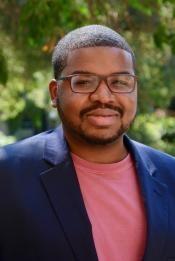
Bruce Jones Headshot

Bruce Jones is a senior fellow and director of the project on international order and strategy at the Brookings Institution. The author or co-author of several books on international order, his most recent work is “To Rule the Waves: How Control of the World’s Oceans Shapes the Fate of the Superpowers”.


Online, via Zoom.

Bruce Jones The Brookings Institution
Seminars
-

About the Seminar: Saumitra Jha and Steven Wilkinson's book project, Wars and Freedoms, makes the case that, throughout human history, external wars are common catalysts for political change at home, and they do so in large part because of their impact on the organizational capacity of the disenfranchised. It draws widely from across the social sciences and humanities: literature; history; biography; psychology; sociology; economics; and political science. The book draws upon these diverse ways of knowing to provide evidence from across time and around the world of the relevance of a simple framework for understanding which types of external wars are conducive to the emergence of broad-based freedoms, the building of states, and the shrinking of wealth inequalities on one hand, and when instead, others have led to the building of military castes, or an increased propensity for political polarization,  ethnic conflict, attempted coups, revolution and genocide on the other. In so doing, Wars and Freedoms provides a re-interpretation of the history of revolutions and political change, in order to make clear which lessons and episodes from history may be more germane for the future of democracy and freedoms in the twenty-first century.

Wars and Freedoms describes how there were historically three paths that connected organizational skills developed in external wars to the spread of democracy and democratic values: in the shadow of a crisis that threatened broad class conflict, through a more gradual process of state-building in response to ongoing external existential threats, and through the organizational efforts of committed military leaders. Of these, however, only the last, the most fragile and contingent, is still likely to emerge organically. Understanding the decline of other paths, however, can still help us understand both how political freedoms and democracy emerged, how our democracies may die, and what we may still be able to do about it.

Register Now

About the Speaker:

Image
Headshot for Saumitra Jha
Saumitra Jha is Associate Professor of Political Economy at the Stanford Graduate School of Business, a Senior Fellow at the Center for Democracy, Development and the Rule of Law in Stanford's Freeman-Spogli Institute for International Affairs and convenes the Stanford Conflict and Polarization Lab. His work on the historical relationship between conflict and markets has been received the Michael Wallerstein Award for best article in political economy from the American Political Science Association, and has been published in the top journals in both Economics and Political Science, including The American Political Science Review, Econometrica, and The Quarterly Journal of Economics. His co-authored work on Heroes was awarded the Oliver Williamson Award from the Society for Institutional and Organizational Economics. Also an award-winning teacher, he has shown a particular interest in communicating the results of his research to broader audiences, in the press (such as the Indian Express and USA Today) and through online policy and social media outlets (VoxEU, VoxDev, Public Books, Broadstreet, Ideas for India, AOC), and to a range of student and practitioner audiences, including cadets at West Point, members of the US intelligence community, European Union diplomats, and entrepreneurs in Africa, India and the United States.  His work has been featured in the Economist, Financial Times and the Washington Post, among others, and he has provided commentary for television and radio news, including for the BBC, ABC and CBC.

Online, via Zoom.

Graduate School of Business 655 Knight Way Stanford, CA 94305
(650) 721 1298
0
Associate Professor of Political Economy, GSB
Associate Professor, by courtesy, of Economics and of Political Science
saumitra_jha.jpg

Along with being a Senior Fellow at the Freeman Spogli Institute for International Studies, Saumitra Jha is an associate professor of political economy at the Stanford Graduate School of Business, and convenes the Stanford Conflict and Polarization Lab. 

Jha’s research has been published in leading journals in economics and political science, including Econometrica, the Quarterly Journal of Economics, the American Political Science Review and the Journal of Development Economics, and he serves on a number of editorial boards. His research on ethnic tolerance has been recognized with the Michael Wallerstein Award for best published article in Political Economy from the American Political Science Association in 2014 and his co-authored research on heroes with the Oliver Williamson Award for best paper by the Society for Institutional and Organizational Economics in 2020. Jha was honored to receive the Teacher of the Year Award, voted by the students of the Stanford MSx Program in 2020.

Saum holds a BA from Williams College, master’s degrees in economics and mathematics from the University of Cambridge, and a PhD in economics from Stanford University. Prior to rejoining Stanford as a faculty member, he was an Academy Scholar at Harvard University. He has been a fellow of the Niehaus Center for Globalization and Governance and the Center for the Study of Democratic Politics at Princeton University, and at the Center for Advanced Study in the Behavioral Sciences at Stanford. Jha has consulted on economic and political risk issues for the United Nations/WTO, the World Bank, government agencies, and for private firms.


Senior Fellow at the Freeman Spogli Institute for International Studies
Dan C. Chung Faculty Scholar at the Freeman Spogli Institute for International Studies
Senior Fellow at the Stanford Institute for Economic Policy Research
Date Label
Associate Professor of Political Economy at the Stanford Graduate School of Business and Senior Fellow at the Center for Democracy, Development at the Rule of Law in the Freeman-Spogli Institute.
Seminars
-

About the Seminar: President Biden and his foreign policy team pledged in early 2021 to upgrade and update U.S. support for democracy globally. With a year having passed, a stocktaking is due.  In what ways have they succeeded in putting the United States back into the role of the world’s leading democracy supporter? In what ways, and for what reasons have they fallen short? And with the Summit for Democracy now behind them, how will they take democracy policy forward in 2022 and what success will they likely have?


Register Now

About the Speaker:

Image
Thomas Carothers
 Thomas Carothers is senior vice president for studies and director of the Democracy, Conflict, and Governance Program at the Carnegie Endowment for International Peace. A leading authority on international democracy support and the global state of democracy, he is the author of numerous critically-acclaimed books and widely-cited articles on these topics.


Online, via Zoom.

Thomas Carothers Senior Vice President for Studies, Carnegie Endowment for International Peace
Seminars
-

About the Seminar: Mark Fathi Massoud will discuss his new book, Shari‘a, Inshallah: Finding God in Somali Legal Politics (Cambridge University Press 2021). Based on historical research, ethnographic fieldwork, and interviews in the Horn of Africa, Shari‘a, Inshallah documents nearly 150 years of historic attempts by the Somali people to use shari‘a to strengthen human rights and the rule of law — including attempts by contemporary women's rights activists to push for gender equality by invoking shari‘a. Massoud upends the conventional account of secular legal progress and demonstrates instead how faith in a higher power guides people toward the rule of law. In a space where secular human rights interventions have largely failed, Massoud shows how future progress in human rights and the rule of law is still possible under shari'a.

Register Now

About the Speaker: 

Image
Mark Massoud

Mark Fathi Massoud is a professor of politics at UC Santa Cruz, where he directs the Legal Studies Program. Massoud is also Visiting Professor of Law at the University of Oxford. He is a former CDDRL postdoctoral fellow (2008–09). Most recently, he received a Guggenheim Fellowship.


Online, via Zoom.

Mark Fathi Massoud Professor of Politics, UC Santa Cruz Visiting Professor of Law, University of Oxford
Seminars
-

About the Seminar: What are the defining traits of an autocracy? Leading works answer this question in negative terms: autocracies are non-democracies. We propose instead a substantive definition of autocracy, which we believe better captures what scholars actually mean when they invoke the term. We define autocracy as exclusive rule. Between substantive autocracy and electoral democracy, there is a residual space, of regimes that do not fit under either concept. We call these regimes “non-autocratic non-democracies” or NANDs.  A substantive understanding of autocracy has important theoretical and empirical implications. Theoretically, it ensures that claims about the population of autocratic regimes are ontologically coherent, and that we do not end up calling barely non-democratic regimes autocracies. Empirically, our measure reveals that the post-Cold War era has been even less autocratic than it is normally portrayed, and that concerns about a global turn toward "autocratization" are likely overblown.
 

Read the paper


About the Speakers:

Jason Brownlee

Image
Jason Brownlee

Jason Brownlee, a former post-doctoral fellow at CDDRL, is now a professor of Government at the University of Texas at Austin, where he researches and teaches about authoritarianism US foreign policy, and Southwest Asian politics.

Ashley Anderson

Image
ashley_anderson.jpg

Ashley Anderson is an Assistant Professor at the University of North Carolina - Chapel Hill. Her research interests are concentrated in the Middle East where she studies issues of contentious politics, political mobilization and regime change.

Killian Clarke

Image
Killian Clarke Headshot

Killian Clarke is an Assistant Professor at Georgetown University’s School of Foreign Service, where he is affiliated with the Center for Contemporary Arab Studies. His research and teaching focuses on protest, revolutions, and regime change in the Middle East.


Autocracy: A Substantive Approach
Download pdf

Online, via Zoom.

Jason Brownlee Professor, Department of Government, University of Texas at Austin
Ashley Anderson University of North Carolina, Chapel Hill
Killian Clarke Assistant Professor, Georgetown University, School of Foreign Service
Seminars
-

About the Seminar: Better regulation or regulatory policy and governance has been on the agenda of Western governments for about 20 years. The OECD regularly publishes overviews and adopts recommendations.

In Germany, the adoption of the Normenkontrollrat Act in 2006 and the subsequent establishment of the National Regulatory Control Council (NKR) as the national oversight body marked the beginning of the Better Regulation Policy. The presentation explains the working methods of the NKR as well as the highlights of its work, especially with regard to efforts to reduce unnecessary bureaucracy, to improve the preparation of draft legislation, and to digitalize and modernize the administration in Germany.

Register Now

About the Speaker:

Image
Johannes
Dr. Johannes Ludewig, Chairman of NKR 2006-2021; Chairman of German Railways and afterwards Community of European Railways, Brussels 1997-2010; State Secretary Federal Ministry of Economics (1995-1997); Economic and Financial Advisor to the German Federal Chancellor, also responsible for the economic reconstruction of East Germany after Reunification 1990; PhD 1975 (University of Hamburg); MS 1972 (Stanford).


Online, via Zoom.

Dr. Johannes Ludewig
Seminars
-

Few aspects of society are being transformed by technology more than health and medical care, with health systems challenged to finance and deliver affordable access to a burgeoning array of technologies enabling longer, healthier lives. Three speakers will address different and complementary aspects of how several Asian health systems create, evaluate, and regulate transformative technologies. Dr. Masuda’s research probes policies governing domestic and cross-border control and sharing of genetic information for medical innovation. Dr. Ahn will discuss health technology assessment (HTA) for pricing and reimbursement decisions in South Korea, where there is a young yet established HTA program, compared to Japan, where a 3-year HTA pilot program has just concluded, and China, where HTA efforts are underway but have not been formally implemented. Finally, Dr. Ho will discuss the emergence of digital medicine enabling N-of-1 regimen design for patients. Truly individualizing patient treatment requires addressing a series of challenges, from dynamic patient response to treatment regimens, to accounting for drug synergies in combination therapies which can be dose-dependent, time-dependent, and patient-specific, such as in oncology. Dr. Ho will summarize several clinical studies aiming to increase accessibility to personalized, precision medicine while reducing healthcare costs.

Image
Masuda, Sachiko 020822
Sachiko Masuda is a Visiting Scholar at the Walter H. Shorenstein Asia-Pacific Research Center (Shorenstein APARC) for the 2021-22 academic year and an Associate Professor at the University of Tokyo, Research Center for Advanced Science and Technology.  Masuda is dedicated to the study of legal systems, regulations, infrastructure and industrial structures necessary for advances in technology and a safer society, especially in the pharmaceutical and medical fields. At Shorenstein APARC, she is conducting a comparative Japan-U.S. study on "Human Genetic Information for Medical Innovation: Examining Policy Issues Related to Ensuring Domestic and Transnational Sharing and Management" supported by the ABE Fellowship Program of the Social Science Research Council. Masuda received a Ph.D. (specializing in intellectual property law) in 2006 and a B.S. in Pharmaceutical Sciences in 1997 from the University of Tokyo.

Image
Ahn, Jeonghoon 020822
Dr. Jeonghoon Ahn is a full professor at the Ewha Womans University (Seoul, Korea) and an adjunct fellow at the National Evidence-based healthcare Collaborating Agency (NECA), Seoul, Korea. He is an expert on health technology assessment (HTA) and health economics. He worked 7 years in NECA and served in various decision making and advisory committees of public agencies such as the Health Insurance Review and Assessment Services (HIRA) and the Korean Centers for Disease Control (KCDC). Professor Ahn has graduated the Seoul National University Department of International Economics for undergraduate and master program. He also received a PhD in Economics from the University of Southern California (USC) and was an assistant professor of pharmaceutical economics and Policy at the USC. Dr. Ahn has served on many international professional organizations such as ISPOR, HTAi, INAHTA, and HTAsiaLink. He is the Chair of the ISPOR Asia Consortium (2020-2022) and was a president of ISPOR Korea Chapter (2012-2014). Dr. Ahn was elected as a board director of the Health Technology Assessment International (HTAi) (2014-2016) and a board director for the International Network of Agencies for Health Technology Assessment (INAHTA) for three times (2012-2016). He also contributed to form a regional Health Technology Assessment agency network, the HTAsiaLink (www.htasialink.org), along with other experts in the region.

Image
Ho, Dean 020822
Professor Dean Ho is currently Provost’s Chair Professor, Director of The N.1 Institute for Health (N.1), Director of The Institute for Digital Medicine (WisDM) and Head of the Department of Biomedical Engineering at the National University of Singapore. Prof. Ho and collaborators successfully developed and validated CURATE.AI, a powerful digital medicine platform that has optimized human treatment for broad indications ranging from oncology to infectious diseases. He co-led the first inhuman clinical trials that have resulted in completely halted disease progression and durable patient responses that substantially outperformed standard of care approaches. Prof. Ho is a Fellow of the US National Academy of Inventors (NAI), the American Institute for Medical and Biological Engineering (AIMBE), and the Royal Society of Chemistry. He was also recently named to the HIMSS Future50 Class of 2021 for his internationally-recognised leadership in digital health. His discoveries have been featured on CNN, The Economist, National Geographic, Forbes, Washington Post, NPR and other international news outlets. Prof. Ho is also a Subgroup Lead in the World Health Organization (WHO)-ITU AI for Health Working Group for Regulatory Considerations. Prof. Ho is a recipient of the Tech Heroes from Crisis Pathfinder Award from the Singapore Computer Society, NSF CAREER Award, Wallace H. Coulter Foundation Translational Research Award, and V Foundation for Cancer Research Scholar Award, among others. He has also served as the President of the Board of Directors of the Society for Laboratory Automation and Screening (SLAS), a 26,000+ member global drug development organization.

Image
ahpp_-_aparc_winter_webinar_series_2022
This event is part of the 2022 Winter webinar series, New Frontiers: Technology, Politics, and Society in the Asia-Pacific, sponsored by the Walter H. Shorenstein Asia-Pacific Research Center.

Via Zoom Webinar
Register: https://bit.ly/3GGqOhv

2021-2022 Walter H. Shorenstein Asia-Pacific Research Center Visiting Scholar, Stanford University.
Jeonghoon Ahn Professor, Ewha Womans University, and Adjunct Fellow, National Evidence-based Healthcare Collaborating Agency, Seoul, Korea.
Dean Ho Provost’s Chair Professor, Director, N.1 Institute for Health (N.1) and Institute for Digital Medicine (WisDM), Head, Department of Biomedical Engineering, National University of Singapore
Seminars
-

For winter quarter 2021, CISAC will be hosting hybrid events. Many events will offer limited-capacity in-person attendance for Stanford faculty, staff, fellows, visiting scholars, and students in accordance with Stanford’s health and safety guidelines, and be open to the public online via Zoom. All CISAC events are scheduled using the Pacific Time Zone. 

SEMINAR RECORDING

This event is virtual only. This event will not be held in person.

David Sloss Professor of Law Santa Clara University
Seminars
-

The REDI Task Force invites you to the next event in our Critical Conversations: Race in Global Affairs series; an exploration of the life of enslaved women. This panel discussion will feature experts of enslavement across the Atlantic including the U.S., Brazil, West Africa, and the West Indies.

What do we really understand about the lives and legacies of African enslaved women across the Atlantic? Enslavement is often rendered through a genderless lens, one in which the category of "race" trumps all else. However, research tells a very different story and one that requires an intimate analysis - enslaved women across the Atlantic held an experience that was shaped uniquely by their race and gender. This conversation will explore how Black women during the slave period acted and reacted to the material forces that shaped their lives in an attempt to not only survive the harsh conditions but to carve out a future for ancestors. This interdisciplinary discussion will draw from various archival sources ranging from Senegambia to Brasil's sugar plantations to articulating novel understandings of enslaved women's selfhood. 

The panel will feature perspectives from three historians to uncover the intimate lives of African women; their kinship, religious, and resistance practices. Tracing a path through different locales, from free to enslaved status, we will discuss not only the lives of enslaved women, but their legacies.

This event is free and open to the public. There will be time for a Q&A.

Note: This discussion will be recorded. 

Speaker bios:

Alexis Wells-Oghoghomeh is an Assistant Professor of Religious Studies whose teaching and research explores the intersections of race, religion, and gender in the United States. A historian of African-American religion, she specializes in the religiosity of enslaved people in the South, religion in the African Atlantic, and women’s religious histories.  Her first book The Souls of Womenfolk: The Religious Cultures of Enslaved Women in the Lower South (UNC 2021) offers a gendered history of enslaved people’s religiosity from the colonial period to the onset of the Civil War. She is currently at work on her second project, which traces the gendered, racialized history of phenomena termed “witchcraft” in the United States. Her work has been supported by the Ford Foundation, Mellon Foundation, and Forum for Theological Education, among others. She received her B.A. in English from Spelman College, and Master of Divinity and Ph.D. from Emory University.

Jessica Marie Johnson is an Assistant Professor in the Department of History at the Johns Hopkins University and a Fellow at the Hutchins Center for African and African American Studies at Harvard University. She is also the Director of LifexCode: Digital Humanities Against Enclosure. Johnson is a historian of Atlantic slavery and the Atlantic African diaspora. She is the author of Wicked Flesh: Black Women, Intimacy, and Freedom in the Atlantic World (University of Pennsylvania Press, August 2020), a winner of numerous awards including the 2021 Wesley-Logan Best Book in African Diaspora History Prize from the Association of American Historians and the 2021 Lora Romero First Book Publication Prize of the American Studies Association. Her work has appeared in Slavery & Abolition, The Black Scholar, Meridians: Feminism, Race and Transnationalism, American Quarterly, Social Text, The Journal of African American History, the William & Mary Quarterly, Debates in the Digital Humanities (2nd edition), Forum Journal, Bitch Magazine, Black Perspectives (AAIHS), Somatosphere and Post-Colonial Digital Humanities (DHPoco) and her book chapters have appeared in multiple edited collections. She is the Founding Curator of #ADPhDProjects which brings social justice and histories of slavery together. She is also Co-Kin Curator at Taller Electric Marronage.  She is also a Digital Alchemist at the Center for Solutions to Online Violence and a co-organizer of the Queering Slavery Working Group with Dr. Vanessa Holden (University of Kentucky). Her past collaborations include organizing with the LatiNegrxs Project. As a historian and Black Studies scholar, Johnson researches black diasporic freedom struggles from slavery to emancipation. As a digital humanist, Johnson explores ways digital and social media disseminate and create historical narratives, in particular, comparative histories of slavery and people of African descent.

Nohora Arrieta Fernández is a Presidential Postdoctoral Fellow at UCLA. She received her Ph.D. in Latin American Literature and Cultural Studies from Georgetown University in 2021. Her current research focuses on art history, visual studies, the history of commodities, and the intellectual traditions of the African Diaspora in the Americas. She has published essays and articles on Latin American literature and visual arts, comics, and the Afro-Latin American Diaspora, and is a collaborator of art magazines as Artishock and Contemporyand. She recently co-edited Transition. The Magazine of Africa and the Diaspora, 130. Her first co-translation project, Semantic of the World, the Poetry of Romulo Bustos, will be published by New Mexico Press (2022).


Online via Zoom

REGISTER

Alexis Wells-Oghoghomeh Assistant Professor of Religious Studies Stanford University
Jessica Marie Johnson Assistant Professor History Johns Hopkins University
Sonita Moss Research Associate Discussant REDI
Nohora Arrieta Fernandez Postdoctoral Fellow UCLA
Seminars
-

About the Seminar: On January 6, 2021, the U. S. Capitol was attacked as Congress certified the presidential election results. On the anniversary of this historic event, join Hakeem Jefferson and Didi Kuo for a discussion of January 6th’s impact on American politics, violence and election legitimacy, and the ongoing crisis of democracy.


About the Speaker: 

Image
Hakeem Jefferson
Hakeem Jefferson is an assistant professor of political science at Stanford University where he also is a faculty affiliate with the Center for Comparative Studies in Race and Ethnicity and the Stanford Center for American Democracy. He received his PhD in political science from the University of Michigan and a Bachelor of Arts degree in political science and African American Studies from the University of South Carolina.

His research focuses primarily on the role identity plays in structuring political attitudes and behaviors in the U.S. He is especially interested in understanding how stigma shapes the politics of Black Americans, particularly as it relates to group members’ support for racialized punitive social policies. In other research projects, Hakeem examines the psychological and social roots of the racial divide in Americans’ reactions to officer-involved shootings and work to evaluate the meaningfulness of key political concepts, like ideological identification, among Black Americans.

Hakeem’s dissertation, "Policing Norms: Punishment and the Politics of Respectability Among Black Americans," was a co-winner of the 2020 Best Dissertation Award from the Political Psychology Section of the American Political Science Association.

Related: 

Statement from CDDRL Leadership on the Events of Jan. 6

January 6 and the Crisis of American Democracy

Online, via Zoom

0
Assistant Professor, Political Science
hakeem_jefferson_2022.jpg

Hakeem Jefferson is an assistant professor of political science at Stanford University where he is also a faculty affiliate with the Center for Comparative Studies in Race and Ethnicity and the Stanford Center for American Democracy. During the 2021-22 academic year he was also the SAGE Sara Miller McCune Fellow at the Center for Advanced Study in the Behavioral Sciences.

Hakeem’s work focuses primarily on the role identity plays in structuring political attitudes and behaviors in the U.S. His in-progress book project builds on his award-winning dissertation to consider how Black Americans come to support punitive social policies that target members of their racial group.

In other projects, Hakeem examines the causes of the racial divide in Americans’ reactions to officer-involved shootings; works to evaluate the meaningfulness of key political concepts, like ideological identification among Black Americans; and considers how white Americans navigate an identity that many within the group perceive as increasingly stigmatized. In these and other projects, Hakeem sets out to showcase and clarify the important and complex ways that identity matters across all domains of American life.

A public-facing, justice-oriented scholar, Hakeem is an academic contributor at FiveThirtyEight and his writings and commentary have been featured in places like the New York Times, The Washington Post, NPR, and other major outlets. He is also active on Twitter, and you can follow him @hakeemjefferson.

CDDRL Affiliated Faculty
CV
Assistant Professor of Political Science at Stanford University

Encina Hall, C150
616 Jane Stanford Way
Stanford, CA 94305

0
Center Fellow, Freeman Spogli Institute for International Studies
didi_kuo_2023.jpg

Didi Kuo is a Center Fellow at the Freeman Spogli Institute for International Studies (FSI) at Stanford University. She is a scholar of comparative politics with a focus on democratization, corruption and clientelism, political parties and institutions, and political reform. She is the author of The Great Retreat: How Political Parties Should Behave and Why They Don’t (Oxford University Press) and Clientelism, Capitalism, and Democracy: the rise of programmatic politics in the United States and Britain (Cambridge University Press, 2018).

She has been at Stanford since 2013 as the manager of the Program on American Democracy in Comparative Perspective and is co-director of the Fisher Family Honors Program at CDDRL. She was an Eric and Wendy Schmidt Fellow at New America and is a non-resident fellow with the Carnegie Endowment for International Peace. She received a PhD in political science from Harvard University, an MSc in Economic and Social History from Oxford University, where she studied as a Marshall Scholar, and a BA from Emory University.

Date Label
Seminars
Subscribe to Seminars