-

Bhutan time: Friday, February 4th, 2022, 8am to 9am.

Asia Health Policy Program (AHPP) 2021-22 Colloquium series "Aligning Incentives for Better Health and More Resilient Health Systems in Asia”

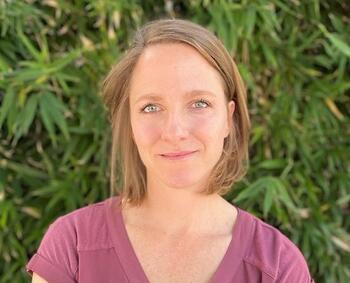
The Minister of Health of Bhutan, Her Excellency Dasho Dechen Wangmo, will share her insights and experiences from managing the national health system during the COVID-19 crisis, serving as President of the 74th World Health Assembly, and her views on health system strengthening, innovative primary care, chronic disease control, health governance, and the global implications of the pandemic as it unfolds in its third year.

Image
Bhutan Health Minister 010522
Her Excellency Dasho Dechen Wangmo, the only female Minister in the current cabinet of Bhutan, formally took charge of the Ministry of Health on 7th November 2018. Prior to joining politic in 2018, Her Excellency worked as a public health international consultant with primary focus on health systems, governance, policy and strategic planning for governments and civil societies in many countries (USA, India, Nepal, Bangladesh, PNG, Myanmar, Sri Lanka, Thailand, Senegal). She brings her background working on various global health issues including health system strengthening, health governance, grant implementation, monitoring and evaluation system to the current portfolio.

On 17th December 2020 in recognition of her outstanding service to the Nation, she was conferred the “Red Scarf”, one of highest honors a Bhutanese civilian can receive, by His Majesty the King. Her Excellency is a passionate public health advocate and social worker at heart. Hon’ble Lyonpo was nominated as the President of the 74th World Health Assembly (WHA) by Member States of the WHO’s South East Asia Region in 2020. She will hold the office of the President for a duration of one year and it is an honour bestowed on Bhutan for the first time since it became a member of the WHO in 1982.

In addition to her memberships in professional organizations, she is also a founder of the Bhutan Cancer Society, a CSO working for the well being of cancer patients in Bhutan, and a founding chairperson for Lhaksam, the HIV-positive network in the country. Her Excellency has a Master in Public Health (MPH) from Yale School of Public Health, New Haven, USA, and a Bachelor in Cardiopulmonary Science (magna cum laude) from Northeastern University, Boston, USA.

Via Zoom Webinar
Register: bit.ly/3G0tR4i

Her Excellency Lyonpo Dechen Wangmo Minister of Health of Bhutan
Seminars
-

Joshua Salomon, PhD, is a Professor of Health Policy and a Senior Fellow at the Freeman Spogli Institute for International Studies. His research focuses on public health policy and priority-setting, including modeling patterns and trends in major causes of global mortality and disease burden; evaluation of health interventions and policies; and measurement and valuation of health outcomes. He is director of the Prevention Policy Modeling Lab, a multi-institution research consortium that conducts health and economic modeling relating to infectious disease. During the COVID-19 pandemic, Dr. Salomon has worked extensively with policymakers on data synthesis, modeling and decision analysis to inform the public health response.

Encina Commons Room 114, 615 Crothers Way, Stanford, CA 94305-6006
(650) 736-9477
0
Professor, Health Policy
Senior Fellow, Freeman Spogli Institute for International Studies
josh_salomon-headshot_2023.jpg PhD

Joshua Salomon is a Professor of Health Policy in the Department of Health Policy at Stanford School of Medicine, Senior Fellow in the Freeman Spogli Institute for International Studies, and founding Director of the Prevention Policy Modeling Lab. Trained in health policy and decision science, Dr. Salomon leads multidisciplinary research teams dedicated to producing rigorous, actionable evidence to improve the public’s health and reduce health disparities. His work — supported by the National Institutes of Health, Centers for Disease Control and Prevention, and the Bill & Melinda Gates Foundation — combines data synthesis and mathematical modeling to measure and forecast health outcomes and evaluate public health programs and strategies, with particular emphasis on infectious diseases. He has spearheaded methodological innovation in measurement and valuation of health, infectious disease modeling and forecasting, and cost-effectiveness analysis. His applied modeling work on HIV/AIDS, tuberculosis, viral hepatitis, COVID-19 and other major health challenges informs local, state, national and international policies to improve health and wellbeing, particularly among under-served populations in the United States and around the world.  

Dr. Salomon established the multi-institution Prevention Policy Modeling Lab in 2014 to conduct health and economic modeling that guides reasoned public health decision-making relating to infectious disease. He has co-authored more than three hundred original peer-reviewed research articles and mentored dozens of graduate and post-graduate trainees in health policy, medicine and public health. Prior to joining the Stanford Faculty, Dr. Salomon served as a policy analyst in the Department of Evidence and Information for Policy at the World Health Organization in Geneva, and as Professor of Global Health at Harvard T.H. Chan School of Public Health. As Associate Chair for Academic Affairs and Strategy in the Department of Health Policy at Stanford, he works on faculty recruitment and development, and leads strategic initiatives to promote interdisciplinary collaborative research, practice partnerships and policy translation.

Collaboration

In this recent Stanford Report article, Salomon talks about how he helped gather faculty, trainees, and other researchers from Stanford and elsewhere to lend expertise in infectious disease modeling and data analytics in hopes of informing the public health response to the COVID-19 pandemic locally and nationwide. This quickly-assembled unit used county data to build models that were updated in real-time and shared with county epidemiologists to track the impact of the epidemic, underlying transmission trends, and potential effectiveness of public health measures.

The unit also advised county epidemiologists on developing their own models for planning and envisioning different scenarios. “In the early weeks especially, we were learning more about the virus every day,” Salomon explained, “but we hadn’t yet seen the first peak of what would eventually turn into multiple waves, so there was a lot of uncertainty about when that peak might arrive, how high it could be, and what would happen next.”

Read Stanford Report Article

Seminars
-

David Chan, MD, PhD, is an Associate Professor of Medicine and an investigator at the Department of Veterans Affairs, and a Faculty Research Fellow at the National Bureau of Economic Research. Drawing on labor and organizational economics, he is interested in studying how information is used in health care, how this affects productivity, and implications for design. He is the recipient of the 2014 NIH Director’s High-Risk, High-Reward Early Independence Award to study the optimal balance of information in health information technology for patient care.

David Chan
Seminars
-

This is a virtual event. Please click here to register and generate a link to the talk. 
The link will be unique to you; please save it and do not share with others.


What is the relationship between internal development and integration into the global economy in developing countries? How and why do state–market relations differ? And do these differences matter in the post-Cold War era of global conflict and cooperation? Drawing on research in China, India, and Russia and examining sectors from textiles to telecommunications, Micro-Institutional Foundations of Capitalism introduces a new theory of sectoral pathways to globalization and development. Adopting a historical and comparative approach, Hsueh's Strategic Value Framework shows how state elites perceive the strategic value of sectors in response to internal and external pressures. Sectoral structures and organization of institutions further determine the role of the state in market coordination and property rights arrangements. The resultant dominant patterns of market governance vary by country and sector within country. These national configurations of sectoral models are the micro-institutional foundations of capitalism, which mediate globalization and development.


Image
Portrait of Roselyn Hsueh
Roselyn Hsueh is an associate professor of political science at Temple University, where she co-directs the Certificate in Political Economy. She is the author of Micro-Institutional Foundations of Capitalism: Sectoral Pathways to Globalization in China, India, and Russia (Cambridge University Press, forthcoming, 2022), China’s Regulatory State: A New Strategy for Globalization (Cornell University Press, 2011), and scholarly articles on states and markets, comparative regulation and governance, and political economy of development. She is a frequent commentator on politics, finance and trade, and economic development in China and beyond. BBC World News, The Economist, Foreign Affairs, National Public Radio, and The Washington Post, among other media outlets, have featured her research. Prestigious fellowships, such as the Fulbright Global Scholar Award, have funded international fieldwork and she has served as a Visiting Scholar at the Institute of World Economics and Politics, Chinese Academy of Social Sciences. She holds a B.A. and Ph.D. in Political Science from the University of California, Berkeley.


Via Zoom Webinar. Register at: https://bit.ly/3zoAafx

Roselyn Hsueh Associate Professor of Political Science, Temple University
Seminars
-

For winter quarter 2021, CISAC will be hosting hybrid events. Many events will offer limited-capacity in-person attendance for Stanford faculty, staff, fellows, visiting scholars, and students in accordance with Stanford’s health and safety guidelines, and be open to the public online via Zoom. All CISAC events are scheduled using the Pacific Time Zone. 

SEMINAR RECORDING

This event is virtual only. This event will not be held in person.

Michael Kofman
Seminars
-

For winter quarter 2021, CISAC will be hosting hybrid events. Many events will offer limited-capacity in-person attendance for Stanford faculty, staff, fellows, visiting scholars, and students in accordance with Stanford’s health and safety guidelines, and be open to the public online via Zoom. All CISAC events are scheduled using the Pacific Time Zone. 

SEMINAR RECORDING

This event is virtual only. This event will not be held in person.

Rose Gottemoeller
James Goldgeier
Seminars
-

This is a virtual event. Please click here to register and generate a link to the talk. 
The link will be unique to you; please save it and do not share with others.


In China, market institutions are still being developed and private owned enterprises need help to overcome obstacles arising from the imperfection of market institutions. Such help can come from various levels of the government or state-owned enterprises. It is believed that such help is more likely if a major shareholder of the private enterprise has formed a joint venture with a state shareholder, either directly or indirectly. In this talk, Bai Chong-en will discuss ownership connections among state and private investors (ultimate shareholders) and their changes overtime. He will also examine the relationship between the degree of such connection and some important characteristics of the investors. His model suggests that such connections have played an important role in the growth of the private sector. 


Image
Portrait of Bai Chong-en
BAI Chong-En is the Mansfield Freeman Chair Professor and dean of the School of Economics and Management of Tsinghua University. He is also the director of both the National Institute for Fiscal Studies of Tsinghua University and the Institute for State-Owned Enterprises of Tsinghua University. He earned his PhD degree in economics from Harvard University. His research areas include institutional economics, economic growth and development, public economics, finance, corporate governance, and Chinese economy.

BAI is a member of the National Committee of the Chinese People’s Political Consultative Conference, the “14th Five-Year Plan” National Development Planning Expert Committee, the Chinese Economists 50 Forum, the China Finance 40 Forum, and Chinainfo 100. He was a member of the monetary policy committee of the People’s Bank of China from 2015 to 2018. He served as Adjunct Vice-President of Beijing State-Owned Assets Management Co., Ltd. from August 2011 to December 2012. He was a non-resident senior fellow of the Brookings Institution from 2006 to 2007.


Image
Chinese 100 yuan bills

This event is part of the 2022 Winter webinar series, The Future of China's Economy, sponsored by the APARC China Program.


Via Zoom Webinar. Register at: https://bit.ly/31peuDs

Bai Chong-en Professor and Dean of School of Economics and Management; Mansfield Freeman Chair Professor, Tsinghua University
Seminars
-

For winter quarter 2021, CISAC will be hosting hybrid events. Many events will offer limited-capacity in-person attendance for Stanford faculty, staff, fellows, visiting scholars, and students in accordance with Stanford’s health and safety guidelines, and be open to the public online via Zoom. All CISAC events are scheduled using the Pacific Time Zone. 

SEMINAR RECORDING

This event is virtual only. This event will not be held in person.

Shirin Sinnar Professor of Law & John A. Wilson Faculty Scholar Stanford Law School
Seminars
-

For winter quarter 2022, CISAC will be hosting hybrid events. Many events will offer limited-capacity in-person attendance for Stanford faculty, staff, fellows, visiting scholars, and students in accordance with Stanford’s health and safety guidelines, and be open to the public online via Zoom. All CISAC events are scheduled using the Pacific Time Zone. 

SEMINAR RECORDING


About the Event: How do states communicate internally about foreign policy and how does this change over time? Applying concepts from linguistics to a novel corpus of all President’s Daily Briefs from 1961 to 1977, we analyze change over time in the variety of terms used in national security writing (“lexical diversity”). We find a consistently declining level of lexical diversity across presidential administrations and despite variation in exogenous changes in foreign affairs. We argue that this increasingly homogenized language reflects a larger process of bureaucratization in American national security institutions in the 1960s and 1970s. We build on the concept of “organizational sensemaking” and argue that bureaucratization directly and indirectly compresses the terminological range used by individual bureaucrats and homogenizes the language of its outputs. One key payoff is shedding light on what is “lost in translation” when bureaucratic experts communicate with leaders and the foreign policy mistakes and misperceptions that may follow. Our research contributes to work on bureaucracy and perceptions in IR by identifying a subtle shift in the spectrum of terms with which the state interprets the world – a finding that is only tractable by combining computational and linguistic techniques with a large corpus of formerly classified intelligence materials.


About the Speaker: Eric Min is Assistant Professor of Political Science at UCLA. He received his Ph.D. in Political Science from Stanford University, where he was the Zukerman Postdoctoral Fellow at the Center for International Security and Cooperation for the 2017-2018 academic year. He is a 2020 Henry Frank Guggenheim Foundation Distinguished Scholar. His research interests focus on the application of machine learning, text, and statistical methods to the analysis of interstate war, diplomacy, decision-making, and conflict management. His research has been published or is forthcoming in American Political Science Review, International Organization, Journal of Conflict Resolution, Journal of Peace Research, and Journal of Strategic Studies.

Virtual to Public. Only those with an active Stanford ID with access to William J Perry Conference Room in Encina Hall may attend in person. 

Seminars
-

About the Seminar: In this time of great challenges, our democracies urgently need to produce citizens who can move from demanding change to making it. But the skills for doing so are not innate, they are learned. In this talk, Beth Simone Noveck will discuss how both citizens and governments can take advantage of digital technology, data, and the collective wisdom of our communities to design and deliver powerful solutions to contemporary problems. Drawing on the latest methods from data and social sciences, including original survey data from around the world, she proposes a practical set of methods for public servants, community leaders, students, activists, and anyone who wants to be a catalyst for positive social change.


Register Now


Image
Beth Simone Noveck Headshot
About the Speaker: Beth Simone Noveck is a professor at Northeastern University, where she directs the Burnes Family Center for Global Impact and its partner project, The Governance Lab (The GovLab) and its MacArthur Research Network on Opening Governance. The author of Solving Public Problems: How to Fix Our Government and Change Our World (Yale Press 2021) (named a Best Book of 2021 by Stanford Social Innovation Review), she is also Core Faculty at the Institute for Experiential AI (IEAI) at Northeastern. New Jersey governor Phil Murphy appointed her as the state’s first Chief Innovation Officer and Chancellor Angela Merkel named her to her Digital Council in 2018. Previously, Beth served in the White House as the first United States Deputy Chief Technology Officer and director of the White House Open Government Initiative under President Obama. UK Prime Minister David Cameron appointed her senior advisor for Open Government.

In addition to Solving Public Problems, Beth is the author of Smart Citizens, Smarter State: The Technologies of Expertise and the Future of Governing (Harvard Univ Press 2015) and Wiki Government: How Technology Can Make Government Better, Democracy Stronger and Citizens More Powerful (Brookings 2009) and co-editor of The State of Play: Law, Games and Virtual Worlds (NYU Press, 2005).

Online, via Zoom.

Beth Simone Noveck Director | The GovLab
Seminars
Subscribe to Seminars