-

This is a virtual event. Please click here to register and generate a link to the talk. 
The link will be unique to you; please save it and do not share with others.


At the end of 2021 China Evergrande Group—one of China’s biggest property developers—finally defaulted on its bonds. The default didn’t spark a Lehman Moment—as widely prophesied—or any significant market upheaval, but it’s increasingly clear that Evergrande’s problems mark the start of a momentous shift in how China’s economy grows. Over the past 18 months, Beijing has induced a slowdown of the property sector with the goal of better ensuring financial sector stability and the sustainability of property sector growth. However, it has resulted in defaults, restructuring, and consolidation among China’s largest developers, and has implication for local government finance and the pace of economic growth. This talk will discuss the challenges posed by Evergrande’s decline and imminent restructuring, what Beijing is trying to achieve by reining in the property sector, and what risks are involved.


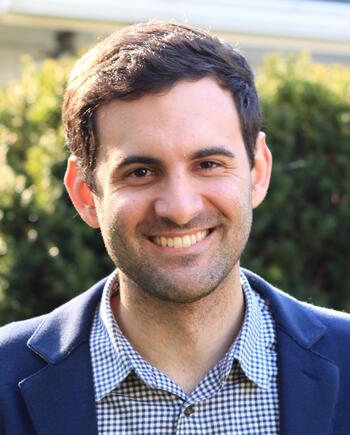
Portrait of Dinny McMahonDinny McMahon is the author of “China's Great Wall of Debt: Shadow Banks, Ghost Cities, Massive Loans, and the End of the Chinese Miracle,” a ground up look at the mechanics of China’s political economy, which he wrote while a fellow at the Woodrow Wilson Center for International Scholars. He later moved to MacroPolo, the Paulson Institute’s think tank in Chicago, where he researched China’s efforts to clean up its financial system. Dinny started his career as a financial journalist in China, spending six years in Beijing with The Wall Street Journal, and four years with Dow Jones Newswires in Shanghai, where he also contributed to the Far Eastern Economic Review. Dinny is currently working on a project for the Wilson Center on China’s efforts to reduce its reliance on the US dollar. He also provides independent research on China’s financial system for financial services firms.


Image
Chinese 100 yuan bills

This event is part of the 2022 Winter webinar series, The Future of China's Economy, sponsored by the APARC China Program.


Via Zoom Webinar. Register at: https://bit.ly/3pkTQfE

Dinny McMahon Global Fellow, Woodrow Wilson International Center for Scholars
Seminars
-

Image
Sandra González-Bailón seminar flyer

Join us  Tuesday, December 7th from 12 PM - 1 PM PST for “Media Choices, Niche Behavior, and Biases in Online Information” featuring Sandra González-Bailón, Associate Professor at the Annenberg School for Communication at University of Pennsylvania. This seminar series is organized by the Cyber Policy Center’s Program on Democracy and the Internet and the William and Flora Hewlett Foundation’s Cyber Initiative.  

The quality of our democracies relies on the quality of the information that citizens consume but we still know very little about how citizens engage with the news “in the wild”. In this talk, I will discuss two papers that examine that question in different settings. The first paper analyzes the media choices of a representative panel of the U.S. population (N ~ 55,000) as they consume TV, web, and YouTube content over a period of 44 months. Less than 10% of the panelists (N ~ 5,300) view and browse news on the three platforms. This small group of news hyper-consumers is formed predominantly by older male users with higher education. We find no evidence of substitution effects in the time these users spend consuming news on each of the three platforms, but consuming news across the media landscape is a choice that only a small and unrepresentative slice of the population makes. These results help us characterize the digital equivalent of the ‘opinion leaders’ first proposed to understand the effects of mass media. The hyper-consumers we identify in our analyses create the elite of opinion leaders that have a disproportionate influence in how news content is selected, circulated, and (ultimately) algorithmically amplified. That this small group is far from representing the population at large is one of the ways in which online information may perpetuate important biases in the salience of some topics over others. The second paper analyzes news sharing in social media during one of the largest protest mobilizations in U.S. history to examine ideological asymmetries in the posting of news content. We extract the list of URLs shared during the mobilization period and we characterize those web sites in terms of their audience reach and the ideological composition of that audience. We also analyze the reliability of the sites in terms of the credibility and transparency of the information they publish. We show that there is no evidence of unreliable sources having any prominent visibility during the protest period, but we do identify asymmetries in the ideological slant of the sources shared, with a clear bias towards right-leaning domains. Our results suggest that online networks are contested spaces where the activism of progressive movements coexists with the narratives of mainstream media, which gain visibility under the same stream of information but whose reporting is not necessarily aligned with the activists’ goals.

About the speaker:

Sandra González-Bailón is an Associate Professor at the Annenberg School for Communication, and affiliated faculty at the Warren Center for Network and Data Sciences. Her research lies at the intersection of network science, computational tools, and political communication. She is the author of Decoding the Social World (MIT Press, 2017) and co-editor of The Oxford Handbook of Networked Communication (OUP, 2020). More information on her research can be found at https://sandragonzalezbailon.net/
 
Her articles have appeared in journals like PNAS, Nature, Science, Political Communication, The Journal of Communication, and Social Networks, among others. She is the author of the book Decoding the Social World (MIT Press, 2017) and co-editor of The Oxford Handbook of Networked Communication (OUP, 2020). She serves as Associate Editor for the journals Social Networks, EPJ Data Science, and The International Journal of Press/Politics, and she is a member of the Board of Reviewing Editors for Science. She leads the research group DiMeNet (/daɪmnet/) — acronym for Digital Media, Networks, and Political Communication.


Seminars
-

Asia Health Policy Program (AHPP) 2021-22 Colloquium series "Aligning Incentives for Better Health and More Resilient Health Systems in Asia”

How can policymakers quantify the net value of medical spending? For what medical conditions has the “bang for the buck” been greatest, and for what conditions has spending outstripped gains in health improvement? Join this virtual workshop to learn about cutting-edge methods that can be applied to health system data to understand the net value of changes in medical spending over time, and how policymakers can track the effectiveness of policies to increase productivity of medical spending. In addition to several Asian policymakers already involved, virtual workshop participants will have the opportunity to pose questions to the expert speakers about applying these methods to their own health system settings, including advice about data, outcomes, and relevance for specific policy questions.

Image
Cutler, David
David Cutler is the Otto Eckstein Professor of Applied Economics in the Department of Economics, Harvard University, with secondary appointments at the Kennedy School of Government and the School of Public Health. He was associate dean of the Faculty of Arts and Sciences for Social Sciences from 2003-2008. Professor Cutler served on the Council of Economic Advisers and the National Economic Council during the Clinton Administration and has advised several presidential campaigns, including as Senior Health Care Advisor for the Obama Presidential Campaign. He is a Research Associate at the National Bureau of Economic Research and a member of the Institute of Medicine, and he has held positions with the National Institutes of Health and the National Academy of Sciences

Image
Dunn, Abe
Abe Dunn is the Assistant Chief Economist at the Bureau of Economic Analysis.  His work has focused on the production and development of a new satellite account for health care and on evaluating and using alternative data sources for measurement purposes.  The Health Care Satellite Account uses billions of medical care claims from public and private sources to improve measurement for the U.S. health care sector, which allows researchers to analyze spending trends by medical condition.  Dr. Dunn has published research on a range of topics with a particular focus on health economic issues and measurement.  Most recently, his research has focused on measuring both the cost and the quality of medical care treatments. He received his PhD from the University of Texas at Austin with a primary focus in the areas of health economics and industrial organization.

Image
Weaver, Marcia 120121
Professor Marcia Weaver earned a PhD in economics at the University of Chicago. She specializes in cost-effectiveness analysis and has published 87 peer-reviewed articles. At the Institute for Health Metrics and Evaluation (IHME), she leads the research team on cost-effectiveness analyses of interventions to reduce the burden of disease. Prior to joining IHME she served as principal investigator of the Integrated Infectious Disease Capacity Building Evaluation in partnership with the Infectious Diseases Institute in Uganda. In the United States, she published on cost-effectiveness of interventions for people with HIV, chronic mental illness and substance abuse, and on a joint campaign to promote influenza and pneumococcal vaccines. Professor Weaver also has extensive experience with evaluating the effects of clinical training programs in Botswana, Indonesia, Namibia, South Africa, Thailand, and the Caribbean region, and served as a long-term advisor on health system reform to ministries of health in Niger and Central African Republic.

Via Zoom Webinar
Register: https://bit.ly/3D8yRBu

David M. Cutler Otto Eckstein Professor of Applied Economics, Harvard University
Abe C. Dunn Assistant Chief Economist, US Bureau of Economic Analysis
Marcia R. Weaver Research Professor, Health Metrics Sciences and Global Health, University of Washington
Seminars
-
Singapore’s typically robust economy and stable hegemonic-party polity today face arguably their most serious challenges in half a century. The hyper-global affluent nation-state is more vulnerable than most to de-globalization trends accelerated by the global pandemic and climate change, increased disallowance of international competition based on tax avoidance and state subsidies for multinationals, and pressures to unwind global supply-chains given the growing prioritization of resilience over efficiency, and rising geopolitical tensions, particularly in U.S.-China relations. These external developments coincide and interact with domestic social pressures over intertwined race, immigration, and inequality concerns that arguably give an edge to the previously weak political opposition. The PAP government’s responses to date include both promises of more “liberal” welfare policies and the enactment of more “authoritarian” restrictions on freedom of expression and association.
 
Image
Linda Lim 030822
Linda Lim is a Singaporean economist who is professor emerita of corporate strategy and international business at the Stephen M. Ross School of Business at the University of Michigan, where she formerly served as director of the Center for Southeast Asian Studies.  She has studied and published extensively on the Singapore economy, edited the SG50 (50th anniversary) volume Singapore's Economic Development: Retrospection and Reflections (2016), and reprinted select articles in the collection, Business, Government and Labor: Essays on Economic Development in Singapore and Southeast Asia (2018), which includes her work on women workers, and on Overseas Chinese business in Southeast Asia.  Linda served from 1998-2016 on the boards of two U.S. public companies with tech manufacturing operations in China, including the sale of one to a Chinese company, and from 2015-2018 directed and taught in custom executive education programs for senior executives of Chinese financial SOEs, on international business, industrial policy and technology development.  In 2019 she co-founded AcademiaSG, a website that champions academic freedom and publishes commentaries by and organizes webinars featuring scholars of Singapore on salient social issues such as race, inequality, international relations, and the environment. Her latest article on "The American Economy and Business" appears in Tommy Koh and Daljit Singh, eds., America: A Singapore Perspective (2021).

Via Zoom Webinar
Register: https://bit.ly/3qRAPE6

Linda Lim Professor Emerita of Corporate Strategy and International Business, Stephen M. Ross School of Business, the University of Michigan
Discussant:
0
Senior Fellow Emeritus at the Freeman Spogli Institute for International Studies
Affiliated Faculty, CDDRL
Affiliated Scholar, Abbasi Program in Islamic Studies
aparc_dke.jpg PhD

At Stanford, in addition to his work for the Southeast Asia Program and his affiliations with CDDRL and the Abbasi Program in Islamic Studies, Donald Emmerson has taught courses on Southeast Asia in East Asian Studies, International Policy Studies, and Political Science. He is active as an analyst of current policy issues involving Asia. In 2010 the National Bureau of Asian Research and the Woodrow Wilson International Center for Scholars awarded him a two-year Research Associateship given to “top scholars from across the United States” who “have successfully bridged the gap between the academy and policy.”

Emmerson’s research interests include Southeast Asia-China-US relations, the South China Sea, and the future of ASEAN. His publications, authored or edited, span more than a dozen books and monographs and some 200 articles, chapters, and shorter pieces.  Recent writings include The Deer and the Dragon: Southeast Asia and China in the 21st Century (ed., 2020); “‘No Sole Control’ in the South China Sea,” in Asia Policy  (2019); ASEAN @ 50, Southeast Asia @ Risk: What Should Be Done? (ed., 2018); “Singapore and Goliath?,” in Journal of Democracy (2018); “Mapping ASEAN’s Futures,” in Contemporary Southeast Asia (2017); and “ASEAN Between China and America: Is It Time to Try Horsing the Cow?,” in Trans-Regional and –National Studies of Southeast Asia (2017).

Earlier work includes “Sunnylands or Rancho Mirage? ASEAN and the South China Sea,” in YaleGlobal (2016); “The Spectrum of Comparisons: A Discussion,” in Pacific Affairs (2014); “Facts, Minds, and Formats: Scholarship and Political Change in Indonesia” in Indonesian Studies: The State of the Field (2013); “Is Indonesia Rising? It Depends” in Indonesia Rising (2012); “Southeast Asia: Minding the Gap between Democracy and Governance,” in Journal of Democracy (April 2012); “The Problem and Promise of Focality in World Affairs,” in Strategic Review (August 2011); An American Place at an Asian Table? Regionalism and Its Reasons (2011); Asian Regionalism and US Policy: The Case for Creative Adaptation (2010); “The Useful Diversity of ‘Islamism’” and “Islamism: Pros, Cons, and Contexts” in Islamism: Conflicting Perspectives on Political Islam (2009); “Crisis and Consensus: America and ASEAN in a New Global Context” in Refreshing U.S.-Thai Relations (2009); and Hard Choices: Security, Democracy, and Regionalism in Southeast Asia (edited, 2008).

Prior to moving to Stanford in 1999, Emmerson was a professor of political science at the University of Wisconsin-Madison, where he won a campus-wide teaching award. That same year he helped monitor voting in Indonesia and East Timor for the National Democratic Institute and the Carter Center. In the course of his career, he has taken part in numerous policy-related working groups focused on topics related to Southeast Asia; has testified before House and Senate committees on Asian affairs; and been a regular at gatherings such as the Asia Pacific Roundtable (Kuala Lumpur), the Bali Democracy Forum (Nusa Dua), and the Shangri-La Dialogue (Singapore). Places where he has held various visiting fellowships, including the Institute for Advanced Study and the Woodrow Wilson International Center for Scholars. 


Emmerson has a Ph.D. in political science from Yale and a BA in international affairs from Princeton. He is fluent in Indonesian, was fluent in French, and has lectured and written in both languages. He has lesser competence in Dutch, Javanese, and Russian. A former slam poet in English, he enjoys the spoken word and reads occasionally under a nom de plume with the Not Yet Dead Poets Society in Redwood City, CA. He and his wife Carolyn met in high school in Lebanon. They have two children. He was born in Tokyo, the son of U.S. Foreign Service Officer John K. Emmerson, who wrote the Japanese Thread among other books.

Selected Multimedia

Date Label
Director, Southeast Asia Program, Asia-Pacific Research Center, Stanford University
Seminars
-

*For fall quarter 2021, CISAC will be hosting hybrid events. Many events will offer limited-capacity in-person attendance for Stanford faculty, staff, fellows, visiting scholars, and students in accordance with Stanford’s health and safety guidelines, and be open to the public online via Zoom. All CISAC events are scheduled using the Pacific Time Zone.


REGISTRATION


Seminar Recording

About the Event: The Afghan government’s collapse in August demonstrated that two decades of donor-driven state-building efforts failed to build a foundation for a stable, democratic, and prosperous Afghanistan. Why did the United States and its allies fail, and what should donors learn for similar state-building efforts in the future, both large and small?

Spanning the U.S. government’s problematic strategies, inappropriate timelines, and poor understanding of the Afghan context, lessons learned reports by the Special Inspector General for Afghanistan Reconstruction (SIGAR) have warned for years that the Afghan government was exceptionally fragile and that many of the gains alleged by the U.S. officials were hollow and unsustainable. This CISAC seminar will detail how and why the U.S. government should reform its own institutions to more effectively stabilize conflict-affected environments around the world. 

Download SIGAR’s 20th anniversary report, What We Need to Learn (2021)

Download SIGAR’s report, Stabilization: Lessons from the U.S. Experience in Afghanistan (2018)


About the Speaker: David H. Young is a supervisory research analyst at the Special Inspector General for Afghanistan Reconstruction and a conflict and governance advisor with experience in six conflict/post-conflict environments: Afghanistan, the Sahel, Israel/Palestine, the Balkans, the Caucasus, and Northern Ireland. At SIGAR, he was the lead author of three comprehensive lessons learned reports: 1) A study of U.S. efforts to stabilize contested Afghan communities, 2) A review of U.S. efforts to build credible and transparent Afghan electoral institutions, and 3) the agency’s 20th anniversary report, What We Need to Learn. He was a civilian advisor to ISAF in Nuristan and Laghman provinces during the Afghanistan surge and subsequently served as a governance advisor to the World Bank, the U.S. Institute of Peace, and Afghanistan's Independent Directorate of Local Governance. His writing and commentary has appeared in the New York Times, the Atlantic, the Christian Science Monitor, Foreign Policy, and the Daily Beast, among others.

Virtual Only. This event will not be held in person.

David Young Special Inspector General for Afghanistan Reconstruction
Seminars
-

Image
Deen Freelon photo along with flyer for event

Join us on November 16th for “Analyzing Social Media From A User-eye View With PIEGraph” from 12 - 1 PM PT featuring Deen Freelon, associate professor at the UNC Hussman School of Journalism and Media at the University of North Carolina. This session will be moderated by Jeff Hancock, founding director of the Stanford Social Media Lab and is organized by the Cyber Policy Center’s Program on Democracy and the Internet and the William and Flora Hewlett Foundation’s Cyber Initiative. 

Quantitative social media research has traditionally been conducted from what might be called a platform-centric view, wherein researchers sample, collect, and analyzed data based on one or more topic- or user-specific keywords. Such studies have yielded many valuable insights, but they convey little about individual users’ tailored social media environments—what Professor Freelon calls the user-eye view. Studies that investigate social media from a user-eye view tend to be rare because of the expense involved and a limited number of suitable tools. This talk introduces PIEGraph, a novel system for user-eye view research that offers key advantages over existing systems. PIEGraph is lightweight, scalable, open-source, OS-independent, and collects data viewable from mobile and desktop interfaces directly from APIs. The system incorporates an extensible tagging taxonomy that allows for straightforward classification of a wide range of political, social, and cultural phenomena. The presentation will focus on how Professor Freelon’s research team is using PIEGraph to examine users’ potential levels of exposure to high- and low-quality information sources across the ideological spectrum.

Speakers:

Deen Freelon is an associate professor at the UNC Hussman School of Journalism and Media at the University of North Carolina and a principal researcher at the Center for Information, Technology, and Public Life (CITAP). His theoretical interests address how ordinary citizens use social media and other digital communication technologies for political purposes, paying particular attention to how identity characteristics (e.g. race, gender, ideology) influence these uses. Methodologically, he is interested in how computational research techniques can be used to answer some of the most fundamental questions of communication science. Freelon has worked at the forefront of political communication and computational social science for over a decade, coauthoring some of the first communication studies to apply computational methods to social media data. 

Jeff Hancock is the founding director of the Stanford Social Media Lab and is Harry and Norman Chandler Professor of Communication at Stanford University. Professor Hancock and his group work on understanding psychological and interpersonal processes in social media. The team specializes in using computational linguistics and experiments to understand how the words we use can reveal psychological and social dynamics, such as deception and trust, emotional dynamics, intimacy and relationships, and social support. Recently Professor Hancock has begun work on understanding the mental models people have about algorithms in social media, as well as working on the ethical issues associated with computational social science.

Deen Freelon
Seminars
-
The Malayan Emergency (1948-1960) is perhaps most famous for Sir Gerald Walter Robert Templer’s famous phrase about the need to win the “hearts and minds” of civilians to defeat a communist insurgency. Less examined is how gender was a central prism through which military officials hoped to achieve their aims. For example, British officials produced one Chinese-language propaganda cartoon that warned communist women of the dangers of giving birth in the jungle. It depicted a pregnant woman laying on bamboo in pain, surrounded by angry-faced men in uniform. Once the men informed a British official about their position, she got airlifted out by helicopter and enjoyed a comfortable hospital bed under the attentive care of a smiling woman. This optimistic depiction of becoming a British informant hints at the central and contested role of women and gender during the anti-communist “emergency,” and during British decolonization more broadly. The Malayan Emergency relied not only military occupation, but also on the reconfiguration of gender expectations following the Japanaese occupation. This, they believed, was central to bringing peace and stability back to Malaya.
 
Image
Kate Imy 120221
Kate Imy is a historian of war and empire in the 20th-century British imperial world. She is currently an Assistant Professor of History at the University of North Texas, having completed her PhD at Rutgers. Her first book, Faithful Fighters: Identity and Power in the British Indian Army (Stanford University Press, 2019), won the NACBS Stansky prize and an award from the American Historical Association. She has conducted research and presented in Australia, India, Nepal, New Zealand, Singapore, and the United Kingdom. Her next book project, “Losing Hearts and Minds: Race, War, and Empire in Singapore and Malaya, 1915-1960,” is the focus of her Lee Kong Chian NUS-Stanford Fellowship on Southeast Asia.

Via Zoom Webinar
Register: bit.ly/3wxD1RC

2021-2022 Lee Kong Chian NUS-Stanford Fellowship on Southeast Asia
Seminars
-

Turkey-US relations have been going through the most turbulent episode since 2016. While occasional divergence of opinion between partners is natural, the frequency and the intensity of such disagreements have sharply increased over time, creating major trust issues between the allies. This talk will address the main causes behind the rift between Turkey and the US,  and warning against the path-dependent foreign policy behavior, will make specific policy recommendations to manage the bilateral tensions.
 

Register Now


Image
​Oya Dursun-Özkanca
Oya Dursun-Özkanca is the Endowed Chair of International Studies Professor of Political Science at Elizabethtown College and the author of Turkey–West Relations: The Politics of Intra-alliance Opposition (Cambridge University Press 2019), and The Nexus Between Security Sector Reform/Governance and Sustainable Development Goal-16: An Examination of Conceptual Linkages and Policy Recommendations (The Geneva Centre for Security Sector Governance 2021). Her edited volumes include The European Union as an Actor in Security Sector Reform (Routledge, 2014) and External Interventions in Civil Wars (with Stefan Wolff, Routledge, 2014).

In Fall 2021, she is a visiting scholar at the Weatherhead Center for International Affairs, Harvard University. 

Online via Zoom

Oya Dursun-Özkanca Professor Endowed Chair of International Studies and Professor of Political Science Elizabethtown College
Seminars
-

For winter quarter 2022, CISAC will be hosting hybrid events. Many events will offer limited-capacity in-person attendance for Stanford faculty, staff, fellows, visiting scholars, and students in accordance with Stanford’s health and safety guidelines, and be open to the public online via Zoom. All CISAC events are scheduled using the Pacific Time Zone. 

SESSION RECORDING


About the Event: Rather than assuming convergence in countries' military capabilities, this seminar examines why and how countries decide to develop different weapon capabilities within similar domains of warfare. To answer these questions, this seminar will explore the role of ideas and institutional bargaining in shaping decisions about military technology. This talk will subsequently apply the theory to the development of missile defense from the 1980s until today.


About the Speaker: Sanne Verschuren is a Stanton Nuclear Security Postdoctoral Fellow at the Center for International Security and Cooperation, Stanford University. Her research interests include the development of military technology, shifts in military strategy and tactics, and the role of ideas and norms therein. Her book project examines why and how countries decide to procure different weapon capabilities within similar military domains, particularly the development of missile defense (1980s-today), air power (1920s-1930s), and aircraft carriers (1950s-1960s). At CISAC, Sanne conducts research on the intersection between nuclear and conventional weapons. Sanne received her Ph.D. in Political Science from Brown University in August 2021.

Virtual to Public. Only those with an active Stanford ID with access to William J Perry Conference Room in Encina Hall may attend in person. 

Seminars
Governance
-


REGISTRATION

This event is virtual only. This event will not be held in person.

Seminars
Subscribe to Seminars