-

Tuesday, February 15, 2022 | 4:00-5:15 pm Pacific Time

Carbon Trading vs. Direct Allocation:  Theory and Application to China's Carbon Abatement

The Emission Trading System (ETS) and Direct Allocation Scheme (DAS) are two popular schemes to achieve a given target of carbon abatement. We compare their welfare implications under incomplete information and with local externalities of such abatement (e.g., changes in air pollution). We show that the ETS addresses incomplete information but not heterogeneous local externalities; the opposite is true for the DAS. Therefore, the policy choice depends on the relative significance of incomplete information and heterogeneous local externalities. We apply the theoretical results to the Chinese data and discuss why a national ETS can be undesirable.


About the Speaker

Picture

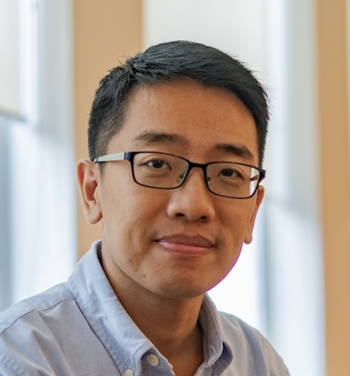
Guojun He is an economist working on environmental, development, and governance issues. Currently, he is an associate professor in Economics and Management & Strategy at the University of Hong Kong (HKU). He holds a concurrent appointment at the Energy Policy Institute of the University of Chicago (EPIC) and serves as the research director of its China center (EPIC-China). He is a co-editor of Journal of Environmental Economics and Management and China Economic Review

His research tries to address some of the most challenging problems faced by developing countries and seeks to produce empirically-grounded estimates for optimal policy design. The majority of his work focuses on understanding the benefits and costs of environmental policies, while he also has a broader research interest in development and governance issues. His work has been published in leading economics journals (like QJEAER: InsightsAEJ: Applied) and science journals (like PNASNature: SustainabilityNature Human Behavior, and The BMJ). 

He has won multiple academic awards, including the Best Paper Award from China Health Policy and Management Society, Masahiko Aoki Best Paper Award Nomination, and notably two Gregory Chow Best Paper Awards from the Chinese Economists Society. He was named a Young Scientist by the World Economic Forum.  

He obtained his Ph.D. degree in Agricultural and Resource Economics from U.C. Berkeley and received undergraduate education from School of Economics at Peking University. ​Before joining HKU, he worked at Hong Kong University of Science and Technology and Harvard University.​


Seminar Series Moderators:

Image
Headshot of Dr. Scott Rozelle

Scott Rozelle is the Helen F. Farnsworth Senior Fellow and the co-director of Stanford Center on China's Economy and Institutions in the Freeman Spogli Institute for International Studies and Stanford Institute for Economic Policy Research at Stanford University.  For the past 30 years, he has worked on the economics of poverty reduction. Currently, his work on poverty has its full focus on human capital, including issues of rural health, nutrition and education. For the past 20 year, Rozelle has been the chair of the International Advisory Board of the Center for Chinese Agricultural Policy, Chinese Academy of Sciences (CAS). Most recently, Rozelle's research focuses on the economics of poverty and inequality, with an emphasis on rural education, health and nutrition in China. In recognition of this work, Dr. Rozelle has received numerous honors and awards. Among them, he became a Yangtse Scholar (Changjiang Xuezhe) in Renmin University of China in 2008. In 2008 he also was awarded the Friendship Award by Premiere Wen Jiabao, the highest honor that can be bestowed on a foreigner. 

Image
hongbin li headshot

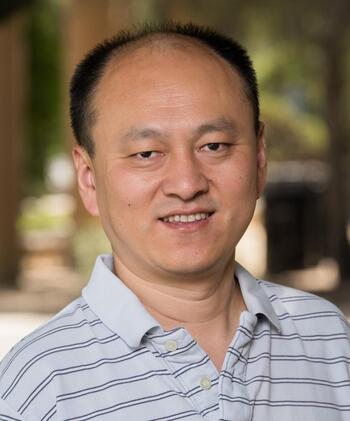
Hongbin Li is the Co-director of Stanford Center on China's Economy and Institutions, and a Senior Fellow of Stanford Institute for Economic Policy Research (SIEPR) and the Freeman Spogli Institute for International Studies (FSI). Hongbin obtained his Ph.D. in economics from Stanford University in 2001 and joined the economics department of the Chinese University of Hong Kong (CUHK), where he became full professor in 2007. He was also one of the two founding directors of the Institute of Economics and Finance at the CUHK. He taught at Tsinghua University in Beijing 2007-2016 and was C.V. Starr Chair Professor of Economics in the School of Economics and Management. He founded the Chinese College Student Survey (CCSS) in 2009 and the China Employer-Employee Survey (CEES) in 2014.

Hongbin’s research has been focused on the transition and development of the Chinese economy, and the evidence-based research results have been both widely covered by media outlets and well read by policy makers around the world. He is currently the co-editor of the Journal of Comparative Economics.


Register Here

Register once to receive the Zoom meeting link that will be used for all lectures in this series.

Academic Seminar | Zoom Meeting
Registration Required

Guojun He
Seminars
Date Label
-

Jakarta time: Thursday, January 27, 2022, 8:00am to 9:30am

Southeast Asia is famously diverse.  Yet, all the ASEAN member states have committed themselves to ASEAN Community, including ASEAN Political and Security Community, with the expressed commitment to protect and promote democratic principles, human rights and good governance.

As democracy retreats around the world, will autocracy spread throughout Southeast Asia?  How can countries of Southeast Asia navigate the complex dynamics between protection and promotion of democratic principles and human rights on the one hand, and the principle of non-interference in internal affairs on the other?  How can they navigate the similarly complex dynamic between protection and promotion of democratic principles and human rights on the one hand, and the geopolitical tensions and rivalries currently prevailing in the region?   Does ASEAN matter? Few are better positioned by knowledge and experience than former Indonesian foreign minister Marty Natalegawa to address these and related questions.
 
Image
Marty Natalegawa 102722
In addition to his productive record as Indonesia’s foreign minister (2009-2014), Dr. R. M. Marty M. Natalegawa has served his country in multiple high-level diplomatic positions, including as ambassador to the UN and the UK and as his foreign ministry’s Director General for ASEAN Cooperation. He holds a PhD from ANU, an MPhil from the University of Cambridge, and a BSc from the London School of Economics and Political Science. 

Via Zoom Webinar
Register: bit.ly/3K2zEZu

Marty Natalegawa Distinguished Fellow, Asia Society Policy Institute, and former Minister of Foreign Affairs, Indonesia
Seminars
-

This is a virtual event. Please click here to register and generate a link to the talk. 
The link will be unique to you; please save it and do not share with others.


China’s rapidly growing local government debt problem has long been recognized by foreign observers as a risk, but inside China, only recently was this problem called out as alarming.  Why has local government debt been allowed to grow with little direct intervention from central authorities?  Based on a forthcoming paper, Oi will show how a “grand bargain” the central authorities entered into with the localities allowed Beijing to take the lion’s share of tax revenues after 1994, but also allowed localities to gain new resources and power as a quid pro quo.  While the bargain provided an expedient and seemingly successful strategy that worked for more than a decade to fuel rapid local state-led growth, it had significant costs that are now becoming increasingly visible.  Because land finance was the core means by which localities raised revenue, Oi also will help explain why the problems with property developers like Evergrande are so important to China’s future economy.   


Image
Dr. Jean C. Oi
Jean C. Oi is the William Haas Professor of Chinese Politics in the Department of Political Science and a senior fellow in the Freeman Spogli Institute for International Studies at Stanford University. She directs the China Program at the Walter H. Shorenstein Asia-Pacific Research Center and is the Lee Shau Kee Director of the Stanford Center at Peking University. Professor Oi has published extensively on China’s reforms. Recent books include Fateful Decisions: Choices That Will Shape China’s Future, co-edited with Thomas Fingar (Stanford University Press, 2020); Zouping Revisited: Adaptive Governance in a Chinese County, co-edited with Steven Goldstein (Stanford University Press, 2018); and Challenges in the Process of China’s Urbanization, co-edited with Karen Eggleston and Yiming Wang (2017). Current research is on fiscal reform and local government debt, continuing SOE reforms, and the Belt and Road Initiative.


Image
Chinese 100 yuan bills

This event is part of the 2022 Winter webinar series, The Future of China's Economy, sponsored by the APARC China Program.


Via Zoom Webinar. Register at: https://bit.ly/34mnOcc

Jean C. Oi Director of Shorenstein APARC China Program; William Haas Professor of Chinese Politics, Stanford University
Seminars
-

Tuesday, February 1, 2022 | 4:00-5:15 pm Pacific Time

The Impacts of Pollution Levies on Chinese Firms

China's rollout of emission fee reform since 2007 provides a quasi-natural experiment to study the effectiveness of pollution levy on firm emissions and economic consequences. Using firm-level financial and pollution data, we find that doubling the levy rate leads to a 6.87% reduction in SO2 emissions. Firms achieve emission abatement through reducing output and coal consumption rather than end-of-the-pipe solutions. 


About the Speaker

Image
Junjie Zhang

Junjie Zhang is Associate Professor of Environmental Economics in the Nicholas School of the Environment at Duke University. Since 2016, he has founded the Environmental Research Center and International Master of Environmental Policy Program at Duke Kunshan University. During 2021-22, he serves as Volkswagen Visiting Chair in Sustainability in the Schwarzman College at Tsinghua University. Zhang is a co-chair for the Environmental Economics Committee in the Chinese Academy of Environmental Science, an advisory board member for the Nicholas Institute for Environmental Policy Solutions, and a board member for the Professional Association for China's Environment. He has also served on the editorial board of several academic journals. Before his current position, he was an associate professor in the School of Global Policy and Strategy at the University of California, San Diego. Zhang's research centers on empirical policy issues in air pollution, energy transition, and climate change. He has received fundings from the U.S. National Science Foundation, U.S. National Oceanic and Atmospheric Administration, China National Natural Science Foundation, China's Ministry of Ecology and Environment, China Council for International Cooperation on Environment and Development, Energy Foundation, Packard Foundation, World Bank, and Asian Development Bank. He holds a B.S. from Renmin University of China, a B.S. and an M.S. from Tsinghua University, and a Ph.D. from Duke University.


Seminar Series Moderators:

Image
Headshot of Dr. Scott Rozelle

Scott Rozelle is the Helen F. Farnsworth Senior Fellow and the co-director of Stanford Center on China's Economy and Institutions in the Freeman Spogli Institute for International Studies and Stanford Institute for Economic Policy Research at Stanford University.  For the past 30 years, he has worked on the economics of poverty reduction. Currently, his work on poverty has its full focus on human capital, including issues of rural health, nutrition and education. For the past 20 year, Rozelle has been the chair of the International Advisory Board of the Center for Chinese Agricultural Policy, Chinese Academy of Sciences (CAS). Most recently, Rozelle's research focuses on the economics of poverty and inequality, with an emphasis on rural education, health and nutrition in China. In recognition of this work, Dr. Rozelle has received numerous honors and awards. Among them, he became a Yangtse Scholar (Changjiang Xuezhe) in Renmin University of China in 2008. In 2008 he also was awarded the Friendship Award by Premiere Wen Jiabao, the highest honor that can be bestowed on a foreigner. 

Image
hongbin li headshot

Hongbin Li is the Co-director of Stanford Center on China's Economy and Institutions, and a Senior Fellow of Stanford Institute for Economic Policy Research (SIEPR) and the Freeman Spogli Institute for International Studies (FSI). Hongbin obtained his Ph.D. in economics from Stanford University in 2001 and joined the economics department of the Chinese University of Hong Kong (CUHK), where he became full professor in 2007. He was also one of the two founding directors of the Institute of Economics and Finance at the CUHK. He taught at Tsinghua University in Beijing 2007-2016 and was C.V. Starr Chair Professor of Economics in the School of Economics and Management. He founded the Chinese College Student Survey (CCSS) in 2009 and the China Employer-Employee Survey (CEES) in 2014.

Hongbin’s research has been focused on the transition and development of the Chinese economy, and the evidence-based research results have been both widely covered by media outlets and well read by policy makers around the world. He is currently the co-editor of the Journal of Comparative Economics.


Register Here

Register once to receive the Zoom meeting link that will be used for all lectures in this series.

Academic Seminar | Zoom Meeting
Registration Required

Junjie Zhang
Seminars
Date Label

For winter quarter 2022, CISAC will be hosting hybrid events. Many events will offer limited-capacity in-person attendance for Stanford faculty, staff, fellows, visiting scholars, and students in accordance with Stanford’s health and safety guidelines, and be open to the public online via Zoom. All CISAC events are scheduled using the Pacific Time Zone. 

REGISTRATION

(Stanford faculty, visiting scholars, staff, fellows, and students only)


About the Event: In Nigeria today, frequent conflicts, disappearances and mass violence, especially in the Northern region of the country, have amounted to large-scale destruction of human life and the displacement of large populations as unarmed civilians are caught in the crossfire. The effects of climate change on the Lake Chad basin are key triggers of conflict as herders migrate to other parts of the region to find fodder and water for their cattle. Existing responses to conflict and mass violence in Nigeria have been beset by challenges. The migration patterns of nomadic communities have begun to signal security concerns beyond the immediately impacted regions. In late 2017, state governments within the western and southern parts of the country began to set up community policing strategies to address growing security challenges around their states, including those relating to the (perceived) threats associated with the movement of cattle herders. Complicating this situation, the presence of large groups of cattle has incentivized “conflict entrepreneurship” as armed groups of young men across north-central, north-west and southern parts of the country engage in cattle rustling. Government efforts at various levels, ranging from the creation of legal and policy frameworks to programs on-the-ground, have been inadequate to protect civilians and have led to the development new mechanisms for human protection.  For example, interventions by the Nigerian Federal Government have, at times, accelerated conflict, as with the passage of an anti-grazing law that has fueled controversy over implementation at state and local levels of government. Local civil society initiatives have continued to emerge to address the gap and attempt to mitigate ever growing security concerns in the region. One such strategy has involved the development of Early Warning and Early Response Systems (EWER) using geospatial technologies and other forms of crowd sourcing imagery to enhance local resilience in the face of security threats and strengthen the ability of communities to protect themselves in a sustainable way. However, the potential of such technologies depends on the ability to “see” particular phenomena and render other phenomena illegible. This paper will argue that such geospatial technology’s interpretive power is concerned with assigning to future violence an interpretive code based on its baseline values.  As an act of decoding that is anticipatory, the power of EWER processes lies in its decoding potential. These interpretive code processes provide participants with the potential to engage in analyses that involve mapping patterns and potential risk that have the ability to produce indicators that have material effects. It is these material effects, drawn from visual codes, that are used to justify action that is life preserving as well as render other relations illegible and therefore invisible to intervention.  This paper explores the emergence of EWER strategies used to address widespread violence and the challenge of illegibility that is central to it.


About the Speaker: M. Kamari Clarke is the Distinguished Professor of Transnational Justice and Sociolegal Studies at the University of Toronto where she teaches in the Centre for Criminology and Sociolegal Studies and the Centre for Diaspora and Transnational Studies. Over her career she has worked at The University of California Los Angeles (2018-2021), Carleton University (2015-2018), The University of Pennsylvania (2013-2015) Yale University (1999-2013), and at Yale she was the former chair of the Council on African Studies from 2007- 2010 and the co-founder of the Yale Center for Transnational Cultural Analysis.  For more than twenty years, Professor Clarke has conducted research on issues related to legal institutions, human rights and international law, religious nationalism and the politics of globalization. For more than 20 years, Professor Clarke has conducted research on issues related to legal institutions, international legal domains, religious nationalism, and the politics of globalization and race. She  is the author of nine books and over fifty peer reviewed articles and book chapters, including her 2009 publication of Fictions of Justice: The International Criminal Court and the Challenge of Legal Pluralism in Sub-Saharan Africa (Cambridge University Press, 2009) and Affective Justice (with Duke University Press, 2019), which won the finalist prize for the American Anthropological Association’s 2020 Elliot P. Skinner Book Award for the Association for Africanist Anthropology.  Clarke has also been the recipient of other research and teaching awards, including Carleton University’s 2018 Research Excellence Award.  During her academic career she has held numerous prestigious fellowships, grants and awards, including multiple grant awards from the National Science Foundation and from The Social Sciences and the Humanities Research Council of Canada (SSHRCC), the Rockefeller Foundation, the Wenner-Gren Foundation for Anthropological Research and, very recently, the 2021 Guggenhiem Award for Career Excellence.

Virtual to Public. Only those with an active Stanford ID with access to William J Perry Conference Room in Encina Hall may attend in person. 

Kamari Clarke University of Toronto / UCLA
Seminars
-

Mary K. Goldstein, MD, MS, is a Professor of Health Policy and a core faculty member at the Department of Health Policy and the Center for Health Policy, and the Director of the Geriatrics Research Education and Clinical Center (GRECC) at the VA Palo Alto Health Care System. She directs the Stanford/VA Palo Alto Geriatric Medicine Fellowship Program, and the Special Fellowship Program in Advanced Geriatrics at VA Palo Alto. She also serves as associate director for the Physician Post-Residency Fellowship Program in Health Services Research and Development, and for the Postdoctoral Fellowship in Medical Informatics, both at VA Palo Alto Health Care System.

Goldstein studies innovative methods of implementing evidence-based clinical practice guidelines for quality improvement. She leads the ATHENA Decision Support System project that has developed and implemented an automated clinical decision support system for primary care clinicians, using hypertension as a model, and now extended into several other clinical domains.  Goldstein's research also explores older adults' health preferences (health utility) for application to cost-effectiveness analysis.

You are Invited to a Zoom Meeting

Registration

After registering, you will receive a confirmation email containing information about joining the meeting.

VA Palo Alto Health Care System Medical Service (111) 3801 Miranda Avenue Palo Alto, CA 94304;

Encina Commons, 615 Crothers Way Room 210, Stanford, CA 94305-6006

(650) 493-5000,,1,,1,62105
0
Professor, Health Policy
Professor, Medicine (by courtesy)
mary_goldstein_profile.jpg MD, MS


Mary K. Goldstein is a Professor of Health Policy and a core faculty member at the Department of Health Policy and the Center for Health Policy, and the Director of the Geriatrics Research Education and Clinical Center (GRECC) at the VA Palo Alto Health Care System. She directs the Primary Care Policy and Practice Advancement program at PCOR, the Stanford/VA Palo Alto Geriatric Medicine Fellowship Program, and the Special Fellowship Program in Advanced Geriatrics at VA Palo Alto. She also serves as associate director for the Physician Post-Residency Fellowship Program in Health Services Research and Development, and for the Postdoctoral Fellowship in Medical Informatics, both at VA Palo Alto Health Care System.

Goldstein studies innovative methods of implementing evidence-based clinical practice guidelines for quality improvement. She leads the ATHENA Decision Support System project that has developed and implemented an automated clinical decision support system for primary care clinicians, using hypertension as a model, and now extended into several other clinical domains.  Goldstein's research also explores older adults' health preferences (health utility) for application to cost-effectiveness analysis.

Goldstein is a fellow of the American Geriatrics Society, and an emerita of the Society's board of directors. Goldstein has received a number of honors and awards including an Advanced Career Development award from the Department of Veterans Affairs Health Services Research and Development (HSR&D) program.  She received a BA in philosophy and an MD, both from Columbia University, and completed her residency in family medicine at Duke University Medical Center. At the Stanford School of Medicine she completed an AHRQ-funded fellowship and an MS in health services research.

CV
Seminars
-

Image
Mark Helfand

Mark Helfand, MD, MS, FACP, is Professor of Medicine and Professor of Medical Informatics and Clinical Epidemiology at the Oregon Health & Science University. He is board-certified in Internal Medicine and practices hospital medicine at the Portland VA Medical Center, where he is a staff physician and directs the VA Evidence Synthesis Program Coordinating Center. He founded the Oregon Evidence-based Practice Center (now the Pacific Northwest EPC) in 1997 and, in the 2000’s, led the EPC’s work for the US Preventive Services Task Force and for OHSU’s pioneering Drug Effectiveness Review Project.

Registration

After registering, you will receive a confirmation email containing information about joining the meeting.


Seminars
-

For winter quarter 2021, CISAC will be hosting hybrid events. Many events will offer limited-capacity in-person attendance for Stanford faculty, staff, fellows, visiting scholars, and students in accordance with Stanford’s health and safety guidelines, and be open to the public online via Zoom. All CISAC events are scheduled using the Pacific Time Zone. 

SEMINAR RECORDING

Virtual Only.

Rolf Nikel
Seminars
-

Katherine Meckel,  PhD, MA, is an Assistant Professor of Economics at the University of California San Diego and a Faculty Research Fellow at the National Bureau of Economic Research. She specializes in topics in public finance, health economics, and environmental economics.

Registration

After registering, you will receive a confirmation email containing information about joining the meeting via Zoom.

Hybrid Seminar:

The speaker will present her talk in person.

Please, no eating in the room. We ask that masks be worn for this event.

Log in on your computer or join us:
William J. Perry Conference Room
Encina Hall, Second Floor, Central, C231 
616 Jane Stanford Way, Stanford, CA 94305


Seminars
-

Arden Morris is a health services researcher, professor of surgery, and director of S-SPIRE Center. She has used claims, clinical datasets, and mixed methods to focus on race/ethnicity, socioeconomic position, and quality and outcomes of cancer care. More recently, she has focused on financial toxicity of cancer care and patient out-of-pocket costs that may influence their treatment decisions.

Seminars
Subscribe to Seminars