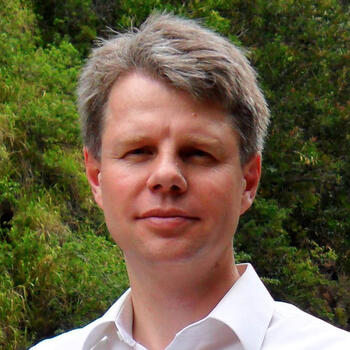
-
Kharis Templeman seminar

Taiwan lies at the heart of the growing confrontation between the United States and the People’s Republic of China (PRC), and it remains the only issue that could plausibly trigger a war between the two countries. Taiwan is claimed by the PRC as Chinese territory, and its government is unrecognized by all but a handful of states today. But it is also a prosperous liberal democracy of more than 23 million people, a major trading partner of both the U.S. and the PRC, and the source of more than 90 percent of the world’s most advanced semiconductor chips.

This talk will cover how the US-PRC-Taiwan relationship got to this point, what each side’s foremost interests and long-term strategies are, and how those have changed in recent years with Xi Jinping’s centralization of power and the shifting balance of economic and military power in the region. It will also touch on the current debates in Washington over Taiwan policy and how best to ensure that peace can be maintained across the Taiwan Strait for the indefinite future. 

ABOUT THE SPEAKER

Image
Kharis Templeman
Kharis Templeman is a Research Fellow at the Hoover Institution and a lecturer at the Center for East Asian Studies at Stanford University. His areas of expertise include democratic transitions and consolidations, comparative parties and elections, and the politics of Taiwan. He is the editor (with Larry Diamond and Yun-han Chu) of two books on Taiwan politics, and (with Netina Tan) a forthcoming volume on electoral malpractice in Asia. His other peer-reviewed research has been published in Comparative Political Studies, Ethnopolitics, Journal of Democracy, International Journal of Taiwan Studies, and Taiwan Journal of Democracy, along with several book chapters. He has also written on Taiwan policy issues for many outlets, including the Brookings Institution, Atlantic Council, Foreign Affairs, Taiwan Insight, War on the Rocks, and The Diplomat. 

Virtual to Public. Only those with an active Stanford ID with access to E008 in Encina Hall may attend in person.

Didi Kuo

Virtual to Public. Only those with an active Stanford ID with access to E008 in Encina Hall may attend in person.

Kharis Templeman
Seminars
-
Brandon de la Cuesta seminar

The use of machine learning for causal inference has become increasingly popular in the social sciences. But relatively less attention has been paid to how machine learning (ML) algorithms can be used to generate novel measures in data-sparse environments like those that prevail in many developing countries, particularly those in sub-Saharan Africa.

Here, I present results from a suite of projects that utilize high-resolution measures of economic development generated by a convolutional neural net trained on satellite imagery. I show that, in addition to superior spatial and temporal coverage, this ML-generated data resolves serious inferential shortcomings in existing national and sub-national estimates of wealth, alters influential findings in African political economy, and opens up several promising avenues of research. I demonstrate one such avenue by discussing ongoing work that investigates the impact of climate change on political behavior, an emerging area of scholarship that demands accurate, high-resolution data in places where such data rarely exist. 

ABOUT THE SPEAKER

Image
Brandon de la Cuesta
Brandon Miller-de la Cuesta is a postdoctoral fellow at CDDRL and the Center on Food Security and the Environment (FSE). He received his PhD in Politics from Princeton University in 2020. He has a strong regional focus in sub-Saharan Africa with a special interest in applied methods and political accountability. His current work utilizes machine learning in both dataset generation and causal inference to estimate the impact of infrastructure investments on economic well-being and to investigate how climate change is altering the strength and substance of accountability demands.

Virtual to Public. Only those with an active Stanford ID with access to E008 in Encina Hall may attend in person.

Didi Kuo
Didi Kuo

Virtual to Public. Only those with an active Stanford ID with access to E008 in Encina Hall may attend in person.

Brandon Miller-de la Cuesta
Seminars
-
Alison Post seminar

According to U.N. projections, 86% of global population growth over the next two decades will occur in cities of low and middle-income countries. While social science scholarship typically focuses on megacities, most population growth will occur in small- and medium-sized urban centers. Meanwhile, many countries have decentralized significant policy responsibilities to municipal governments over the last three decades. Expectations derived from the literature on fiscal federalism suggest that this is a cause for concern, as larger cities are thought to deliver public goods more effectively than smaller ones owing to economics of scale. This book project examines the relationship between city size and the types of political demands citizens make of local governments, the ways in which local elected officials respond to these demands, and public service access and quality. Analysis focuses on four large, highly decentralized democracies: Argentina, Brazil, India, and Indonesia. 

ABOUT THE SPEAKER

Image
Alison Post
Alison Post is Associate Professor of Political Science and Global Metropolitan Studies at the University of California, Berkeley. Her research examines urban politics and policy and other political economy themes, including environmental politics and policy, regulation, and business-government relations. She works principally in Latin America, and recently in India and the United States as well. Post is the author of Foreign and Domestic Investment in Argentina: The Politics of Privatized Infrastructure (Cambridge University Press, 2014) and numerous articles. She is a former President of the Urban and Local Politics section of the American Political Science Association, former Co-Director of the Global Metropolitan Studies Program at U.C. Berkeley, and currently Chair of the Steering Committee for the Red de Economía Política de America Latina.

Virtual to Public. Only those with an active Stanford ID with access to E008 in Encina Hall may attend in person.

Didi Kuo

Virtual to Public. Only those with an active Stanford ID with access to E008 in Encina Hall may attend in person.

Alison Post Associate Professor, University of California Berkeley and Hoover National Fellow Associate Professor, University of California Berkeley and Hoover National Fellow
Seminars
-
Classless Politics seminar

In this talk, Hesham Sallam will discuss his recent book, Classless Politics: Islamist Movements, the Left, and Authoritarian Legacies in Egypt (Columbia University Press, 2022). The book offers a counterintuitive account of the relationship between neoliberal economics and Islamist politics in Egypt that sheds new light on the worldwide trend of "more identity, less class." It examines why Islamist movements have gained support at the expense of the left, even amid conflicts over the costs of economic reforms.

ABOUT THE SPEAKER

Image
Hesham Sallam
Hesham Sallam is a Research Scholar at Stanford University's Center on Democracy, Development and the Rule of Law, where he serves as the Associate Director of the Program on Arab Reform and Democracy. He is also a co-editor of Jadaliyya ezine. He is the author of Classless Politics: Islamist Movements, the Left, and Authoritarian Legacies in Egypt (Columbia University Press, 2022), co-editor of Struggles for Political Change in the Arab World (University of Michigan Press, 2022), and editor of Egypt's Parliamentary Elections 2011-2012: A Critical Guide to a Changing Political Arena (Tadween Publishing, 2013).

Virtual to Public. Only those with an active Stanford ID with access to E008 in Encina Hall may attend in person.

Didi Kuo

Virtual to Public. Only those with an active Stanford ID with access to E008 in Encina Hall may attend in person.

Encina Hall, E105
616 Jane Stanford Way
Stanford, CA 94305-6055

0
Senior Research Scholar
hesham_sallam_thumbnail_image_for_cddrl_1-2_copy.jpg

Hesham Sallam is a Senior Research Scholar at CDDRL, where he serves as Associate Director for Research. He is also Associate Director of the Program on Arab Reform and Development. Sallam is co-editor of Jadaliyya ezine and a former program specialist at the U.S. Institute of Peace. His research focuses on political and social development in the Arab World. Sallam’s research has previously received the support of the Social Science Research Council and the U.S. Institute of Peace. He is author of Classless Politics: Islamist Movements, the Left, and Authoritarian Legacies in Egypt (Columbia University Press, 2022), co-editor of Struggles for Political Change in the Arab World (University of Michigan Press, 2022), and editor of Egypt's Parliamentary Elections 2011-2012: A Critical Guide to a Changing Political Arena (Tadween Publishing, 2013). Sallam received a Ph.D. in Government (2015) and an M.A. in Arab Studies (2006) from Georgetown University, and a B.A. in Political Science from the University of Pittsburgh (2003).


Associate Director for Research, Center on Democracy, Development and the Rule of Law
Associate Director, Program on Arab Reform and Development
Date Label
Seminars
-
Image
Ryan McDevitt

Ryan McDevitt is a professor of economics at the Fuqua School of Business, Duke University, and a research associate at the National Bureau of Economic Research. T

Title: Comparing the Effects of Vertical Integration and Horizontal Consolidation: Evidence from the Dialysis Industry

Abstract: Health care markets have consolidated in recent decades, with increases in both horizontal and vertical ownership ties. We study the implications of shared ownership along both of these dimensions in the U.S. market for outpatient dialysis using a new dataset of mergers, acquisitions, and joint ventures between dialysis chains and local partners such as physicians. We first provide novel evidence of the growth and prevalence of joint ventures in dialysis facilities, which nearly tripled from 9.8% in 2005 to 29.8% in 2017. Using a difference-in-differences framework, we find that joint ventures result in much larger gains in market share compared to acquisitions but relatively similar changes in practices. We also provide evidence that these gains in market share stem largely from business stealing and that patient steering at joint ventures may serve as a barrier to potential entrants.

Stanford Health Policy

Conference Room 119

615 Crothers Way Encina Commons


Seminars
-
Karen Nershi headshot on a blue background with Fall Seminar Series in white font

Join the Cyber Policy Center and moderator  Daniel Bateyko in conversation with Karen Nershi for How Strong Are International Standards in Practice?:  Evidence from Cryptocurrency Transactions. 

The rise of cryptocurrency (decentralized digital currency) presents challenges for state regulators given its connection to illegal activity and pseudonymous nature, which has allowed both individuals and businesses to circumvent national laws through regulatory arbitrage. Karen Nershi assess the degree to which states have managed to regulate cryptocurrency exchanges, providing a detailed study of international efforts to impose common regulatory standards for a new technology. To do so, she introduces a dataset of cryptocurrency transactions collected during a two-month period in 2020 from exchanges in countries around the world and employ bunching estimation to compare levels of unusual activity below a threshold at which exchanges must screen customers for money laundering risk. She finds that exchanges in some, but not all, countries show substantial unusual activity below the threshold; these findings suggest that while countries have made progress toward regulating cryptocurrency exchanges, gaps in enforcement across countries allow for regulatory arbitrage. 

This session is part of the Fall Seminar Series, a months-long series designed to bring researchers, policy makers, scholars and industry professionals together to share research, findings and trends in the cyber policy space. Both in-person (Stanford-affiliation required) and virtual attendance (open to the public) is available; registration is required.

Karen Nershi is a Postdoctoral Fellow at Stanford University's Stanford Internet Observatory and the Center for International Security and Cooperation (CISAC). In the summer of 2021, she completed her Ph.D. in political science at the University of Pennsylvania specializing in the fields of international relations and comparative politics. Through an empirical lens, her research examines questions of international cooperation and regulation within international political economy, including challenges emerging from the adoption of decentralized digital currency and other new technologies. 

Specific topics Dr. Nershi explores in her research include ransomware, cross-national regulation of the cryptocurrency sector, and international cooperation around anti-money laundering enforcement. Her research has been supported by the University of Pennsylvania GAPSA Provost Fellowship for Innovation and the Christopher H. Browne Center for International Politics. 

Before beginning her doctorate, Karen Nershi earned a B.A. in International Studies with honors at the University of Alabama. She lived and studied Arabic in Amman, Jordan and Meknes, Morocco as a Foreign Language and Area Studies Fellow and a Critical Language Scholarship recipient. She also lived and studied in Mannheim, Germany, in addition to interning at the U.S. Consulate General Frankfurt (Frankfurt, Germany).

Dan Bateyko is the Special Projects Manager at the Stanford Internet Observatory.

Dan worked previously as a Research Coordinator for The Center on Privacy & Technology at Georgetown Law, where he investigated Immigration and Customs Enforcement surveillance practices, co-authoring American Dragnet: Data-Drive Deportation in the 21st Century. He has worked at the Berkman Klein Center for Internet & Society, the Dangerous Speech Project, and as a research assistant for Amanda Levendowski, whom he assisted with legal scholarship on facial surveillance.

In 2016, he received a Thomas J. Watson Fellowship. He spent his fellowship year talking with people about digital surveillance and Internet infrastructure in South Korea, China, Malaysia, Germany, Ghana, Russia, and Iceland. His writing has appeared in Georgetown Tech Law Review, Columbia Journalism Review, Dazed Magazine, The Internet Health Report, Council on Foreign Relations' Net Politics, and Global Voices. He is a 2022 Internet Law & Policy Foundry Fellow.

Dan received his Masters of Law & Technology from Georgetown University Law Center (where he received the IAPP Westin Scholar Book Award for excellence in Privacy Law), and his B.A. from Middlebury College.

Karen Nershi
Seminars
-
robert robertson headshot fall seminar series text on blue background

Join the Program on Democracy and the Internet (PDI) and moderator Alex Stamos in conversation with Ronald E. Robertson for Engagement Outweighs Exposure to Partisan and Unreliable News within Google Search 

This session is part of the Fall Seminar Series, a months-long series designed to bring researchers, policy makers, scholars and industry professionals together to share research, findings and trends in the cyber policy space. Both in-person (Stanford-affiliation required) and virtual attendance (open to the public) is available; registration is required.

If popular online platforms systematically expose their users to partisan and unreliable news, they could potentially contribute to societal issues like rising political polarization. This concern is central to the echo chamber and filter bubble debates, which critique the roles that user choice and algorithmic curation play in guiding users to different online information sources. These roles can be measured in terms of exposure, the URLs seen while using an online platform, and engagement, the URLs selected while on that platform or browsing the web more generally. However, due to the challenges of obtaining ecologically valid exposure data--what real users saw during their regular platform use--studies in this vein often only examine engagement data, or estimate exposure via simulated behavior or inference. Despite their centrality to the contemporary information ecosystem, few such studies have focused on web search, and even fewer have examined both exposure and engagement on any platform. To address these gaps, we conducted a two-wave study pairing surveys with ecologically valid measures of exposure and engagement on Google Search during the 2018 and 2020 US elections. We found that participants' partisan identification had a small and inconsistent relationship with the amount of partisan and unreliable news they were exposed to on Google Search, a more consistent relationship with the search results they chose to follow, and the most consistent relationship with their overall engagement. That is, compared to the news sources our participants were exposed to on Google Search, we found more identity-congruent and unreliable news sources in their engagement choices, both within Google Search and overall. These results suggest that exposure and engagement with partisan or unreliable news on Google Search are not primarily driven by algorithmic curation, but by users' own choices.

Dr. Ronald E Robertson received his Ph.D. in Network Science from Northeastern University in 2021. He was advised by Christo Wilson, a computer scientist, and David Lazer, a political scientist. For his research, Dr. Robertson uses computational tools, behavioral experiments, and qualitative user studies to measure user activity, algorithmic personalization, and choice architecture in online platforms. By rooting his questions in findings and frameworks from the social, behavioral, and network sciences, his goal is to foster a deeper and more widespread understanding of how humans and algorithms interact in digital spaces. Prior to Northeastern, Dr. Robertson obtained a BA in Psychology from the University of California San Diego and worked with research psychologist Robert Epstein at the American Institute for Behavioral Research and Technology.

Alex Stamos
0
ronald-e-robertson-2024.jpg PhD

Dr. Ronald E Robertson received his Ph.D. in Network Science from Northeastern University in 2021. He was advised by Christo Wilson, a computer scientist, and David Lazer, a political scientist. For his research, Dr. Robertson uses computational tools, behavioral experiments, and qualitative user studies to measure user activity, algorithmic personalization, and choice architecture in online platforms. By rooting his questions in findings and frameworks from the social, behavioral, and network sciences, his goal is to foster a deeper and more widespread understanding of how humans and algorithms interact in digital spaces.

Prior to Northeastern, Dr. Robertson obtained a BA in Psychology from the University of California San Diego and worked with research psychologist Robert Epstein at the American Institute for Behavioral Research and Technology.

Research Scientist
Date Label
Seminars
-

The combination of COVID-19 and global uncertainties — from wars, cost-of-living crises, high cross-national public debts, and impending global recession — creates new challenges for affordable access to new medicines around the world. Using insights from his research on price regulation, incentives for innovation, and universal health coverage in global bio-pharmaceutical markets, Chirantan Chatterjee will consider how the future may unravel for affordable access to new medicines in the Global North and South.

Image
Chatterjee 120822
Chirantan Chatterjee is an applied microeconomist and a Reader in the Economics of Innovation at the University of Sussex. He is also a Visiting Fellow at the Hoover Institution, Stanford University, and Visiting Faculty, IIM Ahmedabad, India. His research interests are in the economics of innovation, pharmaceutical economics, and global health. He has published in top peer-reviewed journals like Management Science, RAND Journal of Economics, Journal of Development Economics, Journal of Health Economics, Research Policy, Production and Operations Management, Journal of Business Ethics, Journal of Environmental Economics & Management and Social Science & Medicine among others. His new co-edited book on Covid-19 and Grand Challenges for Health, Innovation and Economy is forthcoming in 2023 with World Scientific. Chatterjee's research has in the past been supported by the NSF during his dissertation work at Carnegie Mellon University from where he obtained his PhD in 2011. His current research is supported by the Wellcome Trust India Alliance & Johns Hopkins Alliance for a Healthy World. Chatterjee has also consulted for the United Nations, World Bank, and the World Health Organization on Covid-19, Universal Health Coverage, and Incentives for Medical Innovation. View more on his personal website at www.chirantanchatterjee.com.

Jianan Yang

Via Zoom Webinar

Chirantan Chatterjee Reader in Economics of Innovation, Science Policy Research Unit, Business School, University of Sussex; Visiting Fellow Hoover Institution, Stanford University; Visiting Faculty, IIM Ahmedabad, India
Seminars
-
l jean camp headshot on blue background

Join the Program on Democracy and the Internet (PDI) and moderator Andrew Grotto, in conversation with L. Jean Camp for Create a Market for Safe, Secure Software

This session is part of the Fall Seminar Series, a months-long series designed to bring researchers, policy makers, scholars and industry professionals together to share research, findings and trends in the cyber policy space. Both in-person (Stanford-affiliation required) and virtual attendance (open to the public) is available; registration is required.

Today the security market, particularly in embedded software and Internet of Things (IoT) devices, is a lemons market.  Buyers simply cannot distinguish between secure and insecure products. To enable the market for secure high quality products to thrive,  buyers need to have some knowledge of the contents of these digital products. Once purchased, ensuring a product or software package remains safe requires knowing if these include publicly disclosed vulnerabilities. Again this requires knowledge of the contents.  When consumers do not know the contents of their digital products, they can not know if they are at risk and need to take action.

The Software Bill of Materials  is a proposal that was identified as a critical instrument for meeting these challenges and securing software supply chains in the Executive Order on Improving the Nation’s Cybersecurity} by the Biden Administration (EO 14028. In this presentation Camp will introduce SBOMs, provide examples, and explain the components that are needed in the marketplace for this initiative to meet its potential.

Jean Camp is a Professor at Indiana University with appointments in Informatics and Computer Science.  She is a Fellow of the AAAS (2017), the IEEE (2018), and the ACM (2021).  She joined Indiana after eight years at Harvard’s Kennedy School. A year after earning her doctorate from Carnegie Mellon she served as a Senior Member of the Technical Staff at Sandia National Laboratories. She began her career as an engineer at Catawba Nuclear Station after a double major in electrical engineering and mathematics, followed by a MSEE in optoelectronics at University of North Carolina at Charlotte.

Andrew Grotto
L. Jean Camp Professor at Indiana University
Seminars
-
Amber E. Barnato is the Director of The Dartmouth Institute for Health Policy and Clinical Practice. She is a board-certified preventive medicine and public health physician with advanced training in decision science. Her research focuses on variation in end-of-life intensive care unit (ICU) and life-sustaining treatment use. Barnato earned a BA from the University of California at Berkeley, an MD from Harvard Medical School, an MPH from the University of California at Berkeley, and an MS from Stanford University.
Photo of Amber Barnato


After registering, you will receive a confirmation email containing information about joining the meeting.

Registration


Hybrid Seminar: Lunch will be provided for on-campus participants. 
Please register if you plan to attend, both for in-person and via Zoom.

Log in on your computer, or join us in person: 
Encina Commons, Room 119 
615 Crothers Way 
Stanford, CA 94305

Seminars
Subscribe to Seminars