-

Seminar Recording

Co-sponsored with The World House Project at the Stanford Center on Democracy, Development and the Rule of Law

About the Event: Nobel Peace Prize laureate Ralph Bunche was once so famous he handed out the Best Picture award at the 1951 Oscars. In this talk, Kal Raustiala, author of The Absolutely Indispensable Man: Ralph Bunche, the United Nations, and the Fight to End Empire explores Bunche’s extraordinary life and career, from professor of political science at Howard to the OSS, State Department, and eventually the UN, his professional home for 25 years. Bunche was a world class mediator and arguably the father of modern peacekeeping. But he was also a Black man in the very white world of diplomacy, who during the Cold War stood at the center of the one of the world’s great historical revolutions: the postwar decolonization of much of Africa and Asia.

About the Speaker: Kal Raustiala is the Promise Institute Distinguished Professor of Comparative and International Law at UCLA Law School, Professor at the UCLA International Institute, and Director of the UCLA Ronald W. Burkle Center for International Relations. From 2012-2015 he served as UCLA’s Associate Vice Provost for International Studies and Faculty Director of the International Education Office.

Professor Raustiala's research focuses on international law, international relations, and intellectual property. His recent publications include “The Fight Against China’s Bribe Machine,” Foreign Affairs, October 2021 (with Nicolas Barile); “Faster Fashion: The Piracy Paradox and its Perils,” 39 Cardozo Arts & Entertainment Law Journal, (Spring 2021)(with Christopher Sprigman); “NGOs in International Treatymaking,” in Duncan Hollis, ed, The Oxford Guide to Treaties, 2nd Edition (Oxford University Press, 2020); “ Hollywood is Running Out of Villains,” Foreign Affairs, August 2020; “Innovation in the Information Age: The United States, China, and the Struggle Over Intellectual Property in the 21st Century,” 58 Columbia Journal of Transnational Law (June 2020); and “The Second Digital Disruption: Streaming and the Dawn of Data-Driven Creativity,” NYU Law Review (2019, (with Christopher Sprigman). His books include Global Governance in a World of Change (Michael Barnett, Jon Pevehouse, and Kal Raustiala, eds, Cambridge University Press, 2021); Does the Constitution Follow the Flag? The Evolution of Territoriality in American Law (Oxford, 2009); and The Knockoff Economy: How Imitation Sparks Innovation (Oxford, 2012) (with Christopher Sprigman), which has been translated into Chinese, Korean, and Japanese. His biography of the late UN diplomat, civil rights advocate, and UCLA alum Ralph Bunche, The Absolutely Indispensable Man: Ralph Bunche, the United Nations, and the Fight to End Empire, will be published in late 2022 by Oxford University Press.

In 2016 Professor Raustiala was elected Vice President of the American Society of International Law. He has been a visiting professor at Yale Law School, Harvard Law School, Columbia Law School, Princeton University, the University of Chicago Law School, Melbourne University in Australia, and Hebrew University in Jerusalem. In 2016, he was the Yong Shook Lin Visiting Professor of Intellectual Property at the National University of Singapore. A graduate of Duke University, Professor Raustiala holds a J.D. from Harvard Law School and Ph.D. in political science from the University of California, San Diego.

Prior to coming to UCLA, Professor Raustiala was a research fellow in the Foreign Policy Studies Program at the Brookings Institution, a Peccei Scholar at the International Institute for Applied Systems, and an assistant professor of politics at Brandeis University. A life member of the Council on Foreign Relations, Professor Raustiala has served on the editorial boards of International Organization and the American Journal of International Law and is a frequent media contributor whose writing has been featured in the New York Times, the Wall Street Journal, the Financial Times, the New Republic, the New Yorker, Wired, Slate, the International Herald Tribune and Le Monde. Along with Catherine Amirfar of Debevoise & Plimpton, he is co-host of the American Society of International Law’s International Law Behind the Headlines podcast.

 All CISAC events are scheduled using the Pacific Time Zone.

William J. Perry Conference Room

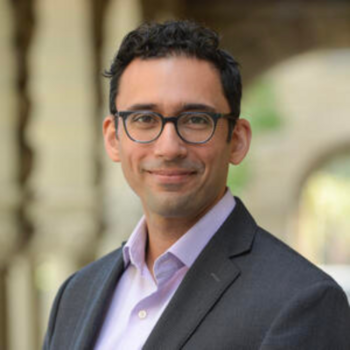
Kal Raustiala
Seminars
-
REDS Steve Fish

Over the past decade, illiberal demagogues around the world have launched ferocious assaults on democracy. Embracing high-dominance political styles and a forceful argot of national greatness, they hammer at their supposed superiority as commanders, protectors, and patriots. Bewildered left-liberals have often played to the type their tormentors assign them. Fretting over their own purported neglect of the folks’ kitchen-table concerns, they leave the guts and glory to opponents who grasp that elections are emotions-driven dominance competitions.

Consequently, in America, democracy’s survival now hangs on the illiberal party making colossal blunders on the eve of elections. But in the wake of Putin’s attack on Ukraine, a new cohort of liberals is emerging in Central and Eastern Europe. From Greens to right-center conservatives, they grasp the centrality of messaging, nationalism, chutzpah, and strength. They’re showing how to dominate rather than accommodate evil. What can American liberals learn from their tactics and ways?

ABOUT THE SPEAKER


Image
Steven Fish

Steve Fish is a professor of political science at the University of California, Berkeley. He is the author of Democracy from Scratch, Democracy Derailed in Russia, and Are Muslims Distinctive? and coauthor of The Handbook of National Legislatures. He is currently working on a book manuscript entitled Comeback: Crushing Trump, Burying Putin, and Restoring Democracy’s Ascendance around the World.

REDS: RETHINKING EUROPEAN DEVELOPMENT AND SECURITY


The REDS Seminar Series aims to deepen the research agenda on the new challenges facing Europe, especially on its eastern flank, and to build intellectual and institutional bridges across Stanford University, fostering interdisciplinary approaches to current global challenges.

REDS is organized by The Europe Center and the Center on Democracy, Development and the Rule of Law, and co-sponsored by the Hoover Institution.


Image
CDDRL, TEC, Hoover, and CREEES logos
Kathryn Stoner
Kathryn Stoner

Perry Conference Room
Encina Hall, Second Floor, Central, C231
616 Jane Stanford Way, Stanford, CA 94305

Steve Fish, University of California, Berkeley
Seminars
-
Oxana Shevel REDS

Ukraine has long been considered a divided society, split between Russia-leaning Russian-speaking south and east and west-leaning and Ukrainian-speaking west and center. This talk will explain why the “divided Ukraine” paradigm no longer captures Ukrainian political and social realities, focusing on profound identity transformation within the Ukrainian society that began following the Euromaidan revolution and the start of Russian aggression against Ukraine in 2014, and further accelerated after the February 2022 full scale Russian invasion. Among implications of these identity shifts is decisive rejection of a “pro-Russian” orientation in numerous policy areas – from memory to language to foreign policy.

This talk will focus on the impact of identity shifts on religious politics, where President Zelensky’s recent call for Ukrainian “spiritual independence” from Moscow is transforming the relationship of the Ukrainian society and the Ukrainian state with the Ukrainian Orthodox Church-Moscow Patriarchate (UOC-MP), the branch of Orthodox Christianity in Ukraine historically subordinate to the Russian Orthodox Church. 

ABOUT THE SPEAKER

Oxana Shevel HeadshotOxana Shevel is an Associate Professor of Political Science at Tufts University and current Vice President of the Association for the Study of Nationalities (ASN) and the American Association of Ukrainian Studies (AAUS). Her work explores nation building and identity politics in the post-Soviet region. Her book, Migration, Refugee Policy, and State Building in Postcommunist Europe (Cambridge University Press, 2011) won the American Association for Ukrainian Studies prize for best book in the fields of Ukrainian history, politics, language, literature and culture. Her recent work has focused on the sources of citizenship policies in the post-Communist states, comparative memory politics, and religious politics in Ukraine. With Maria Popova, she is currently writing a book on the root causes of the Russo-Ukrainian war, entitled Russia and Ukraine: Entangled Histories, Diverging States, scheduled to be released in late 2023. 

REDS: RETHINKING EUROPEAN DEVELOPMENT AND SECURITY


The REDS Seminar Series aims to deepen the research agenda on the new challenges facing Europe, especially on its eastern flank, and to build intellectual and institutional bridges across Stanford University, fostering interdisciplinary approaches to current global challenges.

REDS is organized by The Europe Center and the Center on Democracy, Development and the Rule of Law, and co-sponsored by the Hoover Institution.

Virtual to Public. Only those with an active Stanford ID with access to Encina Hall may attend in person.

Image
CDDRL, TEC, Hoover, and CREEES logos
Kathryn Stoner
Kathryn Stoner

William J. Perry Conference Room
Encina Hall, Second Floor, Central, C231
616 Jane Stanford Way, Stanford, CA 94305

Virtual to Public. Only those with an active Stanford ID with access to Encina Hall may attend in person.

Oxana Shevel
Seminars
-
Sheri Berman event

Across Europe, social democratic (or more broadly center-left) parties are a shadow of their former selves.

Most treatments of the center-left's decline stress economic factors like globalization or the decline of manufacturing or social factors, like the decline of the traditional working class. While such factors are important, they alone cannot explain the center-left’s decline if only because such factors do not correlate well with the fortunes of center-left parties across either time or space. This talk will accordingly focus on the political causes of the center-left's decline, in particular its shift to the center on economic issues and the dilution of its class-based political appeals during the late 20th century. This transformation had a variety of unintended and detrimental consequences for center-left parties, played a significant role in the rise of the populist right, and contributed to reshaping the dynamics of western democracies more generally.

ABOUT THE SPEAKER

Image
Sheri Berman
Sheri Berman is a professor of political science at Barnard College, Columbia University. Her research interests include the development of democracy and dictatorship, European politics, populism and fascism, and the history of the left. Her latest book is Democracy and Dictatorship in Europe: From the Ancien Régime to the Present Day. In addition to her scholarly work, she has published in a wide variety of non-scholarly publications including The New York Times, the Washington Post, Foreign Affairs, Foreign Policy, VOX, The Guardian and Dissent. She is on the boards of The Journal of Democracy, Political Science Quarterly, Dissent and Persuasion. 

REDS: RETHINKING EUROPEAN DEVELOPMENT AND SECURITY


The REDS Seminar Series aims to deepen the research agenda on the new challenges facing Europe, especially on its eastern flank, and to build intellectual and institutional bridges across Stanford University, fostering interdisciplinary approaches to current global challenges.

REDS is organized by The Europe Center and the Center on Democracy, Development and the Rule of Law, and co-sponsored by the Hoover Institution.


Image
CDDRL, TEC, Hoover, and CREEES logos
Kathryn Stoner
Kathryn Stoner

William J. Perry Conference Room
Encina Hall, Second Floor, Central, C231
616 Jane Stanford Way, Stanford, CA 94305

Sheri Berman, Barnard College
Seminars
-
Catherine Thomas seminar

Every year, millions of low-income households around the world receive over $100 billion in anti-poverty aid. This research shows how psychologically savvy and culturally attuned narratives of anti-poverty policies can both improve recipients’ economic outcomes and build public support. This research suggests that status quo narratives of aid that are focused on recipients’ neediness and helplessness may paradoxically maintain cycles of stigma, prejudice and poverty. However, a series of experiments in East and West Africa demonstrate that these cycles can be interrupted when narratives represent aid as an opportunity for recipients to realize their agency and aspirations in culturally resonant ways. Lab and field experiments with low-income recipients of aid in East and West Africa demonstrate how such narrative-based interventions can enhance the cost-effectiveness of large-scale anti-poverty programs. Online experiments in the US show how such narratives can mitigate welfare-related prejudice and build support for policies like universal basic income.

ABOUT THE SPEAKER

Image
Catherine Thomas
Catherine Thomas is a Postdoctoral Scholar at Social Psychological Answers to Real-World Questions (SPARQ). She assesses psychological drivers of cycles of poverty and inequality through lab and field experiments in the US and low-income countries. With a focus on agency and dignity, she tests culturally attuned psychological interventions for reducing poverty, attenuating inequality, and mitigating prejudice against people living in poverty. She received her Ph.D. in Social Psychology from Stanford University and an M.Sc. in Global Mental Health from the University of London. 

Virtual to Public. Only those with an active Stanford ID with access to E008 in Encina Hall may attend in person.

Didi Kuo

Virtual to Public. Only those with an active Stanford ID with access to E008 in Encina Hall may attend in person.

Catherine Thomas Postdoctoral Scholar at Stanford University's Social Psychological Answers to Real-World Questions (SPARQ) Postdoctoral Scholar at Stanford University's Social Psychological Answers to Real-World Questions (SPARQ)
Seminars
-
Yuko Kasuya seminar

Increasingly, disinformation, a type of fake news with malicious or manipulative intentions, has become common in elections worldwide. However, a few survey-based studies have been conducted to understand how disinformation influences voter attitudes. We address this question in the case of the 2022 Philippine presidential election, where disinformation was rampant during the campaign. Allegedly, various types of disinformation contributed to the victory of Ferdinand “Bongbong” Marcos Jr. (hereafter BBM). In this project, we focused on the disinformation about BBM’s father, the late dictator Ferdinand Marcos Sr. and conducted two survey-based studies. Study 1 examined the association between BBM support and belief in disinformation about Marcos Sr., and we found they were highly correlated. Study 2 tested the direction of causality by an experimental survey. Contrary to our expectations, those exposed to disinformation reduced support for BBM. At the same time, Study 2 showed that fact checks help correct respondents’ evaluation of disinformation. We conclude that although disinformation played a role in the 2022 presidential election, more research is needed to understand how exactly voter behavior and disinformation are related.

ABOUT THE SPEAKER

Image
Yuko Kasuya
Yuko Kasuya is a Professor of Comparative Politics at the Department of Political Science, Faculty of Law, Keio University, Tokyo, Japan. Her research interests include regime transition, political institutions, measurement of democracy, Southeast Asia (especially the Philippines), and East Asia (especially Japan). She is the author and/or editor of Decolonization and Regime Change in Asia: Historical Origins of Democracy and Dictatorship (Hakusuisha, in Japanese, 2022), Comparative Politics (Minerva Publishing, in Japanese, 2014) and Presidential Bandwagon: Parties and Party Systems in the Philippines (Anvil, 2008). Her articles can be found in journals such as Electoral Studies, The Pacific Affairs, and Party Politics, among others. She holds a Ph.D. from the University of California, San Diego, an M.A. from the Institute of Social Studies (Netherlands), and a B.A. from Keio University. She was a visiting scholar at CDDRL from 2009 to 2010 and Vice President of the International Political Science Association from 2018 to 2021. She currently serves as President of the Japan Association of Comparative Politics and Director of the V-Dem East Asia Regional Center.


Virtual to Public. Only those with an active Stanford ID with access to E008 in Encina Hall may attend in person.

Didi Kuo

Virtual to Public. Only those with an active Stanford ID with access to E008 in Encina Hall may attend in person.

Yuko Kasuya
Seminars
-
Bennon Fukuyama seminar

Infrastructure development requires democracies to balance multiple, competing governance priorities. The representativeness of the decision-making process must be balanced against the benefits of impartial technical assessments by the civil service, and both must be balanced against the efficiency of infrastructure development and government actions. Using the California Environmental Quality Act (CEQA) as a case study, we will argue that California has become a “vetocracy” in which decisions in favor of collective action have become extremely difficult to arrive at. This presentation is based in part on CDDRL’s recent research on California governance, in collaboration with the California 100 Initiative. 

ABOUT THE SPEAKERS

Image
Francis Fukuyama
Francis Fukuyama has written widely on issues in development and international politics. His 1992 book, The End of History and the Last Man, has appeared in over twenty foreign editions. His most recent book, Identity: The Demand for Dignity and the Politics of Resentment, was published in September 2018. His latest book, Liberalism and Its Discontents, was published in the spring of 2022.

Dr. Fukuyama received his B.A. from Cornell University in classics, and his Ph.D. from Harvard in Political Science. He was a member of the Political Science Department of the RAND Corporation, and of the Policy Planning Staff of the US Department of State. From 1996-2000 he was Omer L. and Nancy Hirst Professor of Public Policy at the School of Public Policy at George Mason University, and from 2001-2010 he was Bernard L. Schwartz Professor of International Political Economy at the Paul H. Nitze School of Advanced International Studies, Johns Hopkins University. He served as a member of the President’s Council on Bioethics from 2001-2004.

Dr. Fukuyama holds honorary doctorates from Connecticut College, Doane College, Doshisha University (Japan), Kansai University (Japan), Aarhus University (Denmark), and the Pardee Rand Graduate School. He is a non-resident fellow at the Carnegie Endowment for International Peace and at the Center for Global Development. He is a member of the Board of Trustees of the Rand Corporation, the Board of Governors of the Pardee Rand Graduate School, and the Volcker Alliance. He is a member of the American Political Science Association and the Council on Foreign Relations. He is married to Laura Holmgren and has three children.
 

Image
Mike Bennon
Michael Bennon is a Research Scholar at CDDRL for the Global Infrastructure Policy Research Initiative. Michael's research interests include infrastructure policy, project finance, public-private partnerships and institutional design in the infrastructure sector. Michael also teaches Global Project Finance to graduate students at Stanford. Prior to Stanford, Michael served as a Captain in the US Army and US Army Corps of Engineers for five years, leading Engineer units, managing projects, and planning for infrastructure development in the United States, Iraq, Afghanistan and Thailand.
 

Virtual to Public. Only those with an active Stanford ID with access to E008 in Encina Hall may attend in person.

Didi Kuo

Virtual to Public. Only those with an active Stanford ID with access to E008 in Encina Hall may attend in person.

Encina Hall, C148
616 Jane Stanford Way
Stanford, CA 94305

0
Olivier Nomellini Senior Fellow at the Freeman Spogli Institute for International Studies
Director of the Ford Dorsey Master's in International Policy
Research Affiliate at The Europe Center
Professor by Courtesy, Department of Political Science
yff-2021-14290_6500x4500_square.jpg

Francis Fukuyama is the Olivier Nomellini Senior Fellow at Stanford University's Freeman Spogli Institute for International Studies (FSI), and a faculty member of FSI's Center on Democracy, Development and the Rule of Law (CDDRL). He is also Director of Stanford's Ford Dorsey Master's in International Policy, and a professor (by courtesy) of Political Science.

Dr. Fukuyama has written widely on issues in development and international politics. His 1992 book, The End of History and the Last Man, has appeared in over twenty foreign editions. His book In the Realm of the Last Man: A Memoir will be published in fall 2026.

Francis Fukuyama received his B.A. from Cornell University in classics, and his Ph.D. from Harvard in Political Science. He was a member of the Political Science Department of the RAND Corporation, and of the Policy Planning Staff of the US Department of State. From 1996-2000 he was Omer L. and Nancy Hirst Professor of Public Policy at the School of Public Policy at George Mason University, and from 2001-2010 he was Bernard L. Schwartz Professor of International Political Economy at the Paul H. Nitze School of Advanced International Studies, Johns Hopkins University. He served as a member of the President’s Council on Bioethics from 2001-2004. He is editor-in-chief of American Purpose, an online journal.

Dr. Fukuyama holds honorary doctorates from Connecticut College, Doane College, Doshisha University (Japan), Kansai University (Japan), Aarhus University (Denmark), the Pardee Rand Graduate School, and Adam Mickiewicz University (Poland). He is a non-resident fellow at the Carnegie Endowment for International Peace. He is a member of the Board of Trustees of the Rand Corporation, the Board of Trustees of Freedom House, and the Board of the Volcker Alliance. He is a fellow of the National Academy for Public Administration, a member of the American Political Science Association, and of the Council on Foreign Relations. He is married to Laura Holmgren and has three children.

(October 2025)

CV
Date Label

Encina Hall
616 Jane Stanford Way
Stanford, CA 94305-6055

0
Research Scholar
mike_bennon_2022.jpg

Michael Bennon is a Research Scholar at CDDRL for the Global Infrastructure Policy Research Initiative. Michael's research interests include infrastructure policy, project finance, public-private partnerships and institutional design in the infrastructure sector. Michael also teaches Global Project Finance to graduate students at Stanford. Prior to Stanford, Michael served as a Captain in the US Army and US Army Corps of Engineers for five years, leading Engineer units, managing projects, and planning for infrastructure development in the United States, Iraq, Afghanistan and Thailand. 

Program Manager, Global Infrastructure Policy Research Initiative
Seminars
-
Leah Rosenzweig seminar

While initial supply shortages delayed access to the COVID-19 vaccine for many low and middle income countries, most now have an abundance of doses. Yet only a quarter of African citizens have completed their COVID-19 vaccination primary series. Exploring effective modes of vaccine delivery is necessary to increase uptake. In collaboration with the Kenyan government, we conducted a field experiment to examine whether ease of access and requests from authority figures influence COVID-19 vaccination rates. By comparing rates between facility and community based vaccination activities, we are able to calculate the cost effectiveness of these policies, offering insights that are useful now and for future pandemics.

ABOUT THE SPEAKER

Image
Leah Rosenzweig
Leah Rosenzweig is Director and Lead Researcher at the Development Innovation Lab (DIL) at the University of Chicago. Her research focuses on the micro-foundations of political and social behavior to gain leverage on macro policy-relevant questions. Her current work in the political economy of development explores the existence and consequences of social norms of voting in semi-authoritarian states, government accountability in low- and middle-income countries, and inter-group relations. She also works on designing and evaluating optimal policies to combat the spread of online misinformation and increase vaccination, as well as applied research methods. Prior to joining DIL, Leah held positions at Stanford University, the Institute for Advanced Study in Toulouse, and was a consultant for the Nigerian government. Leah received her PhD in Political Science from MIT.

Virtual to Public. Only those with an active Stanford ID with access to E008 in Encina Hall may attend in person.

Didi Kuo
Didi Kuo

Virtual to Public. Only those with an active Stanford ID with access to E008 in Encina Hall may attend in person.

0
CDDRL Postdoctoral Scholar, 2020-21
thumbnail_leah1_small.jpg

My research centers on topics in comparative politics and the political economy of development. I focus on the micro-foundations of political behavior to gain leverage on macro-political questions. How do autocrats survive? How can citizen-state relations be improved and government accountability strengthened? Can shared identities mitigate out-group animosity? Adopting a multi-method approach, I use lab-in-the-field and online experiments, surveys, and in-depth field research to examine these questions in sub-Saharan Africa and the US. My current book project reexamines the role of elections in authoritarian endurance and explains why citizens vote in elections with foregone conclusions in Tanzania and Uganda. Moving beyond conventional paradigms, my theory describes how a social norm of voting and accompanying social sanctions from peers contribute to high turnout in semi-authoritarian elections. In other ongoing projects, I study how national and pan-African identification stimulated through national sports games influence attitudes toward refugees, the relationship between identity, emotions, and belief in fake news, and how researchers can use Facebook as a tool for social science research.

Leah R. Rosenzweig
Seminars
-
Anna GB seminar with book cover

The medieval church was a fundamental force in European state formation.

Existing accounts focus on early modern warfare or contracts between the rulers and the ruled. Yet the Catholic church both competed with medieval monarchs and provided critical templates for governing institutions, the rule of law, and parliaments. The Catholic Church was the most powerful, wealthiest, and best-organized political actor in the Middle Ages. Starting in the 11th century, the papacy fought for the autonomy of the church, challenging European rulers and then claiming authority over people, territory, and monarchs alike. Conflicts with the papacy fragmented territorial authority in Europe for centuries to come, propagating urban autonomy and ideas of sovereignty. Thanks to its organizational advantages and human capital, the church also developed the institutional precedents adopted by rulers across Europe—from chanceries and taxation to courts and councils. Church innovations made possible both the rule of law and parliamentary representation.

ABOUT THE SPEAKER

Image
Anna Grzymala-Busse

Anna Grzymala-Busse is a professor in the Department of Political Science, the Michelle and Kevin Douglas Professor of International Studies, Senior Fellow at the Freeman Spogli Institute for International Studies, and the director of The Europe Center. Her research interests include political parties, state development and transformation, informal political institutions, religion and politics, and post-communist politics.

This seminar is co-sponsored by The Europe Center.

Virtual to Public. Only those with an active Stanford ID with access to E008 in Encina Hall may attend in person.

Didi Kuo
Didi Kuo

Virtual to Public. Only those with an active Stanford ID with access to E008 in Encina Hall may attend in person.

Encina Hall
616 Jane Stanford Way
Stanford, CA  94305


(650) 723-4270
0
Senior Fellow at the Freeman Spogli Institute for International Studies
Michelle and Kevin Douglas Professor of International Studies
Professor of Political Science
Senior Fellow, Hoover Institution
anna_gb_4_2022.jpg

Anna Grzymała-Busse is a professor in the Department of Political Science, the Michelle and Kevin Douglas Professor of International Studies, senior fellow at the Freeman Spogli Institute for International Studies and the director of The Europe Center. Her research interests include political parties, state development and transformation, informal political institutions, religion and politics, and post-communist politics.

In her first book, Redeeming the Communist Past, she examined the paradox of the communist successor parties in East Central Europe: incompetent as authoritarian rulers of the communist party-state, several then succeeded as democratic competitors after the collapse of these communist regimes in 1989.

Rebuilding Leviathan, her second book project, investigated the role of political parties and party competition in the reconstruction of the post-communist state. Unless checked by a robust competition, democratic governing parties simultaneously rebuilt the state and ensured their own survival by building in enormous discretion into new state institutions.

Anna's third book, Nations Under God, examines why some churches have been able to wield enormous policy influence. Others have failed to do so, even in very religious countries. Where religious and national identities have historically fused, churches gained great moral authority, and subsequently covert and direct access to state institutions. It was this institutional access, rather than either partisan coalitions or electoral mobilization, that allowed some churches to become so powerful.

Anna's most recent book, Sacred Foundations: The Religious and Medieval Roots of the European State argues that the medieval church was a fundamental force in European state formation.

Other areas of interest include informal institutions, the impact of European Union membership on politics in newer member countries, and the role of temporality and causal mechanisms in social science explanations.

Director of The Europe Center
Anna Grzymała-Busse
Seminars
-
Margaret Levi seminar

Our empirical and theoretical focus is on what constitutes political equality as "equal consideration" in advanced capitalist democracies. We claim that political inequality is a distinctive type of inequality. First, although affected by the factors that routinely go into thinking about social, economic and power inequality, it cannot be reduced to those factors. Second, its currency is performative, not only distributive. To make our case, we focus on three broad dimensions of political equality: participation, representation, and responsiveness. Although there is some research on each of these dimensions, influential commentators on political equality have tended to focus almost exclusively on political participation. We develop concepts and measurement for all three and then weigh the trade-offs among these dimensions.

ABOUT THE SPEAKER

Image
Margaret Levi
Margaret Levi is a Professor of Political Science and Senior Fellow at the Center for Democracy, Development and Rule of Law (CDDRL) at the Freeman Spogli Institute (FSI) at Stanford University. She is the former Sara Miller McCune Director of the Center for Advanced Study in the Behavioral Sciences (CASBS) Levi is currently a faculty fellow at CASBS and Senior Fellow at the Woods Institute for the Environment, co-director of the Stanford Ethics, Society and Technology Hub, and the Jere L. Bacharach Professor Emerita of International Studies at the University of Washington. She is the winner of the 2019 Johan Skytte Prize and the 2020 Falling Walls Breakthrough. She is a member of the National Academy of Sciences, the British Academy, the American Academy of Arts and Sciences, the American Philosophical Society, and the American Association of Political and Social Sciences. She served as president of the American Political Science Association from 2004 to 2005. In 2014 she received the William H. Riker Prize in Political Science, in 2017 gave the Elinor Ostrom Memorial Lecture, and in 2018 received an honorary doctorate from Universidad Carlos III de Madrid.

She earned her BA from Bryn Mawr College in 1968 and her PhD from Harvard University in 1974, the year she joined the faculty of the University of Washington. Levi is the author or coauthor of numerous articles and seven books, including Of Rule and Revenue; Consent, Dissent, and Patriotism; Analytic Narratives; Cooperation Without Trust?; In the Interest of Others; and A Moral Political Economy.

Virtual to Public. Only those with an active Stanford ID with access to E008 in Encina Hall may attend in person.

Didi Kuo

Virtual to Public. Only those with an active Stanford ID with access to E008 in Encina Hall may attend in person.

Encina Hall West, Room 306
417 Galvez Mall
Stanford, CA 94305

206.849.8222
0
Professor Emerita of Political Science
Jere L. Bacharach Professor Emerita of International Studies, University of Washington
margaret_levi.jpg

Margaret Levi is professor of Political Science, Senior Fellow of the Freeman Spogli Institute for International Studies, a faculty fellow and former Sara Miller McCune Director of the Center for Advanced Study in the Behavioral Sciences (CASBS), and Senior Fellow at the Woods Institute for the Environment, Stanford University. She is the winner of the 2019 Johan Skytte Prize and the 2020 Falling Walls Breakthrough. She is a member of the National Academy of Sciences, the British Academy, the American Academy of Arts and Sciences, and the American Philosophical Society and served as president of the American Political Science Association.

The most recent of her many books are In the Interest of Others (Princeton, 2013), co-authored with John Ahlquist, and A Moral Political Economy: Present, Past, Future (Cambridge University Press, 2021), co-authored with Federica Carugati. She writes about what makes for trustworthy governance in states and organizations and what evokes citizen compliance, consent, and dissent.

Senior Fellow, Freeman Spogli Institute for International Studies
Faculty Fellow, Center for Advanced Study in the Behavioral Sciences at Stanford
Senior Fellow, Stanford Woods Institute for the Environment
Co-director, Stanford Ethics, Society and Technology Hub
Date Label
Seminars
Subscribe to Seminars