-
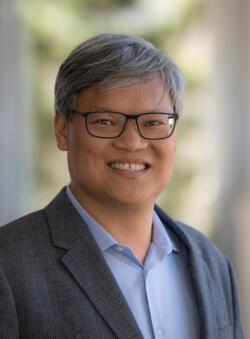
Portrait of Daniel Smoth on a flyer for his talk, "Winning Elections with Unpopular Policies: Valence Advantage and Single-Party Dominance in Japan"

An enduring puzzle in comparative politics is why voters in some democracies continuously support dominant parties in elections, and whether their support is based on policy congruence or non-policy factors like valence. Smith and his team consider the preeminent case of a dominant party—Japan’s Liberal Democratic Party (LDP)—and investigate whether voters’ support for its policies can explain its recent landslide election victories. They first introduce a new measurement strategy to infer individuals’ utility for parties’ policy platforms from conjoint experiments. Unlike most other uses of conjoint designs, their approach quantifies individual preferences for entire platforms rather than the average effect of any one component. Using this measure, they then show that many voters supported the LDP in the 2017 and 2021 elections despite preferring the opposition’s policies. To understand what accounts for this disconnect, Smith and his team experimentally manipulate party label and decompose its effect, revealing that trust is an important non-policy factor motivating LDP voters. Together, their findings support the argument that the LDP’s recent dominance can be attributed to its valence advantage over the opposition rather than voters’ support for its policies.

This event is part of APARC's Contemporary Asia Seminar Series.


Headshot for Daniel Smith

Daniel M. Smith is Associate Professor of Political Science at the University of Pennsylvania. His research interests cover a range of topics in comparative politics and Japanese politics, with a core focus on elections and democratic representation. He is the author of Dynasties and Democracy: The Inherited Incumbency Advantage in Japan (Stanford University Press, 2018), and articles appearing in the American Political Science ReviewAmerican Journal of Political ScienceThe Journal of Politics, and Comparative Political Studies, among other journals and edited volumes. He also co-organizes the Japanese Politics Online Seminar Series (JPOSS), and co-edits the Japan Decides election series.

Philippines Room, Encina Hall (3rd floor), Room C330
616 Jane Stanford Way, Stanford, CA 94305

Daniel Smith Associate Professor of Political Science University of Pennsylvania
Seminars
Date Label
-
Portrait of Dahjin Kim on a flyer for her seminar, "Online Ingroup Bias Helps Correct Misinformation"

Online misinformation poses serious risks to politics and society, prompting researchers and policymakers to explore effective intervention strategies. While approaches like enhancing digital literacy, expert fact-checking, and regulation have shown limited success, a more collective strategy—user correction—offers promise. However, its effectiveness often relies on social factors, such as demographic information and interpersonal relationships, which are frequently absent in online interactions.

Kim will argue that shared membership in online communities serves as a critical yet underexplored social cue that enhances the persuasiveness of corrections. Drawing on two original studies conducted in South Korea—a highly connected but understudied region in misinformation research— Kim finds evidence of ingroup bias that is closely associated with participation in online communities. Furthermore, corrections from members of the same online community can effectively counter misinformation, even in anonymous settings. This research, funded by an APSA grant, offers actionable insights into leveraging online group dynamics to combat misinformation more effectively.

This event is part of APARC's Contemporary Asia Seminar Series.


Headshot for Dahjin Kim

Dahjin Kim is a PhD Candidate in Political Science at Washington University in St. Louis. She studies online political communication and misinformation, with a particular interest in South Korea. Her research has been supported by the APSA Doctoral Dissertation Research Improvement Grant and has been published in the American Journal of Political Science,  International Organization, Political Science Research and Methods, Journal of Theoretical Politics, and Humanities and Social Sciences Communications. She received her M.A. in Political Science and her B.A. in Political Science from Seoul National University.

Philippines Room, Encina Hall (3rd floor), Room C330
616 Jane Stanford Way, Stanford, CA 94305


Dahjin Kim Political Science PhD Candidate Washington University in St. Louis
Seminars
Date Label
-
illustration

Join the Cyber Policy Center on February 11 from 1PM–2PM Pacific for a fireside chat with Nicole Perlroth, and Nate Low. Stanford affiliates are invited to join us at 12:40 PM for lunch, prior to the seminar.  

Perlroth, in conversation with Nate Low, will discuss how the cyber threat landscape has transformed over the past decade, from the first outing of “APTs” stealing intellectual property, to personal data collection, to the “Everything, Everywhere, All At Once” attack scenario on our critical infrastructure. The United States is now seeing novel attacks from China, utilizing “zero days” and “living off the land” techniques to embed in our most vital systems, from telecommunications to water. Russia continues its infrastructure attacks and influence campaign, focused increasingly on division, particularly on the topic of energy, and Ukraine, but also continues to empower a sophisticated ransomware-as-a-service economy– utilizing America's own citizens in many cases– that has metastasized from one-off attacks on corporations to ransomware supply chain attacks that threaten the entire healthcare system (see Change Healthcare). Such third, fourth, even fifth, order attacks are our new norm. Generative A.I. has only expanded the attack surface, with deepfake-enabled social engineering attacks, Chat GPT written phishing scams and AI-augmented zero days. But these are just the threats we see. Below the surface lies the possibility of data theft, poisoning, model corruption and influence campaigns.

Stanford Law School Building, Manning Faculty Lounge (Room 270)
559 Nathan Abbott Way Stanford, CA 94305

Nicole Perlroth
Nate Low
Seminars
Date Label
-
Filippo Menczer

Join the Cyber Policy Center on February 4 from 1PM–2PM Pacific for AI and Social Media Manipulation: The Good, the Bad and the Ugly, a seminar with Filippo Menczer, moderated by Jeff Hancock Stanford affiliates are invited to join us at 12:40 PM for lunch, prior to the seminar.

Disinformation can be very harmful. AI provides us with tools to mitigate these harms, such as methods to detect inauthentic accounts and coordinated information operations. Large language models (LLMs) can also help rate the reliability of information sources and aid in fact-checking tasks. However, attempts to scale up these AI-supported interventions must account for unintended consequences when people interact with AI. In some cases, fact checking information generated by an LLM can actually decrease news discernment. In the hands of bad actors, AI can become a dangerous weapon. Aside from much-discussed deepfakes, generative AI can be used to easily and cheaply create fake but credible profiles and content at scale. These capabilities enable the infiltration and manipulation of vulnerable online communities. Given the near-impossibility of detecting AI-generated content, research is needed to develop new ways of challenging the provenance of content before wide exposure through distribution channels like social media and search engines.

About the Speaker

Filippo Menczer is the Luddy distinguished professor of informatics and computer science and the director of the Observatory on Social Media at Indiana University. He holds a Laurea in Physics from the Sapienza University of Rome and a Ph.D. in Computer Science and Cognitive Science from the University of California, San Diego. His research interests span Web and data science, computational social science, science of science, and modeling of complex information networks. Dr. Menczer was named a Fellow of the ACM for his research on the vulnerability of social media networks to disinformation and manipulation.


Stanford Law School Building, Manning Faculty Lounge (Room 270)
559 Nathan Abbott Way Stanford, CA 94305

Filippo Menczer
Seminars
Date Label
-
Lee M. Sanders, MD, MPH

Join the Cyber Policy Center on January 28 from 1PM–2PM Pacific for AI for Health Equity: A Literacy Lens with Lee Sanders, moderated by Jeff Hancock. Stanford affiliates are invited to join us at 12:40 PM for lunch, prior to the seminar.

New technologies, particularly in health AI, offer promises and perils for transforming primary care and behavioral health. One peril is the unintended exacerbation of underlying health inequities. Based on 30 years of clinical research – complemented by teaching human-centered design and consulting for Silicon Valley startups – Dr. Sanders will share examples of opportunities to leverage new technologies in ways that advance health equity, including implications for public policy.

About the Speaker

Lee M. Sanders, MD, MPH is Professor of Pediatrics and Health Policy, and Division Chief for General Pediatrics at Stanford University. He holds joint appointments in the Department of Health Policy, Department of Epidemiology and Population Health and the Freeman Spogli Institute for International Studies. He teaches in the Human Biology Program and at the Hasso Plattner Institute of Design (Stanford d.School). With funding from the NIH, CDC, FDA and other national agencies -- Dr. Sanders directs the Stanford MUSE Lab, which aims to leverage AI, human-centered design, and rigorous analytics to address maternal and child disparities. He leads multi-disciplinary studies that aim to prevent obesity during early childhood, to improve the health of children in immigrant families, to understand the long-term educational consequences of preterm birth, and to advance novel AI tools that improve care for children with complex chronic conditions. 

As a multi-lingual primary-care physician – Dr. Sanders directs Stanford Children’s Complex Primary Care Clinic, where he cares for children with serious chronic illness, and he also provides care at a federally qualified health center that is the main teaching site for Stanford residents and medical students.

Stanford Law School Building, Manning Faculty Lounge (Room 270)
559 Nathan Abbott Way Stanford, CA 94305

Lee Sanders
Seminars
Date Label
-
Jennifer Allen

Join the Cyber Policy Center on January 21 from 1PM–2PM Pacific for a seminar for Quantifying the Impact of Misinformation and Vaccine-Skeptical Content on Facebook with Jennifer Allen, moderated by Jeff Hancock. Stanford affiliates are invited to join us at 12:40 PM for lunch, prior to the seminar.

Low uptake of the COVID-19 vaccine in the US has been widely attributed to social media misinformation. To evaluate this claim, we introduce a framework combining lab experiments (total N = 18,725), crowdsourcing, and machine learning to estimate the causal effect of 13,206 vaccine-related URLs on the vaccination intentions of US Facebook users (N ≈ 233 million). We estimate that the impact of unflagged content that nonetheless encouraged vaccine skepticism was 46-fold greater than that of misinformation flagged by fact-checkers. Although misinformation reduced predicted vaccination intentions significantly more than unflagged vaccine content when viewed, Facebook users’ exposure to flagged content was limited. In contrast, mainstream media stories highlighting rare deaths after vaccination were not flagged by fact-checkers, but were among Facebook’s most-viewed stories. Our work emphasizes the need to scrutinize factually accurate but potentially misleading content in addition to outright falsehoods. Additionally, we show that fact-checking has only limited efficacy in preventing misinformed decision-making and introduce a novel methodology incorporating crowdsourcing and machine learning to better identify misinforming content at scale. 

About the Speaker

Jenny is a postdoctoral researcher in the Computational Social Science Lab at the University of Pennsylvania. In Fall 2025, she will join NYU Stern as an Assistant Professor of Technology, Operations, and Statistics and a core faculty member of the Center for Social Media and Politics. She received her PhD in Management Science from MIT in 2025 and previously worked at Meta and Microsoft Research. Her research interests include misinformation, political persuasion, and the wisdom of crowds.

Stanford Law School Building, Manning Faculty Lounge (Room 270)
559 Nathan Abbott Way Stanford, CA 94305

Jennifer Allen
Seminars
Date Label
-
jeremy bailenson

Join the Cyber Policy Center on January 14 from 1PM–2PM Pacific for What VR is Good For (And What it is Not) with Jeremy Bailenson, moderated by Jeff Hancock. Stanford affiliates are invited to join us at 12:40 PM for lunch, prior to the seminar.

Bailenson is the founding director of Stanford University’s Virtual Human Interaction Lab and has researched the psychology of virtual reality technologies for 25 years. During his talk, you will better understand when using virtual reality technology truly enhances an experience and when it should be avoided.   Bailenson will discuss the DICE framework when evaluating potential uses of virtual reality. DICE is a way to determine if VR makes sense because a real-world experience would be Dangerous, Impossible, Counterproductive, or Expensive (DICE). He will also discuss the historical successes and failures of VR, and provide guidelines on deploying a VR project effectively.

Jeremy Bailenson earned a B.A. from the University of Michigan in 1994 and a Ph.D. in cognitive psychology from Northwestern University in 1999. Bailenson studies the psychology of Virtual and Augmented Reality, in particular how virtual experiences lead to changes in perceptions of self and others. His lab builds and studies systems that allow people to meet in virtual space, and explores the changes in the nature of social interaction. His most recent research focuses on how virtual experiences can transform education, environmental conservation, empathy, and health. He is the recipient of the Dean’s Award for Distinguished Teaching at Stanford. In 2020, IEEE recognized his work with “The Virtual/Augmented Reality Technical Achievement Award.”

Stanford Law School Building, Manning Faculty Lounge (Room 270)
559 Nathan Abbott Way Stanford, CA 94305

Jeremy Bailenson
Seminars
Date Label
-

About the event: Studies have found that voters in democratic countries are far more reluctant to use military force against democracies than against nondemocracies. This pattern may help explain why democracies almost never wage war against other democracies. In an important contribution, Rathbun, Parker, and Pomeroy (2024) propose that the apparent democratic peace in public opinion is an artifact of failing to account for race. Rather than democracy itself influencing support for war, they argue, the term “democracy” cues assumptions about the adversary’s racial composition, and those racialized assumptions are the true drivers of support for war. We reevaluate RPP’s evidence, concluding that their data do not support their predictions. In fact, their novel experiments provide powerful evidence that democracy affects support for war, independent of race. Our findings contribute to major debates about both regime type and race in international relations, as well as the design and interpretation of survey experiments.

About the speaker: Jessica L. P. Weeks is Professor of Political Science and H. Douglas Weaver Chair in Diplomacy and International Relations in the Department of Political Science at UW-Madison. Her research has appeared in journals including the American Political Science Review, the Journal of Political Science, the Journal of Politics, International Organization, and World Politics. Her book, Dictators at War and Peace, explores the domestic politics of international conflict in dictatorships. Weeks was the 2018 recipient of the International Studies Association Karl Deutsch Award, recognizing the scholar under 40 who has made the most significant contribution to the study of international relations. Professor Weeks received a B.A. in political science from The Ohio State University in 2001, a Master’s degree in international history from the Graduate Institute of International and Development Studies in 2003, and a PhD in political science from Stanford University in 2009.

 All CISAC events are scheduled using the Pacific Time Zone.

No filming or recording without express permission from speaker.

William J. Perry Conference Room

Jessica Weeks
Seminars
Date Label
-
Ravi Iyer headshot

Join the Cyber Policy Center on January 7th from 1PM–2PM Pacific for Measurably Improving Online Experiences by Design, a seminar with Ravi Iyer, moderated by Jeff Hancock. Stanford affiliates are invited to join us at 12:40 PM for lunch, prior to the seminar. This seminar is part of the Winter Seminar Series, running January through March. Sign up for individual seminars or the whole series.

About the Seminar

Ravi will talk about the current harms resulting from online platforms and present a taxonomy of observed harms - including unwanted/harmful contact, unwanted/harmful experiences, and excessive usage. He will discuss evidence from both technology companies and external research to show that these harms are relatively common and exacerbated by the specific design choices of platforms - as captured by the Neely Center's Design Code for Social Media. In contrast to a common focus on moderation, a design focus results in more effectiveness and fewer concerns about bias or censorship. Several specific design principles will be discussed with the idea of communicating that is indeed possible to effectively and measurably improve online experiences.

In the 2nd part of this talk, Ravi will discuss how platforms have often measured progress and the limits of measurements based on policy violating content. User experience measurement is an increasingly common method of evaluating platform impact, both within companies and for regulators. He will discuss the creation of the Neely Indices, which are longitudinal platform specific measures of user experience that can help bring needed data to debates about individual platforms' effects on society. These measures can illuminate both current and future risks from technology.

In the final part of the talk, Ravi will discuss how these tools - both our Design Code and Indices - are informing regulation and platform changes across companies and in various jurisdictions.

About the Speaker

Ravi Iyer is the Managing Director of the University of Southern California Marshall School’s Neely Center. He advises the authors of The Anxious Generation, the Minnesota Attorney General’s office, and the UK's OfCom on improving the societal impact of technology. Previously, he spent 4+ years leading data science, research and product teams across Meta toward improving the societal impact of social media. He has a Ph.D. in social psychology from USC, co-founded Ranker and continues to work at the intersection of academia, civil society, and the technology industry.

Stanford Law School Building, Manning Faculty Lounge (Room 270)
559 Nathan Abbott Way Stanford, CA 94305

Ravi Iyer
Seminars
Date Label
Subscribe to Seminars