-

About the event: What explains the current US arsenal of unmanned systems? Why, for example, is the contemporary arsenal dominated by aerial unmanned systems versus the munitions that dominated earlier developments? This book challenges traditional explanations for the proliferation of unmanned systems that focus on capacity or structure. Instead, this book argues that beliefs and identities shape the structures and capacities chosen when the United States invests in weapon systems. In particular, it traces beliefs about technological determinism and military revolutions, force protection and casualty aversion, and service identities to explain why the United States has invested so heavily in remote-controlled unmanned aerial platforms over the last three decades. In doing so, the book illustrates how ideas become influential to ultimately manifest in budget lines, detailing the policy entrepreneurs, critical junctures, and path dependencies that shape the lifecycle of beliefs about unmanned weapon systems. The book begins by providing a historical overview of US unmanned systems investments, taking an expansive view of unmanned technologies from land mines to missiles and drones from the Revolutionary War to contemporary investments. It then leans on theories of norms, ideas, and influence to detail the role of the Office of Net Assessment, Vietnam, 9/11, and armed service identity in building the United States’ current unmanned arsenal. Finally, it concludes with what this case of unmanned technologies reveals about US support to Ukraine as well as contemporary weapons debates about cyber, information technology, space, and hypersonic missiles.

About the speaker: Jacquelyn Schneider is the Hargrove Hoover Fellow at the Hoover Institution, the Director of the Hoover Wargaming and Crisis Simulation Initiative, and an affiliate with Stanford's Center for International Security and Cooperation. Her research focuses on the intersection of technology, national security, and political psychology with a special interest in cybersecurity, autonomous technologies, wargames, and Northeast Asia. She was previously an Assistant Professor at the Naval War College as well as a senior policy advisor to the Cyberspace Solarium Commission.

Dr. Schneider is an active member of the defense policy community with previous positions at the Center for a New American Security and the RAND Corporation. Before beginning her academic career, she spent six years as an Air Force officer in South Korea and Japan and is currently a reservist assigned to US Space Systems Command. She has a BA from Columbia University, MA from Arizona State University, and PhD from George Washington University.

 All CISAC events are scheduled using the Pacific Time Zone.

No filming or recording without express permission from speaker.

William J. Perry Conference Room

0
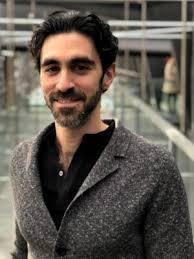
Jacquelyn Schneider

Jacquelyn Schneider is a Hoover Fellow at the Hoover Institution.  Her research focuses on the intersection of technology, national security, and political psychology with a special interest in cybersecurity, unmanned technologies, and Northeast Asia.

Her work has appeared in Security Studies, Journal of Conflict Resolution, Strategic Studies Quarterly, and Journal of Strategic Studies and is featured in Cross Domain Deterrence: Strategy in an Era of Complexity (Oxford University Press, 2019).  Her current manuscript project is The Rise of Unmanned Technologies with Julia Macdonald (upcoming, Oxford University Press). In addition to her scholarly publications, she is a frequent contributor to policy outlets,  including Foreign Affairs, CFR, Cipher Brief, Lawfare, War on the Rocks, Washington Post, Bulletin of the Atomic Scientists, National Interest, H-Diplo, and the Center for a New American Security.  

In 2018, Schneider was included in CyberScoop’s Leet List of influential cyber experts.  She is also the recipient of a Minerva grant on autonomy (with co-PIs Michael Horowitz, Julia Macdonald, and Allen Dafoe) and a University of Denver grant to study public responses to the use of drones (with Macdonald).  She was awarded best graduate paper for the International Security and Arms Control section of the International Studies Association, the Foreign Policy Analysis section of the International Studies Association, and the Southwest Social Science Association. 

She is an active member of the defense policy community with previous positions at the Center for a New American Security and the RAND Corporation. Before beginning her academic career, she spent six years as an Air Force officer in South Korea and Japan and is currently a reservist assigned to US Cyber Command. She has a BA from Columbia University, MA from Arizona State University, and PhD from George Washington University.

Hoover Fellow at the Hoover Institution
Seminars
Date Label
-

About the Event: Our speaker, Ambassador Juan Carlos Pinzón, will explore the intricate intersections of geopolitics, national security, and organized crime in the context of a rapidly evolving global landscape. He will examine the shift toward global power competition, the growing influence of the Global South, and the implications for national security in areas such as geoeconomics, trade, and technological rivalry. His discussion will delve into the socio-economic roots of organized crime, its entanglement with transnational networks, and its role in fueling proxy wars and political instability.

Key themes that Ambassador Pinzón will develop in this talk include the transformation of criminal organizations into national security threats, their influence over communities, and their capacity to undermine democratic institutions. He will also analyze when organized crime expands into or allies with terrorist networks and armed non-state actors. Ambassador Pinzón will conclude by considering policy options for confronting transnational organized crime through international cooperation.

About the Speaker: Juan Carlos Pinzón is currently a John L. Weinberg/Goldman Sachs & Co. visiting professor at Princeton University. He was previously Colombia's Minister of Defense and ambassador to the United States on two occasions. He served as ambassador to the United States between 2021 and 2022, celebrating 200 years of diplomatic relations between the two countries and between 2015 and 2017 strengthening the bilateral relationship. Previously, during 2018 and 2021 he was president of ProBogotá, a private non-profit entity for the promotion of public policies and long-term strategic projects for Colombia's capital region. During the period from 2011 to 2015 he served as Colombia's youngest Minister of Defense at a critical moment in the country's history.

In addition to these positions, he has also held other positions such as Chief of Staff to the President of Colombia from 2010 to 2011, Vice Minister of Defense from 2006 to 2009, Senior Advisor to the Executive Director of the World Bank from 2004 to 2006, Vice President of the Colombian Banking Association from 2003 to 2004, Chief of Staff of the Ministry of Finance from 2000 to 2002. In the 2018 national elections he served as presidential and vice-presidential candidate.

Juan Carlos Pinzón is an Economist from Pontificia Universidad Javeriana, with a master's degree in economics from the same institution, and a master degree in Public Policy from Princeton University and Honoris Causa in National Security and Defense from the Colombian War College. Pinzón has also taken advanced courses in strategic studies at Johns Hopkins University, science and technology policy at Harvard University, and smart cities at Nanyang Technological University, Singapore. Finally, he has several awards and over 60 decorations such as the Grand Cross of the Order of Boyacá and the Distinguished Public Service Medal from the U.S. Department of Defense.

 All CISAC events are scheduled using the Pacific Time Zone.

William J. Perry Conference Room

Amb. Juan Carlos Pinzón
Seminars
Date Label
-

About the event: How AI might be used in nuclear command and control is the subject of much discussion in national security circles.  But this debate—important though it has been—obscures many other ways that AI could be used or should not be used across the entire nuclear weapons enterprise.  (In this talk, the nuclear weapons enterprise also encompasses nuclear weapons, their delivery systems, the associated command and control and the links of these entities to AI in systems not usually associated with nuclear weapons.)  Key attributes of AI and the nuclear weapons enterprise will be reviewed, principles for thinking about AI in the nuclear weapons enterprise discussed, and specific guidelines for assessing the wisdom of AI in any given nuclear application proposed.

About the speaker: Herbert Lin is senior research scholar and Hank J. Holland Fellow at Stanford University whose research interests are at the intersection of national security and emerging technologies. He is Chief Scientist Emeritus for the Computer Science and Telecommunications Board of the National Academies and serves on the Science and Security Board of the Bulletin of Atomic Scientists. Lin was a member of President Obama’s Commission on Enhancing National Cybersecurity (2016) and the Aspen Commission on Information Disorder (2020).  He was also a professional staff member and staff scientist for the House Armed Services Committee, where his portfolio included defense policy and arms control issues. He received his doctorate in physics from MIT.

 All CISAC events are scheduled using the Pacific Time Zone.

No filming or recording without express permission from speaker.

William J. Perry Conference Room

CISAC
Stanford University
Encina Hall, C236
Stanford, CA 94305-6165

650-497-8600
0
Senior Research Scholar at the Center for International Security and Cooperation
Hank J. Holland Fellow in Cyber Policy and Security, Hoover Institution
HerbertLin.jpg

Dr. Herb Lin is senior research scholar at the Center for International Security and Cooperation and Research Fellow at the Hoover Institution, both at Stanford University.  His research interests relate broadly to the impact of emerging technologies on national security, especially in the digital domain (cyber, artificial intelligence, information warfare and operations), and has written extensively on the role of offensive operations in cyberspace as instruments of national policy.  In addition to his positions at Stanford University, he is Chief Scientist, Emeritus for the Computer Science and Telecommunications Board, National Research Council (NRC) of the National Academies, where he served from 1990 through 2014 as study director of major projects on public policy and information technology.  From 2016 to 2025, he was a member of the Science and Security Board of the Bulletin of Atomic Scientists. In 2016, he served on President Obama’s Commission on Enhancing National Cybersecurity and in  2021 on the Aspen Commission on Information Disorder.  Prior to his NRC service, he was a professional staff member and staff scientist for the House Armed Services Committee (1986-1990), where his portfolio included defense policy and arms control issues. He received his doctorate in physics from MIT.

Avocationally, he is a longtime folk and swing dancer and a lousy magician. Apart from his work on cyberspace and cybersecurity, he is published in cognitive science, science education, biophysics, and arms control and defense policy. He also consults on K-12 math and science education.

Date Label
Herb Lin
Seminars
Date Label
-

About the event: Vladimir Putin’s full-scale invasion of Ukraine in 2022 has cast a spotlight on Russia’s burgeoning partnership with Iran. Moscow looked to Tehran for drones and ammunition to fuel its so-called ‘special military operation’, and Iran’s support for Russia’s war reflected a decade-long strengthening of Russo-Iranian ties, beginning with the 2011 outbreak of the Syrian Civil War.

Despite a relationship historically marred by mistrust and unmet expectations, the two regimes have worked together to promote their common interests in Syria, where battlefield coordination soon developed into much deeper political alignment. Nicole Grajewski uncovers the drivers of ever-closer cooperation between the Kremlin and the Islamic Republic. Detailing the internal structures, shared anxieties and broader ambitions underpinning this alignment, she explores the genesis of Russia and Iran’s mutual antagonism towards the Western-led global order; the impact of deep-seated leadership concerns over regime security and domestic protests; and the future trajectory of the partnership within the larger world order.

About the speaker: Nicole Grajewski is a fellow in the Nuclear Policy Program at the Carnegie Endowment for International Peace and an Associate with the Project on Managing the Atom at the Harvard Kennedy School's Belfer Center. She holds a PhD in International Relations from the University of Oxford and is the author of Russia and Iran: Partners in Defiance from Syria to Ukraine.

 All CISAC events are scheduled using the Pacific Time Zone.

No filming or recording without express permission from speaker.

William J. Perry Conference Room

Nicole Grajewski
Seminars
Date Label
-

About the event: When states go to war, they must devise a strategy that anticipates how their use of military force will achieve national objectives. But that choice is heavily constrained. This book project shows how wartime strategy is a function of both dispositional and situational factors - that is, the military’s abiding organizational preferences, and the government’s contingency-specific decisions, respectively. This presentation focuses on one of the book’s key theoretical contributions: how a military’s structure and processes reveal its unwritten warfighting preferences. In the Indian case, official doctrine pronouncements suggest a military that is postured to fight state of the art maneuver warfare. But, in reality, its entrenched preferences have not changed in over half a century, and heavily favor attritional combat. Doctrine, of course, is not destiny - states like India can and have fought differently under certain extraordinary conditions. But absent those rare conditions, the Indian Army’s attritional preferences dominate the state’s strategic options, which has implications for conventional deterrence and strategic stability.

About the speaker: Arzan Tarapore is a Research Scholar whose research focuses on Indian military strategy and regional security issues in the Indo-Pacific. In academic year 2024-25, he is also a part-time Visiting Research Professor at the China Landpower Studies Center, at the U.S. Army War College. Prior to his scholarly career, he served for 13 years in the Australian Defence Department in various analytic, management, and liaison positions, including operational deployments and a diplomatic posting to the Australian Embassy in Washington, DC.

His academic work has been published in the Journal of Strategic Studies, International Affairs, The Washington Quarterly, Asia Policy, and Joint Force Quarterly, among others, and his policy commentary frequently appears on platforms such as Foreign Affairs, the Hindu, the Indian Express, The National Interest, the Lowy Institute's Interpreter, the Brookings Institution’s Lawfare, and War on the Rocks.

He previously held research and teaching positions at Georgetown University, the East-West Center in Washington, the Observer Research Foundation in New Delhi, and the RAND Corporation.

He earned a PhD in war studies from King's College London, an MSc from the London School of Economics, and a BA (Hons) from the University of New South Wales. Follow his commentary on Twitter @arzandc and his website at arzantarapore.com.

 All CISAC events are scheduled using the Pacific Time Zone.

William J. Perry Conference Room

0
Research Scholar at CISAC
Arzan Tarapore Headshot CISAC PhD

Arzan Tarapore is a Research Scholar whose research focuses on Indian military strategy and regional security issues in the Indo-Pacific. In academic year 2024-25, he is also a part-time Visiting Research Professor at the China Landpower Studies Center, at the U.S. Army War College. Prior to his scholarly career, he served for 13 years in the Australian Defence Department in various analytic, management, and liaison positions, including operational deployments and a diplomatic posting to the Australian Embassy in Washington, DC.

His academic work has been published in the Journal of Strategic Studies, International Affairs, The Washington Quarterly, Asia Policy, and Joint Force Quarterly, among others, and his policy commentary frequently appears on platforms such as Foreign Affairs, the Hindu, the Indian Express, The National Interest, the Lowy Institute's Interpreter, the Brookings Institution’s Lawfare, and War on the Rocks.

He previously held research and teaching positions at Georgetown University, the East-West Center in Washington, the Observer Research Foundation in New Delhi, and the RAND Corporation.

He earned a PhD in war studies from King's College London, an MSc from the London School of Economics, and a BA (Hons) from the University of New South Wales. Follow his commentary on Twitter @arzandc and his website at arzantarapore.com.

CV
Date Label
Arzan Tarapore
Seminars
Date Label
-

About the event: Why do some leaders reposition themselves on salient foreign policy issues in ways that may contradict their earlier behavior or rhetoric? I argue that expectations of how leaders ought to behave are tied to their reputations; however, leaders are also both strategic actors and reputationally mindful. In other words, leaders have strategic incentives to either maintain or moderate their reputations on salient foreign policy issues – a phenomenon I term reputation management. Using controlled case comparisons of eight cases of foreign policy position-taking across India, Israel, South Korea and the United States, I argue that two variables -- the salience of a moderation imperative, and the degree of electoral constraint circumscribing leader behavior -- determine the opportunity costs for leaders to either maintain or moderate their reputations, which outwardly manifests as behavioral consistency or inconsistency respectively.

About the speaker: Fahd Humayun is a Stanton Nuclear Security Fellow at Stanford University’s Center for International Security and Cooperation (CISAC). He completed his PhD in Political Science from Yale University in 2022 before joining Tufts University as an Assistant Professor of Political Science. His research looks at the domestic sources of interstate conflict and crisis behavior, expanding on existing theories of democratic accountability and political representation as they pertain to domestic decision-making and crisis signaling. His book project, “Leaders, Reputation & War” uses case studies of foreign policy position-taking India, Israel, South Korea and the United States to explain why domestic politics compels some leaders to commit to unanticipated national security pathways. He also holds an MPhil from the University of Cambridge and a BSc in International History from the London School of Economics.

 All CISAC events are scheduled using the Pacific Time Zone.

William J. Perry Conference Room

0
Affiliate
Fahd Humayun Headshot CISAC

Fahd Humayun is an Assistant Professor of Political Science at Tufts University. He received his PhD in Political Science from Yale University in 2022. His research looks at the domestic sources of interstate crisis behavior, leader decision making and crisis signaling. During 2024-25 he was a Stanton Nuclear Security Fellow at Stanford University’s Center for International Security & Cooperation.

Date Label
Fahd Humayun
Seminars
Date Label
-

About the event: In nearly every country with sizable armed forces, debates persist about the relative effectiveness of military recruitment systems. Conventional wisdom asserts that volunteer armies fight more effectively in battle than conscript armies due to higher levels of training and motivation. I argue instead that conscript forces outperform their volunteer counterparts for several reasons. First, higher domestic political costs of sending draftees into combat incentivize leaders to vet military operations more carefully. Second, the leaders restrict conflicts to those that involve broadly recognized national interests, for which individual conscripts are highly motivated to bear real costs. Third, the average demographic makeup of conscript armies is superior to that of volunteer armies, which translates into advantages in battlefield skill acquisition. Democratic regime type and longer enlistment terms further bolster the battlefield effectiveness of conscript armies. I provide support for these propositions by analyzing cross-national battle-level data as well as American battlefield performance during the Vietnam War. My findings contribute to debates about military recruitment policy and civil–military relations.

About the speaker: Changwook Ju is a Postdoctoral Scholar at Stanford University’s Center for International Security and Cooperation. He specializes in International Relations and security studies, with a focus on military recruitment and effectiveness, China and global politics, and conflict-related sexual violence.

Changwook earned his Ph.D. in Political Science from Yale University in 2024. Before Yale, he received an M.P.P. from the University of Chicago Harris School of Public Policy in 2018. In 2015, he graduated from Sungkyunkwan University in Seoul, South Korea, with dual undergraduate degrees in public policy and political science.

From 2011 to 2013, Changwook served in the Republic of Korea Marine Corps, attaining the rank of sergeant.

 All CISAC events are scheduled using the Pacific Time Zone.

William J. Perry Conference Room

0
Affiliate
headshot_1.jpg

Changwook Ju is an Assistant Professor of International Relations in the Department of Political Science at Tulane University. Previously, he was a Postdoctoral Scholar at Stanford University’s Center for International Security and Cooperation and a Hans J. Morgenthau Fellow at the Notre Dame International Security Center. Changwook earned his Ph.D. in Political Science from Yale University in 2024. Before Yale, he received an M.P.P. from the University of Chicago Harris School of Public Policy in 2018. In 2015, he graduated from Sungkyunkwan University in Seoul, South Korea, with dual undergraduate degrees in public policy and political science. 

Changwook’s research spans international relations and security studies. He is primarily interested in military recruitment, battlefield effectiveness, civil–military relations, democracy and war, public nuclear attitudes, China and global politics, East Asian security, political violence, and conflict-related sexual violence. His research has been published in the American Journal of Political Science, Foreign Policy Analysis, International Studies Quarterly, International Studies Review, and the Journal of Conflict Resolution. His policy analysis and commentary have appeared in Chicago Policy Review, The Diplomat, and Foreign Policy. 

Prior to his academic career, Changwook served in the Republic of Korea Marine Corps from 2011 to 2013, attaining the rank of sergeant.

Date Label
Changwook Ju
Seminars
Date Label
-

About the event: Scholars have long debated why some conflicts spiral into prolonged cycles of hostility, while others fizzle out. Conventional wisdom suggests that states, when challenged, can demonstrate their resolve by retaliating militarily, thereby deterring future challenges. I argue that the desire for revenge, rather than deterrence concerns, shapes when individuals prefer military retaliation and why such actions provoke cyclical conflicts. Public support for military retaliation is primarily driven by a human desire to balance the suffering inflicted upon one's own ingroup, often without regard for the consequences. Consequently, instead of achieving deterrence, imposing costs on an adversary through military retaliation tends to provoke reciprocal retaliation. I test my theory using a preregistered survey experiment in which China attempts to deter U.S. intervention in a hypothetical Taiwan Strait crisis through retaliation. The results align with the logic of revenge. Rather than deterring the U.S., China's retaliation, which imposes greater suffering on the U.S., increases public support for further escalation, even in scenarios of secret U.S. retaliation with no deterrent benefit. This study contributes to the deterrence versus spiral model debate in two ways. First, it challenges the deterrence model, particularly theories of reputation for resolve. Second, it complements the spiral model by providing an alternative psychological microfoundation for the endogenous emergence of conflict spirals.

About the speaker: X Zhang is a predoctoral fellow at Stanford University's Center for International Security and Cooperation and a Ph.D. candidate in the Political Science Department at the University of Wisconsin-Madison. Zhang's research interests include the political psychology of interstate conflict, public opinion, and the domestic politics of foreign policy.

 All CISAC events are scheduled using the Pacific Time Zone.

William J. Perry Conference Room

0
Postdoctoral Fellow
X. Zhang Headshot

X received his PhD in the Department of Political Science at the University of Wisconsin–Madison. Prior to this, he received an MA from the University of Chicago's Committee on International Relations and a BIR from the Australian National University.

X's research focuses on the dynamics of revenge in international conflict. While conventional wisdom and strategic discourse often advocate for retaliation as a means of deterrence, he proposes that the real impetus frequently stems from an intrinsic desire for revenge. He argue that the primary trigger for revenge in international relations is the magnitude of suffering experienced by one’s national ingroup. Consequently, retaliatory actions are less about strategic deterrence and more about inflicting equivalent pain on the adversary, potentially setting off a cycle of revenge. Thus, in security crises and peace settlements, the key to escalation management and rivalry termination lies in reducing adversary suffering and the adversary public's desire for revenge.

As a hobby, X is writing a novel about disinformation and gaslighting in politics.

Date Label
X Zhang
Seminars
Date Label
-

About the event: Modern survey experiments indicate that in the event of a limited nuclear strike, the public in the targeted country, including a great democracy, would demand a decisive response. The implications for crisis stability are dire. Just at the moment when democratic decision makers would struggle to formulate a proportional response, they would also have to contend with an enraged populace shouting for vengeance. Public opinion as recently characterized is anathema to sound crisis management. The same mass sentiment that bolstered democratic resolve in the triumphal years after the Cold War now abandons presidents in the age of nuclear multipolarity to foredoomed strategies that overplay their hand. This, however, is not the whole story. Public opinion in real life also prevents leaders from throwing it all away or allowing crises to slip out of control. The Missiles of October in 1962 threatened international peace under different geopolitical circumstances, but the role of public opinion then has lessons for today. What might be called the Robert McNamara-Brent Scowcroft school still reigns. Rather than preclude crisis management, public opinion on net enables it: amplifying popular demand for peace and motivating extraordinary leader performance to preserve it.

About the speaker: Dr. Damon Coletta served as the endowed Scowcroft Professor of Political Science (2020-2021) at the United States Air Force Academy and director of the department’s Eisenhower Center for Space and Defense Studies (2022-2023).  Damon edits the peer-reviewed e-journal, Space & Defense (2012-2024) and serves as social sciences liaison to USAFA’s nationally recognized Nuclear Weapons & Strategy minor program.  He completed a book on science & technology policy and international security, Courting Science: Securing the Foundation for a Second American Century (Stanford, 2016), and coedited NATO’s Return to Europe (Georgetown, 2017).

 All CISAC events are scheduled using the Pacific Time Zone.

William J. Perry Conference Room

Damon Coletta
Seminars
Date Label
-

About the event: The Responsibility to Protect (R2P) has been invoked over one hundred times since its formal endorsement by the UN General Assembly in 2005. Although R2P was designed to protect populations around the world from mass atrocity, it is selectively applied to societies outside of the North. Cases of inaction are also observed over atrocities in the South that would otherwise qualify for intervention by UN standards. Why does the international community intervene in some cases and not others? I argue that R2P betrays a racialized bias whereby the legal principle of sovereignty is transformed into a conditional privilege withheld from most non-European countries all else equal. Debates over a peoples’ capacity for self-rule are historically framed or even justified by racism. Since R2P restores a similar debate wherein state sovereignty becomes contingent, it can affirm prevailing beliefs about race and capacity for self-governance as a means to political ends. I examine R2P cross-nationally by matching countries on characteristics that likely drive intervention. Using UN resolutions and original data on mass atrocity events, I measure the relationship between country racial majority and the decision to intervene. The results suggest that R2P is disproportionately invoked over societies racialized as non-white. To address variation in R2P invocation over countries in the South, I examine a set of cases qualitatively and show that inaction by the international community is racial as it is strategic. A theory of race deepens understanding of the contradictory values that cohere to shape international law and intervention. 

About the speaker: Bianca Freeman is a 2024-2026 UC President's Postdoctoral Fellow in the Travers Department of Political Science at UC Berkeley. She received her PhD from UC San Diego Political Science in the summer of 2024. Bianca’s research focuses on the politics of race and racism in international law. In her dissertation and book project, she examines norms and agreements between states as legal outcomes of racial hierarchy in world politics. Bianca has published or has work forthcoming in the Annual Review of Political Science, Security Studies, International Studies Review, International Politics, and Politics, Groups, and Identities. 

 All CISAC events are scheduled using the Pacific Time Zone.

William J. Perry Conference Room

Bianca Freeman
Seminars
Date Label
Subscribe to Seminars