-
jonathan chen MD

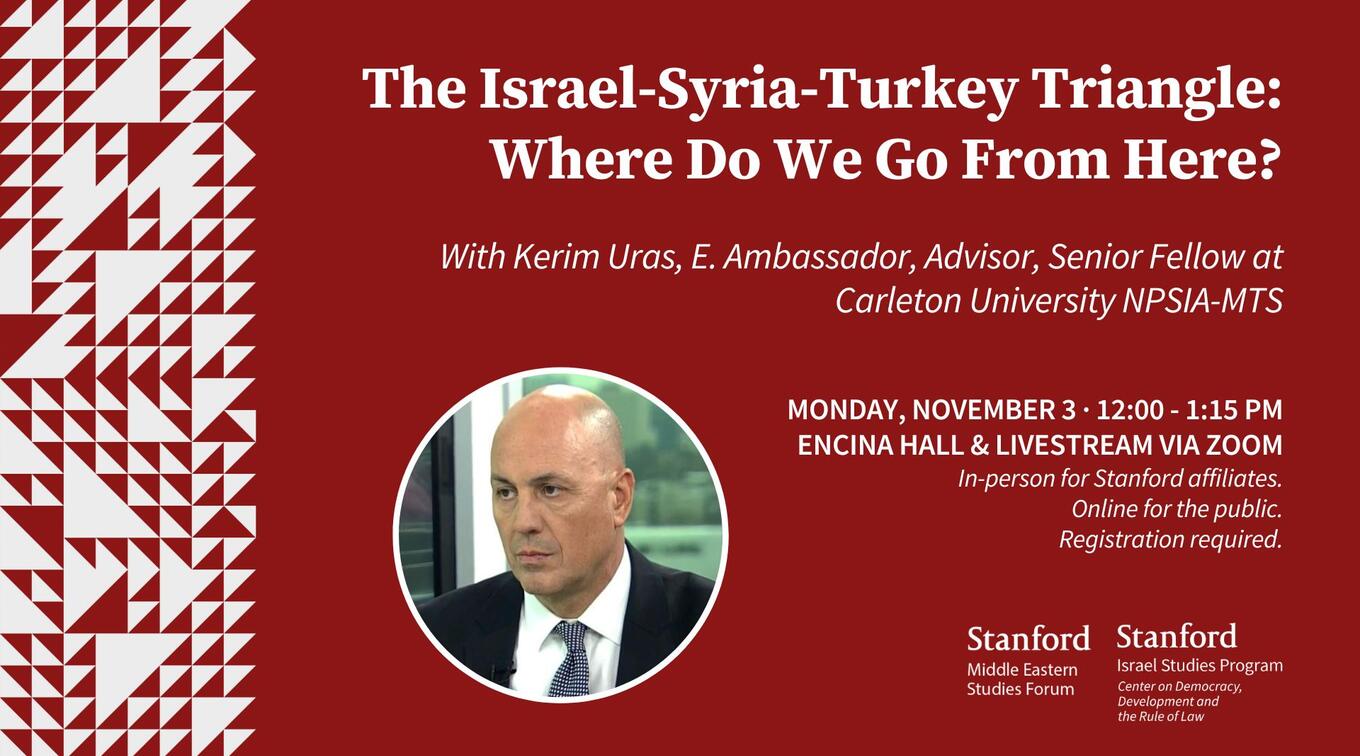
Join the Cyber Policy Center on April 29th from 1PM–2PM Pacific for Artificial Intelligence in Medicine - Real Magic or Technological Illusions? with Jonathan H. Chen MD, PhD, Assistant Professor of Medicine (Biomedical Informatics) and of Biomedical Data Science at Stanford University. It will be moderated by Jeff Hancock. 

Stanford affiliates are invited to join us at 12:40 PM for lunch, prior to the seminar.  The Spring Seminar Series continues through the end of May; see our Spring Seminar Series page for speakers and topics.

About the Seminar:

Pandora’s box has opened in the form of publicly available generative AI systems for every imaginable (and many unintended) purposes. With a global scarcity of medical expertise against the unlimited demand of people in need, AI's potential to democratize healthcare knowledge, access, and to recover efficiencies is desperately needed. The implications are vast as we converge upon a point in history where human vs. computer generated content can no longer be reliably distinguished. This session will review the attention and intention required for AI applications in the high-stakes world of healthcare as we distinguish real magic from convincing illusions.

About the Speaker:

Jonathan H. Chen MD, PhD leads a research group to empower individuals with the collective experience of the many, combining human and artificial intelligence approaches to deliver better care than either alone. Dr. Chen continues to practice medicine for the concrete rewards of caring for real people and to inspire this research focused on discovering and distributing the latent knowledge embedded in clinical data.

Before his medical training, Chen co-founded a company to translate his Computer Science graduate work into an expert system for organic chemistry, with applications from drug discovery to an education tool for students around the world. His expertise is regularly featured in popular press outlets with over 100 publications in leading clinical and informatics venues and awards from the NIH, National Library of Medicine, American Medical Informatics Association, International Brotherhood of Magicians and more.

In the face of ever escalating complexity in medicine, informatics solutions are the only credible approach to systematically address challenges in healthcare. Tapping into real-world clinical data like electronic medical records with machine learning and data analytics will reveal the community's latent knowledge in a reproducible form. By delivering this back to clinicians, patients, and healthcare systems as clinical decision support, he aims to uniquely close the loop on a continuously learning health system.

Stanford Law School Building, Manning Faculty Lounge (Room 270)
559 Nathan Abbott Way Stanford, CA 94305

Jonathan Chen
Seminars
Date Label
-
Amy Zegart

Join the Cyber Policy Center on April 15th from 1PM–2PM Pacific for The Unforgiving Hour: New Technologies, Old Ideas, and the Fragility of American Power, a seminar with Amy Zegart, Senior Fellow at the Freeman Spogli Institute for International Studies and the Morris Arnold and Nona Jean Cox Senior Fellow at the Hoover Institution. It will be moderated by Jeff Hancock. 

Stanford affiliates are invited to join us at 12:40 PM for lunch, prior to the seminar.  The Spring Seminar Series continues through the end of May; see our Spring Seminar Series page for speakers and topics.

About the Seminar:

The foundations of American power are eroding due to a failure to adapt to a new era in which knowledge and technological innovation are the primary sources of national strength. Traditional measures of power—military might, natural resources, and economic scale—are increasingly insufficient. Instead, intangible assets such as education, research capacity, and control over emerging technologies determine long-term geopolitical influence. The United States is losing ground in these areas, with declining K–12 educational outcomes, reduced federal investment in basic research, outdated immigration policies, and growing reliance on private-sector actors whose interests may diverge from national objectives. Meanwhile, global competitors—particularly China—are rapidly expanding their innovation capacity. The U.S. must look toward a strategic shift in policy to enhance knowledge power through educational reform, immigration modernization, increased public research funding, and improved coordination between government, academia, and industry.

About the Speaker:

Amy Zegart is the Morris Arnold and Nona Jean Cox Senior Fellow at the Hoover Institution and Professor of Political Science (by courtesy) at Stanford University. She is also a Senior Fellow at Stanford's Human-Centered Artificial Intelligence Institute and the Freeman Spogli Institute for International Studies.  Zegart is an internationally recognized expert in U.S. intelligence, emerging technologies, and global political risk management. At Hoover, Zegart currently serves as the Director of the Robert and Marion Oster National Security Affairs fellows program and as Director of the Technology Policy Accelerator, which produces the annual Stanford Emerging Technology Review. She frequently advises senior U.S. officials on intelligence and emerging technology matters. She is the author of five books, including the bestseller Spies, Lies, and Algorithms: The History and Future of American Intelligence. Zegart holds a bachelor’s degree in East Asian studies from Harvard University and a doctorate in political science from Stanford University.

Stanford Law School Building, Manning Faculty Lounge (Room 270)
559 Nathan Abbott Way Stanford, CA 94305

Amy Zegart
Seminars
Date Label
-
jo robinson

Join the Cyber Policy Center on April 8th from 1PM–2PM Pacific for Social Media and Youth Suicide Prevention, a seminar with Jo Robinson. It will be moderated by Jeff Hancock. 

Stanford affiliates are invited to join us at 12:40 PM for lunch, prior to the seminar.  The Spring Seminar Series continues through the end of May; see our Spring Seminar Series page for speakers and topics.

About the Seminar

Concerns exist regarding the relationship between social media, self-harm and suicide. However, social media is commonly used, in particular by young people, and research has identified several potential benefits, such as the potential for connection, seeking help and support and helping others. Therefore, we need to identify ways to minimize the risks without diminishing the benefits. Potential levers for maintaining safe online environments include equipping users to keep themselves and others safe; policy approaches, whereby governments develop and implement legislation to support online safety; and industry approaches whereby the social media industry takes responsibility for maximizing safety on its platforms.

In this presentation Prof Robinson will present a body of work that has examined the role of social media in suicide prevention. It will include three brand new studies that together have led to a suite of recommendations for both industry professionals and policymakers regarding approaches to online safety. She will also present a case study of one evidence-based educational approach to supporting young people to engage with self-harm and suicide-related content safely on social media. This approach has been tested widely and is now supported by governments across Australia and New Zealand as well as overseas.

About the Speaker:

Professor Jo Robinson leads Orygen’s suite of research programs around suicide prevention. She currently coordinates several research projects in collaboration with Australian and overseas universities. Some of the projects underway include a randomised controlled trial of an internet-based program for at-risk secondary school students, a study examining the role of social media in suicide prevention, and the evaluation of a gatekeeper-training program designed to assist school staff to identify and support students at risk. Robinson's work focuses on improving our knowledge about the best approaches to reduce suicide risk among young people. This includes developing programs, testing novel approaches that specifically target at-risk youth, and translating the research evidence into practice and policy.

Stanford Law School Building, Manning Faculty Lounge (Room 270)
559 Nathan Abbott Way Stanford, CA 94305

Jo Robinson
Seminars
Date Label
-
sandy pentland

Join the Cyber Policy Center on April 1st from 1PM–2PM Pacific for Human-Compatible AI for Digital Media, a seminar with Sandy Pentland. It will be moderated by Jeff Hancock. 

Stanford affiliates are invited to join us at 12:40 PM for lunch, prior to the seminar.  The Spring Seminar Series continues through the end of May; see our Spring Seminar Series page for speakers and topics.

About the Seminar

Human beliefs and norms evolve through a process of collective search and evaluation; the practice of science is a classic example of this sort of collective abductive reasoning.  We can accelerate this search process while protecting human human agency by using AI to accelerate the laborious or inefficient aspects of collective search. We have built and tested social media style systems that support improved belief and norm development in the domains of science, patents, law, finance, and democratic deliberation without unduly replacing human judgement. Finally, we have just embarked on a project called “consumer champions” that inverts the standard social media advertising model by using these same methods.
 

About the Speaker:

Sandy Pentland is a Center Fellow at Stanford's HAI. He directs MIT’s Human Dynamics Laboratory and the MIT Media Lab Entrepreneurship Program, co-leads the World Economic Forum Big Data and Personal Data initiatives, and is a founding member of the Advisory Boards for Nissan, Motorola Mobility, Telefonica, and a variety of start-up firms. He has previously helped create and direct MIT’s Media Laboratory, the Media Lab Asia laboratories at the Indian Institutes of Technology, and Strong Hospital’s Center for Future Health. 

Stanford Law School Building, Manning Faculty Lounge (Room 270)
559 Nathan Abbott Way Stanford, CA 94305

Sandy Pentland
Seminars
Date Label
-

About the event: Autonomous weapons systems (AWS) have sparked significant debate in international politics and research, especially regarding their ‘critical functions’ of target selection and engagement without human intervention or control. As a response to potential ethical and legal concerns, as well as security-related risks, AWS have been subject to an ongoing international regulation process at the United Nations since 2014. The primary focus of this process has been on maintaining human control over the use of force. However, since its initiation more than a decade ago, no regulatory framework has been agreed upon and core concepts, such as human control, are still highly contested.

Anna's research investigates why the regulation of AWS have not been successful (so far) by analyzing the co-production of weapons technology and arms control politics. In this talk, she shows that it is not solely determined by state interests. Rather, it is influenced by a complex interplay of knowledge production practices and discourses both within and outside of these processes. Moreover, with recent developments in and applications of artificial intelligence (AI), new questions about the nature of human-machine relations in war come to the fore, further complicating the regulatory landscape.

About the speaker: Anna-Katharina Ferl is a Postdoctoral Fellow at the Center for International Security and Cooperation (CISAC) and the Stanford Existential Risk Initiative (SERI) at Stanford University. Her research focuses on the regulation of artificial intelligence and autonomy as well as the practices of knowledge production in international security. Anna received her PhD from the University of Frankfurt in 2024 and previously worked as a researcher at the Peace Research Institute Frankfurt (PRIF). In addition to academic publications, she has also contributed to several policy reports on topics such as German arms control policies and gender-specific aspects of new technologies in international security.

 All CISAC events are scheduled using the Pacific Time Zone.

No filming or recording without express permission from speaker.

William J. Perry Conference Room

0
Post-doctoral Fellow
rsd25_073_0426a.jpg

Before joining CISAC, Anna worked as a researcher at the Peace Research Institute Frankfurt (PRIF) and completed her PhD in Political Science at Goethe University Frankfurt. During her doctoral studies, she was a research fellow at the German Federal Foreign Office, Cornell University, and the University of Southern Denmark. Anna has also conducted field research at the United Nations in Geneva.

Anna’s research focuses on the intersection between politics, international security, and technology, with a specific focus on military applications of AI and autonomy. She is interested in how these technological developments shape human-machine relations and how they change understandings of the human role in future warfare. This also influences how AI technologies could be politically regulated and governed.

Date Label
Anna-Katharina Ferl
Seminars
Date Label
-

About the event: Research shows that women are less likely to protest and have less cellphone access than men. Since studies indicate that cellphones can boost protest participation, we ask whether the gender gap in mobile ownership influences gender disparities in protest turnout. We find that the growing gender digital divide in cellphone ownership exacerbates the participation gap. We use survey data from Africa to show that where women systematically own fewer cellphones than men, they protest less frequently than men. We use a variety of methodological techniques to address concerns of endogeneity. We also probe one mechanism underpinning this relationship; we demonstrate that women who do not own cellphones face a political information disadvantage that limits their engagement. We conclude that unequal cellphone access further entrenches women’s position on the political margins.

This paper was co-authored with Tiffany Barnes, Emily Rains and Jingwen Wu.

About the speaker: Jakana Thomas is Associate Professor in the School of Global Policy and Strategy and Department of Political Science at University of California San Diego. Her research focuses on political violence and conflict processes with an emphasis on understanding women’s participation in and experiences with contentious politics. Her work has been published at the leading Political Science and International Relations journals, including the American Political Science Review, American Journal of Political Science, Journal of Politics and International Organization, among other outlets. She is PI on a Blue Shield Foundation funded project examining Californians’ experiences with violence across their lifespans (CalVEX).

 All CISAC events are scheduled using the Pacific Time Zone.

No filming or recording without express permission from speaker.

William J. Perry Conference Room

Jakana Thomas
Seminars
Date Label
-
Grigore Pop-Eleches

After more than three years since Russia’s full-scale invasion of Ukraine, international support for Ukraine is coming under increasing attack, even as it is more important than ever to safeguard Ukraine’s independence and sovereignty. 

This paper builds on two waves of online public opinion surveys in eight countries bordering Ukraine and/or Russia (Latvia, Lithuania, Poland, Hungary, Romania, Moldova, Kazakhstan and Azerbaijan) to analyze the drivers of popular attitudes towards the war among citizens of neighboring countries, and identify the factors that may counter the growing war fatigue and the barrage of misinformation and propaganda from Russia (and increasingly from Western politicians). We also present the results of a pre-registered survey experiment, in which respondents were selectively exposed to an empathy induction prompt that encouraged them to reflect on the challenges of daily life in war-time Ukraine, and tests the impact of this empathy treatment on different dimensions of support for Ukraine.


Speaker: Grigore Pop-Eleches

I am a Professor of Politics and International Affairs at the Princeton School of Public and International Affairs and the Politics Department at Princeton University. I joined the Princeton faculty in 2003 after receiving my PhD in Political Science from UC Berkeley. I am co-director of the Princeton Workshop on Post-Communist Politics(Link is external).

My main current research interests are in comparative political behavior with a focus on authoritarian and post-authoritarian regimes (largely in Eastern Europe and the former Soviet Union). I have also worked on comparative and international political economy of Eastern Europe and Latin America, and on democratization and democratic backsliding, with a focus on the role of electoral behavior and political parties.

My first book, entitled "From Economic Crisis to Reform: IMF Programs in Latin America and Eastern Europe" was published by Princeton University Press in February 2009. My second book, "Communism's Shadow: Historical Legacies and Contemporary Political Attitudes" (joint with Joshua A. Tucker), was published in 2017 by Princeton University Press. My work has also appeared in a variety of academic journals, including The American Journal of Political Science, The Journal of Politics, World Politics, Comparative Political Studies, Comparative Politics, Quarterly Journal of Political Science, International Studies Quarterly, Journal of Democracy, Studies in Comparative International Development, and East European Politics and Societies.


REDS: RETHINKING EUROPEAN DEVELOPMENT AND SECURITY


The REDS Seminar Series aims to deepen the research agenda on the new challenges facing Europe, especially on its eastern flank, and to build intellectual and institutional bridges across Stanford University, fostering interdisciplinary approaches to current global challenges.

REDS is organized by The Europe Center and the Center on Democracy, Development and the Rule of Law, and co-sponsored by the Hoover Institution and the Center for Russian, East European and Eurasian Studies.

Learn more about REDS and view past seminars here.


Image
CDDRL, TEC, Hoover, and CREEES logos
Anna Grzymała-Busse
Anna Grzymała-Busse, Kathryn Stoner
Grigore Pop-Eleches, Princeton University
Seminars
Date Label
-
Phillip Ayoub

How Transnational Conservative Networks Target Sexual and Gender Minorities

In the past three decades, remarkable progress has been made in numerous countries for the rights of individuals marginalized due to their sexual orientation and gender identity. The advancements in LGBTI rights in a variety of diverse countries can largely be attributed to the tireless efforts of the transnational LGBTI-rights movement, forward-thinking governments in pioneering nations, and the evolving human rights frameworks of international organizations. However, this journey towards equality has been met with formidable opposition. An increasingly interconnected and globally networked resistance, backed by religious-nationalist elements and conservative governments, has emerged to challenge LGBTI and women's rights, even seeking to reinterpret and co-opt international human rights law.

In this lecture, Phillip Ayoub draws on his new book with Kristina Stöckl to investigate this complex landscape, drawing from over a decade of in-depth fieldwork with LGBTI activists, anti-LGBTI proponents, and various state and international organization actors. Moral conservative TANs have employed many of the same transnational tools that garnered LGBTIQ people their widespread recognition. As the double-helix metaphor suggests, rival TANs have a reciprocal relationship, having to navigate each other’s presence in an interactive space and thus using related strategies and instruments for mutually exclusive ends."


Phillip M. Ayoub is a professor of International Relations in the Department of Political Science at University College London. He is the author of four books and volumes, including When States Come Out: Europe’s Sexual Minorities and the Politics of Visibility (Cambridge University Press, 2016), and his articles have appeared in the American Political Science Review, Comparative Political Studies, Social Forces, the Journal of Ethnic and Migration Studies, the European Journal of International Relations, the European Journal of Political Research, the Review of International Studies, Mobilization, the European Political Science Review, the Journal of Human Rights, Social Politics, Political Research Quarterly, and Social Movement Studies, among others. Further information can be found under www.phillipayoub.com.

Anna Grzymała-Busse
Anna Grzymała-Busse
Phillip Ayoub, University College London
Seminars
Date Label
-

About the event: In this talk, Elena Kempf shares material from her forthcoming book on the history of weapons prohibitions in international law from the 1860s to the 1970s.

She argues that weapons prohibitions during this period emerged as a central site of contestation about the limits of the legitimate application of new technologies to war. These debates involved diplomats and international lawyers, but also medical professionals, scientists, and journalists. From their efforts, two ways of justifying a prohibition on a weapon emerged. The first repurposed the old legal concept of unnecessary suffering to newly weigh wounding against the abilities of military surgeons. The second was based on the specter of injury to global systems like shipping lines or the obliteration of major cities.

To revisit the early history of weapons prohibitions under international law is to uncover an expansive vocabulary that might animate future efforts at prohibition or control. This history also reveals the limits of outlawing weapons under international law. Law and technology changed at different velocities, leading to persistent distortions between moral-legal expectations and technical realities. In addition, the project of weapons prohibitions remained fragile, contested by techno-optimist, militarist, and pacifist critics.

About the speaker: Elena Kempf is the Old Dominion Career Development Assistant Professor of History at the Massachusetts Institute of Technology. Her research focuses on the legal regulation of modern weapons of war. She is currently completing a manuscript on the history of weapons prohibitions in international law from the 1860s to the 1970s. She is also drafting a paper on the history of the concept of unnecessary suffering and superfluous injury. Prior to joining MIT, she was a postdoctoral fellow with the Miller Institute for Global Challenges and the Law at UC Berkeley Law School, and a lecturer with the Department of History at Stanford University. Professor Kempf earned her PhD in History from UC Berkeley in 2021.

 All CISAC events are scheduled using the Pacific Time Zone.

No filming or recording without express permission from speaker.

William J. Perry Conference Room

Elena Kempf
Seminars
Date Label
-
A Fractured Liberation

With the collapse of the Japanese Empire in August 1945, the Korean peninsula erupted with hopes and dreams that had been bottled up for nearly forty years. Kornel Chang's new book, A Fractured Liberation: Korea under U.S. Occupation (Cambridge: Belknap Press of Harvard University Press, 2025), tells the story of how Koreans—from political leaders and activists to ordinary peasants, workers, and women—experienced the shock of liberation, what they thought it might bring, the great expectations, and the opportunities and challenges they faced as a newly emancipated people. The book also looks at how the entry of American forces complicated, and ultimately, narrowed possibilities for liberation. U.S. officials fought over how to best fulfill Korean aspirations and how they should be prioritized among competing objectives in Korea. An eclectic group of American and Korean reformers—New Deal liberals, Christian socialists, and trade unionists—proposed an agenda of democratization and reform as an alternative to the rigid anti-communism of the military high command. Their stories reveal the paths not taken. In telling them, A Fractured Liberation restores contingency to a narrative that looks ahead to war and division as an inevitable endpoint.
 

Kornel Chang headshot

Kornel Chang is Associate Professor of History and American Studies and Chair of the History Department at Rutgers University-Newark. His first book Pacific Connections: The Making of the U.S.-Canadian Borderlands is a history of Asian migration to the Pacific Northwest, revealing how their movements sparked some of the first battles over the border in North America. It won the Association for Asian American Studies History Book Prize and was a finalist for the John Hope Franklin Book Prize. His second book, A Fractured Liberation: Korea under U.S. Occupation, recently published by Belknap Press of Harvard University Press, is a narrative history of southern Korea in the aftermath of World War II, when the collapse of the Japanese Empire ushered in an extraordinary moment of promise and possibility that ultimately ended in political tragedy.

Directions and Parking > 

Philippines Conference Room (C330)
Encina Hall, 3rd Floor
616 Jane Stanford Way, Stanford, CA 94305

Kornel Chang, Associate Professor of History and American Studies and Chair of the History Department at Rutgers University-Newark
Seminars
Title
[Book Talk] A Fractured Liberation: Korea under U.S. Occupation
Date Label
Subscribe to Seminars