US Government Agencies and NGOs Abroad
Oksenberg Room, Third Floor, Encina Hall
What explains the variation in legislative strength in African states since the early 1990s? Strong legislatures are central to democratic consolidation and the emergence of limited representative government. Yet we know very little about contemporary legislative development, especially among countries that democratized over the last two decades. With novel data and qualitative analysis from sub-Saharan Africa, this paper investigates the sources of observed variation in legislative strength and capacity in Africa, and the policy implications of varying levels of legislative institutionalization. The findings show that strong states with elite party systems produce strong legislatures. These findings highlight the tension between political institutionalization and populist democratic representative government. The paper concludes with policy recommendations for ongoing legislative strengthening programs around the world.
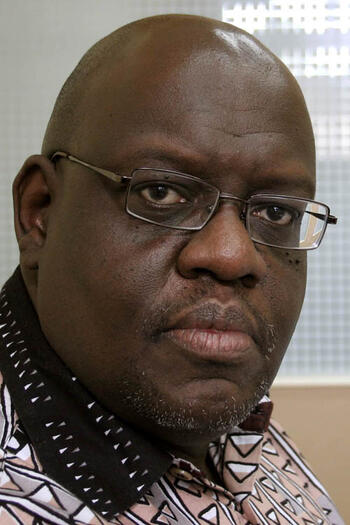
Ken Opalo is a PhD Candidate in the Department of Political Science at Stanford University. His research interests include the political economy of institutional development, natural resource management, elections and governance. His dissertation explains the observed variation in political strength, organizational capacity and general levels of institutionalization of African legislatures since 1990. Ken argues that strategies of political domination employed by ruling elites during the period of one party rule explain much of the variation in legislative development in Africa. Specifically, countries that had strong mass parties (as opposed to elite parties) were more likely to have weaker parliaments after the re-introduction of multiparty politics. In his research, Ken uses a mixed methods approach – including detailed case studies of Kenya and Zambia; a regression discontinuity design; and natural experiments to identify the causal mechanisms implied by his theory of endogenous institutional change.
Ken has done research and/or visited 10 different African countries in Eastern, West and Southern Africa. He is a former research consultant with the Global Commission on Elections, Democracy, and Security, a project of the Kofi Annan Foundation. Ken is currently a short-term consultant with the World Bank on the political economy of regional infrastructure development in East and West Africa. He maintains a blog at www.kenopalo.com and has written for and/or appeared on the BBC, Al Jazeera, the African Development Bank, and Foreign Policy Magazine.
Scholars increasingly find that autocrats secure their survival by building formal political institutions: either single parties or national parliaments. These insights, however, do little to illuminate autocratic politics in post-Cold War Africa, where international creditors have forced autocrats to abide the nominally democratic institutions constructed during the Third Wave of Democracy. My book manuscript measures the threats to autocratic survival posed by democratic institutions and explains how the continent's autocrats are learning to survive them. During this presentation I will focus on the dynamics of popular protest in an age of regular elections. After presenting evidence that dependence on Western aid constrains African autocrats' recourse to repression -- and that, anticipating these constraints, African citizens are far more likely to protest when their rulers depend on Western aid -- I will show how Africa's autocrats suppress popular unrest without violence. Drawing on micro-level data from the Republic of Congo, I will focus on three classes of autocratic survival strategies: electoral alliances with opposition parties, electoral competition among regime loyalists, and the ethnic construction of the internal security apparatus.
Brett Carter is an Associate Professor in the Department of Political Science and International Relations at the University of Southern California, a Hoover Fellow at Stanford University's Hoover Institution, and a Faculty Affiliate at Stanford's Center on Democracy, Development and the Rule of Law. He received a Ph.D. from Harvard University, where he was a fellow at the Harvard Academy for International and Area Studies.
Carter studies politics in the world's autocracies. His first book, Propaganda in Autocracies: Institutions, Information, and the Politics of Belief (Cambridge University Press), draws on the largest archive of state propaganda ever assembled — encompassing over eight million newspaper articles in six languages from nearly 60 countries around the world — to show how political institutions shape the propaganda strategies of repressive governments. It received the William Riker Prize for the Best Book in Political Economy, the International Journal of Press/Politics Hazel Gaudet-Erskine Best Book Award, Honorable Mention for the Gregory Luebbert Award for the Best Book in Comparative Politics, and Honorable Mention for the APSA Democracy & Autocracy Section's Best Book Award.
His second book, in progress, shows how politics in Africa’s autocracies changed after the fall of the Berlin Wall and how a new era of geopolitical competition — marked by the rise of China and the resurgence of Russia — is changing them again.
Carter’s other work has appeared in the Journal of Politics, British Journal of Political Science, Perspectives on Politics, Journal of Conflict Resolution, Security Studies, China Quarterly, Journal of Democracy, and Foreign Affairs, among others. His work has been featured by The New York Times, The Economist, The National Interest, and NPR’s Radiolab.
Paul Amar will discuss his book The Security Archipelago, winner of the 2014 Charles Taylor Book Award of the American Political Science Association. The book provides an alternative historical and theoretical framing of the refashioning of free-market states and the rise of humanitarian security regimes in the Global South by examining the pivotal, trendsetting cases of Brazil and Egypt. Addressing gaps in the study of neoliberalism and biopolitics, Amar describes how coercive security operations and cultural rescue campaigns confronting waves of resistance have appropriated progressive, antimarket discourses around morality, sexuality, and labor. Homing in on Cairo and Rio de Janeiro, Amar reveals the innovative resistances and unexpected alliances that have coalesced in new polities emerging from the Arab Spring and South America's Pink Tide. These have generated a shared modern governance model that he terms the "human-security state."
Paul Amar, Associate Professor in the Global & International Studies Program, is a political scientist with affiliate appointments in Feminist Studies, Sociology, Comparative Literature, Middle East Studies, and Latin American & Iberian Studies. At UCSB he currently serves as Chair of Middle East Studies, Coordinator of the Campus Cluster on Security Studies, and member of the Graduate Studies Council. In addition, he serves as coordinator of scholarly projects for the Arab Council of the Social Sciences, based in Beirut. Before he began his academic career, he worked as a journalist in Egypt, a police reformer in Brazil, and as a conflict-resolution and economic development specialist at the United Nations. His books include: Cairo Cosmopolitan (2006); New Racial Missions of Policing (2010); Global South to the Rescue (2011); Dispatches from the Arab Spring (2013); The Middle East and Brazil (2014), and The Security Archipelago: Human-Security States, Sexuality Politics and the End of Neoliberalism. This most recent book was awarded the Charles Taylor Award for "Best Book of the Year" in 2014 by the Interpretive Methods Section of the American Political Science Association.
*This event is co-sponsored with CDDRL's Program on Arab Reform and Democracy and the Mediterranean Studies Program.*
[[{"fid":"217928","view_mode":"crop_870xauto","fields":{"format":"crop_870xauto","field_file_image_description[und][0][value]":"Paul Amar Flyer","field_file_image_alt_text[und][0][value]":"","field_file_image_title_text[und][0][value]":"","field_credit[und][0][value]":"","field_caption[und][0][value]":"","field_related_image_aspect[und][0][value]":"","thumbnails":"crop_870xauto","pp_lightbox":false,"pp_description":false},"type":"media","attributes":{"width":"870","class":"media-element file-crop-870xauto"}}]]
Reuben Hills Conference Room
2nd Floor East Wing E207
Encina Hall
616 Serra Street
Stanford, California 94305
Two former congressmen present the keys to fixing a broken Congress in
“A smart book that asks the right questions and offers some intriguing solutions.”— President Bill Clinton
Premiere/FastPencil (a publishing imprint distributed by Dover Publications) announces the release of The Partisan Divide: Congress in Crisis, a powerful and important new work by two former congressional leaders, one Democratic and one Republican. According to Mr. Frost and Mr. Davis, Congress is incapable of reforming itself without a good kick in the seat from the American public. Frost and Davis, with great insight and skill, along with a wealth of entertaining anecdotes and photos, dissect the causes of legislative gridlock and offer a common sense, bipartisan plan for making our Congress function again.
The perfect tonic for these turbulent times, The Partisan Divide: Congress in Crisis is a fascinating must-read for the historically and politically curious.
*This event is co-sponsored with CDDRL's Program on American Democracy in Comparative Perspective and Stanford in Government.*
[[{"fid":"217935","view_mode":"crop_870xauto","fields":{"format":"crop_870xauto","field_file_image_description[und][0][value]":"","field_file_image_alt_text[und][0][value]":"","field_file_image_title_text[und][0][value]":"","field_credit[und][0][value]":"","field_caption[und][0][value]":"","field_related_image_aspect[und][0][value]":"","thumbnails":"crop_870xauto","pp_lightbox":true,"pp_description":false},"type":"media","attributes":{"height":"1113","width":"870","class":"media-element file-crop-870xauto"}}]]
*This event is co-sponsored with CDDRL's Program on Arab Reform and Democracy and The Sohaib and Sara Abbasi Program in Islamic Studies.*
European and US-based scholars and practitioners have debated the purposes and sometimes the (limited) macro-effects of programs designed to promote transitions from authoritarianism to democracy in Middle East countries. Yet this discussion often lacks analysis of on-the-ground experiences or ignores the cumulative wisdom of local counterparts and intermediaries. This seminar is based on Carapico’s ground-breaking study Political Aid and Arab Activism: Democracy Promotion, Justice, and Representation (Cambridge University Press, 2013) which explores two decades’ worth of projects sponsored by American, European, and other transnational agencies in four key sub-fields: the rule of law, electoral design and monitoring, female empowerment, and civil society. Specifically in the seminar Carapico will discuss controversies and contradictions surrounding projects in Egypt, Palestine, and Iraq (the three main cases) and Jordan, Morocco, Yemen, Algeria, Tunisia, and Lebanon (where democracy brokers also work) to help explain why so many feminists and other advocates for justice, free elections, and civic agency concluded that foreign funding is inherently political and paradoxical.
Sheila Carapico
Sheila Carapico, Professor of Political Science and International Studies at the University of Richmond, has been exploring Arab activism since studying in Cairo and traveling around the region in 1971/72. She lived in Sana’a from 1977 through 1980, mainly researching community development initiatives and foreign aid interventions. Subsequently she worked as a consultant for the International Fund for Agricultural Development, the Netherlands Embassy, Human Rights Watch, and several other agencies in Yemen, Egypt, and Lebanon. She was a Fulbright research scholar and visiting fellow at the Sana’a University Women’s Studies and Social Research Center for two years during the ‘democratic opening’ in Yemen in the early 1990s. She served as Visiting Chairperson in the Department of Political Science at the American University in Cairo for all of 2010 and the ‘Arab spring’ semester of 2011, and returned to AUC as a visiting faculty member in the spring of 2013. In addition to Political Aid she is the author of Civil Society in Yemen: A Political Economy of Activism in Modern Arabia (Cambridge University Press, 1998) and other works on the comparative and international politics of the Arabian Peninsula and the Arab world. She is a contributing editor of Middle East Report.
[[{"fid":"217801","view_mode":"crop_870xauto","fields":{"format":"crop_870xauto","field_file_image_description[und][0][value]":"Sheila Carapico flyer","field_file_image_alt_text[und][0][value]":"","field_file_image_title_text[und][0][value]":"","field_credit[und][0][value]":"","field_caption[und][0][value]":"","field_related_image_aspect[und][0][value]":"","thumbnails":"crop_870xauto","pp_lightbox":false,"pp_description":false},"type":"media","attributes":{"width":"870","class":"media-element file-crop-870xauto"}}]]
The uprisings that spread across the Middle East in 2011 created new hope for democratic change in the Arab world. Four years later, the euphoria that greeted the Arab uprisings has given way to a far more somber mood, a recognition of the limits of mass protests to bring about political change, and acknowledgement that the region's entrenched authoritarian regimes are more resilient than many protesters imagined. Yet in responding to the challenge of mass politics, authoritarian regimes in the Middle East have not simply shown their resilience. In adapting to new challenges they have also changed, giving rise to new and more troubling forms of authoritarian rule, suggesting that the turmoil of recent years may be only the beginning of an extended period of political instability, violence, and repression in many parts of the Middle East.
Steven Heydemann
Steven Heydemann serves as the vice president of Applied Research on Conflict at United States Institute of Peace. Heydemann is a political scientist who specializes in the comparative politics and the political economy of the Middle East, with a particular focus on Syria. His interests include authoritarian governance, economic development, social policy, political and economic reform and civil society. From 2003 to 2007, Heydemann directed the Center for Democracy and Civil Society at Georgetown University. From 1997 to 2001, he was an associate professor in the department of political science at Columbia University. Earlier, from 1990-1997, he directed the Social Science Research Council’s Program on International Peace and Security and Program on the Near and Middle East. Heydemann is the author of Authoritarianism in Syria: Institutions and Social Conflict, 1946-1970 (Cornell University Press, 1999), and editor of Networks of Privilege in the Middle East: The Politics of Economic Reform Revisited, (Palgrave Press, 2004), and War, Institutions and Social Change in the Middle East (University of California Press, 2000).
[[{"fid":"217528","view_mode":"crop_870xauto","fields":{"format":"crop_870xauto","field_file_image_description[und][0][value]":"Steven Heydemann talk flyer","field_file_image_alt_text[und][0][value]":"","field_file_image_title_text[und][0][value]":"","field_credit[und][0][value]":"","field_caption[und][0][value]":"","field_related_image_aspect[und][0][value]":"","thumbnails":"crop_870xauto","pp_lightbox":false,"pp_description":false},"type":"media","attributes":{"height":506,"width":870,"class":"media-element file-crop-870xauto"}}]]
Goldman Conference Room
4th Floor East Wing E409
Encina Hall
616 Serra Street
Stanford, California 94305
This event has been cancelled. We will update our website once the new date has been determined.
Encina Hall, C148
616 Jane Stanford Way
Stanford, CA 94305
Francis Fukuyama is the Olivier Nomellini Senior Fellow at Stanford University's Freeman Spogli Institute for International Studies (FSI), and a faculty member of FSI's Center on Democracy, Development and the Rule of Law (CDDRL). He is also Director of Stanford's Ford Dorsey Master's in International Policy, and a professor (by courtesy) of Political Science.
Dr. Fukuyama has written widely on issues in development and international politics. His 1992 book, The End of History and the Last Man, has appeared in over twenty foreign editions. His book In the Realm of the Last Man: A Memoir will be published in fall 2026.
Francis Fukuyama received his B.A. from Cornell University in classics, and his Ph.D. from Harvard in Political Science. He was a member of the Political Science Department of the RAND Corporation, and of the Policy Planning Staff of the US Department of State. From 1996-2000 he was Omer L. and Nancy Hirst Professor of Public Policy at the School of Public Policy at George Mason University, and from 2001-2010 he was Bernard L. Schwartz Professor of International Political Economy at the Paul H. Nitze School of Advanced International Studies, Johns Hopkins University. He served as a member of the President’s Council on Bioethics from 2001-2004. He is editor-in-chief of American Purpose, an online journal.
Dr. Fukuyama holds honorary doctorates from Connecticut College, Doane College, Doshisha University (Japan), Kansai University (Japan), Aarhus University (Denmark), the Pardee Rand Graduate School, and Adam Mickiewicz University (Poland). He is a non-resident fellow at the Carnegie Endowment for International Peace. He is a member of the Board of Trustees of the Rand Corporation, the Board of Trustees of Freedom House, and the Board of the Volcker Alliance. He is a fellow of the National Academy for Public Administration, a member of the American Political Science Association, and of the Council on Foreign Relations. He is married to Laura Holmgren and has three children.
(October 2025)
Aims: Concerns have been raised about the increasing trend in diabetes among lean populations including Southeast Asians. However, this issue is less studied in Vietnam. We determined the prevalence of diabetes and prediabetes, and quantitatively evaluated associated risk factors among Vietnamese adults.
Methods: Subjects were 5,602 men and 10,680 women aged 30-69 years who participated in community diabetes screening programs during 2011-2013 in northeastern Vietnam. Diabetes was defined as fasting plasma glucose (FPG) ≥7.0 mmol/L or 2-h postload PG ≥11.1 mmol/L. Prediabetes was defined as FPG ≥6.1 mmol/L and <7.0 mmol/L or FPG <7.0 mmol/l and 2-h postload PG ≥7.8 mmol/L and <11.1 mmol/L. Putative risk factors were elicited through an interview-administered questionnaire. The authors calculated standardized prevalence rates of prediabetes and diabetes in 2011-2013 and demographic projections for 2030, and used multiple logistic regression analysis to estimate odds ratios and 95% confidence intervals for the association of multiple risk factors with diabetes and prediabetes.
Results: The overall age- and sex-standardized prevalence of diabetes was 6.0% and of prediabetes was 13.5%. Among urban residents, age- and sex-adjusted prevalence of diabetes was 6.7%, compared with 5.2% among rural/mountainous inhabitants. The age- and residence-adjusted prevalence of diabetes was 8.0% in men and 5.4% in women. Population aging is projected to raise the total prevalence of diabetes to 7.0% and of prediabetes to 15.3% by 2030. Advancing age, obesity, large waist-to-hip ratio and hypertension were each associated with higher prevalence of diabetes, whereas the opposite direction of association was observed for underweight and ethnic minority peoples in both genders. In addition, diabetes was positively associated with family history of diabetes in women, and inversely related to physically heavy work in men.
Conclusions: The present study found that in 2011-2013, around one in 17 adults had diabetes and one in 7 adults had prediabetes in northeastern Vietnam . Urbanization, population aging, elevated adiposity, uncontrolled hypertension and sedentary work may be important contributors to the increased prevalence of diabetes in this country.
Dr. Ngoc Minh Pham, the 2014-15 Stanford-APO Developing Asia Health Policy fellow with the Stanford Asia Health Policy Program, is a health professional with teaching and research experiences in epidemiology and public health in Vietnam and Japan. He obtained his MD degree from Thai Nguyen University of Medicine and Pharmacy - Vietnam in 1997, MPH from The University of Melbourne - Australia in 2004, and PhD from Kyushu University - Japan in 2011. His main interests are public health, disease prevention and the rural-urban divide in developing countries, including the epidemiology of lifestyle-related diseases including diabetes, metabolic syndrome, cancer, insulin resistance and mental illness. At Stanford, Pham is studying the epidemiology of diabetes and developing a conceptual framework for diabetes prevention and management in Vietnam, particularly in mountainous areas of that country.
Philippines Conference Room
Encina Hall Central, 3rd Floor
616 Serra Street, Stanford University
Stanford, CA 94305
Is Europe "elderly and haggard", and could France become "the crucible of Europe" (Jan. 10, 2015 NYTimes op-ed)?
On the one hand, Europe is warned by the US about an Asian "pivot", and is perceived here as less relevant and effective. Significantly, certainly as a wake up call, Pope Francis recently compared Europe to a "grandmother, no longer fertile and vibrant, increasingly a bystander in a world that has apparently become less and less Eurocentric”. France had been previously presented here as an eminent representative of an "Old Europe".
On the other hand, the US has been constantly, during the last decade, advocating for a stronger Europe and stressing a special French role in this endeavour. A few days ago, after the terrorist attacks in Paris, President Obama publicly stated that "France was the US oldest Ally".
At a time when we have to face common challenges in the Middle East and in Africa, to adapt to new emerged actors and a more assertive Russia, to deal with direct threats including in the field of proliferation and the cyber space, to define a multipolar world and organize our economic relation (TTIP), what can be the EU contribution? What can also be a special intellectual and diplomatic French input to this global realignment?
Co-sponsored by The Europe Center, the Center for International Security and Cooperation and the France-Stanford Center.
Ambassador Eric Lebédel is a French diplomat, former ambassador to the OSCE and to Finland, with a deep experience in Transatlantic relationship (twice as Minister's advisor; in the French embassy in Washington DC) and in European affairs. He is also involved in crisis management (PMs office), international security (embassy in Moscow, consul general in Istanbul) and multilateral diplomacy ( NATO's Director for crisis management, OSCE). Presently working on Strategic Partnerships for the French MFA and interested in e.diplomacy, he also regularly lectures at Sciences-po and ENA (Ecole Nationale d'Administration) on crisis management and Europe.