-


The Stanford Silicon Valley-New Japan Project
Public Forum Series with Networking
 

Speaker: Robert Cole (Bio)

Image
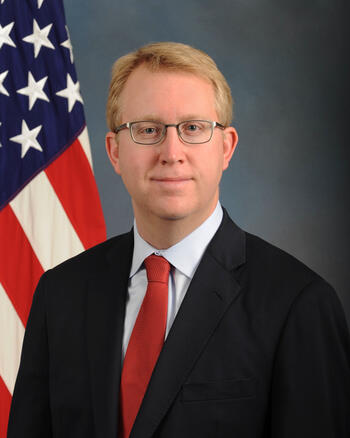
cole robert ashx

Tuesday, January 27, 2015
5:00 – 5:30 pm Networking
5:30pm - 7:00pm Lecture
Cypress Semiconductor Auditorium (CISX Auditorium)

Public Welcome • Light Refreshments

The Silicon Valley - New Japan Project


Cypress Semiconductor Auditorium (CISX Auditorium)
Paul G. Allen Building, Stanford University
330 Serra Mall, Stanford CA 94305
https://www.google.com/maps?q=CISX+Cypress+Semiconductor+Auditorium@37.4295793,-122.1748332

Robert Cole Professor Emeritus, Haas School of Business, University of California Berkeley
Seminars
-

Speaker Bios

Pamela Merchant served as the Executive Director of the Center for Justice & Accountability for the past nine years.  CJA is the leading U.S- based organization pursuing international human rights abusers through litigation.  Ms. Merchant is a former federal prosecutor and has testified before Congress on human rights issues.  She currently serves on the Advisory Council for the ABA Center on Human Rights and is a Director of the Foundation for Sustainable Rule of Law Initiatives. Ms. Merchant received her B.A from Georgetown University and her J.D. from Boston College School of Law.

Kristin Linsley Myles is a litigation partner in the San Francisco office of Munger, Tolles & Olson LLP. Her practice has focused upon complex business litigation in a wide spectrum of matters.For many years Ms. Myles has been named among California's "Top Women Lawers" by the Daily Journal. SHe has been profiled by Law360 as a Female Powerbroker. Ms. Myles frequesntly writes and speaks on a range of issues, including the Alien Tort Statue, especially in light of the U.S. Supreme Court's ruling in Kiobel.


Bechtel Conference Room, Encina Hall

Kristin Linsley Myles Litigation Partner Speaker Munger and Tolles, LLP
Pamela Merchant Speaker Center for Justice and Accountability
Helen Stacy Director Commentator Program on Human Rights
Seminars
-

Abstract

Much of the work done in international development is ineffective, non-sustainable and sometimes even harmful.  Habitat for Humanity International and other global NGOs are rightfully being challenged to undertake new strategies and work with new private and public sector partners to increase the effectiveness and the long-term sustainability of their efforts.  During this talk, I will share the framework of Habitat’s global work in seventy plus countries around the world and highlight how that work is changing and must continue to change to further its impact and Mission.

I will support the case made by others that human rights visionaries, policy makers, and advocates of the next generation must help shape a changing world to one where international development causes community-based priorities to be enabled and implemented based upon permanent and varied improvements in local capacity especially among vulnerable populations. This will require a new vocabulary, new timelines, new coalitions with new actors, new --- but not necessarily more -- resources and new metrics.

I will illustrate these issues in several contexts including Haiti, where past practices have had results ranging from disappointing to devastating but where new and exciting efforts are emerging and setting positive global standards.

Speaker Bio

Liz Blake retired in December 2014 after serving nearly nine years as Senior Vice President – Advocacy, Government Affairs & General Counsel for Habitat for Humanity International.  Prior to Habitat, Liz worked in the corporate world and in private law practice for 28 years.

At Habitat for Humanity, Liz created and led its Global Advocacy initiative, ran a global legal team and headed its government affairs office in Washington, D.C.  Liz traveled extensively in the developing world working on land rights, women’s inheritance rights, issues of secure tenure, women’s issues, and water/sanitation related issues.  Liz founded the Haiti Property Law Working Group working on land rights in Haiti and was also responsible for Habitat on the Hill, World Habitat Day events, and supported Habitat’s participation in the World Urban Forum, the World Bank Land and Poverty Conference and Prep Con for Habitat III.  Liz served as a founding member of the Board of MicroBuild and represented Habitat for Humanity on the boards of the National Housing Conference and the International Housing Coalition.

Liz continues to lead the Haiti Property Law Working Group including implementation of a land tenure grant from US AID.  Liz is on the board of the National Association of Realtors, the International Women’s Forum – Atlanta, the National Association of Corporate Directors – Atlanta and the Children’s Healthcare of Atlanta where she heads the Audit and Compliance Committee.  Liz is a director of Green Brick Partners, Inc. (NASDAQ).

Bechtel Conference Room, Encina Hall

Elizabeth Blake Senior Vice President, Government Affairs Speaker Advocacy and General Counsel, Habitat for Humanity
Helen Stacy Director Commentator Program on Human Rights
Seminars
-

Speaker Bio

Mark Lorey serves as Vice President for Child Development and Programme Effectiveness in World Vision International. The group that he leads provides global technical leadership for World Vision's work in education, child protection, child participation, gender, disability, peace building, urban programming, local partnering and advocacy, and other technical areas. Mark has worked with World Vision for more than a decade. He has previously been based in Malawi, South Africa, and Zambia and worked with Save the Children, USAID, and other agencies. He currently lives near Washington, DC with his wife and two daughters.

Bechtel Conference Room, Encina Hall

Mark Lorey Speaker Vice President for Child Development and Programme Effectiveness in World Vision International.
Helen Stacy Director Commentator Program on Human Rights
Seminars
-

ABSTRACT

The Buddhist Compassion Relief Tzu Chi (Ciji) Foundation from Taiwan is perhaps one of the largest Buddhist charities in the Chinese world today. This talk traces how Tzu Chi developed under the “regime of civility” in Taiwan. The same regime also contributed to the recent controversies between Tzu Chi and the Aborigines. I argue that the tension between the Buddhist non-governmental organization and the Christian Aborigines has to do with the inequality under the regime of civility: on the one hand, the Aborigines have been marginalized as the “subject” of the civility campaign by the state; and, on the other hand, the same regime of civility is what allows the Buddhist charity to thrive in civil society. This talk raises the question whether civility could turn against civil society.

SPEAKER BIO

Image
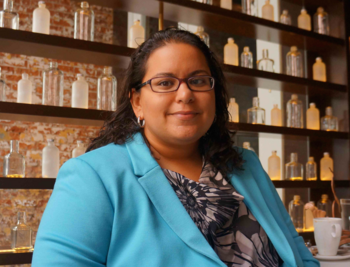
huang julia

C. Julia Huang is a Professor of Anthropology at National Tsing Hua University, Taiwan, and currently a Visiting Scholar at the Ho Center for Buddhist Studies at Stanford University. Huang has published articles in the Journal of Asian Studies, Ethnology, Positions, Nova Religio, the Eastern Buddhist, and the European Journal for East Asian Studies. Her book, Charisma and Compassion: Cheng Yen and the Buddhist Tzu Chi Movement (Harvard University Press, 2009) is an ethnography of a lay Buddhist movement that began as a tiny group in Taiwan and grew into an organization with ten million members worldwide. Huang has recently completed a book manuscript, The Social Life of Goodness: Religious Philanthropy in Chinese Societies (with Robert P. Weller and Keping Wu). She is currently working on a project on the Buddhist influences on cadaver donations for medical education in Taiwan.


This event is part of the Taiwan Democracy Project.

Ends of Compassion--presentation
Download pdf
C. Julia Huang Professor of Anthropology National Tsing Hua University, Taiwan
Seminars
-

Bechtel Conference Room, Encina Hall

Carolyn Miles President and CEO Speaker Save the Children
Helen Stacy Director Commentator Program on Human Rights
Seminars
-

Abstract

Thorn (www.wearethorn.org) drives technology innovation to fight child sexual exploitation. The talk will provide an overview of how technology has drastically changed the dynamics of crimes against children and will present concepts for how technology can also be used in new, innovative ways to combat these crimes and protect children.
 

Bechtel Conference Room, Encina Hall

Julie Cordua Speaker CEO,Thorn
Helen Stacy Director Commentator Program on Human Rights
Seminars
-

Abstract

In 2010-2011, the "Arab Spring" brought unexpected revolutions to many Middle Eastern and North African countries. Why did these seemingly invincible regimes fall, while China remained durably authoritarian? Many observers credited global media for the political transformations. While the hopes of Arab Spring democracy have proven to be fragile or short-lived, we can effectively explore the relationship between political communication and regime stability by turning our attention to Taiwan’s remarkable democratization, which remains under-appreciated by the international community.

This talk considers political communication in Taiwan from the martial law era to the heady days of democratic activism beginning in the late 1970s and lasting till the 1990s. Professor Esarey argues that the Chiang Ching-kuo administration’s diminishing capacity to control a small but influential opposition (dangwai) media, and even mainstream newspapers, gradually permitted reformers to reframe debates, reset the political agenda, and challenge state narratives and legitimacy claims. 

When viewed in comparative perspective, Taiwan’s successful democratization suggests that seeking regime change is impracticable, and even perilous, without considerable and sustainable media freedom as well as opportunities for the public to advocate, evaluate, and internalize alternative political views. A balance of “communication power” between state and societal actors facilitates a negotiated and peaceful transition from authoritarianism.


Bio

Professor Ashley Esarey received his PhD in Political Science from Columbia University and was awarded the An Wang Postdoctoral Fellowship by Harvard University. He has held academic appointments at Middlebury College, Whitman College, and the University of Alberta, where he is an instructor in the departments of East Asian Studies and Political Science and a research associate of the China Institute. Esarey has written on democratization and authoritarian resilience, digital media and politics, and information control and propaganda. His recent publications include My Fight for a New Taiwan: One Woman’s Journey from Prison to Power (with Lu Hsiu-lien) and The Internet in China: Cultural, Political, and Social Dimensions (with Randolph Kluver).


Communication Power and Taiwan's Democratization
Download pdf
Ashley Esarey Research Associate, China Institute University of Alberta
Seminars
-

Abstract

Cross-Strait relations play an important role in electoral politics in Taiwan. Increasing economic exchange together with warming political engagements make today’s cross-Strait relations a very unique case in the study of public opinion in Taiwan. Because of the economic prosperity of China, people in Taiwan might consider the expansion of trade and other forms of cross-Strait exchanges beneficial to the prosperity of Taiwan. However, growing trade ties also mean that Taiwan’s economic reliance on the mainland increases day by day, and it could eventually result in political unification—an outcome that the majority of people in Taiwan do not want. The long-standing antagonism across the Strait, especially visible in their different governing systems and ideological attitudes, has produced something close to two separate countries and contrasting national identities.  Dr. Chen was former Director of Election Study Center of National Chengchi University in Taiwan, and he will present long-term polling tracks to demonstrate how cross-Strait relations have affected electoral politics in Taiwan.


Bio

Lu-huei Chen is Distinguished Research Fellow at the Election Study Center and Professor of Political Science at National Chengchi University in Taiwan.  He is currently a visiting scholar of Top University Strategic Alliance (TUSA) at MIT. Professor Chen received his Ph. D. in political science from Michigan State University. His research focuses on political behavior, political socialization, research methods, and cross-Strait relations.  He has published articles in Issues and Studies, Journal of Electoral Studies (in Chinese), Social Science Quarterly, and Taiwan Political Science Review (in Chinese). He is the editor of Continuity and Change in Taiwan's 2012 Presidential and Legislative Election (in Chinese, 2013), Public Opinion Polls (in Chinese, 2013), and co-edited The 2008 Presidential Election: A Critical Election on Second Turnover (in Chinese, with Chi Huang and Ching-hsin Yu, 2009).

Electoral Politics and Cross-Strait Relations
Lu-huei "Jack" Chen Professor of Political Science National Cheng Chi University, Taiwan
Seminars
-

Bechtel Conference Room, Encina Hall

Musimbi Kanyoro CEO and President Speaker Global Fund for Women
Christine Sherry Founder and Principal Speaker Sherry Consulting
Helen Stacy Director Commentator Program on Human Rights
Seminars
Subscribe to Seminars