-

The nationwide massacres of 1965-66 in Indonesia must have numbered in the thousands, yet historians lack detailed information on particular killings. The scholarly literature on the killings of communist party members and sympathizers typically conveys broad generalizations based on a limited range of sources. In Indonesia today, many people remain confused as to the identity of the perpetrators. Were the massacres carried out by civilians or by army personnel? Were the killings spontaneous or were they officially planned? In addressing such questions, Prof. Roosa will draw upon the latest research on the politicide and his own oral history interviews in Java and Bali. He will argue that the army high command under General Suharto's leadership pushed regional and district commanders to organize the disappearances of detainees, that army officers called upon particular groups of civilians to assist them, and that the army personnel and civilians carried out the massacres in a semi-clandestine manner, ensuring that public knowledge of their dirty work would remain fragmented and confused.

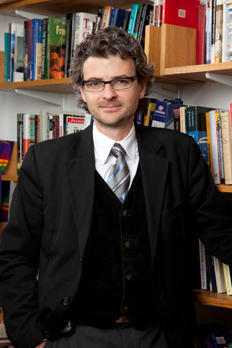
John Roosa has been researching the mysterious events of 1965-66 for the past fifteen years. His book Pretext for Mass Murder: The September 30th Movement and Suharto's Coup d'État in Indonesia (2006) was called "the leading book about the 1965 massacres" by the New York Times. The book that he is currently writing presents case studies of specific massacres and explores the difficulties of interpreting memories of violence.

Philippines Conference Room

3rd Floor Encina Hall Central.

616 Serra Street,

Stanford, CA 94305

John Roosa Associate Professor Department of History, University of British Columbia
Seminars
-

ABSTRACT

The current state of democracy in Mongolia is 1960 Kuwait, 1980 Qatar, 1995 Abu Dhabi, 2012 Mongolia all the same? This was the headline of the “Financial Times” newspaper in March 2012. Mongolia experienced the fastest growing economic growth in the world with 17.2 % of GDP growth in 2011, 12.3% in 2012. But the growth rate didn’t sustain longer and showed significant decline since 2012. Why? The country has since then not been able to meet the expectations that it had accumulated from its previous year’s successful growth performances. At the same time, the assessments of the rule of law, the political stability and the effectiveness of the government have been downgraded, suggesting that Mongolia may not be immune to the resources curse. In fact, Mongolian democracy has been in decline in the past 5 years because of the weak rule of law and justice, clientelism, patronage, corruption and cronyism without much public engagement. Clientelism and relations of patronage are all at risk, especially with the low level of rule of law and high corruption in the country. 

Mongolia is a landlocked country situated between the world’s two superpowers with hybrid regimes. In the south, it is bordered with China that has socialism with its own Chinese characteristics, and in the north, it is bordered with Russia that has authoritarian/totalitarian oligarchy with father figurehead leaders, what we call as countries with hybrid regime system.

Nevertheless, given the present state of Mongolia, external and internal factors, the manifestation of strong civil society and sound political movements for the change might be crucial aspect for defining country’s path towards full democratic development or essentially a corrupt police state with small elite fraction groups ruling over the poor masses.


SPEAKER BIO

Image
Zandanshatar

Zandanshatar Gombojav comes to Stanford as a Visiting Scholar at CDDRL.  Before his appointment as Foreign Minister, 2011 during which he had many foreign policy accomplishments from renewing the country's foreign policy concept, which was described as democracy-oriented third neighbour policy, to adopting new trade agreements with several partners and thus started the economic dimension program of the foreign relations. He has made significant contribution in making Mongolia the official member of The Organization for Security and Co-operation in Europe (OSCE). One of the major achievements during his tenure is that Mongolia took presidency over the community of democracies. His current research interest focuses on issues related to the democratic and political development of Mongolia given its geostrategic situation. At Stanford, he will be working on a larger research project encompassing regional democratic and political development from Mongolia's unique perspective.

He has published extensively on various banking issues and also on topics regarding the international relations process in refereed journals and different conference proceedings. He has been a strong supporter of the reform process, being actively involved in the organization of youth development.

Zandanshatar Gombojav General Secretary of the Mongolian People's Party
Seminars
-

Abstract: NSA stands for National Security Agency, but the agency is at odds with itself in its security mission. Undermining global encryption standards, intercepting Internet companies' data center transmissions, using auto-update to spread malware, and demanding law enforcement back doors in products and services are all business as usual. What legal basis does NSA and FBI have for these demands, and do they make the country more or less safe?

About the Speaker: Jennifer Granick started as the Stanford Law School Center for Internet and Society's (CIS) Director of Civil Liberties in June of 2012. She became an affiliate at the Center for International  Security and Cooperation in July 2012. 

Jennifer returned to Stanford after stints as General Counsel of entertainment company Worldstar Hip Hop and as counsel with the internet boutique firm of Zwillgen PLLC. Before that, she was the Civil Liberties Director at the Electronic Frontier Foundation. Jennifer practices, speaks and writes about computer crime and security, electronic surveillance, consumer privacy, data protection, copyright, trademark and the Digital Millennium Copyright Act.

From 2001 to 2007, Jennifer was Executive Director of CIS and taught Cyberlaw, Computer Crime Law, Internet intermediary liability, and Internet law and policy. Before teaching at Stanford, Jennifer spent almost a decade practicing criminal defense law in California. She was selected by Information Security magazine in 2003 as one of 20 "Women of Vision" in the computer security field. She earned her law degree from University of California, Hastings College of the Law and her undergraduate degree from the New College of the University of South Florida.

Encina Hall (2nd floor)

Jennifer Granick Director of Civil Liberties at Stanford Center for Internet and Society Speaker Stanford University
Seminars
-

*Please note that the seminar begins with a reception at 4:00pm where you can meet and talk with Mr. Githongo, followed by a lecture at 5:00pm in Paul Brest Hall at Stanford University.*


Speaker Bio: 

johngithongo 145x205 John Githongo
John Githongo, a journalist and former correspondent for The Economist, is one of the most courageous leaders in the struggle to combat corruption and improve governance in Kenya. He served as permanent secretary for governance and ethics in Kenya’s post-transition government in 2003–4, and risked his life and career to expose one of the biggest government corruption scandals in Kenyan history. He has served as CEO of Transparency International Kenya, vice president of World Vision, senior associate member at St Antony’s College Oxford, and member of the Kenya Human Rights Commission. Currently he is CEO of Inuka, an NGO that works with Kenyans, youth in particular, to improve governance and address societal problems. In 2011 Githongo was selected as one of the world’s 100 most influential Africans by New African magazine and one of the world’s top 100 global thinkers by Foreign Policymagazine. 

Image
dvposter2015  final

This event is co-sponsored by the Center on Democracy, Development and the Rule of Law. 

Paul Brest Hall 

555 Salvatierra Walk

Stanford, CA

John Githongo 2015 Mimi and Peter E. Haas Distinguished Visitor
Seminars

Co-sponsored by the Department of History and The Europe Center.

Lane History Corner, Room 307

Philip Nord Rosengarten Professor of Modern and Contemporary History Speaker Princeton University
Seminars
-

ABSTRACT

Malaysia has long had an authoritarian (UMNO/BN) regime strong enough to allow it to concede democratic reforms without conceding electoral defeat. Unlike its authoritarian counterparts in Taiwan, South Korea, Indonesia, Thailand, and now Burma/Myanmar, however, Malaysia’s regime has thus far eschewed this surprisingly common Asian strategy of “democracy through strength.” Professor  Slater will discuss how and why Malaysia’s rulers have responded to their regime’s gradual decline with the rhetoric but not the substance of democratic reform.


SPEAKER BIO

Dan Slater is an associate member of the Department of Sociology at the University of Chicago, in addition to his professorship in Political Science. He is the author of "Ordering Power: Contentious Politics and Authoritarian Leviathans in Southeast Asia" (Cambridge Studies in Comparative Politics, 2010) and co-editor of "Southeast Asia in Political Science: Theory, Region, and Qualitative Analysis" (Stanford, 2008). He has also published articles in journals including the American Journal of Political Science, the American Journal of Sociology, Comparative Politics, Critical Asian Studies, International Organization, the Journal of Democracy, Perspectives on Politics, and World Politics.


                                               ** This event is co-sponsored with the South East Asia Program **

Associate Professor
Download pdf

Okimoto Conference Room

Encina Hall 3rd Floor, East Wing

616 Serra Street, Stanford University

Dan Slater Associate Professor University of Chicago
Seminars
-

Japanese Prime Minister Shinzo Abe has just won another landslide victory from snap election last December. After two years of governance, his cabinet is still popular and powerful. There are high chances for him to accomplish tax reform and win the LDP presidential election this fall. The current political situation is often reported as “Prime Minister’s Office’s dominance” or “Abe dominates.” This Abe cabinet is becoming a sharp contrast to past six cabinets, including his own first cabinet. All six cabinets were short tenured, serving just for around a year, and prime ministers’ leadership were weak. Before these six prime minister, however, Junichiro Koizumi commanded strong power and leadership, succeeding in a series of reforms. Why do we witness two totally different outcomes of Japanese prime ministers’ power in the last decade?

In this presentation, Professor Takenaka gives an institutionalist explanation to this puzzle by examining the Japanese parliamentary system. To highlight its nature, he will make a brief comparison with the British system.


Image
dsc 7211
Harukata Takenaka is a professor of political science at the National Graduate Institute for Policy Studies in Tokyo.  He specializes in comparative politics and international political economy, with a particular focus on Japanese political economy. His research interests include democracy in Japan, and Japan's political and economic stagnation since the 1990s. 

He received a B.A. from the Faculty of Law of the University of Tokyo and an M.A. and Ph.D. in political science from Stanford University.  He is the author of Failed Democratization in Prewar Japan: Breakdown of a Hybrid Regime, (Stanford University Press, 2014), and Sangiin to ha [What is House of Councillors], (Chuokoron Shinsha, 2010).

Philippines Conference Room
Encina Hall, 3rd Floor, Central


Harukata Takenaka Professor, the National Graduate Institute for Policy Studies
Seminars
-

Abstract: With the development of cyber capabilities by an increasing number of states, policymakers as well as scholars have been calling for the negotiation of a new international treaty to regulate cyber warfare. This paper provides an account and analysis of relevant debates in the United Nations with a focus on the position of four states – Russia, China, the US and the UK. Discussions have been concentrated in the First Committee of the General Assembly which has been seized with the issue since 1998 when the Russian Federation submitted a proposal for an international convention to govern the use of information and communication technologies for military purposes. While these efforts towards a wholesale international treaty have not materialized, Russia and China continue to advocate a change in the legal status through the promulgation of additional norms. In contrast, the US and the UK have been firm supporters of applying current legal regimes, including the UN Charter and the Geneva Conventions, to the use of cyber capabilities by states. In advancing these positions, two powerful narratives have emerged each emphasizing different aspects of the cybersecurity debate.


About the Speaker: Elaine Korzak is a postdoctoral cybersecurity fellow at CISAC. She earned her Ph.D from the Department of War Studies at King´s College London in 2014. Her thesis examined the applicability and adequacy of international legal frameworks to the emerging phenomenon of cyber attacks. Her analysis focused on two legal areas in particular: international law on the use of force and international humanitarian law. Elaine holds both an MA in International Peace and Security from King´s College London and an LL.M in Public International Law from the LSE. Her professional experience includes various governmental and non-governmental institutions, including NATO´s Cyber Defence Section as well as the European Commission´s Directorate-General on Information Society and Media.


Encina Hall (2nd floor)

Elaine Korzak Cybersecurity Fellow Speaker CISAC
Seminars
-

Image
Last year was relatively quiet in inter-Korean relations, with no further North Korean military provocations against the South and no nuclear tests conducted. Then, on New Year’s Day this year, for the first time since he came to power on his father’s death, North Korean leader Kim Jong-un publicly expressed his willingness to hold an inter-Korean summit meeting “if the atmosphere and environment are ready." At the same time, he continued to emphasize the importance of his regime’s policies of “military first” and byeongjin, the simultaneous development of nuclear weapons and pursuit of economic growth. What are Kim’s real intentions? Can inter-Korean dialogue actually resume? Can the Six Party Talks to denuclearize the North be restarted after a six-year hiatus? Sook Kim, a former South Korean nuclear negotiator with North Korea, ambassador to the United Nations, and deputy director of the National Intelligence Service, will explore what the year 2015, the seventieth anniversary of Korea’s division, may hold for inter-Korean relations and the North Korean nuclear problem.

Philippines Conference Room

Encina Hall, 3rd floor

Stanford University

Sook Kim <i>2014–15 Pantech Fellow; former ROK Ambassador to United Nations</i>
Seminars
Subscribe to Seminars