-
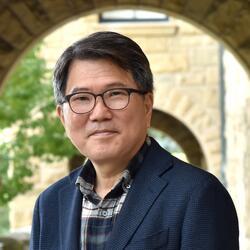
Soledad Artiz Prillaman seminar — Does Affirmative Action Worsen Quality? Theory and Evidence to the Contrary from Elections

Affirmative action improves the representation of women and minorities, but critics worry that it is at odds with meritocracy. We argue that quotas can improve quality under conditions of discrimination, as quota recipients are held to a higher standard despite facing structural inequalities that make meeting these standards difficult. The net effect of quotas on observable proxies for quality -- qualifications -- therefore depends on the degrees of selection and structural discrimination. We test our argument by examining the effects of electoral quotas on politicians' education and quality in India. Using two censuses covering more than 40 million residents and 13 states, we show that randomly and quasi-randomly assigned quota politicians have lower average education than non-quota politicians but the same or higher quality. We further provide evidence of both voter and structural discrimination. Our results show that quotas can both enhance the representativeness and quality of politicians.

ABOUT THE SPEAKER

Soledad Artiz Prillaman is an assistant professor of political science at Stanford University. Her research lies at the intersections of comparative political economy, development, and gender, with a focus in South Asia. She investigates the political consequences of development; the political behavior and representation of minorities, specifically women; inequalities in political engagement; and the translation of voter demands. She is the faculty director of the Inclusive Democracy and Development Lab and recently published a book with Cambridge University Press titled "The Patriarchal Political Order: The Making and Unraveling of the Gendered Participation Gap in India."

Virtual to Public. Only those with an active Stanford ID with access to the William J. Perry Conference Room in Encina Hall may attend in person.

Hesham Sallam
Hesham Sallam

Virtual to Public. If prompted for a password, use: 123456
Only those with an active Stanford ID with access to the William J. Perry Conference Room in Encina Hall may attend in person.

Soledad Artiz Prillaman Assistant Professor, Stanford University
Seminars
Date Label
-
Francis Fukuyama seminar April 3, 2025

Delegation of authority is central to the functioning of bureaucracies and, indeed, to political institutions as a whole. It is today at the center of the contemporary assault on the "administrative state," and its importance is widely misunderstood. In this seminar, Francis Fukuyama will discuss how a well-functioning government needs to provide bureaucrats with sufficient authority and that this is something that the US has failed to do.

ABOUT THE SPEAKER

Francis Fukuyama is Olivier Nomellini Senior Fellow at Stanford University's Freeman Spogli Institute for International Studies (FSI), and a faculty member of FSI's Center on Democracy, Development, and the Rule of Law (CDDRL). He is also Director of Stanford's Ford Dorsey Master’s in International Policy Program, and a professor (by courtesy) of Political Science.

Dr. Fukuyama has written widely on issues in development and international politics. His 1992 book, The End of History and the Last Man, has appeared in over twenty foreign editions. His most recent book,  Liberalism and Its Discontents, was published in the spring of 2022.

Francis Fukuyama received his B.A. from Cornell University in classics, and his Ph.D. from Harvard in Political Science. He was a member of the Political Science Department of the RAND Corporation and of the Policy Planning Staff of the US Department of State. From 1996-2000 he was Omer L. and Nancy Hirst Professor of Public Policy at the School of Public Policy at George Mason University, and from 2001-2010 he was Bernard L. Schwartz Professor of International Political Economy at the Paul H. Nitze School of Advanced International Studies, Johns Hopkins University. He served as a member of the President’s Council on Bioethics from 2001-2004.  

Dr. Fukuyama holds honorary doctorates from Connecticut College, Doane College, Doshisha University (Japan), Kansai University (Japan), Aarhus University (Denmark), and the Pardee Rand Graduate School. He is a non-resident fellow at the Carnegie Endowment for International Peace. He is a member of the Board of Trustees of the Rand Corporation, the Board of Trustees of Freedom House, and the Board of the Volcker Alliance. He is a fellow of the National Academy for Public Administration, a member of the American Political Science Association, and of the Council on Foreign Relations. He is married to Laura Holmgren and has three children.

Virtual to Public. Only those with an active Stanford ID with access to the William J. Perry Conference Room in Encina Hall may attend in person.

Hesham Sallam
Hesham Sallam

Virtual to Public. If prompted for a password, use: 123456
Only those with an active Stanford ID with access to the William J. Perry Conference Room in Encina Hall may attend in person.

Encina Hall, C148
616 Jane Stanford Way
Stanford, CA 94305

0
Olivier Nomellini Senior Fellow at the Freeman Spogli Institute for International Studies
Director of the Ford Dorsey Master's in International Policy
Research Affiliate at The Europe Center
Professor by Courtesy, Department of Political Science
yff-2021-14290_6500x4500_square.jpg

Francis Fukuyama is the Olivier Nomellini Senior Fellow at Stanford University's Freeman Spogli Institute for International Studies (FSI), and a faculty member of FSI's Center on Democracy, Development and the Rule of Law (CDDRL). He is also Director of Stanford's Ford Dorsey Master's in International Policy, and a professor (by courtesy) of Political Science.

Dr. Fukuyama has written widely on issues in development and international politics. His 1992 book, The End of History and the Last Man, has appeared in over twenty foreign editions. His book In the Realm of the Last Man: A Memoir will be published in fall 2026.

Francis Fukuyama received his B.A. from Cornell University in classics, and his Ph.D. from Harvard in Political Science. He was a member of the Political Science Department of the RAND Corporation, and of the Policy Planning Staff of the US Department of State. From 1996-2000 he was Omer L. and Nancy Hirst Professor of Public Policy at the School of Public Policy at George Mason University, and from 2001-2010 he was Bernard L. Schwartz Professor of International Political Economy at the Paul H. Nitze School of Advanced International Studies, Johns Hopkins University. He served as a member of the President’s Council on Bioethics from 2001-2004. He is editor-in-chief of American Purpose, an online journal.

Dr. Fukuyama holds honorary doctorates from Connecticut College, Doane College, Doshisha University (Japan), Kansai University (Japan), Aarhus University (Denmark), the Pardee Rand Graduate School, and Adam Mickiewicz University (Poland). He is a non-resident fellow at the Carnegie Endowment for International Peace. He is a member of the Board of Trustees of the Rand Corporation, the Board of Trustees of Freedom House, and the Board of the Volcker Alliance. He is a fellow of the National Academy for Public Administration, a member of the American Political Science Association, and of the Council on Foreign Relations. He is married to Laura Holmgren and has three children.

(October 2025)

CV
Date Label
Francis Fukuyama
Seminars
Date Label
-

Skyline Scholars Seminar Series


Tuesday, April 29, 2025 | 12:00 pm -1:20 pm Pacific Time
Goldman Room E409, Encina Hall, 616 Jane Stanford Way


The Origin and Diffusion of Policy Ideas in China


Drawing on two decades of Chinese policy documents and government work reports, we document over 116,000 distinct policy ideas and trace their complete life cycles. Our analysis reveals three main findings. First, in the 2000s, policy innovation was highly decentralized—more than 80% of ideas originated from local governments, driven primarily by local officials. Second, after 2013, the central government shifted its incentives by ceasing rewards for bottom-up innovation and instead promoting the diligent enforcement of centrally assigned policies, leading to significant centralization of policy innovation. Third, focusing on industrial policies, we highlight tradeoffs between centralization and decentralization. Top-down industrial policies tend to be less aligned with local comparative advantages and are less effective at spurring industrial growth, revealing the cost of centralization. Conversely, under decentralization, strategic competition among local politicians can distort policy diffusion, reducing the fit between policies and local contexts and undermining their effectiveness. Quantitatively, our results indicate that since 2013, the costs of centralizing policy innovation in China have far outweighed its benefits.

Please register for the event to receive email updates and add it to your calendar.


About the Speaker 
 

Shaoda Wang headshot

Shaoda Wang is an Assistant Professor at the University of Chicago Harris School of Public Policy, a Skyline Scholar (2024-2025) at the Stanford Center on China's Economy and Institutions (SCCEI), a Faculty Research Fellow at the National Bureau of Economic Research (NBER), and an affiliate of the Bureau for Research and Economic Analysis in Development (BREAD). He also serves as the deputy faculty director of the China branches of the Becker Friedman Institute for Economics (BFI-China) and the Energy Policy Institute at UChicago (EPIC-China). He is an applied economist with research interests in development economics, environmental economics, and political economy, with a regional focus on China. He holds a BA from Peking University and a PhD from the University of California, Berkeley. Prior to joining Harris, he was a Postdoctoral Scholar in the Department of Economics and Energy Policy Institute (EPIC) at the University of Chicago.

Interested in meeting with Professor Wang one-on-one? 
Sign up to speak with him during his office hours: 
Select Tuesdays | 2:00-3:30 PM 

Please schedule a meeting in advance and use your Stanford email to log in. 


Questions? Contact Xinmin Zhao at xinminzhao@stanford.edu


Goldman Room E409, Encina Hall

Shaoda Wang, Skyline Scholar; Assistant Professor, University of Chicago Harris School of Public Policy
Seminars
Date Label
-
The Art of Diplomacy book cover and Stuart Eizenstat headshot

Join the Visiting Fellows in Israel Studies program for lunch on Wednesday, February 26, as former ambassador to the EU Stewart Eizenstat, who has been actively involved in Holocaust restitution negotiations, U.S.-Israel relations, and Middle East peace policy discussions, discusses his new book, The Art of Diplomacy: How American Negotiators Reached Historic Agreements that Changed the World.

ABOUT THE SPEAKER

Stuart E. Eizenstat served as chief White House domestic policy adviser to President Jimmy Carter; in the Clinton administration, he served as U.S. ambassador to the European Union, undersecretary of commerce, undersecretary of state, and deputy secretary of the treasury. He was also special representative of the president and secretary of state on Holocaust issues, with continuing responsibilities on Holocaust issues, in the Obama, Trump, and Biden administrations. He is the author of President Carter: The White House Years (2018), The Future of the Jews: How Global Forces Are Impacting the Jewish People, Israel, and Its Relationship with the United States (2012), and Imperfect Justice: Looted Assets, Slave Labor, and the Unfinished Business of World War II (2003). He is an international lawyer in Washington, DC, with Covington & Burling, LLP, and serves as chairman of the U.S. Holocaust Memorial Museum Council, appointed by President Joe Biden. He received the “Great Negotiator” award from Harvard Law School. This book is written in his personal capacity.

Reuben Hills Conference Room (Encina Hall, 2nd floor East Wing)

Open to Stanford affiliates (students, fellows, faculty, and staff) only.

Stuart Eizenstat
Seminars
Date Label
-


David Rehkopf

Talk title: Will Tomorrow's Older Persons Be as Healthy as Their Parents? Implications of Recent Trends for Social Security and Medicare

David Rehkopf is the Director of the Stanford Center for Population Health Sciences. His research focuses on understanding the health implications of the myriad decisions that are made daily by corporations and government, and how these decisions give the public and policy makers evidence to support new strategies for promoting health and well-being. His work also focuses on the implications of this data for health inequalities.  

Jack Rowe leads the MacArthur Foundation’s Initiative on An Aging Society and chairs the Institute of Medicine’s Committee on the Future Health Care Workforce for Older Americans. He serves on the Board of Trustees of the Rockefeller Foundation and is a former member of the Medicare Payment Advisory Commission. He chairs the Board of Trustees at the University of Connecticut and the Marine Biological Laboratory in Woods Hole, MA. 

Jack Rowe

After registering, you will receive a confirmation email. For Zoom participants, the link will be in the confirmation email. 

Registration 

Hybrid Seminar: Lunch will be provided for on-campus participants.
Please register if you plan to attend, both for in-person and via Zoom.

Log in on your computer, or join us in person:
Encina Commons, Room 119
615 Crothers Way
Stanford, CA 94305

Seminars
Date Label
-
event banner
book cover by Yale University Press

Victor Cha of Georgetown University and Ramon Pacheco Pardo of King's College, London team up to explore the history of modern Korea, from the late nineteenth century, Japanese occupation, and Cold War division to democratization, nuclear weapons, and BTS. A country situated amongst the world’s largest powers—including China, Japan, Russia, and the United States—Korea’s fate has been affected by its geography and the strength of its leadership and society. Cha and Pardo shed light on the evolving identities of the two Koreas, explaining the sharp differences between North and South, and prospects for unification.

Portrait of Victor Cha

Victor Cha is president of the Geopolitics and Foreign Policy Department and Korea Chair at the Center for Strategic and International Studies (CSIS). He is also the distinguished university professor and professor of government at Georgetown University. He was appointed in 2021 by the Biden administration to serve on the Defense Policy Board in an advisory role to the secretary of defense. From 2004 to 2007, he served on the National Security Council (NSC) and was responsible for Japan, Korea, Australia/New Zealand, and Pacific Island nations. Dr. Cha was U.S. deputy head of delegation at the Six Party Talks and received two outstanding service commendations during his tenure at the NSC. He is the author of eight books, including the award-winning Alignment Despite Antagonism: The United States-Korea-Japan Security Triangle (Stanford, 1999) (winner of the 2000 Ohira Book Prize), The Impossible State: North Korea, Past and Future (Ecco, 2012) selected by Foreign Affairs as a “Best Book on the Asia-Pacific for 2012", Powerplay: Origins of the American Alliance System in Asia (Princeton, 2018), Korea: A New History of South and North (Yale, 2023), and The Black Box: Demystifying the Study of Korean Unification and North Korea (Columbia University Press, 2024). He serves on the board of the National Endowment for Democracy and is a senior fellow at the George W. Bush Institute. He is also a foreign affairs contributor for MSNBC and NBC News. Professor Cha received his PhD, MIA and BA degree from Columbia University and a BA Honors from Oxford University.

Portrait of Ramon Pacheco Pardo

Ramon Pacheco Pardo is Professor of International Relations at King’s College London and the KF-VUB Korea Chair at the Brussels School of Governance of Vrije Universiteit Brussel. He is also King's Regional Envoy for East and South East Asia, helping to shape and implement the university's strategy for the region. He is also Adjunct Fellow (Non-Resident) with the Korea Chair at CSIS, Scientific Council member at Elcano Royal Institute, Steering Committee member at CSCAP EU, Advisory Committee member at Jeju Forum and Advisory Committee member at the Reset Korea Campaign of JoongAng Ilbo, a major Korean newspaper. He has held visiting positions at Korea University, the Lee Kuan Yew School of Public Policy and Melbourne University. His publications include the books North Korea: Survival of a Political Dynasty (Agenda Publishing, 2024), Korea: A New History of South & North (Yale University Press, 2023; with Victor Cha), South Korea's Grand Strategy: Making Its Own Destiny (Columbia University Press, 2023), Shrimp to Whale: South Korea from the Forgotten War to K-Pop (Hurst and Oxford University Press, 2022) and North Korea-US Relations from Kim Jong Il to Kim Jong Un (Routledge, 2019). Prof Pacheco Pardo has participated in track 1.5 and 2 dialogues with China, Japan, North Korea, South Korea and the United States. He has testified before the European Parliament and consulted and advised NATO, the OECD and the governments of Canada, the EU, South Korea, Spain, the UK and the United States as well as several private firms, among others. Professor Pacheco Pardo is a regular columnist with JoongAng Ilbo. He is also a frequent media commentator on North East Asian and affairs and Europe-East Asia and Europe-Indo-Pacific relations.

Directions and Parking > 

Philippines Conference Room (C330)
Encina Hall, 3rd Floor
616 Jane Stanford Way, Stanford, CA 94305

Victor Cha, Professor of Government, Georgetown University; Korea Chair, CSIS Professor, Asian American Studies and Labor Studies, UCLA
Ramon Pacheco Pardo, Professor of International Relations, King's College, London
Seminars
News Feed Image
kp_cha_2025feb25_web.jpg
Image
portraits of speakers with the book cover by Yale University
Title
Book Talk: A Major New History of North and South Korea: From the Late 19th Century to the Present
Date Label
-
Flyer for the seminar "Myth vs. Reality in Japan's Historic Defense Transformation" with a portrait of speaker Adam Liff.

In December 2022, then-Prime Minister Fumio Kishida made global headlines when he announced a historic revision of Japan’s national security strategy. The Kishida Cabinet’s defense pledges were as remarkable for their substantive ambition and breadth as for what they revealed about political leaders’ growing alarm concerning the rapidly worsening security environment surrounding Japan. Including but not limited to unprecedented and headline-grabbing commitments to surge defense spending and acquire “counterstrike” capabilities, Japan’s new National Defense Strategy was especially significant. Nevertheless, over the past two years, several core aspects of Japan’s plans have been widely misunderstood, leading many to claim a far more radical defense transformation than the facts actually warrant.

In this public talk, Professor Liff will introduce key elements of Japan’s (FY2023-2027) national defense strategy and highlight the significance of, as well as the reasons for, several widespread misconceptions about it. He will draw particular attention to how widely-overlooked domestic political factors quietly “bent the curve” of Japan’s reform trajectory—effectively watering down national security leaders’ more ambitious policy goals in several subtle and oft-ignored, but profoundly consequential, ways.

This event is part of APARC's Contemporary Asia Seminar Series.


Headshot for Adam Liff

Adam P. Liff is Associate Professor of East Asian International Relations at Indiana University’s (IU) Hamilton Lugar School of Global and International Studies, where he also serves as Founding Director of its multidisciplinary 21st Century Japan Politics and Society Initiative (21JPSI). Beyond IU, he is a Nonresident Senior Fellow at the Brookings Institution's Center for East Asia Policy Studies and an associate-in-research at Harvard University’s Reischauer Institute of Japanese Studies. He is also the former Visiting Chair in Modern and Contemporary Japanese Politics and Foreign Policy at Georgetown University's School of Foreign Service, where he launched and directed its Japan and the World public event series. Dr. Liff's research and teaching focus is on contemporary international security and foreign policy challenges in East Asia—with a particular emphasis on Japanese politics and foreign (esp. defense) policy; the U.S.-Japan alliance; U.S. allies and Taiwan, and U.S. Asia-Pacific strategy. In addition to regularly engaging Japan-focused scholarly communities across North America, East Asia, and Europe, he also frequently exchanges views with policymakers and is an active participant in Track 1.5 policy dialogues (e.g., the DC-based U.S.-Japan Security Seminar and Tokyo-based Mt. Fuji Dialogue). Dr. Liff’s past academic and policy research affiliations include the University of Tokyo’s Institute for Advanced Studies on Asia, Institute of Social Science, and Graduate School of Law and Politics; Waseda University’s Institute of Asia-Pacific Studies; the Center for Strategic and International Studies’ (CSIS) Japan Chair; and the Wilson Center’s Indo-Pacific Program, among others. An active institution-builder and fundraiser to support contemporary Japan-focused initiatives at IU, he has also received multiple teaching awards—including IU’s Trustees Teaching Award in 2024. Dr. Liff holds a Ph.D. and M.A. in Politics from Princeton University, a postgraduate research certificate in international politics from the University of Tokyo, and a B.A. (with honors and distinction) in East Asian Studies and Psychology from Stanford University. 

Philippines Room, Encina Hall (3rd floor), Room C330
616 Jane Stanford Way, Stanford, CA 94305

Adam Liff
Seminars
Date Label
-

Limited number of lunches available for registered guests on day of event.

About the event: Climate change has been deemed the greatest threat to global public health, yet critical gaps remain in understanding how this anthropogenic phenomenon impacts health-relevant infrastructure and decision-making. My research leverages ecological principles and data science to address a subset of these gaps at the intersection of extreme environmental change and adaptive interventions for planetary and human health. In this talk, I present work evaluating how rising temperatures affect the design and deployment of vector-borne disease prevention strategies, using Aedes aegypti mosquitoes as a case study. I discuss the methodological challenge of predicting how unprecedented ecological perturbations drive disease persistence and transmission, leveraging historical dengue outbreaks to interrogate the capacity of data-driven methods for forecasting explosive, environmentally sensitive epidemiological events. Finally, I outline how economic forces contribute to and can mitigate anthropogenic change, focusing on the role of targeted investments in antibiotic research and development to reduce ecological contamination and address the growing crisis of antimicrobial resistance. Throughout, I highlight the utility of scientific software for advancing equity and efficiency in human and planetary health management. 

About the speaker: Dr. Váleri Vásquez is a Biotechnology Innovation and International Security Fellow at Stanford University, with appointments in the Department of Biology and the Center for International Security and Cooperation. Her research develops mathematical frameworks to render infectious disease management more robust to environmental uncertainty, as well as scientific software to guide strategic policymaking in public health. Dr. Vásquez completed her PhD at the University of California Berkeley in August 2023, with an emphasis in Computational Data Science and Engineering. Prior to her doctorate she specialized in international climate policy at the U.S. Department of State, serving on the senior team shaping the 2015 Paris Agreement under the United Nations Framework Convention on Climate Change. Dr. Vásquez holds an MS in Electrical Engineering and Computer Science and an MS in Energy and Resources, both from UC Berkeley. She earned her BA from the College of William and Mary.

 All CISAC events are scheduled using the Pacific Time Zone.

No filming or recording without express permission from speaker.

William J. Perry Conference Room

0
Post-doctoral Fellow
9b82c609-714c-4969-b59b-417dd686fcdd.jpg

Dr. Vásquez's research informs the development of health management actions for vector-borne disease that are robust to climate change uncertainty.

Váleri Vásquez
Seminars
Date Label
-
ai action summit logo

Note this event is in Paris from 6:00 pm - 8:00 pm, Paris time. It is offered on Zoom as well for Stanford affiliates and those not able to attend in person. The Pacific time for this event is 9:00 am - 11 am.

On the occasion of the Artificial Intelligence Action Summit , organized by France on February 10 and 11, 2025, the Stanford Cyber Policy Center is joining forces with the Paris Bar Association to organize a round table discussion on:  “AI and the Future of Democracy: Challenges and Opportunities"

  • Date: February 11, 2025
  • Time: 6:00 pm - 8:00 pm (CET TIME)
  • Venue: Maison du Barreau, auditorium 2 rue de Harlay, 75001, Paris


Rapid advances in artificial intelligence (AI) are raising critical questions about its potential impact on democratic institutions and processes. While AI holds great promise, such as enhancing productivity and streamlining the work of legal professionals, it also presents significant risks to society and democracy.One major concern is the lack of transparency surrounding the data used to train widely adopted AI systems, which raises questions about the protection of data owners' rights. Additionally, AI systems can perpetuate biases, produce inaccurate outputs (often referred to as “hallucinations”), and facilitate large-scale disinformation by enabling the rapid spread of false or misleading information. The growing ability of AI to create convincing synthetic content—such as realistic images, audio, and videos—further heightens the risk of manipulation and deception. These dangers become especially concerning when artificial intelligence is exploited by malicious actors, such as authoritarian regimes or terrorist organizations. The risks are further exacerbated by the concentration of advanced AI development within large technology companies. This raises the critical question of how to deploy artificial intelligence in a manner that upholds democratic principles and safeguards fundamental rights.

To address these critical issues, the Paris Bar, in collaboration with the Stanford Cyber Policy Center, warmly invites you to a round table discussion with:


  • Florence G’sell, Visiting Professor of Private Law, Director of the program « Governance of Emerging Technologies », Stanford Cyber Policy Center – moderator
  • Nate Persily, James B. McClatchy Professor of Law, Stanford Law School.
  • Emmanuel Candès, Barnum-Simons Chair in Mathematics and Statistics, Director of Stanford Data Science, Stanford University
  • Rob Reich, McGregor-Girand Professor of Social Ethics of Science and Technology, Associate Director of the Institute for Human-Centered Artificial Intelligence (HAI), Stanford University.
  • Divya Siddarth, co-founder of the Collective Intelligence Project, graduate research affiliate at the Stanford Digital Economy Lab.
  • Bernard Cazeneuven, Former Prime Minister, Partner, August Debouzy
  • Vanessa Bousardo, Vice President of the Paris Bar
Image
ai action summit logo

6:00 PM - 8:00 PM (CET)
Maison du Barreau 2 Rue de Harlay 75001 Paris, France

0
Visiting Professor
Director of the Program on Governance of Emerging Technologies
top_pick_rsd25_070_0142a.jpg

Florence G’sell is a visiting professor of private law at the Tech Impact and Policy Center, where she directs the Program on the Governance of Emerging Technologies. She also holds the Chair in Digital, Governance, and Sovereignty Chair at Sciences Po (France) and is a professor of private law at the University of Lorraine (currently on leave).

Her early scholarship focused on tort law, judicial systems, and comparative law. In recent years, her research has turned to digital law, with particular emphasis on the regulation of online platforms, the legal challenges raised by emerging technologies such as blockchain and the metaverse, and the evolving concept of digital sovereignty. She works comparatively on digital policies in the European Union and the United States. Her recent publications include Regulating under Uncertainty. Governance Options for Generative AI (Stanford Cyber Policy Center, 2024); Digital Authoritarianism: From State Control to Algorithmic Despotism in the Oxford Handbook of Digital Constitutionalism (2025); and Statutory Obsolescence in the Age of Innovation: a Few Thoughts about GDPR (Network Law Review, September 2025).

Professor G’sell graduated from Sciences Po, is admitted to the Paris Bar, and holds a PhD in Private Law from the University of Paris I Panthéon-Sorbonne. She also holds the agrégation in Private Law and Criminal Sciences. She has been a Visiting Scholar at the University of Chicago and, more recently, at Stanford University.

Date Label
Seminars
Date Label
-
Flyer for the seminar "Geopolitical Multiculturalism: Second-Generation Identities in Taiwan," with a portrait of speaker Pei-Chia Lan."

The influx of marriage migrants and their children of mixed heritages has reconstructed the demographic landscape and national membership in East Asia. Through in-depth interviews with sixty adult children from cross-border marriages in Taiwan, Lan’s research explores their identity management at the intersection of geopolitical tensions and multicultural policies. Taiwan's evolving regime of “geopolitical multiculturalism” started to associate Southeast Asian immigrants with a reward for difference, while PRC immigrants are still considered a threat of similarity. Accordingly, Southeast Asian second-generation youths are increasingly encouraged to claim a bicultural identity, but the children of PRC Chinese immigrants continue to face geopolitical stigmas and conflicting identities. Three major strategies of second-generation identity work are identified: majority identity, biculturalism, and rescaling. Lan will also discuss policy implications for immigrant incorporation and multicultural future in the region. 

This event is part of APARC's Contemporary Asia Seminar Series.

Headshot for Pei-Chia Lan

Pei-Chia Lan is Distinguished Professor of Sociology at National Taiwan University and also a 2024-25 Stanford-Taiwan Social Science Fellow at the Center for Advanced Study in the Behavioral Sciences, Stanford University. Her major publications include Global Cinderellas: Migrant Domestics and Newly Rich Employers in Taiwan (Duke 2006, won a Distinguished Book Award from the Sex and Gender Section of the American Sociological Association and ICAS Book Prize: Best Study in Social Science from the International Convention of Asian Scholars) and Raising Global Families: Parenting, Immigration, and Class in Taiwan and the US (Stanford 2018).

Philippines Room, Encina Hall (3rd floor), Room C330
616 Jane Stanford Way, Stanford, CA 94305

Pei-Chia Lan
Seminars
Date Label
Subscribe to Seminars