-
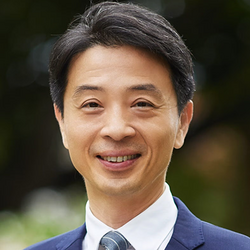
Roberta Gatti ARD event

The Middle East and North Africa (MENA) economies are not catching up with the rest of the world. The region’s average per capita income has increased by just 62 percent over the last 50 years. In comparison, over the same period, the increase was fourfold in emerging market and developing economies (EMDEs) and twofold in advanced ones. Only a few developing MENA economies have avoided diverging further from the richest countries’ living standards (what economists call the frontier), and those where conflicts erupted have accelerated in the wrong direction. In this presentation, Roberta Gatti will discuss the factors that shape MENA’s long-term growth potential, with special attention to the role of the state in the economy, the persistent effects of conflict, and the boost that closing the gender gap in the labor force can deliver in terms of growth.

This event is co-sponsored by the Program on Arab Reform and Development and the Program on Capitalism and Democracy, as well as the Middle Eastern Studies Forum.

ABOUT THE SPEAKER

Roberta Gatti is the Chief Economist for the Middle East and North Africa (MENA) region at the World Bank, where she oversees the analytical agenda of the region and the publication of the semi-annual MENA Economic Updates. She is the founder of the MENA Central Banks Regional Research Network. In her prior capacity as Chief Economist for the Human Development Practice Group, Roberta co-led the conceptualization and launch of the World Bank Human Capital Index and the scale up of the Service Delivery Indicators data initiative.

Roberta joined the World Bank as a Young Professional in the Macro unit of the Development Research Group, and she has since led and overseen both operational and analytical work in her roles of Manager and of Global Lead for Labor Policies.

Roberta’s research, spanning a broad set of topics such as growth, firm productivity, the economics of corruption, gender equity, and labor markets, has been published in lead field journals such as the Journal of Public Economics, the Journal of Economic Growth, and the Journal of Development Economics. She is also the lead author of a number of flagship reports, including Jobs for Shared Prosperity: Time for Action in the Middle East and North Africa; Striving for Better Jobs: The Challenge of Informality in Middle East and North Africa; The Human Capital Index 2020 Update: Human Capital in the Time of COVID-19; and Service Delivery in Education and Health across Africa.

Roberta has taught courses at the undergraduate, masters, and Ph.D. Level at Georgetown and Johns Hopkins Universities. She is a frequent lecturer on development economics, most recently at Dartmouth College, Princeton University, and Cornell University. Roberta holds a B.A. from Università Bocconi and a Ph.D. in Economics from Harvard University.

In-person: Encina Hall E008, Garden-level East (616 Jane Stanford Way Stanford)

Online: Via Zoom

Roberta Gatti
Seminars
Date Label
-
Flyer for International Academic Cooperation in a Complex and Polarized World

The world is changing rapidly and becoming increasingly polarized, complex, and uncertain. These changes affect many aspects of academia, particularly international collaboration and attitudes toward academia, as observed in the past decade. In addition, several global challenges of varying kinds deeply affect societies worldwide, including academia. Geopolitical and economic developments have reshaped global dynamics previously dominated by the USA. These include the rise of China in several fields, such as its establishment as a strong research nation and the formation of a multipolar world order. The logic of international collaboration as providing a way to solve common challenges more effectively has, to some extent, been replaced by a zero-sum rationale. Many governments increasingly view internationalization efforts through the lens of national and economic security. However, allowing national security concerns to overshadow the positive aspects of international collaboration may restrict researchers’ access to the research front, jeopardize the viability of the innovation ecosystem, and diminish the role of academia in public diplomacy efforts.

This event is part of APARC's Contemporary Asia Seminar Series.


Image
Headshot for Andreas Gothenberg

Andreas Göthenberg is the Executive Director of STINT (The Swedish Foundation for International Cooperation in Research and Higher Education) since 2009 and a Board Member of Karolinska Institute. He received his M.Sc. and Ph.D. from KTH Royal Institute of Technology (Sweden). Dr Gothenberg was a Post Doctoral Research Fellow at Tokyo Institute of Technology between 2003-2004 and is currently an Adjunct Professor at The Chinese University of Hong Kong. He was a Science & Technology Attaché at the Embassy of Sweden in Tokyo from 2006 to 2009, where he also covered Science & Technology (S&T) development in South Korea. During 2004-2006, he worked as a Center Manager and Senior Researcher in China, setting up joint research & education centers for KTH Royal Institute of Technology at Zhejiang University and Fudan University.

Moderator:

Headshot of Gi-Wook Shin Gi-Wook Shin

Gi-Wook Shin is the William J. Perry Professor of Contemporary Korea in Sociology and a senior fellow of the Freeman Spogli Institute for International Studies at Stanford University. He has served as director of the Walter H. Shorenstein Asia-Pacific Research Center since 2005, and as founding director of the Korea Program since 2001. His research concentrates on social movements, nationalism, and international relations, focusing on Korea and Asia. He is the author/editor of numerous books and articles, including South Korea’s Democracy in Crisis: The Threats of Illiberalism, Populism, and Polarization and The North Korean Conundrum: Balancing Human Rights and Nuclear Security. His new book, Talent Giants in the Asia-Pacific Century, a comparative study of talent strategies of Japan, Australia, China, and India, will be published by Stanford University Press in 2025.

In 2023, Shin launched the Stanford Next Asia Policy Lab (SNAPL), an initiative committed to addressing emergent social, cultural, economic, and political challenges in Asia. In May 2024, he launched the new Taiwan Program at APARC and currently serves as the program director.

Shin previously taught at the University of Iowa and the University of California, Los Angeles. He holds a B.A. from Yonsei University and an M.A. and Ph.D. from the University of Washington.

Gi-Wook Shin

Philippines Room, Encina Hall (3rd floor), Room C330
616 Jane Stanford Way, Stanford, CA 94305

Andreas Göthenberg Executive Director The Swedish Foundation for International Cooperation in Research and Higher Education
Seminars
Date Label
-
robb willer

Join the Cyber Policy Center on February 18 from 1PM–2PM Pacific for a seminar with Robb Willer, Director of the Polarization and Social Change Lab and Co-Director of the Center on Philanthropy and Civil Society. Stanford affiliates are invited to join us at 12:40 PM for lunch, prior to the seminar.  

About the Seminar

Advances in large language models (LLMs) now enable simulation of human behavior for application to social science research. In this talk, I present two interrelated lines of work. First, we use GPT-4 to simulate responses of experimental participants, predicting observed experimental effects with accuracy comparable to—or better than—human forecasters, even for unpublished studies. Second, we introduce a generative agent architecture that replicates the responses and behaviors of over 1,000 individuals, approaching the accuracy of repeated self-assessment and largely mitigating gaps in predictive accuracy for different demographic groups. I conclude by highlighting the promise and challenges of leveraging LLMs to augment social science research and inform policy.

About the Speaker

Robb Willer is a Professor of Sociology, Psychology, and Business at Stanford University where he is Director of the Polarization Social Change Lab and Co-Director of the Center on Philanthropy and Civil Society. Willer’s research focuses on addressing critical societal challenges through rigorous scientific methods and practical applications. Working across the fields of social psychology, sociology, political science, organizational behavior, and cognitive science, he aims to develop actionable solutions in three main areas: pathways to healthy democracy, strategies for social change, and rapid application of social science to emerging technologies and current events.


Stanford Law School Building, Manning Faculty Lounge (Room 270)
559 Nathan Abbott Way Stanford, CA 94305

Robb Willer
Seminars
Date Label
-
Event flyer: fireside chat with Pita Limjaroenrat. Image: speaker headshot.

We have reached in-person capacity for this event but you are welcome to join us online and submit questions for Pita.

Join Pita Limjaroenrat, former leader of Thailand’s dissolved Move Forward Party, for a discussion on contemporary Thai politics and society. In this fireside chat, Pita will address audience questions on topics such as Thailand’s political and economic landscape, inequality, and democratic movements, as well as the country’s evolving relationships with ASEAN and major global powers. The discussion will also touch on broader regional challenges and the state of democracy on a global scale.

Limjaroenrat, Pita SEAP 20250228

Pita Limjaroenrat formerly led the Move Forward Party (MFP) in Thailand’s May 2023 general elections, where his social democratic platform won the most votes and seats in the Parliament. Despite this mandate, his attempts to form a government were blocked by institutional mechanisms, and the Constitutional Court dissolved the MFP on August 7. Pita’s policy focus centers on addressing grassroots issues, welfare improvements, and human rights, while advocating for the demilitarization of politics and economic de-monopolization. Currently, he is a Visiting Senior Fellow at Harvard Kennedy School. He holds a joint MPA-MBA from Harvard Kennedy School and MIT Sloan and has been named on the TIME 100 Next List. Today, Pita continues to champion transparent and equitable governance on a global scale.

Lunch will be served.

Kiyoteru Tsutsui
Kiyoteru Tsutsui, Co-Director, Southeast Asia Program at Shorenstein APARC
Pita Limjaroenrat, Visiting Senior Fellow at Harvard Kennedy School
Seminars
Image
Event flyer: fireside chat with Pita Limjaroenrat. Image: speaker headshot.
Date Label
-
2025 CDDRL Fisher Family Honors Program Award Winner Presentations

CDDRL's Fisher Family Honors Program trains students from any academic department at Stanford to prepare them to write a policy-relevant research thesis with global impact on a subject touching on democracy, development, and the rule of law. Please join us for this seminar to hear our Honors Program award winners present their research.

The Limits of Payout Politics: How Biden-Harris Federal Spending Shaped (and Didn't Shape) the 2024 Presidential Vote


By Charles Sheiner (2025 Firestone Medal Winner)
Under the advisement of Larry Diamond and Jonathan Rodden

This thesis examines whether the Biden-Harris administration’s signature spending programs — the Bipartisan Infrastructure Law, Inflation Reduction Act, and CHIPS Act — yielded electoral rewards in the 2024 presidential election. Using an original dataset of over 40,000 geocoded federal projects representing $227 billion in county-level investments, I find no statistically significant association between per-capita spending and Democratic vote margin shifts, even when accounting for partisan context and project visibility. Through interviews with federal and local officials, I identify three explanatory mechanisms: implementation lags prevented most projects from reaching completion before Election Day, administrative and policy bottlenecks systematically delayed development, and Republican messaging successfully reframed spending as inflationary. These findings suggest that retrospective voting operates primarily through immediate, visible benefits rather than campaign promises or announced investments, with significant implications for how policy initiatives must be designed to deliver outcomes within electoral cycles.

The Gavel and the Gun: Post-War Trials and State-Building Politics in Yugoslavia (1945-1949)


By Adrian Feinberg (2025 CDDRL Outstanding Thesis Award Winner)
Under the advisement of Aron Rodrigue

This thesis explores how Communist Party of Yugoslavia (KPJ) authorities used the post-World War II justice process to consolidate power from 1945 to 1949. Drawing on trial transcripts, newspapers, and other archival materials, the study argues that the Yugoslav state instrumentalized judicial structures in three distinct stages: first, using honor courts to assert basic state capacity; second, conducting public-facing war crimes trials to promote the state’s ideological legitimacy; and third, orchestrating espionage trials to suppress dissent and entrench single-party rule. While affirming that the KPJ often subordinated judicial integrity to its state-building project, the thesis complicates conventional narratives by attending to the moral ambiguities, partial truths, and undeniable moments of justice present in even the most politicized of trials. In doing so, it offers broader insights into the fraught intersection of law, memory, and power in postwar societies.

Philoxenia: Local Responses to Immigration in Calabria, Italy


By Adelaide Madary (2025 CDDRL Outstanding Thesis Award Winner)
Under the advisement of Vasiliki Fouka, Ph.D.

Over recent decades, many nations across Europe and the Americas have responded to mass migration movements across the globe with hostile policies, xenophobic sentiment, and poorly managed immigration systems. At the same time, several municipalities in Calabria, Italy that struggle with severe depopulation and economic hardship have experienced positive transformations upon opening refugee reception centers, including reversals to declining population trends, job creation and the continuation of important public goods, such as elementary schools—but not all towns that have a demand for immigration respond in the same way. Many Calabrian municipalities have not opened refugee resettlement centers, and others have become a breeding ground for labor exploitation among migrant workers. This thesis employs a mixed-methods approach to consider how structure, agency, and culture account for the variation in local responses to migrants and refugees throughout the relatively homogenous region of Calabria. A systematic analysis of quantitative municipal-level data paired with four granular case studies suggests that a municipality’s structural characteristics alone do not explain the variance in local responses to immigration. Rather, the presence of an entrepreneurial local actor, such as a mayor or non-profit leader with strong humanitarian commitments, is necessary to recognize and actualize the aligned interests between locals and newcomers and bring about cultures of hospitality. While much of the literature on local responses to immigration has focused on urban settings, this thesis aims to widen academic discussions to include more rural contexts and contributes to the underdeveloped literature on hospitality, rather than hostility, toward newcomers.


Only those with an active Stanford ID with access to the E008 in Encina Hall may attend in person.


Image
Fisher Family Honors Program logo
Didi Kuo
Didi Kuo
Stephen J. Stedman
Stephen J. Stedman

In-person only.
Only those with an active Stanford ID with access to room E008 in Encina Hall may attend in person.

0
CDDRL Honors Student, 2024-25
charles_wolf_sheiner.png

Major: International Relations
Hometown: Toronto, Canada
Thesis Advisor: Jean Oi

Tentative Thesis Title: Exploring Stakeholder Decision-Making and Incentive Dynamics in Chinese Development Projects

Future aspirations post-Stanford: After graduation, I hope to 1) pursue a graduate degree in international policy and/or law and 2) work at a think tank or geopolitical research firm, with the eventual possibility of joining the Canadian government. Climate tech is another passion of mine, so I will always remain open to joining a startup too.

A fun fact about yourself: People always think being from Canada is a fun fact... but I'll say that I'm ambidextrous.

Date Label
Charles Sheiner
0
CDDRL Honors Student, 2024-25
adrian_feinberg.jpg

Major: International Relations
Hometown: Berkeley, California
Thesis Advisor: Kathryn Stoner

Tentative Thesis Title: Atrocity Denial and State Formation in the Balkans

Future aspirations post-Stanford: Maybe a PhD? Maybe international law? Maybe writing? Suggestions welcome.

A fun fact about yourself: I put pomegranate molasses in 90% of the dishes I cook.

RA, 2023 Fisher Family Summer Fellows Program
Date Label
Adrian Feinberg
0
CDDRL Honors Student, 2024-25
adelaide_rose_madary.jpg

Major: Political Science
Minor: Modern Languages & Data Science
Hometown: Lodi, California
Thesis Advisor: Anna Grzymala-Busse

Tentative Thesis Title: Combating Agricultural Labor Exploitation among Migrant Workers in Italy and California

Future aspirations post-Stanford: After Stanford, I would like to attend graduate school, continue to learn languages, and participate in public service projects.

A fun fact about yourself: I ran my first half marathon in Rome while studying abroad in Florence this past winter!

Date Label
Adelaide Madary
Seminars
Date Label
-
Natalia Forrat seminar 2025

Why are some authoritarian regimes highly competitive and others highly unified? Do they function differently? And what does it mean for our understanding of democracy and democratization? The Social Roots of Authoritarianism unpacks the grassroots mechanisms maintaining unity-based and division-based authoritarianisms. They develop in societies with opposite visions: the state as team leader or the state as outsider. Depending on which vision of the state is dominant in society, autocrats must use different tools to consolidate their regimes or risk pushback. The book demonstrates the grassroots mechanisms of authoritarian power comparing four Russian regions with opposite patterns of electoral performance—the Rostov region, the Kemerovo region, the Republic of Tatarstan, and the Republic of Altai. The theory of unity- and division-based authoritarianisms developed in the book implies that these types of authoritarian regimes miss the opposite elements of democracy, and that democratization depends on cultivating these missing institutions over time.

ABOUT THE SPEAKER

Natalia Forrat is a social scientist studying democracy, authoritarianism, state power, and civil society. She obtained her PhD from Northwestern University and held academic appointments at Stanford University, the University of Notre Dame, and the University of Michigan. Currently, she is a lecturer at the Center for Russian, East European, and Eurasian Studies at the University of Michigan.  

Virtual to Public. Only those with an active Stanford ID with access to Room E008 in Encina Hall may attend in person.

Hesham Sallam
Hesham Sallam

Virtual to Public. If prompted for a password, use: 123456
Only those with an active Stanford ID with access to Room E008 in Encina Hall may attend in person.

Natalia Forrat
Seminars
Date Label
-
Paul Pierson seminar - Assessing the Risks of Democratic Backsliding in the U.S.

The American constitutional order is in a crisis, squeezed by the emergence of nationalized polarization that it is not equipped to handle on the one hand and by the rising political influence of plutocrats on the other.

ABOUT THE SPEAKER

Paul Pierson is the John Gross Distinguished Professor of Political Science at the University of California, Berkeley. He also serves as Director of the Berkeley Economy and Society Initiative. Pierson is author or co-author of seven books, most recently Partisan Nation (with Eric Schickler).

Virtual to Public. Only those with an active Stanford ID with access to Room E008 in Encina Hall may attend in person.

Hesham Sallam
Hesham Sallam

Virtual to Public. If prompted for a password, use: 123456
Only those with an active Stanford ID with access to Room E008 in Encina Hall may attend in person.

Paul Pierson
Seminars
Date Label
-
Clémence Tricaud seminar

We assemble a comprehensive database of historical electoral results for the US House, Senate and presidential contests, from the 19th century until today. We analyze long run trends in election vote margins and party seat margins. Seat margins declined in the recent period, so the margins of control of the House, Senate, and Electoral College by either party have become smaller. However, this was not accompanied by a decline in the margins of victory at the constituency level. We interpret these facts in the context of a simple model of electoral competition where seat margins and vote margins depend on the availability of information about voter preferences, as well as the ability of political candidates to tailor their platforms locally. We argue that the gradual increase in politicians' information about voter preferences, as well as the growing nationalization of politics can explain the long-run decrease in seat margins and the concurrent stability in vote margins.

ABOUT THE SPEAKER

Clemence Tricaud is an Assistant Professor of Economics at the UCLA Anderson School of Management. She is also a research affiliate of the NBER and CEPR. She received her Ph.D in Economics from Ecole Polytechnique and CREST in 2020. Her research lies at the intersection of political economy and public economics. Her work combines quasi-experimental designs with administrative data to better understand the determinants and consequences of citizen and policymaker behaviors. The first part of her research studies the factors affecting voters' and candidates' behavior during elections and the consequences of their choices on electoral outcomes. The second part of her work explores how the identity of policymakers and the level of governance affect the design of local public policies and the provision of public goods.

Virtual to Public. Only those with an active Stanford ID with access to Room E008 in Encina Hall may attend in person.

Hesham Sallam
Hesham Sallam

Virtual to Public. If prompted for a password, use: 123456
Only those with an active Stanford ID with access to Room E008 in Encina Hall may attend in person.

Clémence Tricaud Assistant Professor, UCLA Anderson
Seminars
Date Label
-
Danila Serra

We examine the impact of ethics and integrity training on police officers in Ghana through a randomized field experiment. The program, informed by theoretical work on the role of identity and motivation in organizations, aimed to re-activate intrinsic motivations to serve the public, and to create a new shared identity of "Agent of Change." Data generated by an endline survey conducted 20 months post training, show that the program positively affected officers' values and beliefs regarding on-the-job unethical behavior and improved their attitudes toward citizens. The training also lowered officers' propensity to behave unethically, as measured by an incentivized cheating game conducted at endline. District-level administrative data for a subsample of districts are consistent with a significant impact of the program on officers' field behavior in the short-run.

ABOUT THE SPEAKER

Danila Serra is Associate Professor of Economics at Texas A&M University. She received her PhD in Economics from the University of Oxford. She is an applied behavioral economist employing experimental methods to address policy-relevant questions in political economy, development, education, and gender economics. Her work has been funded by the Alfred P. Sloan Foundation, the Russell Sage Foundation, the Spencer Foundation, the World Bank, the IZA G²LM|LIC program, the Social Science Research Council (SSRC), the Abdul Latif Jameel Poverty Action Lab (JPAL) and the Arnold Foundation. In 2017, she was the inaugural recipient of the Vernon Smith Ascending Scholar Prize, given by the International Foundation for Research in Experimental Economics (IFREE) to an exceptional scholar using experiments in economics research.

Virtual to Public. Only those with an active Stanford ID with access to the William J. Perry Conference Room in Encina Hall may attend in person.

Hesham Sallam
Hesham Sallam

Virtual to Public. If prompted for a password, use: 123456
Only those with an active Stanford ID with access to the William J. Perry Conference Room in Encina Hall may attend in person.

Danila Serra
Seminars
Date Label
-
Brian Taylor REDS seminar 4/17/25

This talk examines the current status of the Russo-Ukraine War. There was a huge surge in discussions about a possible “peace deal” in the early months of 2025. As a candidate, U.S. President Donald Trump had promised to end the war in 24 hours, and U.S. policy towards the war shifted drastically. Is an end to the Russo-Ukraine War imminent? This talk will examine Russian and Ukrainian positions regarding a possible peace settlement and discuss the future of the conflict.

ABOUT THE SPEAKER

Brian Taylor is a Professor of Political Science and the Director of the Moynihan Institute of Global Affairs at the Maxwell School of Citizenship and Public Affairs, Syracuse University. His research is focused on Russian elite politics and the development of the Russian state, with particular attention to state coercive organizations, such as the military, law enforcement, and the security services. He is the author of four books on Russian politics: Russian Politics: A Very Short Introduction (Oxford University Press, 2024); The Code of Putinism (Oxford University Press, 2018); State Building in Putin’s Russia: Policing and Coercion After Communism (Cambridge University Press, 2011); and Politics and the Russian Army: Civil-Military Relations, 1689-2000 (Cambridge University Press, 2003).  

Virtual to Public. Only those with an active Stanford ID with access to William J Perry Conference Room in Encina Hall may attend in person.


REDS: RETHINKING EUROPEAN DEVELOPMENT AND SECURITY


The REDS Seminar Series aims to deepen the research agenda on the new challenges facing Europe, especially on its eastern flank, and to build intellectual and institutional bridges across Stanford University, fostering interdisciplinary approaches to current global challenges.

REDS is organized by The Europe Center and the Center on Democracy, Development and the Rule of Law, and co-sponsored by the Hoover Institution and the Center for Russian, East European and Eurasian Studies.

Learn more about REDS and view past seminars here.


Image
CDDRL, TEC, Hoover, and CREEES logos
Kathryn Stoner
Kathryn Stoner

Virtual to Public. If prompted for a password, use: 123456
Only those with an active Stanford ID with access to William J. Perry Conference Room in Encina Hall may attend in person.

Brian Taylor
Seminars
Date Label
Subscribe to Seminars