-

Note: This event is open to Stanford community members only.

Stanford ID required for entry.

Remarks are off the record. Recording, reporting and citation of remarks is strictly prohibited.


P

Image
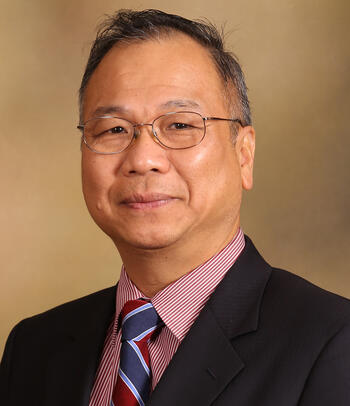
rior to his confirmation in July 2014, Mr. Shear served for 32 years in the Foreign Service, most recently as the United States Ambassador to Vietnam. He has also been posted to Sapporo, Beijing, Tokyo, and Kuala Lumpur. In Washington, he has served in the Offices of Japanese, Chinese, and Korean Affairs and as the Special Assistant to the Under Secretary for Political Affairs. He was Director of the Office of Chinese and Mongolian Affairs in 2008-2009 and Deputy Assistant Secretary in the Bureau of East Asian and Pacific Affairs in 2009-2011.


Mr. Shear was a Rusk Fellow at Georgetown University’s institute for the Study of Diplomacy 1998-99. He is the recipient of the State Department’s Superior Honor Award and the Defense Department’s Civilian Meritorious Service Award for his work in U.S.-Japan defense relations. 


Mr. Shear graduated from Earlham College and has a Master’s degree in International Affairs from the Johns Hopkins School of Advanced International Studies. He also attended Waseda University, Taiwan National University, and Nanjing University. 


David B. Shear U.S. Department of Defense, <i>Assistant Secretary of Defense for Asian and Pacific Security Affairs</i>
Seminars
-

Abstract: Technological and social forces are allowing the growth of science outside a professionalized context.  The Internet, mobile devices, and public availability of big data are technological facilitators of “citizen science”, in part through enabling data sharing, analysis, and communication.  These technological changes now allow the entire scientific process, from funding and development of a research agenda, to conduct, analysis and dissemination and application of findings, to take place without the involvement of any science professionals or research-related institutions.  However, most ethical and regulatory frameworks for biomedical science arose from concepts of obligations of professionals and (largely not-for-profit) institutions.  We will discuss current examples of “citizen science” in biology and clinical research, and the ethical and policy implications.

About the Speaker: Mildred Cho is a Professor in the Division of Medical Genetics of the Department of Pediatrics at Stanford University, Associate Director of the Stanford Center for Biomedical Ethics, and Director of the Center for Integration of Research on Genetics and Ethics. She received her B.S. in Biology in 1984 from the Massachusetts Institute of Technology and her Ph.D. in 1992 from the Stanford University Department of Pharmacology.  Her post-doctoral training was in Health Policy as a Pew Fellow at the Institute for Health Policy Studies at the University of California, San Francisco and at the Palo Alto VA Center for Health Care Evaluation.  She is a member of international and national advisory boards, including for Genome Canada, the March of Dimes, and the Board of Reviewing Editors of Science magazine.  Her current research projects examine ethical and social issues in research on the human genome and microbiome, synthetic biology and genome editing, and the ethics at the intersection of clinical practice and research.  


Mildred Cho Professor in the Division of Medical Genetics of the Department of Pediatrics and Associate Director of the Stanford Center for Biomedical Ethics Stanford University
Seminars
-

"Private provision of social insurance: drug-specific price elasticities and pricing in Medicare Part D"


Please note: All research in progress seminars are off-the-record. Any information about methodology and/or results is embargoed until publication.


Abstract:

Although optimal social insurance theory suggests that consumer cost-sharing should increase in a drug's elasticity of demand, publicly provided drug coverage typically involves uniform cost-sharing across drugs. Does the private market behave differently? We examine this question in the context of Medicare Part D. To do so, we first exploit the famous donut hole – at which insurance becomes discontinuously generous at the margin – together with detailed claim-level data for about 2 million beneficiaries to estimate price elasticities of demand for almost 200 different common drugs and 80 different common therapeutic classes. We document substantial heterogeneity in the price elasticity of demand across drugs and diseases, with an average elasticity estimate across drugs of -0.22 and a standard deviation of 0.5. Drawing on additional detail on the contract design of hundreds of Medicare Part D private plans, we document - in contrast to pricing in public prescription drug plans - substantial heterogeneity in the cost-sharing rate private plans charge for different drugs. We find that private plans vary cost-sharing in the direction of the social optimum: charging higher consumer coinsurance for drugs and classes with more elastic demand. Results from a highly stylized model are consistent with the empirical findings: profit maximizing private firms have incentives to vary cost-sharing across drugs in the socially efficient direction. Our findings suggest that benefit design may be more efficient in privately rather than publicly provided insurance.

Encina Commons,
615 Crothers Way Room 182,
Stanford, California 94305-6006

(650) 498-7528
0
Associate Professor, Health Policy
MS in Health Policy Program Director
maria_4_-_copy.jpg PhD

Maria Polyakova, PhD, is an Associate Professor of Health Policy at the Stanford University School of Medicine. Her research investigates the impact of government interventions in healthcare markets. She is especially interested in the broad economic impacts of public health insurance systems and the structure of healthcare labor markets. Her work also investigates the drivers of individual decision-making in health care and the roots of socio-economic differences in health outcomes. Dr. Polyakova received a BA degree in Economics and Mathematics from Yale University, and a PhD in Economics from MIT.

Date Label
Maria Polyakova
Seminars
-
2008 witnessed a double shock to the post Cold War order. The North Atlantic financial system suffered a historic crisis, which could be managed only by unprecedented financial intervention by the US state. Weeks before Wall Street imploded, Russia invaded Georgia, a country which earlier in the year had been promised NATO membership. Too little remarked upon at the time, this paper will argue that this conjuncture revealed stark limits to the North Atlantic system of security and financial stability, which since 2013 have come back to haunt us in the on-going Ukrainian crisis. 
 

Adam Tooze is the Kathryn and Shelby Cullom Davis Professor of History at Columbia University.

Note: New Location

CISAC Central Conference Room

Adam Tooze Kathryn and Shelby Cullom Davis Professor of History Speaker Columbia University
Seminars
-

NOTE: Event registration is full. Some seats may be available in case of no shows; please arrive early.


For the first time since it started moving toward "ever closer union" more than a half-century ago, Europe finds itself closer to unraveling than to greater integration. The euro, conceived to cement unity and hitch Germany forever to its European partners, has sown disunity by placing economies and cultures as diverse as the Greek and the German within the same currency. Britain is to hold a referendum this year or next on leaving the European Union. Its outcome is uncertain. At Europe's eastern borders, President Putin is doing what he can to undermine the European idea and create havoc in the no-man's lands between the Union and Russia. Ukraine has paid a preposterous price in blood and treasure for seeking a trade accord with Brussels, a perceived offense to Moscow. Refugees from a war the West has fanned through indecision, and from other conflict zones, converge on the continent; Germany alone took in 1.1 million in 2015. Parisians die in a hale of bullets. Brussels shuts down. Everywhere, instability and anxiety favor nationalist movements.

The miracle of a Europe whole and free is increasingly taken for granted. As miracles go, it's just so 20th-century. America, to a significant degree, has disengaged -- Europe is an old story by now. Is the greatest peace-generating mechanism of recent decades on the verge of coming apart?


Roger Cohen has worked for The New York Times for 25 years as a foreign correspondent, foreign editor, and now columnist. Prior to that he worked for The Wall Street Journal and Reuters. He is the author of four books. The latest, a family memoir entitled The Girl from Human Street: Ghosts of Memory in a Jewish Family, was published to wide acclaim by Alfred A. Knopf in January, 2015. He has taught at Harvard and Princeton and his work has been recognized with several awards, including a Lifetime Achievement Award from Britain’s Next Century Foundation and a prize from the Overseas Press Club of New York. Raised in South Africa and England, a graduate of Balliol College, Oxford, he is a naturalized American.

Roger Cohen Columnist Speaker The International New York Times
Seminars
-

States make war, and wars make states. The second clause of Tilly's dictum assumes that the fiscal effort that states exert to wage war persists over time. This paper investigates the effect of war on long-term fiscal capacity as a function of two types of war financing instruments: taxes and loans. Tax-waged wars are argued to exert lasting effects on state capacity, as new taxes require enhancements of the state apparatus as well as complementary fiscal innovations. Loan-waged wars may not contribute to long-term state capacity, as countries might default once the war is over, thus preempting any persistent fiscal effect. Importantly, the way war is waged might be endogenous. To cope with this possibility, I exploit unanticipated crashes in the nineteenth-century international capital markets, which temporarily banned warring states from borrowing regardless of their (un)observed characteristics. The analysis shows that countries that fought wars while the international credit markets were down have today higher fiscal capacity, measured by income tax ratios as well as the size of the tax administration. Altogether, the paper advances the conditions under which wars exert positive and lasting effects on state building.


Didac Queralt is a junior professor at the Institute of Political Economy and Governance (IPEG) in Barcelona. He received his Ph.D. from the NYU Politics Department in September 2012.

His research lies at the intersection of comparative political economy and international relations, with a focus on the political economy of fiscal capacity building in Europe (East and West) and the Americas. Using formal methods, he investigates tax compliance in scenarios of low fiscal capacity, as well as the replacement of old forms of taxation (e.g. trade taxes) by modern extractive technologies (e.g. income taxation) that result from deliberate investment in the tax administration. He analyzes the theoretical predictions using contemporary data from developing economies in Latin America and Eastern Europe, as well as historical data for European powers in the pre-modern era.

In addition, he investigates the origins of direct taxation in the Western World, both with macro- and micro-data, as well as the electoral politics underlying the expansion of the fiscal state. Currently, he is involved in a quasi-experimental test of the legacy of pre-modern wars on state capacity, and an field experiment on tax progressivity in Colombia,


This seminar is part of the Comparative Politics Workshop in the Department of Political Science and is co-sponsored by The Europe Center.

Encina Hall West, Room 400 (Graham Stuart Lounge)

Didac Queralt Junior Professor Speaker Institute of Political Economy and Governance (IPEG), Barcelona
Seminars
-

Abstract

Taiwan’s domestic politics, particularly presidential elections, has been the main driver of the island’s relations with China for two decades. The 2016 elections, in which the Democratic Progressive Party, led by Dr. Tsai Ing-wen, won both the presidency and majority control of the Legislative elections, promises to be no exception. Although PRC intentions under President Xi Jinping are far from certain, some change from the state of play under the current Ma Ying-jeou administration seems fairly certain, with implications for U.S. policy.


Bio

Richard Bush is a Senior Fellow at the Brookings Institution and Director of its Center for Northeast Asian Policy Studies, and the Chen-Fu and Cecilia Yen Koo Chair in Taiwan Studies. He came to Brookings in July 2002 after nineteen years working in the US government, including five years as the Chairman and Managing Director of the American Institute in Taiwan. He is the author of a number of articles on U.S. relations with China and Taiwan, and of At Cross Purposes, a book of essays on the history of America’s relations with Taiwan, published in March 2004 by M. E. Sharpe. In the spring of 2005, Brookings published his study on cross-Strait relations, entitled Untying the Knot: Making Peace in the Taiwan Strait. In 2013, Brookings published his Uncharted Strait: The Future of China-Taiwan Relations.


This talk is co-sponsored by the Taiwan Democracy Project in the Center on Democracy, Development, and the Rule of Law and the U.S.-Asia Security Initiative in the Walter H. Shorenstein Asia-Pacific Research Center.

Image
richard bush taiwan talk flyer


Richard C. Bush Senior Fellow and Director, Center for East Asian Policy Studies Brookings Institution
Seminars
-

*Registration is now closed. For more information, please contact Kharis Templeman at kharis@stanford.edu.*


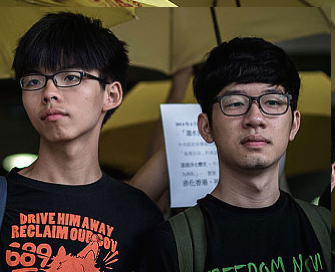
On January 16, 2016, Taiwanese went to the polls to elect a new president and legislature. The results were historic: Tsai Ing-wen of the opposition Democratic Progressive Party (DPP) won a landslide victory over two opponents, and the DPP won a comfortable majority in the legislature, giving the party full control over the central government for the first time. In contrast, the ruling Chinese Nationalist Party, or Kuomintang (KMT), suffered its worst defeat in the presidential election since 2000, and its worst-ever defeat in the legislative elections, and it faces a long, difficult road to political recovery. This election was also notable for the entry into electoral politics of some of the leaders of the so-called "Sunflower Movement": the upstart New Power Party won five seats, becoming the third-largest party in the legislature.

This seminar will feature remarks by Larry Diamond, senior fellow at the Freeman Spogli Institute for International Affairs, and Kharis Templeman, the program manager of the Taiwan Democracy Project in the Center on Democracy, Development, and the Rule of Law. Dr. Diamond and Dr. Templeman will offer their thoughts about who won, why, what it means for Taiwan's democratic development, what to expect from the new government, and how it will affect relations between Taiwan, the United States, and the People's Republic of China.

This event is free and open to the public, and lunch will be served.

[[{"fid":"221885","view_mode":"crop_870xauto","fields":{"format":"crop_870xauto","field_file_image_description[und][0][value]":"Tsai Ing-wen ","field_file_image_alt_text[und][0][value]":"","field_file_image_title_text[und][0][value]":"","field_credit[und][0][value]":"REUTERS/Pichi Chuang","field_caption[und][0][value]":"Democratic Progressive Party (DPP) Chairperson and presidential candidate Tsai Ing-wen shouts slogans as she greets supporters after her election victory at party headquarters in Taipei, Taiwan January 16, 2016. REUTERS/Pichi Chuang","field_related_image_aspect[und][0][value]":"","thumbnails":"crop_870xauto"},"type":"media","attributes":{"width":"870","class":"media-element file-crop-870xauto"}}]]

Video from this event can be found here. 

Taiwan's 2016 Presidential and Legislative Elections
Download pdf

CDDRL
Stanford University
Encina Hall, C147
616 Jane Stanford Way
Stanford, CA 94305-6055

(650) 724-6448 (650) 723-1928
0
Mosbacher Senior Fellow in Global Democracy at the Freeman Spogli Institute for International Studies
William L. Clayton Senior Fellow at the Hoover Institution
Professor, by courtesy, of Political Science and Sociology
diamond_encina_hall.png MA, PhD

Larry Diamond is the William L. Clayton Senior Fellow at the Hoover Institution, the Mosbacher Senior Fellow in Global Democracy at the Freeman Spogli Institute for International Studies (FSI), and a Bass University Fellow in Undergraduate Education at Stanford University. He is also professor by courtesy of Political Science and Sociology at Stanford, where he lectures and teaches courses on democracy (including an online course on EdX). At the Hoover Institution, he co-leads the Project on Taiwan in the Indo-Pacific Region and participates in the Project on the U.S., China, and the World. At FSI, he is among the core faculty of the Center on Democracy, Development and the Rule of Law, which he directed for six and a half years. He leads FSI’s Israel Studies Program and is a member of the Program on Arab Reform and Development. He also co-leads the Global Digital Policy Incubator, based at FSI’s Cyber Policy Center. He served for 32 years as founding co-editor of the Journal of Democracy.

Diamond’s research focuses on global trends affecting freedom and democracy and on U.S. and international policies to defend and advance democracy. His book, Ill Winds: Saving Democracy from Russian Rage, Chinese Ambition, and American Complacency, analyzes the challenges confronting liberal democracy in the United States and around the world at this potential “hinge in history,” and offers an agenda for strengthening and defending democracy at home and abroad.  A paperback edition with a new preface was released by Penguin in April 2020. His other books include: In Search of Democracy (2016), The Spirit of Democracy (2008), Developing Democracy: Toward Consolidation (1999), Promoting Democracy in the 1990s (1995), and Class, Ethnicity, and Democracy in Nigeria (1989). He has edited or coedited more than fifty books, including China’s Influence and American Interests (2019, with Orville Schell), Silicon Triangle: The United States, China, Taiwan the Global Semiconductor Security (2023, with James O. Ellis Jr. and Orville Schell), and The Troubling State of India’s Democracy (2024, with Sumit Ganguly and Dinsha Mistree).

During 2002–03, Diamond served as a consultant to the US Agency for International Development (USAID) and was a contributing author of its report, Foreign Aid in the National Interest. He has advised and lectured to universities and think tanks around the world, and to the World Bank, the United Nations, the State Department, and other organizations dealing with governance and development. During the first three months of 2004, Diamond served as a senior adviser on governance to the Coalition Provisional Authority in Baghdad. His 2005 book, Squandered Victory: The American Occupation and the Bungled Effort to Bring Democracy to Iraq, was one of the first books to critically analyze America's postwar engagement in Iraq.

Among Diamond’s other edited books are Democracy in Decline?; Democratization and Authoritarianism in the Arab WorldWill China Democratize?; and Liberation Technology: Social Media and the Struggle for Democracy, all edited with Marc F. Plattner; and Politics and Culture in Contemporary Iran, with Abbas Milani. With Juan J. Linz and Seymour Martin Lipset, he edited the series, Democracy in Developing Countries, which helped to shape a new generation of comparative study of democratic development.

Download full-resolution headshot; photo credit: Rod Searcey.

Former Director of the Center on Democracy, Development and the Rule of Law
Faculty Chair, Jan Koum Israel Studies Program
Date Label
Seminars
-

ABSTRACT

Image
ballot battles
In Ballot Battles, Edward Foley presents a sweeping history of election controversies in the United States, tracing how their evolution generated legal precedents that ultimately transformed how we determine who wins and who loses. While weaving a narrative spanning over two centuries, Foley repeatedly returns to an originating event: because the Founding Fathers despised parties and never envisioned the emergence of a party system, they wrote a constitution that did not provide clear solutions for high-stakes and highly-contested elections in which two parties could pool resources against one another. Moreover, in the American political system that actually developed, politicians are beholden to the parties which they represent - and elected officials have typically had an outsized say in determining the outcomes of extremely close elections that involve recounts. This underlying structural problem, more than anything else, explains why intense ballot battles that leave one side feeling aggrieved will continue to occur for the foreseeable future. 


SPEAKER BIO

Image
foley
Edward Foley directs Election Law @ Moritz at Ohio State’s law school, where he also holds the Ebersold Chair in Constitutional Law. His book Ballot Ballots: The History of Disputed Elections in the United States, published by Oxford University Press, was available as of December 2015. Ned also serves as the reporter for the American Law Institute’s Election Law Project, which is developing nonpartisan rules for the resolution of disputed elections. (The American Law Institute is the well-respected professional society responsible for the Restatements of Law and the Model Penal Code, among many other projects.) While Ned has special expertise on the topics of recounts, he is conversant in all topics of election law, including redistricting and campaign finance, and recently co-authored a casebook Election Law and Litigation: The Judicial Regulation of Politics (Aspen 2014), which covers all aspects of election law. He and his casebook co-authors also have a contract with Oxford University Press to write a treatise on election law—remarkably the first of its kind in the United States in over a century. He is also a co-author of From Registration to Recounts: The Ecosystems of Five Midwestern States (2007).


[[{"fid":"221900","view_mode":"crop_870xauto","fields":{"format":"crop_870xauto","field_file_image_description[und][0][value]":"Ned Foley Flyer","field_file_image_alt_text[und][0][value]":"","field_file_image_title_text[und][0][value]":"","field_credit[und][0][value]":"","field_caption[und][0][value]":"","field_related_image_aspect[und][0][value]":"","thumbnails":"crop_870xauto"},"type":"media","attributes":{"width":"870","class":"media-element file-crop-870xauto"}}]]

Seminars
-

Less than four years after Mao Zedong’s death, Deng Xiaoping declared that China needed to move away from an “over-concentration of power” by an individual leader to establish a more institutionalized system of governance. Xi Jinping’s ascension to power in 2013 promised a new era of reform of the Communist Party of China (CCP), specifically intended to preserve the party’s power.  Rather than addressing governance issues, however, Xi’s actions, such as the anti-corruption campaign, have served to concentrate power in his hands, showing the weakness of political institutionalization in China after decades of collective leadership.  While decision-making processes continue to be a black box, by reclaiming the CCP’s authority over policy-making, and by chairing CCP small leading groups, Xi appears to have moved China back to Mao-style personalistic rule.   The puzzles that remain are how personalistic authoritarian rule has returned to a country characterized by a growing middle class and a modern open market economy; and what this reversion to personalistic leadership tells us about the ambiguities of institutions in communist ruling parties.  


Susan Shirk is the Chair of the 21st Century China Program and Research Professor at the School of Global Policy and Strategy at the University of California - San Diego. She is also director emeritus of the University of California’s Institute on Global Conflict and Cooperation (IGCC). Susan Shirk first visited China in 1971 and has been teaching, researching and engaging China diplomatically ever since. 

From 1997-2000, Shirk served as Deputy Assistant Secretary of State in the Bureau of East Asia and Pacific Affairs, with responsibility for China, Taiwan, Hong Kong and Mongolia.

In 1993, she founded, and continues to lead, the Northeast Asia Cooperation Dialogue (NEACD), a Track II forum for discussions of security issues among defense and foreign ministry officials and academics from the U.S., Japan, China, Russia, South Korea and North Korea.

Shirk's publications include her books, China:  Fragile Superpower; How China Opened Its Door: The Political Success of the PRC's Foreign Trade and Investment Reforms; The Political Logic of Economic Reform in China; Competitive Comrades: Career Incentives and Student Strategies in China; and her edited book, Changing Media, Changing China.

Shirk served as a member of the U.S. Defense Policy Board, the Board of Governors for the East-West Center (Hawaii), the Board of Trustees of the U.S.-Japan Foundation, and the Board of Directors of the National Committee on United States-China Relations. She is a member of the Trilateral Commission, the Council on Foreign Relations, and an emeritus member of the Aspen Strategy Group. Dr. Shirk received her BA in Political Science from Mount Holyoke College, her MA in Asian Studies from the University of California, Berkeley, and her PhD in Political Science from the Massachusetts Institute of Technology.


This event is off the record.

Feb 19, 2016 Event Flyer
Download pdf
Susan Shirk, UC San Diego
Seminars
Subscribe to Seminars