-

Abstract: To what extent will multipolar institution building undermine the US-led international order? Recent Chinese initiatives like the Asian Infrastructure Investment Bank and the Shanghai Cooperation Organization, and similar efforts by Russia and even Venezuela, might be seen as attempts to build alternatives to American hegemony. We suggest that we can learn from past rival hierarchies to understand contemporary politics. Some scholars highlight international hierarchy, in which a dominant state exerts a limited degree of political control over one or more subordinate states. We contend that certain patterns of international cooperation and conflict between dominant states cannot be fully understood without reference to their rival hierarchies. We identify three distinct mechanisms through which one hierarchy can influence the internal workings of a second hierarchy: competitive shaming, outbidding, and inter-hierarchy cooperation.

We illustrate the plausibility of our argument by exploring the politics of nuclear technology sharing by the United States and the Soviet Union in the Cold War. We show that Soviet competitive shaming of the United States was a major motivation for the U.S. Atoms for Peace program. In response, the Soviet Union attempted to outbid the United States with its own technology sharing program. Ultimately, Moscow and Washington cooperated in founding the International Atomic Energy Agency.

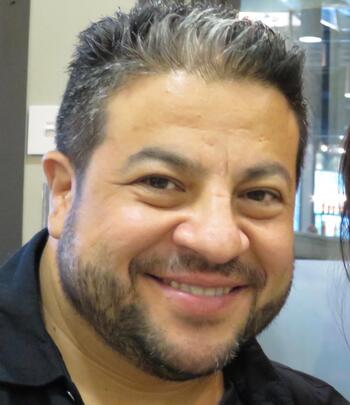
The paper is co-authored with Nicholas Miller, Frank Stanton Assistant Professor of Nuclear Security and Policy at Brown University.

About the Speaker: Jeff D. Colgan is the Richard Holbrooke Assistant Professor in the Department of Political Science and Watson Institute for International and Public Affairs at Brown University.  His research focuses on two main areas: (1) the causes of war and (2) global energy politics. His book, Petro-Aggression: When Oil Causes War, was published in 2013 by Cambridge University Press. An article that previews the book's argument won the Robert O. Keohane award for the best article published in International Organization (Oct 2010) by an untenured scholar. He has published other articles in International Organization, World Politics, International Security and elsewhere.

Professor Colgan previously taught at the School of International Service of American University 2010-2014, and was a Fellow at the Woodrow Wilson International Center for Scholars in Washington DC in 2012-13. He completed his PhD at Princeton University, and was a Canada-US Fulbright Scholar at UC Berkeley, where he earned a Master’s in Public Policy. Dr. Colgan has worked with the World Bank, McKinsey & Company, and The Brattle Group.


Jeff D. Colgan Richard Holbrooke Assistant Professor of Political Science and International and Public Affairs Watson Institute for International and Public Affairs, Brown University
Seminars
-

Abstract: The conventional wisdom about current space dynamics paints a picture of a rising China, a resurgent Russia, and a drifting United States. It also argues that international governance mechanisms in space are failing and not worth U.S. efforts to repair. Thus, it suggests that nationalist and protectionist responses are the best policy directions for the United States. This presentation posits that both arguments are wrong. First, it makes the case that as 21st century space power shifts toward the commercial sector, the United States is well suited to compete with its rivals through innovation, international engagement, and network-building in space. Such efforts are more likely to succeed under emerging conditions in space than traditional, state-led efforts. Second, it argues that the possible breakdown of international space governance mechanisms poses a serious threat to American interests and will require the attention of both the U.S. government and the expanding commercial space sector.  

About the Speaker: James Clay Moltz holds a joint appointment as a professor in the Department of National Security Affairs (NSA) and in the Space Systems Academic Group at the Naval Postgraduate School (NPS) in Monterey, California. He also serves as the NSA Department’s Associate Chairman for Research and directs the DTRA-funded Project on Advanced Systems and Concepts for Countering Weapons of Mass Destruction, based at NPS. He is the author of the recent books Crowded Orbits: Conflict and Cooperation in Space (Columbia University Press, 2014), Asia’s Space Race: National Motivations, Regional Rivalries, and International Risks (Columbia University Press, 2012), and The Politics of Space Security: Strategic Restraint and the Pursuit of National Interests (Stanford University Press, 2008 and 2011 editions). Prof. Moltz holds a Ph.D. in Political Science from the University of California at Berkeley and an M.A. and B.A. (with Distinction) from Stanford University. He has served as an advisor to the NASA-Ames Research Center and to the U.S. Department of Energy and has provided expert testimony on space issues before the U.S. Congress. His commentary on space topics has appeared in such periodicals as Aviation Week and Space Technology, Nature, and the New York Times.  At NPS, his honors include the 2015 Carl E. and Jesse W. Menneken Award for Excellence in Scientific Research and Sustained Contribution to the Navy and the Defense Department and the 2010 Richard W. Hamming Award for Interdisciplinary Achievement. 

James Clay Moltz Professor in the Department of National Security Affairs (NSA) and in the Space Systems Academic Group Naval Postgraduate School
Seminars
-

Abstract: For four years running now, the Director of National Intelligence’s Worldwide Threat Assessment to Congress has led with cyber threats to national and international security.  Under statute, the several National Intelligence Officers constitute the most senior advisors of the US Intelligence Community in their areas of expertise.  This discussion with the National Intelligence Officer for Cyber Issues will begin by highlighting the technology trends that are having a transformational change on cyber security and the future of intelligence.  It will then assess strategic developments in international relations and their implications for deterring malicious activity in cyberspace.  The analysis will focus on the (in)applicability of existing arms control mechanisms and deterrence principles to modern information and communication technologies.

About the Speaker: Sean Kanuck was appointed as the first National Intelligence Officer for Cyber Issues in May 2011.  Mr. Kanuck came to the National Intelligence Council after a decade of experience in the Central Intelligence Agency’s Information Operations Center, including both analytic and field assignments.  In his Senior Analytic Service role, he was a contributing author for the 2009 White House Cyberspace Policy Review, an Intelligence Fellow with the Directorates for Cybersecurity and Combating Terrorism at the National Security Council, and a member of the United States delegation to the United Nations Group of Governmental Experts on international information security.

Prior to government service, Mr. Kanuck practiced law with Skadden Arps et al. in New York, where he specialized in mergers and acquisitions, corporate finance, and banking matters.  He is a member of the International Institute for Strategic Studies, and his academic publications focus on information warfare and international law.  Mr. Kanuck holds degrees from Harvard University (A.B., J.D.), the London School of Economics (M.Sc.), and the University of Oslo (LL.M.).

Sean P. Kanuck National Intelligence Officer for Cyber Issues (until April 2016) Office of the Director of National Intelligence
Seminars

Lecture and Book Signing

Abstract:

ISIS behadings, AL Qaeda bombings, killing of cartoonists, flogging of bloggers, or stoning of women... Such disturbing news have shaped the image of Islam in the West in the past two decades. Buy what do they really tell us? Is Islam, the religion of 1.6 billion people, on a destructive mission against the West, as some claim? Or is there a battle, and a crisis, within the Islamic civilization itself? And are liberal Western values inherently incompatible with this youngest Abrahamic religion? Mustafa Akyol, Turkish writer and contributing columnist for the New York Times, will tackle these questions honestly, by granting the troubles in his own religious tradition, but also showing the reasons for hope. 


Speaker Bio:

Image
akyolistanbulwide22
A Turkish journalist and author, Mustafa Akyol studied political science and history at Bogazici University, and teaches politics and religion at Fatih University, both in Istanbul. For about a decade, he has been writing regular opinion columns for Turkish publications like Hurriyet Daily News, and recently for the Middle-East focused Al-Monitor.com. Since fall 2013, he is also a regular contributing opinion writer for The International New York Times. He has published six books in Turkish, including “Rethinking the Kurdish Question: What Went Wrong, What Next?” (2005). His latest book, “Islam Without Extremes: A Muslim Case for Liberty,” an argument for Islamic liberalism, was published in the United States in 2011 by W.W. Norton. The book was long-listed for the Lionel Gelber Prize, a literary prize awarded by the University of Toronto for the best nonfiction book in English that seeks to deepen public debate on significant international issues, and praised by The Financial Times as “a forthright and elegant Muslim defense of freedom.” The book has been published also in Turkish, Malay and Indonesian. 


This event is co-sponsored by CDDRL in partnership with Stanford's Abbasi Program in Islamic Studies. 

Cypress Lounge, Tresidder Union

Mustafa Akyol Journalist and Author Journalist and Author
Seminars
-

Abstract: What drives jihadi violence in Europe? Terrorists of today are seen as pursuing social rather than political revolt, motivated by failed integration, identity crisis and nihilism. Europe's segregated suburbs are regarded as incubators for violent radicalization, and some suggest online propaganda produces 'lone wolves' who act in unpredictable, volatile fashions.  An examination of jihadi terrorist plots in Europe between 1994 and 2015 contradicts such assumptions. Terrorist cells emerge through intricate interplay between jihadi groups in war zones and European extremists.  Most cells are traced to the same transnational network, which has evolved and expanded since the early 1990s. The plots are linked in time and space through people involved, and there are striking similarities between cases. This talk will reveal that lone wolves are largely a myth in Europe, as most perpetrators have network ties and interact with militants during radicalization. Terrorist cell formation is not confined to gritty suburbs and disenfranchised immigrants are not necessarily key actors. On the contrary, cells emerge in diverse settings where resourceful, well-connected and ideological entrepreneurs (cell builders) are present. Entrepreneurs recruit misfits and drifters as manpower, and embody the foremost driving force for the occurrence of plots and attacks.

About the Speaker: Petter Nesser (Cand. Polit, Dr. Philos) is a senior research fellow with the Norwegian Defence Research Establishment (FFI). Trained in social science, Middle East studies and Arabic at the University of Oslo and The American University in Cairo, Dr Nesser has conducted extensive research on jihadism in Europe for more than twelve years. His work focuses mainly on radicalization processes and terrorists’ modus operandi. Nesser communicates findings through conferences, speeches, and the media. He teaches at academic institutions and acts as advisor for Norwegian authorities on issues related to extremism. His most recent publication, Islamist Terrorism in Europe, A History (Hurst and Oxford University Press, 2015), provides a comprehensive account of the emergence and evolution of transnational militant Islamism in Western Europe.

Petter Nesser Senior Research Fellow Norwegian Defense Research Establishment
Seminars
-

Abstract:

There is a general consensus that institutions do matter in development. Rule of law, property rights enforcement and participatory political institutions are necessary conditions for implementing market-oriented policies such as financial liberalization, trade openness, and increasing private sector involvement. There is also an alternative argument suggesting that integration to the global market has an impact on domestic institutions. Yet there is still little attention given to how institutions are evolving in the developing world in the context of an integrated world market. Specifically, do institutions evolve as a given economy becomes more integrated in the global markets or do they remain unchanged? Also, how do they change and what are the key determinants of this change? In answering these questions, this talk examines the different experiences of liberalization in the Arab World. It investigates the impact of trade and capital flows on different types of institutions. It also addresses the role of existing institutions in the success or failure of these experiences of economic liberalization.  


Speaker Bio:

Samer Atallah is an Assistant Professor of economics at the School of Business of the American University in Cairo since 2011.He was a visiting scholar at the University of Chicago Center in Paris during the winter of 2014.

He has earned his PhD and Masters of Arts in economics from McGill University. The title of his PhD thesis is “Essays on resource-dependent economies: Political economy and strategic behavior”.  He also holds a Masters of Science from University of California at Berkeley.

His research interests are in development economics and political economy. His research work in development economics covers intergenerational mobility, education policy and quantitative analysis of household surveys. His research also covers game theory applications on the political economy of democratization and quantitative analysis of election results.

He is a research fellow at the Economic Research Forum and a member of the Canadian Economics Association and the Middle East Economic Association.


This event is co-sponosred by the Program on Arab Reform and Democracy. 


Ground Floor Conference Rm E008
Encina Hall
616 Serra St.
Stanford, CA 94305-6055

Assistant Professor of Economics at the School of Business of the American University in Cairo
Seminars
-

Abstract:

A growing body of research suggests that authoritarian regimes are responsive to societal actors, but we know little about the sources and limitations of authoritarian responsiveness because of the challenges of measurement and causal identification. This seminar will focus on the results of two new studies---a survey experiment among 1,377 provincial and city-level leaders in China and an online field experiment among 2,103 Chinese counties---to examine factors that influence officials’ incentives to respond to citizens in the absence of electoral competition. These studies show that the threat of collective action causes county governments to be considerably more responsive, and to be more publicly responsive. However, the manifestation of collective action and social contention decreases officials' willingness to be receptive to societal input. Together these results demonstrate that bottom-up societal pressure is a possible source of authoritarian responsiveness, but one with substantial restrictions.


Speaker Bio:

 
Image
jenpan
Jennifer Pan is an Assistant Professor in the Department of Communication and Assistant Professor, by courtesy, of Political Science at Stanford University. Her research focuses on the strategies authoritarian regimes employ to perpetuate their rule, including censorship, redistribution, and responsiveness, and how technology facilitates and hinders these strategies. Her work focuses primarily on China, and uses computational and experimental methods to measure and examine different components of these strategies.
Jennifer Pan Assistant Professor in the Department of Communication and Assistant Professor, by courtesy, of Political Science at Stanford University
Seminars
-

Abstract:

Designing peace agreements that can be signed and sustained can be difficult in civil conflict. A recent transformation in successful settlement design has produced many cases that include electoral or other political participation provisions. In this paper, we examine popular support for the transformation from bullets to ballots, testing whether individuals object to providing former rebels with the protections and legitimacy of electoral participation. Using a survey experiment in the context of Colombia’s current peace process between the Government and the FARC (Fuerzas Armadas Revolucionarias de Colombia), we find that the latter is a highly controversial actor in the country—indeed, invoking the specific group diminishes support for the peace process, particularly accords that would allow for increased representation in municipalities more affected by conflict. These findings are important to understanding how to design settlements, providing policy implications for the peace process with the FARC in Colombia but also in other civil conflicts that negotiators may seek to end through electoral participation by the former rebels, a proposal that has become common in many cases, including the Taliban in Afghanistan.


Speaker Bio:

Image
matanock headshot 2014
Aila M. Matanock is an Assistant Professor of Political Science at the University of California, Berkeley and, during 2015-2016, a W. Glenn Campbell and Rita Ricardo-Campbell National Fellow and the Arch W. Shaw National Fellow at the Hoover Institution. Her research focuses on post-conflict elections that are produced by peace processes, foreign intervention that occurs by host state invitation, and armed actor governance and social support, especially in counterinsurgency contexts. She uses case studies, survey experiments, and cross-national data in this work. She has conducted fieldwork in Colombia, Central America, the Pacific, and elsewhere. She has received funding for these projects from many sources, including the National Science Foundation (NSF), the National Center for the Study of Terrorism and the Response to Terrorism (START), and the Center for Global Development (CGD). Her dissertation won the 2012 Helen Dwight Reid Award from the American Political Science Association, and a revised version is currently under review as a book manuscript. She has worked at the RAND Corporation before graduate school, and she held a postdoctoral fellowship at the Institute on Global Conflict and Cooperation afterward. She received her Ph.D. in political science from Stanford University and her A.B. magna cum laude from Harvard University.

Aila M. Matanock Assistant Professor of Political Science at the University of California, Berkeley
Seminars
-

Abstract:

Ongoing crises of urban insecurity in Central America have spurred novel forms of state engagement in high-risk neighbourhoods. In 2012, the Guatemalan government deployed new urban security task forces in some of the capital’s most notorious ‘red zones’, the poor neighbourhoods where gangs, violence, and delinquency are seen to be concentrated. While officials trumpeted their success in pacifying these sectors, their gangs (maras) continued to operate much as they previously had under the new military occupations.

Based on sixteen months of ethnographic fieldwork in one red zone neighbourhood, this paper examines both gang violence and state power from the perspective of residents struggling to secure a measure of order in a dangerous and volatile environment. I argue that situations of chronic urban insecurity can create opportunities for the state to tighten its relationship with marginal communities, but that they do so in a way that may raise further impediments to substantively improving democratic governance.


Speaker Bio:

Image
ksh photo
Katherine Saunders-Hastings is a postdoctoral fellow at Stanford’s Center on Democracy, Development, and the Rule of Law. She employs ethnographic methods to study the impact of violence and insecurity on the social and political life of vulnerable urban neighbourhoods, focusing particularly on the changing gang cultures and criminal economies of Central America. Katherine earned her DPhil from the University of Oxford in 2015 and also holds degrees from McGill University and the University of Cambridge. Her research has been supported by fellowships from the Social Sciences and Humanities Research Council of Canada, the Clarendon Fund, and the Harry Frank Guggenheim Foundation. She has worked with the International Centre for the Prevention of Crime (Montreal, Canada) and the Asociación para el Avance de las Ciencias Sociales (Guatemala City, Guatemala).

Postdoctoral Fellow, CDDRL
Seminars
-

About the Topic: Despite massive research and public policy efforts aimed at diversification, gender segregation of science, technology, engineering and mathematics remains extreme in affluent democracies. More surprising is evidence that women’s representation in many “STEM” fields is weaker in advanced industrial societies than in poorer, reputably gender traditional ones. The most obvious explanation is that broad-based existential security frees more women to realize aspirations for (less lucrative) non-STEM pursuits. I will discuss another piece of the puzzle by focusing on the aspirations themselves and how these vary with societal affluence. Over-time data on eighth-grade boys and girls in 32 countries provide strong evidence that the gender gap in aspirations for mathematically-related jobs increases with societal affluence, controlling for traits of individual students (parental education, affinity for school, mathematics test scores). This affluence effect is not attributable to cross-national differences in the gender-labeling of science, Internet access, or women’s educational or economic integration. Results are consistent with arguments suggesting that gender beliefs more strongly influence career aspirations in affluent, “postmaterialist” societies.


Maria Charles

About the Speaker:  Maria Charles is Professor and Chair of Sociology, Area Director for Sex and Gender Research, and an Affiliate Professor of Feminist Studies at U.S. Santa Barbara. She specializes in the international comparative study of social inequalities, particularly cross-national differences in women's economic, educational, and family roles. She has published extensively on gender segregation, most recently on the ideological and organizational factors that contribute to woman's underrepresentation in science, technology, engineering, and mathematics ("STEM") fields around the world. She has a Ph.D. in Sociology from Stanford University, and Bachelor’s degrees from UCSB in Environmental Studies and Political Science.

Philippines Conference Room

Encina Hall Central, 3rd floor

616 Serra St.

Stanford, CA 94305

Maria Charles Professor and Chair of Sociology, Area Director for Sex and Gender Research, Affiliate Professor of Feminist Studies U.C. Santa Barbara
Seminars
Subscribe to Seminars