-

Abstract:

By the standards of prosperity and peace, the post-Cold War international order has been  an unparalleled success. Over the last thirty years there has been more creation of wealth, and reduction of poverty, disease, and food insecurity than in all of previous history. During the same period, the numbers and lethality of wars have decreased. Yet these facts have not deterred an alternative assessment that asserts that civil violence, terrorism, and failed states are at unprecedented high levels, and the numbers of refugees are at an all time high.

There is no global crisis of failed states and endemic civil war, no global crisis of refugees and migration, and no global crisis of disorder. Instead what we have seen is a particular historical crisis unfold in the greater Middle East, which has collapsed order within that region, and has fed the biggest threat to international order: populism in the United States and Europe.

Speaker Bio:

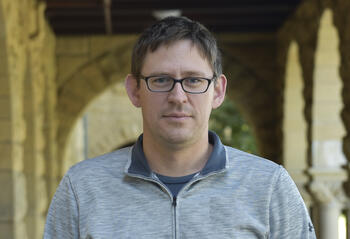
Stephen John Stedman is Deputy Director of the Center on Democracy, Development, and Rule of Law (CDDRL), Senior Fellow at the Freeman Spogli Institute for International Studies, and Professor of Political Science (by courtesy) at Stanford University. At CDDRL Professor Stedman directs the project on American Democracy in Comparative Perspective, which examines the sources and extent of polarization and paralysis in Western democracies. From 2010 to 2012 he served as the Director for the Global Commission on Elections, Democracy, and Security, a body of eminent persons tasked with developing recommendations on promoting and protecting the integrity of elections. Professor Stedman drafted the Commission’s report, Deepening Democracy: A Strategy for Improving the Integrity of Elections Worldwide.  In 2003-2004 Professor Stedman was Research Director of the United Nations High-level Panel on Threats, Challenges and Change and was a principal drafter of the Panel’s report, A More Secure World: Our Shared Responsibility. In 2005 he served as Assistant Secretary General and Special Advisor to the Secretary General of the United Nations, with responsibility for working with governments to adopt the Panel’s recommendations for strengthening collective security and for implementing changes within the United Nations Secretariat, including the creation of a Peacebuilding Support Office, a Counter Terrorism Task Force, and a Policy Committee to act as a cabinet to the Secretary General.

Professor Stedman has written widely on transnational threats to international security. He is currently researching the historical development of the concept of security and how its meanings have changed over time. Professor Stedman received his BA, MA and PhD degrees from Stanford University.  He and his wife, Corinne Thomas, are the Resident Fellows in Crothers -- Stanford’s academic theme house on global citizenship.

CDDRL
Encina Hall, C152
616 Jane Stanford Way
Stanford, CA 94305-6055

(650) 725-2705 (650) 724-2996
0
Senior Fellow at the Freeman Spogli Institute for International Studies
Professor, by courtesy, of Political Science
Stedman_Steve.jpg PhD

Stephen Stedman is a Senior Fellow at the Freeman Spogli Institute for International Studies (FSI) and the Center on Democracy, Development and the Rule of Law (CDDRL), an affiliated faculty member at CISAC, and professor of political science (by courtesy) at Stanford University. He is director of CDDRL's Fisher Family Honors Program in Democracy, Development and Rule of Law, and will be faculty director of the Program on International Relations in the School of Humanities and Sciences effective Fall 2025.

In 2011-12 Professor Stedman served as the Director for the Global Commission on Elections, Democracy, and Security, a body of eminent persons tasked with developing recommendations on promoting and protecting the integrity of elections and international electoral assistance. The Commission is a joint project of the Kofi Annan Foundation and International IDEA, an intergovernmental organization that works on international democracy and electoral assistance.

In 2003-04 Professor Stedman was Research Director of the United Nations High-level Panel on Threats, Challenges and Change and was a principal drafter of the Panel’s report, A More Secure World: Our Shared Responsibility.

In 2005 he served as Assistant Secretary-General and Special Advisor to the Secretary- General of the United Nations, with responsibility for working with governments to adopt the Panel’s recommendations for strengthening collective security and for implementing changes within the United Nations Secretariat, including the creation of a Peacebuilding Support Office, a Counter Terrorism Task Force, and a Policy Committee to act as a cabinet to the Secretary-General.

His most recent book, with Bruce Jones and Carlos Pascual, is Power and Responsibility: Creating International Order in an Era of Transnational Threats (Washington DC: Brookings Institution, 2009).

Director, Fisher Family Honors Program in Democracy, Development and Rule of Law
Director, Program in International Relations
Affiliated faculty at the Center for International Security and Cooperation
Date Label
Deputy Director, Center on Democracy, Development and Rule of Law (CDDRL)
Seminars
-

About the event: In his talk Toomas Hendrik Ilves will discuss how various digital tools have been used in democracies in Europe and the US in an attempt to disrupt and affect elections outcomes. These are new approaches, meant if not to alter electoral outcomes then at least to sow discord and seem in some instances to have been successful. Methods used include hacking into political parties' servers and “doxxing” embarrassing hacked materials; disseminating via “bots” false stories that have occasionally gone viral; as well highly granular big data analyses to target voters with ads specifically tailored to their profiles as culled from social media.

These methods and tactics have been employed in the U.S, French, and Dutch elections; cyber-break-ins into the Bundestag and German political think tanks suggest they will play a role in the upcoming German parliamentary elections. Perpetrated by an authoritarian government, they are asymmetric: without a free media environment they are immune to such tacts even if democracies were to even try to respond in kind. What democracies have experienced in the past several years will force them to adapt to a new environment with the realization that there are many ways for an adversary to change a nations policies.

About the Speaker: Toomas Hendrik Ilves was born on December 26, 1953, to an Estonian family living in Stockholm, Sweden. He was educated in the United States, receiving a degree from Columbia University in 1976 and a master's degree in psychology from the University of Pennsylvania in 1978.

In 1984 he moved to Munich, Germany, to work at the office of Radio Free Europe, first as a researcher and foreign policy analyst and later as the head of the Estonian Desk.

From 1993 to 1996 Ilves served in Washington as the ambassador of the Republic of Estonia to the United States and Canada. During this time, he launched the Tiger Leap Initiative to computerize and connect all Estonian schools online with Education Minister Jaak Aaviksoo. He then served as minister of foreign affairs from 1996 to 1998. After a brief period as chairman of the North Atlantic Institute in 1998, he was again appointed minister of foreign affairs, serving until 2002.

From 2002 to 2004, Ilves was a member of the Estonian Parliament and in 2004 he was elected a member of the European Parliament, where he was vice-president of the Foreign Affairs Committee. As a MEP, he initiated the Baltic Sea Strategy that was later implemented as official regional policy of the European Union.

Ilves was elected president of the Republic of Estonia in 2006. He was re-elected for a second term in office in 2011.

During his presidency, Ilves has been appointed to serve in several high positions in the field of ICT in the European Union. He served as chairman of the EU Task Force on eHealth from 2011 to 2012 and was chairman of the European Cloud Partnership Steering Board at the invitation of the European Commission from 2012 to 2014. In 2013 he chaired the High-Level Panel on Global Internet Cooperation and Governance Mechanisms convened by ICANN. From 2014 to 2015 Ilves was the co-chair of the advisory panel of the World Bank's World Development Report 2016 "Digital Dividends" and was also the chair of World Economic Forum's Global Agenda Council on Cyber Security beginning in June 2014.

Starting from 2016, Ilves co-chairs The World Economic Forum working group The Global Futures Council on Blockchain Technology. In 2017 he joined Stanford University as a Bernard and Susan Liautaud Distinguished Visiting Fellow at the Center for International Security and Cooperation in the Freeman Spogli Institute for International Studies.

President Ilves has published many essays and articles in Estonian and English on numerous topics ranging from Estonian language, history, and literature to global foreign and security policy and cyber security. His books include essay collections in Estonian, Finnish, Latvian, Hungarian, and Russian.

His international awards and honorary degrees include Knight of Freedom Award by the Casimir Pulaski Foundation (2016), the Aspen Prague Award by the Aspen Institute (2015), the Freedom Award by the Atlantic Council (2014) and the NDI Democracy Award by the National Democratic Institute (2013). His Honorary Degrees include an Honorary Degree from St. Olaf College, US (2014), an Honorary Degree from the John Paul II Catholic University of Lublin, Poland (2010), and an Honorary Degree from Tbilisi University, Georgia (2007).

Encina Hall, 2nd floor

Seminars
-

"The Effects of Expert Recommendations on Health Insurance Choices:  Evidence from a Randomized, Controlled Trial"

Please note: All research in progress seminars are off-the-record unless otherwise noted. Any information about methodology and/or results are embargoed until publication.

Medicare beneficiaries consistently report difficulty choosing a Medicare Part D plan, rarely change their plans and are often not enrolled in the plan providing the most generous coverage for their medications. In this project, we test whether providing personalized information on the financial implications of enrolling in different plans, both with and without expert recommendations, improves decision outcomes for Medicare Part D enrollees relative to directing them to the Medicare.gov website. We describe and report the results of a randomized, controlled trial of the effects of using a patient-centered Medicare Part D decision tool during 2017 open enrollment (October 15 through December 7, 2016) among patients who are members of a large multispecialty group practice.


Kate Bundorf

Encina Commons,
615 Crothers Way Room 182,
Stanford, California 94305-6006

(650) 498-7528
0
Associate Professor, Health Policy
MS in Health Policy Program Director
maria_4_-_copy.jpg PhD

Maria Polyakova, PhD, is an Associate Professor of Health Policy at the Stanford University School of Medicine. Her research investigates the impact of government interventions in healthcare markets. She is especially interested in the broad economic impacts of public health insurance systems and the structure of healthcare labor markets. Her work also investigates the drivers of individual decision-making in health care and the roots of socio-economic differences in health outcomes. Dr. Polyakova received a BA degree in Economics and Mathematics from Yale University, and a PhD in Economics from MIT.

Date Label
Maria Polyakova
Ming Tai-Seale
Cheryl Stults
Seminars
-

"Billing Irregularities by Health Care Providers: Evidence from Anesthesia"
 

Please note: All research in progress seminars are off-the-record unless otherwise noted. Any information about methodology and/or results are embargoed until publication.


In the United States, physicians exercise tremendous discretion in choosing billing details that determine payment for their services.  While understanding the degree to which physicians inappropriately use this discretion has implications for setting payment policies, separating inappropriate discretion from actual differences in patient complexity is empirically challenging.  In anesthesia, providers are compensated by self-reported length of time (“anesthesia time”) spent on a case. Therefore, anomalous patterns in a practitioner’s reported times—e.g., an excess number of cases with an anesthesia time ending in five (e.g., 65 minutes)—can objectively identify inappropriate billing when those reported times are also longer than expected. Using a national database of over 6.5 million anesthesia cases from 5,755 anesthesia providers, we found that anomalous patterns are common—nearly one-quarter of providers report an unusually large number of cases with anesthesia times ending in 5 or zero.  Providers who were particularly anomalous—those in the top 5th percentile in terms of anesthesia times ending in 5 or zero—also tended to report anesthesia times that were 22 minutes longer than expected, which would net an additional $34 to $98 per case, depending on payer.  While inappropriate practices seem confined to a minority of anesthesia providers, our results provide some impetus for ongoing policy efforts aimed at reducing the amount of discretion given to physicians.

Eric Sun
Seminars
-

Abstract: High-security organizations around the world face devastating threats from insiders—trusted employees with access to sensitive information, facilities, and materials. From Edward Snowden to the Fort Hood shooter to the theft of nuclear materials, the threat from insiders is on the front page and at the top of the policy agenda. Insider Threats offers detailed case studies of insider disasters across a range of different types of institutions, from biological research laboratories, to nuclear power plants, to the U.S. Army. Matthew Bunn and Scott D. Sagan outline cognitive and organizational biases that lead organizations to downplay the insider threat, and they synthesize "worst practices" from these past mistakes, offering lessons that will be valuable for any organization with high security and a lot to lose.

About the Speakers: Matthew Bunn is a Professor of Practice at Harvard University's John F. Kennedy School of Government. His research interests include nuclear theft and terrorism; nuclear proliferation and measures to control it; the future of nuclear energy and its fuel cycle; and policies to promote innovation in energy technologies. Before joining the Kennedy School in January 1997, he served for three years as an adviser to the Office of Science and Technology Policy, where he played a major role in U.S. policies related to the control and disposition of weapons-usable nuclear materials in the United States and the former Soviet Union, and directed a secret study for President Clinton on security for nuclear materials in Russia.

Scott S. Sagan is the Caroline S.G. Munro Professor of Political Science, the Mimi and Peter Haas University Fellow in Undergraduate Education, and Senior Fellow at the Center for International Security and Cooperation and the Freeman Spogli Institute at Stanford University. He also serves as Project Chair for the American Academy of Arts and Sciences’ Initiative on New Dilemmas in Ethics, Technology, and War. Before joining the Stanford faculty, Sagan was a lecturer in the Department of Government at Harvard University. From 1984 to 1985, he served as special assistant to the director of the Organization of the Joint Chiefs of Staff in the Pentagon. Sagan has also served as a consultant to the office of the Secretary of Defense and at the Sandia National Laboratory and the Los Alamos National Laboratory. 

Amy Zegart is is co-director of CISAC and Professor of Political Science, by courtesy. She is also the Davies Family Senior Fellow at the Hoover Institution. 

Before coming to Stanford in 2011, Zegart served as professor of public policy at UCLA’s Luskin School of Public Affairs and as a fellow at the Burkle Center for International Relations. Her research examines the organization of American national security agencies and their effectiveness. She is the author of two award-winning books. Flawed by Design, which chronicles the development of the Central Intelligence Agency, Joint Chiefs of Staff, and National Security Council, won the highest national dissertation award in political science. Spying Blind, which examines why American intelligence agencies failed to adapt to the terrorist threat before 9/11, won the National Academy of Public Administration’s Brownlow Book Award. She has also published in International Security, Political Science Quarterly, and other leading academic journals. She serves on the editorial boards of Terrorism and Political Violence and Intelligence and National Security. Her most recent book is Eyes on Spies: Congress and the United States Intelligence Community.
 
Zegart was featured by the National Journal as one of the ten most influential experts in intelligence reform. 

- The book, Insider Threats, will be available for purchase at the event -

CISAC
Stanford University
Encina Hall, E202
Stanford, CA 94305-6165

(650) 725-2715 (650) 723-0089
0
The Caroline S.G. Munro Professor of Political Science
The Bass University Fellow in Undergraduate Education  
Senior Fellow, Freeman Spogli Institute for International Studies
rsd25_073_1160a_1.jpg PhD

Scott D. Sagan is Co-Director and Senior Fellow at the Center for International Security and Cooperation, the Caroline S.G. Munro Professor of Political Science, and the Bass University Fellow in Undergraduate Education at Stanford University. He also serves as Co-Chair of the American Academy of Arts and Sciences’ Committee on International Security Studies. Before joining the Stanford faculty, Sagan was a lecturer in the Department of Government at Harvard University and served as special assistant to the director of the Organization of the Joint Chiefs of Staff in the Pentagon.

Sagan is the author of Moving Targets: Nuclear Strategy and National Security (Princeton University Press, 1989); The Limits of Safety: Organizations, Accidents, and Nuclear Weapons (Princeton University Press, 1993); and, with co-author Kenneth N. Waltz, The Spread of Nuclear Weapons: An Enduring Debate (W.W. Norton, 2012). He is the co-editor of Insider Threats (Cornell University Press, 2017) with Matthew Bunn; and co-editor of The Fragile Balance of Terror (Cornell University Press, 2022) with Vipin Narang. Sagan was also the guest editor of a two-volume special issue of DaedalusEthics, Technology, and War (Fall 2016) and The Changing Rules of War (Winter 2017).

Recent publications include “Creeds and Contestation: How US Nuclear and Legal Doctrine Influence Each Other,” with Janina Dill, in a special issue of Security Studies (December 2025); “Kettles of Hawks: Public Opinion on the Nuclear Taboo and Noncombatant Immunity in the United States, United Kingdom, France, and Israel”, with Janina Dill and Benjamin A. Valentino in Security Studies (February 2022); “The Rule of Law and the Role of Strategy in U.S. Nuclear Doctrine” with Allen S. Weiner in International Security (Spring 2021); “Does the Noncombatant Immunity Norm Have Stopping Power?” with Benjamin A. Valentino in International Security (Fall 2020); and “Just War and Unjust Soldiers: American Public Opinion on the Moral Equality of Combatants” and “On Reciprocity, Revenge, and Replication: A Rejoinder to Walzer, McMahan, and Keohane” with Benjamin A. Valentino in Ethics & International Affairs (Winter 2019).

In 2022, Sagan was awarded Thérèse Delpech Memorial Award from the Carnegie Endowment for International Peace at their International Nuclear Policy Conference. In 2017, he received the International Studies Association’s Susan Strange Award which recognizes the scholar whose “singular intellect, assertiveness, and insight most challenge conventional wisdom and intellectual and organizational complacency" in the international studies community. Sagan was also the recipient of the National Academy of Sciences William and Katherine Estes Award in 2015, for his work addressing the risks of nuclear weapons and the causes of nuclear proliferation. The award, which is granted triennially, recognizes “research in any field of cognitive or behavioral science that advances understanding of issues relating to the risk of nuclear war.” In 2013, Sagan received the International Studies Association's International Security Studies Section Distinguished Scholar Award. He has also won four teaching awards: Stanford’s 1998-99 Dean’s Award for Distinguished Teaching; Stanford's 1996 Hoagland Prize for Undergraduate Teaching; the International Studies Association’s 2008 Innovative Teaching Award; and the Monterey Institute for International Studies’ Nonproliferation Education Award in 2009.     

Co-director of the Center for International Security and Cooperation
CV
Date Label
Stanford University
Matthew Bunn Professor of Practice; Co-Principal Investigator, Project on Managing the Atom Belfer Center, Harvard Kennedy School

CISAC
Stanford University
Encina Hall, E216
Stanford, CA 94305-6165

(650) 725-9754 (650) 723-0089
0
Senior Fellow at the Freeman Spogli Institute for International Studies
Morris Arnold and Nona Jean Cox Senior Fellow at the Hoover Institution
Senior Fellow at the Stanford Institute for Human-Centered AI
Professor, by courtesy, of Political Science
amyzegart-9.jpg PhD

Dr. Amy Zegart is the Morris Arnold and Nona Jean Cox Senior Fellow at the Hoover Institution. The author of five books, she specializes in U.S. intelligence, emerging technologies, and national security. At Hoover, she leads the Technology Policy Accelerator and the Oster National Security Affairs Fellows Program. She also is an associate director and senior fellow at the Stanford Institute for Human-Centered AI; a senior fellow at the Freeman Spogli Institute; and professor of political science by courtesy, teaching 100 students each year about how emerging technologies are transforming espionage.

Her award-winning research includes the leading academic study of intelligence failures before 9/11: Spying Blind: The CIA, the FBI, and the Origins of 9/11 (Princeton, 2007) and the bestseller Spies, Lies, and Algorithms: The History and Future of American Intelligence (Princeton, 2022), which was nominated by Princeton University Press for the Pulitzer Prize. She also coauthored Political Risk: How Businesses and Organizations Can Anticipate Global Insecurity, with Condoleezza Rice (Twelve, 2018). Her op-eds and essays have appeared in Foreign Affairs, Politico, the New York Times, the Washington Post, and the Wall Street Journal.

Zegart has advised senior officials about intelligence and foreign policy for more than two decades. She served on the National Security Council staff and as a presidential campaign foreign policy advisor and has testified before numerous congressional committees. Before her academic career, she spent several years as a McKinsey & Company consultant.

Zegart received an AB in East Asian studies from Harvard and an MA and a PhD in political science from Stanford. She serves on the boards of the Council on Foreign Relations, Kratos Defense & Security Solutions, and the American Funds/Capital Group.

Date Label
Stanford University
Seminars
-

Abstract: Relative to the struggles Western nuclear powered countries have experienced in the recent past, South Korea and China have had notable success building up nuclear power at an impressive scale. China today leads the world in new builds of nuclear reactors. Moving beyond indigenous construction, South Korea is on the verge of completing its first exported power reactor in the UAE, marking an impressive accomplishment for this relatively new nuclear startup. However, China and South Korea now face a challenge other more established nuclear powered countries have yet to solve, an unresolved structure of the back end of the fuel cycle. Despite the uncertainty that exists about the ultimate fate of the spent fuel, the more immediate problem of interim storage is urgent. In this talk, I will review the status and urgency of this problem in the two countries with quantitative results from modeling accumulation, storage and transportation. I will then outline immediate policy mitigations needed in the short term as well as strategies for designing a more permanent solution.

About the Speaker: Rob Forrest is currently a member of the technical staff at Sandia National Laboratories where his research interests include nuclear power, cybersecurity, and nonproliferation. As a member of the systems research group, he specializes in data driven methods and analysis to inform policy for national security.

As a postdoctoral fellow at CISAC, his research focused on one of the most pressing technical issues of nuclear power: what to do with spent nuclear fuel. Specifically, he looked at the more short term issues surrounding interim storage as they affect the structure of the back end of the fuel cycle. He focuses mainly on countries with strong nuclear power growth such as South Korea and China.

Rob’s interest in policy and nuclear issues began during his fellowship in the 2008 Public Policy and Nuclear Threats program at the Institute on Global Conflict and Cooperation at UC San Diego. In 2010, he also participated in the PONI Nuclear Scholars Initiative at CSIS.

Before coming to CISAC in 2011, Rob received his Ph.D. in high-energy physics from the University of California, Davis. Most of his graduate career was spent at Fermi National Accelerator Laboratory (Fermilab) in Batavia, IL where he performed a search for signs of a theory called Supersymmetry. Before beginning his graduate work, Rob spent two years at SLAC National Accelerator Laboratory. In 2001, Rob earned his B.S. in physics from the University of California, San Diego where, throughout his undergraduate career, he worked for NASA. 

0
Affiliate
Forrest,_Robert.jpg
Rob Forrest is currently a member of the technical staff at Sandia National Laboratories where his research interests include nuclear power, cybersecurity, and nonproliferation. As a member of the systems research group, he specializes in data driven methods and analysis to inform policy  for national security.

As a postdoctoral fellow at CISAC, his research focused on one of the most pressing technical issues of nuclear power: what to do with spent nuclear fuel. Specifically, he looked at the more short term issues surrounding interim storage as they affect the structure of the back end of the fuel cycle. He focuses mainly on countries with strong nuclear power growth such as South Korea and China.

Rob’s interest in policy and nuclear issues began during his fellowship in the 2008 Public Policy and Nuclear Threats program at the Institute on Global Conflict and Cooperation at UC San Diego. In 2010, he also participated in the PONI Nuclear Scholars Initiative at CSIS.

Before coming to CISAC in 2011, Rob received his Ph.D. in high-energy physics from the University of California, Davis. Most of his graduate career was spent at Fermi National Accelerator Laboratory (Fermilab) in Batavia, IL where he performed a search for signs of a theory called Supersymmetry. Before beginning his graduate work, Rob spent two years at SLAC National Accelerator Laboratory. In 2001, Rob earned his B.S. in physics from the University of California, San Diego where, throughout his undergraduate career, he worked for NASA. 


CV
Seminars
-
Abstract: Fueled with rapidly growing data sets and with breakthroughs in machine learning, algorithms are informing and often even making decisions that affect all aspects of life. All the way from which news articles we are exposed to and which ads we see to input to sentencing decisions and in the foreseeable future to the life-and-death emergency decisions of our cars. 
 
The centrality of automatic classification brings great utility to individuals, companies and society as a whole. Nevertheless, to unleash the full potential of such algorithms we must address substantial challenges in terms of the privacy of individuals, the protection of individuals from discrimination and the accuracy of the classification algorithms under adversarial manipulations.
 
In this talk, we will discuss some of the insights we learn from recent research in computer science. Specifically, we will discuss surprising connections and differences between privacy, fairness and correctness. We will also discuss the challenges and opportunities in stronger collaborations between computer science and social sciences on these topics.
 
About the Speaker: Omer Reingold is a Professor of Computer Science at Stanford University. Past positions include Samsung Research America, the Weizmann Institute of Science, Microsoft Research, the Institute for Advanced Study in Princeton, NJ, and AT&T Labs. His research is in the Foundations of Computer Science and most notably in Computational Complexity and the Foundations of Cryptography with emphasis on randomness, derandomization and explicit combinatorial constructions. He is an ACM Fellow and among his distinctions are the 2005 Grace Murray Hopper Award and the 2009 Gödel Prize.
Omer Reingold Professor of Computer Science Stanford University
Seminars
-

Decades of rapid growth transformed developing Asia into a largely middle-income region, but the pace of expansion has fallen off since the 2008 global financial crisis. This has serious implications for American businesses and the global economy as a whole.

The Asian Development Bank (ADB) explores this challenge in its Asian Development Outlook 2017, a comprehensive economic forecast providing country and regional analysis and growth projections for 45 economies, including the People’s Republic of China, India and Indonesia. ADB's Chief Economist Yasuyuki Sawada will outline the report’s findings and policy options for innovation, education and infrastructure to spur growth in middle-income economies amid uncertainties ranging from protectionist threats to changing monetary policy.


Image
yasuyuki sawada new
Yasuyuki Sawada is the chief spokesperson for ADB on economic and development trends, and leads the Economic Research and Regional Cooperation Department (ERCD), which publishes ADB's flagship knowledge products.

Mr. Sawada previously served as a Professor in the Faculty of Economics at the University of Tokyo, Japan. Earlier, he was an Associate Professor at the University of Tokyo; an Adjunct Professor of Economics at the Korea University; a Research Associate at the Australia-Japan Research Centre, Crawford School of Public Policy, Australian National University; and a Visiting Researcher at the Asian Development Bank Institute. He previously performed research work in a variety of institutions, such as the Japan International Cooperation Agency (JICA) Research Institute; the World Bank; Economic Research Institute of ASEAN and East Asia (ERIA); Bangladesh Institute of Development Studies (BIDS); Pakistan Institute of Development Economics (PIDE); International Rice Research Institute (IRRI) in the Philippines; International Water Management Institute (IWMI) in Sri Lanka; Research Institute of Economy, Trade, and Industry (RIETI) in Japan; and Japan Society of Promotion of Science (JSPS), where he led a number of large-scale development policy evaluation projects in Asia and other developing countries.

Mr. Sawada's research fields are macro- and micro-development economics, microeconometrics, economics of disasters, and field surveys and experiments. He has published more than 60 peer-reviewed research articles on diversified topics pertaining to Asia and other developing countries ranging from macro development issues, such as long-term economic growth and structural change, sovereign debt sustainability, foreign aid, trade, ageing and social security, and natural and man-made disasters to micro issues of poverty, education, infrastructure, microenterprises, microfinance, health, and disabilities.

A Japanese national, Mr. Sawada holds a Doctorate degree in Economics and a Master's degree in International Development Policy from Stanford University, USA; a Master's degree in International Relations from the University of Tokyo, Japan; a Master's degree in Economics from Osaka University, Japan; and a Bachelor's degree in Economics from Keio University, Japan.

Yasuyuki Sawada Chief Economist, Asian Development Bank
Seminars
-

In discussions of how Japan can harness Silicon Valley, and how Japan can accelerate its efforts to foster greater innovation and entrepreneurship, the endpoint is often “Japan’s education system needs to change.” However, the people discussing innovation, entrepreneurship, and harnessing Silicon Valley are rarely positioned to be able to take the next step and actively facilitate change. The Stanford Program on International and Cross-Cultural Education (SPICE) has begun offering an interactive online learning program called Stanford e-Japan to high schools in Japan and plans to expand into the college level.  Students not only learn content provided by Stanford scholars, but are also exposed to critical thinking, creative but structured intellectual inquiry, and formulating informed opinions about topics of great relevance to everyday life – all in English. SPICE and the Stanford Silicon Valley – New Japan Project are delighted to collaborate on building new relationships and content to directly begin influencing educational change in Japan. In this SV-NJ Public Forum series, SPICE director Gary Mukai and SV-NJ project leader Kenji Kushida will provide an overview of educational skills needed for the Japanese young people of today and tomorrow, and introduce the Stanford e-Japan program.


Image

Dr. Gary Mukai is the director of the Stanford Program on International and Cross-Cultural Education (SPICE) at Stanford University. Prior to joining SPICE in 1988, he was a teacher in Gunma Prefecture, Japan, and in California public schools. Gary’s academic interests include curriculum and instruction, educational equity, and teacher professional development. He is a graduate of U.C. Berkeley and Stanford University. His curricular writings for U.S. schools include extensive work on Japan and the Japanese-American experience. In 2003, under his leadership, SPICE established the Reischauer Scholars Program, a distance-learning course on Japan and U.S.–Japan relations for high school students in the United States, and in 2015, SPICE launched Stanford e-Japan, a distance-learning course on the United States and U.S.–Japan relations for high school students in Japan. In 2007, he was the recipient of the Foreign Minister’s Commendation from the Japanese government for the promotion of mutual understanding between Japan and the United States, especially in the field of education. In 2015, he was selected as the recipient of the Stanford Alumni Award by the Asian American Activities Center Advisory Board. He has been a long-time interviewer of the Japan Exchange and Teaching (JET) Program and member of the JET Alumni Association of Northern California board. 

Kenji E. Kushida is a Japan Program Research Scholar at the Walter H. Shorenstein Asia-Pacific Research Center and an affiliated researcher at the Berkeley Roundtable on the International Economy. Kushida’s research interests are in the fields of comparative politics, political economy, and information technology. He has four streams of academic research and publication: political economy issues surrounding information technology such as Cloud Computing; institutional and governance structures of Japan’s Fukushima nuclear disaster; political strategies of foreign multinational corporations in Japan; and Japan’s political economic transformation since the 1990s. Kushida has written two general audience books in Japanese, entitled Biculturalism and the Japanese: Beyond English Linguistic Capabilities (Chuko Shinsho, 2006) and International Schools, an Introduction (Fusosha, 2008). Kushida holds a PhD in political science from the University of California, Berkeley. His received his MA in East Asian studies and BAs in economics and East Asian studies, all from Stanford University.

Agenda

4:15pm: Doors open
4:30pm-5:30pm: Talk and Discussion
5:30pm-6:00pm: Networking

RSVP Required

 
For more information about the Silicon Valley-New Japan Project please visit: http://www.stanford-svnj.org/


Gary Mukai, Director of the Stanford Program on International and Cross-Cultural Education (SPICE)
Kenji Kushida, Research Scholar, Shorenstein APARC Japan Program
Seminars
-

Abstract: Effective climate risk management requires robust quantification of the probability of different kinds of hazards, such as heat waves, droughts, floods, and severe storms. As a result, there has been increasing interest in the extent to which historical global warming has influenced the occurrence and severity of individual extreme climate events. However, although trends in the extremes of the seasonal- and daily-scale distributions of climate records have been analyzed for many years, quantifying the contribution of observed global warming to individual events that are unprecedented in the observed record presents a particular scientific challenge. I will describe a framework for leveraging observations and large climate model ensembles to quantify the influence of observed global warming on the probability of unprecedented extreme events. This approach is grounded on three tenets: (1) Focus on understanding the physical causes of the individual event; (2) Use formal uncertainty quantification to test the probability of those physical conditions occurring in the current climate; and (3) Use formal hypothesis testing to compare the probability of those physical conditions occurring in the current climate and a climate without human influence. My group has applied our analysis to a number of different climate variables from a number of individual events, including temperature, precipitation, soil moisture, and atmospheric circulation patterns. Together, this work has shown that global warming can influence the risk of extreme events that are unprecedented in historical experience, particularly by altering the probability of the physical conditions that are responsible for the event. In addition, given the widespread public interest in “real time” attribution, the prospects for operational attribution analysis will also be discussed.

About the Speaker: Noah Diffenbaugh is a Professor and Kimmelman Family Senior Fellow at Stanford University. He studies the climate system, including impacts on agriculture, water resources, and human health. He is currently Editor-in-Chief of Geophysical Research Letters. He has served as an IPCC Lead Author, and has provided scientific expertise to the White House, the Governor of California, and U.S. Congressional offices. Recognitions include the Holton Award from the American Geophysical Union and a CAREER award from the National Science Foundation. 

Encina Hall, 2nd floor

Noah S. Diffenbaugh Professor, School of Earth, Energy and Environmental Sciences Stanford University
Seminars
Subscribe to Seminars