-

Abstract: Over decades, assessment by the Intergovernmental Panel on Climate Change and many others has bolstered understanding of the climate problem: unequivocal warming, pervasive impacts, and serious risks from continued high emissions of heat-trapping gases. Societies are increasingly responding with early actions to decarbonize energy systems and prepare for impacts. In this emerging era of climate solutions, new assessment opportunities arise. They include learning from ongoing real-world experiences and helping close the gap between aspirations and the pace of progress. Against this backdrop, I will consider core challenges in assessment, in particular: (1) integrating diverse evidence; (2) applying rigorous expert judgment; and (3) deeply embedding interactions between experts and decision-makers. Examples span climate risks and portfolios of mitigation and adaptation responses. For climate and broader global change, the presentation will explore how transparent, high-traction assessment can support decisions about contested and uncertain futures. 

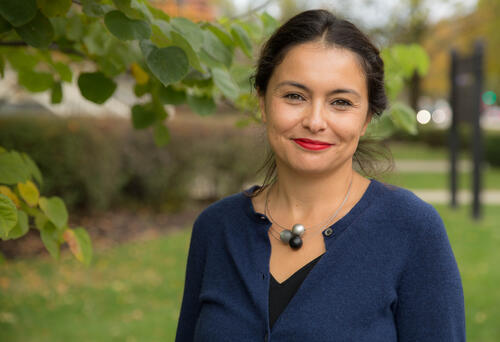
About the Speaker: Katharine Mach is a Senior Research Scientist at Stanford University, an Adjunct Assistant Professor at Carnegie Mellon University, and a Visiting Investigator at the Carnegie Institution for Science. She leads the Stanford Environment Assessment Facility (SEAF). From 2010 until 2015, Mach co-directed the scientific activities of Working Group II of the Intergovernmental Panel on Climate Change, which focuses on impacts, adaptation, and vulnerability. This work culminated in the IPCC’s Fifth Assessment Report and its Special Report on Managing the Risks of Extreme Events and Disasters to Advance Climate Change Adaptation. Mach received her PhD from Stanford University and AB from Harvard College.

What next for climate? Assessing the risks and the options
Download pdf
Katharine J. Mach Senior Research Scientist Stanford University
Seminars
-

Abstract: The short half-life (87.7 yr) of the isotope plutonium-238 makes it ideal for use in radioisotope power systems – nuclear power systems that derive their energy from the heat produced by spontaneous radioactive decay, as distinguished from nuclear fission. 238Pu has become an important source of power for fuelling NASA unmanned interplanetary spacecraft, and instruments on Mars.  The use of plutonium in space exploration poses interesting policy questions that balance safety against scientific understanding of the solar system. I will provide an overview of the production, safety, component fabrication, and peaceful applications of this very important plutonium isotope.  

About the Speaker: David L. Clark is a Los Alamos National Laboratory Fellow and Director of the Laboratory’s National Security Education Center (NSEC). He joined Los Alamos as a postdoctoral fellow in 1988. Since then he has held various leadership positions at the Laboratory, and become an international authority on the chemistry and physics of the actinides. He has published 170 peer-reviewed publications, encyclopedia and book chapters, and is currently co-editing the 2nd edition of the Plutonium Handbook. He is a CISAC affiliate whose research interests are in the molecular and electronic structure of actinide materials, applications of synchrotron radiation to nuclear security, behavior of actinide and fission products in the environment, the aging effects of nuclear weapons materials, and education and training in actinide science.  

Los Alamos National Laboratory
Seminars
-

Image

The same institutions that enabled China’s massive urbanization and spurred its economic growth now require further reform and innovation.

To address the issues facing the next phase of the nation’s transformation, the National New Urbanization Plan (2014–20) set ambitious targets for sustainable, human-centered, and environmentally friendly urbanization. This volume explores the key institutional and governance challenges China will face in reaching those goals. Its policy-focused contributions from leading social scientists in the United States and China explore aspects of urbanization ranging from migration and labor markets to agglomeration economies, land finance, affordable housing, and education policy. Subjects covered in the eleven chapters include:


    * Institutional problems leading to fiscal pressures on local governments and unequal provision of social    services to migrant families   

   * The history of land financing and threats to its sustainability

    * The difficulty of sorting out property rights in rural China

    * How administrative redistricting has allowed the urbanization of geographical administrative places to     outpace the urbanization of populations within those areas

    * How the hukou system may not be the sole, or even primary, mechanism restricting migrants from      public goods, such as their childrens’ education

    * Whether the nation’s food security is threatened by its ongoing urbanization

    * The current state of the provision of low-income housing, and future challenges

Professor Jean Oi is Director of the China Program, William Haas Professor of Chinese Politics, Stanford University; Lee Shau Kee Director of the Stanford Center, Peking University. Her work focuses on comparative politics, with special expertise on political economy and the process of reform in transitional systems.  Oi has written extensively on China's rural politics and political economy. Her State and Peasant in Contemporary China (University of California Press, 1989) examined the core of rural politics in the Mao period—the struggle over the distribution of the grain harvest—and the clientelistic politics that ensued. Her Rural China Takes Off (University of California Press, 1999) examined the property rights necessary for development and showed how "local state corporatism" facilitated rapid growth of rural industry.  Recent publications include Growing Pains: Tensions and Opportunity in China's Transformation (Brookings Institution Press, 2010), co-edited with Scott Rozelle and Xueguang Zhou; and “Development Strategies and Poverty Reduction in China,” in Yusuf Bangura, ed., The Developmental Road to Poverty Reduction, (2015); and “Rural Development,” in David S. Goodman, ed., Handbook of the Politics of China (Edward Elgar Publishing, 2015).

Professor Karen Eggleston is Director of the Asia Health Policy Program; Deputy Director, Shorenstein Asia-Pacific Research Center. She joined the Walter H. Shorenstein Asia-Pacific Research Center (APARC) in the summer of 2007. She is also a fellow at Stanford's Center for Health Policy/Primary Care and Outcomes Research (CHP/PCOR), and a Faculty Research Fellow of the National Bureau of Economic Research (NBER). Her research focuses on comparative healthcare systems and health reform in Asia, especially China; government and market roles in the health sector; payment incentives; healthcare productivity; and the economics of the demographic transition. Eggleston teaches through Stanford's East Asian studies program and is also affiliated with Stanford's public policy program.

Professor Klaus Desmet is Altshuler Centennial Interdisciplinary Professor at Southern Methodist University; Research Fellow at the Centre for Economic Policy Research. He holds an MSc in Business and Engineering from the Université Catholique de Louvain and a Ph.D. in Economics from Stanford University. He previously was professor at Universidad Carlos III de Madrid and has held visiting positions at a number of institutions, including the University of Illinois, Stanford University and the Bank of Spain. His research focuses on regional economics, international trade, economic growth and diversity.

Books will be available for sale. Cash or check only.


Department of Political Science
Stanford University
616 Serra Street
Stanford, CA 94305-26044

(650) 723-2843 (650) 725-9401
0
Senior Fellow at the Freeman Spogli Institute for International Studies
William Haas Professor in Chinese Politics
jean_oi_headshot.jpg PhD

Jean C. Oi is the William Haas Professor of Chinese Politics in the department of political science and a Senior Fellow of the Freeman Spogli Institute for International Studies at Stanford University. She is the founding director of the Stanford China Program at the Walter H. Shorenstein Asia-Pacific Research Center. Professor Oi is also the founding Lee Shau Kee Director of the Stanford Center at Peking University.

A PhD in political science from the University of Michigan, Oi first taught at Lehigh University and later in the Department of Government at Harvard University before joining the Stanford faculty in 1997.

Her work focuses on comparative politics, with special expertise on political economy and the process of reform in transitional systems. Oi has written extensively on China's rural politics and political economy. Her State and Peasant in Contemporary China (University of California Press, 1989) examined the core of rural politics in the Mao period—the struggle over the distribution of the grain harvest—and the clientelistic politics that ensued. Her Rural China Takes Off (University of California Press, 1999 and Choice Outstanding Academic Title, 1999) examines the property rights necessary for growth and coined the term “local state corporatism" to describe local-state-led growth that has been the cornerstone of China’s development model. 

She has edited a number of conference volumes on key issues in China’s reforms. The first was Growing Pains: Tensions and Opportunity in China's Transformation (Brookings Institution Press, 2010), co-edited with Scott Rozelle and Xueguang Zhou, which examined the earlier phases of reform. Most recently, she co-edited with Thomas Fingar, Fateful Decisions: Choices That Will Shape China’s Future (Stanford University Press, 2020). The volume examines the difficult choices and tradeoffs that China leaders face after forty years of reform, when the economy has slowed and the population is aging, and with increasing demand for and costs of education, healthcare, elder care, and other social benefits.

Oi also works on the politics of corporate restructuring, with a focus on the incentives and institutional constraints of state actors. She has published three edited volumes related to this topic: one on China, Going Private in China: The Politics of Corporate Restructuring and System Reform (Shorenstein APARC, 2011); one on Korea, co-edited with Byung-Kook Kim and Eun Mee Kim, Adapt, Fragment, Transform: Corporate Restructuring and System Reform in Korea (Shorenstein APARC, 2012); and a third on Japan, Syncretism: The Politics of Economic Restructuring and System Reform in Japan, co-edited with Kenji E. Kushida and Kay Shimizu (Brookings Institution, 2013). Other more recent articles include “Creating Corporate Groups to Strengthen China’s State-Owned Enterprises,” with Zhang Xiaowen, in Kjeld Erik Brodsgard, ed., Globalization and Public Sector Reform in China (Routledge, 2014) and "Unpacking the Patterns of Corporate Restructuring during China's SOE Reform," co-authored with Xiaojun Li, Economic and Political Studies, Vol. 6, No. 2, 2018.

Oi continues her research on rural finance and local governance in China. She has done collaborative work with scholars in China, including conducting fieldwork on the organization of rural communities, the provision of public goods, and the fiscal pressures of rapid urbanization. This research is brought together in a co-edited volume, Challenges in the Process of China’s Urbanization (Brookings Institution Shorenstein APARC Series, 2017), with Karen Eggleston and Wang Yiming. Included in this volume is her “Institutional Challenges in Providing Affordable Housing in the People’s Republic of China,” with Niny Khor. 

As a member of the research team who began studying in the late 1980s one county in China, Oi with Steven Goldstein provides a window on China’s dramatic change over the decades in Zouping Revisited: Adaptive Governance in a Chinese County (Stanford University Press, 2018). This volume assesses the later phases of reform and asks how this rural county has been able to manage governance with seemingly unchanged political institutions when the economy and society have transformed beyond recognition. The findings reveal a process of adaptive governance and institutional agility in the way that institutions actually operate, even as their outward appearances remain seemingly unchanged.

Selected Multimedia

Director of the China Program
Lee Shau Kee Director of the Stanford Center at Peking University
Faculty Affiliate at the Stanford Center on China's Economy and Institutions
Date Label
<i>Stanford University</i>

Shorenstein APARC
Stanford University
Encina Hall E301
Stanford, CA 94305-6055

(650) 723-9072 (650) 723-6530
0
Senior Fellow at the Freeman Spogli Institute for International Studies
Center Fellow at the Center for Health Policy and the Center for Primary Care and Outcomes Research
Faculty Research Fellow of the National Bureau of Economic Research
Faculty Affiliate at the Stanford Center on China's Economy and Institutions
karen-0320_cropprd.jpg PhD

Karen Eggleston is a Senior Fellow at the Freeman Spogli Institute for International Studies (FSI) at Stanford University and Director of the Stanford Asia Health Policy Program at the Shorenstein Asia-Pacific Research Center at FSI. She is also a Fellow with the Center for Innovation in Global Health at Stanford University School of Medicine, and a Faculty Research Fellow of the National Bureau of Economic Research (NBER). Her research focuses on government and market roles in the health sector and Asia health policy, especially in China, India, Japan, and Korea; healthcare productivity; and the economics of the demographic transition.

Eggleston earned her PhD in public policy from Harvard University and has MA degrees in economics and Asian studies from the University of Hawaii and a BA in Asian studies summa cum laude (valedictorian) from Dartmouth College. Eggleston studied in China for two years and was a Fulbright scholar in Korea. She served on the Strategic Technical Advisory Committee for the Asia Pacific Observatory on Health Systems and Policies and has been a consultant to the World Bank, the Asian Development Bank, and the WHO regarding health system reforms in the PRC.

Director of the Asia Health Policy Program, Shorenstein Asia-Pacific Research Center
Stanford Health Policy Associate
Faculty Fellow at the Stanford Center at Peking University, June and August of 2016
CV
Date Label
<i>Stanford University</i>
Klaus Desmet <i>Southern Methodist University</i>
Seminars
-

Professor Jha will present an overview of a book project, joint with Rikhil Bhavnani, that examines the promise and limitations of non-violent civil disobedience as a means for peaceful political reform. The project draws upon both cross-country comparisons of political movements, and a detailed  empirical analyses of India's struggle for independence that draws upon hitherto- untapped secret intelligence reports and archival sources. We lay out both the conditions for success of non-violent movements in general, and also the implications for the subsequent economic and political development of South Asia.


Image
Professor Saumitra Jha holds a BA from Williams College, master’s degrees in economics and mathematics from the University of Cambridge, and a PhD in economics from Stanford University. Prior to joining the GSB, he was an Academy Scholar at Harvard University. He has been a Fellow of the Niehaus Center for Globalization and Governance and the Center for the Study of Democratic Politics at Princeton University and received the Michael Wallerstein Award for best published article in Political Economy from the American Political Science Association in 2014 for his research on ethnic tolerance.  He currently serves on the Editorial Boards of the Journal of Development Economics and the Journal of Comparative Economics. Professor Jha has consulted on economic and political risk issues for the United Nations/ WTO, the World Bank and other agencies.


About the colloquia:

In 2016, the Walter H. Shorenstein Asia-Pacific Research Center, in collaboration with the Stanford Center for South Asia, launched a series of public lectures to broaden our understanding and discussion of contemporary India — its enormous domestic potential and problems, its place in the region and the world, and the ambitious agenda of the new Modi administration. Building on the strong engagement of those issues from across the university community and beyond, we are continuing the series, with generous support from the U.S. India Business Council, in the 2017-2018 academic year. We will  draw business, political, diplomatic and academic experts from the U.S. and India to explore topics including India’s innovation economy, India-China relations, India’s pivotal role in global health, and U.S.-India relations. 

This colloquia is co-sponsored with the Stanford Center for South Asia

Image

Saumitra Jha <i>Senior Fellow, Freeman Spogli Institute for International Studies; Associate Professor, Political Economy, Graduate School of Business and by courtesy, Economics and Political Science, Stanford University</i>
Seminars
-

Vietnam has adopted a public-private mixed health service delivery system for 30 years to mobilize more resources for the health sector. Public hospital physicians are allowed to practice for the private sector outside official working hours; therefore, physician dual practice is very common. This paper investigates the characteristics and dynamics of the phenomenon, focusing on the choices of physicians about whether to engage in dual practice, as well as their performance in their public practice. The analysis is based on a survey at 10 public hospitals in Vietnam with 510 physicians. Half of public hospital physicians reported participating in at least one type of private practice. Personal characteristics (gender, age, position), private practice income, and clinical autonomy are the reasons for dual practice involvement. Dual practitioners spend more time overall in clinical practice than their non-dual-practice counterparts, but reduce the time for public practice to have more time for private practice. They are also more likely to refer public patients to private practice. Nevertheless physicians appear to still be committed to the public sector to enlarge their professional networking, participate in training opportunities, and fulfill their sense of public responsibility.

Image
ngan do kim img 0669 copy
Ngan Do is currently a postdoctoral fellow at the Walter H. Shorenstein Asia-Pacific Research Center, Stanford University. Prior to that, she worked as a Health Leadership Development Initiative fellow at the World Health Organization Western Pacific Regional Office. Her research focuses on comparative healthcare systems and health reforms in Asia; payment incentives; physicians’ behaviors, human resources for health, and the public-private partnership in the health sector. She experienced field-work in Cambodia, Lao PDR, Philippines, Korea, and Vietnam. Ngan achieved her Ph.D. degree in health policy and management at Seoul National University College of Medicine. She earned her master degree on public policy at the KDI School of Public Policy and Management, and her bachelor degree on international relations at the Diplomacy Academy of Vietnam.


Ngan Do Kim 2016-2017 Developing Asia Health Policy Postdoctoral Fellow 2016-2017 Developing Asia Health Policy Postdoctoral Fellow
Seminars
-
 
Two CDDRL honor students will present their theses at this week's CDDRL Research Seminar on Thursday, May 25, from 12-1:30.
 
Whitney McIntosh's thesis, "France and the Internationalization of Security: A Conceptual History of Security During the Interwar Years (1919-1933)" will receive a Firestone Medal, given to the top 10% of all honors theses.

Image
whitney
About Whitney: Whitney McIntosh is from Melbourne, Australia. At Stanford, she studied International Relations and English before pursuing an interdisciplinary honors thesis through CDDRL. Her thesis explores the way that the conception of ‘security’ rose to prominence over the 20th century, gathering new referents and meanings with changes to the international order. The term ‘security’ came into common parlance following World War I, specifically through the experience of France who felt threatened by potential German aggression. This research reflects general interests in intellectual history, post-conflict reconstruction, and French culture and politics. Outside of her studies, Whitney volunteers with kids with special needs through Kids with Dreams and is the Managing Editor of Liminal Magazine. After Stanford, Whitney hopes to pursue graduate studies in Political Science, before a career in academia.


Sofia Filippa's thesis, "NGO Family Planning Programs and Indigenous Women's Motivations for Collective Action: A Case Study of Solola, Guatemala ," will receive the CDDRL Award for Outstanding Thesis.

Image
honor jpeg
About Sofia:  Sofia was born in Washington, D.C. and grew up in Buenos Aires, Argentina. As she prepares to graduate, she is looking for ways to get involved with organizations that work to advance women's reproductive rights in Latin America or in the U.S. Writing her thesis has definitely been the driving inspiration behind this decision, and so she is very thankful for having had this opportunity!

Whitney McIntosh CDDRL Honors Student
Sofia Filippa CDDRL Honors Student
Seminars
-

About the Event: In conversation with Philip Taubman, General Hayden will discuss intelligence and cybersecurity challenges the United States faces in combatting terrorism, dealing with North Korea, Iran and Russia, and will assess President Trump’s relations with the U.S. intelligence community. 

About the Speaker: General Michael Hayden is a retired four-star general who served as director of the Central Intelligence Agency and the National Security Agency when the course of world events was changing at a rapid rate. As head of the country’s premier intelligence agencies, he was on the frontline of global change, the war on terrorism and the growing cyber challenge. He understands the dangers, risks, and potential rewards of the political, economic, and security situations facing us. General Hayden dissects political situations in hot spots around the world, analyzing the tumultuous global environment and what it all means for Americans and America’s interests. He speaks on the delicate balance between liberty and security in intelligence work, as well the potential benefits and dangers associated with the cyber domain. As the former head of two multi-billion dollar enterprises, he can also address the challenges of managing complex organizations in times of stress and risk, and the need to develop effective internal and external communications.

In addition to leading CIA and NSA, General Hayden was the country’s first principal deputy director of national intelligence and the highest-ranking military intelligence officer in the country.  In all of these jobs, he worked to put a human face on American intelligence, explaining to the American people the role of espionage in protecting both American security and American liberty.  Hayden also served as commander of the Air Intelligence Agency and Director of the Joint Command and Control Warfare Center and served in senior staff positions at the Pentagon, at U.S. European Command, at the National Security Council, and the U.S. Embassy in Bulgaria. He was also the deputy chief of staff for the United Nations Command and U.S. Forces in South Korea.

Hayden has been a frequent expert and commentator on major news outlets and in top publications, valued for his expertise on intelligence matters like cyber security, government surveillance, geopolitics, and more. He was featured in the HBO documentary Manhunt, which looked at espionage through the eyes of the insiders who led the secret war against Osama bin Laden, and in Showtime’s The Spymasters, a detailed look at the directors of the Central Intelligence Agency.

Hayden is currently a principal at the Chertoff Group and a distinguished visiting professor at the George Mason University Schar School of Policy and Government. He is on the board of directors of Motorola Solutions and serves on a variety of other boards and consultancies. In 2013, the Intelligence and National Security Alliance (INSA) awarded Hayden the 29th annual William Oliver Baker Award.  General Hayden is also the first recipient of the Helms Award presented by the CIA Officers’ Memorial Foundation.  In 2014 he was the inaugural Humanitas visiting professor in intelligence studies at Oxford University in the United Kingdom.  His recent memoir, Playing to the Edge: American Intelligence in the Age of Terror, has been a New York Times best-seller and was recently selected as one of the 100 most notable books of 2016.

Philip Taubman is Adjunct Professor at the Center for International Security and Cooperation. He is also the former Moscow and Washington Bureau Chief, and Deputy Editorial Page Editor, of The New York Times. Philip Taubman served as a reporter and editor at The New York Times for thirty years, specializing in national security coverage. He is author of Secret Empire: Eisenhower, the CIA, and the Hidden Story of America’s Space Espionage, and The Partnership: Five Cold Warriors and Their Quest to Ban the Bomb. He is working on a biography of George P. Shultz, the former secretary of state.

Michael Hayden Former director, CIA, NSA
Seminars
-

Abstract: In 2015 nations agreed to the Sustainable Development Goals, including ending poverty, protecting the planet, and ensuring prosperity for all. To accomplish them, we need to find synergies across the seventeen goals. Fortunately, some co-benefits are clear.  Cutting greenhouse gas emissions does much more than fight climate change.  It saves water and improves water quality. It saves lives, too, as witnessed by the ~20,000 or more people who die from coal pollution each year in the United States, with a million more people worldwide. The low-carbon economy will help stabilize national security, create net jobs, and more.

About the Speaker: Rob Jackson is Douglas Provostial Professor and Chair of the Earth System Science Department at Stanford University and a Senior Fellow in Stanford's Woods Institute for the Environment and Precourt Institute for Energy (jacksonlab.stanford.edu).  As an environmental scientist, he chairs the Global Carbon Project (globalcarbonproject.org), an international organization that tracks natural and anthropogenic greenhouse gas emissions.  His photographs have appeared in many media outlets, including the NY Times, Washington Post, and USA Today, and he has published several books of poetry. Jackson is a Fellow of the American Geophysical Union and the Ecological Society of America and was honored at the White House with a Presidential Early Career Award in Science and Engineering.

Rob Jackson Douglas Provostial Professor and Chair Earth System Science Department, Stanford University
Seminars
-

Abstract: The Cold War was about the rise and the solidification of US power. But it was also about more than that. It was about the defeat of Soviet-style Communism and the victory, in Europe, of a form of democratic consensus that had become institutionalized through the European Union. In China it meant a political and social revolution carried out by the Chinese Communist Party. In Latin America it meant the increasing polarization of societies along Cold War ideological lines of division. This book attempts to show the significance of the Cold War between capitalism and socialism on a world scale, in all its varieties and its sometimes confusing inconsistencies. As a one-volume history it can do little but scratch the surface of  complicated developments. But it will have served its purpose if it invites the reader to explore further the ways in which the Cold War made the world what it is today.

About the Speaker: Odd Arne Westad is the S.T. Lee Professor of U.S.-Asia Relations at Harvard University, where he teaches at the Kennedy School of Government. He is an expert on contemporary international history and on the eastern Asian region.  

Before coming to Harvard in 2015, Westad was School Professor of International History at the London School of Economics and Political Science (LSE). While at LSE, he directed LSE IDEAS, a leading centre for international affairs, diplomacy and strategy.
 
Professor Westad won the Bancroft Prize for The Global Cold War: Third World Interventions and the Making of Our Times. The book, which has been translated into fifteen languages, also won a number of other awards. Westad served as general editor for the three-volume Cambridge History of the Cold War, and is the author of the Penguin History of the World (now in its 6th edition). His most recent book, Restless Empire: China and the World since 1750, won the Asia Society’s book award for 2013.
Arne Westad Harvard University
Seminars
-

This event is a joint sponsorship between The Center for International Security and Cooperation and The Hoover Institution

About the Event: In this event, Professor Graham Allison will be interviewed by Niall Ferguson, Professor of History at Harvard University and a Senior Fellow at the Hoover Institution, about his new book, Thucydides’ Trap. In this book Allison argues that China and the United States are heading toward a war neither wants. Behind this dynamic is what Allison sees as a deadly pattern of structural stress that results when a rising power challenges a hegemon. This phenomenon is as old as history itself. About the Peloponnesian War that devastated ancient Greece, the historian Thucydides explained: “It was the rise of Athens and the fear that this instilled in Sparta that made war inevitable.” Over the past 500 years, these conditions have occurred sixteen times. War broke out in twelve of them. Today, as an unstoppable China approaches an immovable America and both Xi Jinping and Donald Trump promise to make their countries ‘great again,’ the seventeenth case looks grim. Unless China is willing to scale back its ambitions or Washington can accept becoming number two in the Pacific, a trade conflict, cyberattack, or accident at sea could soon escalate into all-out war (excerpt from www.amazon.com). Audience members will have an opportunity to ask questions after the conversation.

About the Speaker: Director of Harvard's Belfer Center for Science and International Affairs, Graham Allison is a leading analyst of U.S. national security and defense policy with a special interest in nuclear weapons, terrorism, and decision-making. As Assistant Secretary of Defense in the first Clinton Administration, Dr. Allison received the Defense Department's highest civilian award, the Defense Medal for Distinguished Public Service, for "reshaping relations with Russia, Ukraine, Belarus, and Kazakhstan to reduce the former Soviet nuclear arsenal." This resulted in the safe return of more than 12,000 tactical nuclear weapons from the former Soviet republics and the complete elimination of more than 4,000 strategic nuclear warheads previously targeted at the United States and left in Ukraine, Kazakhstan, and Belarus when the Soviet Union disappeared.

His latest book, Destined for War: Can America and China Escape Thucydides’s Trap?, will be published by Houghton Mifflin Harcourt in May 2017.  His 2013 book, Lee Kuan Yew: The Grand Master’s Insights on China, the United States and the World (co-authored with Robert Blackwill), has been a bestseller in the U.S. and abroad. Nuclear Terrorism: The Ultimate Preventable Catastrophe, now in its third printing, was selected by the New York Times as one of the "100 most notable books of 2004."  It presents a strategy for preventing nuclear terrorism organized under a doctrine of "Three Nos:" no loose nukes; no new nascent nukes; and no new nuclear weapons states. Dr. Allison's first book, Essence of Decision: Explaining the Cuban Missile Crisis (1971), was released in an updated and revised second edition (1999) and ranks among the all-time bestsellers with more than 450,000 copies in print.

Niall Ferguson is a senior fellow of the Hoover Institution, Stanford, and a senior fellow of the Center for European Studies, Harvard. He is also a visiting professor at Tsinghua University, Beijing, and the Diller-von Furstenberg Family Foundation Distinguished Scholar at the Nitze School of Advanced International Studies in Washington, DC. He has written fourteen books, including The House of Rothschild, Empire, The War of the World, The Ascent of Money, The Great Degeneration, and Kissinger, 1923-1968: The Idealist. His 2011 feature-length film Kissinger won the New York International Film Festival’s prize for best documentary. His PBS series The Ascent of Money won the International Emmy for best documentary. His many prizes and awards include the Benjamin Franklin Prize for Public Service (2010), the Hayek Prize for Lifetime Achievement (2012) and the Ludwig Erhard Prize for Economic Journalism (2013). He writes a weekly column for the London Sunday Times and the Boston Globe.

Graham Allison Professor of Government Belfer Center for Science and International Affairs, Harvard University
Seminars
Subscribe to Seminars