-

Abstract:

In the year 1200, many of the largest cities in Western Europe were inhabited by just tens of thousands of individuals while Middle Eastern and Central Asia cities had upwards to 100,000 residents each. By 1800, however, this pattern had reversed. This paper explores the importance of historical trade in explaining patterns of urban growth and decline in the run-up to the Industrial Revolution. To address the issue of the endogenous development of trade routes, the paper’s empirical analysis is focused on trade networks which connected historical cities located near natural harbors, maritime choke points and desert oases. These findings speak to why Middle Eastern and Central Asian cities – long beneficiaries of locational centrality between Europe and Asia – declined as Europeans found alternative routes to the East and opened new trade opportunities in the New World.


Speaker Bio:

Image
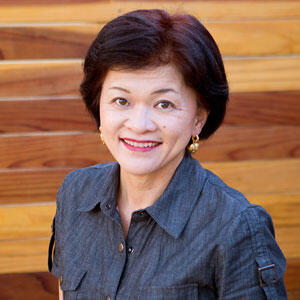
lisa blades
Lisa Blaydes is an Associate Professor of Political Science. She is the author of Elections and Distributive Politics in Mubarak’s Egypt (Cambridge University Press, 2011). Her articles have appeared in the American Political Science Review, the Annual Review of Political Science, International Organization, International Studies Quarterly, Journal of Theoretical Politics, Middle East Journal, and World Politics.

William J. Perry Conference Room, Encina Hall, 2nd Floor, 616 Serra St, Stanford, CA 94305

Encina Hall West, Room 408
Stanford, CA 94305-6044

(650) 723-0649
0
Senior Fellow at the Freeman Spogli Institute for International Studies
Professor of Political Science
lisa_blaydes_108_vert_final.jpg

Lisa Blaydes is a Professor of Political Science at Stanford University. She is the author of State of Repression: Iraq under Saddam Hussein (Princeton University Press, 2018) and Elections and Distributive Politics in Mubarak’s Egypt (Cambridge University Press, 2011). Professor Blaydes received the 2009 Gabriel Almond Award for best dissertation in the field of comparative politics from the American Political Science Association for this project.  Her articles have appeared in the American Political Science Review, International Studies Quarterly, International Organization, Journal of Theoretical Politics, Middle East Journal, and World Politics. During the 2008-2009 and 2009-2010 academic years, Professor Blaydes was an Academy Scholar at the Harvard Academy for International and Area Studies. She holds degrees in Political Science (PhD) from the University of California, Los Angeles, and International Relations (BA, MA) from Johns Hopkins University.


Affiliated faculty at the Center on Democracy, Development and the Rule of Law
Affiliated faculty at the Center for International Security and Cooperation
Date Label
Associate Professor of Political Science
Seminars
-

Abstract: As a potential measure of mitigating the contribution of fossil fuel emissions to global warming, carbon dioxide (CO2) capture and storage (CCS) entails capturing CO2 from from large industrial sources, compressing it to a dense supercritical form (scCO2), injecting it deep into suitable reservoirs, and storing it permanently. After 20+ years of research on CCS, including various applied studies involving pilot and demonstration projects, many stakeholders believe that the world is now ready to move from demonstration to industrial-scale implementation. Yet many hurdles remain, ranging from mostly technical nature to economic and public perception issues. This talk provides a broad overview of the decades of research on CO2 and discusses what has been learned versus what challenges remain. The presentation also elaborates on California as an interesting example for the complicated road to deployment at scale, as ambitious climate goals and generous carbon credits should provide for project economics to work, yet no California CCS project has materialized to date.

Speaker Bio: Jens Birkholzer is an internationally recognized expert in subsurface energy applications and environmental impact assessment. He is a Senior Scientist at the Lawrence Berkeley National Laboratory (LBNL, Berkeley Lab) in Berkeley, California, and currently serves as the Director for the Energy Geosciences Division (EGD) at LBNL. He received his Ph.D. in water resources, hydrology, and soil science from Aachen University of Technology in Germany in 1994. Jens joined LBNL in 1994, left for a management position in his native Germany in 1999, and eventually returned to LBNL in 2001. He has over 400 scientific publications, about 125 of which are in peer-reviewed journals, in addition to numerous research reports. He serves as the Associate Editor of the International Journal of Greenhouse Gas Control (IJGGC) and is also on the Board of Editorial Policy Advisors for the Journal of Geomechanics for Energy and Environment (GETE). Jens leads the international DECOVALEX Project as its Chairman, is a Fellow of the Geological Society of America, and serves as a Senior Fellow of the California Council on Science and Technology.

William J. Perry Conference Room

Encina Hall, 2nd floor

616 Serra Street

Stanford, CA 94305

Jens Birkholzer Lawrence Berkeley National Laboratory
Seminars
-

Abstract: Why do moderate majorities often fail to coordinate opposition to extremist minorities? This paper offers an explanation for the microfoundations of moderate mobilization in the face of extremist minorities using the case of Islamist extremism in Indonesia. In particular, I show that moderates and extremists face asymmetric costs in the decision to voice their true preferences resulting in a coordination dilemma for moderates, which I call the “Moderates’ Dilemma.” An original survey experiment and observational data of participant behavior during two additional surveys demonstrate that moderates hide anti-violent views for fear of reputation costs and that these effects vary by individuals’ sensitivity to reputation costs and degree of uncertainty of others’ attitudes. These findings suggest that over 16 million Indonesians may be hiding moderate preferences and have significant implications for countering violent extremism policies globally. 

Speaker Bio: Kerry Ann Carter Persen is a Carnegie Predoctoral Fellow at CISAC for the 2017-2018 academic year and a Ph.D. Candidate in the Department of Political Science at Stanford University. Her research focuses on the impact of violent extremism on political behavior in the Islamic World.

In her dissertation, she develops a theory of the microfoundations of moderate mobilization against extremist groups using the case of Islamist extremism in Indonesia.  Employing fieldwork, survey data, and observational data, she shows that moderates and extremists face asymmetric costs in the decision to voice their private preferences publicly. This asymmetry results in a failure of moderates to act collectively in line with their individual beliefs, a coordination dilemma called the “Moderates Dilemma.”
 
Kerry’s research has been supported by the National Science Foundation, the U.S. Institute for Peace, the Horowitz Foundation, the National Consortium for the Study of Terrorism and Responses to Terrorism (START), and the Vice Provost for Graduate Education at Stanford University, among others.
 
Prior to graduate school, Kerry spent a Fulbright year in Indonesia and worked at the U.S-Indonesia Society in Washington, D.C. She graduated summa cum laude from Bowdoin College with a double major in Government and Economics.
Predoctoral Fellow CISAC
Seminars
-

Copies of the book will be available for purchase at the event. 


Abstract:

Over the past decades, there has been a revolution in terms of who controls knowledge and information. This rapid change has imperiled the way we think. Without pausing to consider the cost, the world has rushed to embrace the products and services of four titanic corporations. Franklin Foer, a correspondent at the Atlantic and former editor of the New Republic, has written a polemic against the monopolistic practices of Google, Facebook, Amazon, and Apple. He argues they have ushered in a new, dangerous age of conformism. A threat to the very foundations of the republic. In the words of Steve Coll—the Pulitzer Prize-winner—his book is “an argument in the spirit of those brave democracy protesters who stand alone before tanks."


Speaker Bio:

Image
franklin foer

Franklin Foer is a national correspondent for The Atlantic and fellow at the New America Foundation. For seven years, he served as editor of The New Republic. Foer has written for Slate and New York magazine. His previous book How Soccer Explains the World has been translated into 27 languages and was the winner of a National Jewish Book Award.

Franklin Foer Correspondent, Atlantic
Seminars
-

Abstract:

Few Ideas are as sacred in American politics as sovereignty. From the founding of the republic through the rejection of the League of Nations to the present day, Americans have grappled with how to reconcile their desire for independence with the need for effective international cooperation. Unfortunately, contemporary debates over how to defend and exercise that sovereignty are confused and overheated. Such polemics distract us from what is really at stake in the sovereignty debate: namely, the ability to shape America’s destiny in a global age. Contrary to common assertions, the United States is in little danger of subordinating its Constitution and system of government to international law and organizations. What globalization does require is for Americans to think more clearly about sovereignty’s different dimensions—and to consider “sovereignty bargains”, whereby the nation voluntarily trades off a measure of its freedom of action to cooperate with other countries in exploiting the shared opportunities and mitigating the common risks of interdependence.


Speaker Bio:

Image
stewart patrick
Dr. Stewart Patrick is the James H. Binger senior fellow in global governance and the director of the program on international institutions and global governance at the Council on Foreign Relations (CFR). His areas of expertise include multilateral cooperation, international institutions, and the challenges posed by fragile, failing, and post-conflict states.

From September 2002 to January 2005, Dr. Patrick served on the secretary of state’s policy planning staff, with lead staff responsibility for U.S. policy toward Afghanistan and a range of transnational issues. Following government service, he was Research Fellow at the Center for Global Development. Dr. Patrick is the author of The Sovereignty Wars: Reconciling America with the World (Brookings Institution Press, October 2018), as well as of Weak Links: Fragile States, Global Threats, and International Security, and The Best Laid Plans: The Origins of American Multilateralism and the Dawn of the Cold War. He also writes the CFR blog “The Internationalist.”

Dr. Patrick graduated from Stanford University (with a B.A. in human biology and honors in humanities) and received his doctorate in international relations and two masters degrees (in international relations and modern European history) from Oxford University, where he was a Rhodes Scholar. He has three children.

Stewart Patrick James H. Binger Senior Fellow in Global Governance, Council on Foreign Relations
Seminars
-

Abstract:

This paper provides evidence that innovative multinational firms attempt to use health and safety regulations to eliminate cheaper, generic products from the market, even when they themselves produce those products. Stricter regulations on generic products allow innovative firms to shift the market to patented alternatives while forcing out generic producers. Firms are able to win these preferential regulatory outcomes at both national and international levels of governance, despite the fact that these outcomes create trade barriers and tilt the playing field in favor of companies in developed nations. I utilize original data from the agrochemical sector to provide evidence that agrochemical producers request stricter standards on their own products when it could help them sell patented alternatives. Using longitudinal data on actual regulatory change at both national and international levels I find that regulatory institutions seemingly set up to protect consumers also appear to have helped innovative firms win preferential outcomes.


Speaker Bio:

Image
rebecca perlam
Rebecca is a Ph.D. candidate in political science at Stanford University and a Pre-doctoral Fellow at CDDRL. She studies international political economy with a focus on regulation, trade, and the role of international institutions. She received a Master of Arts in Law and Diplomacy from the Fletcher School of Law and Diplomacy at Tufts University. Her undergraduate degree is from Princeton University, where she majored in politics and graduated summa cum laude and phi beta kappa.

Rebecca Perlman PhD Candidate, Political Science, Stanford University
Seminars
-

Abstract:

Duncan Green, Oxfam Strategic Adviser and LSE Professor of Practice in International Development, introduces the arguments of his new book, How Change Happens (OUP, October 2016). How Change Happens explores how political and social change takes place, and the role of individuals and organizations in influencing that change. He discusses the challenges that 'systems thinking' creates for traditional aid practices, and how a 'power and systems approach' requires activists, whether in campaigns, companies or governments, to fundamentally rethink the way they understand the world and try to influence it.

Praise for How Change Happens:

• A splendid treatise on how to change the actual world - in reality, not just in our dreams’ Amartya Sen

• ‘An indispensable guide for activists and change-makers everywhere’ Francis Fukuyama


Speaker Bio:

Image
duncan green
Dr.Duncan Green is Senior Strategic Adviser at Oxfam GB, Professor in Practice in International Development at the London School of Economics, Honorary Professor of International Development at Cardiff University and a Visiting Fellow at the Institute for Development Studies. He is the author of How Change Happens (OUP, October 2016) and From Poverty to Power: How Active Citizens and Effective States can Change the World (Oxfam International, 2008, second edition 2012). His daily development blog can be found on http://www.oxfamblogs.org/fp2p/. He was previously Oxfam’s Head of Research, a Visiting Fellow at Notre Dame University, a Senior Policy Adviser on Trade and Development at the Department for International Development (DFID), a Policy Analyst on trade and globalization at CAFOD, the Catholic aid agency for England and Wales and Head of Research and Engagement at the Just Pensions project on socially responsible investment. He is the author of several books on Latin America including Silent Revolution: The Rise and Crisis of Market Economics in Latin America (2003, 2nd edition), Faces of Latin America (2012, 4th edition) and Hidden Lives: Voices of Children in Latin America and the Caribbean (1998).

Duncan Green Oxfam Strategic Adviser and LSE Professor of Practice in International Development Oxfam Strategic Adviser and LSE Professor of Practice in International Development
Seminars
-

Abstract: Artificial intelligence (AI) is rapidly improving. The opportunities are tremendous, but so are the risks. Existing and soon-to-exist capabilities pose several plausible extreme governance challenges. These include massive labor displacement, extreme inequality, an oligopolistic global market structure, reinforced authoritarianism, shifts and volatility in national power, and strategic instability. Further, there is no apparent ceiling to AI capabilities, experts envision that superhuman capabilities in strategic domains will be achieved in the coming four decades, and radical surprise breakthroughs are possible. Such achievements would likely transform wealth, power, and world order, though global politics will in turn crucially shape how AI is developed and deployed. The consequences are plausibly of a magnitude and on a timescale to dwarf other global concerns, leaders of governments and firms are asking for policy guidance, and yet scholarly attention to the AI revolution remains negligible. Research is thus urgently needed on the AI governance problem: the problem of devising global norms, policies, and institutions to best ensure the beneficial development and use of advanced AI.

This problem can be broken into three complementary research clusters:

  1. The technical landscape: What are the trends and possibilities in AI capabilities? What are their likely consequences? What are the externalities from AI, and how can they best be addressed?
  2. AI politics: Who are the relevant actors, what are their interests, and what can they do? What is the nature of the conflict and cooperation challenges that they are likely to face? How can they overcome dangerous conflictual dynamics, in particular an international arms race?
  3. AI governance: Given our understanding of the technical landscape and AI politics, what options are available to us for global governance of AI and what should we work towards?


Work on the AI governance problem must draw on the full body of social science and policy expertise. Solutions are needed by an unknown, but plausibly impending, deadline.

Speaker Bio: Allan Dafoe is an Assistant Professor of Political Science at Yale University and a Research Associate at the Future of Humanity Institute, University of Oxford. His research seeks to understand the causes of world peace and stability. Specifically, his research has examined the causes of the liberal peace, and the role of reputation and honor as motives for war. He develops methodological tools and approaches to enable more transparent, credible causal inference. Allan is beginning research on the international politics of transformative artificial intelligence.

William J. Perry Conference Room

Encina Hall, 2nd floor

616 Serra Street

Stanford, CA 94305

Allan Dafoe Assistant Professor of Political Science Yale University
Seminars
-
This event is co-sponsored by the Stanford Silicon Valley-New Japan Project and the Japan Society of Northern California.

When the Fukushima Daiichi Nuclear Power Plant experienced a meltdown after the Great East Japan Earthquake in March 2011, people scrambled to get accurate data on radiation. Geiger counters were suddenly a hot commodity. In that moment of crisis, a group of global citizens rose to the occasion to launch Safecast, an open data platform to track, monitor and share data on the radiation levels in Fukushima and throughout Japan. Safecast, a Japan Earthquake Relief Fund grantee, enlisted the help of volunteers who collected the data from all over Japan, and even built its own DIY Geiger counter kit. The Japan Society of Northern California and the Stanford Silicon Valley-New Japan Project are proud to present a program with Pieter Franken, the Co-Founder of Safecast, will look back at Safecast’s evolution—a prime example of citizen science embracing open data and open source—over the last six years and their plans to expand their data gathering efforts to take on new environmental challenges. 

Bio

Image
Pieter Franken's career spans over 25 years in Financial Services, specializing in O&T, Fintech, innovation and large-scale transformations. He has held C-level and executive positions with industry leaders such as Citigroup, Shinsei Bank, Aplus, Monex Securities and Monex Group. His hallmark is pioneering innovative services by implementing bleeding edge technologies while minimizing time-to-market and dramatically reducing costs. Versed in large scale IT transformation, bi-modal management, innovation, software development, datacenter operations, financial operations and FinTech, he is a much looked after advisor and speaker on a wide range of topics and is known for providing deep insights pulling from is wide experience in IT, financial services and innovation management. 

Pieter currently is Senior Advisor at Monex Group (a leading online securities and financial services company in Japan) where he focuses on the Future of Financial Services, Group IT Strategy, Fintech, and Blockchain. 

He is also a member of Monetary Authority of Singapore (MAS) International Technology Advisory Panel (ITAP) where he contributes in the transformation of Singapore as a leading Fintech Hub. In 2011 Pieter co-founded Safecast.org - a global volunteer initiative to collect citizen sourced environmental data. Pieter also advises startups, such as ModuleQ, an AI startup based in Silicon Valley. Pieter holds a MSc in Computer Science from Delft University (The Netherlands) and currently is a researcher with MIT Media Lab (US) and Keio University (Japan) where he contributes to the advancement in IoT, Digital Currencies, Block-chain technologies and Citizen Science. Pieter is based in Japan and frequently travels across Asia, North America and Europe.

Agenda

4:15pm: Doors open
4:30pm-5:30pm: Talk and Discussion
5:30pm-6:00pm: Networking

RSVP Required

 
For more information about the Silicon Valley-New Japan Project please visit: http://www.stanford-svnj.org/


Pieter Franken, Senior Advisor, Monex Group
Seminars
-

Abstract: Mainland China has undergone a rapid development of nuclear power during the last two decades. The reactors under construction or soon to be constructed there include some of the world's most advanced models. While the average age of the workforce in China’s nuclear industry is still in the early 30s, China has already become largely self-sufficient in reactor design and construction, as well as other aspects of the fuel cycle. They have made full use of western technology while adapting and improving it, and now have set up a “go global” policy for exporting nuclear technology including heavy components to the rest of the world that may seem to be a strong competition to the US nuclear power industry. 

The speaker has led some two-way educational exchange programs with China during the last 20 years, including training about 20 Chinese nuclear engineers at the University of Michigan (UM), and taking over 100 UM students to China’s nuclear power construction sites and research institutions as visitors or interns. He will share his observation and thoughts with the audience on why we should continue to collaborate with China in nuclear engineering education and research, and how such collaboration can be a win-win deal for both countries in terms of global nuclear safety, technological advancement and economics. 
 

Speaker Bio: Dr. Lumin Wang came to US from China in 1982 and received his PhD in Materials Science from the University of Wisconsin-Madison in 1988. He is a professor in the Department of Nuclear Engineering & Radiological Sciences and the Department of Materials Science & Engineering at the University of Michigan, Ann Arbor (UM). He worked at Argonne National Laboratory and University of New Mexico before joining UM in 1997. Professor Wang’s main research interests are on radiation tolerance of nuclear engineering materials and ion beam modification of materials. Professor Wang has published more than 400 SCI indexed research papers with an h-index above 50. Professor Wang has been serving on the International Committee of American Nuclear Society (ANS) since 2010. He has taken over 100 UM students to China to observe the development of nuclear power there seven summers in a row since 2010. Professor Wang was named as an outstanding nuclear engineering professor in 2008 and an international ambassador in 2013 by UM’s college of engineering. 

Lumin Wang Professor, Dept. of Nuclear Engineering & Radiological Sciences University of Michigan
Seminars
Subscribe to Seminars