-

Abstract:

Modernization theory, institutional capacity, and rational choice institutionalism are the three candidate theories that explain how rich democratic states got to be rich and democratic. External development efforts will only be successful if he objectives or external and internal elites are complementary. This is only likely to be the case for 30-40 countries in the world. For the other 130 poorer countries the best that can be hoped for is good enough governance.


Speaker Bio:

Image
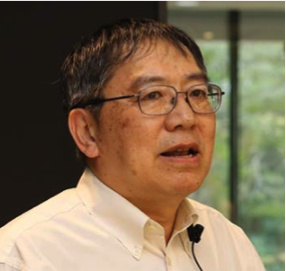
StephenKrasner
Stephen D. Krasner is the Graham H. Stuart Professor of International Relations at Stanford, and a Senior Fellow at the Freeman Spogli Institute, and the Hoover Institution. From February 2005 to April 2007 he was Director of the Policy Planning Staff at the Department of State. He is a member of the Board of Directors of the United States Institute of Peace, and was a member of the Foreign Policy Advisory Board of the Department of State from 2012 to 2014. He edited International Organization from 1986 to 1992. Professor Krasner is a Fellow of the American Academy of Arts and Sciences and a member of the Council on Foreign Relations. He is a Mercator Fellow at the Free University and was a Fellow at the Wissenschaftskolleg in 2000-2001. He has written or edited eight books and more than eighty articles.

CDDRL
Stanford University
Encina Hall
Stanford, CA 94305-6055

(650) 723-0676 (650) 724-2996
0
Senior Fellow at the Freeman Spogli Institute for International Studies, Emeritus
Graham H. Stuart Professor of International Relations
Senior Fellow at the Hoover Institution, Emeritus
krasner.jpg MA, PhD

Stephen Krasner is the Graham H. Stuart Professor of International Relations. A former director of CDDRL, Krasner is also an FSI senior fellow, and a fellow of the Hoover Institution.

From February 2005 to April 2007 he served as the Director of Policy Planning at the US State Department. While at the State Department, Krasner was a driving force behind foreign assistance reform designed to more effectively target American foreign aid. He was also involved in activities related to the promotion of good governance and democratic institutions around the world.

At CDDRL, Krasner was the coordinator of the Program on Sovereignty. His work has dealt primarily with sovereignty, American foreign policy, and the political determinants of international economic relations. Before coming to Stanford in 1981 he taught at Harvard University and UCLA. At Stanford, he was chair of the political science department from 1984 to 1991, and he served as the editor of International Organization from 1986 to 1992.

He has been a fellow at the Center for Advanced Studies in the Behavioral Sciences (1987-88) and at the Wissenschaftskolleg zu Berlin (2000-2001). In 2002 he served as director for governance and development at the National Security Council. He is a fellow of the American Academy of Arts and Sciences and a member of the Council on Foreign Relations.

His major publications include Defending the National Interest: Raw Materials Investment and American Foreign Policy (1978), Structural Conflict: The Third World Against Global Liberalism (1985), Sovereignty: Organized Hypocrisy (1999), and How to Make Love to a Despot (2020). Publications he has edited include International Regimes (1983), Exploration and Contestation in the Study of World Politics (co-editor, 1999),  Problematic Sovereignty: Contested Rules and Political Possibilities (2001), and Power, the State, and Sovereignty: Essays on International Relations (2009). He received a BA in history from Cornell University, an MA in international affairs from Columbia University and a PhD in political science from Harvard.

CV
Professor of International Relations at Stanford, and a Senior Fellow at the Freeman Spogli Institute, and the Hoover Institution
Seminars
-
Abstract: This talk examines the history of environmental data systems in the context of the Trump administration’s assault on environmental science. Tracking and understanding environmental change requires “long data,” i.e. consistent, reliable sampling over long periods of time. Weather observations can become climate data, for example — but only if carefully curated and adjusted to account for changes in instrumentation and data analysis methods. Environmental knowledge institutions therefore depend on an ongoing “truce” among scientific and political actors. Climate denialism and deregulatory movements seek to destabilize this truce. In recent months, with the installation of climate change deniers and non-scientist ideologues as leaders of American knowledge institutions, wholesale dismantling of some environmental data systems has begun. These developments threaten the continuity of “long data” vital to tracking climate change and other environmental disruptions with significant consequences for both domestic and international security.
 
Speaker bio: Paul N. Edwards is William J. Perry Fellow in International Security at Stanford University (from July 2017) and Professor of Information at the University of Michigan. He writes and teaches about the history, politics, and culture of information infrastructures. Edwards is the author of A Vast Machine: Computer Models, Climate Data, and the Politics of Global Warming (MIT Press, 2010) and The Closed World: Computers and the Politics of Discourse in Cold War America (MIT Press, 1996), and co-editor of Changing the Atmosphere: Expert Knowledge and Environmental Governance (MIT Press, 2001), as well as numerous articles.


William J. Perry Fellow in International Security Stanford University
Seminars
-

Abstract: What is the strategic value of cyber weapons? Even though a growing body of research has addressed the destructive potential of cyber weapons, there remains a large gap in thinking about the strategic utility of these capabilities. The purpose of this paper is to partially fill this gap, by means of assessing under what conditions 'counterforce’ and ‘countervalue’ cyber weapons can be effective. I argue that cyber weapons can provide an ‘extra option’ to leaders. The discussed cases suggest that they can be used both as an important force-multiplier enabler for conventional military assets or as independent capability. Cyber weapons can also be used to achieve a form of psychological ascendancy and can be used effectively with few casualties.

Speaker Bio: Max Smeets is a cybersecurity fellow at the Center for International Security and Cooperation and holds a DPhil in International Relations from the University of Oxford, St. John’s College. Max current book project focuses on the causes underlying cyber proliferation and restraint. The results of this research are valuable for understanding the likely changes in the future prevalence of cyber weapons. It clarifies to what degree this is an ‘inevitable’ development – and if/how it can be stopped.

Max was a College Lecturer in Politics at Keble College, University of Oxford, and Research Affiliate of the Oxford Cyber Studies Programme. He was also a Carnegie Visiting Scholar at Columbia University SIPA and a Doctoral Visiting Scholar at Sciences Po CERI. He holds an undergraduate degree from University College Roosevelt, Utrecht University, and an M.Phil in International Relations from the University of Oxford, Brasenose College.  Max has a diverse professional background, having worked for financial, political, and non-governmental organizations.


William J. Perry Conference Room

Encina Hall, 2nd floor

616 Serra Street

Stanford, CA 94305

Cybersecurity Fellow CISAC
Seminars

Title: Optimal Clinical Trials for Personalizing Medical Care: The Expected Value of Oversampling Information

Abstract: Personalizing patient care frequently involves selecting treatments based on risk predictions, with patients at lower risk being recommended less aggressive treatment or no treatment at all. Because risk predictions are uncertain, treatments selected based on them may not be optimal. Collecting additional information could, therefore, be valuable. Designing studies to collect the needed information most efficiently is important given that studies have become increasingly expensive to conduct. Methods exist to support such endeavors (i.e., expected value of sample information (EVSI)). However, to date, EVSI calculations consider only studies that estimate overall population means efficiently. Studies to support the personalization of medical care require deciding how much information to collect about which patient subgroups: on which locations along the risk spectrum should studies focus? We develop the Expected Value of Oversampling Information (EVOSI) framework by introducing EVSI into a previously proposed Expected Value of Individualized Care (EVIC) framework, narrowing prediction uncertainty where doing so maximally increases the overall value of individualized treatment choices. With the EVOSI framework, we analyze the features of patient risk subgroups that increase the value of oversampling and conduct numerical simulations to consider trade-offs between these features (i.e., how much to oversample). Results show that studies designed with EVOSI can be expected to achieve more value than those designed with EVSI at a given sample size or the same expected value as EVSI at a smaller sample size. Features that determine optimal oversampling in EVOSI include: subgroup prevalence; one’s priors on the relative distance to the threshold risk at which one should initiate treatment for each subgroup; the amount of uncertainty in these priors for each subgroup; and the amount of available sample for the new study (i.e., the new study’s total sample budget). Deciding to personalize medical care based on patients’ predicted but uncertain risks also requires decisions about collecting additional information. Such risk heterogeneity calls for an EVOSI analysis if, given available sample, the value of personalized care is to be maximized.


Please note: All research in progress seminars are off-the-record unless otherwise noted. Any information about methodology and/or results are embargoed until publication.


Encina Commons, Room 220
615 Crothers Way
Stanford, CA 94305-6006

(650) 721-2486 (650) 723-1919
0
Professor, Health Policy
jeremy-fisch_profile_compressed.jpg PhD

Jeremy Goldhaber-Fiebert, PhD, is a Professor of Health Policy, a Core Faculty Member at the Center for Health Policy and the Department of Health Policy, and a Faculty Affiliate of the Stanford Center on Longevity and Stanford Center for International Development. His research focuses on complex policy decisions surrounding the prevention and management of increasingly common, chronic diseases and the life course impact of exposure to their risk factors. In the context of both developing and developed countries including the US, India, China, and South Africa, he has examined chronic conditions including type 2 diabetes and cardiovascular diseases, human papillomavirus and cervical cancer, tuberculosis, and hepatitis C and on risk factors including smoking, physical activity, obesity, malnutrition, and other diseases themselves. He combines simulation modeling methods and cost-effectiveness analyses with econometric approaches and behavioral economic studies to address these issues. Dr. Goldhaber-Fiebert graduated magna cum laude from Harvard College in 1997, with an A.B. in the History and Literature of America. After working as a software engineer and consultant, he conducted a year-long public health research program in Costa Rica with his wife in 2001. Winner of the Lee B. Lusted Prize for Outstanding Student Research from the Society for Medical Decision Making in 2006 and in 2008, he completed his PhD in Health Policy concentrating in Decision Science at Harvard University in 2008. He was elected as a Trustee of the Society for Medical Decision Making in 2011.

Past and current research topics:

  1. Type 2 diabetes and cardiovascular risk factors: Randomized and observational studies in Costa Rica examining the impact of community-based lifestyle interventions and the relationship of gender, risk factors, and care utilization.
  2. Cervical cancer: Model-based cost-effectiveness analyses and costing methods studies that examine policy issues relating to cervical cancer screening and human papillomavirus vaccination in countries including the United States, Brazil, India, Kenya, Peru, South Africa, Tanzania, and Thailand.
  3. Measles, haemophilus influenzae type b, and other childhood infectious diseases: Longitudinal regression analyses of country-level data from middle and upper income countries that examine the link between vaccination, sustained reductions in mortality, and evidence of herd immunity.
  4. Patient adherence: Studies in both developing and developed countries of the costs and effectiveness of measures to increase successful adherence. Adherence to cervical cancer screening as well as to disease management programs targeting depression and obesity is examined from both a decision-analytic and a behavioral economics perspective.
  5. Simulation modeling methods: Research examining model calibration and validation, the appropriate representation of uncertainty in projected outcomes, the use of models to examine plausible counterfactuals at the biological and epidemiological level, and the reflection of population and spatial heterogeneity.
CV
Date Label
Seminars
-

Abstract: We live in a world where the risks from a changing climate are clear. New research highlights the magnitude of the risks and the benefits of rapid, ambitious action. We also live in a world where the technologies for addressing climate change, for limiting the amount of climate change that occurs and for dealing as effectively as possible with the changes that cannot be avoided, are increasingly mature, affordable, and rich with co-benefits. In many ways and in many places, progress in deploying solutions is dramatic. But worldwide, progress is much slower than it needs to be, if we are to avoid the worst impacts. We need to find a global accelerator pedal for climate solutions. Key enablers include steps to level the economic playing field, government investments to drive down the costs and risks of technology solutions, and novel mechanisms to spur international collaboration.

Speaker Bio: Chris Field is the Perry L. McCarty Director of the Stanford Woods Institute for the Environment and Melvin and Joan Lane Professor for Interdisciplinary Environmental Studies. His research focuses on climate change, ranging from work on improving climate models, to prospects for renewable energy systems, to community organizations that can minimize the risk of a tragedy of the commons. Field was the founding director of the Carnegie Institution’s Department of Global Ecology, a position he held from 2002 to 2016. He was co-chair of Working Group II of the Intergovernmental Panel on Climate Change from 2008-2015, where he led the effort on the IPCC Special Report on “Managing the Risks of Extreme Events and Disasters to Advance Climate Change Adaptation”  (2012) and the Working Group II contribution to the IPCC Fifth Assessment Report (2014) on Impacts, Adaptation, and Vulnerability. His widely cited work has earned many recognitions, including election to the US National Academy of Sciences, the Max Planck Research Award, and the Roger Revelle Medal.

William J. Perry Conference Room

Encina Hall, 2nd floor

616 Serra Street

Stanford, CA 94305

Chris Field Professor for Interdisciplinary Environmental Studies Woods Institute for the Environment, Stanford University
Seminars
-

Image

Dr. Forbes chairs the Steam Engineering Companies of Forbes Marshall, India’s leading Steam Engineering and Control Instrumentation firm. 

Dr. Forbes was an occasional Lecturer and Consulting Professor at Stanford University from 1987 to 2004, where he developed courses on technology in newly industrializing countries. He received his Bachelors, Masters and PhD degrees from Stanford University.

Dr. Forbes is on the Board of several educational institutions and public companies. He is the Chairman of Centre for Technology, Innovation and Economic Research in Pune. He has long been an active member of CII and has, at various times, chaired the National Committees on Higher Education, Innovation, Technology and International Business. He was President of CII from 2016-2017.


About the Colloquia:

In 2016, the Walter H. Shorenstein Asia-Pacific Research Center, in collaboration with the Stanford Center for South Asia, launched a series of public lectures to broaden our understanding and discussion of contemporary India — its enormous domestic potential and problems, its place in the region and the world, and the ambitious agenda of the new Modi administration. Building on the strong engagement of those issues from across the university community and beyond, we are continuing the series, with generous support from the U.S. India Business Council, in the 2017-2018 academic year. We will  draw business, political, diplomatic and academic experts from the U.S. and India to explore topics including India’s innovation economy, India-China relations, India’s pivotal role in global health, and U.S.-India relations. 


This Colloquia is co-sponsored with 

Image

Naushad Forbes Co-Chairman, <i>Forbes Marshall</i>
Seminars
-

Through 20 weeks of persistent and peaceful demonstrations, South Koreans called for their former president's impeachment which resulted in a special presidential election in May. Moon Jae-in, a candidate from a progressive party, was elected and took over the Blue House immediately.

kim jin pyo headshot Kim Jin Pyo
Kim Jin-pyo who served as Chairman of the State Affairs Planning Advisory Committee under President Moon during the transition period will discuss the new administration's socio-economic policies on major topics including job creation, income growth, and a fair economy.

Kim, a National Assembly Member for a fourth term, served as Vice Prime Minister and Minister of Education and Human Resources Development (2005-06); Vice Prime Minister and Minister of Finance and Economy (2003-04); vice chairman of the transition committee under President Roh Moo-hyun; and Senior Secretary of Policy and Planning to President Kim Dae-jung in 2002.

Kim received a BA in law from Seoul National University and an MA in public administration from University of Wisconsin.

This event is open to the public and reservations are not required.

Philippines Conference Room
Encina Hall, 3rd Floor
616 Serra Street
Stanford, CA 94305
Directions

Kim Jin-pyo <i>former Chairman of the State Affairs Planning Advisory Committee; National Assembly Member</i>, South Korea
Seminars
-

Abstract: The United States is (belatedly) waking up to the risk that adversaries will use social media and botnets to influence U.S. elections. However, we have only begun to analyze how adversaries might conduct information operations in the United States to help advance other political goals, especially during intense crises or escalating cyber conflicts.  Strategies to counter such information operations in the U.S. homeland do not exist. To help begin filling that gap, this presentation examines the risk that adversaries will combine cyberattacks on the power grid with disinformation campaigns, tailored to maximize the disruptive effect of blackouts and gain leverage over U.S. leaders for conflict resolution. The presentation also proposes how the electric industry can build on its expertise for “unity of messaging” in hurricane-induced outages, and partner with government agencies to meet the very different (and vastly more difficult) challenges of countering information warfare.  

Speaker Bio: Paul Stockton is the Managing Director of Sonecon LLC, an economic and security advisory firm in Washington, DC.  Before joining Sonecon, Dr. Stockton served as the Assistant Secretary of Defense for Homeland Defense and Americas' Security Affairs from May 2009 until January 2013.  In that position, he helped lead the Department’s response to Superstorm Sandy and other disasters. Dr. Stockton also guided Defense Critical Infrastructure Protection policies and programs. Dr. Stockton was twice awarded the Department of Defense Medal for Distinguished Public Service, DOD's highest civilian award. He holds a Ph.D. from Harvard University and a BA from Dartmouth College.  He is the author of Superstorm Sandy: Implications for Designing a Post-Cyber Attack Power Restoration System and numerous other publications on cybersecurity and infrastructure resilience. 

Paul Stockton Managing Director Sonecon
Seminars
-

Abstract: Continuing social concerns over nuclear energy technologies still limit the application of long-term solutions to nuclear waste management in most countries. These concerns result from a lack of public trust in the scientific basis used in the decision-making approach to waste disposal, particularly the siting of a geologic repository.  Also, nuclear waste issues have become intertwined with the discussion of the future of nuclear energy. Moreover, setting aside the technical uncertainties about the long-term behavior of the waste materials under extended geologic disposal conditions, a scientific dilemma exists about how to deal with the preferences of future generations that will have to safely manage the waste. This stalemate situation has motivated an effort to frame the discussion from a different and interdisciplinary perspective.

An innovative approach to nuclear waste management called ENTRUST is proposed. The approach consists of an analytical framework for the holistic assessment of nuclear waste management strategies and policies where the primary focus is on building and maintaining public trust. Based on a careful use of quantitative information for technical issues, ENTRUST seeks to support a participative and deliberative analysis of the policy and narratives on strategies for nuclear waste management and disposal.

Speaker Bio: François Diaz-Maurin is a Nuclear Security Visiting Scholar at CISAC (2017-2019) and a European Commission’s Marie Sklodowska-Curie Fellow (2017-2020).

François’ research at CISAC deals with the issue of the long-term management of nuclear waste produced at commercial power plants in a context of uncertain transitions and persisting social concerns over nuclear energy technologies. His interdisciplinary research seeks to merge quantitative and qualitative methods for the holistic study of nuclear waste management systems and policies.

In this talk, François will be presenting the preliminary results of his 3-year research project entitled “Building Trust in Nuclear Waste Management through Participatory Quantitative Story Telling (ENTRUST)”. The project will contribute to CISAC’s “Reset of U.S. Nuclear Waste Management Policy” science-policy initiative.

François received both B.S. (2004, with distinction) and M.S. (2007, with distinction) degrees in civil engineering from the University of Rennes 1, France, and a Ph.D. degree in environmental science and technology (2013, summa cum laude) from the Universitat Autònoma de Barcelona, Spain. Before joining academia, François spent four years as an engineer in the design of nuclear energy technologies in Paris, France (2007-2008) and in Boston, MA (2009-2010) for AREVA Inc. North America and AREVA Federal Services LLC.

William J. Perry Conference Room

Encina Hall, 2nd floor

616 Serra Street

Stanford, CA 94305

Nuclear Security Visiting Scholar CISAC
Seminars
-

Abstract:

In the year 1200, many of the largest cities in Western Europe were inhabited by just tens of thousands of individuals while Middle Eastern and Central Asia cities had upwards to 100,000 residents each. By 1800, however, this pattern had reversed. This paper explores the importance of historical trade in explaining patterns of urban growth and decline in the run-up to the Industrial Revolution. To address the issue of the endogenous development of trade routes, the paper’s empirical analysis is focused on trade networks which connected historical cities located near natural harbors, maritime choke points and desert oases. These findings speak to why Middle Eastern and Central Asian cities – long beneficiaries of locational centrality between Europe and Asia – declined as Europeans found alternative routes to the East and opened new trade opportunities in the New World.


Speaker Bio:

Image
lisa blades
Lisa Blaydes is an Associate Professor of Political Science. She is the author of Elections and Distributive Politics in Mubarak’s Egypt (Cambridge University Press, 2011). Her articles have appeared in the American Political Science Review, the Annual Review of Political Science, International Organization, International Studies Quarterly, Journal of Theoretical Politics, Middle East Journal, and World Politics.

William J. Perry Conference Room, Encina Hall, 2nd Floor, 616 Serra St, Stanford, CA 94305

Encina Hall West, Room 408
Stanford, CA 94305-6044

(650) 723-0649
0
Senior Fellow at the Freeman Spogli Institute for International Studies
Professor of Political Science
lisa_blaydes_108_vert_final.jpg

Lisa Blaydes is a Professor of Political Science at Stanford University. She is the author of State of Repression: Iraq under Saddam Hussein (Princeton University Press, 2018) and Elections and Distributive Politics in Mubarak’s Egypt (Cambridge University Press, 2011). Professor Blaydes received the 2009 Gabriel Almond Award for best dissertation in the field of comparative politics from the American Political Science Association for this project.  Her articles have appeared in the American Political Science Review, International Studies Quarterly, International Organization, Journal of Theoretical Politics, Middle East Journal, and World Politics. During the 2008-2009 and 2009-2010 academic years, Professor Blaydes was an Academy Scholar at the Harvard Academy for International and Area Studies. She holds degrees in Political Science (PhD) from the University of California, Los Angeles, and International Relations (BA, MA) from Johns Hopkins University.


Affiliated faculty at the Center on Democracy, Development and the Rule of Law
Affiliated faculty at the Center for International Security and Cooperation
Date Label
Associate Professor of Political Science
Seminars
Subscribe to Seminars