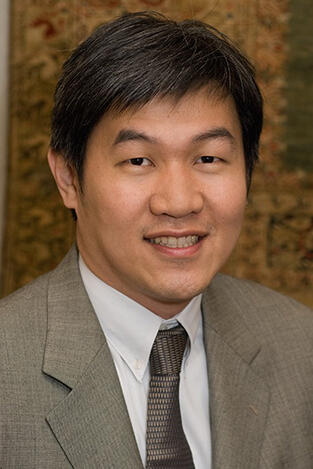
-

Abstract: In this talk, based on his new book “Experience on Demand: What Virtual Reality is, How it Works, and What it Can Do,” Bailenson draws upon two decades spent researching the psychological effects of virtual reality (VR) to help people understand this powerful new tool. ​He describes the profound ways this technology can be put to use—not to distance ourselves from reality, but to enrich our lives and influence us to treat others, the environment, and ourselves better.

Speaker Bio: Jeremy Bailenson is founding director of Stanford University’s Virtual Human Interaction Lab, Thomas More Storke Professor in the Department of Communication, Professor (by courtesy) of Education, Professor (by courtesy) Program in Symbolic Systems, a Senior Fellow at the Woods Institute for the Environment, and a Faculty Leader at Stanford’s Center for Longevity. He earned a B.A. cum laude from the University of Michigan in 1994 and a Ph.D. in cognitive psychology from Northwestern University in 1999. He spent four years at the University of California, Santa Barbara as a Post-Doctoral Fellow and then an Assistant Research Professor.

Bailenson studies the psychology of Virtual Reality (VR), in particular how virtual experiences lead to changes in perceptions of self and others. His lab builds and studies systems that allow people to meet in virtual space, and explores the changes in the nature of social interaction. His most recent research focuses on how VR can transform education, environmental conservation, empathy, and health.

He consults pro bono on VR policy for a wide variety of government agencies, has published numerous papers and opinion pieces, and has produced three VR documentary experiences which were official selections at the Tribeca Film Festival in 2016 and 2017. His new book, “Experience on Demand” will be published by Norton in January.

Jeremy Bailenson Professor of Communication Stanford University
Seminars
-
About the Topic: We review evidence on the characteristics of the most effective teacher professional development (PD) programs, present new data from around the world on the actual characteristics of large-scale teacher PD programs, and demonstrate where existing PD programs could be more effective based on evidence. We propose a standard set of 70 indicators—the In-Service Teacher Training Survey Instrument (ITTSI)—for reporting on such programs as a prerequisite for understanding the characteristics of interventions that lead to improved student learning. We apply the ITTSI to PD programs in low- and middle-income countries that have been evaluated rigorously. Across 26 programs with impact evaluations and student learning results, those programs that provide complementary materials, focus on a specific subject, and include follow-up visits tend to show higher gains. We then apply the ITTSI to a sample of 48 government-funded, at-scale PD programs across 14 countries. This analysis uncovers a sharp gap between the characteristics of teacher training programs that evidence suggests are effective and the global realities of most teacher training programs.  
 
About the Speaker: David is a Lead Economist in the Chief Economist's Office for the Africa Region of the World Bank. He is a co-author of the World Development Report 2018, “Learning to Realize Education’s Promise.”  He studies education, health, and social protection issues. He has designed and implemented impact evaluations in education, early child development, health, and social protection, in Brazil, the Gambia, Kenya, Mexico, Nigeria, Sierra Leone, and Tanzania, and he has managed education projects for the World Bank in Brazil. Current projects include global evidence on girls’ education and teacher professional development. He teaches economic development at the Pardee RAND Graduate School of Public Policy, and he holds a Ph.D. in economics from Harvard University.
Lead Economist
Download pdf

Philippines Room Encina Hall East, 3rd floor

616 Serra St. Stanford, CA 94305

David Evans Lead Economist World Bank African Region
Seminars
-

Through the Hack the Pentagon program, The Department of Defense (DoD) had asked Synack to look for vulnerabilities left undetected by traditional security solutions in one of their highly complex and sensitive systems. The DoD was going to push the limits of security beyond that of most enterprises, and the results were surprising. Hear from Synack CEO Jay Kaplan how the government can benefit from bug bounty programs, what Hack the Pentagon revealed about DoD security, and why more and more organizations are employing red team penetration testing. 

Jay Kaplan co-founded Synack after serving in several security-related capacities at the Department of Defense, including the DoD’s Incident Response and Red Team. Prior to founding Synack, Jay was a Senior Cyber Analyst at the National Security Agency (NSA), where his focus was supporting counterterrorism-related intelligence operations. Jay received a BS in Computer Science with a focus in Information Assurance and a MS in Engineering Management from George Washington University studying under a DoD/NSA-sponsored fellowship. Jay holds a number of security certifications from ISC(2) and GIAC.

Encina Hall, E008 (garden level)

Jay Kaplan CEO Synack
Seminars
-

This seminar exploits longitudinal claims data and a cost-sharing subsidy that has exempted copayment and coinsurance of healthcare service for children under the age of 3 in Taiwan.  We conduct a regression discontinuity design by comparing the use of healthcare for children just before and just after their third birthdays. Our results show that lower level of cost sharing increases outpatient visits and discourages patients’ price-shopping behavior. In contrast, the utilization of inpatient care for children is price insensitive. Finally, we find little evidence on the impact of the cost-sharing subsidy on children’s short-run or long-run health.

Image
hsien ming lien
Hsien-Ming Lien is currently a visiting Fellow at the Center for Advanced Study in the Behavioral Sciences (CASBS) and a Fulbright Scholar at Stanford University. He is also the Director of the Taiwan Study Center, and Professor in the Department of Public Finance, National Chen-Chi University and an adjunct Professor in the Department of Economics at National Taiwan University, where he teaches health systems, health economics, and econometrics. He earned his B.S. from National Taiwan University, and Ph. D. from Boston University.

Prof Lien’s research focuses on 1) physicians’ behavior; 2) the impact of the National Health Insurance program on the health care market; and 3) the impact of copayments on health care use. Prof Lien is a recipient of the Minister Wang Jin Naw Memorial Award for Best Paper in Health Care Management presented by the Kimma Chang Foundation in 2002, and the Golden Paper Award presented by the Chuang Yi-Chou Foundation in 2009. Prof. Lien has published papers in Health Services Research, Journal of Health Economics, Economic Inquiry, and other journals.  


Hsien-Ming Lien Visiting Fellow at the Center for Advanced Study in the Behavioral Sciences (CASBS) and a Fulbright Scholar, Stanford University
Seminars
-

[[{"fid":"228881","view_mode":"crop_870xauto","fields":{"format":"crop_870xauto","field_file_image_description[und][0][value]":"","field_file_image_alt_text[und][0][value]":false,"field_file_image_title_text[und][0][value]":false,"field_credit[und][0][value]":"","field_caption[und][0][value]":"","thumbnails":"crop_870xauto","alt":"","title":""},"type":"media","field_deltas":{"1":{"format":"crop_870xauto","field_file_image_description[und][0][value]":"","field_file_image_alt_text[und][0][value]":false,"field_file_image_title_text[und][0][value]":false,"field_credit[und][0][value]":"","field_caption[und][0][value]":"","thumbnails":"crop_870xauto","alt":"","title":""}},"link_text":null,"attributes":{"style":"margin-left: 0px; margin-right: 15px; padding: 0px; float: left; width: 140px; height: 187px;","class":"media-element file-crop-870xauto","data-delta":"1"}}]]Hak-kyu Sohn, a career politician and the former chairman of the South Korea's Democratic Party, will share his insights into Korean democracy based on his decades of experience in politics.

As a student activist, Sohn participated in Korea's democratization movement, which rose up against the nation's military dictatorship, and he also led labor and human rights movements. As a result of his activities under South Korea's oppresive military rule, Sohn was imprisoned. Later, he went on to be appointed minister of health and welfare, became governor of Gyonggi Province, and served four terms as a member of the National Assembly.

Sohn received a PhD in politics from University of Oxford, England, and BA in political science from Seoul National University.

Philippines Conference Room
Encina Hall, 3rd floor
616 Serra Street
Stanford University
Directions

Hak-kyu Sohn <i>Visiting Scholar, Shorenstein APARC; former Chairman of Democratic Party, South Korea</i>
Seminars
-

I estimate and decompose the welfare benefit of Thailand's universal health care policy, also known as the “30 Baht program”. The total welfare impact of the 30 Baht program is defined as the amount of consumption that an enrollee would need to give up so as to leave her with the same expected utility as without the 30 Baht program. I find that the total welfare benefit is approximately 75 cents per dollar of government spending. The main source of the welfare effect can be attributed to improved consumption smoothing rather than increases in the consumption level. Using the difference in differences method, I find that the effect of the 30 Baht program on income is significantly positive, while the effect on consumption is slightly negative but not significant. This implies that the 30 Baht program has a positive impact on savings and future consumption, rather than current consumption.

Image
natt 4x6
Natt Hongdilokkul joins the Walter H. Shorenstein Asia-Pacific Research Center (APARC) during the 2017-2018 academic year as a postdoctoral scholar in Developing Asia Health policy. His research interests concern the effect of universal health care on household outcomes and welfare using micro-level panel data in Thailand. He received a PhD and an MA in Economics from Simon Fraser University, Canada, and another MA and a BA in Economics from Thammasat University, Thailand.

616 Serra StreetEncina Hall E301Stanford, CA94305-6055
0
natt_hongdilokkul.jpg Ph.D.

Natt Hongdilokkul joins the Walter H. Shorenstein Asia-Pacific Research Center (APARC) during the 2017-2018 academic year as a postdoctoral scholar in Developing Asia Health policy. His research interests concern the effect of universal health care on household outcomes and welfare using micro-level panel data in Thailand. He received a PhD and an MA in Economics from Simon Fraser University, Canada, and another MA and a BA in Economics from Thammasat University, Thailand.

Developing Asia Health Policy Postdoctoral Fellow, 2017-18
Seminars
-

Join us for a conversation with FSI Director, Michael McFaul, as he showcases all the ways to get involved in student programs at FSI. Learn about FSI's centers, programs, and opportunities for students.


Light refreshments will be served.


RSVP Here.

Director
Seminars

Relative to just a few decades ago, today's children are much more likely to grow up with divorced or separated parents. Laws promoting joint legal custody arrangements, which grant both parents the right to make decisions regarding key aspects of their children's welfare, are increasingly common, despite scarce evidence regarding their causal impacts on families. We merge several sources of Danish administrative data and leverage the random assignment of legal custody cases to judges to estimate causal impacts of court-ordered joint legal custody on parent-child interactions, both parents' subsequent family formation, parental and child health, and the incidence of domestic violence. Our analysis sample is highly policy-relevant as these families are "marginal" with respect to joint custody (i.e., the parents would have opted for sole maternal or paternal custody if the decision were up to them).


Please note: All research in progress seminars are off-the-record unless otherwise noted. Any information about methodology and/or results are embargoed until publication.

Encina Commons,
615 Crothers Way Room 184,
Stanford, CA 94305-6006

0
Associate Professor, Health Policy
Senior Fellow, Stanford Institute for Economic Policy Research
Associate Professor, Economics (by courtesy)
rossin-slater_ar21_12_f-cr_compressed.jpg PhD

Maya Rossin-Slater is an Associate Professor of Health Policy at Stanford University School of Medicine. She is also a Senior Fellow at the Stanford Institute for Economic and Policy Research (SIEPR), a Research Associate at the National Bureau of Economic Research (NBER) and a Research Fellow at the Institute of Labor Economics (IZA). She received her PhD in Economics from Columbia University in 2013, and was an Assistant Professor of Economics at the University of California, Santa Barbara from 2013 to 2017, prior to coming to Stanford. Rossin-Slater’s research includes work in health, public, and labor economics. She focuses on issues in maternal and child well-being, family structure and behavior, and policies targeting disadvantaged populations in the United States and other developed countries.

CV
Seminars
-

Co-sponsored by the Center on Democracy, Development, and the Rule of Law, Center for East Asian Studies, and the Southeast Asia Program

Who is Rodrigo Duterte?  How did he become president of the Philippines?  How has his rule impacted Philippine democracy and society?  Is his ascent part of a broader “Duterte wave” of strongman leadership in Russia, Turkey, India, China, and Southeast Asia?  What is his foreign policy?  How has it affected Sino-US rivalry in Asia including the situation in the South China Sea?  Richard Heydarian will address these and other questions drawing on field research for his latest book, The Rise of Duterte.  Regarding China, he will argue that Duterte’s willingness to realign Manila with Beijing at Washington’s expense offers a glimpse of what China’s rise could imply for nations around the world.  The book will be available for sale at his talk. 

Image
javad richard heydarian
Richard Javad Heydarian is the most prolific and interviewed geopolitical analyst currently writing and speaking not only in the Philippines but arguably in Southeast Asia as well. Outlets for his articles and remarks have included Aljazeera English, The Atlantic, BBC, Bloomberg, The Economist, The Financial Times, Foreign Affairs, The Guardian, The New York Times, Nikkei Asian Review, South China Morning Post, The Straits Times, The Wall Street Journal, and The Washington Post. In addition to the 2017 book that entitles his talk, he has written two others: Asia's New Battlefield: US, China, and the Struggle for Western Pacific (2015) and How Capitalism Failed the Arab World (2014). He lectures widely; has taught political science at Ateneo de Manila University and De La Salle University in the Philippines; has published in leading scholarly journals on Asian politics and security; and is a regular contributor to the Center for Strategic and International Studies and the Council on Foreign Relations. 


Richard Javad Heydarian Resident Political Analyst, GMA Network, and Non-resident Fellow, Stratbase-ADR Institute, Manila
Seminars
-
Stanford Cyber Initiative Seminar: Securing California - Peter Liebert, Chief Information Security Officer for the State of California. 
October 19th, 5pm, 380-380Y

What cybersecurity challenges does California face, as the 6th largest economy in the world? How is cybersecurity scalable from a university, local, state, and federal level? Do state CISOs work together, and how does information sharing between states affect cybersecurity? Learn more about setting security policy and security practice in our state. 
 
Peter Liebert serves as chief information security officer and director of the Office of Information Security at the California Department of Technology. Liebert has been senior product manager at FireEye Inc. since 2016, where he was threat assessment manager from 2015 to 2016. He served in several positions at the United States Cyber Command, where he was special assistant in the Office of the Secretary of Defense for cyber policy from 2014 to 2015 and senior cyber policy analyst from 2013 to 2014. Liebert served as cybersecurity and logistics analyst in the Office of the Chief of Naval Operations from 2011 to 2013 and was lead for the Palestinian Logistics Mentoring and Warehouse Information Technology Program at DynCorp International from 2008 to 2010. He served as an officer in the U.S. Navy from 2000 to 2008. He earned a Master of Public Administration degree from the Harvard University, Kennedy School of Government and a Master of Science degree in international security from Cranfield University.

Building 380, Room 380Y, Main Quad, Stanford campus

Peter Liebert CISO California Department of Technology
Seminars
Subscribe to Seminars