-

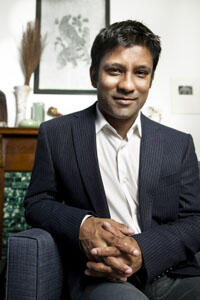
Abstract: China's economic growth over the last thirty years has positioned it to project political and economic power across the world.  In 2013, Chinese President Xi Jinping officially launched the “One Belt, One Road” Initiative, later re-branded as the Belt and Road Initiative (BRI), with the goal of economically connecting China to the countries of the Greater Middle East through a new infrastructural network of roads and maritime ports. The Chinese government has reportedly already spent $250 billion on these projects and will spend up to $1 trillion more in the next decade, much of it in Muslim-majority countries.  This project seeks to answer a number of questions about the economic, political and cultural implications of the BRI.  What does the potential rise of a global trading bloc dominated by the authoritarian regimes of China and the Greater Middle East mean for the liberal economic order?  How will the BRI impact the advancement of human rights in the Greater Middle East?  What types of political tensions might arise between China and BRI target countries because of Chinese state economic investments?  And how is a “rising China” viewed by the citizenries of countries in the Greater Middle East?  


Bio: Lisa Blaydes is a Professor of Political Science at Stanford University.  She is the author of Elections and Distributive Politics in Mubarak’s Egypt (Cambridge University Press, 2011).  Professor Blaydes received the 2009 Gabriel Almond Award for best dissertation in the field of comparative politics from the American Political Science Association for this project.  Her articles have appeared in the American Political Science Review, International Studies Quarterly, International Organization, Journal of Theoretical Politics, Middle East Journal, and World Politics. During the 2008-2009 and 2009-2010 academic years, Professor Blaydes was an Academy Scholar at the Harvard Academy for International and Area Studies.  She holds degrees in Political Science (PhD) from the University of California, Los Angeles and International Relations (BA, MA) from Johns Hopkins University.


Lisa Blaydes Professor of Political Science Stanford University
Seminars
-

Abstract: Steve Fetter worked in the White House Office of Science and Technology Policy during the first three and last two years of the Obama administration.  In the first period he played a role in the debates that defined the administration’s nuclear policy; in the latter period he participated in the final push to make progress on what became known as “the Prague agenda.”  He will discuss the key successes and failures in President Obama’s attempt to revise U.S. nuclear weapon policy and lessons that can be learned for a future administration that seeks to reduce nuclear risks. 


Bio: Steve Fetter is Associate Provost, Dean of the Graduate School, and Professor of Public Policy at the University of Maryland.  Service in the U.S. government includes five years at the White House Office of Science and Technology Policy, two years at the Department of Defense, and a year at the State Department.  He has been a visiting fellow at Stanford, Harvard, MIT, and Livermore and is a member of the National Academy of Sciences Committee on International Security and Arms Control.  Fetter holds a Ph.D. in energy and resources from Berkeley and a S.B. in physics from MIT.

Steve Fetter Associate Provost, Dean of the Graduate School, and Professor of Public Policy University of Maryland
Seminars
-

Abstract: Revenge may not be a necessary condition for deterrence to operate, but it can certainly prove sufficient in many circumstances.  The psychology of revenge is implicitly embedded into the theory and practice of deterrence; it adds an important source of credibility to the threat of retaliatory strike. This discussion provides a deeper theoretical examination of the psychological nature of revenge, its situational triggers, and the implications for deterrence. This approach distinguishes revenge from other forms of retaliation often conflated with revenge, such as negative reciprocity, and highlights the importance of emotional cues such as anger and hatred as motivators.  This allows for greater clarification in understanding the psychological mechanisms that process information, regulate and trigger emotions, and provides a foundation for policymakers to determine the nature of the adversary they confront. We argue that the human psychology of revenge explains why and when policymakers readily commit to the otherwise seemingly ‘irrational’ retaliation that makes deterrence work. Counterintuitively, however, revenge is not motivated by the rational expectation of future deterrence; rather, it is driven by the intrinsic pleasure that one expects to experience upon striking back.  In other words, exacting revenge for perceived transgressions simply feels incredibly satisfying to most people. It is when revenge is sought for its own sake that its prospect can be such an effective deterrent to adversaries, and why it has evolved as such an effective psychological strategy.


Bio: Rose McDermott is the David and Mariana Fisher University Professor of International Relations at Brown University and a Fellow in the American Academy of Arts and Sciences.  She received her Ph.D.(Political Science) and M.A. (Experimental Social Psychology) from Stanford University and has taught at Cornell, UCSB  and Harvard. She has held fellowships at the Radcliffe Institute for Advanced Study, the Olin Institute for Strategic Studies and the Women and Public Policy Program, all at Harvard University. She has been a fellow at the Stanford Center for Advanced Studies in the Behavioral Sciences twice. She is the author of four books, a co-editor of two additional volumes, and author of over two hundred academic articles across a wide variety of disciplines encompassing topics such as experimentation, emotion and decision making, and the biological and genetic bases of political behavior.

Rose McDermott David and Marianna Fisher University Professor of International Relations Brown University
Seminars
-

The Longitudinal Study of Handgun Ownership and Transfer (LongSHOT)
David Studdert, LLB, ScD, MPH
Professor of Medicine
Professor of Law
Stanford University

The prevalence of civilian-owned guns in the US is the highest in the world, and the incidence of firearm-related injury is among the world’s highest.  Evidence that the relationship between these two phenomena is causal has grown, but still has major gaps.  We recently completed assembly of a large cohort of California residents.  Our goal is to assess firearm ownership as a risk factor for firearm-related mortality in this population.  The seminar will outline the project and describe results of some preliminary analyses.


David M. Studdert is a leading expert in the fields of health law and empirical legal research. His scholarship explores how the legal system influences the health and well-being of populations. A prolific scholar, he has authored more than 150 articles and book chapters, and his work appears frequently in leading international medical, law, and health policy publications.

Professor Studdert joined Stanford Law School faculty on November 1, 2013, in a joint appointment as Professor of Medicine (PCOR/CHP) and Professor of Law.

Before joining the Stanford faculty, Professor Studdert was on the faculty at the University of Melbourne (2007-13) and the Harvard School of Public Health (2000-06). He has also worked as a policy analyst at the RAND Corporation, a policy advisor to the Minister for Health in Australia, and a practicing attorney.

Professor Studdert has received the Alice S. Hersh New Investigator Award from AcademyHealth, the leading organization for health services and health policy research in the United States. He was awarded a Federation Fellowship (2006) and a Laureate Fellowship (2011) by the Australian Research Council. He holds a law degree from University of Melbourne and a doctoral degree in health policy and public health from the Harvard School of Public Health.

Seminars
-

Abstract:

Existing scholarship attributes various political and economic advantages to democratic governance. These advantages may make more democratic countries prone to financial crises. Democracy is characterized by constraints on executive authority, accountability through free and fair elections, protections for civil liberties, and large winning coalitions. These characteristics bring important benefits, but they can also have unintended consequences that increase the likelihood of financial instability and crises. Using data covering the past two centuries, I demonstrate a strong relationship between democracy and financial crisis onset: on average, democracies are about twice as likely to experience a crisis as autocracies. This is an empirical regularity that is robust across a wide range of model specifications and time periods.


Speaker Bio:

Image
phillip lipscy 3
Phillip Y. Lipscy (Stanford University) is Assistant Professor of Political Science and Thomas Rohlen Center Fellow at the Freeman Spogli Institute for International Studies.  His fields of research include international and comparative political economy, international organizations, and the politics of East Asia, particularly Japan.  Lipscy’s book from Cambridge University Press, Renegotiating the World Order: Institutional Change in International Relations, examines how countries seek greater international influence by reforming or creating international organizations.

Phillip Lispcy Assistant Professor of Political Science and Thomas Rohlen Center Fellow at the Freeman Spogli Institute for International Studies
Seminars
-

Abstract:

Russia has evolved into an autocracy under Putin's 18-year long rule. The political landscape resembles a desert with just a few oases of relatively strong civil initiatives and political movements. Under these circumstances, people who are eager to continue their activities inside Russia - be it cultural or philanthropic projects - face hard moral choices to either collaborate with the regime or refuse to do so and sacrifice many opportunities along the way. In light of these circumstances, is there any ground for optimism? What are the necessary pre-conditions for strong movements in Russia? What are the visions for post-Putin Russia? Zhanna Nemtsova, the founder of the Boris Nemstov Foundation for Freedom and a news show/anchor for the Deutsche Welle broadcaster shares her insights into the current state of affairs in Russia during this special lunchtime event hosted by the Center on Democracy, Development, and the Rule of Law together with the Center for Russian, East European and Eurasian Studies.


Speaker Bio:

Image
zhanna nemstova1
Zhanna Nemtsova is a Russian journalist currently working at Deutsche Welle, a German international broadcaster. At Deutsche Welle, Nemtsova hosts the weekly Russian-language program "Nemtsova.Interview," which features discussions on current events. Nemtsova founded the Boris Nemtsov Foundation for Freedom to promote the ideas of freedom and education and to preserve her father's liberal political legacy after he was assassinated in 2015. The Foundation awards the Boris Nemtsov Prize to courageous Russians for their demonstrated dedication to fighting for democratic rights in Russia, hosts the annual Boris Nemtsov Forum in Berlin and supports Russian political prisoners and asylum seekers. On May 10 the Boris Nemtsov Foundation, in cooperation with Charles University in Prague, launched the Boris Nemtsov Center for Russian Studies. Nemtsova holds a bachelor’s of science degree in economics with a minor in foreign languages from the Moscow State Institute of International Relations.


Zhanna Nemtsova Founder of the Boris Nemstov Foundation for Freedom
Seminars
-

Abstract:

Is philanthropy, by its very nature, a threat to today’s democracy? Though we may laud wealthy individuals who give away their money for society’s benefit, Just Giving shows how such generosity not only isn’t the unassailable good we think it to be but might also undermine democratic values and set back aspirations of justice. Big philanthropy is often an exercise of power, the conversion of private assets into public influence. And it is a form of power that is largely unaccountable, often perpetual, and lavishly tax-advantaged. The affluent—and their foundations—reap vast benefits even as they influence policy without accountability. And small philanthropy, or ordinary charitable giving, can be problematic as well. Charity, it turns out, does surprisingly little to provide for those in need and sometimes worsens inequality.


Speaker Bio:

Image
rob reich
Rob Reich is professor of political science and, by courtesy, professor of philosophy and at the Graduate School of Education, at Stanford University. He is the director of the Center for Ethics in Society and faculty co-director of the Center on Philanthropy and Civil Society (publisher of the Stanford Social Innovation Review), both at Stanford University. Most recently, he is the author of the forthcoming book, Just Giving: Why Philanthropy is Failing Democracy and How It Can Do Better (Princeton University Press) and the recent Philanthropy in Democratic Societies (edited with Chiara Cordelli and Lucy Bernholz). His current work focuses on ethics and technology, and he is editing a new volume called Digital Technology and Democratic Theory (with Lucy Bernholz and Helene Landemore). He is the recipient of multiple teaching awards and is a board member of GiveWell.org and the magazine Boston Review.


Rob Reich Professor of Political Science Courtesy Appointments in Philosophy and at the Graduate School of Education
Seminars
-

Abstract:

Three years after the Sustainable Development Goals were adopted, it's already clear we will fall short on our current trajectory. Global challenges are getting more complex, and the fast pace of change is disrupting the status quo faster than we can adapt. Bridging this gap will require a fresh mindset. Rather than rigid programs, we need to embrace risk and accelerate learning in order to create more cost-effective and scaleable solutions. It's time to bring the best practices for innovation that have underpinned Silicon Valley's success to global development.


Speaker Bio:

Image
annmei pink square

Ann Mei Chang is a leading expert on social innovation the author of Lean Impact: How to Innovate for Radically Greater Social Good (Wiley, Oct 2018). Previously, she served as the Chief Innovation Officer at both USAID and Mercy Corps. Prior to her pivot to social good, Ann Mei was a seasoned Silicon Valley executive, with more than 20 years experience at such leading companies as Google, Apple, and Intuit, as well as a number of startups.

Ann Mei Chang Author: Lean Impact: How to Innovate for Radically Greater Social Good
Seminars
-

Abstract:

Influential theories indicate concern that campaign donors exert outsized political influence. However, little data documents what donors actually want from government; and existing research largely neglects donors' views on individual issues. We argue there should be significant heterogeneity by party and policy domain in how donors' views diverge from citizens'. We support this argument with the largest survey of U.S. partisan donors to date, including an over sample of the largest donors. We show that Republican donors are much more conservative than Republican citizens on economic issues, whereas their views are similar on social issues. By contrast, Democratic donors are much more liberal than Democratic citizens on social issues, whereas their views are more similar on economic issues. Both parties' donors are more pro-globalism than their citizen counterparts. We replicate these patterns in an independent dataset. These patterns can help inform significant debates about representation, inequality, and populism in American politics.

Speaker Bio:

Image
neil malhorta
Neil Malhotra is the Edith M. Cornell Professor of Political Economy in the Graduate School of Business at Stanford University. He also holds a courtesy appointment in the Department of Political Science. He serves as the Louise and Claude N. Rosenberg, Jr. Co-Director of the Center for Social Innovation at the Stanford GSB.

He has authored over 60 articles on numerous topics including American politics, political behavior, and survey methodology. His research has been published in the American Political Science Review, the American Journal of Political Science, the Journal of Politics, Science, and the Proceedings of the National Academy of Sciences, among other outlets. He currently serves as an Associate Editor of Public Opinion Quarterly and the Journal of Experimental Political Science.

He received his MA and PhD in political science from Stanford University, where he was the Melvin & Joan Lane Stanford Graduate Fellow. He received a BA in economics from Yale University.


Neil Malhotra Professor of Political Economy at the Stanford Graduate School of Business
Seminars
-

Co-sponsored by the Southeast Asia Program and

the Center on Democracy, Development and the Rule of Law

Indonesia features Southeast Asia’s most vibrant and dynamic democracy, but debilitating institutional dysfunctions persist.  Age-old patronage-style practices remain commonplace, despite voter demands for governance reform.  In effect, two mutually incompatible systems operate simultaneously: the rule of law on the one hand—“Ruler’s Law” on the other.  The disarray provides space for mafias and Islamist fringe groups to wield clout.  The contradiction tends to deter investment that Indonesia sorely needs in order to escape a “middle-income trap.”  What are the prospects for change in the April 2019 national elections?  Join the Indonesia political analyst Kevin O’Rourke for a presentation and discussion of poll data, political trends, and potential post-2019 scenarios in the world’s fourth most populous country. 

Image
kevin orourke cropped
Kevin O’Rourke’s Reformasi Weekly analyzes politics and policy-making for organizations operating in Indonesia. Subscribers include embassies, NGOs, universities, and companies. His firm, Reformasi Information Services, provides political risk consul­ting and customized research. His latest publication, 2019 Election Primer: Players, Playing Field and Scenarios (Nov. 2018), reviews in detail the rules, issues, and possible results of the country’s nationwide elections in April 2019. Earlier writings include Who’s Who in Yudhoyono’s Indonesia (2010) and Reformasi: The Struggle for Power in Post-Soeharto Indonesia (2002). Kevin started his career in Indonesia in 1994 as an equity research analyst. He is a graduate of Harvard University with an honors degree in government.

Philippines Conference Room Encina Hall, 3rd Floor 616 Serra Mall, Stanford, CA 94305
Kevin O’Rourke Writer and producer, Reformasi Weekly Review of Indonesian politics and policymaking
Seminars
Subscribe to Seminars