-

Note: This seminar series is open only to Stanford faculty and scholars.

The Project on Democracy and the Internet’s Fall Seminar Series on Free Speech, Democracy, and the Internet is hosted by Nate Persily, James B. McClatchy Professor of Law at Stanford, and Monika Bickert, Head of Global Policy Management at Facebook, every Tuesday, from September 25 to November 27 (excluding holidays).

The goal of this seminar series is to encourage collaboration and knowledge sharing as we address the impact of the internet on democracy and build this new field of study. Guest speakers from academia and the technology sector will cover topics including disinformation, polarization, hate speech, political advertising, media transformation, election integrity, and legal regulation of internet platforms in the U.S. and abroad. Please RSVP for the first 5 sessions above. Future sessions will be announced at a later date.

Room 280, Crown Law Building, Stanford Law School

Stanford Law School Neukom Building, Room N230 Stanford, CA 94305
650-725-9875
0
James B. McClatchy Professor of Law at Stanford Law School
Senior Fellow, Freeman Spogli Institute
Professor, by courtesy, Political Science
Professor, by courtesy, Communication
headshot_3.jpg

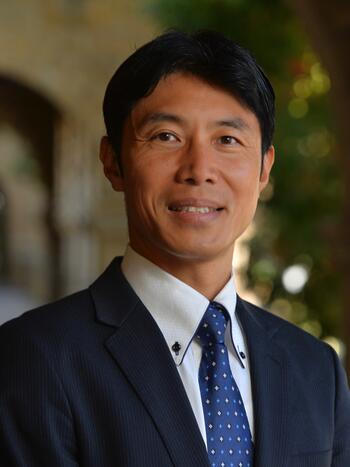
Nathaniel Persily is the James B. McClatchy Professor of Law at Stanford Law School, with appointments in the departments of Political Science, Communication, and FSI.  Prior to joining Stanford, Professor Persily taught at Columbia and the University of Pennsylvania Law School, and as a visiting professor at Harvard, NYU, Princeton, the University of Amsterdam, and the University of Melbourne. Professor Persily’s scholarship and legal practice focus on American election law or what is sometimes called the “law of democracy,” which addresses issues such as voting rights, political parties, campaign finance, redistricting, and election administration. He has served as a special master or court-appointed expert to craft congressional or legislative districting plans for Georgia, Maryland, Connecticut, New York, North Carolina, and Pennsylvania.  He also served as the Senior Research Director for the Presidential Commission on Election Administration. In addition to dozens of articles (many of which have been cited by the Supreme Court) on the legal regulation of political parties, issues surrounding the census and redistricting process, voting rights, and campaign finance reform, Professor Persily is coauthor of the leading election law casebook, The Law of Democracy (Foundation Press, 5th ed., 2016), with Samuel Issacharoff, Pamela Karlan, and Richard Pildes. His current work, for which he has been honored as a Guggenheim Fellow, Andrew Carnegie Fellow, and a Fellow at the Center for Advanced Study in the Behavioral Sciences, examines the impact of changing technology on political communication, campaigns, and election administration.  He is codirector of the Stanford Program on Democracy and the Internet, and Social Science One, a project to make available to the world’s research community privacy-protected Facebook data to study the impact of social media on democracy.  He is also a member of the American Academy of Arts and Sciences, and a commissioner on the Kofi Annan Commission on Elections and Democracy in the Digital Age.  Along with Professor Charles Stewart III, he recently founded HealthyElections.Org (the Stanford-MIT Healthy Elections Project) which aims to support local election officials in taking the necessary steps during the COVID-19 pandemic to provide safe voting options for the 2020 election. He received a B.A. and M.A. in political science from Yale (1992); a J.D. from Stanford (1998) where he was President of the Stanford Law Review, and a Ph.D. in political science from U.C. Berkeley in 2002.   

CV
Date Label
James B. McClatchy Professor of Law at Stanford
Monica Bickert Head of Global Policy Management at Facebook
Seminars
-
Natural Experiments in Health Care

Anupam B. Jena, MD, PhD

Ruth L. Newhouse Associate Professor of Health Care Policy, Harvard Medical School

Anupam B. Jena, MD, PhD, is the Ruth L. Newhouse Associate Professor of Health Care Policy at Harvard Medical School and a physician in the Department of Medicine at Massachusetts General Hospital. He is also a faculty research fellow at the National Bureau of Economic Research. As an economist and physician, Dr. Jena’s research involves several areas of health economics and policy including the economics of physician behavior and the physician workforce, medical malpractice, the economics of health care productivity, and the economics of medical innovation. Dr. Jena graduated Phi Beta Kappa from the Massachusetts Institute of Technology with majors in biology and economics. He received his MD and PhD in Economics from the University of Chicago, where he was funded by the NIH Medical Scientist Training Program. He completed his residency in internal medicine at Massachusetts General Hospital. In 2007, he was awarded the Eugene Garfield Award by Research America for his work demonstrating the economic value of medical innovation in HIV/AIDS. In 2013, he received the NIH Director’s Early Independence Award to fund research on the physician determinants of health care spending, quality, and patient outcomes.  In 2015, he was awarded the International Society for Pharmacoeconomics and Outcomes Research (ISPOR) New Investigator Award. From 2014-15, Dr. Jena served as a member of the Institute of Medicine Committee on Diagnostic Errors in Health Care.

William J. Perry Conference Room

Encina Hall

2nd Floor

616 Serra Mall (Address changed due to construction)

Stanford, CA 94305

Seminars
-

Jake Shapiro Bio: Jacob N. Shapiro is Professor of Politics and International Affairs at Princeton University and co-directs the Empirical Studies of Conflict Project. His research focuses on political violence, economic development in conflict zones, and security policy. He is the author of The Terrorist’s Dilemma: Managing Violent Covert Organizations. His research has been published in Journal of Political Economy, American Economic Review, American Journal of Political Science, International Security, International Studies Quarterly, Journal of Conflict Resolution, Perspectives on Politics, Political Analysis, Public Opinion Quarterly, Security Studies, World Politics, Foreign Affairs, Foreign Policy, Military Operations Research, Terrorism and Political Violence, and a number of edited volumes. Shapiro is a term member of the Council on Foreign Relations, an Associate Editor of World Politics, a Faculty Fellow of the Association for Analytic Learning about Islam and Muslim Societies (AALIMS), a Research Fellow at the Center for Economic Research in Pakistan (CERP), and served in the U.S. Navy and Naval Reserve. Ph.D. Political Science, M.A. Economics, Stanford University. B.A. Political Science, University of Michigan.

Eli Berman Bio: Eli Berman is chair and professor of economics at UC San Diego, research director for international security studies at the UC Institute on Global Conflict and Cooperation, faculty member at the UCSD school of Global Policy and Strategy, member of the Empirical Studies of Conflict research project, and research associate at the National Bureau of Economic Research. His book Radical, Religious and Violent: The New Economics of Terrorism was published in 2009 by the MIT Press. Berman received his Ph.D. in economics from Harvard University. His latest publications are “The Empiricists’ Insurgency” (with Aila Matanock), and "Modest, Secure and Employed: Successful Development in Conflict Zones," (with Joseph Felter, Jacob Shapiro and Erin Troland). Grants supporting his research have come from the Department of Defense, Department of Homeland Security, and the National Science Foundation. His research interests include economic development and conflict, the economics of religion, labor economics, technological change, and economic demography.

Abstract: The way wars are fought has changed starkly over the past sixty years. International military campaigns used to play out between large armies at central fronts. Today's conflicts find major powers facing rebel insurgencies that deploy elusive methods, from improvised explosives to terrorist attacks. Small Wars, Big Data presents a transformative understanding of these contemporary confrontations and how they should be fought. The authors show that a revolution in the study of conflict--enabled by vast data, rich qualitative evidence, and modern methods—yields new insights into terrorism, civil wars, and foreign interventions. Modern warfare is not about struggles over territory but over people; civilians—and the information they might choose to provide—can turn the tide at critical junctures.The authors draw practical lessons from the past two decades of conflict in locations ranging from Latin America and the Middle East to Central and Southeast Asia. Building an information-centric understanding of insurgencies, the authors examine the relationships between rebels, the government, and civilians. This approach serves as a springboard for exploring other aspects of modern conflict, including the suppression of rebel activity, the role of mobile communications networks, the links between aid and violence, and why conventional military methods might provide short-term success but undermine lasting peace. Ultimately the authorsshow how the stronger side can almost always win the villages, but why that does not guarantee winning the war.

Jake Shapiro, Professor, Princeton University and Eli Berman, Professor, UC San Diego
Seminars
-

Click here to RSVP

Abstract: In 1992, the United States stood at the pinnacle of world power and Americans were confident that a new era of peace and prosperity was at hand. Twenty-five years later, those hopes have been dashed. Relations with Russia and China have soured, the European Union is wobbling, democracy is in retreat, and the United States is stuck in costly and pointless wars.

The root of this dismal record is the foreign policy elite’s stubborn commitment to a strategy of “liberal hegemony.” Since the end of the Cold War, Republicans and Democrats alike have tried to use U.S. power to spread democracy, and other liberal values around the world. This strategy was doomed to fail, but its proponents elite were never held accountable and kept repeating the same mistakes. 

Donald Trump won the presidency promising to end these misguided policies, but his erratic style of governing and flawed grasp of world politics have made a bad situation worse. The best alternative is a return to a strategy of “offshore balancing,” eschewing regime change, nation-building, and other forms of global social engineering.  This long-overdue shift will require creating a foreign policy elite with a more realistic view of American power. 


Speaker Bio: Stephen M. Walt is Robert and Renée Belfer Professor of International Affairs at the Harvard Kennedy School. He is a contributing editor at Foreign Policy, co-editor of the Cornell Studies in Security Affairs, and was elected a Fellow of the American Academy of Arts and Sciences in May 200.  He received the ISA’s Distinguished Senior Scholar award in 2014.  His writings include The Origins of Alliances (1987) Revolution and War (1996), Taming American Power: The Global Response to U.S. Primacy, and The Israel Lobby and U.S. Foreign Policy (co-authored with John J. Mearsheimer, 2007).  His latest book is The Hell of Good Intentions: America’s Foreign Policy Elite and the Decline of U.S. Primacy (2018).

Stephen Walt Robert and Renee Belfer Professor of International Affairs Harvard Kennedy School
Seminars
-

Abstract: The purpose and force of the Nuclear Non-Proliferation Treaty hinges on a legal distinction between "nuclear weapons states" and "non-nuclear weapons states." But rather than being a self-evident distinction based entirely on material differences, the distinction is constructed and negotiated—not just by the conventionally powerful but by disempowered states. This article argues that the NPT is a discursive resource for states that the treaty does not legitimate. The NPT’s power comes from the legal categories it institutionalizes and perpetuates. In order to understand the origins and effects of dividing the terrain of nuclear politics into nuclear and non-nuclear states, I analyze the meeting documents of the Eighteen Nation Disarmament Committee (ENDC) which negotiated the treaty from 1962-1969. I find that the “non-nuclear” states used the designation as an identity that set them apart from nuclear states. Using these categories like identities is not without political consequence—for example, India’s unique diplomatic approach toward the NPT shapes both the discourses it advances and policies it pursues.  In contrast to existing approaches that examine the distinction primarily through material terms, this article turns to state practice to reveal how being nuclear or non-nuclear is used as a legitimating tool in nuclear politics. The article also shows that, while most approaches to international law presume that the law either constrains state power or has no effect on it, the case of the nuclear/non-nuclear distinction illustrates that international law does matter, but perhaps not in the way assumed by IR realists or institutionalists.

Speaker Bio: Sidra Hamidi is a Stanton Nuclear Security Postdoctoral Fellow at CISAC. She completed her PhD in Political Science from Northwestern University in 2018. Her research explores the role of identity and discourse in contemporary and historical nuclear politics. Specifically, she studies the distinction between nuclear and non-nuclear states in technical, legal, and normative contexts. She locates the politics of this distinction in the diplomatic practices of Israel, India, and Iran. She completed her MA in International Relations from the University of Chicago. Her commentary has appeared in The Washington Post, Duck of Minerva, and E-IR. She is also interested in international relations theory and political science conceptualization and methodology.

Sidra Hamidi Stanton Post-doctoral Fellow CISAC, Stanford University
Seminars
-

Abstract: Australia is dealing with nuclear waste disposal issues on two separate fronts.  In 2015, South Australia began to consider expanding their role in the nuclear fuel cycle as a way to leverage their nuclear expertise, based on their extensive uranium mining.  A Royal Commission proposed consideration of the development of a deep geologic repository for high-level radioactive waste from international sources (since Australia has none).  In 2016 Premier Jay Weatherill decided against an international repository after a community-based consultation process also opposed it.  At the same time, the Commonwealth of Australia has revived its search for a low-level radioactive waste disposal site and a storage facility for intermediate-level waste. Again, South Australia is in play, with three sites volunteering their land for further consideration.  As a result, a siting process is ongoing in Kimba and Barndioota, South Australia, with sides both strongly for and adamantly against development of a low-level waste facility in their community.  Both nuclear waste situations have informed and affected the other, but it’s not clear that South Australia is ready to host nuclear waste any time soon in the near future.


Speaker Bio: Allison M. Macfarlane is Professor of Science and Technology Policy at George Washington University and Director of the Center for International Science and Technology Policy at the University’s Elliott School of International Affairs. She recently served as Chairman of the U.S. Nuclear Regulatory Commission from July, 2012 until December, 2014. As Chairman, Dr. Macfarlane had ultimate responsibility for the safety of all U.S. commercial nuclear reactors, for the regulation of medical radiation and nuclear waste in the U.S., and for representing the U.S. in negotiations with international nuclear regulators. She was nominated by President Obama and confirmed by the Senate. She was the agency’s 15th Chairman, its 3rd woman chair, and the only person with a background in geology to serve on the Commission.

Dr. Macfarlane holds a doctorate in geology from the Massachusetts Institute of Technology and a bachelor's of science degree in geology from the University of Rochester. During her academic career, she held fellowships at Radcliffe College, MIT, Stanford, and Harvard Universities. She has been on the faculty at Georgia Tech in Earth Science and International Affairs and at George Mason University in Environmental Science and Policy.

From 2010 to 2012 she served on the Blue Ribbon Commission on America's Nuclear Future, created by the Obama Administration to make recommendations about a national strategy for dealing with the nation's high-level nuclear waste. She has served on National Academy of Sciences panels on nuclear energy and nuclear weapons issues. Dr. Macfarlane has also chaired the Science and Security Board of the Bulletin of Atomic Scientists, the folks who set the “doomsday clock.”

Her research has focused on environmental policy and international security issues associated with nuclear energy. Her expertise is in nuclear waste disposal, nuclear energy, regulatory issues, and science and technology policy. As Chairman of the Nuclear Regulatory Commission, she pushed for a more open dialogue with the public, for greater engagement with international nuclear regulators and, following the Fukushima accident, for stricter safety protocols at U.S. nuclear reactors. She also advocated for a more family-friendly workplace.  She has spoken on a wide range of topics, from women and science to nuclear policy and regulatory politics.

In 2006, MIT Press published a book she co-edited, Uncertainty Underground: Yucca Mountain and the Nation's High-Level Nuclear Waste, which explored technical issues at the proposed waste disposal facility at Yucca Mountain, Nevada. Dr. Macfarlane has published extensively in academia and her work has appeared in Science, Nature, American Scientist, The Bulletin of Atomic Scientists, and Environment Magazine.


Allison Macfarlane Director, Center for International Science and Technology Policy Elliot School of International Affairs, George Washington University
Seminars
-

Abstract: What are the effects of international intervention on the rule of law after civil war? Rule of law requires not only that state authorities abide by legal limits on their power, but also that citizens rely on state laws and institutions to adjudicate disputes. Using an original survey and list experiment in Liberia, I show that exposure to the UN Mission in Liberia (UNMIL) increased citizens’ reliance on state over non-state authorities to resolve the most serious incidents of crime and violence, and increased non-state authorities’ reliance on legal over illegal mechanisms of dispute resolution. I use multiple identification strategies to support a causal interpretation of these results, including an instrumental variables strategy that leverages plausibly exogenous variation in the distribution of UNMIL personnel induced by the killing of seven peacekeepers in neighboring Cote d’Ivoire. My results are still detectable two years later, even in communities that report no further exposure to peacekeepers. I also find that exposure to UNMIL did not mitigate and may in fact have exacerbated citizens’ perceptions of state corruption and bias in the short term, but that these apparently adverse effects dissipated over time. I conclude by discussing implications of these complex but overall beneficial effects

Speaker Bio: Rob Blair is an Assistant Professor of Political Science and International and Public Affairs at Brown University. His research focuses on international intervention and the consolidation of state authority after civil war, with an emphasis on rule of law and security institutions. He has conducted fieldwork on these and related topics in Colombia, Liberia, Uganda, and Côte d'Ivoire. He has also worked in various capacities for the the UN Office of Rule of Law and Security Institutions, the Political Instability Task Force, Freedom House, and the Small Arms Survey. He holds a B.A. from Brown, an M.Sc in Conflict Studies from Universidad de los Andes in Bogotá, Colombia, and a Ph.D in political science from Yale University. His research has been published in the American Political Science Review and other venues.

Robert Blair Carnegie Junior Faculty Fellow CISAC, Stanford University
Seminars
-

Abstract: Why are some rebel groups able to seamlessly transition into political parties on the heels of war while others revert to violence or die trying? Drawing on insights from organizational sociology, I argue that the answer lies in the previously unacknowledged diversity of rebel organizational structures during war. I identify three wartime domains that I call "proto-party" structures: shadow governance, political messaging, and social service wings. I demonstrate that these structures---by mirroring the key components of political party organizations---provide insurgencies with two decisive advantages when attempting to transition into a party: (1) relevant experience that translates into the political arena, and (2) an easier path to transition by repurposing existing structures rather than building a party from scratch. I test this theory using a combination of statistical analysis on a novel dataset and process tracing the FMLN's transformation in El Salvador. 

Speaker Bio: Sherry Zaks is currently a postdoctoral fellow at the Center for International Security and Cooperation. She received her Ph.D. from the University of California, Berkeley in 2017. Next year, she’ll be joining the faculty of the University of Southern California as an Assistant Professor of Comparative Politics. Sherry’s book project and current substantive work examine the conditions under which rebel groups transition into political parties in the aftermath of civil war. Drawing on theoretical tools from organizational sociology, she models rebel-to-party transformation as a process of organizational resilience and adaptation. The dissertation on which the book project is based was recently awarded the prize for best dissertation in peace science by the United States Institute of Peace. Sherry also works on political methodology with a focus on refining tools for qualitative inference and developing rigorous standards for dataset construction and evaluation. Her work has appeared in Comparative Politics and Political Analysis.

Sherry Zaks Carnegie Post-doctoral Fellow CISAC, Stanford University
Seminars
-

Abstract: Recent tensions on the Korean peninsula and in the South China Sea have raised concerns that provocative actions, such as the use of insulting rhetoric or military force, might trigger unwanted escalation and embroil the United States in a costly war. The international relations literature, however, is ill equipped to explain these escalatory dangers of provocation. There is no theory of crisis escalation that explains the escalatory mechanisms of provocation and there is no clear conception of what it means to provoke. This paper develops a novel theory of provocation that explains how provocative rhetoric and military actions can distinctively lead to unwanted crisis escalation and conflict. This escalatory logic of provocation can potentially explain a host of important crisis-related behavior other than explosive outcomes, such as how a relatively minor issue becomes salient and intractable to resolve, and how a state that was once willing to concede a stake in dispute stands firm to risk war. To further clarify the distinctive dangers of this logic of provocation, the paper contrasts three alternative logics of unwanted escalation that are referred to as an “accidental escalation logic,” a “security dilemma logic,” and a “crisis bargaining logic.” The overlooked importance of the logic of provocation is then demonstrated in a case study of the Sino-India War of 1962 which uses original language sources. The conclusion draws implications for coercive diplomacy.

Speaker Bio: Hyun-Binn Cho is a Stanton Nuclear Security Postdoctoral Fellow at CISAC. His research interests are in crisis escalation, coercive diplomacy, and security in the Asia-Pacific, with a focus on China and the Korean peninsula. Binn received his Ph.D. in Political Science from the University of Pennsylvania in 2018. Previously, he was a pre-doctoral fellow at the Institute for Security and Conflict Studies at George Washington University, and a visiting doctoral student at the School of International Studies at Peking University. He is proficient in Mandarin Chinese, fluent in Korean, and holds an M.A. in Political Science from Columbia University, an M.A. in International Relations from Seoul National University, and a B.Sc. in Government and Economics from the London School of Economics. 


Hyun-Binn Cho Stanton Nuclear Security Postdoctoral Fellow CISAC, Stanford University
Seminars
-

Click here to RSVP

*Event co-hosted with the Middle Eastern Initiative

Speaker Bio: Wendy R. Sherman is Senior Counselor at Albright Stonebridge Group and former Under Secretary of State for Political Affairs.  In January 2019, Ambassador Sherman will join Harvard Kennedy School as a professor of the practice in public leadership and director of the School’s Center for Public Leadership.  She serves on the boards of the International Crisis Group and the Atlantic Council, and is a member of the Council on Foreign Relations and the Aspen Strategy Group.  Ambassador Sherman led the U.S. negotiating team that reached agreement on a Joint Comprehensive Plan of Action between the P5+1, the European Union, and Iran for which, among other diplomatic accomplishments, she was awarded the National Security Medal by President Barack Obama.  Prior to her service at the Department of State, she was Vice Chair and founding partner of the Albright Stonebridge Group, Counselor of the Department of State under Secretary Madeleine Albright and Special Advisor to President Clinton and Policy Coordinator on North Korea, and Assistant Secretary for Legislative Affairs under Secretary Warren Christopher.   Early in her career, she managed Senator Barbara Mikulski’s successful campaign for the U.S Senate and served as Director of EMILY’S list.  She served on the President’s Intelligence Advisory Board, was Chair of the Board of Directors of Oxfam America and served on the U.S. Department of Defense’s Defense Policy Board and Congressional Commission on the Prevention of Weapons of Mass Destruction, Proliferation and Terrorism.  Ambassador Sherman is the author of Not for the Faint of Heart: Lessons in Courage, Power and Persistence published by PublicAffairs, September 2018.

Abstract: During the international negotiations that resulted in the 2015 Iran nuclear deal, Ambassador Wendy R. Sherman led the team of American diplomats representing the United States. The Joint Comprehensive Plan of Action (JCPOA), as the agreement is formerly know, was not perfect, but it did offer the best possible assurance that Iran would never obtain a nuclear weapon. But in May of this year, President Trump made the decision to pull out of the deal—a move that will go down as one of the worst foreign policy blunders in U.S. history, according to Ambassador Sherman. Here, the Ambassador will discuss how the Iran nuclear deal came to be—and why we will all miss it.


Ambassador Wendy R. Sherman Senior Counselor at Albright Stonebridge Group and former Under Secretary of State for Political Affairs
Seminars
Subscribe to Seminars