-

Improvements in medical treatment have clearly contributed to significant increases in medical spending, yet there is relatively little quantitative evidence on whether the rise in expenditure is “worth it” in the sense of producing health outcomes of commensurate value. This seminar will focus on empirical research assessing the net value of health care for patients with chronic disease, using the case of type 2 diabetes mellitus. Based on analysis of detailed longitudinal, patient-level data, the collaborating researchers from Hong Kong, Japan, Taiwan, the Netherlands, and the US describe patterns in resource use and quality outcomes as measured by clinical markers and predicted risk of complications and death. In most of the studied cases, increases in spending were accompanied with improvements in outcomes of commensurate or greater value, given a range of values for a quality-adjusted life year. The authors conclude with a discussion of what the results imply about productivity of medical care, quality adjustment of price indices for healthcare, and policies for healthy aging in Asia (based on a forthcoming book).

Philippines Conference Room Encina Hall, 3rd Floor 616 Serra Mall, Stanford, CA 94305
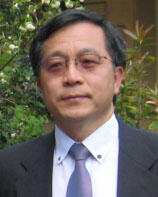
Jianchao Quan Hong Kong University
616 Serra StreetEncina Hall E301Stanford, CA94305-6055
0
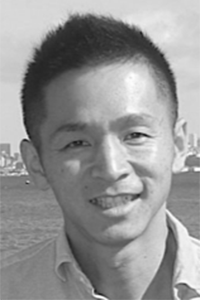
toshiaki_iizuka.jpg Ph.D.

Toshiaki Iizuka is Professor at Graduate School of Public Policy and Graduate School of Economics, the University of Tokyo. Before joining the University of Tokyo in 2010, he taught at Vanderbilt University (2001-2005), Aoyama Gakuin University (2005-2009), and Keio University (2009-2010). He served as Dean of Graduate School of Public Policy, the University of Tokyo, between 2016 and 2018. He is a recipient of Abe Fellowship (2018-2019). 

His research interests are in the field of health economics and health policy. He has written a number of articles on incentive and information in the health care markets. His research articles have appeared in leading professional journals, including American Economic Review, RAND Journal of Economics, Journal of Health Economics, and Health Affairs, among others. Dr. Iizuka holds a PhD in Economics from the University of California, Los Angeles, an MIA from Columbia University, and an ME and BE from the University of Tokyo.
Visiting Scholar, Asia Health Policy Program at APARC
University of Tokyo

Shorenstein APARC
Stanford University
Encina Hall E301
Stanford, CA 94305-6055

(650) 723-9072 (650) 723-6530
0
Senior Fellow at the Freeman Spogli Institute for International Studies
Center Fellow at the Center for Health Policy and the Center for Primary Care and Outcomes Research
Faculty Research Fellow of the National Bureau of Economic Research
Faculty Affiliate at the Stanford Center on China's Economy and Institutions
karen-0320_cropprd.jpg PhD

Karen Eggleston is a Senior Fellow at the Freeman Spogli Institute for International Studies (FSI) at Stanford University and Director of the Stanford Asia Health Policy Program at the Shorenstein Asia-Pacific Research Center at FSI. She is also a Fellow with the Center for Innovation in Global Health at Stanford University School of Medicine, and a Faculty Research Fellow of the National Bureau of Economic Research (NBER). Her research focuses on government and market roles in the health sector and Asia health policy, especially in China, India, Japan, and Korea; healthcare productivity; and the economics of the demographic transition.

Eggleston earned her PhD in public policy from Harvard University and has MA degrees in economics and Asian studies from the University of Hawaii and a BA in Asian studies summa cum laude (valedictorian) from Dartmouth College. Eggleston studied in China for two years and was a Fulbright scholar in Korea. She served on the Strategic Technical Advisory Committee for the Asia Pacific Observatory on Health Systems and Policies and has been a consultant to the World Bank, the Asian Development Bank, and the WHO regarding health system reforms in the PRC.

Director of the Asia Health Policy Program, Shorenstein Asia-Pacific Research Center
Stanford Health Policy Associate
Faculty Fellow at the Stanford Center at Peking University, June and August of 2016
CV
Date Label
Stanford University and NBER
Seminars
-

This event is co-sponsored with The Abbasi Program in Islamic Studies.

Abstract:

Why were Islamists less polarizing in Tunisia than their counterparts in Egypt after the downfall of the autocratic regime in 2011? While the electoral processes that brought the Muslim Brotherhood to power in Egypt rapidly polarized society, the Muslim Brothers in Tunisia formed a coalition with secular groups to pry power from the old power centers immediately after the removal of Ben Ali. Different approaches focused on Tunisians’ liberal culture and their proximity to Europe. Scant attention paid to both the historical and political-strategic conditions that shaped boundaries of interactions between Islamists and non-Islamists. I argue that the historical relations between the state and Islamists affect the distribution of power between them on the one hand, and their secular opponents on the other. In Tunisia, Islamist and non-Islamist forces believed in the necessity of conciliation (or were forced to do so by political circumstances). They, therefore, reached across ideological lines and struck deals to hold democratic institutions.


Speaker Bio:

Image
shimaa hatab
Shimaa Hatab is assistant professor of political science at the Faculty of Economics and Political Science, Cairo University. She received her Ph.D. in Political Science from Essex University. She is a Fulbright Visiting Scholar at the Abbasi Program, at Stanford. Her research interests include democratization, authoritarianism, political economy of development, with a focus on countries in the Middle East and Latin America.

Shimaa Hatab assistant professor of political science at the Faculty of Economics and Political Science, Cairo University
Seminars
-


This event is co-sponsored with The Abbasi Program in Islamic Studies.

Abstract:

Severe polarization is a global threat that has detrimental effects on democracy and well-being. What can citizens and collective actors such as political parties do to reverse polarization and to sustain democracy in affected polities? The triggers of current polarizations across the world often are political and thus intentional: they exemplify various forms of “the politics of transforming through polarizing,” which are aimed at achieving wide-scale transformations in political-economic institutions and policies. Yet, as these polarizations take a life of their own, the causal mechanisms that render them pernicious gain a structural nature. They lock in both the incumbents and the oppositions in a downward spiral of polarization-cum-democratic erosion, generating many unintended consequences. With comparative examples from various polities, this talk will discuss a political and relational notion of polarization, the dilemmas faced by opposition actors who want to reverse polarization and democratic backsliding, and implications for theory and policy.


Speaker Bio:

Image
murat somer

Murat Somer is a Professor of Political Science and International Relations at Koç University and a Visiting Scholar at the Abbasi Program in Islamic Studies at Stanford University. His research on democratization and autocratization, polarization, ethnic conflicts, religious and secular politics, political Islam, and the Kurdish question have been published in books, book volumes and journals such as Comparative Political Studies and Democratization. His book on the Turkish and Kurdish Question won a Sedat Simavi Social Sciences Prize in 2015 and he recently co-edited two special journal volumes on polarization, democracy and democratic erosion across the world. Among other visiting appointments, Somer was a Democracy and Development Fellow at Princeton University, a Senior Visiting Scholar at Stockholm University, and a Visiting Scholar at the Weatherhead Center for International Affairs at Harvard University. He has been a frequent contributor to Turkish and international media and he is working on a research and book project that explores the multiple paths through which polarizing politics lead to authoritarianism, and what pro-democracy citizens and political actors can and cannot do to sustain democracy.

Murat Somer Professor of Political Science and International Relations at Koç University, Istanbul
Seminars
-

Abstract:

Ever since the Millennium Message, Putin's first presidential speech on January 1, 2000, the Kremlin's political architects have cultivated a narrative of Russia as a unique nation on a righteous path toward restored greatness. The process of myth-making is intertwined with the policies involved in remaking Russia as a global power, as the regime builds legitimacy through careful messaging on Russian nationhood, history, morality, and geopolitical strength, using law and policy to embed those concepts as institutions and persuade citizens that Russia needs autocracy to survive. This talk traces the Kremlin's cooptation of culture and history to tell a certain story about Russia and its citizens, and examines public opinion polls to assess the degree to which the strategy is working, as well as street protests and radical performance art that attempts to claim spaces of agency for citizens who don't fit into the mythic mold.


Speaker Bio:


Image
alice underwood
Alice E.M. Underwood is a Pre-Doctoral Fellow at the Center on Democracy, Development, and the Rule of Law and a Ph.D. Candidate in the Department of Comparative Literature at Stanford University. She is a Weiland Fellow at Stanford and a former Title VIII Fellow at the Kennan Institute at the Woodrow Wilson International Center for Scholars, and has published with Intersection, The Russia File, Russian Life, and Harvard International Review.

 
Pre-doctoral fellow at the Center on Democracy, Development, and the Rule of Law.
Seminars
-

Abstract: My research focuses on the 2011 Fukushima nuclear disaster and on the release of radioactive contamination throughout Japan. Based on 14 months of fieldwork in Japan, the research examines the crisis of expertise that ensued when many citizens became wary of state institutional experts, especially in their capacities to explain and manage the problems engendered by residual radioactivity.In this context of public skepticism, I ask the following: how does the Japanese state attempt to govern the hazards of radioactive contamination, and ultimately, the reconstruction of normality in the aftermath of a nuclear disaster? I argue that the management of radiation hazard after Fukushima includes an important reorganization of state expertise, which now moves beyond traditional forms of risk communication and institutional experts.My research advances policyand public-relevant understandings of repliesto radioactive contamination by highlighting the needs of appropriate educational infrastructure around radiation risk, while emphasizing democratic opportunity for citizen-government collaboration. Within post-Fukushima Japan, anthropological investigations of the governance of radiation hazards are essential for understanding the configurations of cultural schemas, social relationships, and technological interplays that led individuals to “accept” life amidst toxicity and other to refuse it.


Speaker's Biography: Maxime Polleri is a Ph.D. candidate in the Department of Anthropology at York University. His current research focuses on the 2011 Fukushima Dai’ichi nuclear disaster and on the crisis of expertise that ensued, in which many citizens have become wary of state institutional experts, especially in their capacities to manage the problems engendered by residual radioactivity. In such a context, his dissertation is concerned with how the Fukushima crisis has participated in the formations of new forms of expertise and consequently, new means of governing toxicity. It asks: How is radioactive hazard being governed in the wake of a crisis of legitimacy against state institutional expert? Based on 14 months of ethnographic fieldwork throughout Japan, the dissertation argues that averting the crisis of expertise and managing the reconstruction of what “normality” involves in a post-Fukushima Japan include a fundamental reorganization of state governance, where the dissemination of radiation hazards cannot simply rest on dry, clinical manner in which government-packaged expertise about radiation was initially promulgated to a former lay public. In particular, these shift in the governance of radioactive risk are increasingly being enacted by promoting a state-sponsored affective embodiment toward nuclear matter, as well as by encouraging the endeavor of citizen science, where former lay citizens now track and monitor residual radioactivity in their environment. His fieldwork was funded by the Japan Foundation and the Canada Social Sciences and Humanities Research Council. His work has been published in Anthropology Now, Anthropology Today, and Medical Anthropology Quarterly Second Spear.


Maxime Polleri CISAC Predoctoral Fellow Stanford University
Seminars
-

Click here to view paper


Abstract: Nuclear disarmament treaties are not sufficient in and of themselves to neutralize the existential threat of the nuclear weapons. Technologies are necessary for verifying the authenticity of the nuclear warheads undergoing dismantlement before counting them towards a treaty partner’s obligation. A team of scientists working at MIT has developed two novel concepts which leverage isotope-specific nuclear resonance phenomena to authenticate a warhead's fissile components by comparing them to a previously authenticated template.  Most actinides such as uranium and plutonium exhibit unique sets of resonances when interacting with MeV photons and eV neutrons. When measured, these resonances produce isotope-specific features in the spectral data, thus creating an isotopic  "fingerprint" of an object. All information in these measurement has to be and is encrypted in the physical domain in a manner that amounts to a physical zero-knowledge proof system. Using Monte Carlo simulations and experimental proof-of-concept measurements these techniques are shown to reveal no isotopic or geometric information about the weapon, while readily detecting hoaxing attempts. These new methodologies can dramatically increase the reach and trustworthiness of future nuclear disarmament treaties.  The talk will discuss the concepts and recent results, and will give a general overview of nuclear security research pursued at MIT.


Bio: Areg Danagoulian is an Assistant Professor of Nuclear Science and Engineering at MIT.  He did his PhD research in Experimental Nuclear Physics at the University of Illinois at Urbana-Champaign. Areg’s PhD thesis focused on experiments that used real Compton scattering on the proton at 2-6 GeV, allowing to probe the proton's internal structure and understand how it couples to external excitations. After his PhD Areg worked at Los Alamos as a postdoctoral researcher, and then as a senior scientist at Passport Systems, Inc. (PSI). At PSI Areg focused on the development of Prompt Neutron from Photofission (PNPF) technique, which allows to rapidly detect shielded fissionable materials in the commercial cargo traffic. Areg's current research interests focus on scientific applications in nuclear security, such areas nuclear nonproliferation, technologies for treaty verification, nuclear safeguards, and cargo security. Current specific research areas include:  warhead verification using nuclear resonances;  use of nuclear reactions for high precision radiography in nuclear security applications.


Areg Danagoulian Assistant Professor, Nuclear Science and Engineering MIT
Seminars
-

Abstract: The American Lab, published by Johns Hopkins University Press in 2018, tells the story of the Lawrence Livermore National Laboratory (the Lab) from the events leading to its founding in 1952 through its transfer to private status in 2008 (after 66 years of sole University of California management). It highlights the important episodes in that journey beginning with the invention of Polaris, the first submarine launched ballistic missile, continuing through the Lab’s controversial role in the Star Wars program, and helping lead the development of the stockpile stewardship program after the cessation of nuclear testing. It describes the intense focus on-laboratory-scale thermonuclear fusion with early work in magnetic fusion to the world’s largest effort on laser fusion that ultimately resulted in the construction of the National Ignition Facility. It includes a number of smaller projects ranging from its participation in founding the Human Genome Project (and its subsequent effort in biodefense) to its array of activities on global climate and basic research. Throughout, the book emphasizes the national security environment in which the Lab existed and the increasing role of politics in “big science”.


Bio: C. Bruce Tarter is a theoretical physicist with a BS from MIT and a PhD from Cornell. He began as a researcher at the Lawrence Livermore National Laboratory in 1967 and eventually served as its Director from 1994-2002. Since that time as Director Emeritus he has served on a number of Boards and Task Forces including the National Academy study of the Comprehensive Test Ban Treaty and the Congressional Commission on the Strategic Posture of the United States. He is a Fellow of the American Physical Society and the American Association for the Advancement of Science.


Bruce Tarter Former Director Lawrence Livermore National Laboratory
Seminars
-

Speaker Bio: Sarah Kreps is an Associate Professor of Government and Adjunct Professor of Law at Cornell University. In 2017-2018, she is an Adjunct Scholar at the Modern War Institute (West Point). She is also a Faculty Fellow in the Milstein Program in Technology and Humanity at the Cornell Tech Campus in New York City.

Dr. Kreps is the author of four books, including, most recently, Taxing Wars: The American Way of War Finance and the Decline of Democracy (Oxford University Press, 2018), which deals with the causes and consequences of how advanced industrialized democracies such as the US, UK, and France pay for its wars.  She has also written two books on drones, including Drones: What Everyone Needs to Know (Oxford University Press, 2016) and Drone Warfare (Polity Press, 2014; with John Kaag).  Her first book was called Coalitions of Convenience: United States Military Interventions after the Cold War (Oxford University Press, 2011) and analyzed military interventions carried out over the last decade.

Beyond these books, her work has appeared or is forthcoming in the American Political Science Review, World Politics, Journal of Politics, International Security, Journal of Conflict Resolution, Security Studies, Journal of Strategic Studies, Political Science Quarterly, International Studies Perspectives, Foreign Policy Analysis, Polity, African Security Review, the Duke Journal of Comparative and International Law, the International Journal of Sustainable Development and World Ecology, Intelligence and National Security, Foreign Affairs, Foreign Policy, and Polity. Her opinions have been featured in a series of media outlets including The Washington Post, International Herald Tribune, New York Times, Christian Science Monitor, USA Today, CNBC,and Reuters.

Dr. Kreps has held fellowships at the Council on Foreign Relations (and is a life member), Harvard’s Kennedy School of Government, and the University of Virginia’s Miller Center for Public Affairs. She has a BA from Harvard, MSc from Oxford, and PhD from Georgetown. Between 1999-2003, she served on active duty in the United States Air Force.

Abtstract: Although the 2016 election highlighted the potential for foreign governments to employ social media for strategic advantages, the particular mechanisms through which social media affect international politics remain underdeveloped.  Building on insights from American politics, in particular the “democratic dilemma,” I observe that many issues of foreign policy are complex and the public is insufficiently informed to offer well-reasoned opinions. To resolve the knowledge deficits and ambivalence, they seek information from their media environment, which is where social media—as platforms that are open access and amplify content that is extreme either in their positive or negative valence—can cue individuals and tilt the balance of support.  In this context, the open media environment of a democracy is a particularly susceptible environment for foreign influence whereas the comparatively closed media environment of a non-democracy provides efficient ways for these governments to censor, cut, or counter social media in ways that promote regime survival.  The research has important implications for the role of media, technology, and persuasion in international politics.


Sarah Kreps Associate Professor, Government Cornell University
Seminars
-

Abstract: Europe and the United States have sharply divergent regulatory regimes and public perceptions on the benefits and risks of genetically modified foods. I draw on the history and factors behind this divergence, including the concept of regulatory precaution, to highlight how institutional design choices, contingent events and policy entrepreneurs can shape how societies absorb new technologies, with particular application to artificial intelligence, machine learning, and automation. The story of GMO governance is a precautionary tale for technologists and policy makers about possible governance futures for AI. 


Bio: Andrew J. Grotto is a William J. Perry International Security Fellow at the Center for International Security and Cooperation and a Research Fellow at the Hoover Institution, both at Stanford University.

Grotto’s research interests center on the national security and international economic dimensions of America’s global leadership in information technology innovation, and its growing reliance on this innovation for its economic and social life. He is particularly interested in the allocation of responsibility between the government and the privater sector for defending against cyber threats, especially as it pertains to critical infrastructure; cyber-enabled information operations as both a threat to, and a tool of statecraft for, liberal democracies; opportunities and constraints facing offensive cyber operations as a tool of statecraft, especially those relating to norms of sovereignty in a digitally connected world; and governance of global trade in information technologies.

Before coming to Stanford, Grotto was the Senior Director for Cybersecurity Policy at the White House in both the Obama and Trump Administrations. His portfolio spanned a range of cyber policy issues, including defense of the financial services, energy, communications, transportation, health care, electoral infrastructure, and other vital critical infrastructure sectors; cybersecurity risk management policies for federal networks; consumer cybersecurity; and cyber incident response policy and incident management. He also coordinated development and execution of technology policy topics with a nexus to cyber policy, such as encryption, surveillance, privacy, and the national security dimensions of artificial intelligence and machine learning. 

At the White House, he played a key role in shaping President Obama’s Cybersecurity National Action Plan and driving its implementation. He was also the principal architect of President Trump’s cybersecurity executive order, “Strengthening the Cybersecurity of Federal Networks and Critical Infrastructure.”

Grotto joined the White House after serving as Senior Advisor for Technology Policy to Commerce Secretary Penny Pritzker, advising Pritzker on all aspects of technology policy, including Internet of Things, net neutrality, privacy, national security reviews of foreign investment in the U.S. technology sector, and international developments affecting the competitiveness of the U.S. technology sector.

Grotto worked on Capitol Hill prior to the Executive Branch, as a member of the professional staff of the Senate Select Committee on Intelligence. He served as then-Chairman Dianne Feinstein’s lead staff overseeing cyber-related activities of the intelligence community and all aspects of NSA’s mission. He led the negotiation and drafting of the information sharing title of the Cybersecurity Act of 2012, which later served as the foundation for the Cybersecurity Information Sharing Act that President Obama signed in 2015. He also served as committee designee first for Senator Sheldon Whitehouse and later for Senator Kent Conrad, advising the senators on oversight of the intelligence community, including of covert action programs, and was a contributing author of the “Committee Study of the Central Intelligence Agency’s Detention and Interrogation Program.”

Before his time on Capitol Hill, Grotto was a Senior National Security Analyst at the Center for American Progress, where his research and writing focused on U.S. policy towards nuclear weapons - how to prevent their spread, and their role in U.S. national security strategy.

Grotto received his JD from the University of California at Berkeley, his MPA from Harvard University, and his BA from the University of Kentucky.


Andrew Grotto CISAC William J. Perry International Security Fellow and Hoover Institution Research Fellow Stanford University
Seminars
-

This seminar will provide analysis and implications of the 2018 Nuclear Posture Review from the perspectives of three people who spent a significant portion of their careers working on the nuclear deterrent.  First, a brief history of nuclear posture reviews will be presented.  The results from the former reviews will be analyzed and the evolution of the nuclear posture reviews will be elucidated.  Next, a summary of the current security environment and the resulting important elements of the 2018 review will be presented.  The reasoning and rationale for the elements of the nuclear posture will be described.  Finally, a perspective of the implication of the 2018 nuclear posture review to the challenging issue of infrastructure and capabilities at the U.S. national laboratories responsible for the nuclear deterrent will be discussed.   The views of the speakers will differ from each other in some cases, and there will be time for questions from the audience to the panelists.


John R. Harvey Bio

Dr. John R. Harvey is a physicist with over 35 years of experience working nuclear weapons and national security issues, first at Lawrence Livermore National Laboratory, then at Stanford University’s Center for International Security and Arms Control and in senior positions in the Departments of Defense (twice) and Energy.  From 2009-2013, he served as Principal Deputy Assistant Secretary of Defense for Nuclear, Chemical, and Biological Defense Programs under then Undersecretary Ash Carter.  He was Dr. Carter’s “go to” person for the 2010 Nuclear Posture Review, as well as for interactions with the Department of Energy on joint oversight of the U.S. nuclear weapons stockpile.  Dr. Harvey also provided oversight to DoD acquisition programs to sustain and modernize nuclear weapons delivery systems and systems for their command and control.  Since retiring from government service in 2013, he consults with the Defense Science Board, Institute for Defense Analysis, Los Alamos National Laboratory, National Institute for Public Policy, Center for Strategic and International Studies and Strategic Command’s Strategic Advisory Group Panel on Nuclear Weapons Command and Control.


Charles McMillan Bio

Dr. Charles McMillan served as the tenth Director of Los Alamos National Laboratory from 2011 through 2017. The Laboratory is a principal contributor to the Department of Energy mission of maintaining the nation's nuclear weapons stockpile. McMillan began his career as an experimental physicist at Lawrence Livermore National Laboratory in 1983. As a scientific leader, he helped create the Stockpile Stewardship Program, developing and applying advanced experimental and computational tools to ensure the safety, security and reliability of the U.S. nuclear deterrent without additional full-scale nuclear testing. He continues to serve as an adviser to the government, laboratories and industry.


Jill Hruby Bio

Jill Hruby is currently the inaugural Sam Nunn Distinguished Fellow at the Nuclear Threat Initiative (NTI). Her work at NTI focuses on the intersection of technology and nuclear non-proliferation policy.

Hruby served as the Director of Sandia National Laboratories from July 2015 to May 2017. Sandia is a Department of Energy (DOE)/National Nuclear Security Administration (NNSA) national laboratory with over 12,000 employees and $3B annual revenue.  Sandia’s broad national security missions include nuclear weapons, cyberspace, energy, non-proliferation, biological defense, and space sensors and systems.

Hruby spent 34 years at Sandia in roles with increasing responsibilities.  In 2010, Hruby moved to Sandia’s New Mexico site after 27 years at Sandia’s California location to become vice president of the Energy, Nonproliferation, and High-Consequence Security Division, and leader of Sandia’s International, Homeland, and Nuclear Security Program.  


Jill Hruby, Charlie McMillan, and John Harvey
Seminars
Subscribe to Seminars