-

About the event: For almost four decades, the United States has tried to stop North Korea’s attempts to build nuclear weapons and the missiles to deliver them. Based on more than 300 interviews with officials in Washington, Seoul and Beijing, as well as his own encounters with North Korean government officials over two decades, Joel Wit’s new book, Flashpoint: The Inside Story of How America Failed to Disarm North Korea, tells the up until now untold story of how six American presidents failed to stop Pyongyang. The book uncovers the policy debates, diplomatic gambits, military planning and covert operations that shaped the struggle to halt North Korea’s Manhattan project. He points to Barack Obama and Donald Trump as the two presidents most responsible for that failure. As a result, North Korea’s nuclear armed missiles can now threaten American cities.

About the speaker: Joel S. Wit is a Distinguished Fellow at the Henry L. Stimson Center and former director of the 38North program.  As a State Department official, he helped negotiate the 1994 U.S.-DPRK Agreed Framework and was in charge of its implementation until he left government in 2002.  He held countless talks with North Korean officials over the next 15 years. Wit served as a Senior Fellow at the US-Korea Institute at Johns Hopkins from 2017-2018 and at the Henry L. Stimson Center until 2022. He is a co-author (with Robert Gallucci and Daniel Poneman) of Going Critical: The First North Korea Nuclear Crisis.

 All CISAC events are scheduled using the Pacific Time Zone.

No filming or recording without express permission from speaker.

William J. Perry Conference Room

Joel Wit
Seminars
Date Label
-

About the event: A fundamental premise of the nuclear revolution theory (TNR) is the claim of assured destruction—the ability of a state to retaliate with a nuclear second-strike that leads to the destruction of the adversary’s sociopolitical-economic-industrial infrastructure, denying it the ability to survive as a viable modern nation-state. However, as we enter an era of renewed strategic great power competition, emerging technological advances have reanimated questions about the continued relevance of TNR. Can a state employing emerging technologies significantly undermine the assured destruction capabilities of its adversary? Using insights and techniques from Self-Organized Criticality theory, Dr. Sankaran analytically reexamines and models the requirements for assured destruction. He demonstrates that the networked structure of critical infrastructures continues to make advanced industrial states extremely vulnerable to assured destruction—at a fraction of Cold War arsenal requirements. Dr. Sankaran argues that advanced industrial nation-states remain vulnerable to assured destruction retaliatory strikes.

About the speaker: Jaganath “Jay” is an associate professor in the Lyndon B. Johnson School of Public Affairs at The University of Texas at Austin and a non-resident fellow in the Foreign Policy program at the Brookings Institution. He works on problems at the intersection of international security and science & technology. Dr. Sankaran spent the first four years of his career as a defense scientist with the Indian Missile R&D establishment. Dr. Sankaran’s work in weapons design and development led to his interests in missile defenses, space weapons, nuclear weapons, military net assessment, and arms control.

The current focus of his research is the growing strategic and military competition between the major powers. In particular, Dr. Sankaran studies the impact of emerging technological advances on international politics, warfare, and nuclear weapons doctrine. His recent publications examine the impact of five technologies—small satellites, hypersonic weapons, machine learning, cyber weapons, and quantum sensing—on nuclear operations, strategic nuclear stability, and international security. His other recent publications have explored a multitude of national security issues, including the lessons for air power emerging from the Russia-Ukraine War, the politics behind the India-China border crises, and the influence of missile defenses on great power nuclear deterrence.

Dr. Sankaran has held fellowships at the Los Alamos National Laboratory, the Belfer Center for Science and International Affairs, Harvard University, and the RAND Corporation. He has held visiting positions at the Congressional Budget Office’s National Security Division, the School of Advanced Air and Space Studies (SAASS) at the U.S. Air University, Tsinghua University, and the National Institute for Defense Studies (Tokyo). Dr. Sankaran has served on study groups of the National Academies of Sciences (NAS) and the American Physical Society (APS) Panel on Public Affairs examining missile defenses and strategic stability. Dr. Sankaran’s first book, “Bombing to Provoke: Rockets, Missiles, and Drones as Instruments of Fear and Coercion,” was published by Oxford University Press. He has published in International Security, Contemporary Security Policy, Journal of Strategic Studies, Journal of East Asian Studies, Asian Security, Strategic Studies Quarterly, Arms Control Today, Bulletin of Atomic Scientists, and other outlets. The RAND Corporation and the Stimson Center have also published his research.

 All CISAC events are scheduled using the Pacific Time Zone.

No filming or recording without express permission from speaker.

William J. Perry Conference Room

Jaganath Sankaran
Seminars
Date Label
  • -
  • -
  • -
  • -
  • -
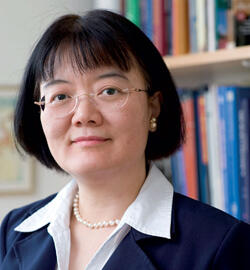
trisha lin headshot

Join the Cyber Policy Center for Seeing Isn’t Believing How Taiwanese Online Users Detect, Share, and Respond to Deepfakes, a seminar with Dr. Trisha T. C. Lin. This talk presents findings from a web survey examining Taiwanese online users’ experiences with deepfakes, focusing on exposure, detection, and sharing behaviors. Study 1 explores the types of deepfakes encountered, detection challenges, and the motivations behind sharing or withholding such content. It highlights how demographic and political factors shape engagement patterns. Study 2 applies the Stimulus-Reasoning-Orientation-Response (SROR) model to assess how deepfake interactions influenced authentication and correction behaviors ahead of Taiwan’s 2024 presidential election. Results indicate that while deepfake exposure reduces echo chamber effects, it heightens conspiracy thinking—paradoxically encouraging proactive verification and correction. Deepfake self-efficacy emerges as a key predictor of these behaviors. Study 3 draws on the Extended Parallel Process Model (EPPM) to examine how perceived threat (severity and susceptibility) and self-efficacy inform users’ coping strategies when confronted with deepfakes. Together, these studies advance understanding of psychological and sociopolitical mechanisms underlying deepfake engagement and provide insights for enhancing digital literacy and disinformation resilience.

About the Speaker

Dr. Trisha T. C. Lin is the Distinguished Professor at College of Communication, National Chengchi University (NCCU) as well as the Director of MA in Global Communication and Innovation Technology. Previously, she worked at Nanyang Technological University. Later, she served as the Research Associate Dean at College of Communication, NCCU. She was the Harvard Yenching Scholar and the Fulbright Scholar. Her mixed-method research focuses on new media innovations, emerging ICT adoption and social impact, and AI human-machine interaction. At present, Dr. Lin is the Vice President of International Chinese Communication Association, and the Vice Chair of Taiwan Communication Association.

Encina Hall (Reuben Hills Conference Room #E207)

616 Jane Stanford Way Stanford, CA 94305

Seminars
Date Label
-

Encina Commons Room 123
615 Crothers Way, Stanford

0
CDDRL Visiting Scholar, 2024-25
01_ali_carkoglu_08_-_ali_carkoglu.jpg

I am a political scientist specializing in elections, voting behavior, public opinion, and Turkish politics. I have led and participated in major cross-national and national projects such as the Turkish Election Study (TES), Turkish Giving Behaviour Study, International Social Survey Program (ISSP), and Comparative Study of Electoral Systems (CSES). I took part in the planning committees for Modules 5 and 6 in CSES and ISSP modules on family and changing gender roles (2012, 2022), religion (2018), and social networks (2017). I am the founding PI in TES and developed the campaign media content data program, which documents daily campaign content for over ten national newspapers since 2002. My work can be accessed here.

My current research is an exploration of the secularization process in Turkey, a topic where the evidence has so far been mixed. Some scholars find the Turkish experience to possess reflections of secularization, as expected following classical modernization theory, while others present evidence that contradicts these expectations. The most recent contributions to this literature now focus on outliers where resistance to secularization exists, and one even finds a resurgence of religiosity in various dimensions of social life. I focus on Turkey, which can be considered an outlier. In the past, I have contributed to this literature through several projects and articles and touched upon the enduring influence of religion in political life.

My main argument in this project is that Turkish society's dual character, where a potentially secularizing group faces an increasingly resacralizing group, is responsible for the contrasting findings about secularization and creating the Turkish outlier. I follow historical and quantitative research, bringing together comprehensive data that focus on the country's critical areas of social development. I argue that underlying Turkish ideological and affective polarization is the dual character of Turkish society with opposing secularization trends.

Date Label
Seminars
Date Label
-
Flyer for the seminar "Assessing Japan’s Taiwan Policy: Power, Politics, and Prudence" with speaker headshots.

What are the patterns of Japan’s foreign policy behavior toward Taiwan in the post-Cold War era? It is generally taken for granted that the origin of Japan’s foreign policy to Taiwan has been derived from a unitary strategic calculation related to East Asian international politics and its maritime security in the Asia-Pacific region. This conventional interpretation is insufficient. In this seminar, by reviewing three case studies in 2006, 2019 and 2021 through the theoretical lens of neoclassical realism and empirical investigation based on primary and secondary Japanese-language sources, the speaker suggests that Japan’s Taiwan policy has been shaped by the combination of three factors: the degree of systemic clarity at the international level, the Japanese prime minister’s political survival and bureaucratic prudence over the Taiwan issue at the domestic level. Since 2021, Japan has adopted a subtle approach to Taiwan, driven more by a defensive and precautionary response to the heightened sense of crisis across the Taiwan Strait.

Speaker:

Mong Cheung headshot

Mong Cheung is Professor of School of International Liberal Studies (SILS) at Waseda University, Japan. He received his PhD degree in international relations from Waseda University and M.Phil degree in political science from the Chinese University of Hong Kong (CUHK). He is currently a visiting scholar at Stanford University (2025). His research interests include contemporary Sino-Japanese relations, Japan’s foreign and security policy, foreign-domestic linkage in Chinese and Japanese foreign policy, misperception and reconciliation in China-Japan relations, and comparative strategic culture. He is the author of Political Survival and Yasukuni in Japan`s Relations with China (London: Routledge, 2017, Paperback, 2018). He has published widely in peer-reviewed international journals such as The Pacific Review, Pacific Affairs, East Asia Forum, Journal of Contemporary China, Journal of Contemporary East Asian Studies. He serves as a peer reviewer for several international academic journals such as International Relations of the Asia-Pacific, Journal of Contemporary China, Journal of Contemporary East Asian Studies. He is also a columnist for the "Japan Outlook" section of Hong Kong's Ming Pao newspaper.

Moderator:

Headshot for Kiyo Tsutsui

Kiyoteru Tsutsui is the Henri H. and Tomoye Takahashi Professor, Professor of Sociology, Senior Fellow at the Freeman Spogli Institute for International Studies, and Deputy Director of the Walter H. Shorenstein Asia-Pacific Research Center, where he is also Director of the Japan Program. Tsutsui’s research interests lie in political/comparative sociology, social movements, globalization, human rights, and Japanese society. His most recent publication, Human Rights and the State: The Power of Ideas and the Realities of International Politics (Iwanami Shinsho, 2022), was awarded the 2022 Ishibashi Tanzan Award and the 44th Suntory Prize for Arts and Sciences.

Kiyoteru Tsutsui
Mong Cheung
Seminars
Date Label
-
Flyer for the panel discussion "Behind the Spotlight: How K-Pop Talent Is Discovered and Made" with speaker headshots. In the background: a photo of audience members during a k-pop concert.

The K-pop industry has undergone a remarkable transformation in recent years. Shifting market demands, increased global attention, and evolving media platforms have redefined how talent is discovered and cultivated. This panel spotlights the behind-the-scenes world of trainee recruitment, a dynamic and evolving part of how K-pop groups come to life. Featuring two current Stanford students with firsthand experience in the audition process and an industry insider actively involved in talent scouting, the event offers a closer look at the inner workings of this fast-changing global industry. 

Speakers:

Portrait of Mina Woo

Mina Woo is CEO of Flowing Academy, which specializes in preparing prospective K-pop trainees for auditions. She also works as a vocal trainer for major entertainment companies that contribute to the Hallyu wave. With direct experience in managing and advocating for trainees, Woo brings her perspective on training and recruiting processes.

portrait of Michael Wu

Michael Wu is a senior at Stanford University, double majoring in Communication and Film & Media Studies. Born in Poland and raised in Canada, Michael developed a passion for dance at an early age. With 5 years of ballet and contemporary training and 11 years of competitive hip-hop experience, he was a semi-finalist on the show NBC's World of Dance, a Finalist on Canada's Got Talent 2021, and a Silver Medalist at the Hip Hop International Dance Championships. At Stanford, he has continued his love for hip-hop as one of three directors of Alliance Dance, one of Stanford's largest hip-hop teams.

Prior to his time as a trainee on Starlight Boys, Michael had no experience as a trainee. He applied himself and interviewed over FaceTime in study rooms on campus, and he was eventually selected as a contestant and flown out to Korea. Michael's journey is one of passion, perseverance, and unexpected opportunities. He hopes to continue inspiring and entertaining others through his personality, story, and craft.  

Luis Oyson

Luis Oyson is a sophomore at Stanford University from the Philippines, majoring in Computer Science and Electrical Engineering. He brings real-world experience in the K-pop industry. His journey started in 2022 when he flew to South Korea and auditioned for top entertainment companies. After a series of competitive evaluations, he was selected as a trainee and spent over two years fully immersed in the demanding world of idol training. During that time, Luis was named main vocalist and earned a spot on the debut team of a new idol group in development. In 2024, he coveted a spot on JTBC’s global idol survival show Project 7, standing out among thousands of applicants from around the world.

Luis’ background is a testament to years of discipline, performance training, and persistence in one of the world’s most competitive entertainment industries. You can catch him at Stanford, where he continues to sing, dance, and create—sharing his musical passion and industry experiences both in person and on social media (@its.luisoyson).

Moderator:

Portrait of Irene Kyoung

Irene Kyoung is currently a Research Associate for the Korea Program and Stanford Next Asia Policy Lab (SNAPL) at the Shorenstein APARC where she supports research projects regarding Korean politics and society, and US-China relations. Irene received her MA in Political Science from Columbia University and graduated with honors in Government and Legal Studies from Bowdoin College. 

Directions and Parking > 

Irene Kyoung, Research Associate at Shorenstein APARC, Stanford University

Philippines Conference Room (C330)
Encina Hall, 3rd Floor
616 Jane Stanford Way, Stanford, CA 94305

Mina Woo, CEO of Flowing Academy in South Korea
Luis Oyson, Sophomore at Stanford University
Michael Wu, Senior at Stanford University
Seminars
Date Label
-
may seminar

Join the Cyber Policy Center on May 27 from 1PM–2PM Pacific for Europe's AI Future: The EU's Plan to Produce AI Technology People Can Trust, a seminar with Joanna Smolinska.

Stanford affiliates are invited to join us at 12:40 PM for lunch, prior to the seminar.  This seminar concludes the Spring Seminar Series. We will be resuming seminars in the fall. Sign up for our newsletter for announcements. 

About the Seminar:

The European Union – a Union of 27 different countries speaking different languages with distinct legal frameworks – is well known for its culture, food and regulation. It is less known for the pro-innovation effect that the EU-level regulation has (akin to federal-level rules in the US), providing one set of rules across the continent that enable companies to sell their products and services to 450 million consumers and hundreds of thousands of businesses. In the digital space, the global AI race is on. Investments in AI infrastructure are announced every week across the globe. In the EU, public and private partnerships are mobilized to invest billions of Euros in AI industrial uptake and supercomputers – AI factories and giga-factories – that will provide commercial access to compute. Startups and researchers will be able to access for free or at the level of cost they can sustain.
 
How does the EU plan to become a continent that not only uses AI technology created elsewhere but also builds it? Where will the money for compute and talent come from? Will its AI regulation result in a race to the top, making human-centric tech a commercially viable value proposition and a competitive advantage? How does it plan to make compliance easier for innovators who, coming from different national labs, often struggle to scale their innovations, facing regulatory fragmentation and insufficient access to capital?

In this talk we will delve into how the EU plans for its citizens to have the best of the two worlds in AI: produce technology that people can trust, that helps solving societal, economic and environmental challenges of today, with democratic oversight and helping innovators scale across the continent and beyond.

About the Speaker:

Joanna Smolinska is Counsellor for Digital and Deputy Head of the EU Office in San Francisco since the day it opened September 1, 2022. She focuses on AI policy and regulation, online content moderation, policies promoting digital markets openness and innovation in the context of transatlantic relations, forging cooperation with California civil society, business, academia and government. Before coming to SF, she had worked for 15 years in the European Commission in Brussels across a wide range of policy areas. In DG CNECT, the Commission’s department responsible for EU tech policy, Joanna focused on digital and green transformation, digital services and copyright regulations, tech standardization, digital skills, blockchain, and technology start ups/scale-ups. She was actively involved in the development of the EU Digital Services Act and Digital Markets Act. Of Polish nationality, Joanna graduated from Warsaw School of Economics, holds a Master’s Degree in Finance from the University of Geneva, Switzerland, and a Master’s Degree in European Law and Economic Analysis from the College of Europe in Bruges, Belgium. Joanna is also a Non-resident Fellow with the Transatlantic Leadership Program and the Digital Innovation Initiative at the Center for European Policy Analysis (CEPA) and a Tech Policy Fellow of the 2024-25 cohort at UC Berkeley.

Stanford Law School Building, Manning Faculty Lounge (Room 270)
559 Nathan Abbott Way Stanford, CA 94305

Joanna Smolinska
Seminars
Date Label
Subscribe to Seminars