
Health Policy Seminar with Valentin Bolotnyy - A Danger to Self and Others: Health and Criminal Consequences of Involuntary Hospitalization
-

Valentin Bolotnyy is a Kleinheinz Fellow at the Hoover Institution and an Affiliated Scholar at CDDRL's Deliberative Democracy Lab. He designs and analyzes randomized experiments aimed at understanding how Americans communicate about politics and public policy, and what factors may lead to changes in public opinion on key issues. He also works on forming research partnerships with government agencies to improve public services and gain insight into social behavior. His recent studies have covered the America in One Room experiment, climate adaptation, the gender earnings gap, public infrastructure procurement, immigration policies, and graduate student mental health. Bolotnyy received a PhD in Economics from Harvard University and a BA in Economics and International Relations, with honors and distinction, from Stanford University.
Health Policy Seminars are hybrid events open to the Stanford community. For more information, please reach out to healthpolicy-comms@stanford.edu
Encina Commons, Room 119
Department of Health Policy/Center for Health Policy
615 Crothers Way, Stanford
Lunch will be provided on a first-come, first-served basis for in-person attendees.
Seminars
Health Policy Seminar with Joanne Spetz: The National Dementia Workforce Study: Methods and Results from the First Wave of Surveys
-

Joanne Spetz is Director and Brenda and Jeffrey L. Kang Presidential Chair in Health Care Financing at the Philip R. Lee Institute for Health Policy Studies (IHPS), University of California San Francisco. Dr. Spetz’s research focuses on the economics of the health care workforce, organization of health care services, and quality of health care. She directs the federally funded UCSF Health Workforce Research Center on Long-Term Care, which generates evidence to ensure an adequate workforce to provide patient-centered care to individuals with long-term care needs across the lifespan. She is an internationally known expert on the nursing workforce, leading studies of nurse supply, demand, education, earnings, and contributions to the quality of care across healthcare settings. Her current research includes serving as the co-Principal Investigator for the National Dementia Workforce Study, and leading a study of the nurse practitioners and midwives in California.
Health Policy Seminars are hybrid events open to the Stanford community. For more information, please reach out to healthpolicy-comms@stanford.edu
Encina Commons, Room 119
Department of Health Policy/Center for Health Policy
615 Crothers Way, Stanford
Lunch will be provided on a first-come, first-served basis for in-person attendees.
Seminars
Health Policy Seminar with Lee Sanders—AI and Population Health: Exploring New Frameworks
-
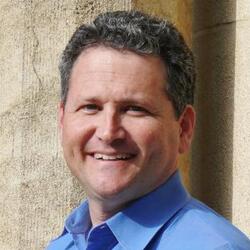
Dr. Lee Sanders is a general pediatrician and Professor of Pediatrics at the Stanford University School of Medicine, where he is Chief of the Division of General Pediatrics. He holds joint appointments in the Department of Health Policy, Department of Epidemiology and Population Health and the Freeman Spogli Institute for International Studies. He teaches in the Human Biology Program and at the Hasso Plattner Institute of Design (Stanford d.School). He is a national expert in the science of health literacy, which applies a literacy lens to advancing maternal and child health equity. He directs the Stanford Health Literacy Lab, which aims to address child disparities in health and educational, by redesigning primary-care with youth and families.
Health Policy Seminars are hybrid events open to the Stanford community. For more information, please reach out to healthpolicy-comms@stanford.edu
Encina Commons, Room 119
Department of Health Policy/Center for Health Policy
615 Crothers Way, Stanford
Lunch will be provided on a first-come, first-served basis for in-person attendees.
Seminars
Health Policy Seminar with Michelle Williams - From Menarche to Menopause and Beyond: Reclaiming Prevention as Women's Health Policy
-
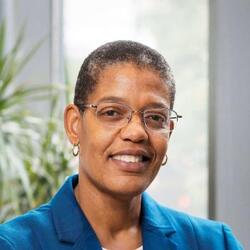
Dr. Williams' research focuses primarily on reproductive and perinatal epidemiology. Over three decades, she has integrated epidemiological, biological, and molecular approaches into rigorously designed research that has advanced understanding of placental abruption, gestational diabetes, and preeclampsia. Her research methodology includes: (1) identifying literature gaps; (2) developing robust epidemiological data systems across North America, Sub-Saharan Africa, Asia, and South America; and (3) integrating biochemical and molecular biomarkers into these platforms. In 2019, in partnership with Apple Inc. and the National Institute of Environmental Health Sciences, she co-designed and currently co-leads the Apple Women's Health Study, a large-scale digital national study examining determinants of women's gynecological health. Dr. Williams has been recognized for her excellence in teaching, as the recipient of the 2015 Harvard Chan School’s Outstanding Mentor Award, the UW’s Brotman Award for excellence in teaching (2007), the American Public Health Association’s Abraham Lilienfeld Award for education in epidemiology (2007), and the White House’s Presidential Award for Excellence in Science, Mathematics, and Engineering Mentoring (2012).
Health Policy Seminars are hybrid events open to the Stanford community. For more information, please reach out to healthpolicy-comms@stanford.edu
Encina Commons, Room 119
Department of Health Policy/Center for Health Policy
615 Crothers Way, Stanford
Lunch will be provided on a first-come, first-served basis for in-person attendees.
Seminars
Health Policy Seminar: Jeffrey Pfeffer - How Employers Could Help Fix US Healthcare — And Some Explanations for Why They Don't
-
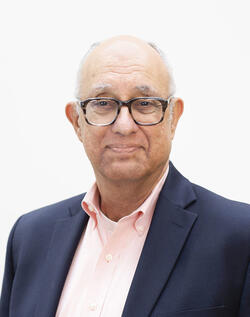
Jeffrey Pfeffer is The Thomas D. Dee II Professor of Organizational Behavior at the Graduate School of Business, Stanford University where he has taught since 1979. He currently serves on the advisory boards for Collective Health, Medeloop, Quorso, and Veridian, and on the boards of the nonprofits Quantum Leap Healthcare and the San Francisco Playhouse. His current research focuses on the effects of work environments on human health and well-being, power and leadership in organizations, evidence-based management, the knowing-doing gap, and how thinking of time like money affects people’s choices about spending time in ways that promote unhappiness.
Health Policy Seminars are hybrid events open to the Stanford community. For more information, please reach out to healthpolicy-comms@stanford.edu
Encina Commons, Room 119
Department of Health Policy/Center for Health Policy
615 Crothers Way, Stanford
Lunch will be provided on a first-come, first-served basis for in-person attendees.
Seminars
Health Policy Seminar: Omar Galárraga - Economic Inequality and Violent Mortality: Evidence from Ecuador
-
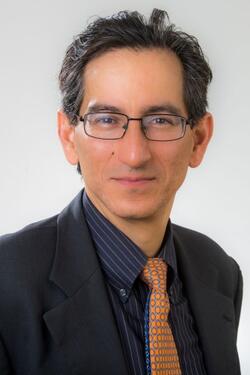
Omar Galárraga, PhD is a health economist and tenured Professor of Health Services, Policy and Practice at the Brown University School of Public Health. He currently serves as the Director of the Center for Global Public Health (CGPH) at Brown. Dr. Galárraga’s research applies principles from health and behavioral economics to improve public health outcomes, with a specific focus on: (a) HIV Prevention & Treatment: Designing and evaluating economic-based interventions, such as conditional economic incentives to improve adherence to antiretroviral therapy and reduce risk behaviors; (b) Health Systems: Analyzing health systems reform and insurance expansion in low- and middle-income countries; and (c) Applied Econometrics: Utilizing rigorous experimental and non-experimental methods to evaluate health interventions and policies.
Health Policy Seminars are hybrid events open to the Stanford community. For more information, please reach out to healthpolicy-comms@stanford.edu
Encina Commons, Room 119
Department of Health Policy/Center for Health Policy
615 Crothers Way, Stanford
Lunch will be provided
Seminars
Healthcare Workforce Shortages and Patient Health Outcomes: Evidence from South Korea
-

In February 2024, the South Korean government announced an expansion of medical school enrollment by 2,000 students to address physician shortages, prompting widespread opposition from the medical community. On February 19, 2024, over 90% of trainee doctors—representing approximately one-third of physicians at major teaching hospitals—resigned and launched a nationwide walkout that lasted until August 2025. This 18-month walkout constituted a major workforce shock in a universal, single-payer system and created a rare opportunity to evaluate effects on mortality, health care use, and spending. Hear from Prof. Park as he presents the results of a study on the impacts of the walkout.
Using a difference‑in‑differences design, the findings reveal significant increases in 30‑day and 90‑day in‑hospital mortality and in weekly all‑cause mortality. Health care utilization declined across inpatient and outpatient settings, with a greater relative reduction in hospital admissions. Hospitalizations dropped primarily for simple and general conditions, whereas admissions for complex conditions remained stable. Mean spending per hospitalization rose substantially, and spending per outpatient visit increased modestly. There was little evidence of systematic substitution of care from teaching hospitals to non‑teaching facilities or primary care settings. Overall, the nationwide trainee doctor walkout in South Korea was associated with higher mortality and lower health care utilization. These findings underscore the vulnerability of health systems to workforce disruptions and highlight the need for policies that strengthen staffing resilience, contingency planning, and communication mechanisms between the government and the medical workforce.
Speaker:
Image
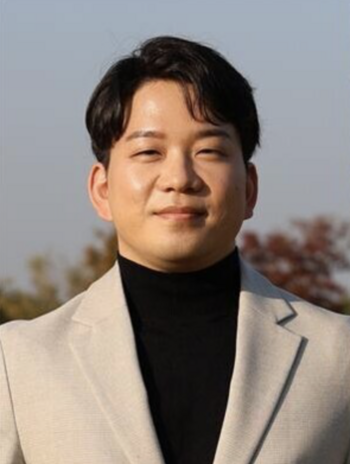
Sungchul Park is an Associate Professor in the Department of Health Policy and Management at Korea University (Republic of Korea). He previously held tenure-track faculty positions at Drexel University (United States) and Ewha Womans University (Republic of Korea). As a health economist and health services researcher, he studies how to design better health care systems that deliver high-quality care at a reasonable cost while ensuring equitable access. His research evaluates the value of health care by assessing both costs and patient and population health outcomes and investigates payment and care delivery reforms, with an emphasis on value-based care. He also analyzes how emerging technologies, including artificial intelligence and digital health, affect cost, quality, access, and efficiency in health care. In addition, he compares health system performance across high-income countries, particularly OECD members, to identify policies that improve care and well-being.
Zoom
Sungchul Park, Associate Professor, Korea University, South Korea
Seminars
Image

Link target
New window
A World Safe for Autocracy: What China Wants and the Domestic Politics that Drive It
-

Beneath Xi Jinping’s grand slogans of a “Chinese dream” and a “shared future for humankind,” there are internal tensions, debates, and competing interests that continue to shape China’s approach to the world. Through the lens of domestic politics, nationalism, and regime insecurity in China, Weiss will examine the evolving and contested landscape of what “China” wants. The talk will conclude with policy implications for the United States, prospects for peaceful coexistence, and the future of international order.
Speaker:
Image
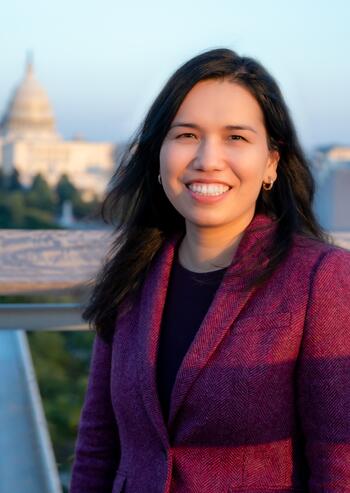
Jessica Chen Weiss is the David M. Lampton Professor of China Studies at Johns Hopkins University's School of Advanced International Studies and the inaugural faculty director of the Institute for America, China, and the Future of Global Affairs (ACF) at SAIS. From August 2021 to July 2022, she served as senior advisor to the Secretary's Policy Planning Staff at the U.S. State Department on a Council on Foreign Relations Fellowship for Tenured International Relations Scholars (IAF-TIRS). Weiss is the author of Powerful Patriots: Nationalist Protest in China’s Foreign Relations (Oxford University Press, 2014). Her research appears in International Organization, China Quarterly, International Studies Quarterly, Journal of Conflict Resolution, Security Studies, Journal of Contemporary China, and Review of International Political Economy. With commentary in the New York Times, Washington Post, Foreign Affairs, Los Angeles Times, and the Ezra Klein show, Weiss was profiled by the New Yorker and named one of Prospect Magazine's Top Thinkers for 2024. Weiss is also a nonresident senior fellow at the Asia Society Policy Institute Center for China Analysis and previously the Michael J. Zak Professor for China and Asia-Pacific Studies at Cornell University and an assistant professor at Yale University. She founded FACES, the Forum for American/Chinese Exchange at Stanford University. Born and raised in Seattle, Washington, she received her Ph.D. from the University of California, San Diego.
Philippines Conference Room (C330)
Encina Hall, 3rd Floor
616 Jane Stanford Way, Stanford, CA 94305
Jessica Chen Weiss, David M. Lampton Professor of China Studies Faculty Director, Institute for America, China, and the Future of Global Affairs Johns Hopkins School of Advanced International Studies
Seminars
Link target
New window