The Drivers and Consequences of the International Mobility of Healthcare Professionals from the Philippines

The Philippines is one of the top exporters of healthcare professionals in the world, and arguably a leader in providing high-quality healthcare professionals to regional and global healthcare systems facing workforce shortages. In the last four decades, about 74,000 healthcare professionals emigrated, of which 84% were professional nurses, and around 13,000 newly-hired nurses were deployed annually as temporary migrant workers whose annual remittances averaged US$308,000 (2018-2021).
This research aims to examine the consequences and drivers of international mobility of health professionals from the Philippines, particularly the role of climate change, given that the country is ranked third globally in terms of vulnerability to climate change risks. While still in its nascent stage, this research first explores the net effects and policy implications of migration using evidence and frameworks found in recent literature. The exodus of high-skilled workers may result in “brain drain”, shortages, and unequal distribution of skilled health workers across the country; however, “brain gain” is also possible. Human capital may improve when: remittances are used for education; more Filipinos are induced to study nursing; and migrants return with new skills and work experience.
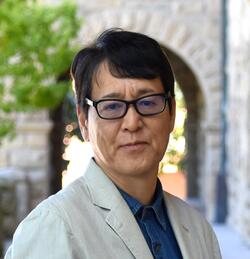
Speaker: Marjorie Pajaron is currently a Visiting Scholar for the spring quarter of 2026 and Associate Professor at the School of Economics, University of the Philippines (UP), Diliman. Prior to her appointment, she was a Postdoctoral Fellow at Stanford University’s Walter H. Shorenstein Asia-Pacific Research Center. She also served as a lecturer at the University of Hawai’i at Manoa Department of Economics, where she received her Ph.D., and she was a Visiting Research Fellow at the University of Manchester's Global Development Institute.
Her published research includes topics on health, migration, climate change, and remote sensing. She was the recipient of the UP Centennial Professorial Chair Award and International Publication Award for four years, and she has also served as an Associate Editor for the Scopus-listed journal SciEnggJ.
Philippines Conference Room
Encina Hall, Third Floor, Central, C330
616 Jane Stanford Way, Stanford, CA 94305