-

The hit movie Crazy Rich Asians shone a light on the extreme wealth of Southeast Asia's ethnically Chinese ultra-wealthy, who have long topped billionaire rankings and dominated stock-markets around the region. Sometimes dubbed “the Asian godfathers,” these successful tycoons are famed both their sharp commercial savvy and their association with chronic crony capitalism. In this talk, however, author James Crabtree will suggest that role of the region's mega-wealthy industrialists is now changing in interesting ways, notably due to the economic rise of China itself, which presents major business opportunities but also tricky political challenges for Southeast Asia's commercial titans.

Image
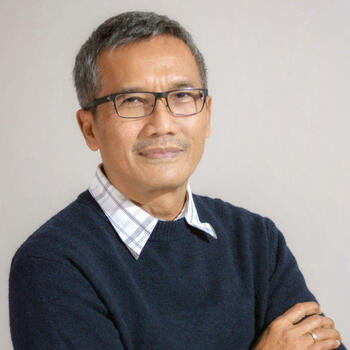
james crabtree profile picture 4x4
James Crabtree is a Singapore-based author and journalist, a columnist for Nikkei Asian Review, and a fellow in the Asia-Pacific Programme at Chatham House in London. His best-selling 2018 book, The Billionaire Raj: A Journey Through India’s New Gilded Age, was short-listed for the Financial Times and McKinsey Business Book of the Year award. Prior to his position at NUS, James worked for the FT, most recently as its bureau chief in Mumbai, India. Publications for which he has written include The New York Times, The Economist, Wired, and Foreign Policy. Before becoming a journalist, he was an advisor in the UK Prime Minister’s Strategy Unit under Tony Blair and Gordon Brown, worked for think tanks in London and Washington DC, and was a Fulbright Scholar at Harvard’s Kennedy School of Government.

James Crabtree Associate Professor of Practice, Lee Kuan Yew School of Public Policy, National University of Singapore (NUS)
Seminars
-

Given the significant health risks faced by households in developing countries, publicly provided health insurance may confer important benefits. Yet, demand for formal insurance is often found to be low. Since health insurance may be relatively unfamiliar to many households, understanding the factors that shape households’ demand for, and ability to utilize, insurance is important for research and policy. It is also important to understand the health and financial impacts of health insurance. We shed light on these questions using a two-stage randomized control trial in Karnataka, India. Many households are willing to pay for insurance. Households’ ability to successfully utilize the insurance is limited, however, especially when only a small fraction of the community has access to insurance. When a higher share of the community has access, households are more able to benefit, suggesting that harnessing community learning is important in designing the rollout of health insurance.

Image
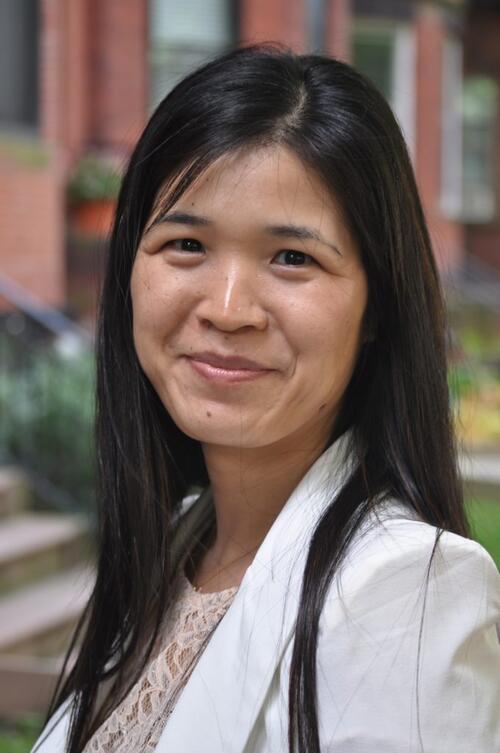
kinnan photo 4x4
Cynthia Kinnan is an assistant professor of economics at Tufts University and a Research Associate of the NBER. She holds a Ph.D. in economics from MIT. Her research lies in the areas of economic development and social networks, with emphasis on understanding linkages between formal finance (including insurance and microcredit) and informal networks. She has been a recipient of research grants from the International Growth Centre, the Tata Centre for Development, and others. Her work has been featured in outlets including the Economist and the NBER Digest and been published in journals including the American Economic Review and the American Economic Journal – Applied Economics.

Advisory on Novel Coronavirus (COVID-19)

In accordance with university guidelines, if you (or a spouse/housemate) have returned from travel to mainland China in the last 14 days, we ask that you DO NOT come to campus until 14 days have passed since your return date and you remain symptom-free. For more information and updates, please refer to the Stanford Environmental Health & Safety website: https://ehs.stanford.edu/news/novel-coronavirus-covid-19

Cynthia Kinnan Assistant Professor of Economics, Tufts University and Research Associate of the NBER.
Seminars
-

IMPORTANT EVENT UPDATE:

In keeping with Stanford University's March 3 message to the campus community on COVID-19 and current recommendations of the CDC, the Asia-Pacific Research Center is electing to postpone this event until further notice. We appreciate your understanding and cooperation as we do our best to keep our community healthy and well. 


Co-sponsored by Shorenstein Asia-Pacific Research Center (APARC) and Center for South Asia (CSA).

When does mass nonviolent mobilization for political change occur, what prevents it from degenerating into violence, and when does it succeed in extracting concessions? We examine these questions in the context of India's movement for independence from Britain, and point to the key roles played by economic shocks and organization in the success of nonviolence.

Image
Rikhil Bhavnani

Rikhil R. Bhavnani is an Associate Professor in the Department of Political Science at the University of Wisconsin–Madison, and a faculty affiliate at the La Follette School of Public Affairs, the Elections Research Center and the Center for South Asia.

Professor Bhavnani’s research and teaching focus on inequalities in political representation, the political economy of migration, and the political economy of development. His research is particularly concerned with causal identification, and is focused on South Asia. Bhavnani is the co-author, with Bethany Lacina, of a book on the backlash against within-country migration across the developing world, published by Cambridge University Press. His articles have been published or are forthcoming in the American Political Science Review, American Journal of Political Science, Journal of Politics, World Politics, the American Economic Journal: Applied Economics, and other outlets. 

Prior to starting at UW–Madison, Professor Bhavnani was a visiting fellow at the Center for the Study of Democratic Politics at Princeton University. He has worked at the Center for Global Development and the International Monetary Fund, and received a PhD in political science and an MA in economics from Stanford University, and a BA in political science and economics from Yale University.

Rikhil Bhavnani, <i>Associate Professor, Department of Political Science</i> University of Wisconsin–Madison
Seminars
-

Seminar Recording: https://youtu.be/P1-Q0OSo4yM


About this Event: The governance of big data and the prevention of their misuse is among the most topical issues in current debates among security experts. But what does it mean when security is not an issue for the stakeholders governing big biomedical data? This paper answers this question by looking at what it describes as a peculiar omission of the issue of security in the biggest harmonization cluster of biomedical research in Europe - BBMRI-ERIC. While it does treat personal data, the risks and threats are constructed through a language of anticipation and self-governance rather than security. The analysis explains why: based on document analysis, interviews, and field research, it studies (1) how are risks and threats constructed in the research with big biomedical data, (2) what regime of their governance is established in this area, and (3) what are the implications for the practices of science and the politics of security. The paper argues that this silence is a by-product of bureaucratization and responsibilization of security, which is in biobanking characteristic by discourse and practices of responsible research, ethics, and law. The paper suggests that this regime of governance precludes the prospects of addressing bigger questions that biobanks may need to deal with in the future, such as regarding the access to the biomedical data by state or private actors and their use for policing, surveillance, or other types of population governance.


Speaker's Biography: Dagmar Rychnovská is Marie Sklodowska-Curie Fellow at the Techno-science and societal transformation group at the Institute for Advanced Studies in Vienna. She holds a PhD in International Relations (Charles University in Prague), an MA in Comparative and International Studies (ETH Zurich and University of Zurich), and an LLM in Law and Politics of International Security (VU University Amsterdam). Her research interests lie at the intersection of international relations, security studies, and science and technology studies. Her current research explores security controversies in research and innovation governance, with a focus on bioweapons, biotechnologies, and biobanks.

Dagmar Rychnovská Institute for Advanced Studies
Seminars
-

Moon Jae-in administration increased South Korea’s minimum wage by nearly 30 percent in 2018 and 2019 under its political slogan of "income-led growth." The idea was that the higher minimum wage would boost low-wage earners’ earnings, thus the income inequality would be reduced while promoting economic growth with increased labor income and expenditure of low-wage workers and their households. This idea was, however, heavily criticized by those who argued that the minimum wage could not be a tool for economic growth and there could be a negative effect on employment.

Lee will discuss empirical findings from his research on the Korean minimum wage including the effect of the recent wage hikes. Using employer-employee matched data and longitudinal data on the universe of establishments, he estimated the effect of the minimum wage on net job growth and tried to decompose the effect into job creation and destruction by existing establishments as well as by establishment entry and exit. He found a significant negative effect of the minimum wage on employment growth; and also that ignoring the minimum wage’s effect on the self-employed could underestimate the adverse effect on total employment. To explain the mechanism, he focuses on the Korean labor market's unique feature—a high share of the self-employed in the workforce and their financial marginality. His findings demonstrate that the minimum wage’s effect and its channels should differ across countries depending on labor market institutions and structure.

Image
Jungmin Lee
Jungmin Lee is a professor of economics at Seoul National University in Korea, and also a Research Fellow at the Institute for the Study of Labor in Germany and at the Center for Research & Analysis of Migration at University College London in UK. Previously, he was an assistant professor at University of Arkansas and Florida International University, and an associate professor at Sogang University in Korea. His current research focuses on Korean labor market and education policies, interactions between health and labor market outcomes, and North Korean refugees. He has been a member of editorial board of many economics journals in Korea. He was the chief editor for the Korean Journal of Labor Economics and he is currently a Co-Editor for the Korean Economic Review; and was a member of the committee on youth employment of the Korea Tripartite Commission. He has published more than 50 papers in academic journals, mostly about the Korean economy. He received a bachelor’s degree in international economics from Seoul National University and PhD in economics from the University of Texas at Austin.

Jungmin Lee <i>Professor of Economics, Seoul National University</i>
Seminars
-

CISAC will be canceling all public events and seminars until at least April 5th due to the ongoing developments associated with COVID-19.

------------------------------------------------------------------------------------------------------------------------------------------------------


About this Event: In this new Brookings Marshall Paper, Michael O’Hanlon argues that now is the time for Western nations to negotiate a new security architecture for neutral countries in eastern Europe to stabilize the region and reduce the risks of war with Russia. He believes NATO expansion has gone far enough. The core concept of this new security architecture would be one of permanent neutrality. The countries in question collectively make a broken-up arc, from Europe’s far north to its south: Finland and Sweden; Ukraine, Moldova, and Belarus; Georgia, Armenia, and Azerbaijan; and finally Cyprus plus Serbia, as well as possibly several other Balkan states. Discussion on the new framework should begin within NATO, followed by deliberation with the neutral countries themselves, and then formal negotiations with Russia.

The new security architecture would require that Russia, like NATO, commit to help uphold the security of Ukraine, Georgia, Moldova, and other states in the region. Russia would have to withdraw its troops from those countries in a verifiable manner; after that, corresponding sanctions on Russia would be lifted. The neutral countries would retain their rights to participate in multilateral security operations on a scale comparable to what has been the case in the past, including even those operations that might be led by NATO. They could think of and describe themselves as Western states (or anything else, for that matter). If the European Union and they so wished in the future, they could join the EU. They would have complete sovereignty and self-determination in every sense of the word. But NATO would decide not to invite them into the alliance as members. Ideally, these nations would endorse and promote this concept themselves as a more practical way to ensure their security than the current situation or any other plausible alternative.

Book Full Text


Speaker's Biography: Michael O'Hanlon is a senior fellow, and director of research, in Foreign Policy at the Brookings Institution, where he specializes in U.S. defense strategy, the use of military force, and American national security policy. He co-directs the Security and Strategy Team, the Defense Industrial Base working group, and the Africa Security Initiative within the Foreign Policy program, as well. He is an adjunct professor at Columbia, Georgetown, and Syracuse universities, and a member of the International Institute for Strategic Studies. O’Hanlon was also a member of the External Advisory Board at the Central Intelligence Agency from 2011-2012.

Michael E. O’Hanlon Director of Research, Foreign Policy Brookings Institution
Seminars
-

In the eyes of China’s neo-authoritarian reformers, Singapore, despite being a tiny city-state, long exemplified a state of affairs for which the PRC should strive: resilient authoritarianism alongside but unweakened by liberalizing steps conducive to economic growth.  On behalf of Beijing’s effort to learn from Singapore, tens of thousands of officials visited the city-state and thousands of articles and books were written about it. Today, however, Xi Jiinping has derided foreign templates and relegated adopting the “Singapore model” to a path not taken by China’s current hard-line leadership and unavailable for authoritarian reformers to pursue. Although the demotion was triggered by Xi’s anti-reformism and China’s rise, Singapore’s loss of “model” character was also path-dependent. Chinese academics studying Singapore had long misunderstood fundamental institutional differences between the two countries that went back to the city-state’s colonial past and China’s Stalinist-Maoist revolution. Efforts to model reforms on the Singaporean “state-party” ran into the prerogatives of the Chinese party-state. Proposals to strengthen market forces, impose limited legal constraints on the party, and introduce semi-competitive elections were seen as threatening the institutional foundations of the CPC. Moreover, despite a (partial) revival of Confucianism in China that imitated the city-state’s attraction to “Asian values,” Singapore’s neo-liberal “pragmatism” and multi-racialism contradicted the CPC’s self-portrayal as an engine of Marxist socialism embodying the Han-Chinese nation.

Image
mark thompson 0120
Mark R. Thompson heads the Southeast Asia Research Centre at the City University of Hong Kong. He is president of the Hong Kong Political Science Association (HKPSA) and a former president of the Asian Political and International Studies Association (2013-14). A comparativist specializing in Southeast Asian politics, his publications include China’s “Singapore Model” and Authoritarian Learning, ed. with Stephan Ortmann (forthcoming 2020); Authoritarian Modernism in East Asia (2019); The Routledge Handbook of the Contemporary Philippines, ed. with Eric Batalla (2018); Dynasties and Female Political Leaders in Asia, ed. with Claudia Derichs (2014); Democratic Revolutions: Asia and Eastern Europe (2004); and The Anti-Marcos Struggle (1995).

Shorenstein APARC
Stanford University
Encina Hall E301
Stanford, CA 94305-6055

(650) 725-6459 (650) 723-6530
0
MarkThompson[1].JPG PhD

Professor Thompson builds on Barrington Moore's insight that there are different "paths to the modern" world. Thompson's manuscript explores alternatives to the familiar South Korean-and Taiwan-based model of "late democratization." According to that model, political pluralism follows a formative period of economic growth during which labor is demobilized and big business, religious leaders, and professionals depend upon and are co-opted by the state.

Thompson argues that even when these preconditions are in place, democratization need not follow. Singapore is an illuminating case in point. The autocratic growth model pays insufficient attention to politics, including the sometimes crucial role of student activists in challenging developmental authoritarianism and triggering a democratic transition, as in Indonesia. As political actors, students (rather than a progressive bourgeoisie) may fill the oppositional vacuum created by the preconditions that characterized predemocratic South Korean and Taiwan.

In his critique of Northeast Asian-style, post-authoritarian "late democratization" and its emphasis on economic growth as the driver of political change, Professor Thompson uses evidence drawn from paired comparisons of Vietnam with China, Hong Kong with Singapore, and between South Korea and Taiwan on the one hand and other major Southeast Asian cases on the other.

Mark R. Thompson is a professor of political science at the University of Erlangen-Nuremberg in Germany.  A Chicago native, he took his first degree in religious studies at Brown University followed by postgraduate work at Cambridge University and the University of the Philippines.  Fascinated by Philippine people power, he wrote his dissertation at Yale University on the anti-Marcos struggle (Yale University Press, 1996). After moving to Germany, he witnessed popular uprisings in East Germany and Eastern Europe, inspiring him to conceptualize democratic revolutions in essays later published as a book (Routledge, 2004).  He is in residence at Stanford as Lee Kong Chian Distinguished Fellow in Southeast Asian Studies from February through April 2009.

Lee Kong Chian NUS-Stanford Distinguished Fellow on Southeast Asia
Head and Professor of Politics, Department of Asian and International Studies, City University of Hong Kong
Seminars
-

Title: Value Based Purchasing for Physician Services 

Dr. Jay Bhattacharya, M.D., Ph.D
Professor of Medicine (CHP/PCOR) 

Jay Bhattacharya is a professor of medicine and a CHP/PCOR core faculty member. His research focuses on the constraints that vulnerable populations face in making decisions that affect their health status, as well as the effects of government policies and programs designed to benefit vulnerable populations. He has published empirical economics and health services research on the elderly, adolescents, HIV/AIDS and managed care.

Research In Progress
In order to control the growth of Medicare spending, the federal government has adopted a policy aimed at inducing physicians to form coordinated care organizations that assume part of the financial risk associated with low value care.  At the same time, an alternative policy has focused on developing direct clinician levels measures of the value of care, and tied these measures to payment. The alternative policy leaves in place the structure of fee-for-service payment, but superimposes value-based purchasing incentives. In this talk, I will argue that the latter structure, properly implemented, is much more likely to succeed in transforming American health care to emphasize high value care.

CHP/PCOR Conference Room
Encina Commons, Room 119
615 Crothers Way, Stanford, CA 94305

Jay Bhattacharya
Seminars
-

WE HAVE REACHED VENUE CAPACITY AND ARE NO LONGER ACCEPTING RSVPS


Image
Portrait of Nicholas Lardy
China has grown faster for longer than any country in recorded history.  Is it market-oriented reform, state industrial policy, or some sophisticated blend of the two that explains this success?  In this talk, Dr. Nicholas Lardy will also further examine what might explain China’s slowdown of recent years.  Is China falling into the frequently fatal middle-income trap?  Or have domestic policy choices led to the slowdown?  Have trade frictions with the United States also contributed to China’s slowing growth?  In addition, what should U.S. policy stance be towards China?  Should the United States continue to ramp up restrictions on two-way flows of technology to try to further slow China’s growth?  How successful is such a strategy likely to be and what costs to the United States would be inherent in such an approach?

Nicholas R. Lardy is the Anthony M. Solomon Senior Fellow at the Peterson Institute for International Economics.  He joined the Institute in March 2003 from the Brookings Institution, where he was a senior fellow from 1995 until 2003.  Before Brookings, he served at the University of Washington, where he was the director of the Henry M. Jackson School of International Studies from 1991 to 1995.  From 1997 through the spring of 2000, he was also the Frederick Frank Adjunct Professor of International Trade and Finance at the Yale University School of Management.  He is an expert on the Chinese economy.  Lardy's most recent books are The State Strikes Back: The End of Economic Reform in China? (2019), Markets over Mao: The Rise of Private Business in China (2014), Sustaining China's Economic Growth after the Global Financial Crisis (2012), The Future of China's Exchange Rate Policy (2009), and China's Rise: Challenges and Opportunities (2008). 


Image of red flag over the Shanghai Bund

This event is part of the 2020 Winter/Spring Colloquia series, The PRC at 70: The Past, Present – and Future?, sponsored by APARC's China Program.


Nicholas Lardy Anthony M. Solomon Fellow Peterson Institute for International Economics
Seminars
-

IMPORTANT EVENT UPDATE: 

In keeping with Stanford University's March 3 message to the campus community on COVID-19 and current recommendations of the CDC, the Asia-Pacific Research Center is electing to make this event available through live stream only. We appreciate your understanding and cooperation as we do our best to keep our community healthy and well. 

Please join the live stream via Zoom by clicking here at the scheduled time, 4:30 PM, on March 4 to view Adam Segal's talk.


Analysts on both sides of the Pacific have described an escalating “technology cold war” between Beijing and Washington. Chinese hackers attack American technology companies and Beijing is reportedly planning on the removal of foreign software and hardware from government offices. Washington is blocking Chinese investments, using punitive measures against Huawei and Chinese surveillance companies, and scrutinizing research collaboration with Chinese universities as well as scientists and students. Both sides believe they are in and have to win a race to dominate 5G, AI, quantum, and other emerging technologies. What are the weapons of the tech cold war, and are the US and China doomed to ever more competition, or can they find common ground for cooperation? What does increasing competition between China and the United States mean for the rest of the world?

Image
Portrait of Adam Segal
Adam Segal is the Ira A. Lipman Chair in emerging technologies and national security and Director of the Digital and Cyberspace Policy Program at the Council on Foreign Relations (CFR). An expert on security issues, technology development, and Chinese domestic and foreign policy, Segal was the project director for the CFR-sponsored Independent Task Force reports titled Innovation and National Security: Keeping Our Edge. His most recent book, The Hacked World Order: How Nations Fight, Trade, Maneuver, and Manipulate in the Digital Age (PublicAffairs, 2016), describes the increasingly contentious geopolitics of cyberspace. His work has appeared in the Financial Times, the New York Times, Foreign Policy, the Wall Street Journal, and Foreign Affairs, among others. He currently writes for the blog, “Net Politics.”


Image
Image of red flag over the Shanghai Bund
This event is part of the 2020 Winter/Spring Colloquia series, The PRC at 70: The Past, Present – and Future?, sponsored by APARC's China Program.


Adam Segal Director Digital and Cyberspace Policy Program, Council on Foreign Relations
Seminars
Subscribe to Seminars