-

IMPORTANT EVENT UPDATE: 

In keeping with Stanford University's March 3 message to the campus community on COVID-19 and current recommendations of the CDC, the Asia-Pacific Research Center is electing to make this event available through live stream only. We appreciate your understanding and cooperation as we do our best to keep our community healthy and well. 

Please join the live stream via Zoom by clicking here at the scheduled time, 4:30 PM, on March 4 to view Adam Segal's talk.


Analysts on both sides of the Pacific have described an escalating “technology cold war” between Beijing and Washington. Chinese hackers attack American technology companies and Beijing is reportedly planning on the removal of foreign software and hardware from government offices. Washington is blocking Chinese investments, using punitive measures against Huawei and Chinese surveillance companies, and scrutinizing research collaboration with Chinese universities as well as scientists and students. Both sides believe they are in and have to win a race to dominate 5G, AI, quantum, and other emerging technologies. What are the weapons of the tech cold war, and are the US and China doomed to ever more competition, or can they find common ground for cooperation? What does increasing competition between China and the United States mean for the rest of the world?

Image
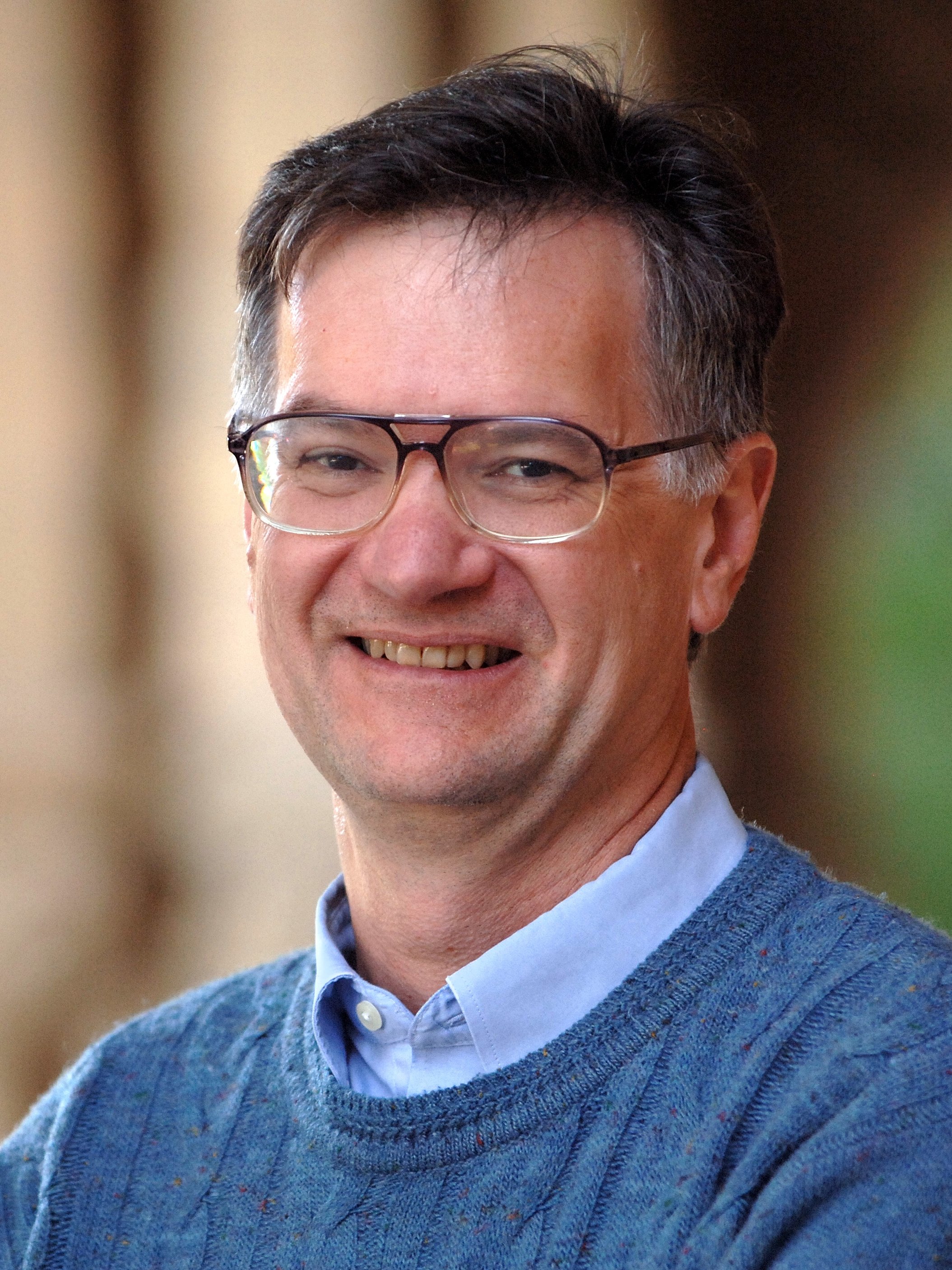
Portrait of Adam Segal
Adam Segal is the Ira A. Lipman Chair in emerging technologies and national security and Director of the Digital and Cyberspace Policy Program at the Council on Foreign Relations (CFR). An expert on security issues, technology development, and Chinese domestic and foreign policy, Segal was the project director for the CFR-sponsored Independent Task Force reports titled Innovation and National Security: Keeping Our Edge. His most recent book, The Hacked World Order: How Nations Fight, Trade, Maneuver, and Manipulate in the Digital Age (PublicAffairs, 2016), describes the increasingly contentious geopolitics of cyberspace. His work has appeared in the Financial Times, the New York Times, Foreign Policy, the Wall Street Journal, and Foreign Affairs, among others. He currently writes for the blog, “Net Politics.”


Image
Image of red flag over the Shanghai Bund
This event is part of the 2020 Winter/Spring Colloquia series, The PRC at 70: The Past, Present – and Future?, sponsored by APARC's China Program.


Adam Segal Director Digital and Cyberspace Policy Program, Council on Foreign Relations
Seminars
-

Panel discussion with Stanford international affairs experts on escalating U.S.-Iran tensions.


Register: Click here to RSVP


Livestream: Please click here to join the livestream.


About this Event: U.S.-Iran tensions are at a new high following the U.S. drone strike that killed Iranian Major General Qassem Soleimani. Both sides continue to exchange threats of violence, and the implications for Iran’s nuclear ambitions, the fight against ISIS, and the U.S. presence in Iraq are expected to be profound. Join us for a panel discussion with Lisa Blaydes, Colin Kahl, Brett McGurk and Abbas Milani, moderated by Michael McFaul, on how recent developments may reshape the geopolitical landscape in one of the most volatile regions of the world.


This event is co-sponsored with Hamid and Christina Moghadam Program in Iranian Studies, Freeman Spogli Institute for International Studies, and the Middle East Initiative at the Center for International Security and Cooperation.


Speaker's Biographies:

Lisa Blaydes is a Professor of Political Science at Stanford University and a Senior Fellow at the Freeman Spogli Institute for International Studies. She is the author of Elections and Distributive Politics in Mubarak’s Egypt (Cambridge University Press, 2011). Her articles have appeared in the American Political Science ReviewInternational Studies QuarterlyInternational OrganizationJournal of Theoretical PoliticsMiddle East Journal, and World Politics. She holds degrees in Political Science (PhD) from the University of California, Los Angeles and International Relations (BA, MA) from Johns Hopkins University.


Colin Kahl is co-director of the Center for International Security and Cooperation, the inaugural Steven C. Házy Senior Fellow at the Freeman Spogli Institute for International Studies, and a Professor, by courtesy, in the Department of Political Science at Stanford University. He is also a Strategic Consultant to the Penn Biden Center for Diplomacy and Global Engagement.

From October 2014 to January 2017, he was Deputy Assistant to the President and National Security Advisor to the Vice President. In that position, he served as a senior advisor to President Obama and Vice President Biden on all matters related to U.S. foreign policy and national security affairs, and represented the Office of the Vice President as a standing member of the National Security Council Deputies’ Committee. From February 2009 to December 2011, Dr. Kahl was the Deputy Assistant Secretary of Defense for the Middle East at the Pentagon. In this capacity, he served as the senior policy advisor to the Secretary of Defense for Egypt, Iran, Iraq, Israel and the Palestinian territories, Saudi Arabia, Syria, Yemen, and six other countries in the Levant and Persian Gulf region. In June 2011, he was awarded the Secretary of Defense Medal for Outstanding Public Service by Secretary Robert Gates. 

From 2007 to 2017 (when not serving in the U.S. government), Dr. Kahl was an assistant and associate professor in the Security Studies Program at Georgetown University's Edmund A. Walsh School of Foreign Service. From 2007 to 2009 and 2012 to 2014, he was also a Senior Fellow at the Center for a New American Security (CNAS), a nonpartisan Washington, DC-based think tank. From 2000 to 2007, he was an assistant professor of political science at the University of Minnesota. In 2005-2006, Dr. Kahl took leave from the University of Minnesota to serve as a Council on Foreign Relations International Affairs Fellow in the Office of the Secretary of Defense, where he worked on issues related to counterinsurgency, counterterrorism, and responses to failed states. In 1997-1998, he was a National Security Fellow at the John M. Olin Institute for Strategic Studies at Harvard University.

Current research projects include a book analyzing American grand strategy in the Middle East in the post-9/11 era. A second research project focuses on the implications of emerging technologies on strategic stability.

He has published numerous articles on international security and U.S. foreign and defense policy in Foreign Affairs, Foreign Policy, International Security, the Los Angeles Times, Middle East Policy, the National Interest, the New Republic, the New York Times, Politico, the Washington Post, and the Washington Quarterly, as well as several reports for CNAS.

His previous research analyzed the causes and consequences of violent civil and ethnic conflict in developing countries, focusing particular attention on the demographic and natural resource dimensions of these conflicts. His book on the subject, States, Scarcity, and Civil Strife in the Developing World, was published by Princeton University Press in 2006, and related articles and chapters have appeared in International Security, the Journal of International Affairs, and various edited volumes.

Dr. Kahl received his B.A. in political science from the University of Michigan (1993) and his Ph.D. in political science from Columbia University (2000).


Brett McGurk is the Frank E. and Arthur W. Payne Distinguished Lecturer at the Freeman Spogli Institute and Center for Security and Cooperation at Stanford University.

McGurk’s research interests center on national security strategy, diplomacy, and decision-making in wartime.  He is particularly interested in the lessons learned over the presidencies of George W. Bush, Barack Obama, and Donald Trump regarding the importance of process in informing presidential decisions and the alignment of ends and means in national security doctrine and strategy.  At Stanford, he will be working on a book project incorporating these themes and teaching a graduate level seminar on presidential decision-making beginning in the fall of 2019.  He is also a frequent commentator on national security events in leading publications and as an NBC News Senior Foreign Affairs Analyst. 

Before coming to Stanford, McGurk served as Special Presidential Envoy for the Global Coalition to Defeat ISIS at the U.S. Department of State, helping to build and then lead the coalition of seventy-five countries and four international organizations in the global campaign against the ISIS terrorist network.  McGurk was also responsible for coordinating all aspects of U.S. policy in the campaign against ISIS in Iraq, Syria, and globally.

McGurk previously served in senior positions in the George W. Bush and Barack Obama administrations, including as Special Assistant to President Bush and Senior Director for Iraq and Afghanistan, and then as Deputy Assistant Secretary of State for Iraq and Iran and Special Presidential Envoy for the U.S. campaign against the Islamic State under Obama.

McGurk has led some of the most sensitive diplomatic missions in the Middle East over the last decade. His most recent assignment established one of the largest coalitions in history to prosecute the counter-ISIS campaign. He was a frequent visitor to the battlefields in both Iraq and Syria to help integrate military and civilian components of the war plan. He also led talks with Russia over the Syria conflict under both the Trump and Obama administrations, initiated back-channel diplomacy to reopen ties between Iraq and Saudi Arabia, and facilitated the formation of the last two Iraqi governments following contested elections in 2014 and 2018.

In 2015 and 2016, McGurk led fourteen months of secret negotiations with Iran to secure the release of Washington Post reporter Jason Rezain, U.S. Marine Amir Hekmati, and Pastor Saad Abadini, as well as three other American citizens.

During his time at the State Department, McGurk received multiple awards, including the Distinguished Honor Award and the Distinguished Service Award, the highest department awards for exceptional service in Washington and overseas assignments.

McGurk is also a nonresident senior fellow in the Middle East Program at the Carnegie Endowment for International Peace.

McGurk received his JD from Columbia University and his BA from the University of Connecticut Honors Program.  He served as a law clerk to Chief Justice William H. Rehnquist on the U.S. Supreme Court, Judge Denis Jacobs on the U.S. Court of Appeals for the 2d Circuit, and Judge Gerard E. Lynch on the U.S. District Court for the Southern District of New York.


Abbas Milani is the Hamid & Christina Moghadam Director of Iranian Studies at Stanford University and a Professor (by courtesy) in the Stanford Global Studies Division. He is also one of the founding co-directors of the Iran Democracy Project and a research fellow at the Hoover Institution. His expertise include U.S.-Iran relations as well as Iranian cultural, political, and security issues. Until 1986, he taught at Tehran University’s Faculty of Law and Political Science, where he was also a member of the Board of Directors of the university’s Center for International Relations. After moving to the United States, he was for fourteen years the Chair of the Political Science Department at the Notre Dame de Namur University. For eight years, he was a visiting Research Fellow in University of California, Berkeley’s Middle East Center.

Professor Milani came to Stanford ten years ago, when he became the founding director of the Iranian Studies Program. He also worked with two colleagues to launch the Iran Democracy Project at the Hoover Institution. He has published more than twenty books and two hundred articles and book reviews in scholarly magazines, journals, and newspapers. His latest book is a collection he co-edited with Larry Diamond, Politics & Culture in Contemporary Iran: Challenging the Status Quo  (Lynne Rienner Publishers, 2015).


Michael McFaul is the Ken Olivier and Angela Nomellini Professor of International Studies in Political Science, Director and Senior Fellow at the Freeman Spogli Institute for International Studies, and the Peter and Helen Bing Senior Fellow at the Hoover Institution, all at Stanford University. He was also the Distinguished Mingde Faculty Fellow at the Stanford Center at Peking University from June to August of 2015. He joined the Stanford faculty in 1995. He is also an analyst for NBC News and a contributing columnist to The Washington Post. McFaul served for five years in the Obama administration, first as Special Assistant to the President and Senior Director for Russian and Eurasian Affairs at the National Security Council at the White House (2009-2012), and then as U.S. Ambassador to the Russian Federation (2012-2014).

He has authored several books, most recently the New York Times bestseller,  “From Cold War to Hot Peace: An American Ambassador in Putin’s Russia.”  Earlier books include Advancing Democracy Abroad: Why We Should, How We Can; Transitions To Democracy: A Comparative Perspective  (eds. with Kathryn Stoner); Power and Purpose: American Policy toward Russia after the Cold War (with James Goldgeier); and Russia’s Unfinished Revolution: Political Change from Gorbachev to Putin. His current research interests include American foreign policy, great power relations between China, Russia, and the United States, and the relationship between democracy and development. 

Prof. McFaul was born and raised in Montana. He received his B.A. in International Relations and Slavic Languages and his M.A. in Soviet and East European Studies from Stanford University in 1986. As a Rhodes Scholar, he completed his D. Phil. in International Relations at Oxford University in 1991.

Encina Hall West, Room 408
Stanford, CA 94305-6044

(650) 723-0649
0
Senior Fellow at the Freeman Spogli Institute for International Studies
Professor of Political Science
lisa_blaydes_108_vert_final.jpg

Lisa Blaydes is a Professor of Political Science at Stanford University. She is the author of State of Repression: Iraq under Saddam Hussein (Princeton University Press, 2018) and Elections and Distributive Politics in Mubarak’s Egypt (Cambridge University Press, 2011). Professor Blaydes received the 2009 Gabriel Almond Award for best dissertation in the field of comparative politics from the American Political Science Association for this project.  Her articles have appeared in the American Political Science Review, International Studies Quarterly, International Organization, Journal of Theoretical Politics, Middle East Journal, and World Politics. During the 2008-2009 and 2009-2010 academic years, Professor Blaydes was an Academy Scholar at the Harvard Academy for International and Area Studies. She holds degrees in Political Science (PhD) from the University of California, Los Angeles, and International Relations (BA, MA) from Johns Hopkins University.


Affiliated faculty at the Center on Democracy, Development and the Rule of Law
Affiliated faculty at the Center for International Security and Cooperation
Date Label

Encina Hall 
616 Jane Stanford Way
Stanford, CA 94305-6055

0
Director, Freeman Spogli Institute for International Studies
Steven C. Házy Senior Fellow, Freeman Spogli Institute for International Studies
Professor, by courtesy, of Political Science
colin_kahl_2025_sq.jpg

Colin Kahl is director of the Freeman Spogli Institute for International Studies and the Steven C. Házy Senior Fellow. He is also the faculty director of CISAC’s Program on Geopolitics, Technology, and Governance, and a professor of political science (by courtesy).

From April 2021-July 2023, Dr. Kahl served as the under secretary of defense for policy at the U.S. Department of Defense. In that role, he was the principal adviser to the secretary of defense for all matters related to national security and defense policy and represented the department as a standing member of the National Security Council Deputies’ Committee. He oversaw the writing of the 2022 National Defense Strategy, which focused the Pentagon’s efforts on the “pacing challenge” posed by the PRC, and he led the department’s response to Russia’s invasion of Ukraine and numerous other international crises. He also led several other major defense diplomacy initiatives, including an unprecedented strengthening of the NATO alliance; the negotiation of the AUKUS agreement with Australia and the United Kingdom; historic defense force posture enhancements in Australia, Japan, and the Philippines; and deepening defense and strategic ties with India. In June 2023, Secretary of Defense Lloyd Austin III awarded Dr. Kahl the Department of Defense Distinguished Public Service Medal, the highest civilian award presented by the secretary of defense.

During the Obama Administration, Dr. Kahl served as deputy assistant to President Obama and national security advisor to Vice President Biden from October 2014 to January 2017. He also served as deputy assistant secretary of defense for the Middle East from February 2009 to December 2011, for which he received the Outstanding Public Service Medal in July 2011.

Dr. Kahl is the co-author (along with Thomas Wright) of Aftershocks: Pandemic Politics and the End of the Old International Order (New York: St. Martin’s Press, 2021) and the author of States, Scarcity, and Civil Strife in the Developing World (Princeton, NJ: Princeton University Press, 2006). He has also published numerous article on U.S. national security and defense policy in Foreign Affairs, Foreign Policy, International Security, the Los Angeles Times, Middle East Policy, the National Interest, the New Republic, the New York Times, Politico, the Washington Post, and the Washington Quarterly, as well as several reports for the Center for a New American Security (CNAS), a non-partisan think tank in Washington, DC.

Dr. Kahl previously taught at Georgetown University and the University of Minnesota, and he has held fellowship positions at Harvard University, the Council on Foreign Relations, CNAS, and the Penn Biden Center for Diplomacy and International Engagement.

He received his B.A. in political science from the University of Michigan (1993) and his Ph.D. in political science from Columbia University (2000).

Date Label
Abbas Milani

Encina Hall
616 Jane Stanford Way
Stanford, CA 94305-6055

0
Senior Fellow, Freeman Spogli Institute for International Studies
Ken Olivier and Angela Nomellini Professor of International Studies, Department of Political Science
Peter and Helen Bing Senior Fellow, Hoover Institution
mcfaul_headshot_2025.jpg PhD

Michael McFaul is the Ken Olivier and Angela Nomellini Professor of International Studies in Political Science, Senior Fellow at the Freeman Spogli Institute for International Studies, and the Peter and Helen Bing Senior Fellow at the Hoover Institution, all at Stanford University. He joined the Stanford faculty in 1995 and served as FSI Director from 2015 to 2025. He is also an international affairs analyst for MSNOW.

McFaul served for five years in the Obama administration, first as Special Assistant to the President and Senior Director for Russian and Eurasian Affairs at the National Security Council at the White House (2009-2012), and then as U.S. Ambassador to the Russian Federation (2012-2014).

McFaul has authored ten books and edited several others, including, most recently, Autocrats vs. Democrats: China, Russia, America, and the New Global Disorder, as well as From Cold War to Hot Peace: An American Ambassador in Putin’s Russia, (a New York Times bestseller) Advancing Democracy Abroad: Why We Should, How We Can; and Russia’s Unfinished Revolution: Political Change from Gorbachev to Putin.

He is a recipient of numerous awards, including an honorary PhD from Montana State University; the Order for Merits to Lithuania from President Gitanas Nausea of Lithuania; Order of Merit of Third Degree from President Volodymyr Zelenskyy of Ukraine, and the Dean’s Award for Distinguished Teaching at Stanford University. In 2015, he was the Distinguished Mingde Faculty Fellow at the Stanford Center at Peking University.

McFaul was born and raised in Montana. He received his B.A. in International Relations and Slavic Languages and his M.A. in Soviet and East European Studies from Stanford University in 1986. As a Rhodes Scholar, he completed his D. Phil. in International Relations at Oxford University in 1991. 

CV
Date Label
Seminars
-

This event is co-sponsored with the Project on Russian Power and Purpose in the 21st Century

* Please note all CISAC events are scheduled using the Pacific Time Zone


Livestream: Please click here to join the livestream webinar via Zoom or log-in with webinar ID 982 0374 3158.


About the Event: Do more intensive efforts to deter an adversary produce more peace? NATO and Russia have over the past six years intensified mutual efforts to deter the other, including through employing a broader range of military and non-military tools. While the allure of deterrence as security policy is well established, so are the pitfalls of deterrence, including the security dilemmas they produce. Integrated deterrence strategies that employ not only nuclear, but also conventional and non-conventional tools of statecraft may produce even more severe security dilemmas. And yet, security policy actors craft deterrence strategies without paying much attention to assessing their effect. This talk will examine the current deterrent strategies of Russia and NATO, their effect on the policies of the other, and what deterrence policy, as distinct from defense policy, can and cannot do to enhance security and stability in Europe.


About the Speaker: Dr. Kristin Ven Bruusgaard is a Postdoctoral Fellow (Assistant Professor) in Political Science at the University of Oslo, where she is a part of the Oslo Nuclear Project. Previously, she was a Nuclear Security Postdoctoral Fellow and a Stanton Nuclear Security Predoctoral Fellow at the Center for International Security and Cooperation (CISAC), Stanford University, a Research Fellow at the Norwegian Institute for Defence Studies (IFS), and a senior security policy analyst in the Norwegian Armed Forces. She holds a Ph.D in Defence Studies from King’s College London and an MA in Security Studies from Georgetown University. Her work appears in Security Dialogue, Survival, War on the Rocks, Texas National Security Review, and in Bulletin of the Atomic Scientists

Virtual Seminar

Kristin Ven Bruusgaard Oslo Nuclear Project, University of Oslo
Seminars
-

Eran Bendavid, MD, MS

Associate Professor of Medicine


Eran Bendavid is an infectious diseases physician, an Associate Professor of Medicine in the Division of General Internal Medicine, and a Stanford Health Policy affiliate.  His research interests involve understanding the relationship between policies and health outcomes in developing countries. He explores how decisions about foreign assistance for health are made, and how those decisions affect the health of those whom assistance aims to serve.  Dr. Bendavid is also a disease modeler and uses this skill to explore issues of resource allocation in low and middle-income countries with cost-effectiveness analyses.

His recent research projects include an impact evaluation of the US assistance program for HIV in Africa, and an exploration of the association between drug prices, aid, and health outcomes in countries heavily affected by HIV.

He received a B.A. in chemistry and philosophy from Dartmouth College, and an M.D. from Harvard Medical School. His residency in internal medicine and fellowship in infectious diseases were completed at Stanford.

CHP/PCOR Conference Room
Encina Commons, Room 119
615 Crothers Way, Stanford, CA 94305

Eran Bendavid
Seminars
-

Image
Portrait of M Taylor Fravel
Since 1949, China has adopted nine national military strategies, known as “strategic guidelines.” The strategies adopted in 1956, 1980, and 1993 represent major changes in China's military strategy or efforts by the People's Liberation Army to wage war in a new way. This talk examines why major changes in strategy have been pursued at these periods and not at other times, highlighting the role of shifts in the conduct of warfare in the international system and unity among the top leaders of the Chinese Communist Party.

M. Taylor Fravel is the Arthur and Ruth Sloan Professor of Political Science and Director of the Security Studies Program at the Massachusetts Institute of Technology.  Taylor studies international relations, with a focus on international security, China, and East Asia.  His books include Strong Borders, Secure Nation: Cooperation and Conflict in China's Territorial Disputes (Princeton University Press, 2008) and Active Defense: China's Military Strategy Since 1949 (Princeton University Press, 2019).  His other publications have appeared in International SecurityForeign AffairsSecurity StudiesInternational Studies ReviewThe China QuarterlyThe Washington QuarterlyJournal of Strategic StudiesArmed Forces & SocietyCurrent HistoryAsian SurveyAsian SecurityChina Leadership Monitor, and Contemporary Southeast Asia. Taylor is a graduate of Middlebury College and Stanford University, where he received his PhD.  He also has graduate degrees from the London School of Economics and Oxford University, where he was a Rhodes Scholar.  In 2016, he was named an Andrew Carnegie Fellow by the Carnegie Corporation.  Taylor serves on the board of directors of the National Committee on U.S.-China Relations and as the Principal Investigator for the Maritime Awareness Project.


Image
Image of red flag over the Shanghai Bund

This event is part of the 2020 Winter/Spring Colloquia series, The PRC at 70: The Past, Present – and Future?, sponsored by APARC's China Program.
 

M. Taylor Fravel Arthur and Ruth Sloan Professor of Political Science, MIT
Seminars
-

renee diresta Renne DiResta
Abstract: Disinformation campaigns and black propaganda are not new, but they are evolving. Media coverage of disinformation and propaganda has focused primarily on the social-first memetic operations of the Internet Research Agency and its targeting of the United States 2016 presidential election. This talk examines a broader collection of influence operations, all affiliated with one state adversary – Russia – but leveraging distinctly different tactics. It investigates a 'playbook' that is far more expansive (and evolving) than previously understood, and assesses disinformation campaigns along several axes. We explore narrative vs memetic pathways, long-term vs discrete actions, and a collection of goals ranging from persuasion to distraction. This talk also discusses how online influence operations are deployed in conjunction hack-and-leak campaigns, and community infiltration. 

Renee DiResta Bio >


E207, Encina Hall 

0
renee-diresta.jpg

Renée DiResta is the former Research Manager at the Stanford Internet Observatory. She investigates the spread of malign narratives across social networks, and assists policymakers in understanding and responding to the problem. She has advised Congress, the State Department, and other academic, civic, and business organizations, and has studied disinformation and computational propaganda in the context of pseudoscience conspiracies, terrorism, and state-sponsored information warfare.

You can see a full list of Renée's writing and speeches on her website: www.reneediresta.com or follow her @noupside.


Former Research Manager, Stanford Internet Observatory
Renee DiResta Research Manager Stanford Internet Observatory
Seminars
-

Abstract:

Why did colonial powers establish courts to address Indigenous grievances? Under which conditions did these rulers decide to rule in favor of Indigenous claimants, even at the expense of their own state agents? This paper addresses these questions by studying the legal battles between Indigenous communities, Spanish settlers, and local bureaucrats in the General Indian Court of colonial Mexico (GIC). I apply an existing framework developed in the judicial politics literature to understand how the Spanish Crown allowed, and even encouraged, the Indigenous population to raise claims against local bureaucrats. Moreover, I offer a theoretical contribution to this literature by defining the scope conditions under which autocratic regimes might also use the judicial system to constrain local elites. To further explore the decision-making process of this colonial court, I develop a model that predicts that the GIC offered favorable rulings to Indigenous claimants in a strategic way. I predict that a favorable ruling was more likely in cases that involved colonial agents, were related to land invasions or physical abuses, and originated from areas where local elite power was high and Indigenous population more vulnerable. I provide empirical evidence of the strategic use of the colonial court using a mixed-methods approach including paleographic transcriptions, human coding, and text analysis of a novel dataset of more than 30,000 judicial claims. These results have implications for our understanding of both the development of Indigenous legal autonomy in colonial history and for the more general strategic development of judicial power in autocracies. One plausible, yet controversial, implication is that Indigenous communities had more tools to resist oppression during the colonial period than following the rise of the nation-state.


Speaker Bio:

Image
edgar vivanco
Edgar Franco Vivanco is a post-doctoral fellow at the University of Michigan. He studied a PhD in political science at Stanford University. During 2018-19, he was a pre-doctoral fellow at the Center on Democracy, Development, and the Rule of Law (CDDRL). Edgar is a collaborator with the Poverty, Governance, and Violence Lab at Stanford University, and with the Digging Early Colonial Mexico project at the University of Lancaster. Edgar’s research agenda explores how colonial-era institutions and contemporary criminal violence shape economic under-performance, particularly within Latin America. In his book project, Strategies of Indigenous Resistance and Assimilation to Colonial Rule, he examines the role Indigenous groups have played in the state-building process of the region since colonial times. 

Encina Hall
Stanford University

0
edgar-franco.jpg MA

Edgar Franco is a graduate of the Stanford Public Policy program and the Stanford School of Education, where he earned an MA in International Education Administration and Policy Analysis from Stanford University. He also holds a dual BA in Economics and Political Science from Instituto Tecnológico Autónomo de Mexico (ITAM). He is interested in the analysis and evaluation of social policy in general and educational policy in particular. His recent research examines the factors related to the change in standardized tests scores in Mexico; he is also conducting an evaluation of teacher incentives programs. In the Program of Poverty and Governance, Edgar studies the impacts of violence related to Mexico’s war on drugs over human capital. 

Doctoral Candidate in Political Science
Post-doctoral fellow at the University of Michigan
Seminars
-

Abstract:

Community-driven development programs that decentralized administrative, fiscal, and political functions have become a popular policy tool to deliver public services.  We study a large reform in the city of Delhi that decentralized the management of discretionary school budgets to elected bodies of parents.  Using household surveys, non-participant observation in schools, semi-structured interviews, and administrative data we ask if decentralization has brought expenditures closer in line to the preferences of parents?  We find that expenditures are heavily skewed to the preferences of more traditionally powerful actors, namely men and members of the government bureaucracy.


Speaker Bio:

Image
emmerich davies
Emmerich Davies specializes in education policy and politics, the political economy of development, and the politics of service provision, with a regional focus on South Asia.  His work has been published in Comparative Political Studies.  His book manuscript examines the growth of non-state service provision in low-income democracies, and the consequences for democratic politics. Davies earned his B.A. in Economics and Political Science with honors from Stanford University in 2007, worked for two years for the Abdul Latif Jameel Poverty Action Lab in Kolkata, India, and Ph.D. in Political Science from the University of Pennsylvania.  He is on leave for the 2019-2020 as the W. Glenn Campbell & Rita Ricardo-Campbell National Fellow and the Susan Louise Dyer Peace Fellow at the Hoover Institution.

Emmerich Davies Assistant Professor of International Education at the Harvard Graduate School of Education
Seminars
-

Abstract:

At any given moment there are hundreds of international negotiations being undertaken in numerous institutions and forums, touching upon every legal and social aspect, including cyber, trade, terrorism, telecommunications, environment and human rights, just to name a few. International investigation and monitoring groups, and international committees and specialized bodies, are routinely created, subjecting states to investigations and reviews. States are subject to strict reporting requirements, having to submit hundreds of detailed reports a year to different institutions. International courts and over 160 international dispute settlement mechanisms are at work in their respective areas– creating new bodies of law, and thousands of professional committees whether in economic blocs, international institutions, or other forums, are revising and creating new international norms. Black lists are being formed, alliances changing, and new actors, including multinational corporations, are now an integral player of the international arena.

The challenges states are facing in building capacity and training personnel to deal with this vast and evolving international scene are formidable, requiring substantial funds, human capital, leadership, strategic planning, specialized education, and extensive inter ministerial cooperation, just to name a few. Ramifications for a state for lack of capacity may be huge.

This talk will seek to take a birds eye view of the evolving international arena, and focus on some of the challenges states, particularly developing countries, have in building their capacity to enable effective navigation in this sphere. The talk will showcase the International Rule Making Project, which seeks to assist in the development of global tools and policies. The talk will also address the increasing participation of China, who openly seeks to reshape global governance, as a strong player in the international space, and the possible interconnections between all of these issues.


Speaker Bio:

Image
shavit matias
Dr. Shavit Matias was Deputy Attorney General of Israel in charge of international issues. She and the teams she led formed and implemented a strategic plan for Israel to deal with globalization and the numerous international institutions and forums. She formed and headed the Department for International Agreements and International Litigation, which deals with policy and law, globalization, international institutions, negotiations of bilateral and multilateral international agreements, joining international organizations, international investigations, and international litigation and arbitration in international forums. She spearheaded changes in inter-ministerial cooperation, training, and decision-making processes throughout government.

Dr. Matias regularly advised Prime Ministers and the Government on policy and law regarding international matters. She was a member of Israeli National Security Council teams on a range of national security challenges, national strategy building, international law, Middle East policy, counter-terrorism, and international conflicts. She headed inter ministerial committees, and worked with colleagues from around the world to develop international mechanisms, international tools, and law.

Matias represented the State of Israel in United Nations committees, international investigations of Israel, international and foreign courts, and co-headed Israel’s inter ministerial task force on matters relating to universal jurisdiction and issues relating to the laws of war. She represented the state in numerous bilateral and multilateral negotiations, including complex trade matters with the EU, joining the OECD, permanent-status issues with the Palestinians, and as a member of Israeli-Palestinian joint committees. She was also a member of Israeli government teams working with the international donor community on matters of Palestinian institution and capacity building, and a member of numerous policy teams.

Since 2014 she heads the Global Affairs and Conflict Resolution program at the Lauder School of Government IDC, and teaches courses on globalization, diplomacy, law, and conflict resolution. She is also on the Professional Advisory Board of the International Institute for Counter Terrorism. She is a recipient of the 2008 Award from Georgetown University Law Center for Outstanding Achievements in the Profession, and in 2017-2018 served on the President of Israel’s Committee for Doctoral Grants for Academic Excellence and Scientific Innovation.

Between 2013-2018 she was a fellow at the Hoover Institution and since 2018 is a visiting scholar at CDDRL heading the International Rule Making Project geared at developing global international tools enhancing good governance, rule of law, capacity building, and economic growth particularly in developing countries and areas of conflict.

Matias is a member of the Israeli bar and the New York bar. She clerked at the Supreme Court of Israel, received her LLB from Tel-Aviv University, her LLM from Georgetown University, and her Doctorate in International Law (S.J.D.) from George Washington University under the supervision of Judge Thomas Buergenthal.


CDDRL Visiting Scholar
Seminars
-

Seminar Recording: https://youtu.be/2J1usUsxZVw


About this Event: Israel’s relations with the Arab countries of the Persian Gulf, and particularly Saudi Arabia, have been improving for many years. Saudi King Faysal famously handed out copies of the anti-Semitic Czarist forgery, The Protocols of the Elders of Zion, to his visitors, but today the leaders of Saudi Arabia, Bahrain, Oman, often make positive statements about Israel and the Jewish people. Prime Minister Binyamin Netanyahu paid an official visit to Oman in October 2018. Unofficial meetings are reportedlyheld often with Saudi leaders. A synagogue now operates openly in Dubai, and EXPO 2020 Dubai will feature a full-blown Israeli pavilion. Qatar will likely let Israelis attend the FIFA World Cup in 2022. The Gulf countries are interested in access to Israeli technology for civil and military use. Never full-fledged supporters of the Palestinians, particularly after the Palestinian leadership supported Saddam Husayn in the Gulf War, Gulf leaders see an opportunity to cooperate with Israel against their common enemy –Iran. With doubts about US commitments to the region getting even stronger, the Arab countries of the Persian Gulf will look to increased cooperation with Israel, as well as Russia and China.


Speaker's Biography: Prof. Joshua Teitelbaum is a Visiting Scholar at CISAC. He is a leading historian and expert on the modern Middle East. Teitelbaum teaches modern Middle Eastern history in the Department of Middle Eastern Studies and is Senior Research Associate at the Begin-Sadat Center for Strategic Studies (BESA), at Bar-Ilan University in Ramat Gan, Israel. For many years he was a Visiting Fellow and Contributor to the Herbert and Jane Dwight Working Group on Islamism and the International Order at the Hoover Institution, a Visiting Associate Professor in the Department of Political Science, and Visiting Scholar at the Center on Democracy, Development and the Rule of Law, all at Stanford. He has also held visiting positions at Cornell University, the University of Washington, and the Washington Institute for Near East Policy. His latest book is Saudi Arabia and the New Strategic Landscape (Stanford: Hoover Press), and his latest article is "Saudi Arabia, Egypt, and the Longue Durée Struggle for Islam's Holiest Places,” in The Historical Journal.

Joshua Teitelbaum Professor Bar-Ilan University
Seminars
Subscribe to Seminars